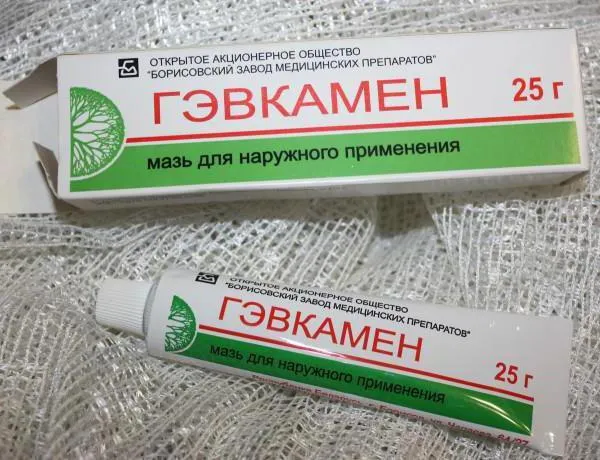
HEVACAMEN
UkraineThe drug is used for joint and muscle pain, neuralgia, myositis, arthritis, myalgia, arthralgia, rheumatism, and sciatica.
Frequently asked questions
How should Hevacamen be used correctly?
The ointment should be rubbed into the skin over the affected muscle or joint in an amount of 2-3 g at a time, repeating the procedure 2-3 times a day. The duration of the course is determined by a physician depending on the severity of the disease.
What side effects can Hevacamen cause?
Allergic reactions are possible: redness, rash, itching, urticaria, or contact dermatitis. Headache, dizziness, or convulsions may also occur (due to the camphor content). Dermatitis is possible in children.
Who should not use this drug?
Contraindicated in skin diseases (eczema, dermatitis), presence of wounds at the application sites, whooping cough, predisposition to convulsions or bronchospasm, as well as hypersensitivity to any components of the composition. It must not be used in children under 3 years of age.
What sensations occur upon application of the ointment?
During rubbing into the skin, a cold sensation is initially felt, followed by warmth, mild tingling, and a slight burning sensation.
What should be done if the ointment gets into the eyes?
The eyes and mucous membranes must be thoroughly rinsed with running water.
Can the product be used during pregnancy or breastfeeding?
Yes, but with caution and only as prescribed by a physician, taking into account the benefits and risks.
What should you do if you feel a strong burning sensation?
In case of severe skin irritation, the application of the ointment should be discontinued immediately. Hands must be washed thoroughly after each use.
Instructions for use
INSTRUCTION FOR MEDICAL USE OF THE MEDICINAL PRODUCT GEUCAMEN (GEUCAMEN)
Composition:
Active substances: racemic menthol, racemic camphor, eucalyptus oil, clove oil;
1 g of ointment contains racemic menthol 0.18 g (180 mg), racemic camphor 0.1 g (100 mg), eucalyptus oil 0.1 g (100 mg), clove oil 0.01 g (10 mg);
Excipients: paraffin, white soft paraffin.
Pharmaceutical form. Ointment.
Main physicochemical properties: ointment of white or white with a yellowish tint color, with a specific odor.
Pharmacotherapeutic group.
Agents used locally for joint and muscle pain. ATC code M02A X10.
Pharmacological properties.
Pharmacodynamics.
The mechanism of action of the drug is determined by its active ingredients. It stimulates nerve endings, dilates arterioles and capillaries, which promotes distracting and analgesic effects. Reduces exudation and stabilizes cell membranes. Exhibits distracting, mild analgesic, moderate anti-inflammatory, and antiseptic actions.
Pharmacokinetics.
Not determined.
Clinical characteristics.
Indications.
Joint and muscle pain, neuralgia, myositis, arthritis, myalgia, arthralgia, rheumatism, sciatica.
Contraindications.
Skin diseases, wounds at the sites of intended application, dermatitis, pertussis, eczema, predisposition to bronchospasm or seizures. Hypersensitivity to any component of the drug. Children under 3 years of age.
Special precautions.
When rubbed into the skin, causes a sensation of cold, followed by warmth, mild burning, and tingling.
Avoid contact with eyes and mucous membranes. If the ointment comes into contact with eyes or mucous membranes, thoroughly rinse with running water. Do not apply the ointment to damaged skin.
Hands should be thoroughly washed after each application. If strong skin irritation occurs, discontinue rubbing in the ointment.
Interaction with other medicinal products and other forms of interaction.
Unknown.
Special precautions for use.
Use during pregnancy or breastfeeding.
Use with caution during pregnancy or breastfeeding only if prescribed by a physician, carefully weighing the potential risks and benefits.
Ability to influence the reaction rate while driving or operating machinery.
Unknown.
Method of administration and dosage.
Apply externally for rubbing. Rub 2–3 g of the ointment into the skin over the affected joint or muscle 2–3 times daily. The duration of treatment depends on the severity and course of the disease, as well as concomitant therapy, and is determined individually by a physician.
Children.
The drug may be used in children aged 3 years and older.
Overdose.
Sensation of intense warmth and burning at the application site. Hypersensitivity reactions are possible and require discontinuation of the drug. Treatment is symptomatic.
Adverse reactions.
Possible development of allergic reactions – skin redness, skin rash, urticaria, contact dermatitis, itching; headache, dizziness, and seizures possibly caused by camphor. Dermatitis may occur in children.
Shelf life.
3 years.
Storage conditions.
Store at a temperature not exceeding 25 ºC, in a place inaccessible to children.
Packaging.
40 g in a tube in a carton.
Release category.
Over-the-counter (without prescription).
Manufacturer.
LLC "DKP "Pharmaceutical Factory".
Manufacturer's location and address of its business activities.
4, Korolova St., Stanyshivka Village, Zhytomyr District, Zhytomyr Oblast, 12430, Ukraine.
Similar drugs
The original data is available in the language of the country of manufacture.
Data source: State Register of Medicinal Products of Ukraine
Data last verified: August 13, 2026