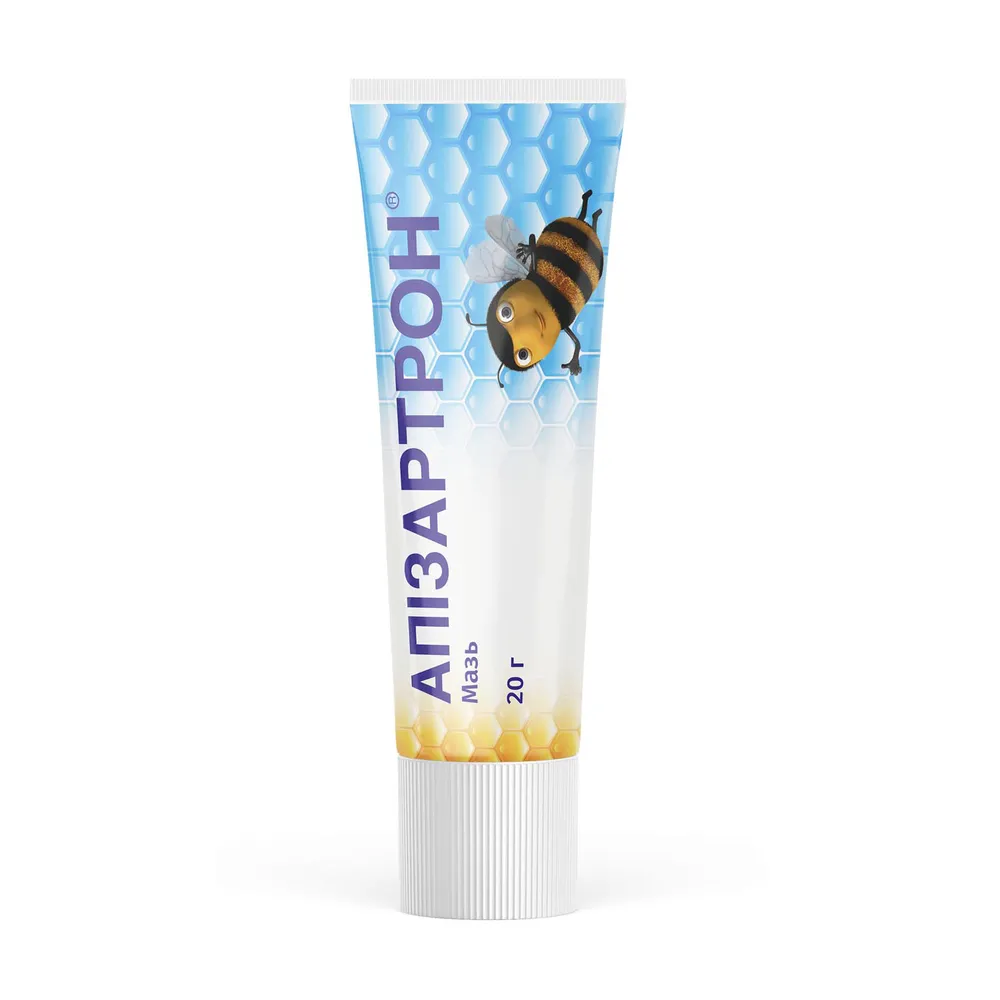
APIZATRON
UkraineThe ointment is used to treat inflammation and degenerative joint diseases (arthritis, arthrosis, rheumatism), for muscle, tendon, and ligament pain, for neuralgia, sciatica, and radiculitis, as well as to improve local blood circulation and warm up the muscles in athletes.
Frequently asked questions
How should Apizatron be applied correctly?
Apply a 3–5 cm strip of ointment to the affected area and distribute it evenly in a thin layer. Wait 0.5–2 minutes until redness and a sensation of warmth appear, then slowly and vigorously rub the product into the skin. It is recommended to keep the treated area warm. Typically, the ointment is applied 2–3 times a day until symptoms disappear.
What are the possible side effects of Apizatron?
Possible skin irritation, contact dermatitis, or allergic reactions such as itching, rash, and swelling.
Who should not use this preparation?
The product is contraindicated in individuals with increased sensitivity to salicylates, bee products, or isothiazotinates, in cases of skin diseases, acute joint inflammation, hemorrhagic diathesis, as well as in cases of hepatic or acute renal failure. The preparation must not be used in children under 6 years of age, in pregnant women, or breastfeeding women.
Can the ointment be combined with other medicines?
The methyl salicylate in the composition may enhance the effects of anticoagulants and methotrexate.
What should be done if the ointment gets into the eyes?
The eyes must be immediately rinsed with running water for 15 minutes. If pain, irritation, or vision impairment occurs after this, a doctor should be consulted.
Can the ointment be applied to damaged skin?
No, the preparation should not be applied to areas with broken skin integrity, open wounds, mucous membranes, or to large areas of the body.
Instructions for use
INSTRUCTIONS FOR MEDICAL USE OF THE MEDICINAL PRODUCT APUZARTHRON® (APISARTHRON®)
Composition:
Active substances:
100 g of ointment contains 0.003 g of standardized bee venom, 10 g of methyl salicylate, 1 g of allyl isothiocyanate;
Excipients: cetyl stearyl alcohol, sodium cetyl stearyl sulfate, sodium lauryl sulfate, mineral oil, purified water.
Pharmaceutical form. Ointment.
Main physicochemical characteristics: homogeneous ointment of white to white with a yellowish tint color, with the odor of methyl salicylate.
Pharmacotherapeutic group.
Other agents for local use in joint and muscular pain.
ATC code M02AX10.
Pharmacological properties.
Pharmacodynamics.
A combined topical medication whose pharmacological properties are due to mutual potentiation of the therapeutic effects of each component. A key ingredient of the ointment is bee venom, obtained from live bees and isolated in purified form by lyophilization. To ensure consistent efficacy of this biological substance, bee venom is standardized and tested during biochemical and pharmacological trials. Standardized bee venom contains active ingredients that provide a multifaceted therapeutic effect. The most important of these are melittin, apamin, peptide MCD, histamine, hyaluronidase, and phospholipase. The second component of the ointment, methyl salicylate, belongs to the group of nonsteroidal anti-inflammatory agents that readily penetrate the skin. It exerts anti-inflammatory and analgesic effects, which are enhanced by the synergistic action of bee venom ingredients—peptide MCD and apamin. The third component, allyl isothiocyanate, has a local irritant effect, causing local hyperthermia and hyperemia, which are intensified by bee venom ingredients—histamine and melittin. Melittin also promotes the release of endothelial-derived relaxing factor (EDRF). Improved local blood circulation leads to better oxygenation of tissues and accelerates the removal from the inflammatory site of toxic metabolic byproducts that cause pain sensations.
Pharmacokinetics.
Not studied.
Clinical characteristics.
Indications.
As part of combination therapy for:
- inflammatory and degenerative-dystrophic joint diseases (arthritis and arthrosis, including rheumatism);
- myalgia and pain due to traumatic injuries of muscles, tendons, and ligaments;
- neuralgic disorders (neuralgia, neuritis, sciatica, lumbago, and radiculitis);
- peripheral local circulatory disorders.
For warming up muscles in sports medicine.
Contraindications.
- hypersensitivity to salicylates, isothiocyanates, or bee products;
- hepatic insufficiency;
- acute renal failure;
- skin diseases;
- acute joint inflammation;
- hemorrhagic diathesis.
Contraindicated in patients under 6 years of age.
Do not apply the product to the skin in case of impaired skin integrity, or over large skin areas.
Special safety precautions.
Avoid contact with mucous membranes, eyes, and open wounds.
After applying the ointment, hands should be thoroughly washed with water and soap.
In case of accidental contact with eyes, rinse immediately with running water for 15 minutes. If the patient experiences pain, irritation, or decreased visual acuity after rinsing, medical advice should be sought.
Avoid prolonged use over large body surface areas in patients with renal insufficiency.
Apizatron® ointment should be used with special caution in children aged 6 to 12 years.
Interaction with medicinal products and other types of interactions. To date, no interactions with other substances have been observed. However, methylsalicylate may potentiate the effects of anticoagulants and methotrexate.
Special precautions for use.
The ointment contains cetostearyl alcohol, which may cause local skin reactions (e.g., contact dermatitis).
Use during pregnancy or breastfeeding.
Apizatron® should not be used during pregnancy and lactation.
Ability to affect reaction speed when driving or operating machinery.
Does not affect.
Method of Administration and Dosage
A strip of ointment 3–5 cm long (depending on the area of affected skin) is applied to the skin surface to be treated. The ointment is evenly spread in a thin layer, and the appearance of a noticeable reaction (redness, sensation of warmth) is awaited, which typically occurs within 0.5–2 minutes, depending on individual sensitivity. After this, the ointment should be rubbed slowly and intensively into the skin. The treated areas of the body should be kept warm. The product is generally applied 2–3 times daily until symptoms disappear.
Children
The product is not recommended for children under 6 years of age due to insufficient experience with use in this patient group.
Apizartron® ointment should be used with particular caution in children aged 6 to 12 years.
Overdose
Methyl salicylate and allyl isothiocyanate are toxic components contained in Apizartron® ointment. Symptoms of methyl salicylate intoxication include bloody vomiting, tachypnea, hyperpnea, dyspnea, tinnitus, deafness, lethargy, seizures, and loss of consciousness. In case of overdose, resuscitation measures are required.
Accidental ingestion of the ointment (in which case apitoxin is inactivated) may cause gastrointestinal irritation (nausea, abdominal pain, vomiting). Treatment: administer activated charcoal, sodium sulfate, and large amounts of fluid (but not milk!).
In case of accidental ingestion or if used in children under 6 years of age, medical advice must be sought immediately.
Side effects.
- Skin irritation;
- Contact dermatitis;
- Possible allergic reactions, including skin rashes, itching, angioedema.
Shelf life. 3 years.
Do not use the medication after the expiry date stated on the packaging.
Storage conditions.
Store at a temperature not exceeding 25 °C.
Keep out of reach of children.
Packaging.
Aluminum tubes of 20 g, 30 g, 50 g, and 100 g of ointment. One tube per cardboard box with instructions.
Availability. Over-the-counter (without prescription).
Manufacturer.
Passauer Pharma GmbH.
Manufacturer's address and place of business. Aiderstedter Weg 3, 14129 Berlin, Germany.
Similar drugs
| Brand name | Dosage form | Active substance / Dosage | Manufacturer |
|---|---|---|---|
| BAINVAIL OINTMENT INTENSIV | ointment |
|
Dr. Theiss Naturwaren GmbH (quality control and batch release; manufacturing of unpackaged products, primary and secondary packaging) |
| CAPSIKAM | ointment |
|
JSC Tallinn Pharmaceutical Plant |
| DR. THEISS'S OINTMENT WITH COMFREY | ointment |
|
Dr. Theiss Naturwaren GmbH (batch release authorization; manufacturing of unpackaged products, primary and secondary packaging) |
| FLAMIDEZ PHYTPLUS | ointment |
|
Encube Ethicals Private Limited |
| GEVKAMEN | ointment | PJSC "Fitofarm" | |
| HEVACAMEN | ointment | Ternofarm LLC | |
| HEVACAMEN | ointment | DKP "Pharmaceutical Factory" LLC | |
| HEVACAMEN | ointment | PJSC Pharmaceutical Factory "Viola" | |
| TURPENTINE OINTMENT | ointment |
|
PJSC "Fitofarm" |
| TURPENTINE OINTMENT | ointment |
|
Ternofarm LLC |
| VIPROSAL V® | ointment |
|
JSC Tallinn Pharmaceutical Plant |
| ZHIVOKOST | ointment |
|
PJSC Pharmaceutical Factory "Viola" |
The original data is available in the language of the country of manufacture.
Data source: State Register of Medicinal Products of Ukraine
Data last verified: August 13, 2026