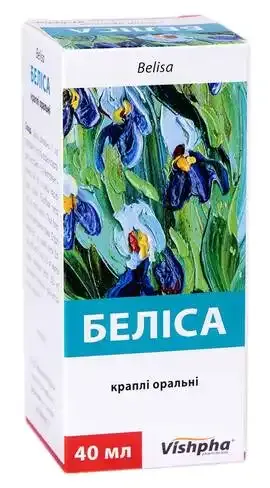
BELISA
UkraineThe drug is used as part of a complex treatment for nervous system disorders (in cases of neurasthenia, headache, sleep disturbances, and asthenic states), as well as for mild to moderate forms of arterial hypertension.
Frequently asked questions
How should Belisa be taken correctly?
Shake the vial before use. Take 10–20 drops three times a day, diluted in a small amount of water (30–50 ml). It should be taken either 30 minutes before meals or one hour after them. The course of treatment usually lasts from 14 days to 1 month.
What are the possible side effects of Belisa?
Nausea and vomiting, heart rhythm disturbances (tachycardia or bradycardia), dizziness, and drowsiness are possible. Allergic reactions may also occur: rash, itching, swelling, or skin redness.
Who should not take this drug?
Contraindications include hypersensitivity to the components, increased gastrointestinal secretion, low blood pressure (hypotension), and pollen allergy. The drug should not be used by pregnant women, breastfeeding women, or children under 12 years of age.
Can I drive a car during treatment?
While taking the drug, you should refrain from driving vehicles and operating dangerous machinery.
How does the drug interact with other medicines?
There is a possibility of enhanced effects of central nervous system depressants, antihypertensive, and anti-inflammatory drugs. It is not recommended to combine it with synthetic sedatives and benzodiazepines. Simultaneous use with disulfiram should be avoided. Consult a physician before taking any other medications.
What should be done in case of overdose?
If you have taken too much of the drug, severe drowsiness, dizziness, lethargy, or decreased attention may occur. In such a case, you must discontinue use and consult a doctor.
Instructions for use
INSTRUCTION for medical use of the medicinal product BELISA (BELISA)
Composition:
Active substances:
1 ml of the preparation contains aqueous-alcoholic extract (1:3) (extraction solvent – 40% ethanol) from a mixture:
passion flower herb (Passiflorae herba) 100 mg;
lime flowers (Tiliae flores) 100 mg;
oregano herb (Origani herba) 66.7 mg;
sage leaf (Salviae officinalis folia) 33.3 mg;
lemon balm herb (Melissae herba) 33.3 mg.
Excipients: apart from the extraction solvent, none.
Pharmaceutical form. Oral drops.
Main physicochemical properties: dark reddish-orange liquid with a characteristic aromatic odor; sediment formation may occur during storage.
Pharmacotherapeutic group.
Sedatives and hypnotics. ATC code N05CM.
Pharmacological properties.
A combined herbal medicinal product. Belladonna exerts sedative, hypotensive, spasmolytic, and anti-inflammatory effects. The drug promotes increased diuresis and choleresis, regulates metabolism (carbohydrate and lipid), and improves the general condition of the body.
Clinical characteristics.
Indications.
As part of complex therapy for nervous system disorders (in neurasthenia, headache, sleep disorders, asthenic condition); in arterial hypertension (mild and moderate forms).
Contraindications.
Hypersensitivity to the components of the drug, increased gastrointestinal tract secretion, arterial hypotension. Pollinosis.
Interaction with other medicinal products and other types of interactions.
When used concomitantly with drugs that suppress the central nervous system, such as barbiturates and tranquilizers, an enhanced sedative and hypnotic effect is possible.
Concomitant use may enhance the effect of antihypertensive and anti-inflammatory agents. Concurrent use with synthetic sedatives and benzodiazepines is not recommended. Concomitant use with disulfiram should be avoided.
Sage enhances the effect of other anti-inflammatory agents.
If simultaneous use with any other medicinal products is necessary, consult a physician.
Special precautions for use
The medicinal product contains 40% (v/v) ethanol and may be harmful to patients with alcoholism. Caution is advised in patients with liver disease and in those with epilepsy.
Use with caution in patients with severe organic gastrointestinal disorders.
In elderly patients, treatment should be initiated with the lowest dose.
Use during pregnancy or breastfeeding
Belisa must not be used during pregnancy or breastfeeding.
Ability to affect reaction speed when driving vehicles or operating machinery
During treatment with Belisa, patients should refrain from driving vehicles or operating potentially hazardous machinery.
Method of Administration and Dosage
Shake before use. Take orally, 10–20 drops at a time, diluted in a small amount of water (30–50 mL), three times daily, 30 minutes before meals or 1 hour after eating.
The duration of treatment depends on the severity of the disease and the nature of concomitant therapy, and typically lasts from 14 days to 1 month. If necessary, the treatment course may be repeated.
Children.
Belisu is not recommended for use in children under 12 years of age.
Overdose.
When doses exceeding the recommended amounts are used, drowsiness may occur. Overdose may lead to dizziness, lethargy, and reduced attention span. Treatment: discontinue the drug and seek medical advice.
Side effects.
Possible:
Gastrointestinal tract: nausea, vomiting.
Cardiovascular system: tachycardia, bradycardia.
Nervous system: dizziness, drowsiness.
Immune system: vasculitis, allergic reactions including rash, itching, swelling, redness of the skin.
If side effects occur, discontinue use of the drug and consult a physician.
Shelf life.
4 years. After first opening, the product is suitable for 3 months.
Storage conditions.
Store in the original packaging at a temperature not exceeding 25 ºC, in a place inaccessible to children.
Packaging.
25 ml or 40 ml in a bottle with a dropper cap in a carton.
Availability.
Over-the-counter.
Manufacturer. LLC "DKP "Pharmaceutical Factory".
Manufacturer's address and place of business. Ukraine, 12430, Zhytomyr region, Zhytomyr district, village Stanishivka, Korolova Street, b. 4.
Similar drugs
| Brand name | Dosage form | Active substance / Dosage | Manufacturer |
|---|---|---|---|
| CARDIOSED | drops, oral | JSC "Lubnipharm" | |
| SEDAFITON® | drops, oral |
alcohol extract mixture of hawthorn fruits valerian roots and passionflower herb
·
0.275 ml + 0.295 ml + 0.43 ml in 1 ml
|
PJSC "Fitofarm" |
| VALOCORMID | drops, oral |
|
DKP "Pharmaceutical Factory" LLC |
| VALOCORMID | drops, oral |
|
Ternofarm LLC |
The original data is available in the language of the country of manufacture.
Data source: State Register of Medicinal Products of Ukraine
Data last verified: August 13, 2026