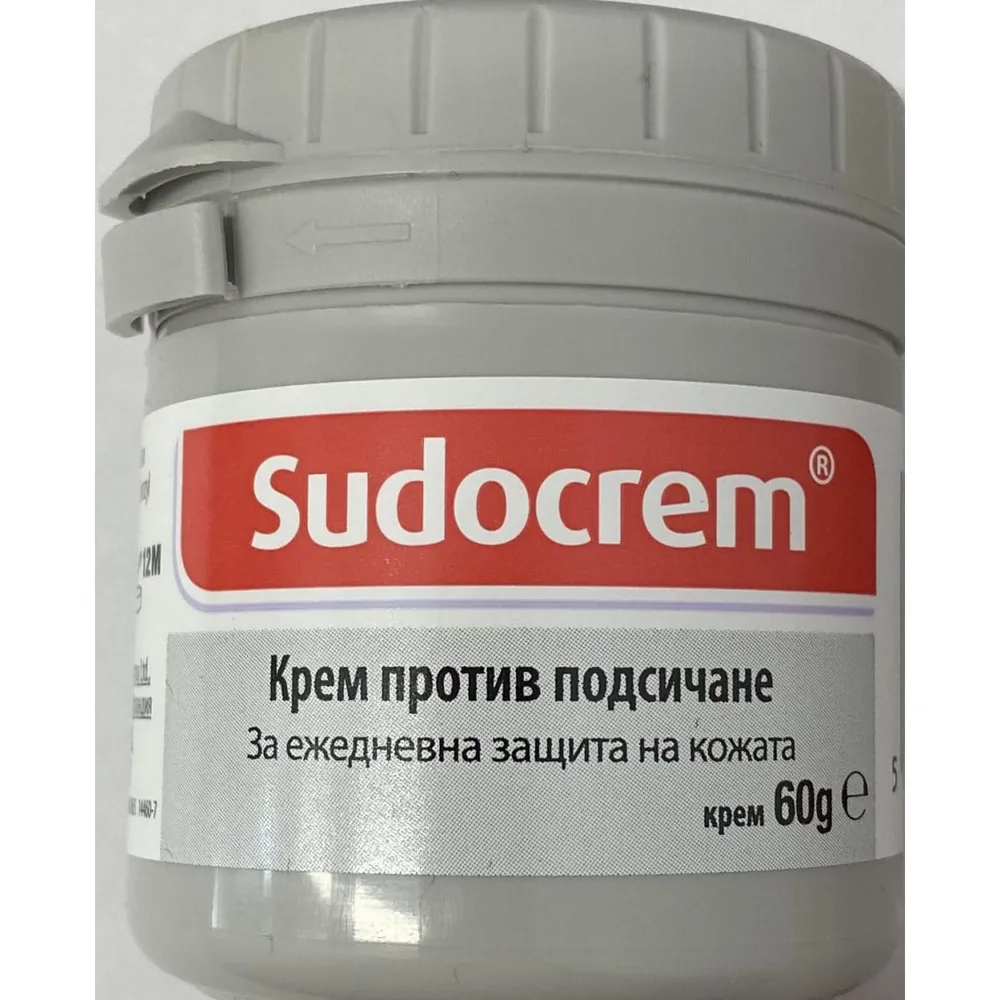
SUDOCREM
UkraineThe cream is used for the topical treatment of diaper dermatitis, chafing, acne, eczema, pressure sores, as well as minor thermal burns and first-degree frostbite.
Frequently asked questions
How should Sudocrem be used correctly?
The cream should be applied in a thin layer to the affected areas of the skin. Adults and children are recommended to use the product no more than 6 times a day.
What side effects may Sudocrem cause?
Hypersensitivity reactions, such as itching, redness (hyperemia), or rashes at the application site, may occur rarely. Excipients may also cause skin irritation or contact dermatitis.
Who should not use this cream?
The product should not be used in cases of acute purulent inflammatory skin diseases, or if you have a hypersensitivity to any of its components.
Can the product be used during pregnancy or breastfeeding?
There are no direct contraindications, but it is necessary to consult a doctor before use during this period.
What safety precautions should be known?
The product is intended for external use only; avoid contact with eyes and mucous membranes. Fabric that has come into contact with the cream may ignite more easily, so you should not smoke or be near an open flame near such items. In newborns (up to 4 weeks), the components may cause yellowing of the skin and eyes.
What should be done if the condition does not improve?
If the condition does not improve or even worsens after applying the cream, it is necessary to consult a doctor.
Instructions for use
INSTRUCTIONS FOR MEDICAL USE OF THE MEDICINAL PRODUCT Sudocrem (Sudocrem®)
Composition:
Active substances: 1 g of cream contains zinc oxide 15.29% m/m, benzyl alcohol 0.39% m/m, benzyl benzoate 1.02% m/m, benzyl cinnamate 0.15% m/m;
Excipients: lanolin, purified water, sodium benzoate (E 211), paraffin wax, synthetic beeswax, microcrystalline wax, sorbitan sesquioleate, propylene glycol, linalyl acetate, lavender flavor, mineral oil, antioxidant containing: propylene glycol, anhydrous citric acid, butylated hydroxyanisole (E 320).
Pharmaceutical form. Topical cream.
Main physicochemical properties: white, homogeneous cream, free from visible impurities, with a lavender scent.
Pharmacotherapeutic group. Dermatologicals. Emollient and protective agents. Zinc preparations. ATC code D02AB.
Pharmacological properties.
Pharmacodynamics.
Zinc oxide exerts antiseptic, astringent, and anti-inflammatory effects. When applied to the skin, it relieves irritation and promotes healing of minor burns and superficial wounds.
Benzyl alcohol has local anesthetic action with disinfectant properties.
Benzyl benzoate has antiseptic effects and also acts as a solubilizing agent.
Benzyl cinnamate is a synthesized compound derived from benzyl alcohol and cinnamic acid, which has antibacterial and antifungal activity.
Clinical characteristics.
Indications.
For local treatment of:
- diaper dermatitis;
- intertrigo;
- minor thermal burns;
- first-degree frostbite;
- acne;
- pressure ulcers;
- eczema.
Contraindications.
Hypersensitivity to any of the components of the medicinal product. Acute purulent-inflammatory skin diseases.
Interaction with other medicinal products and other forms of interaction.
Unknown.
Special precautions for use.
For external use only. Avoid contact with eyes and mucous membranes. In case of contact with eyes or mucous membranes, rinse thoroughly with water.
Smoking or being near open flames is prohibited due to the risk of severe burns. Fabric (clothing, bed linen, bandages, etc.) that has come into contact with this medicinal product becomes more flammable and poses a serious fire hazard. Washing clothes and bed linen may reduce accumulation of the product, but will not completely remove it.
Sodium benzoate may cause local irritation and may exacerbate jaundice (yellowing of the skin and eyes) in newborns (up to 4 weeks of age).
If the condition does not improve or worsens after applying the cream, consult a physician.
Use during pregnancy and breastfeeding.
No contraindications. May be used during pregnancy or breastfeeding after consultation with a physician.
Ability to affect reaction speed when driving or operating machinery. Not established.
Method of Administration and Dosage.
For external use only.
Unless otherwise prescribed, apply to adults and children no more than 6 times daily. The cream should be applied in a thin layer to the affected areas of skin.
The duration of treatment depends on the severity and course of the disease and is determined individually by a physician.
If the condition does not improve or worsens after using the medicinal product, medical advice should be sought.
Children.
The medicinal product can be used in pediatric practice.
Overdose.
Overdose is unlikely with topical application. In case of accidental ingestion in large amounts, symptoms such as vomiting, diarrhea, central nervous system stimulation, and seizures may occur.
Treatment is symptomatic.
Side effects.
Rarely, hypersensitivity reactions may occur, including itching, hyperemia, rashes, changes at the site of cream application; excipients contained in the medicinal product may cause skin irritation and local skin reactions (e.g., contact dermatitis).
Shelf life. 3 years.
Storage conditions.
Store at a temperature not exceeding 25 °C. Keep out of reach of children.
Packaging.
45 g, or 60 g, or 75 g, or 125 g, or 150 g, or 250 g, or 300 g in a polypropylene container with a tamper-evident seal.
Supply category. Over-the-counter.
Manufacturer.
Balkanpharma-Troyan AD.
Manufacturer's address and place of business.
1 Krakra Str., Troyan, 5600, Bulgaria.
The original data is available in the language of the country of manufacture.
Data source: State Register of Medicinal Products of Ukraine
Data last verified: August 13, 2026