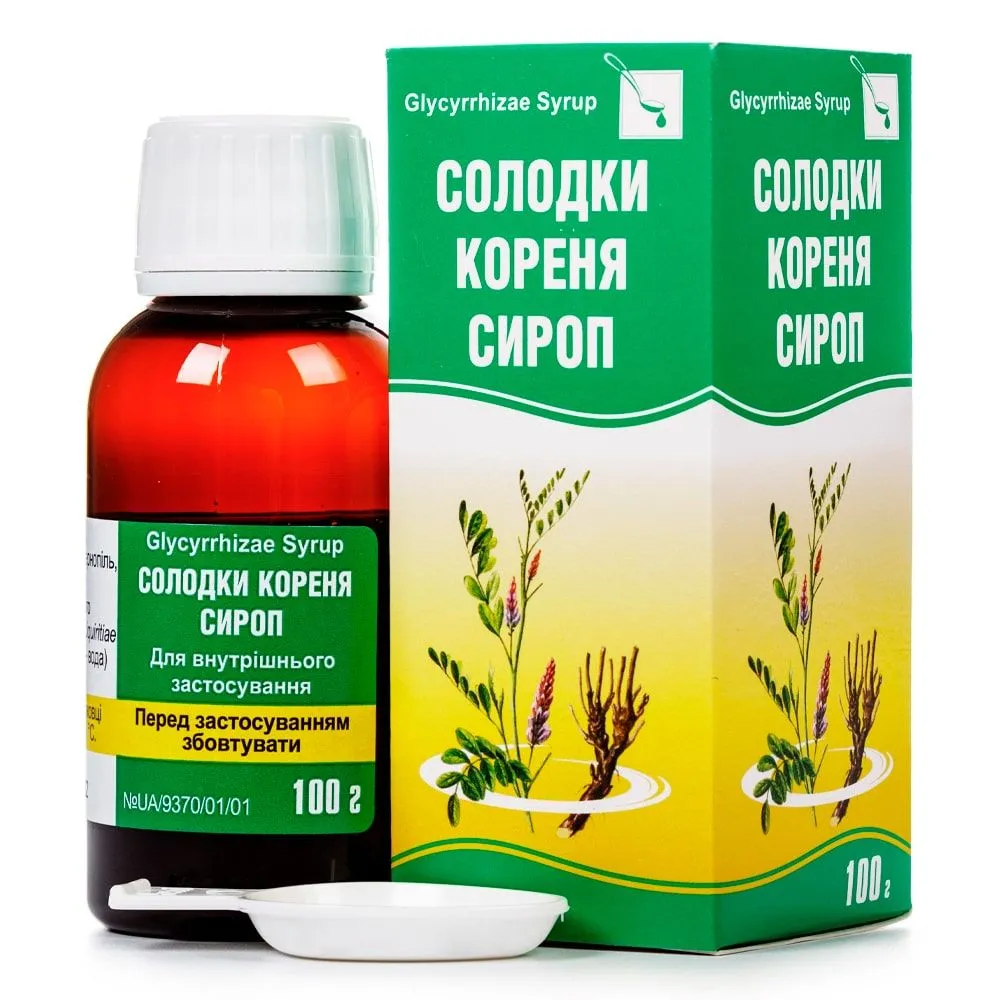
GLYCYRRHIZAE RADIX SYRUP
UkraineIt is used as part of complex therapy for infectious and inflammatory respiratory tract diseases accompanied by cough and difficulty expectorating phlegm (for example, in cases of bronchitis, pneumonia, or tracheobronchitis).
Frequently asked questions
How should Glycyrrhizae radix syrup be taken correctly?
The syrup is taken orally after meals 3–4 times a day. It does not need to be diluted, but after administration, it should be taken with a sufficient amount of warm water or tea. The dose should be measured using the measuring spoon or cup provided in the kit.
What dosages are suitable for different age groups?
For adults and children aged 12 years and older, 15 ml per dose is recommended. For children, the dosage is lower: from 1 to 3 years — 2.5 ml; from 4 to 6 years — 2.5–5 ml; from 7 to 9 years — 5–7.5 ml; from 10 to 12 years — 7.5–10 ml.
Who should not use this drug?
Contraindications include hypersensitivity to the components, impaired liver or kidney function, low potassium levels (hypokalemia), high blood pressure, and severe obesity. The drug is prohibited during pregnancy. Breastfeeding women should discontinue lactation during treatment.
What side effects may Glycyrrhizae radix syrup cause?
Allergic reactions (rash, itching, edema) are possible. Prolonged or excessive use may lead to edema, water-salt balance disturbances, increased blood pressure, cardiac arrhythmia, and decreased potassium levels.
Can the syrup be combined with other medicines?
Long-term use in combination with diuretics, cardiac glycosides, corticosteroids, or laxatives is not recommended, as this may disrupt the electrolyte balance. The drug may also reduce the effectiveness of blood pressure medications. Always consult a physician before combining it with any other agents.
Are there any dietary restrictions during treatment?
Yes, other products containing licorice should not be consumed, as this may lead to serious consequences such as fluid retention, increased blood pressure, or cardiac arrhythmia.
Instructions for use
INSTRUCTIONS FOR MEDICAL USE OF THE MEDICINAL PRODUCT LIQUORICE ROOT SYRUP (SIRUPUS RADICIS GLYCYRRHIZAE)
Composition:
Active ingredient: dry aqueous extract of liquorice root (Extractum Glycyrrhizae aqua siccum) ((4.8–5.5):1) (extraction agent — aqueous ammonia solution);
5 ml of syrup contains 250 mg of dry aqueous extract of liquorice root (Extractum Glycyrrhizae aqua siccum) ((4.8–5.5):1) (extraction agent — aqueous ammonia solution), equivalent to 20 mg of glycyrrhizic acid;
Excipients: sodium hydroxide, sodium benzoate (E 211), aspartame (E 951), glycerin, hypromellose (E 464), purified water.
Pharmaceutical form. Syrup.
Main physico-chemical properties: viscous brown liquid with a characteristic odour. Sedimentation may occur during storage.
Pharmacotherapeutic group.
Medicinal products used for cough and colds. Expectorants.
ATC code R05C A.
Pharmacological properties.
Pharmacodynamics.
Licorice root contains glycyrrhizin, potassium and calcium salts of glycyrrhizic acid, and flavonoid glycosides (liquiritin, liquiritigenin, liquiritoside). The expectorant effect of licorice preparations is associated with glycyrrhizin content, which stimulates the activity of the ciliated epithelium of the trachea and bronchi and enhances secretory function of the mucous membranes of the upper respiratory tract.
The spasmolytic effect of the medicinal product on smooth muscles of the respiratory tract is due to the presence of flavonoid compounds, among which liquiritoside is the most active. The anti-inflammatory (corticosteroid-like) effect is attributed to glycyrrhizic acid, released upon hydrolysis of glycyrrhizin.
Pharmacokinetics.
Not studied.
Clinical characteristics.
Indications.
As part of complex therapy for infectious and inflammatory diseases of the respiratory tract accompanied by cough and difficult expectoration of sputum (acute and chronic bronchitis, tracheobronchitis, pneumonia, bronchopneumonia, bronchiectatic disease).
Contraindications.
- Individual hypersensitivity to any component of the medicinal product;
- liver and kidney function disorders;
- hypokalemia;
- arterial hypertension;
- severe obesity.
Interaction with other medicinal products and other types of interactions.
Hypokalemia (resulting from excessive use of licorice root) may be intensified when used concomitantly with cardiac glycosides, antiarrhythmic agents, and drugs affecting heart rhythm (e.g., quinidine).
When used in combination with drugs that may cause hypokalemia (thiazide and loop diuretics, adrenocorticosteroids, and laxatives), disturbances in electrolyte balance may occur; therefore, prolonged simultaneous use of "Licorice Root Syrup" with the above-mentioned medicinal products should be avoided.
"Licorice Root Syrup" may counteract the effects of antihypertensive drugs.
When taking any other medicinal products simultaneously, consult a physician.
Special precautions for use.
Prolonged use of the medicinal product is not recommended, as it may lead to disturbances in water and electrolyte balance and edema.
Patients taking Liquorice Root Syrup should not take other products containing liquorice, since serious adverse effects may occur, such as fluid retention, hypokalemia, hypertension, and cardiac rhythm disturbances.
Concomitant use with diuretics, cardiac glycosides, corticosteroids, stimulant laxatives, or other drugs that may worsen electrolyte imbalance is not recommended (see section "Interaction with other medicinal products and other forms of interaction").
Liquorice Root Syrup contains aspartame (E 951), a derivative of phenylalanine, which may be harmful for patients with phenylketonuria.
Use during pregnancy or breastfeeding.
The medicinal product is contraindicated during pregnancy, as Glycyrrhiza glabra increases estrogen levels, thereby disrupting hormonal balance. It stimulates uterine activity. In high doses, it has shown embryotoxic effects in experimental studies.
If use of the drug is necessary in breastfeeding women, breastfeeding should be discontinued during treatment.
Ability to influence reaction rate when driving or operating machinery.
Does not affect the ability to drive or operate potentially hazardous machinery.
Dosage and Administration.
Administer orally after meals 3–4 times a day. Do not dilute the medicinal product before use; however, after administration, it should be followed by a sufficient amount of liquid (tea or warm water).
The recommended dose for adults and children aged 12 years and older is 15 ml of syrup per dose:
children aged 1 to 3 years — 2.5 ml per dose;
children aged 4 to 6 years — 2.5–5 ml per dose;
children aged 7 to 9 years — 5–7.5 ml per dose;
children aged 10 to 12 years — 7.5–10 ml per dose.
Measure the dose using a measuring cup or a measuring spoon.
The duration of treatment is determined individually by a physician for each patient, taking into account the nature, severity, and specific course of the disease, stability of the achieved therapeutic effect, and the drug's tolerability.
Children.
The medicinal product is prescribed to children aged 1 year and older.
Overdose.
Cases of overdose have been reported following prolonged use (more than 4 weeks) and/or excessive intake of licorice-containing preparations, with symptoms such as fluid retention, hypokalemia, hypertension, cardiac arrhythmias, and hypertensive encephalopathy.
In case of overdose, adverse effects may be intensified.
Treatment is symptomatic.
Adverse reactions.
In case of individual hypersensitivity, allergic reactions may develop, including skin rash, itching, skin hyperemia, and swelling.
Prolonged use of licorice preparations in excessive doses may cause disturbances in water-electrolyte balance and lead to edema formation and development of hypokalemia; in individual cases, increased blood pressure, hypokalemic myopathy, and myoglobinuria are possible.
If any adverse events occur, the patient must discontinue use of the medicinal product and consult a physician.
Reporting of adverse reactions
Reporting of adverse reactions after medicinal product registration is highly important. It enables continuous monitoring of the benefit-risk balance of this medicinal product. Medical and pharmaceutical professionals, as well as patients or their legal representatives, should report all suspected adverse reactions and lack of efficacy via the automated pharmacovigilance information system at the following link: https://aisf.dec.gov.ua.
Shelf life. 2 years.
Shelf life after first opening of the packaging — 6 months.
Do not use after the expiry date stated on the packaging.
Storage conditions.
Store in the original packaging at a temperature not exceeding 25 °C.
Keep out of reach of children.
Packaging.
100 mL in polymer bottles with a measuring cup and measuring spoon, in a cardboard box.
100 mL in glass bottles with a measuring cup and measuring spoon, in a cardboard box.
Availability category. Over-the-counter.
Manufacturer.
JSC "CHEMICAL PHARMACEUTICAL PLANT "CHERVONA ZIRKA".
Manufacturer's address and place of business.
1 Gordienkovskaya Street, Kharkiv, Kharkiv Oblast, 61010, Ukraine.
Similar drugs
The original data is available in the language of the country of manufacture.
Data source: State Register of Medicinal Products of Ukraine
Data last verified: August 13, 2026