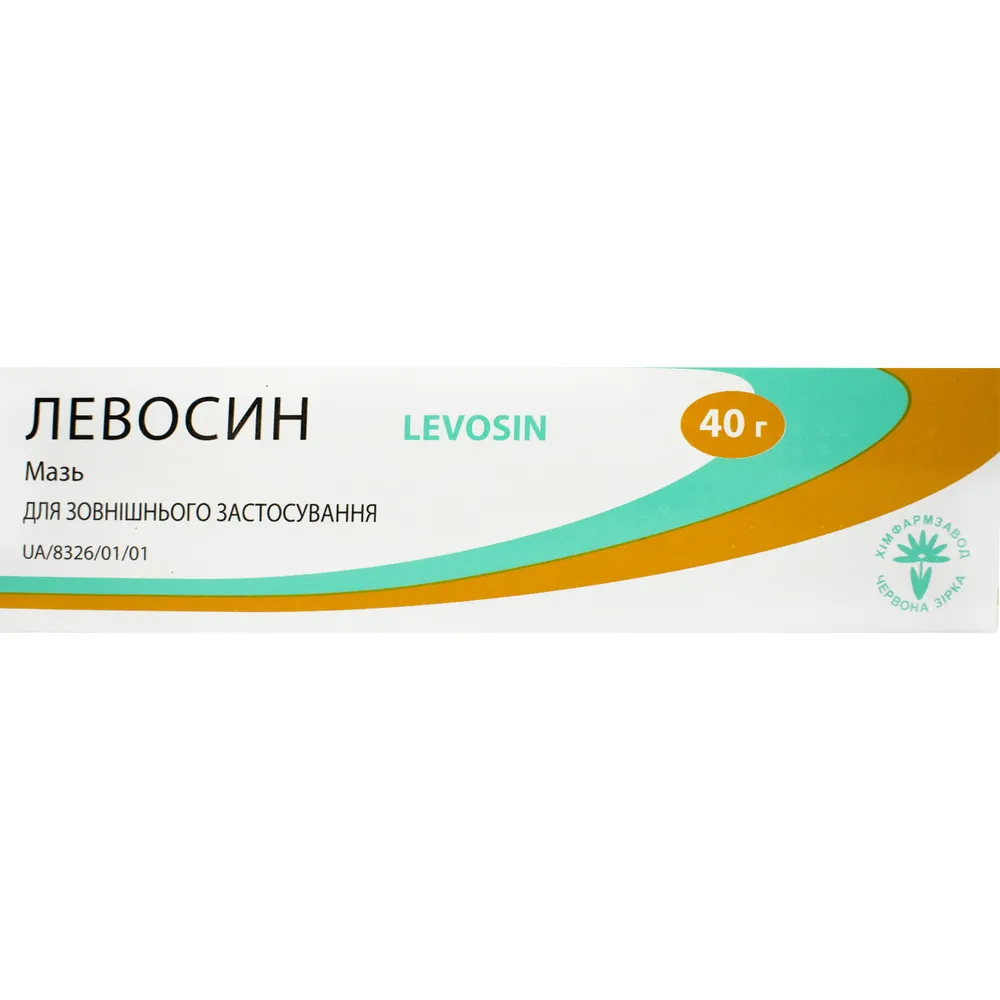
LEVOSIN
UkraineThe drug is used for the treatment of purulent wounds, particularly those infected with mixed microflora, during the first (purulent-necrotic) stage of healing.
Frequently asked questions
How to use the ointment correctly?
The ointment is applied topically. Sterile gauze pads should be soaked with the product and used to fill the wound after it has been cleaned. It is also possible to introduce the ointment into purulent cavities via a drainage tube (in this case, the ointment should be preheated to 35–36 °C). Dressings should be changed daily until the wound is completely cleared.
Who should not use Levosin?
The drug is contraindicated in cases of individual hypersensitivity to its components, as well as in psoriasis, eczema, and fungal skin infections. Use of the drug is not recommended for children.
What are the possible side effects?
Possible allergic reactions include: skin rash, itching, dermatitis, burning, redness (hyperemia), urticaria, or swelling (angioedema). If such symptoms appear, discontinue use of the ointment and consult a physician.
Can the ointment be combined with other medicines?
It is undesirable to use simultaneously with drugs that suppress blood formation (sulfonamides, cytostatics, pyrazoline derivatives), as well as with ethanol, barbiturates, or diphenyl.
Is it necessary to monitor blood status during treatment?
Yes, if the ointment is used for an extended period (more than 1 month), it is necessary to monitor peripheral blood status.
Instructions for use
INSTRUCTIONS for medical use of the medicinal product LEVOSIN (Levosin)
Composition:
Active substances: chloramphenicol, sulfadimethoxine, methyluracil, trimethacaine;
1 g of ointment contains: chloramphenicol – 10 mg, sulfadimethoxine – 40 mg, methyluracil – 40 mg, trimethacaine – 30 mg;
Excipients: polyethylene glycol 400, polyethylene glycol 1500.
Pharmaceutical form. Ointment.
Main physicochemical properties: ointment of white with a yellowish tint color.
Pharmacotherapeutic group.
Antibiotics in combination with chemotherapeutic agents.
ATC code D06C.
Pharmacological properties.
Pharmacodynamics.
Levosin is a combination preparation exerting antimicrobial, anti-inflammatory (dehydrating), necrolytic, and analgesic effects. It is active against Gram-positive and Gram-negative microorganisms, as well as anaerobes. The water-soluble base of the ointment—polyethylene glycol—enhances and prolongs its antibacterial action. The ointment easily penetrates deeply into tissues without damaging biological membranes, transporting chloramphenicol and sulfadimethoxine bound to polyethylene glycol. The ointment exhibits strong dehydrating properties, thereby promoting reduction of perifocal edema and wound cleansing from purulent-necrotic content. The medicinal product does not produce cumulative or locally irritating effects.
Pharmacokinetics.
Not studied.
Clinical characteristics.
Indications.
Purulent wounds (including those infected with mixed microflora) during the first (suppurative-necrotic) phase of the wound process.
Contraindications.
Individual hypersensitivity to the components of the drug, psoriasis, eczema, fungal skin infections.
Interaction with other medicinal products and other types of interactions.
Concomitant use with hematopoiesis-suppressing agents is undesirable: sulfonamides, cytostatics, pyrazolone derivatives; as well as with diphenyl, barbiturates, and ethanol.
Simultaneous use of the medicinal product with strophantin, erythromycin, oleandomycin, nystatin, and levorin enhances the antibacterial activity of the ointment, whereas concurrent use with benzylpenicillin salts reduces it. Combined use with pentoxyl enhances its toxic effect.
Special precautions for use.
Use of the drug may lead to skin sensitization, accompanied by the development of hypersensitivity reactions upon subsequent topical or systemic administration of this drug. The drug retains its antibacterial activity in the presence of purulent or necrotic material. When the drug is used long-term (longer than 1 month), monitoring of peripheral blood status is required. Avoid contact of the ointment with eyes and mucous membranes.
Use during pregnancy or breastfeeding.
Clinical experience with use during pregnancy or breastfeeding is limited; therefore, the ointment may be used only if the expected benefit to the mother outweighs the potential risk to the fetus/child, as determined by the physician.
Ability to influence reaction rate when driving or operating machinery.
Has no effect.
Method of Administration and Dosage
Apply topically. Apply the ointment to sterile gauze pads and loosely pack the wound after standard wound care (mechanical removal of necrotic tissue, rinsing with hydrogen peroxide solution). The drug may also be introduced into purulent cavities through a catheter (drainage tube) using a syringe. In such cases, the drug should first be warmed to 35–36 °C. Dressings should be changed daily until complete wound debridement.
Children
There is no data on the safety of using the drug in children. The drug should not be used in children.
Overdose
Topical application of the drug at recommended doses does not lead to overdose. With prolonged and frequent use of the ointment, the occurrence and intensification of the described adverse reactions are possible. If adverse reactions occur, discontinue use of the ointment and consult a physician. Further treatment should be symptomatic.
Side effects.
Allergic reactions may occur during the use of the medication, including skin rashes, itching, dermatitis, burning, hyperemia, angioneurotic edema, urticaria. In such cases, the use of the ointment should be discontinued and medical advice should be sought.
Shelf life.
2 years.
Do not use after the expiry date stated on the packaging.
Storage conditions.
Store in the original packaging at a temperature not exceeding 25 °C.
Keep out of reach of children.
Packaging.
40 g in tubes.
1 tube per cardboard box.
Supply category.
Over-the-counter.
Manufacturer.
PJSC "CHIMFARMZAVOD "CHERVONA ZIRKA".
Manufacturer's address and location of business activity.
Ukraine, 61010, Kharkiv region, city of Kharkiv, Gordienkovska street, building 1.
Similar drugs
| Brand name | Dosage form | Active substance / Dosage | Manufacturer |
|---|---|---|---|
| FASTIN | ointment | JSC "Lubnipharm" | |
| INFLARAX | ointment | LLC "Corporation "Zdorovya" (all stages of manufacturing, quality control, batch release; all stages of manufacturing, except quality control and batch release) | |
| METROAVIN | ointment | PJSC "HIMFARMZAVOD "CHERVONA ZIRKA" |
The original data is available in the language of the country of manufacture.
Data source: State Register of Medicinal Products of Ukraine
Data last verified: August 13, 2026