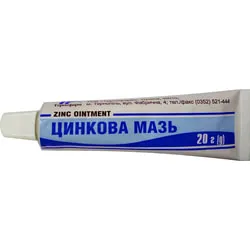
ZINC OINTMENT
UkraineThe drug is used for the treatment and prevention of diaper dermatitis, dermatitis, eczema, and chafing. It also helps with skin damage such as minor sunburns or thermal burns, cuts, and scratches.
Frequently asked questions
How should the drug be used correctly?
Apply a thin layer of the ointment to the affected area of the skin. When treating diaper dermatitis in children, apply the ointment to clean, dry skin for prevention (especially before bedtime), and for treatment, apply three times a day if redness or irritation occurs. A gauze bandage may be applied to skin injuries.
When should Zinc ointment not be used?
The drug should not be used in cases of purulent skin diseases or in the presence of hypersensitivity to its components. The ointment should only be applied to non-infected areas of the skin, and contact with mucous membranes or eyes should be avoided.
What are the possible side effects?
Hypersensitivity reactions may occur, such as itching, rash, redness, or changes at the application site. Prolonged use may cause skin irritation.
Can the ointment be used during pregnancy or breastfeeding?
Use is only possible in cases where the expected benefit to the mother outweighs the potential risk to the child or fetus.
What should be done if the ointment gets into the eyes?
The eyes must be rinsed with plenty of running water, and a doctor should be consulted.
When should a child's treatment be stopped and a doctor consulted?
If the diaper rash in a child does not disappear within 7 days of using the drug, discontinue use of the ointment and consult a physician.
Instructions for use
INSTRUCTIONS FOR MEDICAL USE OF THE MEDICINAL PRODUCT ZINC OINTMENT
Composition:
Active substance: zinc oxide;
1 g of ointment contains zinc oxide – 100 mg;
Excipient: white soft paraffin.
Pharmaceutical form. Ointment.
Main physicochemical properties: ointment of white or white with a yellowish tint color.
Pharmacotherapeutic group. Emollient and protective agents. Zinc preparations. ATC code D02AB.
Pharmacological properties.
Pharmacodynamics.
Zinc ointment exerts astringent, adsorbent, and antiseptic effects, reducing the severity of exudative processes.
When applied topically, it reduces signs of inflammation and skin irritation, softens and dries the skin.
Pharmacokinetics.
When applied externally, zinc ointment is practically not absorbed into the systemic circulation and does not exhibit resorptive effects.
Clinical characteristics.
Indications. Treatment and prevention of diaper dermatitis. Treatment of dermatitis, eczema, intertrigo, and skin injuries (minor thermal and sun burns, cuts, scratches).
Contraindications. Hypersensitivity to the components of the drug. Purulent-inflammatory skin diseases and adjacent tissues.
Special precautions. The ointment is intended for topical use only. Do not use in cases of pyoderma or other purulent skin diseases.
Apply the ointment only to non-infected areas of the skin.
Avoid contact of the ointment with mucous membranes and eyes. If the ointment comes into contact with the eyes, rinse thoroughly with plenty of running water and consult a physician.
If diaper rash in a child does not resolve within 7 days of starting treatment, discontinue use and seek medical advice again.
Interaction with other medicinal products and other forms of interaction. Interaction not established.
Usage features.
Use during pregnancy or breastfeeding.
The use of the drug during pregnancy or breastfeeding is possible only when the expected benefit to the mother outweighs the potential risk to the fetus or infant.
Ability to affect reaction speed when driving or operating machinery.
The drug does not affect the ability to drive vehicles or operate other machinery.
Method of Administration and Dosage
Diaper Dermatitis in Children
For prophylactic use, apply the ointment to clean and dry skin (under diapers), especially before bedtime, to prevent skin irritation caused by prolonged contact with wet diapers.
For therapeutic use, apply the ointment in a thin layer to the skin three times daily (if necessary, with each diaper change) at the first signs of hyperemia (skin redness), diaper rash, or mild skin irritation.
Dermatitis, Eczema, Thermal and Sunburns, Cuts, Scratches, Skin Irritations
Apply the ointment in a thin layer to the affected area. If necessary, cover with a gauze dressing.
The duration of treatment is determined by the physician according to the nature and course of the disease.
Children
Can be used in pediatric practice.
Overdose
Overdose is unlikely with topical application. In case of accidental ingestion in large amounts, symptoms such as vomiting, diarrhea, central nervous system stimulation, and seizures may occur.
Side effects.
Hypersensitivity reactions to the drug, including itching, hyperemia, rash, and changes at the site of ointment application. Skin irritation is possible with prolonged use.
Shelf life. 4 years.
Storage conditions. Store in the original packaging at a temperature not exceeding 25 °C; freezing is not permitted. Keep out of reach of children.
Packaging. Containers of 25 g; aluminum or laminated tubes of 20 g and 30 g, with or without carton.
Availability. Over-the-counter.
Manufacturer. JSC "Pharmaceutical Factory "Viola".
Manufacturer's address.
75 Amosova Akademika Street, Zaporizhzhia, Ukraine, 69063.
Marketing Authorization Holder. JSC "Pharmaceutical Factory "Viola".
Address of the Marketing Authorization Holder.
75 Amosova Akademika Street, Zaporizhzhia, Ukraine, 69063.
Similar drugs
| Brand name | Dosage form | Active substance / Dosage | Manufacturer |
|---|---|---|---|
| ZINC OINTMENT | ointment |
|
JSC "Lubnipharm" |
| ZINC OXIDE OINTMENT | ointment |
|
Ternofarm LLC |
The original data is available in the language of the country of manufacture.
Data source: State Register of Medicinal Products of Ukraine
Data last verified: August 13, 2026