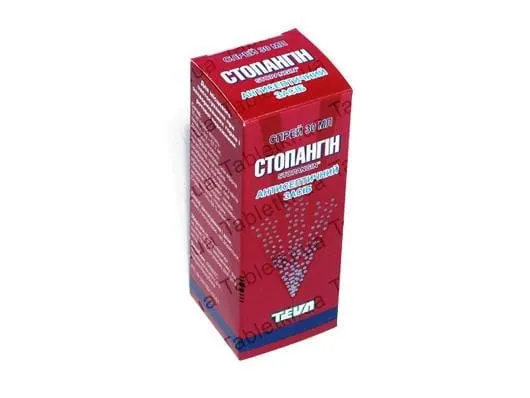
STOPANGIN
UkraineThe drug is used for the disinfection of the oral cavity and throat in cases of inflammation (tonsillitis, pharyngitis, stomatitis, gingivitis, glossitis, aphthae), as well as to eliminate bad breath. It is also used before and after oral surgical interventions or as an adjunct in the treatment of tonsillitis with antibiotics.
Frequently asked questions
How should Stopangin be taken correctly?
Adults and children from 8 years of age should dissolve the preparation in the oral cavity 2–3 times a day after meals or between meals. When using the spray, hold your breath while directing the stream toward the relevant area of the throat. The solution should not be inhaled or swallowed.
Who should not use this drug?
Contraindications include hypersensitivity to the components of the composition, dry atrophic pharyngitis, laryngitis, bronchial asthma, or other respiratory diseases. The drug should not be used in children under 8 years of age, pregnant women, or breastfeeding women. Caution should be exercised in patients with epilepsy and liver diseases.
What are the possible side effects of Stopangin?
Possible allergic reactions (laryngeal edema, rash, itching), changes in taste or smell, irritation, burning, or coating in the mouth. Dry mouth, pain upon swallowing, nausea, or vomiting (if the drug is accidentally swallowed), cough, or shortness of breath may also occur. If inflammation worsens, treatment should be discontinued.
Can you drive after use?
Drivers are not recommended to operate a vehicle for 30 minutes after using the drug, as it contains ethanol.
Can the drug be combined with other agents?
Interaction with other antiseptic agents is possible. Hexetidine may lose its efficacy when in contact with alkaline solutions. Consult a physician before simultaneous administration of any other medications.
Instructions for use
INSTRUCTIONS FOR MEDICAL USE OF THE MEDICINAL PRODUCT STOPANGIN® (STOPANGIN®)
Composition:
Active substance: hexetidine;
1 ml of spray contains 1.92 mg of hexetidine;
Excipients: sodium saccharin monohydrate, star anise essential oil, eucalyptus essential oil, bitter orange flower essential oil, peppermint essential oil, levomenthol, methyl salicylate, glycerol (85%), ethanol 96%.
Pharmaceutical form. Oral spray.
Main physicochemical properties: clear, colorless or almost colorless liquid with a characteristic odor.
Pharmacotherapeutic group. Medicinal products used in throat disorders. Antiseptics. ATC code R02A A20.
Pharmacological properties.
Pharmacodynamics.
Stopangin is a disinfectant agent with moderate anesthetic action. The main active component, hexetidine, exhibits bactericidal and fungicidal effects. The antimicrobial action of hexetidine is achieved through competitive inhibition of thiamine pyrophosphate production, a coenzyme essential for microbial life processes. By acting on the glycolytic process, oxidation of food residues in the oral cavity is reduced. Hexetidine and, to some extent, essential oils contribute to the therapeutic effect of the product with a mild local anesthetic action.
Pharmacokinetics.
After application by the recommended route, absorption through the mucous membrane is negligible, although certain components contained in it (e.g., methyl salicylate) may be absorbed to a greater extent.
Clinical characteristics.
Indications.
− Disinfection of the oral cavity and pharynx in inflammatory and infectious diseases: tonsillitis, pharyngitis, gingivitis, periodontosis, stomatitis, glossitis, and aphthae;
− disinfection before and after tonsillectomy, tooth extraction, and other surgical interventions in the oral cavity;
− elimination of unpleasant oral odor;
− adjunctive medicinal agent in antibiotic treatment of streptococcal angina.
Contraindications.
Hypersensitivity to hexetidine, eucalyptus oil, levomenthol, peppermint oil, or to any other component of the drug.
Dry pharyngitis of atrophic type.
Laryngitis (due to the risk of laryngospasm).
Patients with bronchial asthma or any other respiratory tract diseases associated with existing airway hypersensitivity. Inhalation may cause bronchoconstriction.
Interaction with other medicinal products and other forms of interaction.
Interaction with other antiseptics is possible. Hexetidine may be inactivated by alkaline solutions.
Interactions with other drugs have not been described.
If simultaneous use of any other agents is necessary, consult a physician.
Special precautions for use
Avoid contact with the eyes. The product should not be inhaled or swallowed.
Therefore, it may be used in children aged 8 years and older only if they do not resist a foreign object (applicator) in the mouth and are able to hold their breath during administration.
The product should be used with caution in patients with epilepsy. The product may lower the epileptic threshold and provoke seizures in children.
The product contains ethanol and therefore should be administered with caution in patients with liver disease.
If inflammation worsens, treatment with the product should be discontinued and medical advice should be sought.
There is a risk of laryngospasm in children due to the presence of levomenthol in the formulation.
Use with caution in patients with allergic reactions, including bronchial asthma, especially in patients with hypersensitivity to acetylsalicylic acid.
Use during pregnancy or breastfeeding
There are no data from studies on the ability of hexetidine to cross the placenta or be excreted in human breast milk; therefore, the product should not be used during pregnancy or breastfeeding.
Effects on ability to drive or operate machinery
This product does not impair the ability to drive a vehicle or operate machinery. However, drivers are advised not to drive for 30 minutes after using the product. The product contains 80% by volume of 96% ethanol.
One dose contains up to 0.1 g of ethanol.
Method of Administration and Dosage
Adults and children aged 8 years and older
Stopangin, spray, is a topical preparation intended for use in the oral cavity.
The medication is administered in measured doses from the bottle equipped with a mechanical atomizer and an oral applicator (Fig. A1 or A2).
If the oral applicator is enclosed in a polyethylene bag (A2), cut the bag with scissors or another suitable tool and remove the applicator (Fig. B2).
Before use, the oral applicator should be rinsed with warm water and inspected for damage. A damaged applicator must not be used.
Remove the protective cap from the mechanical atomizer.
Attach the applicator to the bottle (Fig. B3).
Press the pump approximately 5 times until the solution reaches the atomizer and begins to spray upon actuation.
Insert the applicator tube into the oral cavity, hold your breath, and press once, directing the spray stream onto the affected areas of the throat on the right and left sides. During administration, the bottle should be held vertically.
Always use only the applicator supplied in the packaging with this medicinal product.
Do not inhale or swallow the sprayed solution. Avoid contact of the medication with the eyes.
Repeat the procedure 2–3 times daily. The medication should be used after meals or between meals.
The duration of treatment is determined individually by a physician, depending on the severity and clinical course of the disease.
Children
Do not use the medication in children under 8 years of age.
Overdose
Symptoms of overdose have not been observed.
However, ingestion of a sufficient amount of the spray may lead to alcohol intoxication due to the presence of ethanol.
Side effects.
Immune system disorders: hypersensitivity reactions, including angioneurotic edema, laryngospasm, laryngeal edema, which together with bronchospasm may lead to respiratory impairment.
Skin and subcutaneous tissue disorders: skin rashes, allergic contact dermatitis, pruritus, urticaria.
General disorders and administration site conditions: ageusia, dysgeusia, altered sense of smell, altered sense of taste for up to 48 hours (sweet taste may change twice to bitter taste), paresthesia of the mucous membrane; inflammation, hyperemia, swelling, diphtheria-like membrane, blisters, ulcers and hemorrhages, irritation of the tongue and/or oral mucosa, pain, sensation of heat, burning sensation in the mouth, decreased sensitivity.
Gastrointestinal disorders: dry mouth, pain on swallowing, increased salivary glands, dysphagia, reversible discoloration of teeth and tongue. Gastrointestinal disturbances, primarily nausea and vomiting, may occur if the product is accidentally swallowed.
Respiratory, thoracic and mediastinal disorders: cough, dyspnea.
If any adverse reactions occur, discontinue use of the product and consult a physician immediately.
Shelf life. 2 years.
Storage conditions.
Store container in the original box to protect from light, at a temperature not exceeding 25 °C, in a place inaccessible to children.
Packaging.
30 ml in a bottle; 1 bottle with a mechanical spray pump, oral applicator, and a spray-protecting cap in a carton.
Availability. Over-the-counter.
Manufacturer. Teva Czech Industries s.r.o.
Manufacturer's address and place of business.
Ostravska 305/29, Komarov, 747 70 Opava, Czech Republic.
Similar drugs
The original data is available in the language of the country of manufacture.
Data source: State Register of Medicinal Products of Ukraine
Data last verified: August 13, 2026