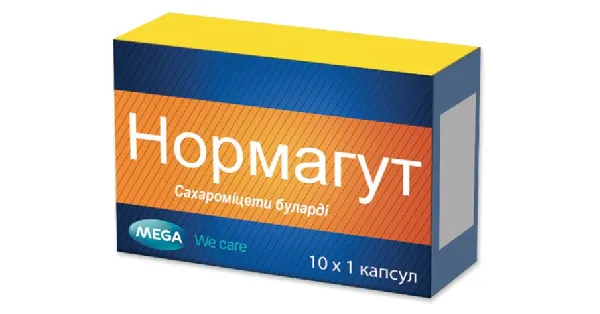
NORMAGUT
UkraineThe drug is used for the prevention and treatment of diarrhea (acute viral or bacterial, as well as traveler's diarrhea), colitis caused by antibiotic use, intestinal dysbiosis, irritable bowel syndrome, and pseudomembranous colitis.
Frequently asked questions
How should Normagut be taken correctly?
Capsules should be taken orally, swallowing with a sufficient amount of water. For adults and children aged 12 years and older, it is recommended to take 1–2 capsules 1–2 times daily. For children aged 2 to 12 years, take 1 capsule 1–2 times daily. If a child under 6 years of age has difficulty swallowing the capsule, it can be opened and the contents mixed with 50 ml of room-temperature water immediately before consumption.
Who should not take this drug?
The drug is contraindicated in individuals with hypersensitivity to yeast or other components of the composition, as well as patients with an indwelling central venous catheter. Due to the presence of lactose, it is not recommended for those with galactose intolerance or lactase deficiency.
What are the possible side effects of Normagut?
Abdominal bloating and short-term discomfort in the upper abdomen (epigastrium) are possible. In case of individual intolerance, allergic reactions may occur: rash, itching, Quincke's edema, shortness of breath, or anaphylactic shock. If such symptoms develop, use should be discontinued immediately.
Can the drug be taken with other medicines?
The drug must not be taken simultaneously with antifungal agents. An increase in blood pressure is also possible if taken together with monoamine oxidase (MAO) inhibitors.
Can the drug be used during pregnancy and breastfeeding?
During pregnancy, it is advisable to avoid using the drug as a precautionary measure. During breastfeeding, use is only possible under medical supervision.
When should you consult a doctor?
If diarrhea persists for more than 2 days, if blood appears in the stool, or if body temperature increases, it is essential to consult a physician.
Instructions for use
INSTRUCTIONS FOR MEDICAL USE OF THE MEDICINAL PRODUCT NORMAGUT
Composition:
Active substance: lyophilized dry yeast Saccharomyces boulardii;
One capsule contains 250 mg of lyophilized dry yeast Saccharomyces boulardii with a minimum of 10^10 cells/g, comprising: 221.25 mg of yeast and 28.75 mg of lactose monohydrate;
Excipients: anhydrous lactose, magnesium stearate, gelatin, titanium dioxide (E 171), yellow iron oxide (E 172), copper complexes of chlorophyllins (E 141), purified water.
Pharmaceutical form. Capsules.
Main physicochemical characteristics: elongated, glossy, opaque, hard gelatin capsules with a light green body and a yellow cap. The capsules contain granulated powder of yellow-gray color with a characteristic odor.
Pharmacotherapeutic group.
Antidiarrheal microbial preparations. ATC code A07F A02.
Pharmacological properties.
Pharmacodynamics.
Normagut promotes restoration of normal intestinal microflora and exerts a pronounced etiopathogenetic antidiarrheal effect. As it passes through the gastrointestinal tract, Saccharomyces boulardii provides a biological protective effect on normal intestinal microflora.
Main mechanisms of action of Saccharomyces boulardii:
- Direct antagonism (antimicrobial activity) related to the ability of Saccharomyces boulardii to inhibit the growth of pathogenic and opportunistic microorganisms and fungi that disrupt intestinal microbiocenosis, such as Clostridium difficile, Clostridium pneumoniae, Staphylococcus aureus, Pseudomonas aeruginosa, Candida krusei, Candida pseudotropicalis, Candida albicans, Salmonella typhi, Salmonella enteritidis, Escherichia coli, Shigella dysenteriae, Shigella flexneri, Klebsiella, Proteus, Vibrio cholerae, as well as Entamoeba histolytica, Giardia lamblia; Enterovirus, Rotavirus;
- Antitoxic activity, due to the production of proteases that degrade toxins and act on the enterocyte receptor to which the toxin binds (particularly with regard to cytotoxin A of Clostridium difficile);
- Antisecretory effect (reduction of water and electrolyte secretion into the intestinal lumen) achieved by decreasing cAMP production in enterocytes;
- Enhancement of nonspecific immune defense through increased production of IgA and secretory components of other immunoglobulins;
- Enzymatic activity due to increased activity of small intestinal disaccharidases (lactase, sucrase, maltase);
- Trophic effect on the mucosa of the small intestine due to the release of spermine and spermidine.
Genetically determined resistance of Saccharomyces boulardii to antibiotics allows its concomitant use with antibiotics to protect the normal microbiocenosis of the gastrointestinal tract.
Pharmacokinetics.
After administration of Normagut, a high concentration of Saccharomyces boulardii is rapidly achieved in the colon and maintained for 24 hours. Saccharomyces boulardii do not penetrate into the systemic circulation or mesenteric lymph nodes. After completion of treatment, Saccharomyces boulardii are completely eliminated in feces within 3–5 days.
Clinical characteristics.
Indications.
- Prevention and treatment of colitis and diarrhea associated with antibiotic use.
- Intestinal dysbiosis.
- Acute and chronic bacterial diarrhea.
- Acute viral diarrhea.
- Traveler’s diarrhea.
- Irritable bowel syndrome.
- Pseudomembranous colitis and diseases caused by Clostridium difficile.
- Diarrhea associated with long-term enteral nutrition.
Contraindications.
Hypersensitivity to yeast or to any component of the medicinal product.
Contraindicated in patients with an established central venous catheter.
Interaction with other medicinal products and other forms of interaction.
Do not take simultaneously with antifungal agents when administered orally or systemically.
Concomitant use with monoamine oxidase inhibitors (MAOIs) may lead to increased arterial blood pressure.
Special precautions for use
If diarrhea lasts longer than 2 days, or if blood is present in the stool, or if body temperature is elevated, a physician should be consulted.
In gastrointestinal disorders, especially in children, it is essential to ensure adequate intake of fluids and electrolytes as the most important therapeutic measures.
Saccharomyces boulardii is a live microorganism which, under unfavorable conditions—such as in patients with immunodeficiency—may cause systemic fungal infections due to mechanical translocation of yeast from the gastrointestinal tract into the bloodstream or through a central venous catheter. Isolated cases of such fungal infections have been reported in patients with central venous catheters who were simultaneously treated for gastrointestinal disorders.
Due to the risk of systemic colonization by Saccharomyces boulardii, Normagut should be administered to patients with weakened immune systems (e.g., HIV infection, organ transplantation, leukemia, malignant tumors, radiation therapy, chemotherapy, or prolonged use of high-dose corticosteroids) only after consultation with a physician.
If microbiological examination of feces is performed during or shortly after Normagut treatment, the laboratory must be informed that the patient is taking Normagut, as false-positive results may occur.
The preparation contains lactose and therefore should not be used in patients with rare hereditary forms of galactose intolerance, lactase deficiency, or glucose-galactose malabsorption syndrome.
Use during pregnancy or breastfeeding
To date, no clinically significant teratogenic or fetotoxic effects have been identified. However, monitoring of pregnancies in women who have taken this medicinal product is insufficient to exclude any risk. Therefore, as a precautionary measure, it is advisable to avoid using the drug during pregnancy.
During breastfeeding, the drug may be used under medical supervision.
Ability to influence reaction rate when driving or operating machinery
No effect.
Method of Administration and Dosage
Take orally, swallowing with a sufficient amount of water.
For adults and children aged 12 years and older: 1–2 capsules 1–2 times daily.
For children aged 2 to 12 years: 1 capsule 1–2 times daily.
For children under 6 years of age: the capsule should be opened and its contents mixed into 50 ml of water at room temperature (20–25 °C). The capsule should be opened and mixed with water immediately before administration.
The dosage and duration of treatment are determined by a physician depending on the nature and course of the disease.
Recommended treatment durations:
- Acute diarrhea: 3–5 days.
- Treatment of dysbiosis, chronic diarrhea syndrome, irritable bowel syndrome: 10–14 days.
- Prevention and treatment of antibiotic-associated diarrhea and pseudomembranous colitis: Normagut should be administered concomitantly with antibiotics, starting from the first day of antibiotic therapy and continuing until the end of antibiotic treatment.
- Traveler's diarrhea: 1 capsule daily. Administration should begin 5 days before arrival at the travel destination and continue throughout the entire trip, up to the day of return from the travel destination. The medication should be taken every morning on an empty stomach. Maximum duration of use – 30 days.
Children.
Normagut can be administered to children aged 2 years and older.
Overdose.
Slight exceeding of the therapeutic dose does not cause adverse reactions. In case of significant overdose, symptoms such as flatulence, nausea, vomiting, or increased intensity of adverse reactions may occur.
Treatment: gastric lavage, administration of activated charcoal and/or symptomatic therapy.
Side effects.
Gastrointestinal side effects: transient epigastric discomfort not requiring discontinuation of the drug, abdominal bloating.
In case of individual intolerance to the drug, hypersensitivity reactions are possible, including skin rashes, pruritus, local and generalized exanthema, Quincke's edema, dyspnea, anaphylactic shock, urticaria, and anaphylactic reactions. If allergic reactions occur, discontinue use of the drug.
Shelf life: 2 years.
Storage conditions.
Store in original packaging at a temperature not exceeding 25 °C, in a place inaccessible to children.
Packaging.
10 capsules per blister; 1 or 3 blisters per cardboard package.
Dispensing category.
Over-the-counter.
Manufacturer.
Ardeypharm GmbH.
Manufacturer's address and place of business.
Loerfeldstrasse 20, 58313 Herdecke, North Rhine-Westphalia, Germany.
Similar drugs
| Brand name | Dosage form | Active substance / Dosage | Manufacturer |
|---|---|---|---|
| ENTEROL 250 | capsules |
|
Biocodex |
The original data is available in the language of the country of manufacture.
Data source: State Register of Medicinal Products of Ukraine
Data last verified: August 13, 2026