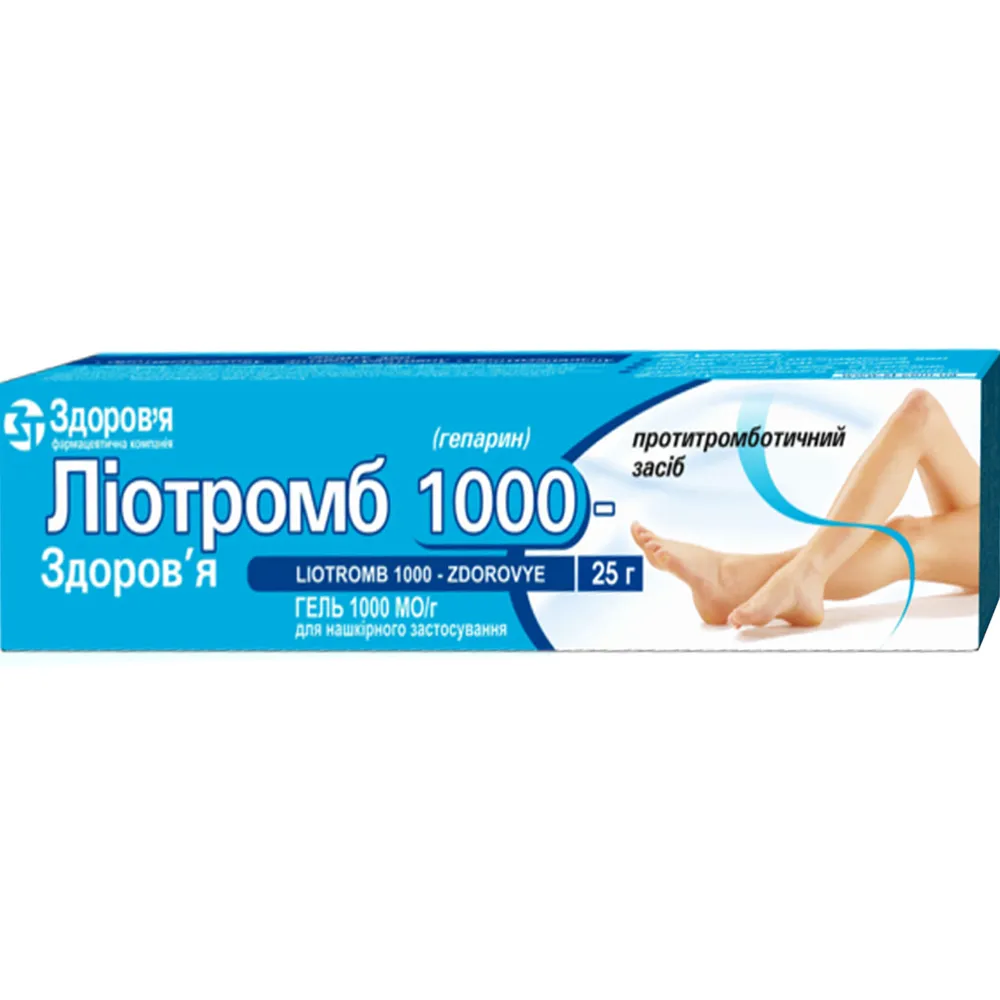
LYOTROMB 1000-ZDOROVYA
UkraineThe drug is used for the treatment of superficial vein diseases (varicose veins, thrombophlebitis, phlebothrombosis), as well as for injuries, bruises, swelling, hematomas, and muscle or ligament strains.
Frequently asked questions
How should the gel be used correctly?
Adults should apply 3–10 cm of the gel to the affected area of the skin and gently rub it in 1–3 times daily. The duration of the course should be determined by a physician. When treating phlebitis, the gel should not be rubbed into the skin.
When should Lyotromb 1000-zdorovya not be used?
The drug is contraindicated in cases of hypersensitivity to its components, the presence of open or infected wounds, bleeding ulcers, hemophilia, thrombocytopenia, purpura, and a tendency to bleeding.
What are the possible side effects?
Allergic reactions are possible: redness, itching, swelling, burning, rash, urticaria, or edema. Small blisters may also appear, which resolve quickly after discontinuing the use of the gel.
Can this gel be combined with other medicines?
It is not recommended to use the drug together with anticoagulants or topical agents containing tetracycline, hydrocortisone, or salicylic acid. Additionally, heparin may prolong the effect of oral anticoagulants.
Can the drug be used by children?
Due to limited experience, the drug should not be prescribed to children.
What should be done if the gel accidentally enters the mouth?
Accidental swallowing may cause nausea or vomiting. In such a case, it is necessary to rinse the stomach and, if necessary, seek medical attention.
Instructions for use
INSTRUCTIONS FOR MEDICAL USE OF THE MEDICINAL PRODUCT LIOTROMB 1000-ZDOROVYE (LIOTROMB 1000-ZDOROVYE)
Composition:
Active substance: heparin;
1 g of the preparation contains 1000 IU of sodium heparin;
Excipients: ethanol 96%, carbomer, tromethamine, methylparaben (E 218), peppermint oil, purified water.
Pharmaceutical form. Gel.
Main physicochemical characteristics: colorless or slightly yellowish, almost transparent gel of viscous consistency with a specific odor.
Pharmacotherapeutic group. Agents used in varicose veins.
ATC code C05BA03.
Pharmacological properties.
Pharmacodynamics.
When applied to the skin, the medicinal product exerts anti-edematous, anti-exudative, anti-inflammatory, and anticoagulant effects.
Pharmacokinetics.
Heparin is detectable in blood plasma within 24 hours after administration of the drug, with maximum heparin concentration reached after 8 hours. Elimination occurs predominantly via the kidneys. The product applied to the skin does not affect blood coagulation parameters.
Clinical characteristics.
Indications.
Treatment of superficial venous diseases such as varicose veins and associated complications, phlebothrombosis, thrombophlebitis, superficial periphlebitis. Postoperative varicose phlebitis, complications following surgical removal of subcutaneous veins of the lower limbs. Injuries and contusions, infiltrates and localized edema, subcutaneous hematomas. Injuries and strains of musculotendinous and capsuloligamentous structures.
Contraindications.
Hypersensitivity to heparin or to any other component of the preparation; bleeding leg ulcers; open and/or infected wounds; hemorrhagic diathesis; purpura; thrombocytopenia; hemophilia. Tendency to bleeding.
Interaction with other medicinal products and other forms of interaction.
Heparin use may potentiate prolongation of prothrombin time in patients receiving oral anticoagulants. The preparation should not be used concomitantly with topical medicinal products, for example those containing tetracycline, hydrocortisone, salicylic acid, as well as with anticoagulants.
Special precautions for use.
In patients presenting hemorrhagic symptoms, careful consideration should be given to the possibility of using the medicinal product. The drug should not be administered in the presence of bleeding, applied to open wounds, infected skin areas with purulent processes, mucous membranes, eyes or areas around the eyes, ulcers, or blisters. In case of coagulation disorders, the gel should not be applied to large skin areas. When treating phlebitis, this medicinal product should not be rubbed into the skin.
The presence of methylparaben (E 218) in the formulation may cause allergic reactions (possibly delayed).
Use during pregnancy or breastfeeding.
Data on the use of the drug during pregnancy or breastfeeding are lacking.
Ability to influence reaction rate while driving or operating machinery.
Does not affect.
Dosage and Administration.
Adults should apply the drug 1–3 times daily. Apply 3–10 cm of gel to the affected area of skin and gently rub in. The duration of treatment is determined individually by the physician, depending on the severity of the disease.
Children. Due to limited experience with the use of the drug, it should not be prescribed to children.
Overdose.
Cases of overdose have not been reported to date. Because of negligible systemic absorption, the risk of overdose with topical application is absent. Following accidental oral ingestion of the gel (e.g., by a child), nausea or vomiting may occur. In such cases, gastric lavage should be performed, and symptomatic therapy administered if necessary. The effect of heparin can be neutralized with protamine sulfate.
Side effects
Allergic reactions to heparin when applied to the skin occur very rarely (less than 1 in 10,000 patients receiving treatment). In individual cases (frequency unknown – cannot be estimated from available data), hypersensitivity reactions may occur, especially with prolonged use, such as redness, itching, and swelling of the skin, burning sensation, skin rashes, urticaria, angioneurotic edema, hemorrhages, and sometimes the appearance of small pustules, vesicles, or blisters, which quickly resolve after discontinuation of the product. When applied to large areas of skin, systemic adverse reactions are possible.
Reporting of suspected adverse reactions
Reporting of suspected adverse reactions after marketing authorization of the medicinal product is important. It allows continued monitoring of the benefit-risk balance of the medicinal product. Healthcare professionals should report any suspected adverse reactions.
Shelf life. 3 years.
Storage conditions. Store in the original packaging at a temperature not exceeding 25 °C.
Keep out of reach of children.
Packaging. Tubes of 25 g, 50 g, or 100 g in a carton box.
Supply classification. Over-the-counter (without prescription).
Manufacturer.
LIMITED LIABILITY COMPANY "CORPORATION "ZDOROVTIA".
Manufacturer's address and place of business.
22, Shevchenka Street, Kharkiv, Kharkiv region, 61013, Ukraine.
Similar drugs
The original data is available in the language of the country of manufacture.
Data source: State Register of Medicinal Products of Ukraine
Data last verified: August 13, 2026