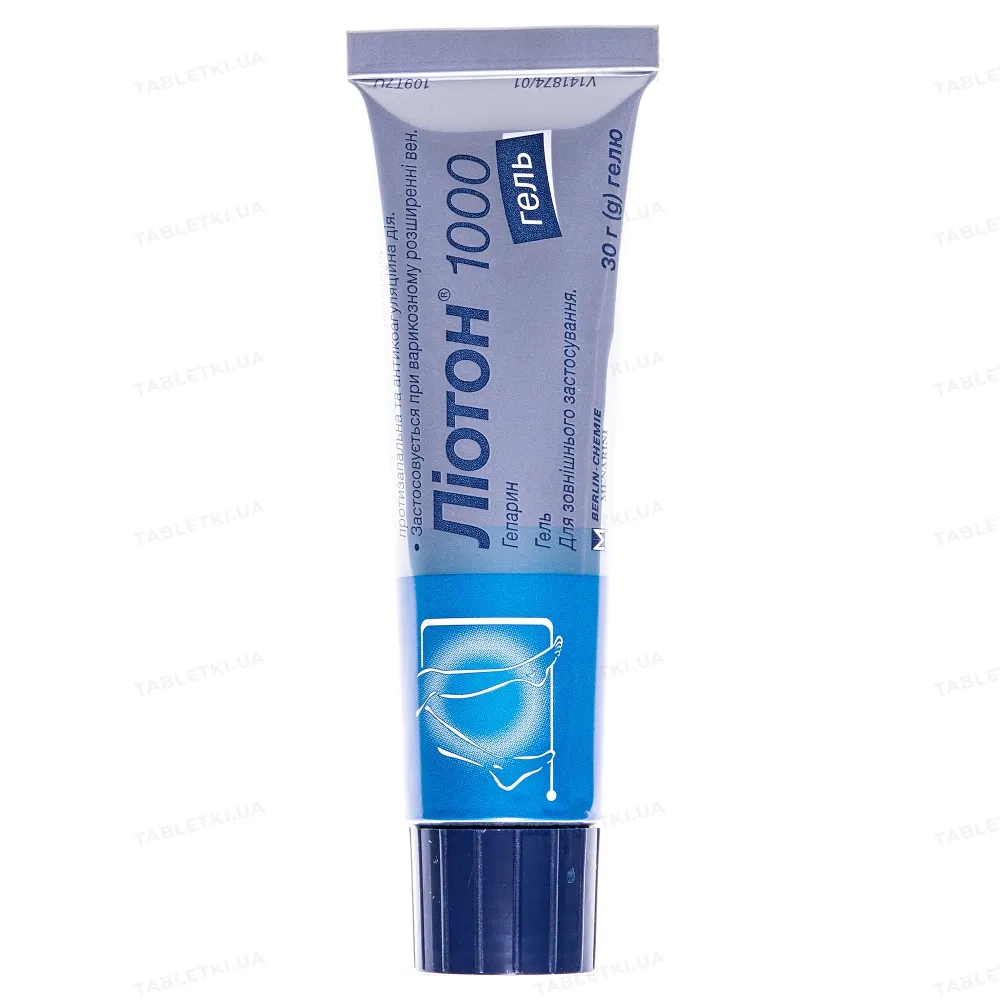
LIOTON® 1000 GEL
UkraineThe drug is used for the treatment of superficial vein diseases (varicose veins, thrombophlebitis, phlebothrombosis), as well as for injuries, bruises, edema, hematomas, and muscle or ligament strains.
Frequently asked questions
How should Lioton® 1000 gel be used correctly?
Adults should apply 3–10 cm of the gel to the affected area of the skin 1–3 times daily, spreading it with light massage movements. When treating phlebitis, the gel should not be rubbed into the skin.
Who should not use this drug?
Use is contraindicated in cases of hypersensitivity to the components, the presence of bleeding ulcers on the legs, open or infected wounds, tendency to bleeding, hemophilia, thrombocytopenia, and purpura. The gel should also not be applied to mucous membranes, into the eyes, or to areas with purulent processes.
What are the possible side effects of Lioton® 1000 gel?
Possible allergic reactions include: redness, itching, swelling, rash, urticaria, or a burning sensation. Due to the ethanol content, a burning sensation may occur on damaged skin.
Can the gel be combined with other medicines?
It is not recommended to use the drug together with topical agents containing tetracycline, hydrocortisone, or salicylic acid, or with anticoagulants. The intake of oral anticoagulants may prolong blood clotting time.
Can the product be used by children?
Due to limited experience, the drug should not be prescribed to children.
Does the drug affect the ability to drive a vehicle?
No, the use of the gel does not affect the ability to drive vehicles or operate machinery.
Instructions for use
INSTRUCTIONS FOR MEDICAL USE OF THE MEDICINAL PRODUCT LIOTON® 1000 GEL
Composition:
Active substance: 1 g of gel contains 1000 IU of sodium heparin;
Excipients: ethanol 96%, carbomer, triethanolamine, methylparaben (E 218), propylparaben (E 216), neroli fragrance (contains linalool, d-limonene, geraniol, citral, citronellol and farnesol), lavender oil (contains linalool, d-limonene, geraniol and coumarin), purified water.
Pharmaceutical form. Gel.
Main physicochemical characteristics: colorless or slightly yellowish, almost transparent gel of viscous consistency, with a pleasant odor.
Pharmacotherapeutic group.
Agents used in varicose veins. Heparins or heparinoids for topical use. ATC code C05BA03.
Pharmacological properties.
Pharmacodynamics.
When applied to the skin, Lioton® 1000 gel exerts anti-edematous, anti-exudative, anti-inflammatory, and anticoagulant effects.
Pharmacokinetics.
Heparin is detectable in blood plasma for 24 hours after application of the product, with peak heparin concentration being reached after 8 hours. Elimination occurs predominantly via the kidneys. Lioton® 1000 gel applied to the skin does not affect blood coagulation parameters.
Clinical characteristics.
Indications.
Treatment of superficial venous diseases such as varicose veins and associated complications, phlebothrombosis, thrombophlebitis, superficial periphlebitis. Postoperative varicose phlebitis, complications following surgical removal of subcutaneous veins of the lower limbs. Injuries and contusions, infiltrates and localized edema, subcutaneous hematomas. Injuries and strains of muscle-tendon and capsulo-ligamentous structures.
Contraindications.
Hypersensitivity to heparin or to any other components of the drug, bleeding leg ulcers, open and/or infected wounds, hemorrhagic diathesis, purpura, thrombocytopenia, hemophilia, tendency to bleeding.
Interaction with other medicinal products and other forms of interaction.
Heparin use may potentiate prolongation of prothrombin time in patients receiving oral anticoagulants. The drug should not be used concomitantly with topical medicinal products, for example those containing tetracycline, hydrocortisone, salicylic acid, or with anticoagulants.
Special precautions for use.
If a patient has hemorrhagic symptoms, careful consideration should be given to the possibility of using Lioton® 1000 gel. The product should not be administered in cases of bleeding, applied to open wounds, mucous membranes, infected skin areas, or areas with purulent processes, nor should it be applied to the eyes or the surrounding areas, ulcers, or blisters. In cases of coagulation disorders, it is not recommended to apply the gel over large skin areas. When treating phlebitis, this medicinal product should not be rubbed into the skin.
Lioton® 1000 gel contains methylparaben (E 218) and propylparaben (E 216) as preservatives, which may cause allergic reactions (possibly delayed).
The medicinal product contains aromatic components including citral, citronellol, coumarin, d-limonene, farnesol, geraniol, and linalool. Citral, citronellol, coumarin, d-limonene, farnesol, geraniol, and linalool may cause allergic reactions.
Each gram of gel contains 233 mg of ethanol.
Ethanol may cause a burning sensation on damaged skin.
Use during pregnancy or breastfeeding.
There are no data available regarding the use of the medicinal product during pregnancy or breastfeeding.
Ability to affect reaction speed when driving or operating machinery.
The product does not affect the ability to drive or operate machinery.
Method of Administration and Dosage
For adults, apply the product 1–3 times daily. Apply 3–10 cm of gel to the affected area of skin and spread gently with light massaging movements. The duration of treatment should be determined individually by a physician, depending on the severity of the disease.
Children. Due to limited experience with the product, it should not be administered to children.
Overdose.
Cases of overdose have not been reported to date. Because of negligible systemic absorption, there is no risk of overdose when the product is used topically. However, following accidental oral ingestion of the gel (e.g., by a child), nausea or vomiting may occur. In such a case, gastric lavage should be performed, and symptomatic therapy administered if necessary. The effect of heparin can be neutralized with protamine sulfate.
Side effects.
Allergic reactions to heparin when applied to the skin occur very rarely (less than 1 in 10,000 patients treated). However, in individual cases (frequency unknown: cannot be estimated from available data), hypersensitivity reactions may occur, especially with prolonged use, such as redness, itching, skin swelling, burning sensation, skin rash, urticaria, angioneurotic edema, hemorrhages, and infrequently, the appearance of small pustules, vesicles or blisters, which quickly resolve after discontinuation of the product. Systemic side effects are possible when applied to large areas of skin.
Reporting of suspected side effects.
Reporting suspected adverse reactions after the medicinal product has been authorized is important. It allows continued monitoring of the benefit-risk balance of the medicinal product. Healthcare professionals should report any suspected adverse reactions.
Shelf life. 5 years. After first opening – 6 months.
Do not use the medicinal product after the expiry date stated on the packaging.
Storage conditions.
Store at a temperature not exceeding 25°C. Keep out of the reach of children.
Packaging.
Tubes of 30 g, 50 g, or 100 g of gel; 1 tube in a cardboard box.
Supply classification.
Over-the-counter (without prescription).
Manufacturer.
A. Menarini Manufacturing Logistics and Services S.r.l.
Manufacturer's address and location of operations.
Via Sette Santi 3, 50131 Florence (FI), Italy.
Marketing Authorization Holder.
A. Menarini Industrie Farmaceutiche Riunite S.r.l.
Address of the Marketing Authorization Holder.
Via Sette Santi 3, 50131 Florence, Italy.
Similar drugs
The original data is available in the language of the country of manufacture.
Data source: State Register of Medicinal Products of Ukraine
Data last verified: August 13, 2026