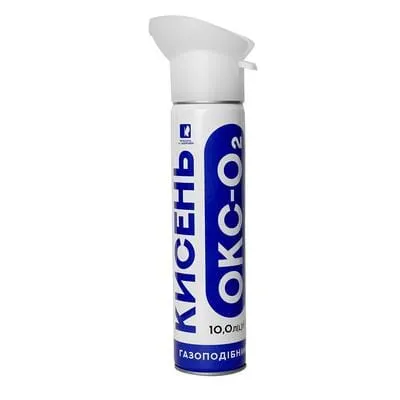
OXYGEN MEDICINAL GASEOUS
UkraineIt is used for diseases accompanied by oxygen deficiency in the body (hypoxia), such as pneumonia, bronchial asthma, pulmonary edema, heart failure, and other respiratory and cardiovascular diseases. It is also required in cases of carbon monoxide or asphyxiant gas poisoning, during anesthesia, and in the postoperative period.
Frequently asked questions
How should oxygen medicinal gaseous be administered correctly?
In hospitals, inhalation is usually performed through special masks, while oxygen pillows are used at home. Most commonly, oxygen is inhaled in a mixture with air (40–60%) at a rate of 4–5 liters per minute. The use of humidifiers is recommended. For special pressurized procedures (hyperbaric oxygen therapy), hyperbaric chambers are used.
What are the possible side effects of oxygen medicinal gaseous?
In some individuals, dizziness, nausea, coughing, irritation or dryness of the mucous membranes, as well as individual hypersensitivity to the drug may occur. In case of overdose, vomiting and seizures are possible.
Who should not use this drug?
For hyperbaric oxygen therapy (under pressure), contraindications include acute respiratory diseases, a history of epileptic seizures, severe forms of arterial hypertension, the presence of cavities in the lungs, neoplasms, and hypersensitivity to oxygen.
Can oxygen be used during pregnancy or breastfeeding?
Pregnant women are recommended to use oxygen only in severe cases of respiratory failure if the gestational age exceeds 5 months. Breastfeeding must be discontinued during the use of the drug.
How does oxygen interact with other medicines?
Some drugs, such as nitrates, adrenoblockers, calcium ion antagonists, and nootropics, may promote better oxygen utilization by tissues and reduce its deficiency in the body.
Does the drug affect the ability to drive a vehicle?
Due to the possible occurrence of dizziness, one should refrain from driving a vehicle or performing work that requires high concentration and rapid reaction.
Instructions for use
Table of contents
INSTRUCTIONS FOR MEDICAL USE OF MEDICINAL PRODUCT. Medical oxygen gas
Composition:
active substance: oxygen with volume fraction not less than 99.5%.
Medicinal form: Gas.
Main physicochemical properties: colorless odorless and tasteless gas, slightly soluble in water (approximately 1:32).
Pharmacotherapeutic group: Medical gases. ATC code V03A N01.
Pharmacological Properties
Pharmacodynamics. Oxygen belongs to the group of anti-hypoxia agents and antioxidants. It has the ability to bind with blood hemoglobin in the lungs and, in a complex compound with heme, to be transported to the body's cells. It is a strong oxidizing agent and an essential element in metabolic transformations of carbohydrates, proteins, and fats into energy required to sustain vital functions of the organism.
Pharmacokinetics. In the human body, oxygen diffuses through lung tissue into the blood, where it binds to hemoglobin in erythrocytes and partially dissolves in plasma. Subsequently, oxygen is transported to body tissues, where it diffuses into the tissue interstitial fluid. The final stage of respiration is the utilization of oxygen in biological oxidation and the generation of energy within cells; oxygen is then released via the lungs in a combined form as carbon dioxide (CO2).
Clinical Characteristics
Indications
Conditions associated with hypoxia:
respiratory diseases:
- pneumonia;
- pulmonary edema;
- bronchial asthma;
- pneumosclerosis;
cardiovascular diseases:
- heart failure;
- coronary insufficiency.
Poisonings:
- carbon monoxide;
- hydrocyanic acid;
- suffocating gases.
Also used during general anesthesia in combination with inhalation anesthetics; in the postoperative period.
For the preparation of oxygen cocktails and foams.
Contraindications. For hyperbaric oxygenation, contraindications include acute respiratory diseases, history of epileptic seizures, impaired patency of auditory tubes and channels connecting the paranasal sinuses, presence of lung cavities, bronchopleural fistulas, severe forms of arterial hypertension, neoplasms, and increased individual sensitivity to oxygen.
Interaction with other medicinal products and other types of interactions. Nitrates, beta-blockers, calcium ion antagonists, and nootropic agents promote more economical tissue use of oxygen, its better utilization, and thereby reduce hypoxia and increase the body's resistance to oxygen deficiency.
Special precautions for use. In women during menstruation, oxygen should be used if necessary in severe cases of respiratory insufficiency under hemoglobin level monitoring.
Use with humidifiers is recommended.
Use during pregnancy or breastfeeding. During pregnancy, use after 5 months of gestation, taking into account the necessity of oxygen administration in severe cases of respiratory insufficiency.
Breastfeeding should be discontinued during the period of using the medicinal product.
Effect on ability to drive vehicles or operate machinery. Due to possible dizziness, refrain from driving a car or performing tasks requiring increased attention and rapid reaction.
Method of administration and dosage. In hospital settings, inhalations are most commonly administered via special rubber or plastic masks connected directly to steel oxygen cylinders.
In outpatient practice and at home, special rubber or plastic containers (bags) filled with oxygen or its mixture are more commonly used.
For hyperbaric oxygenation, i.e., oxygen delivery under increased pressure, special ventilated chambers, so-called hyperbaric chambers, are used, where oxygen is administered both by inhalation and through mucous membranes and skin.
Most commonly, oxygen is administered by inhalation as a mixture with air at a concentration of 40–60% at a flow rate of 4–5 liters per minute. A mixture called "carbogen," consisting of 95% oxygen and 5% carbon dioxide, is also used. The mixture should usually be administered humidified.
During hyperbaric oxygenation, oxygen is administered under pressure of 1.2–2 atm. For therapeutic purposes, 8–10 sessions are conducted.
Preparation of oxygen cocktails and foams: oxygen is mixed with food products, juices, herbal infusions.
Children. The medicinal product is used in pediatric practice.
Overdose. In case of overdose, nausea, vomiting, and seizures may occur. Treatment is symptomatic.
Adverse reactions. In some patients, individual increased sensitivity to oxygen and its mixtures, dizziness, nausea, increased dryness of mucous membranes, their irritation, and cough may occur.
If any adverse events occur, consult a physician.
Reporting of adverse reactions after drug registration is of great importance. It enables monitoring of the benefit-risk balance during use of this medicinal product. Medical and pharmaceutical professionals, as well as patients or their legal representatives, should report all suspected adverse reactions and lack of drug efficacy via the Automated Information System for Pharmacovigilance at the following link: https://aisf.dec.gov.ua
Shelf life. 18 months.
Storage conditions. Store protected from direct sunlight at temperatures from –50 to +50 °C.
Avoid contact with open flame, oils, and heat sources; prevent dropping or impact to cylinders and cryogenic gasifiers.
Packaging. Gas in compressed gas cylinders with volumes of 1.5 L, 2 L, 3 L, 5 L, 10 L, 40 L, 50 L, and from cryogenic gasifiers.
Prescription status. Prescription only.
Manufacturer. Limited Liability Company "MEDICAL-GAS".
Manufacturer's address and location of business activity:
13V, Novozavodska Street, Mykolaiv, Mykolaiv Oblast, 54000, Ukraine.
Date of last review.
Similar drugs
The original data is available in the language of the country of manufacture.
Data source: State Register of Medicinal Products of Ukraine
Data last verified: August 13, 2026