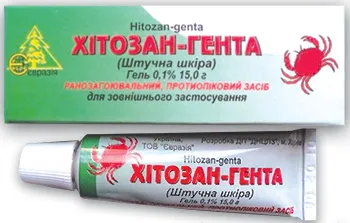
CHITOSAN-GENTA
UkraineThe drug is used for the treatment of wounds (in surgery and from domestic injuries), trophic ulcers, second- and third-degree burns, and frostbite. It is also used in dermatology to treat infectious skin diseases such as pyoderma, furuncles, dermatitis, and acne.
Frequently asked questions
How should Chitosan-genta be used correctly?
The gel is applied directly to the wound after it has been cleaned. During the first 5 days of treating a wound or skin infection, apply the gel 1-2 times daily. Once the wound has cleared, apply it once every 1-2 days. When treating burns, apply the gel 2-3 times per week. For large burns, the daily dose should not exceed 200 g.
What are the possible side effects of Chitosan-genta?
Allergic reactions, such as itching or skin redness, are possible. With prolonged use (over 14 days) over large areas of skin, absorption of the active substance may occur, which can cause dizziness, tinnitus, nausea, and may also affect kidney function or blood bilirubin levels.
Who should not use this drug?
The product should not be used by individuals with hypersensitivity to gentamicin or other components of the gel, nor in children under 2 years of age.
Can the drug be used by pregnant or breastfeeding women?
Pregnant and breastfeeding women are not recommended to apply the drug to large areas of skin due to the risk of systemic absorption.
What should be done if the gel gets into the eyes?
The eyes must be rinsed immediately with a large amount of water.
Does this gel interact with other medicines?
No significant incompatibility with other drugs has been identified. However, prolonged use over large areas of skin may increase the toxicity of other aminoglycoside antibiotics, polymyxin B, colistin, cephalordin, furosemide, and ethenoic acid.
Instructions for use
INSTRUCTIONS FOR MEDICAL USE OF THE MEDICINAL PRODUCT CHITOSAN-GENTAMICIN
Composition:
Active ingredient: gentamicin sulfate;
1 g of gel contains gentamicin sulfate 1 mg;
Excipients: chitosan base: chitosan-lactic acid complex, hydroxyethylcellulose, methylparahydroxybenzoate (E 218), propylene glycol, glycerol, purified water.
Medicinal form: Gel.
Main physicochemical characteristics: gel ranging from yellow to light brown color, homogeneous.
Pharmacotherapeutic group.
Antibiotics and chemotherapeutic agents for topical use in dermatology.
Gentamicin. ATC code D06AX07.
Pharmacological properties.
Pharmacodynamics.
Gentamicin is a broad-spectrum antibiotic of the aminoglycoside group. It exerts a pronounced bacteriostatic effect against gram-positive and gram-negative microorganisms: Enterobacteriaceae, Escherichia coli, Klebsiella, Haemophilus influenzae, indole-positive Proteus, Pseudomonas aeruginosa, Shigella, gram-positive cocci, including penicillinase-producing staphylococci. It shows moderate or strain-dependent activity against streptococci, pneumococci, gonococci, and Salmonella.
The gel base of the drug ensures complete solubility of gentamicin and its action at the site of injury. It has sorptive properties, absorbing wound exudate. The gel base forms a protective, air-permeable film on the affected surface, prevents infection from entering, and creates an artificial skin effect.
Pharmacokinetics.
Gentamicin poorly penetrates through intact skin and mucous membranes; therefore, it exerts practically no systemic effect.
Clinical characteristics.
Indications.
Used (as part of combination therapy):
- in surgery, for local treatment of wounds during the first and second phases of the wound process, for prevention and treatment of purulent complications;
- for treatment of trophic ulcers;
- in burn medicine: for treatment of second- and third-degree burns (II-III A) and frostbite;
- in dermatology: for treatment of infectious skin diseases (pyoderma, superficial folliculitis, furunculosis, dermatitis, acne) caused by bacteria sensitive to gentamicin;
- for treatment of minor wounds and superficial skin integrity disturbances resulting from domestic injuries.
Contraindications.
Hypersensitivity to gentamicin and to other components of the drug. Children under 2 years of age.
Interaction with other medicinal products and other forms of interaction.
No significant incompatibility reactions with drugs from other groups have been established. In cases of extensive wound surface areas and prolonged use, absorption (resorption) of gentamicin may occur, potentially increasing the risk of ototoxicity when used concomitantly with other aminoglycoside antibiotics, polymyxin B, colistin, cephaloridine, ethacrynic acid, and furosemide.
Special precautions.
With prolonged use (more than 14 days) over large areas of skin, especially in patients with chronic renal insufficiency, the possibility of systemic absorption effects of gentamicin should be considered: ototoxicity (dizziness, nausea, tinnitus), nephrotoxicity (increased blood urea and creatinine levels, decreased diuresis), and elevated serum bilirubin and transaminase levels.
Avoid contact with eyes! If the gel gets into the eyes, rinse thoroughly with plenty of water.
Use during pregnancy or breastfeeding.
The drug is not recommended for use over large skin areas in pregnant or breastfeeding women due to the potential for systemic absorption effects.
Effect on the ability to drive or operate machinery.
When applied to small skin areas within the recommended treatment duration, the drug does not affect reaction speed.
Dosage and Administration.
For topical use. For use in adults and children aged 2 years and older. Apply the gel directly to the wound surface after appropriate wound cleansing; if necessary, apply a sterile gauze dressing. If the dressing adheres to the wound surface during dressing changes, moisten it with 0.9% sodium chloride solution. This will rehydrate the gel, soften it, and allow the dressing to be removed easily.
During the first 5 days of treatment of wounds and infectious skin diseases, apply the gel 1–2 times daily. After wound debridement of purulent-necrotic material and appearance of granulation tissue, apply once every 1–2 days. For the treatment of burns, apply the gel 2–3 times per week.
The dose depends on the size of the wound surface. When treating extensive skin burns, the daily dose of gel should not exceed 200 g to avoid potential adverse effects due to possible systemic absorption of gentamicin.
The duration of treatment depends on the healing progress, as well as the type and severity of the condition, and typically lasts 7–14 days.
Children.
The drug may be used in children aged 2 years and older.
Overdose.
Excessive or prolonged use of gentamicin may lead to overgrowth of nonsusceptible microorganisms. If overgrowth of resistant microorganisms occurs, discontinue treatment with this drug and initiate appropriate alternative therapy.
Side effects.
Allergic reactions are possible, including hyperemia and itching.
Shelf life.
2 years for sachets.
3 years for tubes.
Storage conditions.
Store in the original packaging at a temperature not exceeding 25 °C.
Keep out of reach of children.
Packaging.
15 g, 30 g, 100 g in tubes; 5 g in sachets.
Prescription status.
Over-the-counter.
Manufacturer.
LLC "EURASIA".
Manufacturer's address and place of business.
Ukraine, 38600, Poltava region, Kotelva district, Kotelva, Ryntkova St., 32.
Marketing Authorization Holder:
LLC "EURASIA".
Address of the Marketing Authorization Holder.
Ukraine, 38600, Poltava region, Kotelva district, Kotelva, Poltavskyi Shliakh St., 210A.
The original data is available in the language of the country of manufacture.
Data source: State Register of Medicinal Products of Ukraine
Data last verified: August 13, 2026