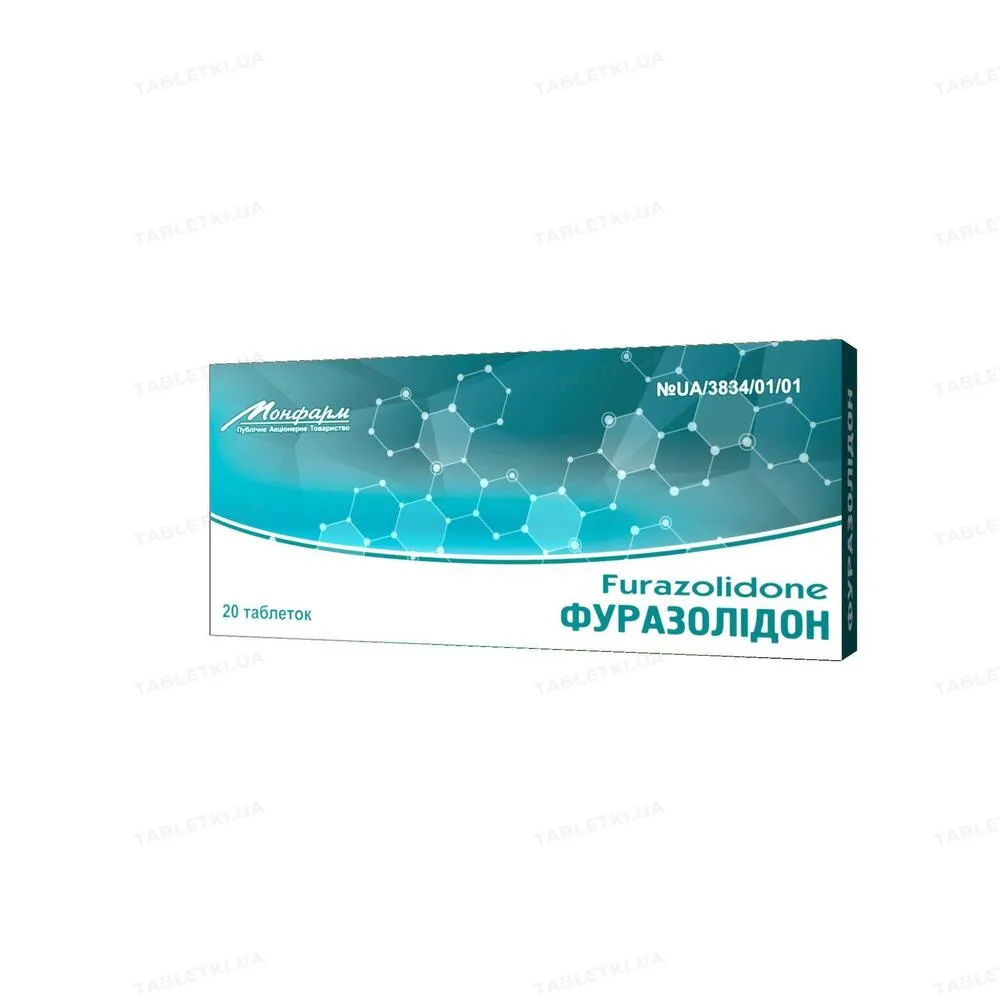
FURAZOLIDONE
UkraineThe drug is used to treat bacillary dysentery, paratyphoid fever, food poisoning, enterocolitis, giardiasis, and trichomonad colpitis.
Frequently asked questions
How should Furazolidone be taken correctly?
Adults and children aged 8 years and older should take the tablets orally after meals, swallowing them with a large amount of water (100–200 ml). The dosage depends on the disease: for example, for dysentery or paratyphoid, adults are usually prescribed 2 tablets 4 times a day for 5–7 days.
What side effects can Furazolidone cause?
Possible side effects include nausea, abdominal pain, vomiting, diarrhea, a bitter taste in the mouth, headache, dizziness, or drowsiness. Allergic reactions (itching, rash, swelling) and a change in urine color to dark yellow may also occur.
Who should not take this medication?
Contraindications include severe renal failure, impaired liver function, glucose-6-phosphate dehydrogenase deficiency, as well as hypersensitivity to the components of the drug or nitrofurans. Use is prohibited in pregnant and breastfeeding women.
Can alcohol be consumed during treatment?
No, alcohol must not be consumed during the administration of the drug and for 4 days after its completion due to the risk of serious reactions.
With which foods should intake not be combined?
Due to the risk of increased blood pressure, it is recommended to exclude foods containing tyramine from the diet: cheese, cream, coffee, chocolate, and smoked meats.
Does the drug affect the ability to drive a vehicle?
It is not recommended to drive vehicles or operate dangerous machinery, as the drug may cause dizziness, drowsiness, and decreased attention.
Instructions for use
INSTRUCTION FOR MEDICAL USE OF THE MEDICINAL PRODUCT FURAZOLIDONE (FURAZOLIDONE)
Composition:
Active substance: furazolidone;
1 tablet contains furazolidone 0.05 g (50 mg);
Excipients: potato starch; lactose monohydrate; colloidal anhydrous silicon dioxide; calcium stearate.
Pharmaceutical form. Tablets.
Main physicochemical characteristics: yellow or greenish-yellow tablets, flat surface with bevelled edges.
Pharmacotherapeutic group.
Antimicrobial and antiseptic agents. Furazolidone. ATC code G01AX06.
Pharmacological properties.
Pharmacodynamics.
Furazolidone is an antimicrobial and antiprotozoal agent, a nitrofuran derivative. It disrupts bacterial cellular respiration and inhibits nucleic acid biosynthesis. Depending on concentration, it exhibits either bacteriostatic or bactericidal effects. It is active against Gram-negative bacilli (Escherichia, Salmonella, Shigella, Proteus, Klebsiella, Citrobacter), Gram-positive cocci (streptococci, staphylococci), and protozoa (Giardia, Trichomonas). Among enteric pathogens, the most sensitive are those causing dysentery, typhoid fever, and paratyphoid fevers. It has weak activity against pathogens causing purulent and anaerobic infections. Resistance to furazolidone develops slowly. It enhances phagocytosis and does not suppress the immune system.
Pharmacokinetics.
After oral administration, furazolidone is rapidly absorbed from the gastrointestinal tract and distributed into tissues, including the central nervous system. Therapeutic blood concentrations are maintained for 4–6 hours. It does not achieve high concentrations in blood and tissues (including kidneys) because it is extensively and rapidly metabolized in the liver, transforming into an amino derivative. The main route of elimination is renal excretion (65%). It is partially excreted with bile, reaching high concentrations in the intestinal lumen, which allows its use in intestinal infections. In renal insufficiency, the drug accumulates in the blood due to delayed excretion.
Clinical characteristics.
Indications.
Bacillary dysentery, paratyphoid, foodborne toxicoinfection, enterocolitis, giardiasis, trichomonal colpitis.
Contraindications.
Terminal stage of chronic renal failure, hepatic function impairment, glucose-6-phosphate dehydrogenase deficiency, hypersensitivity to any component of the drug and nitrofurans.
Interaction with other medicinal products and other types of interactions.
When furazolidone is used concomitantly with monoamine oxidase inhibitors, sympathomimetics, tricyclic antidepressants, and food products containing tyramine, there is a risk of developing a hypertensive crisis. Combination with chloramphenicol and ristomycin increases the risk of bone marrow suppression.
Concomitant use of furazolidone with amitriptyline may lead to the development of toxic psychosis.
Aminoglycosides and tetracycline enhance the antimicrobial effect of furazolidone.
Agents that alkalinize urine (sodium hydrocarbonate, sodium bicarbonate, acetazolamide) reduce the efficacy of furazolidone by increasing its urinary excretion; agents that acidify urine enhance the drug's effect.
Furazolidone sensitizes the body to alcohol. Due to the risk of disulfiram-like reactions, alcohol consumption should be avoided during furazolidone therapy and for 4 days after its discontinuation.
Usage characteristics.
The risk of peripheral polyneuropathies increases in patients with anemia, diabetes mellitus, electrolyte imbalances, and vitamin B deficiencies.
To prevent neuritis during prolonged use of furazolidone, it may be combined with vitamin B complex.
Furazolidone is a monoamine oxidase inhibitor; therefore, safety precautions necessary for other monoamine oxidase inhibitors should be observed during its use.
Due to the risk of increased arterial pressure and development of psychiatric disorders, foods containing tyramine and other vasoconstrictive amines (such as cheese, cream, coffee, chocolate, smoked products) should be excluded from the diet.
Concurrent use of furazolidone with antitussive or cold remedies is not recommended. The medicinal product contains lactose and therefore should not be administered to patients with rare hereditary conditions of galactose intolerance, lactase deficiency, or glucose-galactose malabsorption syndrome.
Use during pregnancy or breastfeeding.
The use of the drug during pregnancy is contraindicated. Breastfeeding must be discontinued during treatment with this drug.
Ability to affect reaction speed when driving or operating machinery.
The drug should not be used when driving vehicles or operating potentially hazardous machinery, as decreased attention, dizziness, and drowsiness may occur during treatment.
Method of Administration and Dosage
For adults and children aged 8 years and older, take orally after meals, with a large amount of liquid (100–200 mL).
For bacillary dysentery, paratyphoid fever, and foodborne toxicoinfection:
Adults: 2 tablets (0.1 g) four times daily for 5–7 days, or in cycles of 3–6 days with 3–4 day intervals between cycles.
Children aged 8 years and older: administer the drug at a dosage of 6–7 mg/kg body weight per day, divided into 4 doses. (If a dose lower than 50 mg is required, use other formulations of furazolidone with appropriate dosage forms and strengths.)
The duration of treatment is 5–7 days, depending on the severity of the disease, response to therapy, and sensitivity to treatment.
For giardiasis:
Adults: 2 tablets (0.1 g) four times daily.
Children aged 8 years and older: administer the drug at a dosage of 6 mg/kg body weight per day, divided into 3–4 doses.
Treatment duration: 5–7 days.
For trichomonas infections:
Adults: 2 tablets (0.1 g) 3–4 times daily for 3–4 days.
For colpitis:
Treatment should be combined. Orally administer 2 tablets (0.1 g) 3–4 times daily for 3 days. Simultaneously, apply powder containing furazolidone with lactose into the vagina and use rectal suppositories containing the drug.
Maximum doses for adults: single dose – 4 tablets (0.2 g), daily dose – 16 tablets (0.8 g). Furazolidone should not be used for longer than 7 days.
Children.
Furazolidone in this dosage form is not recommended for children under 8 years of age.
Overdose.
Symptoms: acute toxic hepatitis, hemolytic or megaloblastic anemia, leukopenia, polyneuritis.
Treatment: discontinue the drug, gastric lavage, administration of antihistamines, calcium chloride, activated charcoal, vitamin B complex, saline laxatives, correction of water and electrolyte balance; symptomatic therapy aimed at supporting vital functions. There is no specific antidote.
Adverse Reactions.
Gastrointestinal tract: abdominal pain, nausea, bitter taste in the mouth, loss of appetite, vomiting, diarrhea, anorexia, cholestasis, hepatotoxicity.
Central nervous system: headache, drowsiness, dizziness, peripheral neuropathies.
Blood system: rarely – leukopenia, agranulocytosis, hemolysis in individuals with glucose-6-phosphate dehydrogenase deficiency.
Immune system: allergic reactions, including skin itching, skin hyperemia, urticaria, skin rashes on the face, trunk, and lower extremities, including maculopapular rashes, angioneurotic edema.
Other: hypoglycemia, orthostatic hypotension, dark yellow discoloration of urine, fever, weakness, malaise.
Respiratory system: rarely – acute pulmonary reactions.
Shelf life. 3 years.
Storage conditions.
Store in original packaging at a temperature not exceeding 25 °C.
Keep out of reach of children.
Packaging.
20 tablets per blister; 1, 5, or 10 blisters per cardboard box.
Prescription status. Prescription only.
Manufacturer. JSC "Monfarm".
Manufacturer's address and location of business activity.
8, Zavodska Street, Avramivka village, Uman district, Cherkasy region, Ukraine, 19161.
The original data is available in the language of the country of manufacture.
Data source: State Register of Medicinal Products of Ukraine
Data last verified: August 13, 2026