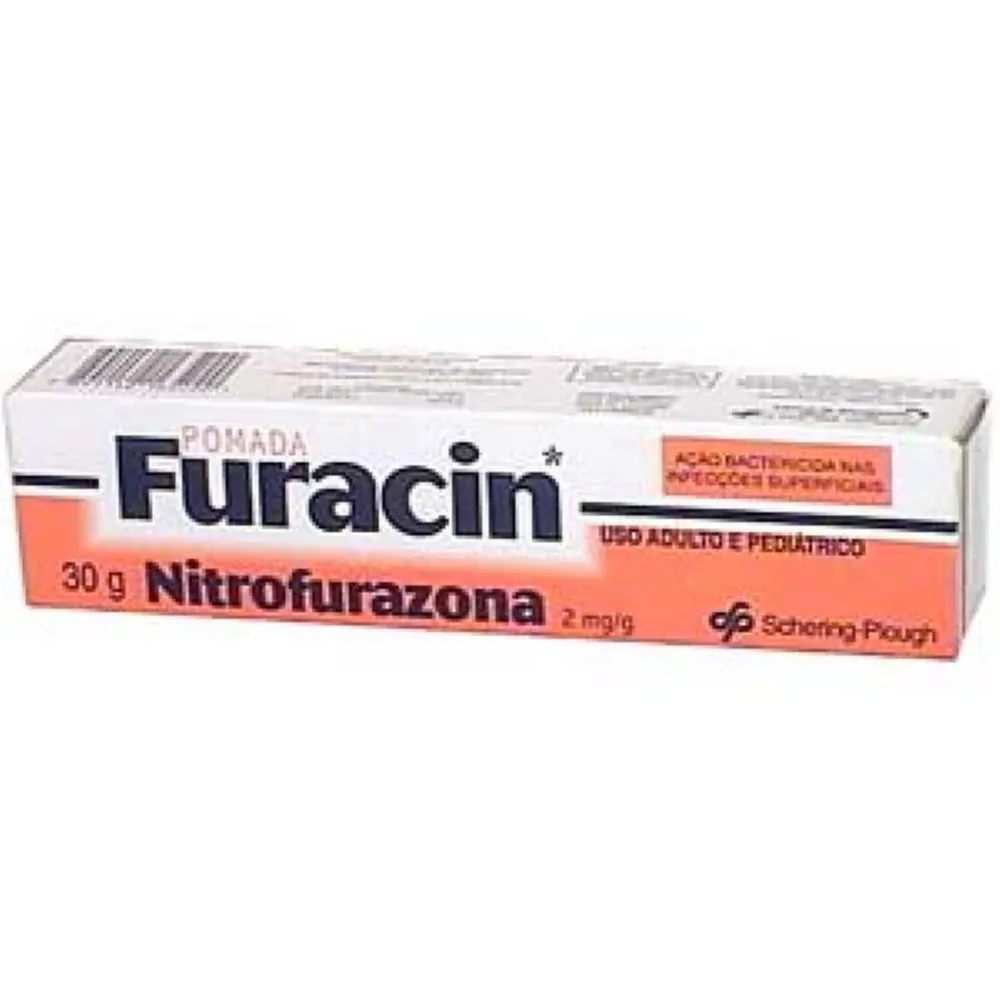
FURACIN 2 MG/G OINTMENT
SpainIt is used to treat skin infections and as an alternative treatment for second and third-degree burns. It is also used to prepare the skin surface in cases of grafts to prevent bacterial contamination.
Frequently asked questions
How should I apply Furacin ointment?
It should be applied directly to the lesion or spread onto a sterile gauze covering the area. The usual dosage is one application per day or every few days, according to medical instructions.
When should I not use this medication?
It should not be used if you are allergic to the active ingredient or any of its components. Caution should also be exercised if you suffer from any kidney disease or if there is an overgrowth of germs that do not respond to the treatment.
What side effects can Furacin ointment have?
It may cause allergic skin reactions such as redness, itching, rash, or swelling. In people with kidney disease, the accumulation of certain components of the product could lead to a progressive deterioration of renal function.
What should I do if the symptoms do not improve?
If symptoms do not improve or if they worsen after 3 days of treatment, you must discontinue use and consult your doctor.
What happens if I take more than the indicated amount or ingest it by mistake?
If applied correctly to the skin, an overdose is unlikely. However, if accidentally ingested, it is toxic and can affect the nerves or cause problems with red blood cells; therefore, you must immediately go to a doctor or medical center.
Can I use it if I am pregnant or breastfeeding?
During pregnancy, it should only be used if the benefit to the mother justifies the risk to the fetus. Regarding breastfeeding, it must be assessed whether it is better to continue or interrupt it based on the benefit to the child and the mother.
How should I store the product?
It must be kept out of the reach of children, at a temperature not exceeding 30ºC, and with the container tightly closed to protect it from direct sunlight and intense fluorescent lights.
Instructions for use
Package leaflet: Information for the user
Introduction
PACKAGE LEAFLET: INFORMATION FOR THE USER
Furacin 2 mg/g ointment
Nitrofural
Read the entire leaflet carefully before you start using this medicine.
|
Package leaflet contents:
- What Furacin ointment is and what it is used for
- Before you use Furacin ointment
- How to use Furacin ointment
- Possible side effects
- How to store Furacin ointment
- Further information
1. What Furacín ointment is and what it is used for
Nitrofural, the active ingredient of the medicine, is a nitrofuran derivative with antiseptic and disinfectant activity, exerting antibacterial action against most pathogenic microorganisms that commonly cause infections on the skin surface.
Furacín ointment is indicated in adults for local application in the following:
Alternative treatment of second- and third-degree burns. Skin infections. Preparation of surfaces for skin grafts, where bacterial contamination may lead to graft rejection or infection at the donor site, particularly in centers with a history of bacterial resistance.
2. Before using Furacin ointment
Do not use Furacin ointment
- If you are allergic (hypersensitive) to the active substance or to any of the other components of Furacin ointment.
Take special care with Furacin ointment
- If you have any kidney disease, since the macrogols present as excipients could be absorbed, and their accumulation may increase the risk of adverse reactions.
- If overgrowth of germs not sensitive to nitrofurazone treatment occurs (another infection with worsening of the lesion or irritation in the treated area).
Use of other medicines
Inform your doctor or pharmacist if you are using or have recently used any other medicines, including those obtained without a prescription.
No interaction studies have been performed.
Use in children
The safety and efficacy of nitrofurazone in children have not been established (see section 3: How to use Furacin ointment).
Use in elderly patients
Elderly patients, who likely have a greater age-related deterioration in renal function, may require application of lower doses (see section 3: How to use Furacin ointment).
Pregnancy and breastfeeding
Consult your doctor or pharmacist before using any medicine.
There is insufficient information regarding the use of nitrofurazone in pregnant women. Furacin ointment should be used during pregnancy only if the potential benefit justifies the potential risk to the fetus.
It is unknown whether this medicine passes into breast milk. Therefore, a decision must be made whether to discontinue breastfeeding or to discontinue treatment with Furacin, taking into account the benefit of breastfeeding for the child and the benefit of treatment with Furacin ointment for the mother.
Driving and using machines
It is very unlikely that Furacin will affect your ability to drive or use machinery.
Important information about some of the components of Furacin ointment
This medicine contains macrogols (polyethylene glycols) as excipients; if you have any kidney disease, you should exercise caution, since they may be absorbed and accumulate, increasing the risk of adverse effects on the kidneys, such as progressive deterioration. You must inform your doctor about this.
3. How to use Furacin ointment
Follow exactly the instructions for use of Furacin ointment provided by your doctor. If you have any doubts, consult your doctor or pharmacist.
Furacin ointment is for topical use only.
The usual dose is:
Adults: Apply directly to the lesion or spread previously on a sterile gauze and cover the lesion; apply once daily or every few days, depending on the dressing technique.
If symptoms worsen or do not improve after 3 days of treatment with Furacin ointment, you must stop treatment and consult your doctor.
There is no experience in children.
Elderly patients, who may have age-related impaired renal function, may require lower doses of nitrofurazone (see section 2 above: Use in elderly patients).
If you use more Furacin ointment than you should
If your renal function is normal, overdose is unlikely when the product is used topically. In case of accidental ingestion, bear in mind that nitrofurazone is a toxic substance when ingested, and adverse effects may affect the nerves; in patients with glucose-6-phosphate dehydrogenase deficiency, hemolysis (release of hemoglobin from red blood cells) may occur.
If you have used more Furacin ointment than you should, or in case of accidental ingestion, contact your doctor or pharmacist immediately, go to a medical center, or call the Toxicology Information Service at telephone number (91) 5620420.
If you forget to apply Furacin ointment
Do not use a double dose to make up for missed doses.
If you forget a dose, apply it as soon as possible and then continue with your usual dosing schedule.
4. Possible adverse effects
Like all medicines, Furacin ointment may produce adverse effects, although not everyone experiences them.
The adverse effects observed are described below according to their frequency of occurrence.
Skin and subcutaneous tissue disorders
Common: at least 1 in 100 patients may experience allergic reactions such as contact dermatitis (redness, itching, rash, swelling, etc.).
Frequency not known (cannot be estimated from available data): fungal infections due to overgrowth of fungi may also occur.
Renal and urinary disorders
Frequency not known (cannot be estimated from available data): in patients with renal disease, symptoms of progressive renal impairment may occur if macrogols (excipients) accumulate, such as increased blood urea nitrogen, anion gap, and metabolic acidosis (see section 2, the subsection: Important information about some of the components of Furacin ointment).
If you consider any of the adverse effects you experience to be severe, or if you notice any adverse effects not listed in this leaflet, inform your doctor or pharmacist.
5. Storage of Furacin Ointment
Keep out of the reach and sight of children.
Do not use Furacin ointment after the expiry date shown on the packaging following EXP. The expiry date refers to the last day of the month indicated.
Do not store above 30°C and keep the container tightly closed to protect it from direct sunlight, intense fluorescent light, and alkaline materials.
Medicines must not be disposed of via wastewater or household waste. Dispose of unused medicines and their containers at the SIGRE collection point at your pharmacy. If in doubt, ask your pharmacist how to dispose of unused medicines and their packaging. This helps protect the environment.
6. Additional Information
Composition of Furacin ointment
- The active substance is Nitrofural. Each gram of ointment contains 2 mg of Nitrofural.
- The other components (excipients) are: macrogol 300, macrogol 1500, macrogol 4000 and purified water.
Appearance of the medicinal product and contents of the container
Furacin ointment is presented as an ointment in tubes containing 30 g and 100 g; and in a plastic jar of 500 g (clinical pack).
Marketing Authorization Holder and Manufacturer
SEID, S.A.
Carretera de Sabadell a Granollers Km, 15
08185 - LLIÇÀ DE VALL (BARCELONA)
This summary of product characteristics was approved in March 2007.
Detailed and up-to-date information on this medicinal product is available on the website of the Spanish Agency for Medicines and Health Products (AEMPS) http://www.aemps.gob.es/.
The original data is available in the language of the country of manufacture.
Data source: Online Medicines Information Centre (CIMA) — AEMPS
Data last verified: September 21, 2026