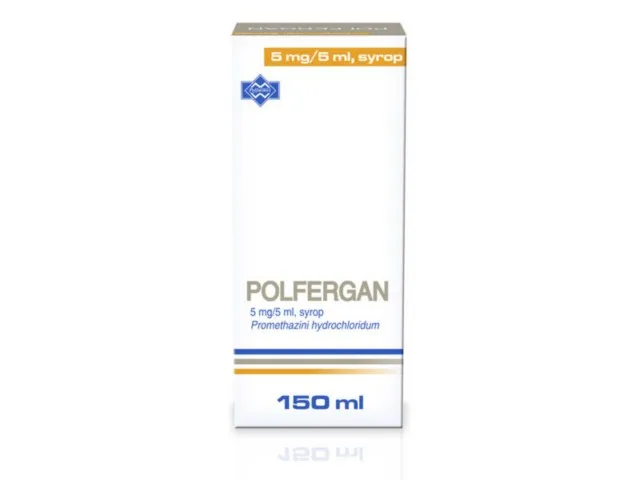
POLFERGAN
PolandThe medicinal product is used for the symptomatic treatment of acute allergic skin reactions with severe itching, transfusion reactions, nausea, vomiting and dizziness, motion sickness, and for the short-term treatment of insomnia, anxiety, and post-surgical recovery.
Frequently asked questions
How to use Polfergan?
Dosage depends on the purpose of use and age. Adults take the medicine orally: for allergic reactions, 25 ml before bedtime (max 50 ml per day); as an antiemetic, 12–25 ml every 6–8 hours; and as a sedative, 25 ml in the evening. For children over 2 years of age, the dose should be adjusted based on body weight according to a doctor's recommendations. The adult dose must not be exceeded.
When should you not take this medicine?
The medicine must not be used if there is a hypersensitivity to the ingredients, states of central nervous system depression, coma, pregnancy (especially in the last trimester), breastfeeding, or in children under 2 years of age. It should also not be administered with antidepressant drugs from the MAO inhibitor group.
What are the possible side effects of Polfergan?
It may cause drowsiness, dizziness, anxiety, headache, fatigue, disorientation, dry mouth, blurred vision, or urinary retention. Less commonly, allergic reactions, cardiac arrhythmias, palpitations, rash, itching, or extrapyramidal symptoms (e.g., muscle stiffness) may occur.
Can the medicine be combined with other agents?
Caution should be exercised, as the medicine enhances the effects of alcohol, hypnotics, sedatives, antidepressants, and anticholinergic drugs. The doctor should be informed about all medications being taken, especially those affecting heart rhythm.
Can you drive while using the medicine?
You should not drive vehicles or operate machinery while using the medicine, as it may affect concentration and motor skills.
Instructions for use
Package leaflet: Information for the user
POLFERGAN, 5 mg/5 ml, syrup
Promethazini hydrochloridum
Please read the entire leaflet carefully before using the medicine, as it contains
important information for the patient.
- Keep this leaflet, so that you can read it again if necessary.
- If you have any questions, please consult your doctor or pharmacist.
- This medicine has been prescribed for a specific individual. Do not pass it on to others. The medicine may harm another person, even if their symptoms are the same.
- If the patient experiences any adverse reactions, including any adverse reactions not listed in this leaflet, inform your doctor or pharmacist. See section 4.
Table of contents of the leaflet:
- What Polfergan is and what it is used for
- Important information before taking Polfergan
- How to take Polfergan
- Possible side effects
- How to store Polfergan
- Contents of the pack and other information
1. What Polfergan is and what it is used for
Polfergan is a syrup containing promethazine hydrochloride as the active substance, which has antihistaminic, sedative, and antiemetic properties.
Polfergan is indicated for:
- Symptomatic treatment of acute allergic skin reactions with intense itching;
- Transfusion reactions; nausea, vomiting, and dizziness;
- Motion sickness;
- Short-term treatment of insomnia and anxiety following surgical procedures.
2. Important information before using Polfergan
When not to use Polfergan:
- if the patient is allergic to the active substance, other phenothiazine derivatives, or any of the other ingredients of this medicine (listed in section 6);
- if the patient has conditions involving depression of central nervous system function;
- in coma;
- during the third trimester of pregnancy;
- during breastfeeding;
- in children under 2 years of age.
Polfergan must not be administered simultaneously with MAO inhibitors (medicines used in the treatment of depression) or within 14 days after their discontinuation.
Warnings and precautions
Before starting treatment with Polfergan, consult a doctor or nurse if:
- the patient has any serious heart problems;
- the patient has a personal or family history of heart disease;
- the patient has irregular heartbeat.
Particular caution is required when using Polfergan in:
- patients with asthma, bronchitis, or bronchiectasis, as Polfergan may thicken pulmonary secretions, thereby causing difficulties with expectoration;
- patients with severe coronary artery disease, narrow-angle glaucoma, epilepsy, liver or kidney impairment;
- patients with urinary retention;
- patients with benign prostatic hyperplasia;
- patients with bladder neck obstruction or pyloric stenosis.
Polfergan must not be used in children and adolescents presenting symptoms of Reye's syndrome.
Polfergan may mask symptoms of ototoxicity (toxic effects on the hearing organ) caused by ototoxic drugs, e.g. salicylates. It may also delay early diagnosis of intestinal obstruction or increased intracranial pressure by suppressing vomiting.
Polfergan syrup, 5 mg/5 ml, should not be taken for longer than 7 days without consulting a doctor.
Consult a doctor even if the above warnings refer to conditions previously experienced.
Children
Do not use this medicine in children under 2 years of age.
Elderly patients
In elderly patients, there is an increased risk of adverse effects on the nervous system.
Polfergan and other medicines
Inform your doctor or pharmacist about all medicines currently taken or recently taken, as well as any medicines planned for use.
Also inform your doctor or pharmacist if the patient is currently taking or has recently taken any of the following medicines:
- medicines that may affect heart rhythm (antipsychotics), such as certain phenothiazines (chlorpromazine, levomepromazine), benzamides (sulpiride, amisulpride, tiapride), pimozide, haloperidol, droperidol, citalopram, halofantrine, methadone, pentamidine, and moxifloxacin.
Polfergan enhances the central nervous system depressant effects of alcohol, barbiturates, hypnotics, sedatives, other antihistamines, and tricyclic antidepressants. It enhances the effects of anticholinergic and antihypertensive drugs.
Polfergan may cause false positive or false negative results in immunological pregnancy tests.
Polfergan should be discontinued at least 72 hours before performing skin tests, as promethazine may inhibit the skin reaction to histamine and lead to falsely negative results.
Pregnancy and breastfeeding
If the patient is pregnant or breastfeeding, suspects she may be pregnant, or is planning to have a child, she should consult a doctor or pharmacist before using this medicine.
This medicine is contraindicated during the third trimester of pregnancy and during breastfeeding.
Driving and operating machinery
While taking this medicine, do not drive, operate machinery, or perform tasks requiring full concentration and good motor coordination (such as swimming or working at heights).
Polfergan contains sucrose, sodium benzoate (E 211), ethanol, and sodium
This medicine contains sucrose. If the patient has previously been diagnosed with intolerance to certain sugars, the patient should consult a doctor before taking this medicine.
5 ml of syrup contains 4.25 g of sucrose, equivalent to 0.4 carbohydrate exchange units (CE). This should be taken into account in diabetic patients.
The medicine contains 0.3 mg of benzoic acid salt (sodium benzoate (E 211)) per 1 ml of syrup.
Polfergan contains a small amount of alcohol (ethanol), which is a component of the substance improving the taste and orange aroma. This medicine contains 0.38 mg of alcohol (ethanol) in 5 ml of syrup. At the maximum daily dose, the amount of alcohol is equivalent to:
- in adults:
- for allergic reactions - 3.8 mg ethanol/50 ml, less than 1 ml of beer and less than 1 ml of wine,
- for antiemetic use - 5.7 mg ethanol/75 ml, less than 1 ml of beer and less than 1 ml of wine,
- for sedative use - 1.9 mg ethanol/25 ml, less than 1 ml of beer and less than 1 ml of wine,
- in children over 2 years of age:
- for allergic reactions - 0.0095 mg ethanol/kg body weight, less than 1 ml of beer and less than 1 ml of wine,
- for antiemetic use - 0.038 mg ethanol/kg body weight, less than 1 ml of beer and less than 1 ml of wine,
- for nausea and dizziness - 0.038 mg ethanol/kg body weight, less than 1 ml of beer and less than 1 ml of wine.
The small amount of alcohol in this medicine will not cause noticeable effects.
The medicine contains less than 1 mmol (23 mg) of sodium per 1 ml of syrup, meaning the medicine is considered "sodium-free".
3. How to use Polfergan
This medicine should always be used according to the doctor's instructions. If in doubt, consult your doctor or pharmacist.
Use in adults:
- In allergic reactions – orally, a single dose of 25 ml at bedtime; maximum 50 ml per day in 2 or 3 divided doses, if necessary;
- Antiemetic use – orally, 12 to 25 ml every 6 to 8 hours, if necessary;
- Sedative use – orally, 25 ml in the evening before bedtime.
Use in children over 2 years of age:
- In allergic reactions – orally, 0.125 mg/kg body weight every 6 to 8 hours or 0.5 mg/kg body weight at bedtime, if necessary;
- Antiemetic use – orally, 0.25 to 0.5 mg/kg body weight every 6 to 8 hours, if necessary;
- Nausea and dizziness – orally, 0.5 mg/kg body weight every 12 hours, if necessary.
Do not exceed the adult dose.
Polfergan must not be used in children under 2 years of age.
1 teaspoon = 5 ml of syrup
Use of a higher than recommended dose of Polfergan
Symptoms of severe overdose may vary. In children, overdose symptoms include: agitation; involuntary movements; lack of motor coordination; abnormal limb movements; hallucinations.
In adults, overdose symptoms include: drowsiness; coma.
In both children and adults, seizures may occur, which may be preceded by coma or agitation.
Tachycardia may also occur. QT interval prolongation and severe, potentially fatal arrhythmias have been reported following phenothiazine overdose. Respiratory depression is rare.
In case a higher than recommended dose of Polfergan has been taken, contact your doctor or pharmacist immediately.
In case of overdose, vomiting should be induced as soon as possible using ipecacuanha. Gastric lavage may also be performed.
Supportive treatment consists of maintaining respiratory and circulatory function.
In case of seizures, diazepam or another appropriate anticonvulsant should be administered.
Missed dose of Polfergan
If a dose of the medicine is missed, take the recommended dose as soon as possible. However, if it is almost time for the next dose, skip the missed dose and continue with the regular dosing schedule. Do not take a double dose to make up for a missed one.
If you have any further doubts concerning the use of this medicine, consult your doctor or pharmacist.
4. Possible adverse reactions
Like all medicines, this medicine can cause adverse reactions, although not everyone will experience them.
Possible adverse reactions: drowsiness; dizziness; anxiety; headache; nightmares;
fatigue and disorientation.
Anticholinergic adverse reactions, such as blurred vision, dry mouth,
and urinary retention occur occasionally. Promethazine has anticholinergic effects to which
infants are particularly susceptible. In children, promethazine may paradoxically cause hyperexcitability.
Elderly individuals are especially prone to anticholinergic adverse effects of
promethazine. In elderly patients, promethazine may cause disorientation.
Other adverse reactions include: urticaria; rash; itching; loss of appetite; stomach irritation;
palpitations; hypotension; cardiac arrhythmias; extrapyramidal symptoms
(muscle stiffness, reduced facial expression, motor restlessness, involuntary movements); muscle spasms
and isolated involuntary movements of the head and face.
Rare adverse reactions (occurring in 1 to 10 people per 10,000) include: anaphylaxis
(a type of immediate allergic reaction occurring after exposure to the allergen, characterized by, among others, malaise, pallor, severe anxiety, feeling of pressure, headache, tinnitus, vomiting, diarrhoea, and loss of consciousness); jaundice and blood abnormalities, including haemolytic anaemia.
Photosensitivity reactions have also been reported. During treatment with promethazine, exposure to strong sunlight should be avoided.
Adverse reactions with unknown frequency (cannot be estimated from available data) include:
- abnormal electrical activity of the heart affecting its rhythm, including life-threatening arrhythmias;
- severe reaction with fever, muscle rigidity, changes in blood pressure, and coma (neuroleptic malignant syndrome);
- low platelet count (which may lead to bleeding and bruising);
- motor restlessness;
- hallucinations;
- aggression.
Reporting of adverse reactions
If any adverse reactions occur, including those not listed in this leaflet, inform your doctor or pharmacist. Adverse reactions can be reported directly to the Department for Monitoring Adverse Drug Reactions of the Office for Registration of Medicinal Products, Medical Devices and Biocidal Products:
Al. Jerozolimskie 181C
02-222 Warsaw
Phone: + 48 22 49 21 301
Fax: + 48 22 49 21 309
Website: https://smz.ezdrowie.gov.pl
Adverse reactions can also be reported to the marketing authorization holder.
Reporting adverse reactions helps to provide more information on the safety of the medicine.
5. How to store Polfergan
Keep this medicine out of sight and reach of children.
Do not use this medicine after the expiry date stated on the carton and bottle after:
"EXP". The expiry date refers to the last day of the stated month.
Store below 25 °C.
Keep in the original packaging to protect from light.
Period of use after first opening of the bottle: 1 month.
Medicines must not be disposed of via the sewage system or household waste. Ask your pharmacist how to dispose of medicines no longer required. Such measures help protect the environment.
6. Contents of the packaging and other information
What Polfergan contains
- The active substance is promethazine hydrochloride. 5 ml of syrup contains 5 mg of promethazine hydrochloride.
- The other ingredients are: citric acid monohydrate, sodium benzoate (E 211), caramel, orange flavouring agent (containing, among others, ethanol, geraniol and citral), sodium gentisinate, sucrose, purified water.
What Polfergan looks like and contents of the pack
Brown-coloured syrup. The pack contains 150 ml of syrup.
Brown glass bottle type III with an aluminium cap with LDPE seal and tamper-evident ring, in a cardboard box or without a cardboard box.
Orange PET bottle with a HDPE cap and tamper-evident ring, in a cardboard box or without a cardboard box.
Orange PET bottle with an aluminium cap with PE seal and tamper-evident ring, in a cardboard box or without a cardboard box.
Marketing Authorisation Holder and Manufacturer
Polfarmex S.A.
ul. Józefów 9
99-300 Kutno
Tel.: +48 24 357 44 44
Fax: +48 24 357 45 45
e-mail: [email protected]
Similar drugs
| Brand name | Dosage form | Active substance / Dosage | Manufacturer |
|---|---|---|---|
| DIPHERGAN | syrup |
|
Aflofarm Farmacja Polska Limited |
The original data is available in the language of the country of manufacture.
Data source: Register of Medicinal Products of Poland (URPL)
Data last verified: September 01, 2026