VIVIDRIN
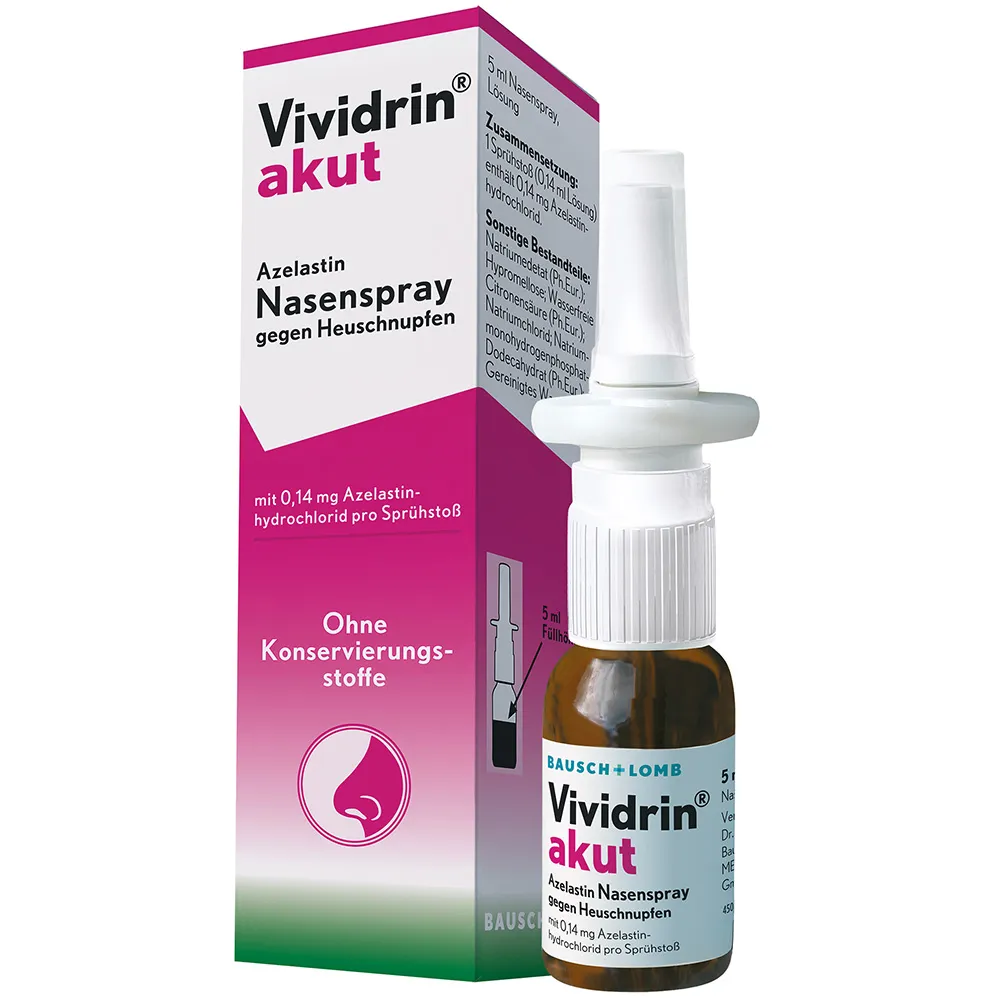
ItalyVividrin is used for the treatment of symptoms of seasonal allergic rhinitis and for attacks of perennial allergic rhinitis. It works by preventing the effect of histamine and other substances that the body produces during an allergic reaction (such as a runny nose, sneezing, itching, or nasal congestion) and also has an anti-inflammatory effect.
Frequently asked questions
Who can use this medicine?
The drug can be used by adults and children aged 6 years and older.
When should you not use Vividrin?
It must not be used if you are allergic to azelastine hydrochloride or any of the other ingredients. Use is prohibited in children under 6 years of age. Additionally, it must not be used during breastfeeding.
What is the dosage of Vividrin and how should it be taken?
The recommended dose for adults and children over 6 years of age is one spray in each nostril, twice daily. It is important to keep the head in an upright position during use and not to tilt it backwards. If you forget a dose, do not take a double dose, but take it as soon as possible, ensuring that a 12-hour interval is respected before the next dose.
What are the possible side effects of Vividrin?
Common side effects may include an unpleasant taste (often if the head is tilted too far back during use) and, in rare cases, nausea. Other effects may include pain or itching in the nose, sneezing, nosebleeds, fatigue, dizziness or weakness, and skin reactions such as rashes or hives.
Are there any special warnings for pregnancy?
Although azelastine is not known to cause harm to the unborn child, use is not recommended during the first trimester of pregnancy. It is necessary to consult a doctor before use.
Can the drug affect driving or the use of machinery?
Very rarely, fatigue, exhaustion, dizziness, or weakness may occur. In these cases, it is necessary to avoid driving vehicles or using machinery. The consumption of alcohol or other medicines may increase these effects.
Instructions for use
Patient Information Leaflet
Vividrin 1 mg/ml nasal spray, solution
Azelastine hydrochloride
Please read all of this leaflet carefully before you start using this medicine because it contains important information for you.
Always use this medicine exactly as described in this leaflet or as your doctor, pharmacist or nurse has told you to do.
- Keep this leaflet. You may need to read it again.
- If you need more information or advice, consult your pharmacist.
- If you experience any side effects, including those not listed in this leaflet, contact your doctor, pharmacist or nurse. See section 4.
- Contact your doctor if you do not notice any improvement or if your symptoms worsen after 4 weeks.
Contents of this leaflet
- What Vividrin is and what it is used for
- What you need to know before using Vividrin
- How to use Vividrin
- Possible side effects
- How to store Vividrin
- Contents of the pack and other information
1. What Vividrin is and what it is used for
Vividrin contains azelastine, which belongs to a group of medicines that work by preventing the effects of histamine (antihistamines) and other substances produced by the body during an allergic reaction, which usually causes runny nose, sneezing, itching, or nasal congestion. Azelastine also has an additional anti-inflammatory effect.
Vividrin is indicated for the symptomatic treatment of seasonal allergic rhinitis, and for acute exacerbations (attacks) of perennial allergic rhinitis.
Vividrin nasal spray is indicated in adults and children from 6 years of age.
2. What you need to know before using Vividrin
Do not use Vividrin:
- if you are allergic to azelastine hydrochloride or to any of the other ingredients of this medicine (listed in section 6). Vividrin nasal spray must not be used in children under 6 years of age. Instructions for adolescents are the same as for adults (see also section 3 “Use in children and adolescents”).
Warnings and precautions
Talk to your doctor or pharmacist before using Vividrin.
Children and adolescents
This medicine can be used in adults and children aged 6 years and older.
Other medicines and Vividrin
Tell your doctor or pharmacist if you are using, have recently used, or might use any other medicines.
Specific interactions have not been studied.
Pregnancy and breastfeeding
If you are pregnant, think you might be pregnant, planning a pregnancy, or are breastfeeding, please consult your doctor or pharmacist before using this medicine.
Pregnancy
Although azelastine is not known to cause harm to the unborn child, the use of this medicine is not recommended during the first trimester of pregnancy.
Breastfeeding
Due to lack of data, Vividrin nasal spray should not be used during breastfeeding.
Driving and using machines
Very rarely, fatigue, exhaustion, weakness, dizziness or tiredness may occur due to the allergic condition itself or to the use of azelastine nasal spray. In such cases, do not drive or operate machinery. You should be aware that consuming alcohol or taking other medicines may increase these effects.
3. How to use Vividrin
Use this medicine exactly as stated in this leaflet or as instructed by your doctor or pharmacist. If you have any doubts, consult your doctor or pharmacist.
Use in adults and children aged 6 years and older
The recommended dose is one spray (0.14 ml) in each nostril, twice daily (0.56 mg of
azelastine hydrochloride).
How to use the spray
- Blow your nose first.
- Remove the plastic seal from the protective cap before first use (Figure 1).
- Remove the protective cap (Figure 2).
- Before first use, press the spray several times until a uniform mist is produced (3–4 times) (Figure 3).
- Spray once into each nostril with your head held upright. Do not tilt your head backward (Figure 4).
- Wipe the nozzle and replace the protective cap.
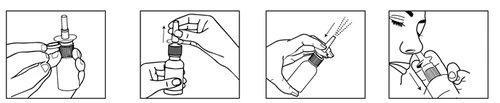
Figure 1 Figure 2 Figure 3 Figure 4
If azelastine has not been used for 6 or more days, the pump mechanism must be re-primed by pressing down and releasing the nozzle enough times until a fine mist appears.
Duration of use:
Talk to your doctor or pharmacist if your symptoms worsen or persist for more than 4 weeks without significant improvement despite using Vividrin nasal spray.
Use in children and adolescents
Vividrin nasal spray is not indicated for use in children under 6 years of age due to lack of safety and efficacy data.
If you use more Vividrin than you should
If you accidentally spray too much Vividrin, contact your doctor or pharmacist.
With nasal administration, overdose reactions are not expected.
Animal studies have shown that toxic doses may lead to central nervous system effects (excitation, tremor, seizures). If this occurs in humans, symptomatic and supportive treatment should be initiated. If the overdose is recent, gastric lavage is recommended.
If you forget to use Vividrin
Do not use a double dose to make up for a forgotten dose.
If you forget to take this medicine, take it as soon as you remember, then take the next dose 12 hours later, if necessary.
If you stop using Vividrin
Do not stop treatment abruptly.
If you have any questions about the use of this medicine, consult your doctor or pharmacist.
4. Possible side effects
Like all medicines, this medicine can cause side effects, although not everyone experiences them.
Common side effects (may affect up to 1 in 10 people): an unpleasant taste after administration (often due to incorrect administration technique, i.e. tilting the head too far backwards during administration), which may rarely cause nausea.
Uncommon side effects (may affect up to 1 in 100 people): disorders of inflamed nasal tissue (pricking pain, itching), sneezing, epistaxis (nosebleed).
Rare side effects (may affect up to 1 in 1,000 people): nausea.
Very rare side effects (may affect up to 1 in 10,000 people): tiredness (exhaustion, weakness), dizziness or weakness (these may also be caused by the allergic condition itself), hypersensitivity reactions, skin rashes, itching, urticaria (itchy rash).
If any of the side effects worsen, or if you notice any side effects not listed in this leaflet, inform your doctor or pharmacist.
Reporting of side effects
If you experience any side effect, including those not listed in this leaflet, talk to your doctor or pharmacist. You can also report side effects directly via the national reporting system at: www.agenziafarmaco.gov.it/content/come-segnalare-una-sospetta-reazione-avversa.
By reporting side effects, you can help provide more information on the safety of this medicine.
5. How to store Vividrin
Keep this medicine out of the sight and reach of children.
Do not use this medicine after the expiry date which is stated on the bottle label and on the
carton after Exp. The expiry date refers to the last day of that month.
Store in the original packaging.
Do not refrigerate or freeze.
Do not store at temperatures above 30°C.
Do not use more than 6 months after first opening.
Do not dispose of any medicine via wastewater or household waste. Ask your pharmacist how to
dispose of medicines no longer required. This will help protect the environment.
6. Package contents and other information
What Vividrin contains
- The active substance is azelastine hydrochloride 1 mg/ml.
- The other components are: hypromellose 2910, disodium edetate, anhydrous citric acid, dibasic sodium phosphate dodecahydrate, sodium chloride and purified water.
Description of the appearance of Vividrin and contents of the pack
Vividrin is a clear, colourless, transparent solution.
Azelastine nasal spray is available in a multidose plastic container (made of high-density polyethylene) equipped with a metering pump mechanism. One bottle contains 10 ml of solution.
Marketing Authorisation Holder and Manufacturer
Marketing Authorisation Holder
Bausch & Lomb - IOM S.p.A.
Viale Martesana, 12 – 20090 – Vimodrone (MI), Italy.
Manufacturers
SAG Manufacturing, S.L.I.
Ctra N-I, Km 36
San Agustin de Guadalix
28750 Madrid, Spain
Galenicum Health, S.L.
Avda Cornellà 144,
Esplugues de Llobregat
08950 Barcelona, Spain
Similar drugs
| Brand name | Dosage form | Active substance / Dosage | Manufacturer |
|---|---|---|---|
| RINAZINA ANTIALLERGIC | spray, nasal solution | HALEON ITALY S.R.L. |
The original data is available in the language of the country of manufacture.
Data source: Italian Medicines Agency (AIFA)
Data last verified: September 21, 2026