LACTULAC EPS
ItalyIt is used to treat hepatic cirrhosis and conditions of mental confusion, altered consciousness, or coma caused by liver failure (porto-systemic hepatic encephalopathy) due to the accumulation of ammonia in the blood.
Frequently asked questions
When should you not take Lattulac EPS?
You must not take it if you are allergic to the active substance or any of the other components, if you suffer from galactosemia (a hereditary disease that prevents the metabolism of galactose), or if you have disorders that cause intestinal obstruction.
How should the medicine be taken?
The method of administration depends on the pharmaceutical form: the granules should be dissolved in water, milk, or other beverages; the syrup should be taken according to the prescribed doses; the rectal solution should be prepared by dissolving the crystals in one liter of lukewarm water at 37°C and administered via a rectal cannula.
What are the doses for adults?
For the granules, the dose is 10-15 g per day (divided into two doses), while for the syrup, it is 15-45 ml per day. For the rectal solution, the dose is 1 liter every 8-12 hours, to be retained for at least 30-40 minutes.
Can Lattulac EPS cause side effects?
In rare cases, it may cause abdominal cramps or excessive intestinal gas buildup (flatulence), which usually disappear within the first few days. Allergic reactions, skin rashes, itching, or hives have also been reported.
Are there interactions with other drugs?
Caution should be exercised if you are taking oral antibiotics, antacids (for stomach acidity), heart medications known as digitalis, or the antibiotic neomycin, as these may affect the efficacy or toxicity of the treatment.
Can I take this drug if I am diabetic?
Yes, the medicine can be taken by those suffering from diabetes mellitus because it contains sugars that are not absorbed at the intestinal level.
Instructions for use
Table of contents
- Lattulac EPS 10 g granules for oral solution
- 1. What Lattulac EPS is and what it is used for
- 2. What you should know before taking Lattulac EPS
- 3. How to take Lattulac EPS
- 4. Possible side effects
- 5. How to store Lattulac EPS
- 6. Package contents and other information
- Package leaflet: information for the user
- Lattulac EPS 200 g granules for rectal solution
- 1. What Lattulac EPS is and what it is used for
- 2. What you need to know before using Lactulac EPS
- 4. How to use Lattulac EPS
- 4. Possible side effects
- 5. How to store Lattulac EPS
- 6. Package Contents and Other Information
- Package leaflet: information for the patient
- Lattulac EPS 66.7 g/100 ml syrup
- 1. What Lattulac EPS is and what it is used for
- 2. What you need to know before taking Lattulac EPS
- 5. How to take Lattulac EPS
- 4. Possible side effects
- 5. How to store Lattulac EPS
- 6. Package contents and other information
Package leaflet: Information for the patient
Lattulac EPS 10 g granules for oral solution
Lactulose
Please read all of this leaflet carefully before taking this medicine because it contains important information for you.
- Keep this leaflet. You may need to read it again.
- If you have any questions, ask your doctor or pharmacist.
- This medicine has been prescribed for you only. Do not give it to other people, even if they have the same symptoms as yours, because it may be harmful.
- If you experience any side effects, including those not listed in this leaflet, contact your doctor or pharmacist. See section 4.
Contents of this leaflet:
- What Lattulac EPS is and what it is used for
- What you need to know before taking Lattulac EPS
- How to take Lattulac EPS
- Possible side effects
- How to store Lattulac EPS
- Contents of the pack and other information
1. What Lattulac EPS is and what it is used for
Lattulac EPS contains the active substance lactulose, which belongs to a class of medicines called
anti-hyperammonaemics.
Lactulose is a sugar that, lacking a specific enzyme in the small intestine for its metabolism, reaches the colon unchanged, where it is converted by the bacterial flora into short-chain fatty acids. This leads to reduced production and increased faecal excretion of ammonia, thereby helping to reduce blood ammonia levels.
Lattulac EPS is used in the treatment of:
- conditions involving mental confusion, altered state of consciousness, and coma due to liver failure (porto-systemic hepatic encephalopathy). These conditions are related to the accumulation of toxic substances, such as ammonia, in the brain as a result of severe liver problems;
- chronic and degenerative liver disease, known as hepatic cirrhosis.
2. What you should know before taking Lattulac EPS
Do not take Lattulac EPS if:
- you are allergic to the active substance or to any of the other ingredients of this medicine (listed in section 6);
- you have a hereditary disease that prevents you from metabolizing a sugar called galactose (galactosemia);
- you have conditions leading to intestinal obstruction.
Warnings and precautions
Talk to your doctor or pharmacist before taking Lattulac EPS if you suffer from excessive production and accumulation of gas in the intestinal tract (meteorism). In such cases, treatment will start with the lowest possible doses, which may then be gradually increased according to your response to the medicine.
If you have carbohydrate metabolism disorders (diabetes mellitus), you may still take Lattulac EPS, as it contains sugars that are not absorbed at the intestinal level.
If you take Lattulac EPS for prolonged periods, in rare cases, you may experience loss of electrolytes.
Other medicines and Lattulac EPS
Inform your doctor or pharmacist if you are taking, have recently taken, or might take any other medicines.
Pay particular attention if you are taking:
- oral medicines used to treat bacterial infections, as they may reduce the response to treatment with Lattulac EPS;
- oral medicines used to counteract stomach acidity (antacids), as they may reduce the response to treatment with Lattulac EPS;
- heart medicines called digitalics, as Lattulac EPS may increase the toxicity of these medicines;
- neomycin, an antibiotic used to treat bacterial infections, as it increases the activity of Lattulac EPS.
Pregnancy and breastfeeding
If you are pregnant, think you may be pregnant, planning to become pregnant, or are breastfeeding, consult your doctor or pharmacist before taking this medicine.
Driving and using machines
Lattulac EPS does not affect the ability to drive vehicles or use machinery.
3. How to take Lattulac EPS
Take this medicine exactly as directed by your doctor or pharmacist. If you have
any doubts, consult your doctor or pharmacist.
Dissolve the granules contained in the Lattulac EPS sachet in water, milk, or other beverages.
Use in adults
The recommended dose of Lattulac EPS is 10–15 g per day, divided into two doses.
If necessary, depending on your response to the medicine, your doctor may double or halve the dose.
If you suffer from chronic disorders (chronic hepatic encephalopathy), the recommended dose of Lattulac EPS is 60–120 g per day, divided into two or three doses.
Use in children
The recommended dose of Lattulac EPS is 2.5–10 g per day, which may be given as a single dose depending on the severity of the condition or the child's age.
Use in infants
The recommended dose of Lattulac EPS is 2.5 g per day.
If you take more Lattulac EPS than you should
If you accidentally ingest/overdose on Lattulac EPS, contact your doctor immediately or go to the nearest hospital.
Accidental ingestion of very high doses of Lattulac EPS may cause diarrhoea and abdominal cramps, which resolve upon discontinuation of treatment.
If you forget to take Lattulac EPS
Do not take a double dose to make up for the forgotten dose.
If you stop taking Lattulac EPS
If you have any doubts about using this medicine, consult your doctor or pharmacist.
4. Possible side effects
Like all medicines, this medicine can cause side effects, although not everyone will experience them.
In rare cases, Lattulac EPS may cause:
- excessive production and accumulation of gas in the intestinal tract or stomach (flatulence);
- abdominal cramps. These side effects are mild in intensity and disappear spontaneously after the first few days of treatment. If this does not occur, your doctor will assess whether it might be necessary to reduce the dose.
Reactions with unknown frequency: frequency cannot be estimated from the available data:
allergic reactions, skin rash, itching, urticaria.
Reporting of side effects
If you experience any side effect, including those not listed in this leaflet, talk to your doctor or pharmacist.
You can also report side effects directly via the national reporting system at the following address: https://www.aifa.gov.it/content/segnalazioni-reazioni-avverse
By reporting side effects, you can help provide more information on the safety of this medicine.
5. How to store Lattulac EPS
Keep this medicine out of the sight and reach of children.
Do not use this medicine after the expiry date stated on the packaging after "Exp.".
The expiry date refers to the last day of that month.
This medicine does not require any special storage conditions.
Do not dispose of medicines via wastewater or household waste. Ask your pharmacist how to dispose of
medicines you no longer use. This will help protect the environment.
6. Package contents and other information
What Lattulac EPS contains
- The active substance is lactulose. Each sachet contains 10 g of lactulose crystals.
- The other component is lemon flavour.
Description of the appearance of Lattulac EPS and contents of the pack
Lattulac EPS is a white, free-flowing crystalline powder contained in heat-sealed paper-aluminium-polyethylene sachets.
Each pack of Lattulac EPS contains 20 sachets.
Marketing Authorisation Holder and Manufacturer
Marketing Authorisation Holder
Alfasigma S.p.A. - Via Ragazzi del '99, n. 5 - 40133 Bologna (BO)
Manufacturer
SOFAR S.p.A.
Via Firenze 40,
20060 Trezzano Rosa (MI)
Italy
Package leaflet: information for the user
Lattulac EPS 200 g granules for rectal solution
Lactulose
Please read this leaflet carefully before using this medicine because it contains important information for you.
- Keep this leaflet. You may need to read it again.
- If you have any questions, ask your doctor or pharmacist.
- This medicine has been prescribed for you only. Do not give it to others, even if their symptoms are the same as yours, as it could be harmful.
- If you experience any side effects, including those not listed in this leaflet, contact your doctor or pharmacist. See section 4.
Contents of this leaflet:
- What Lattulac EPS is and what it is used for
- What you need to know before using Lattulac EPS
- How to use Lattulac EPS
- Possible side effects
- How to store Lattulac EPS
- Contents of the pack and other information
1. What Lattulac EPS is and what it is used for
Lattulac EPS contains the active substance lactulose, which belongs to a class of medicines called
anti-hyperammonaemics.
Lactulose is a sugar which, lacking the specific enzyme for its metabolism in the small intestine, reaches the colon unchanged, where it is converted by the intestinal bacterial flora into short-chain fatty acids. This leads to reduced production and increased faecal excretion of ammonia, thereby lowering its blood levels.
Lattulac EPS is used in the treatment of:
- conditions of mental confusion, altered consciousness level, and coma due to liver insufficiency (porto-systemic hepatic encephalopathy). These conditions are related to the accumulation of toxic substances, such as ammonia, in the brain as a result of severe liver disease;
- chronic degenerative liver disease, known as hepatic cirrhosis.
Lattulac EPS, 200 g granules for rectal solution, is used when the patient is unable to take Lattulac EPS orally due to the following reasons:
- impaired level of consciousness, coma, pre-coma, or semiconsciousness;
- difficulty in taking Lattulac EPS orally due to high doses or its taste;
- risk of tracheal aspiration with oral administration;
- medical inability to take the product orally (e.g. due to endoscopic procedures or intubation).
2. What you need to know before using Lactulac EPS
Do not use Lactulac EPS if:
- you are allergic to the active substance or to any of the other ingredients of this medicine (listed in section 6);
- you suffer from a hereditary disease that prevents you from metabolizing a sugar called galactose (galactosemia);
- you suffer from conditions leading to intestinal obstruction.
Warnings and precautions
Consult your doctor or pharmacist before taking Lactulac EPS if you suffer from excessive production and accumulation of gas in the intestinal tract (flatulence). In such cases, treatment should start with the lowest possible doses, which may then be gradually increased according to your response to the medicine.
If you have carbohydrate metabolism disorders (diabetes mellitus), you may still take Lactulac EPS, as it contains sugars that are not absorbed at the intestinal level.
If you take Lactulac EPS for prolonged periods, in rare cases, you might experience loss of electrolytes.
Children and adolescents
Lactulac EPS, 200 g granules for rectal solution, is not recommended for use in children and adolescents.
Other medicines and Lactulac EPS
Inform your doctor or pharmacist if you are taking, have recently taken, or might take any other medicines.
Pay particular attention if you are taking:
- oral medicines used to treat bacterial infections, as they may reduce the response to treatment with Lactulac EPS;
- oral medicines used to counteract stomach acidity (antacids), as they may reduce the response to treatment with Lactulac EPS;
- heart medicines called digitalis glycosides, as Lactulac EPS may increase the toxicity of these medicines;
- neomycin, an antibiotic used to treat bacterial infections, as it increases the activity of Lactulac EPS.
Pregnancy and breastfeeding
If you are pregnant, think you might be pregnant, planning to become pregnant, or breastfeeding, consult your doctor or pharmacist before taking this medicine.
Driving and using machines
Lactulac EPS does not affect the ability to drive or use machinery.
4. How to use Lattulac EPS
Use this medicine exactly as directed by your doctor or pharmacist. If you have any doubts, consult your doctor or pharmacist.
The lactulose crystals contained in the graduated bag must be dissolved in lukewarm water (37°C), bringing the volume up to 1 litre, immediately before use.
Instructions for use
To facilitate the use of the medicine in a quick and hygienic manner, it is recommended to use the accessories provided in the package together with the ready-to-use Lattulac EPS bag, which serves the dual purpose of containing the active ingredient and acting as an administration device:
- Atraumatic rectal cannula, individually packed in a heat-sealed pouch;
- Lubricant for the rectal cannula, supplied in a heat-sealed pouch.
Preparation and administration of Lattulac EPS 200 g granules for rectal solution (1-litre bag) must be carried out as follows:
-
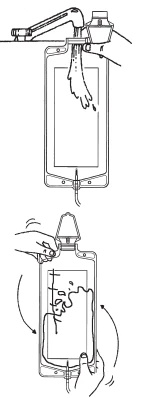
Remove the cap and fill the bag with lukewarm tap water at 37°C up to the 1-litre mark;
-
Close the bag and shake until a homogeneous solution is obtained. Add more water if necessary to reach the 1-litre mark, then shake briefly again;
-
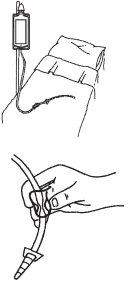
Suspend the bag at approximately 1 metre above bed level using the loop attached to the bag’s cap;
-
Close the clamp near the cone fixed at the end of the drainage tube;
-
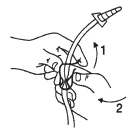
Break the seal located at the beginning of the drainage tube inside the bag by bending it alternately to the right and left;
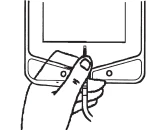
This allows the solution to flow freely from the bag; -
Expel any air from the tubing by briefly opening the clamp and closing it again immediately after the solution appears;
-
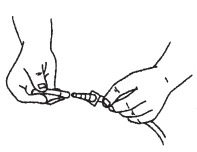
Remove the rectal cannula from its packaging and firmly attach it to the conical connector fixed at the end of the drainage tube;
-
If needed, the rectal cannula may be lubricated before insertion into the rectum using the lubricant provided in the pouch;
-
Position the patient on their left side, with the right leg slightly bent;
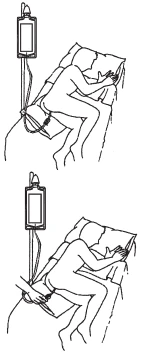
Gently insert the cannula into the rectum in the direction of the navel. To help retain the enema, elevate the pelvis with one or two pillows; -
Open the clamp on the drainage tube to allow the solution to flow into the intestine. It is important to regulate the flow rate using the clamp to avoid unpleasant sensations or abdominal cramps. The enema should be retained for at least 30–40 minutes.
If immediate evacuation occurs, the enema must be immediately repeated. A balloon catheter, available at pharmacies, may be used if necessary to ensure retention for the required time. The catheter should be attached to the cone of the drainage tube, replacing the rectal cannula.
Use in adults
The recommended dose is 1 litre of Lattulac EPS every 8–12 hours, to be retained in the intestine for at least 30–40 minutes.
If the patient persistently fails to retain the enema for the required time (at least 30–40 minutes), or if there are any issues with subjective tolerability (abdominal pain or significant discomfort), the 1-litre dose may be divided into two half-doses of 500 ml administered every 3–4 hours. Rectal administration should continue for 3–4 days, during which full and alert consciousness is usually restored, allowing transition to oral administration of Lattulac EPS or other medications.
If you use more Lattulac EPS than you should
Overdose effects are not expected. In case of accidental ingestion or overdose, contact your doctor immediately or go to the nearest hospital.
If you forget to use Lattulac EPS
Do not use a double dose to make up for the missed dose.
If you stop using Lattulac EPS
If you have any doubts about the use of this medicine, consult your doctor or pharmacist.
4. Possible side effects
Like all medicines, this medicine can cause side effects, although not everybody gets them.
In rare cases, Lactulac EPS may cause:
- excessive production and accumulation of gas in the intestinal tract or stomach (flatulence);
- abdominal cramps.
These side effects are mild in intensity and disappear spontaneously after the first few days of treatment. If this does not happen, your doctor will assess whether the dose should be reduced.
Side effects with unknown frequency (frequency cannot be determined from the available data):
allergic reactions, skin rash, itching, urticaria.
Reporting of side effects
If you experience any side effect, including those not listed in this leaflet, talk to your doctor or pharmacist.
You can also report side effects directly via the national reporting system at the following website: https://www.aifa.gov.it/content/segnalazioni-reazioni-avverse
By reporting side effects, you can help provide more information on the safety of this medicine.
5. How to store Lattulac EPS
Keep this medicine out of the sight and reach of children.
Store below 25°C.
Do not use this medicine after the expiry date stated on the packaging after "Exp.".
The expiry date refers to the last day of that month.
Do not dispose of any medicine via wastewater or household waste. Ask your pharmacist how to dispose of
medicines you no longer use. This will help protect the environment.
6. Package Contents and Other Information
What Lattulac EPS Contains
- The active substance is lactulose. Each graduated 1-litre bag contains 200 g of lactulose crystals.
- There are no other components.
Description of the Appearance of Lattulac EPS and Contents of the Pack
Lattulac EPS is a granulate for rectal solution, contained in a graduated 1-litre PVC medical bag.
Each pack contains one bag of Lattulac EPS and the following accessories for administration:
- atraumatic rectal cannula, individually packed in a heat-sealed pouch;
- lubricant for the rectal cannula, in a heat-sealed pouch.
Marketing Authorisation Holder and Manufacturer
Marketing Authorisation Holder
Alfasigma S.p.A. - Via Ragazzi del '99, n. 5 - 40133 Bologna (BO)
Manufacturer
SOFAR S.p.A.
Via Firenze 40,
20060 Trezzano Rosa (MI)
Italy
Package leaflet: information for the patient
Lattulac EPS 66.7 g/100 ml syrup
Lactulose
Please read this leaflet carefully before taking this medicine because it contains important information for you.
- Keep this leaflet. You may need to read it again.
- If you have any questions, consult your doctor or pharmacist.
- This medicine has been prescribed for you only. Do not give it to others, even if their symptoms are the same as yours, as it could be harmful.
- If you experience any side effects, including those not listed in this leaflet, contact your doctor or pharmacist. See section 4.
Contents of this leaflet:
- What Lattulac EPS is and what it is used for
- What you need to know before taking Lattulac EPS
- How to take Lattulac EPS
- Possible side effects
- How to store Lattulac EPS
- Contents of the pack and other information
1. What Lattulac EPS is and what it is used for
Lattulac EPS contains the active substance lactulose, which belongs to a class of medicines called
anti-ammonaemics.
Lactulose is a sugar that, lacking a specific enzyme for its metabolism in the small intestine, reaches the colon unchanged, where it is converted by the intestinal bacterial flora into short-chain fatty acids. This leads to reduced production and increased faecal excretion of ammonia, thereby helping to lower ammonia levels in the blood.
Lattulac EPS is used in the treatment of:
- conditions of mental confusion, altered consciousness level, and coma due to liver insufficiency (porto-systemic hepatic encephalopathy). These conditions are related to the accumulation of toxic substances, such as ammonia, in the brain as a result of severe liver disease;
- chronic degenerative liver disease, known as hepatic cirrhosis.
2. What you need to know before taking Lattulac EPS
Do not take Lattulac EPS if:
- you are allergic to the active substance or to any of the other ingredients of this medicine (listed in section 6);
- you suffer from an inherited disease that prevents you from metabolizing a sugar called galactose (galactosemia);
- you suffer from conditions leading to intestinal obstruction.
Warnings and precautions
Talk to your doctor or pharmacist before taking Lattulac EPS if you suffer from excessive production and accumulation of gas in the intestinal tract (meteorism). In such cases, treatment will start with the lowest possible doses, which may then be gradually increased depending on your response to the medicine.
If you have carbohydrate metabolism disorders (diabetes mellitus), you may still take Lattulac EPS, as it contains sugars that are not absorbed at the intestinal level.
If you take Lattulac EPS for long periods, in exceptional cases, you might experience loss of electrolytes.
Other medicines and Lattulac EPS
Inform your doctor or pharmacist if you are taking, have recently taken, or might take any other medicines.
Pay particular attention if you are taking:
- oral medicines used to treat bacterial infections, as they may reduce the response to treatment with Lattulac EPS;
- oral medicines used to counteract stomach acidity (anti-acids), as they may reduce the response to treatment with Lattulac EPS;
- heart medicines called digitalics, as Lattulac EPS may increase the toxicity of these medicines;
- neomycin, an antibiotic used to treat bacterial infections, as it enhances the activity of Lattulac EPS.
Pregnancy and breastfeeding
If you are pregnant, think you might be pregnant, planning a pregnancy, or are breastfeeding, consult your doctor or pharmacist before taking this medicine.
Driving and using machines
Lattulac EPS does not affect the ability to drive vehicles or operate machinery.
5. How to take Lattulac EPS
Take this medicine exactly as directed by your doctor or pharmacist. If you have
any doubts, consult your doctor or pharmacist.
Use in adults
The recommended dose of Lattulac EPS is 15–45 ml per day, depending on the severity of the condition and
your response to the medicine.
If you suffer from chronic disorders (chronic hepatic encephalopathy), the recommended dose of Lattulac EPS is 90–190 ml
per day, divided into two or three doses.
Use in children
The recommended dose of Lattulac EPS is 5–15 ml per day, which may be given as a single dose depending on the severity of the condition or the child's age.
Use in infants
The recommended dose of Lattulac EPS is 5 ml per day.
If you take more Lattulac EPS than you should
If you accidentally ingest/overdose on Lattulac EPS, contact your doctor immediately or go to the nearest hospital.
Accidental ingestion of very high doses of Lattulac EPS may cause diarrhoea and abdominal cramps, which
disappear upon discontinuation of treatment.
If you forget to take Lattulac EPS
Do not take a double dose to make up for the missed dose.
If you stop taking Lattulac EPS
If you have any doubts about using this medicine, consult your doctor or pharmacist.
4. Possible side effects
Like all medicines, this medicine can cause side effects, although not everybody gets them.
In rare cases, Lattulac EPS may cause:
- excessive production and accumulation of gas in the intestinal tract or stomach (flatulence);
- abdominal cramps.
These side effects are mild in intensity and disappear spontaneously after the first few days of treatment. If this does not occur, the doctor will assess whether the dose should be reduced.
Reactions with unknown frequency: frequency cannot be estimated from the available data:
allergic reactions, skin rash, itching, urticaria.
Reporting of side effects
If you experience any side effects, including those not listed in this leaflet, consult your doctor or pharmacist.
You can also report side effects directly via the national reporting system at the following website: https://www.aifa.gov.it/content/segnalazioni-reazioni-avverse
By reporting side effects, you can help provide more information on the safety of this medicine.
5. How to store Lattulac EPS
Keep this medicine out of the sight and reach of children.
Do not use this medicine after the expiry date stated on the packaging after “Exp.”.
The expiry date refers to the last day of that month.
This medicine does not require any special storage conditions.
Do not dispose of medicines via wastewater or household waste. Ask your pharmacist how to dispose of
medicines you no longer use. This will help protect the environment.
6. Package contents and other information
What Lattulac EPS contains
- The active substance is lactulose. 100 ml of syrup contain 66.7 g of lactulose.
- The other components are sorbic acid (E200) and purified water.
Description of the appearance of Lattulac EPS and contents of the pack
Lattulac EPS is a clear, dense syrup with a slightly brownish-yellow colour, contained in an 180 ml amber-coloured PET bottle with a screw cap and sealed with an aluminium seal.
The pack contains 1 bottle of 180 ml and a dosing cup.
Marketing Authorisation Holder and Manufacturer
Marketing Authorisation Holder
Alfasigma S.p.A. - Via Ragazzi del '99, n. 5 - 40133 Bologna (BO)
Manufacturer
SOFAR S.p.A.
Via Firenze 40,
20060 Trezzano Rosa (MI)
Italy
Similar drugs
| Brand name | Dosage form | Active substance / Dosage | Manufacturer |
|---|---|---|---|
| DUPHALAC | syrup | COOPER CONSUMER HEALTH B.V. | |
| LACTULOSE ABC | syrup | ABC FARMACEUTICI S.P.A. | |
| LACTULOSE ALMUS | syrup | ALMUS S.R.L. | |
| LACTULOSE AUROBINDO | syrup | AUROBINDO PHARMA (ITALIA) S.R.L. | |
| LACTULOSE COOPER | syrup | COOPER CONSUMER HEALTH B.V. | |
| LACTULOSE EG | syrup | EG S.P.A. | |
| LACTULOSE PENSA | syrup | TOWA PHARMACEUTICAL S.P.A. | |
| LACTULOSE SANDOZ | syrup | SANDOZ S.P.A. | |
| LAEVOLAC | syrup | CHIESI ITALIA S.P.A | |
| LATTULAC | syrup | ALFASIGMA S.P.A. | |
| NORMASE | syrup | L. MOLTENI & C. DEI F.LLI ALITTI SOCIETA' DI ESERCIZIO S.P.A. | |
| NORMASE EPS | syrup | L. MOLTENI & C. DEI F.LLI ALITTI SOCIETA' DI ESERCIZIO S.P.A. |
The original data is available in the language of the country of manufacture.
Data source: Italian Medicines Agency (AIFA)
Data last verified: September 21, 2026