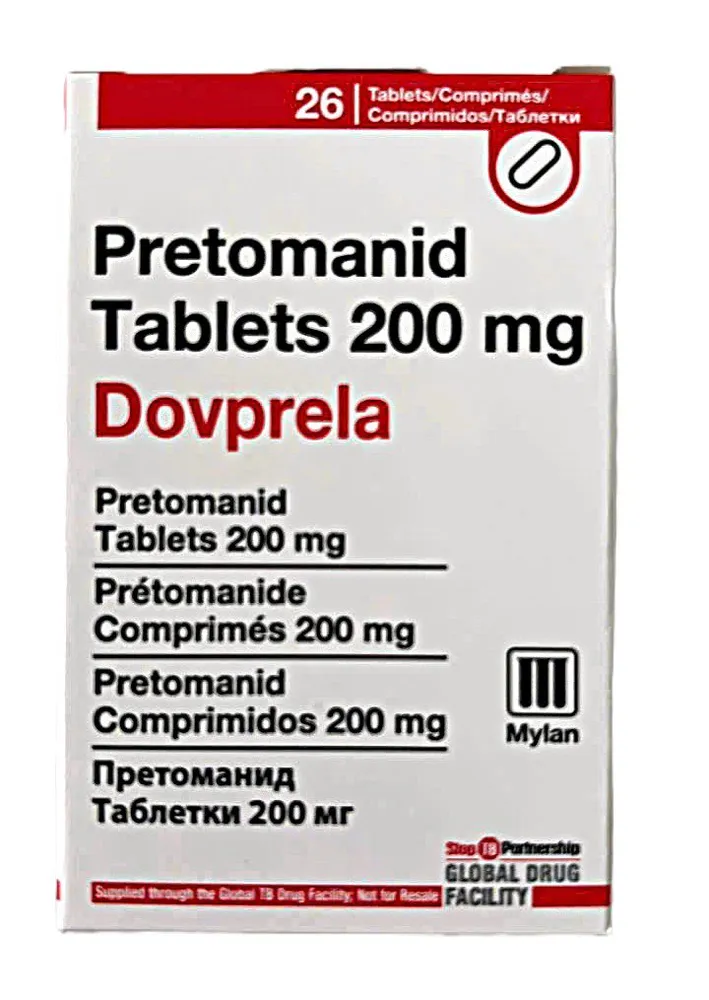
DOVPRELA
ItalyDovprela is an antibiotic used in adults to treat pulmonary tuberculosis that is resistant to certain antibiotics (such as rifampicin or isoniazid). It is taken in combination with two or three other specific medicines.
Frequently asked questions
How should I take Dovprela?
The recommended dose is 1 tablet once daily, to be swallowed with a glass of water during a meal. If you have difficulty swallowing, the tablet can be crushed and mixed with water, but it must be taken immediately afterward.
When should you not take this medicine?
You must not take this medicine if you are allergic to pretomanid, nitroimidazole antibiotics, or any of the other ingredients. It is also not recommended for children and adolescents under 18 years of age.
What are the most common side effects of Dovprela?
Very common side effects include nausea, vomiting, skin rashes, muscle or joint pain, nerve problems in the hands and feet (such as numbness or burning), and irregular heartbeat. Fatigue, reduced appetite, and vision disturbances are also common.
Which symptoms require immediate medical attention?
You must consult a doctor immediately if you experience bruising, bleeding, infections, yellowing of the skin or eyes, dark urine, abdominal pain, recurrent nausea or vomiting, or vision problems and numbness in the hands or feet.
Are there interactions with alcohol or other medicines?
Alcoholic beverages should be avoided during treatment because they increase the risk of serious liver damage. It is essential to inform your doctor about all other medications being taken, as some (such as rifampicin, efavirenz, or St. John's wort) may make the treatment ineffective.
What happens if I forget a dose or stop the treatment?
In case of a missed dose, do not take a double dose. Do not stop treatment without consulting your doctor, as this could make the therapy ineffective and cause the tuberculosis to worsen, increasing bacterial drug resistance.
Instructions for use
Package leaflet: Information for the patient
Dovprela 200 mg tablets
pretomanid
This medicinal product is subject to additional monitoring. This will allow for rapid identification of new safety information. You can help by reporting any side effects you experience while taking this medicine. See the end of section 4 for information on how to report side effects.
Please read all of this leaflet carefully before you start taking this medicine, as it contains important information for you.
- Keep this leaflet. You may need to read it again.
- If you have any questions, ask your doctor, pharmacist, or nurse.
- This medicine has been prescribed for you only. Do not give it to others, even if they have the same symptoms as yours, as it may be harmful.
- If you experience any side effects, including those not listed in this leaflet, tell your doctor, pharmacist, or nurse. See section 4.
Contents of this leaflet
- What Dovprela is and what it is used for
- What you need to know before taking Dovprela
- How to take Dovprela
- Possible side effects
- How to store Dovprela
- Contents of the pack and other information
1. What Dovprela is and what it is used for
Dovprela contains the active substance pretomanid, a type of antibiotic. Antibiotics are medicines
that work by killing bacteria causing diseases.
Dovprela is used in adults (18 years of age and older) in combination with three other medicines called
linezolid, bedaquiline, and moxifloxacin, to treat pulmonary tuberculosis that is resistant to another antibiotic, rifampicin, and possibly also resistant to isoniazid.
Dovprela is also used in adults in combination with two other medicines, called linezolid and bedaquiline, to treat pulmonary tuberculosis resistant to multiple classes of antibiotics (rifampicin, any fluoroquinolone), and possibly also resistant to isoniazid.
2. What you need to know before taking Dovprela
Do not take Dovprela
- if you are allergic to pretomanid, to antibiotics of the nitroimidazole group, or to any of the other ingredients of this medicine (listed in section 6).
Since pretomanid must be used in combination with other medicines for tuberculosis,
remember to also read the "Do not take" section in the package leaflets of these medicines. If you
have any doubts about information contained in the leaflets, consult your doctor or pharmacist.
Warnings and precautions
Talk to your doctor, pharmacist, or nurse before taking Dovprela if:
- you have impaired liver function
- you regularly consume alcoholic beverages
- you have impaired kidney function
- you have or have had heart rhythm disorders, or if someone in your family has a heart rhythm problem
- you have heart failure
- you have or have had underactive thyroid
- you have low levels of calcium, magnesium, or potassium in your blood
Liver damage
When Dovprela is used in combination with other tuberculosis medicines, there is a risk of liver damage. Your doctor will therefore monitor you for signs of liver damage and will take blood samples before starting treatment and at regular intervals during treatment.
Tell your doctor if you experience symptoms such as:
- fatigue
- loss of appetite
- nausea
- yellowing of the skin or eyes
- dark-colored urine
- abdominal pain
If liver problems occur, your doctor will adjust your treatment.
Reduction in blood cell count
Treatment with Dovprela in combination with other tuberculosis medicines may severely reduce the number of blood cells, such as platelets, red blood cells, and white blood cells called neutrophils. Contact your doctor immediately if you develop bruising, bleeding, or infections.
Your doctor will check your complete blood count before starting treatment and at regular intervals during treatment. Your doctor will adjust your treatment if your blood cell count is low.
Neuropathy in hands, feet, or eyes
During treatment, nerve problems in the hands, feet, or eyes may occur. Contact your doctor if you experience vision problems or numbness, tingling, or burning sensations in your hands or feet. In such cases, your doctor will adjust your treatment. If you experience vision problems, consult a doctor promptly for an ophthalmological examination.
Increased blood lactic acid levels
During treatment, excessive blood acidification known as lactic acidosis may occur. Contact your doctor if you repeatedly experience nausea or vomiting. In such cases, your doctor may adjust your treatment.
Heart problems
An abnormal heart rhythm known as QT interval prolongation may occur during treatment. Your doctor will therefore perform an ECG before starting treatment and at regular intervals during treatment. If heart rhythm abnormalities occur, your treatment will be adjusted.
In addition, levels of potassium, calcium, and magnesium will be monitored and corrected if abnormal.
The safety and efficacy of Dovprela have not been studied in combination with medicines other than linezolid, bedaquiline, and moxifloxacin; therefore, the medicine must not be used as part of other combination therapies.
Children and adolescents
This medicine is not recommended for children and adolescents under 18 years of age, as it has not been studied in this age group.
Other medicines and Dovprela
Tell your doctor or pharmacist if you are taking, have recently taken, or might take any other medicines, including herbal therapies. Other treatments may alter the way Dovprela works or increase the risk of side effects.
Avoid concomitant use of Dovprela with any of the following medicines. These medicines may reduce the effect of Dovprela, making the treatment ineffective; therefore, inform your doctor immediately about:
- rifampicin, rifamycin, rifapentine, rifabutin: other medicines used to treat tuberculosis or certain other infections
- efavirenz, etravirine: medicines used to treat HIV infection
- carbamazepine, phenytoin: medicines used to treat epilepsy and certain pain conditions
- St. John’s wort (Hypericum perforatum): a herbal medicine used to treat depression and anxiety
You should also avoid using medicines (other than bedaquiline, linezolid, and moxifloxacin) that may have harmful effects on the liver. Consult your doctor, who can advise you which medicines to avoid.
Inform your doctor if you are taking:
- methotrexate: a medicine used to treat severe joint inflammation, malignant tumors, and the skin condition psoriasis
- benzylpenicillin, ciprofloxacin: medicines used to treat bacterial infections
- indomethacin: a medicine used to treat pain and inflammation
- ritonavir: a medicine used to treat HIV infection
Dovprela and alcohol
Avoid consuming alcoholic beverages during treatment with Dovprela, as this increases the risk of severe liver damage.
Pregnancy and breastfeeding
If you are pregnant, think you may be pregnant, are planning to become pregnant, or are breastfeeding, consult your doctor or pharmacist before taking this medicine.
- Pregnancy Knowledge about the use of Dovprela during pregnancy is very limited. Dovprela should therefore be used during pregnancy only if the benefit to the patient outweighs the potential risk to the fetus. Your doctor will decide whether you should be treated with Dovprela.
- Breastfeeding It is not known whether pretomanid passes into breast milk. Your doctor will decide whether you should discontinue breastfeeding or avoid treatment with Dovprela.
Driving and using machines
After taking Dovprela, you may experience dizziness or vision problems. If so, do not drive and do not operate machinery.
Dovprela contains lactose and sodium
If your doctor has diagnosed you with an intolerance to certain sugars, contact them before taking this medicine.
This medicine contains less than 1 mmol (23 mg) of sodium per tablet, i.e., essentially 'sodium-free'.
3. How to take Dovprela
Take this medicine exactly as your doctor or pharmacist has told you. If
you have any doubts, consult your doctor or pharmacist.
Dovprela is used in combination with linezolid, bedaquiline, and moxifloxacin. Also read the package leaflets
of these medicines. If you have any doubts, consult your doctor or pharmacist.
The recommended dose is
- Dovprela: 1 tablet once daily
- linezolid: 600 mg daily
- bedaquiline: 400 mg once daily for 2 weeks, followed by 200 mg 3 times a week (with at least 48 hours between doses). For example, you may take bedaquiline weekly on Monday, Wednesday, and Friday starting from week 3
If your doctor has informed you that you will be taking moxifloxacin together with Dovprela, linezolid, and
bedaquiline, the recommended dose is
- moxifloxacin: 400 mg once daily.
Instructions for use
Take Dovprela together with linezolid, bedaquiline, and moxifloxacin. Swallow the
tablets with a glass of water during a meal. If you have difficulty swallowing a whole tablet,
an acceptable alternative is to crush the tablets and mix them with water for administration. You must take the tablets immediately after crushing and mixing with water.
The tablets should be taken under the direct supervision of a healthcare provider or according to local practice.
Duration of treatment
The duration of treatment with Dovprela in combination with other anti-tuberculosis medicines is
26 weeks. Your doctor may decide to extend the treatment or stop administration to ensure the treatment is safe and effective.
If you take more Dovprela than you should
Contact your doctor immediately and bring the medicine package with you.
If you forget to take Dovprela
Do not take a double dose to make up for the forgotten dose.
It is recommended to make up for any missed doses of pretomanid, bedaquiline, or moxifloxacin at the end of the treatment. Making up for missed doses of linezolid is not recommended due to adverse reactions associated with linezolid. Consult your doctor or pharmacist if you have missed a dose and are unsure what to do.
If you stop taking Dovprela
Do not stop treatment with Dovprela or the medicines linezolid, bedaquiline, or moxifloxacin, which are to be taken in combination, without the consent of your doctor. If you miss doses or do not complete the full course of treatment, the treatment may be ineffective and tuberculosis may worsen. Furthermore, this would increase the likelihood that the bacteria become resistant to these medicines.
If you have any doubts about the use of this medicine, consult your doctor, pharmacist, or
nurse.
4. Possible side effects
Like all medicines, this medicine can cause side effects, although not everyone experiences them.
The following side effects have been reported with the use of Dovprela in combination with other tuberculosis medicines:
Contact your doctor immediately if you experience any of the following:
Very common (may affect more than 1 in 10 people)
- reduction in the number of red blood cells. Possible signs include feeling tired, weakness, shortness of breath, fainting, and increased thirst.
- reduction in the number of white blood cells. Possible signs include infections.
- increased blood levels of liver enzymes called transaminases such as ALT, AST. Inform your doctor if you experience symptoms such as fatigue, lack of appetite or loss of appetite, nausea, yellowing of the skin and eyes, dark urine, or abdominal pain.
Common (may affect up to 1 in 10 people)
- reduction in the number of white blood cells or platelets. Possible signs include bruising, bleeding, or infections.
- increased blood levels of a liver enzyme called gamma GT (indicating liver function).
- increased blood levels of lactic acid. Contact your doctor if you have recurrent nausea or vomiting.
Uncommon (may affect up to 1 in 100 people)
- swelling of the face, lips, tongue, or eyes (angioedema)
Other side effects may occur with the following frequencies:
Very common (may affect more than 1 in 10 people)
- nausea, vomiting
- rash
- musculoskeletal pain, such as joint, back, or muscle pain
- nerve problems in the hands or feet, such as pain, burning, abnormal sensations, or numbness
- abnormalities in the heart's electrical activity (prolonged QT on electrocardiogram)
Common (may affect up to 1 in 10 people)
- fungal infection (including candida, yeast, fungi) of the mouth or throat, presenting with white patches
- fungal infection (including candida, yeast, fungi) of the vagina, which may cause itching, soreness, burning, and redness
- difficulty sleeping, depression
- fatigue
- reduced appetite
- taste disturbances
- dizziness
- tremor
- muscle spasm
- diarrhoea, constipation, indigestion
- inflammation of the stomach lining, inflammation of the pancreas
- abdominal pain
- dry skin, itching, hives, acne
- vision problems
- deafness
- sensation of increased heartbeat, chest pain
- high blood pressure
- coughing up blood, nosebleeds
- increased number of white blood cells
- increased blood levels of:
- amylase
- bilirubin, the yellow breakdown product of blood pigment
- lipase
- alkaline phosphatase
- creatinine
- blood sugar
- urea
- sodium
- potassium
- decreased blood levels of:
- blood sugar
- sodium
- calcium
- albumin
- potassium
- magnesium
- reduced excretion of creatinine, a breakdown product of muscle tissue, through the kidneys
Uncommon (may affect up to 1 in 100 people)
- excessive fluid loss, reduced fluid volume in the body
- anxiety
- enlarged liver
- yellowish discoloration of the skin, internal organs, and/or whites of the eyes (jaundice)
- lens disorders of the eyes
- worsening ability to focus on nearby objects
- eye itching, eye swelling, eye irritation or pain
- damage and/or inflammation of the optic nerve, with swelling and vision disturbances
- swelling of the optic disc (resulting in vision loss)
- clouding of the lens (cataract)
- increased or decreased heart rate
- low blood pressure
- cough
- sensation of bloating, belching
- burning of the tongue, enlargement of taste buds on the upper surface of the tongue
- gastroesophageal reflux
- swelling and pain (arthritis) in multiple joints
- allergic reaction
- eczema, excessive skin pigmentation, skin redness, hair loss
- abnormal presence of albumin protein in urine
- vomiting blood
- deficiency of white blood cells, red blood cells, and platelets in the blood
- increased blood levels of:
- creatine phosphokinase isoenzyme (MB)
- uric acid
- creatine phosphokinase
Reporting of side effects
If you experience any side effect, including those not listed in this leaflet, contact your doctor, pharmacist, or nurse. You can also report side effects directly through the national reporting system listed in Annex V. By reporting side effects, you help provide more information on the safety of this medicine.
5. How to store Dovprela
Keep this medicine out of the sight and reach of children.
Do not use this medicine after the expiry date stated on the carton, bottle, or blister after "Exp.". The expiry date refers to the last day of that month.
This medicine does not require any special storage temperature.
Unused medicine and waste material derived from this medicine must be disposed of in accordance with local regulations.
6. Package contents and other information
What Dovprela contains
- The active substance is pretomanid. Each tablet contains 200 mg of pretomanid.
- The other components are monohydrate lactose, microcrystalline cellulose, sodium starch glycolate, magnesium stearate, colloidal silicon dioxide, sodium lauryl sulfate, povidone.
Description of the appearance of Dovprela and package contents
Dovprela is a white to off-white oval tablet, with the inscription “M” on one side and “P200” on the other. Tablet dimensions: 18 × 9 mm.
The tablets are supplied in:
Blister packs containing 14, 14 × 1, 182 or 182 × 1 tablets
Plastic bottles containing 26 tablets
Not all pack sizes may be marketed.
Marketing Authorization Holder
Mylan IRE Healthcare Limited
Unit 35/36 Grange Parade
Baldoyle Industrial Estate
Dublin 13
Ireland
Manufacturer
Mylan Hungary Kft.
H-2900, Komárom
Mylan utca 1
Hungary
Rottapharm Limited,
Damastown Industrial Park,
Mulhuddart,
Dublin 15,
D15 XD71
Ireland
For further information about this medicinal product, please contact the local representative of the Marketing Authorization Holder:
België/Belgique/Belgien Lietuva
Viatris Viatris UAB
Tél/Tel: + 32 (0)2 658 61 00 Tel: +370 5 205 1288
България Luxembourg/Luxemburg
Майлан ЕООД Viatris
Тел.: +359 2 44 55 400 Tél/Tel: + 32 (0)2 658 61 00
(Belgique/Belgien)
Česká republika Magyarország
Viatris CZ s.r.o. Viatris Healthcare Kft.
Tel: + 420 222 004 400 Tel.: + 36 1 465 2100
Danmark Malta
Viatris ApS V.J. Salomone Pharma Ltd
Tlf.: +45 28 11 69 32 Tel: + 356 21 22 01 74
Deutschland Nederland
Viatris Healthcare GmbH Mylan BV
Tel: +49 800 0700 800 Tel: +31 (0)20 426 3300
Eesti Norge
Viatris OÜ Viatris AS
Tel: + 372 6363 052 Tlf: + 47 66 75 33 00
Ελλάδα Österreich
Viatris Hellas Ltd Viatris Austria GmbH
Τηλ: +30 2100 100 002 Tel: +43 1 86390
España Polska
Viatris Pharmaceuticals, S.L. Viatris Healthcare Sp. z o.o.
Tel: + 34 900 102 712 Tel.: + 48 22 546 64 00
France Portugal
Viatris Santé Viatris Healthcare, Lda
Tél: +33 1 40 80 15 55 Tel: + 351 21 412 72 00
Hrvatska România
Viatris Hrvatska d.o.o. BGP Products SRL
Tel: +385 1 23 50 599 Tel: +40 372 579 000
Ireland Slovenija
Viatris Limited Viatris d.o.o.
Tel: +353 1 8711600 Tel: + 386 1 23 63 180
Ísland Slovenská republika
Icepharma hf. Viatris Slovakia s.r.o.
Sími: +354 540 8000 Tel: +421 2 32 199 100
Italia Suomi/Finland
Viatris Italia S.r.l. Viatris Oy
Tel: + 39 (0)2 612 46921 Puh/Tel: +358 20 720 9555
Κύπρος Sverige
CPO Pharmaceuticals Limited Viatris AB
Τηλ: +357 22863100 Tel: + 46 (0) 8 630 19 00
Latvija
Viatris SIA
Tel: +371 676 055 80
Other sources of information
More detailed information on this medicinal product is available on the website of the European Medicines Agency: http://www.ema.europa.eu
The original data is available in the language of the country of manufacture.
Data source: Italian Medicines Agency (AIFA)
Data last verified: September 21, 2026