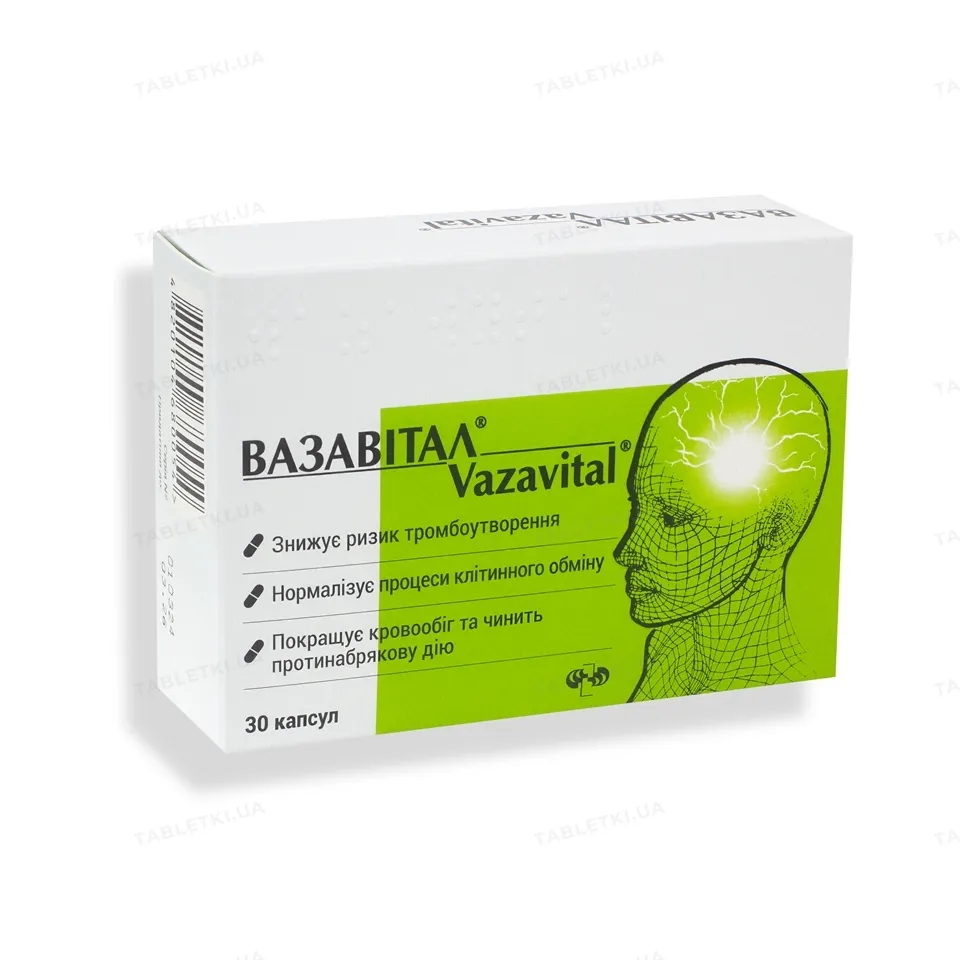
VAZAVITAL®
UkraineThe drug is used by adults for the prevention and complex treatment of impairments in memory, attention, and intellect (in case of encephalopathy), in the early stages of Alzheimer's disease, as well as for tinnitus, dizziness, diabetic retinopathy, Raynaud's syndrome, and circulatory problems in the lower extremities.
Frequently asked questions
How should Vazavital® be taken correctly?
Adults should take 1 capsule 3 times a day during meals, swallowing with half a glass of water. Typically, the course lasts from 1 to 3 months, twice a year. The first results appear after 7 days, and the most pronounced effect occurs after 3 weeks.
What side effects may Vazavital® cause?
Possible digestive disorders (nausea, vomiting, diarrhea, abdominal pain), headache, dizziness, allergic reactions (rash, itching, swelling), as well as changes in urine color or decreased blood clotting. In rare cases, hemorrhages may occur.
Who should not take this drug?
The drug is contraindicated in cases of hypersensitivity to its components, urolithiasis, thrombophlebitis, gout, gastric or duodenal ulcers in the acute stage, as well as serious renal dysfunction or disturbances in iron and copper metabolism. Due to its lactose content, it should not be used by individuals with lactose intolerance.
Can the drug be combined with other medicines?
It is not recommended to take it together with other multivitamins. Simultaneous intake with anticoagulants and antiplatelet agents (e.g., acetylsalicylic acid) should be avoided due to the risk of bleeding. Additionally, the drug should not be taken if you have been taking warfarin or thiazide diuretics for a long time.
Can you drive a car during treatment?
Due to the possible occurrence of dizziness, caution should be exercised, as this may affect the ability to operate vehicles or machinery.
Can the drug be used by pregnant or breastfeeding women?
Due to the lack of sufficient data, use during this period is not recommended.
Instructions for use
INSTRUCTIONS FOR MEDICAL USE OF THE MEDICINAL PRODUCT VASAVITAL®
Composition:
Active ingredients: dry extract of ginkgo biloba (Ginkgo biloba L.), bee pollen (flower pollen), rutin (vitamin P), ascorbic acid (vitamin C), nicotinic acid (vitamin PP), thiamine hydrochloride (vitamin B1), riboflavin (vitamin B2), pyridoxine hydrochloride (vitamin B6);
Each capsule contains: dry extract of ginkgo biloba (Ginkgo biloba L.) (ratio of raw material to extract 50:1; extraction solvent – 60% ethanol) 40 mg, bee pollen (flower pollen) 60 mg, rutin (vitamin P) 20 mg, ascorbic acid (vitamin C) 30 mg, nicotinic acid (vitamin PP) 17 mg, thiamine hydrochloride (vitamin B1) 1 mg, riboflavin (vitamin B2) 1 mg, pyridoxine hydrochloride (vitamin B6) 1 mg;
Excipients: lactose monohydrate; magnesium stearate;
Capsule shell composition: gelatin, titanium dioxide (E 171), indigocarmine (E 132), quinoline yellow (E 104).
Pharmaceutical form. Capsules.
Main physicochemical properties: hard gelatin capsules of cylindrical shape with hemispherical ends; the body of the capsule is white, the cap is green. The capsule contents – light brown powder with a pleasant odor. The presence of dark and light specks is permissible.
Pharmacotherapeutic group.
Drugs used in dementia. ATC code N06D X.
Pharmacological properties.
Pharmacodynamics.
Vazavital® is a combined herbal preparation containing vitamins.
It contains Ginkgo biloba leaf extract. The active ingredients of Ginkgo biloba are flavonoid glycosides and terpenes – ginkgolides and bilobalides, as well as proanthocyanidins and organic acids, which enhance the bioavailability of the preparation's components and increase the specific activity of Vazavital®. The pharmacological action of Ginkgo biloba leaf extract is primarily based on its ability to inhibit free radical oxidation processes, which is an important factor in tissue damage during ischemia and hypoxia.
The preparation affects the production of vasoactive mediators and inflammatory mediators, thereby enhancing its ability to improve blood circulation and exert an anti-edematous effect. The drug reduces the risk of thrombosis, normalizes cellular metabolism, increases ATP content in the cerebral cortex, positively influences dopamine and norepinephrine metabolism, as well as cholinergic transmission. It improves tissue perfusion due to its regulatory effect on blood flow in arteries, capillaries, and veins.
Bee pollen (flower pollen) contains biologically active substances (essential amino acids, unsaturated fatty acids) necessary for cell regeneration. Flower pollen exerts an anti-atherosclerotic effect, reduces blood cholesterol levels, and promotes its elimination from the body.
The predominant components in pollen—rutin and quercetin—improve the elasticity of blood capillaries and regulate their permeability. Flavonoids also exert mild antihistaminic, antioxidant, and detoxifying effects.
Ascorbic acid (vitamin C). Normalizes capillary permeability, supports the body's defense functions, prevents thrombus formation, and promotes tissue oxygenation.
Nicotinic acid (vitamin PP). Participates in energy metabolism reactions.
Thiamine hydrochloride (vitamin B1). Plays a primary role in the optimal utilization of carbohydrates, the main energy source, and regulates the function of the peripheral nervous system.
Riboflavin (vitamin B2). Participates in growth processes, affects vision and skin condition; its active phosphorylated forms are involved in regulating redox reactions.
Pyridoxine hydrochloride (vitamin B6). Essential for the metabolism of proteins and fats, promotes erythrocyte formation, and regulates the condition of the nervous system.
Rutin (vitamin P). An angioprotector that reduces increased capillary permeability, strengthens the vascular wall, reduces edema and inflammation. Exerts anti-aggregant effects, thereby improving microcirculation and slowing the progression of diabetic retinopathy.
Clinical characteristics.
Indications.
For use in adults for the prevention and as part of complex treatment of:
- dyscirculatory encephalopathy with impairments in attention, memory, perception, and reduced intellectual capacity;
- early-stage Alzheimer's disease;
- neurosensory disorders: cochleovestibular syndrome (tinnitus, hypoacusis, dizziness);
- diabetic retinopathy;
- peripheral arterial disease of the lower limbs (pain when walking, trophic disorders);
- Raynaud's syndrome.
Contraindications.
Hypersensitivity to the components of the drug. Nephrolithiasis, thrombophlebitis, disorders of iron or copper metabolism, severe renal function impairment, peptic ulcer of the stomach and duodenum in the stage of exacerbation, gout, hyperuricemia.
Interaction with other medicinal products and other forms of interaction.
Clinical studies on the interaction of Ginkgo biloba have demonstrated potentiation or inhibition of cytochrome P450 isoenzymes. Changes in midazolam concentration levels were observed after concomitant administration of Ginkgo biloba, suggesting a possible interaction via CYP3A4. Therefore, medicinal products that are primarily metabolized via CYP3A4 and have a narrow therapeutic index should be used with caution.
The drug should not be taken if the patient has been long-term using acetylsalicylic acid, warfarin, or thiazide diuretics.
When used concomitantly with medicinal products that inhibit blood coagulation (such as phenprocoumon, acetylsalicylic acid, and other nonsteroidal anti-inflammatory drugs), the effect of the latter may be enhanced.
Due to the increased risk of bleeding, concomitant use of the drug with anticoagulants and antiplatelet agents should be avoided. Hemorrhages may be intensified when the drug is taken concomitantly with quinine. Vitamin C enhances the effect of antimicrobial agents belonging to the sulfonamide group.
Special precautions for use
The drug should be taken only after consultation with a physician in cases of pathologically increased tendency to bleeding (hemorrhagic diathesis) or when used concomitantly with anticoagulants.
Since data indicate that medicinal products containing Ginkgo biloba extract may increase the risk of bleeding, this product should be discontinued prior to surgical procedures.
Use with caution in patients with a history of peptic ulcer of the stomach and duodenum, urolithiasis, hepatic impairment, patients with a history of renal disease, predisposition to thrombosis and bleeding (hemophilia, thrombocytopenia, thrombocytopathies, etc.), and in patients with allergic disorders. The product should not be prescribed concomitantly with other multivitamin preparations due to the risk of vitamin overdose. The recommended dose of the drug should not be exceeded.
The product contains lactose; therefore, patients with rare hereditary forms of galactose intolerance, lactase deficiency, or glucose-galactose malabsorption syndrome should not take this product.
Close monitoring is recommended in patients who are concurrently taking drugs metabolized by cytochrome P450 3A4. Information regarding Ginkgo biloba overdose is not available.
The product contains lactose; therefore, patients with rare hereditary forms of galactose intolerance, lactase deficiency, or glucose-galactose malabsorption syndrome should not take this product.
Use during pregnancy or breastfeeding
Due to the lack of clinical data, the product is not recommended for use during pregnancy or breastfeeding.
Ability to influence reaction rate while driving or operating machinery
Studies evaluating the effect on reaction speed while driving or operating machinery have not been conducted. However, dizziness may impair the ability to drive or operate machinery.
Method of Administration and Dosage.
Adults: 1 capsule three times a day. Take during meals with ½ glass of water.
The treatment course is determined individually by a physician and usually lasts
1–3 months, twice a year. The onset of therapeutic effect occurs within 7 days of treatment.
The most pronounced effect is observed 3 weeks after starting the medication.
Children.
Do not use in children.
Overdose.
Symptoms: possible intensification of adverse reactions, abdominal pain, nausea, vomiting, bloating, renal dysfunction, allergic skin rashes, itching, headache, increased excitability, impaired consciousness.
With prolonged use of high doses, anorexia, disturbances in liver enzyme activity, paresthesia, excessive sweating, arterial hypotension, hyperuricemia, and sensation of warmth may occur.
Treatment: induce vomiting. Symptomatic therapy.
Side effects.
Rarely observed reactions:
Immune system: hypersensitivity reactions, allergic reactions, including anaphylactic shock, angioneurotic edema, urticaria, dyspnea, bronchospasm, hyperthermia;
Gastrointestinal system: digestive disorders, nausea, vomiting, diarrhea, dyspepsia, abdominal pain, increased gastric juice secretion;
Nervous system: headache, dizziness, syncope (including vasovagal);
Skin: skin inflammation, redness, swelling, itching, rash, urticaria, eczema;
Other: decreased blood coagulation, change in urine color.
In isolated cases, when using medicinal products containing Ginkgo biloba extract, especially when used concomitantly with anticoagulants (such as phenprocoumon, acetylsalicylic acid and other nonsteroidal anti-inflammatory drugs), bleeding (gastrointestinal, ocular, cerebral) may occur.
Shelf life.
2 years.
Do not use the medicinal product after the expiry date stated on the packaging.
Storage conditions.
Store in the original packaging at a temperature not exceeding 25 °C.
Keep out of reach of children.
Packaging.
10 capsules in a blister. 3 blisters in a cardboard box.
90 capsules in a polymer bottle. 1 bottle in a cardboard box.
Release category.
Over-the-counter.
Manufacturer.
LLC "Astrafarm".
Manufacturer's location and address of business activity.
6, Kyivska St., Vyshneve, Kyiv-Sviatoshyn district, Kyiv region, 08132, Ukraine.
Manufacturer.
JSC "Biolyk".
Manufacturer's location and address of business activity.
131, Nezalezhnosti St., city of Ladyzhyn, Vinnytsia region, 24321, Ukraine.
Marketing Authorization Holder.
LLC "Ukrainian Pharmaceutical Company".
Address of the Marketing Authorization Holder.
1U, Starosilska St., Kyiv, 02660, Ukraine.
Similar drugs
| Brand name | Dosage form | Active substance / Dosage | Manufacturer |
|---|---|---|---|
| EVRIZAM | capsules |
|
Farmak JSC |
| NEURO-NORM | capsules |
|
PJSC «Pharmaceutical Company «Darnitsa» |
| OLATROPIL® | capsules |
|
JSC "Olyinpharm" |
The original data is available in the language of the country of manufacture.
Data source: State Register of Medicinal Products of Ukraine
Data last verified: August 13, 2026