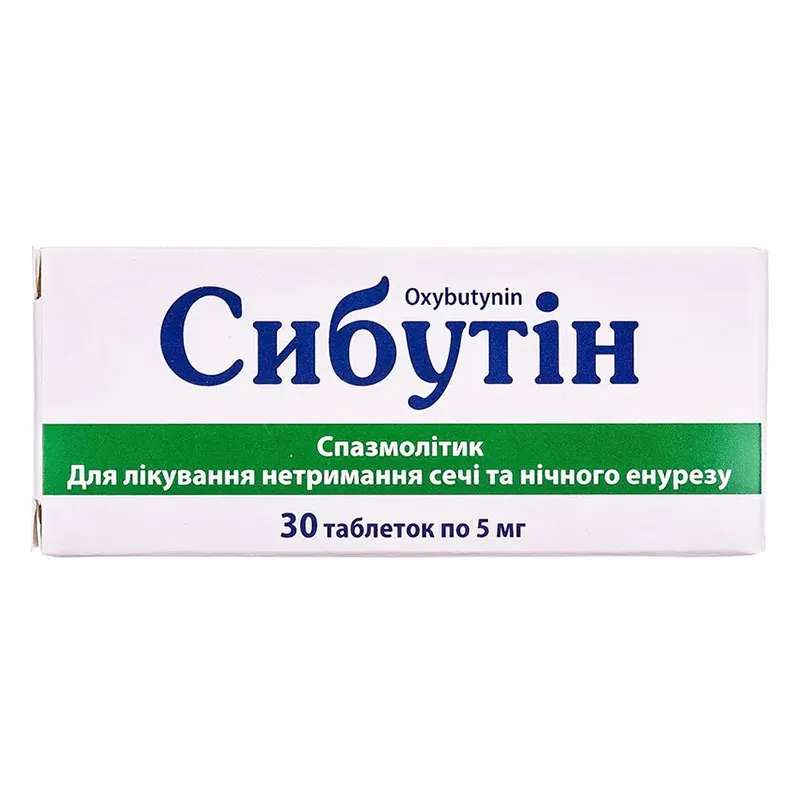
SIBUTIN
UkraineThe drug is used to treat urinary incontinence, frequent or sudden urges to urinate associated with bladder instability. It is also used to control bladder hyperactivity following surgical operations or in cases of cystitis. In children, the drug is prescribed for urinary incontinence and nocturnal enuresis.
Frequently asked questions
How should Sibutin be taken?
The tablets are taken orally. For adults, the usual dosage is 5 mg 2–3 times daily (maximum 4 times). For elderly people, a lower dose of 2.5 mg 2 times daily is recommended. For children aged 5 and older, the usual dosage is 2.5 mg 2 times daily. In cases of nocturnal enuresis, the last dose should be taken before bedtime.
Who should not take this medication?
Use is contraindicated in cases of hypersensitivity to the components, myasthenia gravis, glaucoma, urinary retention (e.g., due to prostatic hypertrophy), esophageal dysfunction, intestinal obstruction, and other gastrointestinal problems. The drug should also not be taken by children under 5 years of age, breastfeeding women, or patients with lactose intolerance.
What are the possible side effects of Sibutin?
Possible side effects include nausea, constipation, dry mouth, abdominal pain, diarrhea, or vomiting. Nervous system effects may include headache, dizziness, drowsiness, hallucinations, or confusion. Visual disturbances (blurred vision, dilated pupils), palpitations (tachycardia), and dry skin are also possible.
Can the drug be combined with other medicines or alcohol?
Caution should be exercised when combining with other anticholinergic agents, neuroleptics, antihistamines, and antidepressants. Alcohol may enhance the drowsiness caused by the drug. Since Sibutin may reduce gastric motility, it may affect the absorption of other medications.
Does the drug affect the ability to drive a vehicle?
Yes, the drug may cause drowsiness or reduced visual acuity; therefore, caution should be exercised when driving a vehicle or operating machinery.
Instructions for use
INSTRUCTIONS FOR MEDICAL USE OF THE MEDICINAL PRODUCT SIBUTIN (Sibutin)
Composition:
Active substance: oxybutynin hydrochloride;
1 tablet contains 5 mg of oxybutynin hydrochloride;
Excipients: lactose monohydrate, microcrystalline cellulose, potato starch, calcium stearate.
Pharmaceutical form. Tablets.
Main physicochemical properties: flat cylindrical tablets with bevelled edges and a score line, white or almost white in colour.
Pharmacotherapeutic group. Agents used in urology. Agents for the treatment of frequent micturition and urinary incontinence. ATC code G04BD04.
Pharmacological properties.
Pharmacodynamics.
Oxybutynin exerts a direct spasmolytic effect on the smooth muscle fibers of the detrusor, as well as an anticholinergic effect by blocking the action of acetylcholine on M-cholinoreceptors of smooth muscles. These properties cause relaxation of the urinary bladder detrusor. In patients with unstable bladder, Sibutin increases bladder volume and reduces the frequency of spontaneous detrusor contractions.
Pharmacokinetics.
After oral administration, oxybutynin is rapidly absorbed from the gastrointestinal tract; maximum plasma concentration is reached within less than 1 hour, followed by a biexponential decline with a half-life of 2 to 3 hours. The maximum effect is observed within 3–4 hours, and residual activity may persist up to 10 hours.
Steady-state concentration is achieved within 8 days of oral drug administration. In elderly patients with an active lifestyle, oxybutynin does not exhibit accumulation, and its pharmacokinetics do not differ from those in other adult patients. However, in frail elderly patients, Cmax and AUC values are significantly increased. Oxybutynin is extensively metabolized in the liver, primarily by cytochrome P450 enzymes, particularly CYP3A4, located mainly in the liver and intestinal wall; its metabolites also possess M-cholinoblocking activity. The main route of elimination is via the kidneys.
Clinical characteristics.
Indications.
Urinary incontinence, urgency, or frequency due to detrusor instability (detrusor hyperreflexia) resulting from neurogenic bladder dysfunction, as observed in conditions such as multiple sclerosis and spina bifida, or due to idiopathic detrusor instability (motor urge incontinence). Also indicated for the management of bladder hyperactivity occurring after surgical procedures on the bladder or prostate gland, or in association with concomitant cystitis.
Use in children.
Oxybutynin hydrochloride is indicated for use in children for:
- Urinary incontinence, urgency, or frequency due to detrusor instability resulting from idiopathic bladder hyperactivity or neurogenic bladder dysfunction (detrusor overactivity);
- Nocturnal enuresis associated with detrusor overactivity, in combination with non-pharmacological treatment, when other therapies have been ineffective.
Contraindications.
- Hypersensitivity to the active substance or to any of the other components of the medicinal product;
- Myasthenia gravis;
- Narrow-angle glaucoma or shallow anterior chamber of the eye;
- Patients with fever or under conditions of elevated ambient temperature, due to the risk of provoking hyperpyrexia;
- Children under 5 years of age;
- Esophageal dysfunction, including hiatal hernia;
- Functional or organic gastrointestinal obstruction, including pyloric stenosis, paralytic ileus, intestinal atony;
- Patients with ileostomy, colostomy, toxic megacolon; severe ulcerative colitis;
- Patients with urinary tract obstruction where urinary retention may be exacerbated, such as in benign prostatic hyperplasia.
Interaction with other medicinal products and other forms of interaction.
When used concomitantly with lysuride, there is a risk of impaired consciousness; therefore, regular clinical monitoring of patients is required.
Sibutin should be used with caution in combination with other anticholinergic agents due to the potential for potentiation of anticholinergic effects.
Isolated cases of interaction have been reported between anticholinergic agents and phenothiazines, amantadine, neuroleptics (e.g., phenothiazines, butyrophenones, clozapine), other anticholinergic antiparkinsonian agents (e.g., biperiden, levodopa), antihistamines, quinidine, digitalis preparations, tricyclic antidepressants, atropine and related compounds (such as atropine-containing spasmolytics), and dipyridamole. Caution should be exercised when oxybutynin is used concomitantly with these medicinal products.
Due to reduced gastric motility, oxybutynin may impair the absorption of other medicinal products.
Oxybutynin is metabolized by the CYP3A4 isoenzyme of cytochrome P450. Concomitant administration with a CYP3A4 inhibitor may inhibit oxybutynin metabolism and increase its exposure. Oxybutynin may act antagonistically to prokinetic agents.
Concomitant use with cholinesterase inhibitors may reduce their efficacy.
Patients should be informed that alcohol consumption may intensify drowsiness caused by anticholinergic agents such as oxybutynin.
Special precautions for use
The medicinal product should be used with caution in elderly patients who may be more sensitive to the effects of oxybutynin and may require dose reduction (see section "Dosage and administration"). The medicinal product should also be used with caution in patients with autonomic neuropathy, gastrointestinal disorders including severe gastrointestinal motility disorders, patients with hepatic or renal insufficiency, or cerebral circulation disorders.
Anticholinergic agents should be used with caution in elderly patients due to the risk of cognitive impairment.
After administration of the medicinal product Sibutin, clinical manifestations of hyperthyroidism, ischemic heart disease, chronic heart failure, arterial hypertension, benign prostatic hyperplasia, cardiac arrhythmias, and tachycardia may be exacerbated.
There have been reports of central nervous system (CNS) anticholinergic effects (e.g., hallucinations, restlessness, confusion, somnolence). Monitoring is recommended, especially during the first few months after initiation of therapy or dose increase. If CNS anticholinergic effects occur, discontinuation of treatment or dose reduction should be considered (see section "Interaction with other medicinal products and other forms of interaction").
Since oxybutynin may cause angle-closure glaucoma, patients should be advised to seek immediate medical attention in case of sudden loss of visual acuity or onset of eye pain.
Oxybutynin is considered unsafe for patients with porphyria, as it has shown porphyrinogenic properties in animal studies and in vitro.
Prolonged use of the medicinal product Sibutin may lead to the development of dental caries due to reduced or absent salivation. Therefore, regular dental check-ups are recommended during long-term treatment with this medicinal product.
Anticholinergic medicinal products should be used with caution in patients who are concurrently taking medications (e.g., bisphosphonates) that may cause or exacerbate esophagitis.
In case of urinary tract infection, antibacterial therapy should be initiated.
Patients with rare hereditary conditions of galactose intolerance, lactase deficiency, or glucose-galactose malabsorption should not take Sibutin due to its lactose content.
Use during pregnancy or breastfeeding
The safety of oxybutynin use during pregnancy has not been established. Oxybutynin should be avoided during pregnancy except when safer alternative treatments are unavailable.
The medicinal product should not be administered to women during breastfeeding.
Ability to affect reaction speed when driving or operating machinery
The medicinal product may cause reduced visual acuity or somnolence. Patients should not drive or operate machinery unless it has been established that the medicinal product does not impair the patient's ability for physical or mental performance.
Administration and Dosage
The medicinal product is administered orally. The tablet may be divided into two equal doses.
Adults
The usual dose is 5 mg 2–3 times daily. The dose may be increased to the maximum of 5 mg 4 times daily to achieve the clinical effect, provided side effects are tolerable.
Elderly Patients
In elderly patients, the drug's elimination half-life is prolonged; therefore, a dosage of 2.5 mg twice daily is recommended, particularly in debilitated patients. The dose may be increased to 5 mg twice daily to achieve the clinical effect, provided side effects are well tolerated.
Children from 5 years of age
Neurogenic bladder instability, nocturnal enuresis: The usual dose is 2.5 mg twice daily. The dose may be increased to 5 mg 2–3 times daily to achieve the clinical effect, provided side effects are well tolerated. In cases of nocturnal enuresis, the last dose should be taken before bedtime.
Children
The use of the medicinal product is contraindicated in children under 5 years of age. There is limited data on the use of oxybutynin in children with monosymptomatic nocturnal enuresis (not associated with detrusor overactivity). The medicinal product should be used with caution in children aged 5 years and older, as they may be more sensitive to the effects of oxybutynin, particularly regarding adverse reactions affecting the central nervous system and psychiatric manifestations.
Overdose
Symptoms. Symptoms of overdose develop as an intensification of the usual adverse effects on the central nervous system (ranging from restlessness and agitation to psychotic behavior), circulatory disturbances (flushing, hypotension, circulatory failure, etc.), respiratory depression, paralysis, and coma.
Treatment. In case of overdose, symptomatic treatment should primarily be applied:
- Immediate gastric lavage;
- In life-threatening anticholinergic syndrome, neostigmine (or physostigmine) may be administered at the dosage recommended in the instructions for medical use of these agents;
- Treatment of fever.
In cases of pronounced restlessness or agitation, diazepam 10 mg should be administered intravenously.
In cases of tachycardia, propranolol should be administered intravenously.
In cases of urinary retention, catheterization of the bladder is indicated.
In case of respiratory muscle paralysis, artificial ventilation of the lungs should be performed.
Adverse reactions.
Gastrointestinal disorders: nausea, constipation, dry mouth, discomfort in the abdominal area, diarrhea, vomiting, gastroesophageal reflux, decreased appetite, anorexia, dysphagia, pseudo-obstruction in patients with risk factors (elderly patients or patients with constipation who are taking other medicinal products that reduce intestinal motility).
Infections and infestations: urinary tract infection.
Central nervous system disorders: headache, dizziness, somnolence, convulsions, cognitive impairment.
Psychiatric disorders: agitation, hallucinations, nightmares, confusion, anxiety, paranoia, cognitive impairment in elderly patients, symptoms of depression, dependence (in patients with a history of dependence on medicinal products or other substances causing dependence), disorientation, delirium.
Immune system disorders: hypersensitivity.
Cardiac disorders: tachycardia, cardiac arrhythmia.
Vascular disorders: flushing (more pronounced in children than in adults).
Eye disorders: blurred vision, mydriasis, increased intraocular pressure, closed-angle glaucoma, and dry conjunctiva.
Injury, poisoning, and procedural complications: heat stroke.
Renal and urinary disorders: urinary retention, dysuria.
Skin and subcutaneous tissue disorders: dry skin, skin rash, urticaria, angioedema, hypohidrosis, photosensitivity.
Shelf life. 3 years.
Storage conditions.
Store in the original packaging at a temperature not exceeding 25 °C.
Keep out of reach of children.
Packaging.
10 tablets in a blister; 3 blisters per pack.
Prescription status. Prescription only.
Manufacturer. JSC "KYIV VITAMIN PLANT".
Manufacturer's address and location of its operations.
38 Kopilivska Street, Kyiv, 04073, Ukraine.
Web-site: www.vitamin.com.ua.
INSTRUCTION
for medical use of medicinal product
SIBUTIN
(Sibutin)
Composition:
Active substance: oxybutynin hydrochloride;
1 tablet contains oxybutynin hydrochloride 5 mg;
Excipients: lactose monohydrate, microcrystalline cellulose, potato starch, calcium stearate.
Pharmaceutical form. Tablets.
Main physicochemical properties: flat cylindrical tablets with bevelled edges and a score line, white or almost white in colour.
Pharmacotherapeutic group. Medicinal products used in urology. Medicinal products for the treatment of frequent urination and urinary incontinence. ATC code G04BD04.
Pharmacological properties.
Pharmacodynamics.
Oxybutynin exerts a direct spasmolytic effect on the smooth muscle fibers of the detrusor and also has an anticholinergic effect by blocking the action of acetylcholine on M-cholinoreceptors of smooth muscles. These properties cause relaxation of the urinary bladder detrusor. In patients with unstable bladder, Sibutin increases bladder capacity and reduces the frequency of spontaneous detrusor contractions.
Pharmacokinetics.
After oral administration, oxybutynin is rapidly absorbed from the gastrointestinal tract, maximum plasma concentration is achieved in less than 1 hour, and then declines biexponentially with a half-life of 2 to 3 hours. Maximum effect is observed within 3–4 hours, and residual activity may persist for up to 10 hours.
Steady-state concentration is reached after 8 days of oral administration. In elderly patients who are physically active, oxybutynin does not accumulate, and its pharmacokinetics do not differ from those in other adult patients. However, in debilitated elderly patients, Cmax and AUC values are significantly increased. Oxybutynin is extensively metabolized in the liver, primarily by the cytochrome P450 enzyme system, particularly CYP3A4, which is mainly present in the liver and intestinal wall. Its metabolites also possess M-cholinoblocking activity. The main route of elimination is via the kidneys.
Clinical characteristics.
Indications.
Urinary incontinence, urgency or frequent urination due to bladder instability resulting from neurogenic bladder dysfunction (detrusor hyperreflexia), as observed in conditions such as multiple sclerosis and spina bifida, or due to idiopathic detrusor instability (motor urgency incontinence). Also indicated for the control of bladder hyperactivity occurring after surgical procedures on the bladder or prostate gland, or in association with concomitant cystitis.
Use in children.
Oxybutynin hydrochloride is indicated for use in children for:
- Urinary incontinence, urgency or frequent urination due to bladder instability resulting from idiopathic bladder hyperactivity or neurogenic bladder dysfunction (detrusor hyperactivity);
- Nocturnal enuresis associated with detrusor hyperactivity, in combination with non-pharmacological treatment, when other therapies have been ineffective.
Contraindications.
- Hypersensitivity to the active substance or to any other component of the medicinal product;
- Myasthenia gravis;
- Narrow-angle glaucoma or shallow anterior chamber of the eye;
- Patients with fever or in conditions of elevated environmental temperature due to the risk of provoking hyperpyrexia;
- Children under 5 years of age;
- Esophageal dysfunction, including hiatal hernia;
- Functional or organic gastrointestinal obstruction, including pyloric stenosis, paralytic ileus, intestinal atony;
- Patients with ileostomy, colostomy, toxic megacolon; severe ulcerative colitis;
- Patients with urinary tract obstruction when urinary retention may worsen, e.g., due to prostate hypertrophy.
Interaction with other medicinal products and other forms of interaction.
When used concomitantly with lysuride, there is a risk of impaired consciousness; therefore, regular clinical monitoring of patients is required.
Sibutin should be used cautiously with other anticholinergic agents due to the possibility of potentiation of anticholinergic effects.
Isolated cases of interaction have been reported between anticholinergic agents and phenothiazines, amantadine, neuroleptics (e.g., phenothiazines, butyrophenones, clozapine), other anticholinergic antiparkinsonian agents (e.g., biperiden, levodopa), antihistamines, quinidine, digitalis preparations, tricyclic antidepressants, atropine and related compounds (such as atropine-like spasmolytics), and dipyridamole. Caution should be exercised when using oxybutynin concomitantly with these medicinal products.
Due to reduced gastric motility, oxybutynin may impair the absorption of other medicinal products.
Oxybutynin is metabolized by the CYP3A4 isoenzyme of cytochrome P450. Concomitant administration with a CYP3A4 inhibitor may inhibit oxybutynin metabolism and increase its exposure. Oxybutynin may act antagonistically to prokinetic agents.
Concomitant use with cholinesterase inhibitors may reduce their efficacy.
Patients should be informed that alcohol consumption may enhance somnolence caused by anticholinergic agents such as oxybutynin.
Special precautions.
The medicinal product should be used cautiously in elderly patients, who may be more sensitive to the effects of oxybutynin and may require dose reduction (see section "Dosage and administration"). The medicinal product should also be used cautiously in patients with autonomic neuropathy, gastrointestinal disorders, including severe gastrointestinal motility disorders, patients with hepatic or renal insufficiency, or cerebral circulation insufficiency.
Anticholinergic agents should be used cautiously in elderly patients due to the risk of cognitive impairment.
After administration of Sibutin, clinical manifestations of hyperthyroidism, ischemic heart disease, chronic heart failure, arterial hypertension, prostate hyperplasia, cardiac arrhythmias, and tachycardia may be exacerbated.
Reports exist of anticholinergic effects on the CNS (e.g., hallucinations, restlessness, confusion, somnolence). Monitoring is recommended, especially during the first few months of therapy or after dose escalation. If anticholinergic CNS effects occur, discontinuation of treatment or dose reduction should be considered (see section "Interaction with other medicinal products and other forms of interaction").
Since oxybutynin may cause closed-angle glaucoma, patients should be advised to seek immediate medical attention in case of sudden vision loss or eye pain.
Oxybutynin is considered unsafe for patients with porphyria, as it has shown porphyrinogenic properties in animal studies and in vitro.
Prolonged use of Sibutin may lead to dental caries due to reduced or ceased salivation. Therefore, regular dental check-ups are recommended during long-term treatment.
Anticholinergic medicinal products should be used cautiously in patients concurrently taking medicinal products (e.g., bisphosphonates) that may cause or exacerbate esophagitis.
In case of urinary tract infection, antibacterial therapy should be prescribed.
Patients with rare hereditary forms of galactose intolerance, lactase deficiency, or glucose-galactose malabsorption should not take Sibutin due to its lactose content.
Use during pregnancy or breastfeeding.
The safety of oxybutynin use during pregnancy has not been established. Oxybutynin should be avoided during pregnancy except when safer alternative treatments are unavailable.
The medicinal product should not be administered to women during breastfeeding.
Ability to affect reaction rate when driving or operating machinery.
The medicinal product may cause reduced visual acuity or somnolence. Patients should not drive or operate machinery unless it has been established that the medicinal product does not affect their ability for physical or mental performance.
Dosage and administration.
The medicinal product is taken orally. The tablet may be divided into two equal doses.
Adults
Usual dose: 5 mg 2–3 times daily. The dose may be increased up to a maximum of 5 mg 4 times daily to achieve clinical effect, provided adverse reactions are well tolerated.
Elderly patients
In elderly patients, the elimination half-life of the drug is prolonged; therefore, a dose of 2.5 mg twice daily is recommended, particularly for debilitated patients. The dose may be increased to 5 mg twice daily to achieve clinical effect, provided adverse reactions are well tolerated.
Children from 5 years of age
Neurogenic bladder instability, nocturnal enuresis: usual dose is 2.5 mg twice daily. The dose may be increased to 5 mg 2–3 times daily to achieve clinical effect, provided adverse reactions are well tolerated. For nocturnal enuresis, the last dose should be taken before bedtime.
Children.
The use of the medicinal product is contraindicated in children under 5 years of age. Data on the use of oxybutynin in children with monosymptomatic nocturnal enuresis (not associated with detrusor hyperactivity) are limited.
In children from 5 years of age, the medicinal product should be used with caution, as they may be more sensitive to the effects of oxybutynin, particularly regarding adverse reactions affecting the central nervous system and psychiatric disorders.
Overdose.
Symptoms. Symptoms of overdose develop as an intensification of the usual adverse effects: central nervous system effects (from restlessness and agitation to psychotic behavior), circulatory disturbances (flushing, decreased blood pressure, circulatory failure, etc.), respiratory failure, paralysis, and coma.
Treatment. Symptomatic treatment is primarily indicated in case of overdose:
- Immediate gastric lavage;
- In case of severe, life-threatening anticholinergic syndrome, neostigmine (or physostigmine) may be administered at the dosage recommended in the instructions for medical use of these agents;
- Treatment of fever.
In case of severe agitation or excitement, diazepam 10 mg should be administered intravenously.
For tachycardia, propranolol should be administered intravenously.
Catheterization of the bladder is indicated in case of urinary retention.
In case of respiratory muscle paralysis, artificial ventilation of the lungs should be performed.
Adverse reactions.
Gastrointestinal disorders: nausea, constipation, dry mouth, discomfort in the abdominal area, diarrhea, vomiting, gastroesophageal reflux, decreased appetite, anorexia, dysphagia, pseudo-obstruction in patients with risk factors (elderly patients or patients with constipation who are taking other medicinal products that reduce intestinal motility).
Infections and infestations: urinary tract infection.
Central nervous system disorders: headache, dizziness, somnolence, convulsions, cognitive impairment.
Psychiatric disorders: agitation, hallucinations, nightmares, confusion, anxiety, paranoia, cognitive impairment in elderly patients, symptoms of depression, dependence (in patients with a history of dependence on medicinal products or other substances causing dependence), disorientation, delirium.
Immune system disorders: hypersensitivity.
Cardiac disorders: tachycardia, cardiac arrhythmia.
Vascular disorders: flushing (more pronounced in children than in adults).
Eye disorders: blurred vision, mydriasis, increased intraocular pressure, closed-angle glaucoma, and dry conjunctiva.
Injury, poisoning, and procedural complications: heat stroke.
Renal and urinary disorders: urinary retention, dysuria.
Skin and subcutaneous tissue disorders: dry skin, skin rash, urticaria, angioedema, hypohidrosis, photosensitivity.
Shelf life. 3 years.
Storage conditions.
Store in the original packaging at a temperature not exceeding 25 °C.
Keep out of reach of children.
Packaging.
10 tablets in a blister; 3 blisters per pack.
Prescription status. Prescription only.
Manufacturer. JSC "KYIV VITAMIN PLANT".
Manufacturer's address and location of its operations.
38 Kopilivska Street, Kyiv, 04073, Ukraine.
Web-site: www.vitamin.com.ua.
Similar drugs
| Brand name | Dosage form | Active substance / Dosage | Manufacturer |
|---|---|---|---|
| OXYBUTYNIN GENHEIM | tablets |
|
Intas Pharmaceuticals Limited (manufacturing of medicinal product, primary and secondary packaging, batch quality control) |
The original data is available in the language of the country of manufacture.
Data source: State Register of Medicinal Products of Ukraine
Data last verified: August 13, 2026