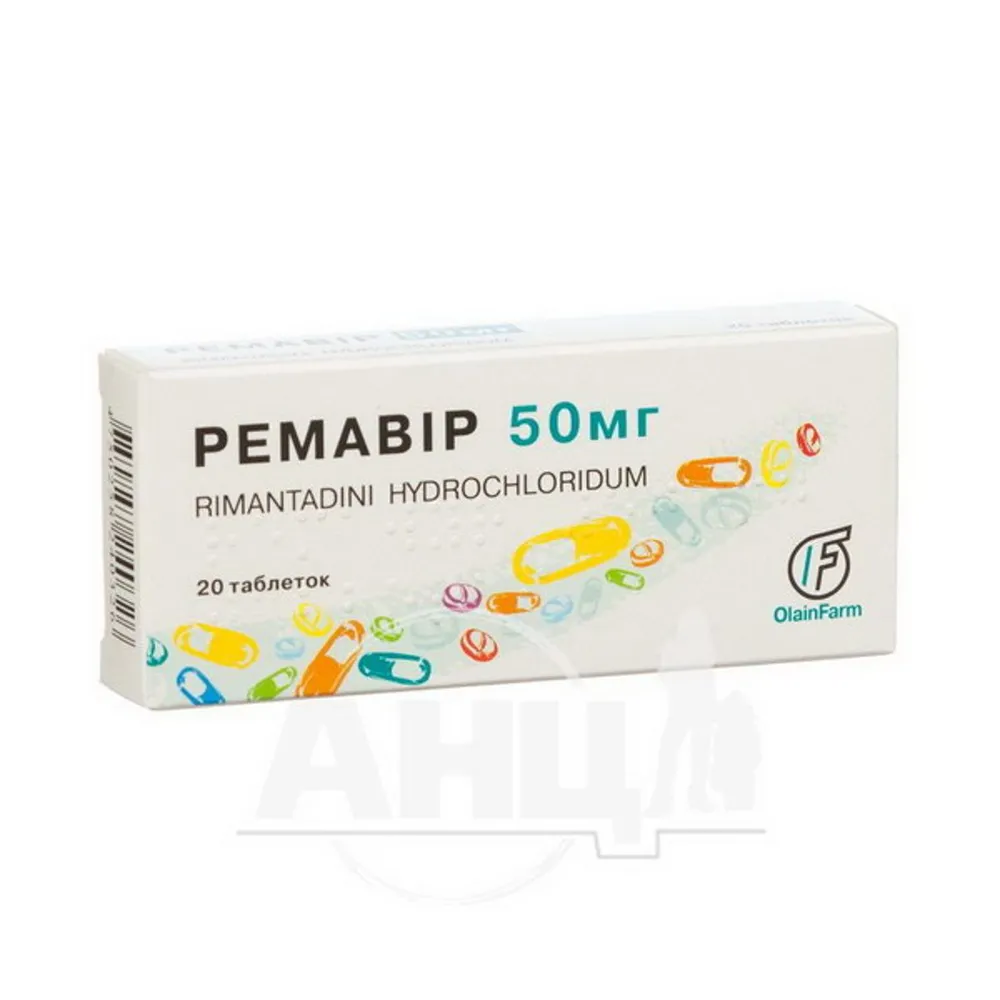
REMAVIR
UkraineThe drug is used for the early treatment of influenza type A in adults and children aged 10 years and older, as well as for the prevention of this disease during an epidemic.
Frequently asked questions
How should Remavir be taken correctly?
The tablets should be taken orally after meals, with water. For the treatment of influenza, adults and children aged 10 years and older take 100 mg (2 tablets) twice daily for 5 days. Elderly people (over 65 years old) are recommended to take 100 mg (2 tablets) once daily. For prevention, the dosage is the same, but the course may last up to 2 weeks.
Who should not take this drug?
The drug is contraindicated in cases of hypersensitivity to rimantadine or other components of the composition, acute and chronic liver or kidney diseases, thyrotoxicosis, as well as during pregnancy and breastfeeding. Additionally, the drug should not be used by people with lactose intolerance.
What side effects can Remavir cause?
Nausea, vomiting, and insomnia are the most common side effects. Dizziness, headache, impaired concentration, abdominal pain, diarrhea, dry mouth, and other reactions of the nervous or digestive systems are also possible. These symptoms usually disappear after completing the course.
Can the drug be combined with other medicines or alcohol?
During treatment, you should refrain from alcohol, as it may cause undesirable nervous system reactions. Paracetamol and acetylsalicylic acid may reduce the efficacy of the drug, while caffeine may increase excitability. Remavir may also reduce the effect of anticonvulsants.
Does the drug affect the ability to drive a vehicle?
Yes, due to possible dizziness, headache, or other nervous system effects, you should refrain from driving vehicles and operating dangerous machinery while taking the drug.
Instructions for use
INSTRUCTIONS FOR MEDICAL USE OF THE MEDICINAL PRODUCT REMAVIR (REMAVIR)
Composition:
Active substance: rimantadine;
1 tablet contains rimantadine hydrochloride 50 mg;
Excipients: lactose monohydrate; potato starch; stearic acid.
Pharmaceutical form. Tablets.
Main physical and chemical properties: white or almost white, flat cylindrical tablets with a bevel.
Pharmacotherapeutic group. Antiviral agents for systemic use. Rimantadine. ATC code J05A C02.
Pharmacological Properties
Pharmacodynamics
Rimantadine hydrochloride is an amantadine derivative with pronounced antiviral activity. It is effective against various strains of influenza virus type A and also exhibits antitoxic effects in influenza caused by type B virus. Remavir inhibits viral replication at early stages of the cycle by disrupting the formation of the viral envelope. Genetic studies have shown that a specific protein of the M2 gene of the virion plays an important role in the antiviral action of rimantadine against influenza virus A. In vitro, rimantadine inhibits replication of all three antigenic subtypes (H1N1, H2N2, H3N2) of influenza virus identified in humans. Remavir does not affect the immunogenic properties of inactivated influenza A vaccine.
Pharmacokinetics
After single and repeated administration of the drug to patients of various age groups, no correlation between the concentration of Remavir in blood plasma and its antiviral activity has been established.
Absorption. After oral administration, the drug is almost completely absorbed in the intestine and provides high bioavailability.
Distribution. After a single oral dose of Remavir 100 mg, maximum plasma concentration – 74 ng/mL (range from 45 to 138 ng/mL) – is reached within 5–7 hours in healthy subjects aged 20–44 years.
Approximately 40% of Remavir is bound to plasma proteins, primarily to albumins. The half-life of a single dose in this study group averages 25 hours, while in patients aged 71–79 years it averages 32 hours.
Metabolism. Remavir is extensively metabolized in the liver via hydroxylation, conjugation, and glucuronidation.
Excretion. Three hydroxylated metabolites of Remavir are detected in blood plasma. These and other metabolites account for up to 74 ± 10% of a single 200 mg dose. The drug is excreted in metabolized form in urine within 72 hours. Less than 25% of the drug is excreted unchanged in urine.
In renal insufficiency, plasma concentrations of Remavir metabolites increase.
The pharmacokinetics of the drug in children is close to that in adults.
Clinical characteristics.
Indications.
Early treatment of disease caused by influenza type A viruses in adults and children aged 10 years and older.
Prophylaxis of influenza type A during epidemics in adults and children aged 10 years and older.
Contraindications.
Hypersensitivity to rimantadine, adamantane derivatives, or excipients of the medicinal product.
Acute and chronic liver and kidney diseases.
Thyrotoxicosis.
Pregnancy and breastfeeding.
Interaction with other medicinal products and other forms of interaction.
Paracetamol and acetylsalicylic acid reduce the effectiveness of Remavir.
Remavir reduces the effectiveness of antiepileptic agents.
Remavir enhances the stimulatory effect of caffeine.
Cimetidine may enhance the effect of Remavir.
During treatment, consumption of alcoholic beverages should be avoided, as undesirable reactions from the central nervous system may occur.
Special precautions for use.
Remavir should be prescribed with caution to patients with gastrointestinal disorders, hepatic and/or renal impairment of mild to moderate severity, severe heart diseases including cardiac rhythm disorders, and elderly patients. In these cases, a reduced dose of the drug is recommended.
In patients with epilepsy and in patients receiving anticonvulsant therapy during Remavir treatment, the risk of epileptic seizures increases. In such cases, the dose of Remavir should be reduced to 100 mg per day.
If a seizure occurs, the drug should be discontinued.
Patients with hepatic and/or renal impairment
Available data on the use of Remavir in patients with acute or chronic hepatic and/or renal impairment are limited. Dose adjustment should be considered before prescribing Remavir, weighing the expected benefit against the potential risk. Close monitoring of patients is necessary, as Remavir is extensively metabolized in the liver and accumulation of its metabolites after repeated administration may lead to adverse reactions.
To prevent the development of drug resistance, influenza treatment should be discontinued as soon as possible, usually approximately 5 days after initiation or within 24–48 hours after the disappearance of disease symptoms.
The medicinal product contains lactose; therefore, it should not be administered to patients with rare hereditary forms of galactose intolerance, lactase deficiency, or glucose-galactose malabsorption syndrome.
Use during pregnancy or breastfeeding.
Remavir crosses the placental barrier and is excreted in breast milk; therefore, the use of the drug during pregnancy and breastfeeding is contraindicated.
Ability to influence reaction rate while driving or operating machinery.
When using the drug, patients should refrain from driving vehicles or operating potentially hazardous machinery, as dizziness, headache, or other central nervous system adverse effects may occur.
Method of administration and dosage.
Take tablets orally after meals, with water.
Remavir treatment should be started as early as possible, immediately after the first symptoms of influenza appear. The therapeutic effect is more pronounced if the drug is taken within the first 48 hours after the onset of influenza symptoms.
Treatment of influenza: for adults and children aged 10 years and older: 100 mg (2 tablets) twice daily.
Always consult a physician before administering this medication to children.
For elderly patients (over 65 years of age): 100 mg (2 tablets) once daily.
Duration of treatment: 5 days.
Influenza prophylaxis: for adults and children aged 10 years and older: 100 mg (2 tablets) twice daily.
For elderly patients and patients at high risk of complications: 100 mg (2 tablets) once daily.
Drug administration should begin at the start of an influenza epidemic and continue during the epidemic period, but not longer than 2 weeks.
For patients with mild to moderate hepatic and/or renal impairment, the dose may be adjusted to 100 mg once daily. Such patients should be closely monitored.
Children. The drug may be used in children aged 10 years and older.
Overdose.
In cases of overdose – symptomatic therapy to support vital functions.
Cases of poisoning with a chemical analogue – amantadine – have been reported.
Symptoms: excitement, hallucinations, cardiac arrhythmia, fever, chills, sweating, arrhythmia, hypesthesia, increased lacrimation, dysphagia, constipation, increased frequency of urination, stomatitis, eye pain.
Treatment: discontinue the drug, gastric lavage, intravenous administration of physostigmine: 1–2 mg for adults, 0.5 mg for children; if repeated administration is needed, no more than 2 mg per hour. Rimantadine and amantadine are not removed by hemodialysis.
Adverse Reactions
The drug is generally well tolerated.
Classification of adverse reactions by frequency of occurrence: very common (≥ 1/10); common (≥ 1/100 to < 1/10); uncommon (≥ 1/1,000 to < 1/100); rare (≥ 1/10,000 to < 1/1,000); very rare (< 1/10,000).
In a clinical study involving 1027 patients receiving a daily dose of rimantadine 200 mg, the most frequent complaints were related to the gastrointestinal tract and the nervous system.
Gastrointestinal system: common – nausea, vomiting; uncommon – anorexia, dry mouth, abdominal pain, diarrhea, dyspepsia.
Nervous system: common – insomnia; uncommon – concentration impairment, dizziness, headache, tremor, convulsions, confusion, ataxia (impaired coordination of movements), somnolence, increased excitability, hyperkinesia (involuntary movements), taste alteration/loss, parosmia.
Psychiatric disorders: uncommon – hallucinations, depression, euphoria.
Cardiovascular system: uncommon – palpitations, arterial hypertension, heart failure, cardiac conduction disorders (blockades), tachycardia, syncope (fainting), cerebrovascular disorders.
Reproductive system and breast: uncommon – galactorrhea.
Vestibular system and auditory organs: uncommon – tinnitus (ringing in the ears).
Respiratory system: uncommon – cough, dyspnea (shortness of breath), bronchospasm.
Skin and subcutaneous tissue: uncommon – pallor; frequency not known – pruritus, papular rash, generalized rash, urticaria.
General disorders: uncommon – asthenia (weakness), edema, fatigue.
The frequency of adverse effects, especially those related to the gastrointestinal and nervous systems, increases if the recommended dose is exceeded.
In individual cases, after exceeding the recommended doses, symptoms such as lacrimation, frequent urination, chills, constipation, sweating, stomatitis, hypesthesia, and eye pain have been observed.
Adverse reactions usually disappear after discontinuation of the drug.
There are conflicting data regarding adverse effects of rimantadine in elderly patients. In a clinical study conducted during the 1997–1998 influenza epidemic involving 156 elderly patients, adverse effects were observed in only 1.9% of patients, mainly disturbances of consciousness.
In another controlled study involving 83 elderly patients requiring home care, central nervous system adverse effects were reported in 8.3% of patients in the placebo group and in 10.6% of patients in the rimantadine group. The observed events included insomnia, increased excitability, concentration impairment, and dizziness.
Shelf life.
5 years.
Storage conditions.
Store in the original packaging at a temperature not exceeding 25°C.
Keep out of reach of children.
Packaging.
10 tablets per blister pack. 2 blisters per cardboard box.
Prescription status.
Over-the-counter.
Manufacturer.
JSC "Olfa" / Olpha AS.
Manufacturer's address and place of business.
Rupnicu iela 5, Olaine, Olaines novads, LV-2114, Latvia.
Similar drugs
| Brand name | Dosage form | Active substance / Dosage | Manufacturer |
|---|---|---|---|
| REMANTADINE-KR | tablets |
|
PJSC "HIMFARMZAVOD "CHERVONA ZIRKA" |
| RIMANTADINE-DARNITSA | tablets |
|
PJSC «Pharmaceutical Company «Darnitsa» |
The original data is available in the language of the country of manufacture.
Data source: State Register of Medicinal Products of Ukraine
Data last verified: August 13, 2026