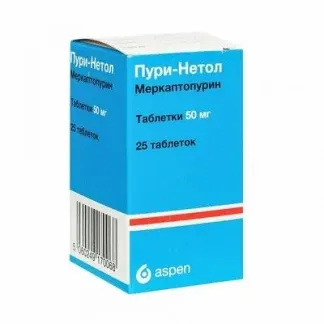
PURI-NETOL®
UkraineThe drug is prescribed for the treatment of acute leukemia in adults and children, specifically acute lymphoblastic leukemia and acute promyelocytic leukemia (acute myeloid leukemia M3).
Frequently asked questions
How should Puri-netol® be taken correctly?
The dosage is determined by a physician depending on the patient's needs and the treatment protocol. Typically, the dose is 2.5 mg/kg of body weight per day. The drug can be taken either on an empty stomach or with food, but it is important to always do so in the same manner. It is recommended to take the daily dose in the evening. It is important not to take the drug with milk or dairy products (an interval of at least 1 hour before or 2 hours after consuming dairy products must be maintained).
What are the contraindications for the use of the drug?
The drug must not be used in case of hypersensitivity to the active substance or any other components of the composition. Concurrent use with the yellow fever vaccine is also contraindicated.
What can be the side effects of Puri-netol®?
The most common side effects are bone marrow suppression (leading to decreased white blood cell and platelet levels), nausea, vomiting, bile stasis, and hepatotoxicity (effect on the liver). Anemia, anorexia, skin rash, and increased sensitivity to sunlight are also possible.
Can this drug be combined with other medicines?
Special caution is required. For example, when taking allopurinol, the dose of Puri-netol® should be reduced to 25% of the usual dose. Concomitant use with ribavirin is not recommended. Interaction with anticoagulants (warfarin), methotrexate, and certain antiepileptic drugs is also possible, requiring careful monitoring.
What safety precautions should be followed when handling the tablets?
Since this is a cytotoxic drug, contact with skin and mucous membranes should be avoided. When handling, it is recommended to wash hands before and after, and caregivers should use disposable gloves. Pregnant women who are planning pregnancy or breastfeeding should not work with this drug. Tablets should be stored out of reach of children.
Instructions for use
INSTRUCTIONS FOR MEDICAL USE OF THE MEDICINAL PRODUCT Puri-Nethol® (Puri-Nethol®)
Composition:
Active substance: mercaptopurine monohydrate;
One tablet contains 50 mg of mercaptopurine monohydrate;
Excipients: lactose monohydrate, maize starch, modified maize starch, magnesium stearate, stearic acid.
Pharmaceutical form. Tablets.
Main physical and chemical properties: round, biconvex tablets of pale-yellow color, with a dividing line and engraving "PT" above and "50" below the line on one side, smooth on the other side.
Pharmacotherapeutic group. Antineoplastic agents. Antimetabolites. Purine analogues. Mercaptopurine. ATC code: L01BB02.
Pharmacological properties.
Pharmacodynamics.
Mechanism of action
Mercaptopurine monohydrate is a sulfhydryl analogue of the purine bases adenine and hypoxanthine. It acts as a cytotoxic antimetabolite.
Mercaptopurine monohydrate is an inactive prodrug that functions as a purine antagonist, but requires cellular uptake and intracellular anabolism to thioguanine nucleotides (TGN) to exert cytotoxicity. Mercaptopurine monohydrate metabolites interfere with de novo purine synthesis and interconversion of purine nucleotides. TGNs are also incorporated into nucleic acids, contributing to the cytotoxic effects of the drug. Cross-resistance between mercaptopurine monohydrate and 6-thioguanine is commonly observed.
Pharmacodynamic effects
The cytotoxic effect of mercaptopurine monohydrate may be related to the levels of mercaptopurine monohydrate-derived thioguanine nucleotides in erythrocytes, but not to the plasma concentration of mercaptopurine monohydrate.
Pharmacokinetics.
Absorption
The oral bioavailability of mercaptopurine monohydrate varies widely among individuals, possibly due to first-pass metabolism. After oral administration of 75 mg/m² body surface area in seven children, the bioavailability of the drug averaged 16% of the administered dose (ranging from 5% to 37%). Following oral administration of mercaptopurine monohydrate at a dose of 75 mg/m² body surface area in 14 children with acute lymphoblastic leukemia, the mean Cmax was 0.89 µM (range: 0.29–1.82 µM), and the mean Tmax was 2.2 hours (range: 0.5–4 hours).
The mean relative bioavailability of mercaptopurine monohydrate was approximately 26% lower when administered with food and milk compared to administration after overnight fasting. Mercaptopurine monohydrate is unstable in milk due to the presence of xanthine oxidase (30% degradation within 30 minutes) (see section "Dosage and administration").
Distribution
Concentrations of mercaptopurine monohydrate in cerebrospinal fluid (CSF) after intravenous or oral administration are low or negligible (CSF:plasma ratio ranges from 0.05 to 0.27). Concentrations in CSF are higher after intrathecal administration.
Biological transformation
Mercaptopurine monohydrate is extensively metabolized into active and inactive metabolites via several multistep pathways. Due to complex metabolism, inhibition of a single enzyme cannot explain all cases of inadequate therapeutic response and/or pronounced myelosuppression. The main enzymes involved in the metabolism of mercaptopurine monohydrate or its metabolites are: the polymorphic enzyme thiopurine S-methyltransferase (TPMT), xanthine oxidase, inosine monophosphate dehydrogenase (IMPDH), and hypoxanthine-guanine phosphoribosyltransferase (HGPRT). Additional enzymes involved in the formation of active and inactive metabolites include guanosine monophosphate synthetase (GMPS, which produces TGN) and inosine triphosphate pyrophosphatase (ITPase). Furthermore, numerous other inactive metabolites are formed through additional pathways.
Evidence suggests that polymorphisms in genes encoding various enzyme systems involved in mercaptopurine monohydrate metabolism may predispose individuals to adverse reactions to mercaptopurine monohydrate therapy. For example, individuals with TPMT deficiency develop very high cytotoxic concentrations of thioguanine nucleotides (see section "Special precautions").
Elimination
In a study involving 22 adult patients, the mean clearance and half-life of mercaptopurine monohydrate after intravenous infusion were 864 ml/min/m² and 0.9 hours, respectively. The mean renal clearance in 16 of these patients was 191 ml/min/m². After intravenous administration, only about 20% of the administered dose was excreted unchanged in urine. In a study of 7 children, the mean clearance and half-life of mercaptopurine monohydrate after intravenous infusion were 719 (±610) ml/min/m² and 0.9 (±0.3) hours, respectively.
Special patient groups
Elderly patients
Specific studies in elderly patients have not been conducted (see section "Dosage and administration").
Renal impairment
Prodrug studies of mercaptopurine monohydrate have shown no difference in the pharmacokinetics of mercaptopurine monohydrate between patients with uremia and those with transplanted kidneys. Because limited information is available on active metabolites of mercaptopurine monohydrate in renal impairment, it is recommended to administer reduced doses of mercaptopurine monohydrate to patients with impaired renal function (see section "Dosage and administration").
Mercaptopurine monohydrate and/or its metabolites are removed during hemodialysis: approximately 45% of radioactive metabolites are eliminated within 8 hours of dialysis.
Hepatic impairment
Prodrug studies of mercaptopurine monohydrate were conducted in three groups of patients with transplanted kidneys: those without liver disease, those with impaired liver function (but without cirrhosis), and those with impaired liver function and cirrhosis. The study demonstrated that mercaptopurine monohydrate exposure was 1.6-fold higher in patients with impaired liver function (but without cirrhosis) and 6-fold higher in patients with impaired liver function and cirrhosis, compared to patients without liver disease (see section "Dosage and administration").
Clinical characteristics.
Indications.
Treatment of acute leukemia in adults and children with:
- acute lymphoblastic leukemia (ALL);
- acute promyelocytic leukemia (APL)/acute myeloid leukemia M3 (AML M3).
Contraindications.
Hypersensitivity to the active substance or to any of the excipients of the medicinal product.
Concomitant use with yellow fever vaccine (see section "Interaction with other medicinal products and other forms of interaction").
Interaction with other medicinal products and other forms of interaction.
Administration of mercaptopurine monohydrate with food may slightly reduce its systemic exposure. Mercaptopurine monohydrate may be taken with or without food; however, the patient should standardize the method of administration to prevent significant fluctuations in exposure. The medicinal product should not be taken with milk or dairy products, as they contain xanthine oxidase, an enzyme that metabolizes mercaptopurine monohydrate, which may lead to reduced plasma concentrations of mercaptopurine monohydrate.
Effect of concomitant medicinal products on mercaptopurine monohydrate
Ribavirin
Ribavirin inhibits the enzyme inosine monophosphate dehydrogenase (IMPDH), leading to decreased production of active 6-thioguanine nucleotides. Cases of severe myelosuppression have been reported during concomitant use of mercaptopurine monohydrate and ribavirin; therefore, concomitant use of ribavirin and mercaptopurine monohydrate is not recommended (see sections "Pharmacokinetics" and "Special precautions for use").
Myelosuppressive agents
Concomitant use of mercaptopurine monohydrate with other myelosuppressive agents should be undertaken with caution; dosage adjustments should be considered based on hematological monitoring (see section "Special precautions for use").
Allopurinol/oxipurinol/thiopurinol and other xanthine oxidase inhibitors
Allopurinol, oxipurinol, and thiopurinol inhibit xanthine oxidase activity, thereby suppressing the conversion of biologically active 6-thioinosinic acid into biologically inactive 6-thiouric acid. When allopurinol is used concomitantly with mercaptopurine monohydrate, only 25% of the usual dose of mercaptopurine monohydrate should be administered, as allopurinol reduces the metabolism of mercaptopurine monohydrate by xanthine oxidase.
Other xanthine oxidase inhibitors, such as febuxostat, may delay the metabolism of mercaptopurine monohydrate. Concomitant use of these agents is not recommended, as insufficient data are available to establish an appropriate dose reduction regimen.
Aminosalicylates
In vitro and in vivo data indicate that aminosalicylate derivatives (e.g., olsalazine, mesalazine, or sulfasalazine) inhibit the TPMT enzyme. Therefore, when mercaptopurine monohydrate is used concomitantly with aminosalicylate derivatives, consideration should be given to reducing the dose of mercaptopurine monohydrate (see section "Special precautions for use").
Methotrexate
Oral methotrexate at a dose of 20 mg/m² increased the area under the concentration–time curve (AUC) of mercaptopurine monohydrate by approximately 31%, whereas intravenous doses of 2 or 5 g/m² increased the AUC of mercaptopurine monohydrate by 69% and 93%, respectively. When administered concomitantly with high-dose methotrexate, the dose of mercaptopurine must be adjusted.
Infliximab
An interaction has been observed between azathioprine, a prodrug of 6-mercaptopurine, and infliximab. In patients receiving azathioprine, transient increases in 6-TGN (6-thioguanine nucleotide, the active metabolite of azathioprine) levels and decreases in mean leukocyte counts were observed during the first weeks following infliximab infusion. These parameters returned to baseline levels within 3 months.
Effect of mercaptopurine monohydrate on other medicinal products
Concomitant use with yellow fever vaccine is contraindicated due to the risk of fatal disease in immunocompromised patients (see section "Contraindications").
Vaccination with other live vaccines is not recommended in immunocompromised patients (see section "Special precautions for use").
Anticoagulants
Reduced anticoagulant effect of warfarin has been reported with concomitant use of mercaptopurine monohydrate. Monitoring of INR (international normalized ratio) is recommended when oral anticoagulants are used concomitantly.
Antiepileptic agents
Cytotoxic agents may reduce intestinal absorption of phenytoin. Careful monitoring of serum phenytoin levels is recommended. Changes in serum levels of other antiepileptic agents may also occur. Serum levels of antiepileptic agents should be closely monitored during treatment with mercaptopurine monohydrate. Dose adjustments should be made as necessary.
Special precautions for use.
6-Mercaptopurine monohydrate is an active cytostatic agent; therefore, it should only be administered under the supervision of a physician experienced in the use of such agents.
Safe handling of 6-mercaptopurine monohydrate tablets
When handling 6-mercaptopurine monohydrate tablets, adherence to current local guidelines and/or regulations regarding handling and disposal of cytotoxic agents is recommended.
Anyone handling the medicinal product Purinethol® should wash their hands before and after administration. To reduce the risk of unintended exposure, parents and caregivers should wear disposable gloves when handling the medicinal product Purinethol®.
Contact of the medicinal product Purinethol® with skin or mucous membranes should be avoided. If Purinethol® comes into contact with skin or mucous membranes, it should be immediately and thoroughly washed off with soap and water.
Pregnant women, women planning pregnancy, or women who are breastfeeding should not handle the medicinal product Purinethol® (see section "Use during pregnancy or breastfeeding").
Parents/caregivers and patients should be advised to store Purinethol® out of sight and reach of children, preferably in a locked cabinet. Accidental ingestion by a child may result in a fatal outcome.
Disposal
Any unused medicinal product or waste material should be disposed of in accordance with local requirements.
Monitoring
Because 6-mercaptopurine monohydrate exerts a strong myelosuppressive effect, a complete blood count should be performed daily during induction of remission. Close monitoring of the patient is required during treatment.
Cytotoxicity and hematological monitoring
Treatment with 6-mercaptopurine monohydrate causes bone marrow suppression, leading to leukopenia and thrombocytopenia, and less frequently to anemia. Hematological parameters must be closely monitored during therapy. Leukocyte and platelet counts may continue to decline after discontinuation of treatment; therefore, treatment should be immediately suspended at the first signs of excessive reduction in leukocyte or platelet counts.
Myelosuppression due to 6-mercaptopurine monohydrate is reversible if the drug is discontinued promptly.
Some individuals have an inherited deficiency of the enzyme thiopurine S-methyltransferase (TPMT). These patients may be extremely sensitive to the myelosuppressive effects of 6-mercaptopurine monohydrate, resulting in rapid onset of bone marrow suppression after initiation of therapy. This issue may be further exacerbated by concomitant administration of drugs that inhibit thiopurine S-methyltransferase, such as olsalazine, mesalazine, or sulfasalazine. Additionally, a possible association has been reported between reduced TPMT activity and the development of secondary leukemias and myelodysplasia in patients receiving 6-mercaptopurine monohydrate in combination with other cytotoxic agents (see section "Adverse reactions"). Some laboratories offer testing for TPMT deficiency, although such tests do not always identify all patients at risk of severe toxicity. Therefore, careful monitoring of hematological parameters is essential. Dose reduction is recommended for patients with homozygous TPMT deficiency to prevent life-threatening bone marrow suppression.
Enhanced hematological monitoring is recommended when switching between different formulations of mercaptopurine.
Immunosuppression
Administration of live vaccines to immunocompromised patients may lead to infection. Therefore, live vaccines should not be administered. In any case, live vaccines may be given to patients in remission only after it is considered that the patient is capable of responding to vaccination. The interval between the end of chemotherapy and restoration of the patient's ability to respond to vaccination depends on the intensity and type of immunosuppressive agents used, the underlying disease, and other factors.
Concomitant use of ribavirin and 6-mercaptopurine monohydrate is not recommended. Ribavirin may reduce the efficacy and enhance the toxic effects of 6-mercaptopurine monohydrate (see section "Interaction with other medicinal products and other forms of interaction").
During induction of remission in acute myeloid leukemia, adequate supportive care facilities should be available to manage potential bone marrow aplasia associated with treatment, and appropriate equipment should be accessible.
The dose of 6-mercaptopurine monohydrate may need to be reduced when co-administered with agents whose primary or secondary toxicity manifests as myelosuppression (see section "Interaction with other medicinal products and other forms of interaction").
Hepatotoxicity
6-Mercaptopurine monohydrate is hepatotoxic; therefore, liver function tests should be monitored weekly throughout treatment. Plasma levels of gamma-glutamyl transferase (GGT) are the most important prognostic factor for drug discontinuation due to hepatotoxicity. In patients with pre-existing liver disease or those receiving other potentially hepatotoxic agents, more frequent monitoring is recommended. Patients should be advised to discontinue 6-mercaptopurine monohydrate immediately if jaundice occurs (see section "Adverse reactions").
Renal toxicity
During induction of remission, when rapid cell lysis occurs, serum and urinary uric acid levels should be monitored due to the risk of hyperuricemia and/or hyperuricosuria, with potential development of uric acid nephropathy. Hydration and urinary alkalinization may minimize potential renal complications.
Renal and/or hepatic impairment
Caution is recommended when administering 6-mercaptopurine monohydrate to patients with impaired renal and/or hepatic function (see sections "Pharmacokinetics" and "Posology and method of administration").
Dose reduction should be considered in such patients, and hematological response should be closely monitored.
Pancreatitis in patients treated for inflammatory bowel disease (off-label use)
Cases of pancreatitis have been reported with a frequency of ≥ 1/100 to < 1/10 ("common") in patients receiving treatment for inflammatory bowel disease (off-label use).
Patients with NUDT15 variant
Patients with an inherited mutation in the NUDT15 gene have an increased risk of developing severe toxicities from 6-mercaptopurine monohydrate treatment, such as early-onset leukopenia and alopecia, even at standard thiopurine therapy doses. Such patients typically require dose reduction, particularly homozygous carriers of the NUDT15 variant (see section "Posology and method of administration"). The frequency of the NUDT15 c.415C>T variant varies ethnically: approximately 10% in East Asian populations, 4% in Latin American populations, 0.2% in European populations, and 0% in African populations. In all cases, hematological parameters should be closely monitored.
Cross-resistance
Cross-resistance between 6-mercaptopurine monohydrate and 6-thioguanine is generally observed.
Hypersensitivity
Patients with suspected history of hypersensitivity reactions to 6-mercaptopurine monohydrate should not be given its prodrug, azathioprine, except in cases where allergy testing has confirmed hypersensitivity to 6-mercaptopurine monohydrate but yielded a negative result for azathioprine. Since azathioprine is a prodrug of 6-mercaptopurine monohydrate, patients with a history of hypersensitivity to azathioprine should undergo hypersensitivity testing for 6-mercaptopurine monohydrate prior to initiating treatment.
Mutagenicity and carcinogenicity
An increased incidence of chromosomal aberrations in peripheral lymphocytes has been observed in patients with leukemia, in a patient with renal cell carcinoma who received an unspecified dose of 6-mercaptopurine monohydrate, and in patients with chronic renal disease receiving doses of 0.4–1.0 mg/kg body weight per day.
Due to 6-mercaptopurine monohydrate's effect on cellular deoxyribonucleic acid (DNA), it is potentially carcinogenic; therefore, the theoretical risk of carcinogenesis during treatment should be considered.
Two cases of acute non-lymphocytic leukemia have been documented in patients receiving 6-mercaptopurine monohydrate in combination with other agents for benign conditions. One case involved a patient treated with 6-mercaptopurine monohydrate for pyoderma gangrenosum who subsequently developed acute non-lymphocytic leukemia, although it remains unclear whether this was due to the natural course of the disease or the use of 6-mercaptopurine monohydrate.
A patient with Hodgkin’s disease developed acute myeloid leukemia while receiving 6-mercaptopurine monohydrate and multiple other cytostatic agents.
Twelve and a half years after treatment with 6-mercaptopurine monohydrate for myasthenia gravis, a patient developed chronic myeloid leukemia.
Cases of hepatosplenic T-cell lymphoma have been reported in patients with inflammatory bowel disease (IBD) (unapproved indication) who received azathioprine (a prodrug of 6-mercaptopurine monohydrate) or 6-mercaptopurine monohydrate, with or without anti-TNF alpha antibodies. This is a rare and aggressive form of T-cell lymphoma that is typically fatal (see section "Adverse reactions").
Patients receiving immunosuppressive therapy, including 6-mercaptopurine monohydrate, have an increased risk of developing lymphoproliferative disorders and other malignancies, particularly skin cancers (melanoma and non-melanoma types), sarcomas (Kaposi’s and others), and carcinoma in situ of the cervix. The increased risk is likely related to the degree and duration of immunosuppression. Discontinuation of immunosuppressive agents has been reported to lead to partial regression of lymphoproliferative disorders.
Therefore, treatment regimens containing multiple immunosuppressive agents (including thiopurines) should be used with caution, as they may lead to lymphoproliferative disorders, including fatal outcomes. The combination of multiple immunosuppressive agents administered simultaneously increases the risk of Epstein-Barr virus (EBV)-associated lymphoproliferative disorders.
Macrophage activation syndrome
Macrophage activation syndrome (MAS) is a known life-threatening condition that may develop in patients with autoimmune conditions, particularly inflammatory bowel disease (IBD) (unapproved indication), who may have increased susceptibility to this condition when treated with 6-mercaptopurine monohydrate. If MAS develops or is suspected, appropriate treatment should be initiated as early as possible, and 6-mercaptopurine monohydrate should be discontinued. Physicians should be vigilant for infections such as EBV or cytomegalovirus (CMV), which are known triggers of MAS.
Metabolism and nutrition disorders
Administration of purine analogs—azathioprine and mercaptopurine—may interfere with niacin metabolism, potentially leading to niacin deficiency (pellagra). Cases of pellagra have been reported with purine analog use, particularly in patients with chronic inflammatory bowel disease. Pellagra should be considered in patients presenting with localized pigmented dermatitis, gastroenteritis, or neurological disturbances, including cognitive decline. Appropriate therapeutic measures including niacin/nicotinamide supplementation should be initiated.
Children
Symptomatic hypoglycemia has been reported in children with ALL receiving 6-mercaptopurine monohydrate therapy (see section "Adverse reactions"). Most reported cases occurred in children under 6 years of age or with low body mass index.
Infections
Patients receiving 6-mercaptopurine monohydrate alone or in combination with other immunosuppressive agents, including corticosteroids, have shown increased susceptibility to viral, fungal, and bacterial infections, including severe or atypical infections, as well as reactivation of viral infections. The course and complications of infection in these patients may be more severe than in those not receiving treatment.
Prior exposure or infection with varicella virus should be assessed before initiating treatment. If necessary, local recommendations should be followed, including prophylactic treatment. Serological testing for hepatitis B virus should be considered before treatment initiation. If serological tests are positive, local recommendations should be followed, including prophylactic treatment. Cases of neutropenic sepsis have been reported in patients receiving 6-mercaptopurine monohydrate for ALL. If infection occurs during treatment, appropriate measures should be taken, which may include antimicrobial therapy and supportive care.
Lesch-Nyhan syndrome
Available data indicate that neither 6-mercaptopurine monohydrate nor its prodrug azathioprine is effective in patients with the rare inherited condition of complete hypoxanthine-guanine phosphoribosyltransferase deficiency (Lesch-Nyhan syndrome). Administration of 6-mercaptopurine monohydrate or azathioprine is not recommended in such patients.
Ultraviolet radiation
Patients receiving 6-mercaptopurine monohydrate are more sensitive to sunlight. Exposure to sunlight and ultraviolet radiation should be limited; patients should be advised to wear protective clothing and use cosmetic products with high UV protection factor.
Excipients
Patients with rare hereditary problems of galactose intolerance, total lactase deficiency, or glucose-galactose malabsorption should not take this medicinal product.
Interactions
Xanthine oxidase inhibitors
When used concomitantly with xanthine oxidase inhibitors such as allopurinol, oxypurinol, or thiopurinol, patients should receive only 25% of the usual dose of 6-mercaptopurine monohydrate, as allopurinol reduces the catabolism rate of 6-mercaptopurine monohydrate (see sections "Interaction with other medicinal products and other forms of interaction" and "Posology and method of administration").
Anticoagulants
Enhanced monitoring of INR is recommended when anticoagulants are used concomitantly with 6-mercaptopurine monohydrate (see section "Interaction with other medicinal products and other forms of interaction").
TPMT deficiency
Some individuals have an inherited deficiency of the enzyme thiopurine S-methyltransferase (TPMT). These patients may be extremely sensitive to the myelosuppressive effects of 6-mercaptopurine monohydrate, leading to rapid onset of bone marrow suppression after initiation of therapy. This issue may be further exacerbated by concomitant administration of drugs that inhibit thiopurine S-methyltransferase, such as olsalazine, mesalazine, or sulfasalazine. Additionally, a possible association has been reported between reduced TPMT activity and the development of secondary leukemias and myelodysplasia in patients receiving 6-mercaptopurine monohydrate in combination with other cytotoxic agents (see section "Adverse reactions"). Approximately 0.3% (1:300) of patients have low or absent enzyme activity. About 10% of patients have low or intermediate TPMT activity, 90% have normal activity, and a group of approximately 2% has high TPMT activity. Some laboratories perform TPMT deficiency testing, although such tests do not always identify all patients at risk of severe toxicity. Therefore, careful monitoring of hematological parameters is essential.
Use during pregnancy or breastfeeding.
Contraception in men and women
Evidence of teratogenicity of 6-mercaptopurine monohydrate in humans is inconclusive. Sexually active men and women should use effective contraceptive methods during treatment and for at least three months after the last dose. Animal studies have demonstrated embryotoxic and embryolethal effects.
Pregnancy
6-Mercaptopurine monohydrate should not be administered to pregnant patients or those planning pregnancy without careful risk-benefit assessment.
Significant transfer of 6-mercaptopurine monohydrate and its metabolites from mother to fetus via the placenta and amniotic fluid has been demonstrated.
Preterm delivery and low birth weight have been reported when women were exposed to 6-mercaptopurine monohydrate during pregnancy. Congenital malformations and spontaneous abortions have also been reported following drug use during pregnancy. Multiple congenital anomalies have been reported in children whose mothers received 6-mercaptopurine monohydrate in combination with other chemotherapeutic agents.
The most recent epidemiological report indicates no increased risk of preterm delivery, low birth weight at term, or congenital anomalies when women received 6-mercaptopurine monohydrate during pregnancy.
It is recommended that newborns whose mothers received 6-mercaptopurine monohydrate during pregnancy be monitored for hematological and immune system disorders.
Cholestasis has occasionally been reported during pregnancy in women treated with azathioprine (a prodrug of 6-mercaptopurine). If cholestasis is confirmed during pregnancy, the benefit to the mother and potential impact on the fetus should be carefully evaluated.
Exposure in mother
Healthy children have been born to women who received 6-mercaptopurine monohydrate as single-agent chemotherapy during pregnancy, particularly when treatment was administered before conception or after the first trimester.
Cases of spontaneous abortion and preterm delivery have been reported in women receiving the drug. Births of children with multiple congenital anomalies have been reported after administration of 6-mercaptopurine monohydrate in combination with other chemotherapeutic agents to pregnant women.
Exposure in father
Cases of spontaneous abortion and congenital malformations in children have been reported following paternal exposure to 6-mercaptopurine monohydrate.
Breastfeeding
6-Mercaptopurine monohydrate has been detected in colostrum and breast milk of patients receiving azathioprine. Therefore, women receiving 6-mercaptopurine monohydrate should not breastfeed.
Reproductive function
The effect of 6-mercaptopurine monohydrate therapy on human fertility is unknown.
Reports of healthy children born to parents/mothers treated during childhood or adolescence have been received.
Cases of transient oligospermia have been reported after treatment with 6-mercaptopurine monohydrate in combination with corticosteroids.
Ability to drive and use machines
There are no data on the effect of 6-mercaptopurine monohydrate on the ability to drive or operate machinery. Given the pharmacological properties of the medicinal product, its potential influence on these activities cannot be predicted.
Method of Administration and Dosage
Treatment with mercaptopurine monohydrate should be conducted only under the supervision of a physician or other healthcare professional experienced in managing patients with CLL and APL (AML M3).
The dose is determined by hematotoxicity, which must be carefully monitored. The dose should be carefully individualized according to the patient's specific needs and the treatment protocol being used.
Depending on the phase of treatment, initial or target doses should be lower in patients with reduced or absent activity of the enzyme thiopurine methyltransferase (TPMT) (see section "Special Warnings and Precautions for Use").
Mercaptopurine monohydrate may be taken with or without food, but the patient should standardize the method of administration. The drug should not be taken with milk or dairy products (see section "Interaction with Other Medicinal Products and Other Forms of Interaction"). Mercaptopurine monohydrate should be taken at least 1 hour before or 2 hours after consuming milk or dairy products.
The pharmacokinetics and efficacy of mercaptopurine monohydrate vary over the course of the day. Evening administration compared to morning dosing may reduce the risk of relapse. Therefore, the daily dose of mercaptopurine should be taken in the evening.
For adults and children, the usual dose is 2.5 mg/kg body weight per day, or 50–75 mg/m² body surface area per day; however, the dose and duration of treatment depend on the type and dosage of other cytostatic agents used concomitantly with mercaptopurine monohydrate.
Doses should be adjusted according to individual patient characteristics.
Mercaptopurine monohydrate has been used in various combination regimens for the treatment of acute leukemia; reference should be made to data from scientific literature and current treatment guidelines.
Studies in children with acute lymphoblastic leukemia suggest that evening administration of mercaptopurine monohydrate reduces the risk of disease relapse compared to morning administration.
Special Populations
Elderly Patients
In elderly patients, renal and hepatic function should be monitored, and the dose of mercaptopurine monohydrate should be reduced in case of impairment.
Renal Impairment
Since the pharmacokinetics of mercaptopurine monohydrate have not been formally studied in patients with renal impairment, specific dosage recommendations cannot be provided. Because renal impairment may lead to slower elimination of mercaptopurine monohydrate and its metabolites, resulting in greater cumulative effects, consideration should be given to reducing initial doses in patients with impaired renal function. Patients should be closely monitored for dose-dependent adverse reactions.
Hepatic Impairment
Since the pharmacokinetics of mercaptopurine monohydrate have not been formally studied in patients with hepatic impairment, specific dosage recommendations cannot be provided. Because there is a potential for delayed elimination of mercaptopurine monohydrate, consideration should be given to reducing initial doses in patients with impaired liver function. Patients should be closely monitored for dose-dependent adverse reactions (see sections "Pharmacokinetics" and "Special Warnings and Precautions for Use").
Switching from Tablets to Oral Suspension and Vice Versa
An oral suspension of mercaptopurine monohydrate is also available. The oral suspension and tablets of mercaptopurine monohydrate are not bioequivalent with respect to peak plasma concentration; therefore, intensified hematological monitoring of the patient is recommended when switching between formulations (see section "Pharmacokinetics").
Combination with Xanthine Oxidase Inhibitors
When mercaptopurine monohydrate is used concomitantly with xanthine oxidase inhibitors such as allopurinol, oxypurinol, or thiopurinol, only 25% of the usual dose of mercaptopurine monohydrate should be administered, as these drugs reduce the catabolism of mercaptopurine monohydrate. Concomitant use with other xanthine oxidase inhibitors, such as febuxostat, should be avoided (see section "Interaction with Other Medicinal Products and Other Forms of Interaction").
Patients with TPMT Deficiency
Mercaptopurine monohydrate is metabolized by the polymorphic enzyme TPMT. Patients with inherited low or completely absent S-methyltransferase (TPMT) activity have an increased risk of developing severe toxic effects from mercaptopurine monohydrate when treated with standard doses, usually requiring a significant dose reduction. The optimal initial dose for homozygous patients with deficiency of this enzyme has not been established. Genotyping or phenotyping for TPMT may be used to identify patients with absent or reduced TPMT activity.
TPMT testing cannot replace hematological monitoring in patients receiving mercaptopurine monohydrate (see sections "Pharmacokinetics" and "Special Warnings and Precautions for Use").
Patients with NUDT15 Variant
Patients with inherited mutations in the NUDT15 gene have an increased risk of developing severe toxic effects from mercaptopurine monohydrate (see section "Special Warnings and Precautions for Use"). Such patients usually require reduced doses, particularly homozygous patients with the NUDT15 variant (see section "Special Warnings and Precautions for Use"). Genotypic testing for NUDT15 variants is recommended before initiating therapy with mercaptopurine monohydrate. In any case, careful hematological monitoring is required.
Children
The drug is used in pediatric practice.
Overdose
Symptoms
Gastrointestinal symptoms, including nausea, vomiting, diarrhea, and anorexia, may be early signs of overdose. The principal toxic effect is on the bone marrow, leading to myelosuppression. Hematological toxicity is more pronounced in chronic overdose than after a single large dose. Hepatic and gastrointestinal dysfunction may also occur.
The risk of overdose is increased when mercaptopurine monohydrate is used concomitantly with xanthine oxidase inhibitors (see section "Interaction with Other Medicinal Products and Other Forms of Interaction").
Treatment
As no specific antidote is known, blood parameters should be closely monitored and appropriate supportive therapy administered, including blood transfusions if necessary. Active methods (such as activated charcoal) may be effective in cases of mercaptopurine monohydrate overdose only if administered within 60 minutes of ingestion.
Further management of overdose cases should be based on clinical indications or recommendations from the national poison control center (if available).
Adverse reactions
Currently, there is a lack of modern clinical data on mercaptopurine monohydrate that could serve as a basis for accurately determining the frequency of adverse effects. The frequency category has been estimated for the adverse reactions listed below; for most reactions, frequency calculation is not possible. Adverse effects may vary in frequency depending on the administered dose as well as when used in combination with other medicinal products.
The principal adverse effect of mercaptopurine monohydrate is bone marrow suppression, which may lead to leukopenia and thrombocytopenia.
The following frequency categories are used to classify the occurrence of adverse reactions:
very common (≥ 1/10);
common (≥ 1/100 to < 1/10);
uncommon (≥ 1/1000 to < 1/100);
rare (≥ 1/10,000 to < 1/1000);
very rare (< 1/10,000);
unknown (frequency cannot be estimated from available data).
Within each frequency category, adverse reactions are listed in order of decreasing severity.
| System Organ Class |
Frequency |
Adverse Reactions |
| Infections and infestations |
Uncommon |
Bacterial and viral infections; infections associated with neutropenia |
| Benign, malignant and unspecified neoplasms (including cysts and polyps) |
Very rare |
Secondary leukemia and myelodysplasia |
| Rare |
Neoplasms including lymphoproliferative disorders, skin cancer (melanoma and non-melanoma), sarcomas (Kaposi's and other types of sarcomas), and carcinoma in situ of the cervix (see section "Special warnings and precautions for use") |
|
| Not known |
Hepatosplenic T-cell lymphoma in patients with inflammatory bowel disease (IBD) (unauthorized indication) receiving combination therapy with tumor necrosis factor (TNF) antagonists (see section "Special warnings and precautions for use") |
|
| Blood and lymphatic system disorders |
Very common |
Bone marrow suppression; leukopenia and thrombocytopenia |
| Common |
Anemia |
|
| Immune system disorders |
Uncommon |
Hypersensitivity reactions with manifestations such as arthralgia, skin rash, drug fever |
| Rare |
Hypersensitivity reactions with manifestations such as facial swelling |
|
| Gastrointestinal disorders |
Common |
Nausea; vomiting; pancreatitis in patients with IBD (unauthorized indication) |
| Rare |
Oral ulcers; pancreatitis (in approved indications) |
|
| Very rare |
Intestinal ulceration |
|
| Not known |
Stomatitis, cheilitis |
|
| Hepatobiliary disorders |
Common |
Cholestasis; hepatotoxicity |
| Uncommon |
Hepatocellular necrosis |
|
| Skin and subcutaneous tissue disorders |
Rare |
Alopecia |
| Not known |
Photosensitivity, nodular erythema |
|
| Metabolism and nutrition disorders |
Common |
Anorexia |
| Not known |
Hypoglycemia# Pellagra (see section "Special warnings and precautions for use") |
|
| Reproductive system and breast disorders |
Rare |
Transient oligospermia |
| General disorders and administration site conditions |
Not known |
Mucosal inflammation |
| Investigations |
Not known |
Decreased coagulation factors |
#In children.
Description of individual adverse reactions
Hepatobiliary system disorders
Mercaptopurine monohydrate is hepatotoxic in both animals and humans. Histological data in humans have shown hepatocellular necrosis and biliary stasis.
Cases of hepatotoxicity vary widely and may develop with any dose, but occur more frequently when exceeding the recommended doses of 2.5 mg/kg body weight, or 75 mg/m² body surface area, per day.
Monitoring liver function parameters allows early detection of the drug's toxic effects. Plasma levels of gamma-glutamyl transferase (GGT) are the most important prognostic factor for drug discontinuation due to hepatotoxicity. If mercaptopurine monohydrate is discontinued promptly, hepatotoxic effects are reversible; however, there have been reports of fatal liver injury.
Reporting of suspected adverse reactions
Reporting of suspected adverse reactions after drug registration is important. It enables ongoing monitoring of the benefit-risk balance of the medicinal product. Healthcare and pharmaceutical professionals, as well as patients or their legal representatives, should report all suspected adverse reactions and lack of drug efficacy via the Automated Pharmacovigilance Information System at the following link: https://aisf.dec.gov.ua.
Shelf life.
5 years.
Storage conditions.
Store in the original packaging at a temperature not exceeding 25 °C, in a place inaccessible to children.
Packaging.
25 tablets in a bottle, 1 bottle in a cardboard box.
Prescription status.
Prescription only.
Manufacturer.
Exella GmbH & Co. KG.
Aspen Bad Oldesloe GmbH.
Manufacturer's address and location of business activity.
Nürnberger Str. 12, 90537 Feucht, Germany
Industriestr. 32 - 36, 23843 Bad Oldesloe, Germany.
Similar drugs
| Brand name | Dosage form | Active substance / Dosage | Manufacturer |
|---|---|---|---|
| MERCAPTOPURINE-VISTA | tablets |
|
Ardena Pamplona S.L. (production of finished medicinal product, primary and secondary packaging, batch control, batch release) |
The original data is available in the language of the country of manufacture.
Data source: State Register of Medicinal Products of Ukraine
Data last verified: August 13, 2026