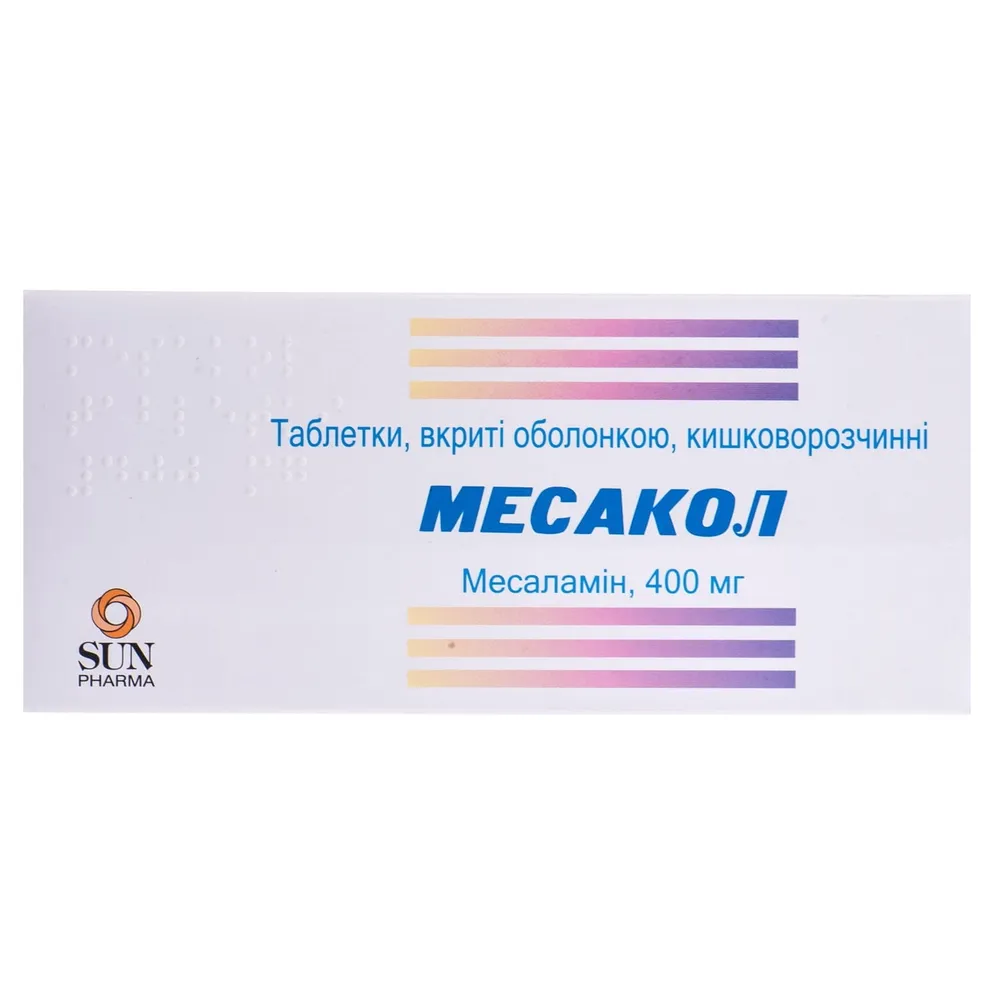
MESACOL
UkraineThe drug is used for the treatment of ulcerative colitis (from mild to moderate) and Crohn's disease. It is also used for maintenance therapy during the remission stage.
Frequently asked questions
How should Mesacol be taken correctly?
Tablets should be swallowed whole, without chewing, with a sufficient amount of liquid 1 hour before a meal. The dosage is selected by a physician individually, depending on the stage of the disease, age, and body weight.
Who should not take this drug?
Contraindications include hypersensitivity to the active substance or salicylates, severe hepatic or renal impairment, gastric or duodenal ulcer disease, as well as hemorrhagic diathesis.
What are the possible side effects of Mesacol?
The most common side effects are diarrhea, nausea, abdominal pain, headache, vomiting, and rash. Rare reactions involving the heart, liver, kidneys, and blood are also possible. If a severe rash, sore throat, or unexplained bleeding occurs, treatment should be discontinued immediately.
Can the drug be combined with other medicines?
Mesalazine may reduce the effect of warfarin and enhance the effect of certain drugs (e.g., methotrexate). When taken concurrently with azathioprine or 6-mercaptopurine, regular blood monitoring is necessary.
Does the drug affect pregnancy and breastfeeding?
The drug may be prescribed during these periods only when the expected benefit to the mother outweighs the risk to the child. During breastfeeding, attention should be paid to the child's condition: if the child develops diarrhea, breastfeeding should be discontinued.
Can you drive a car while taking the drug?
No specific effect on the ability to drive has been identified; however, the possibility of dizziness should be taken into account.
Instructions for use
INSTRUCTIONS FOR MEDICAL USE OF THE MEDICINAL PRODUCT MESACOL (MESACOL)
Composition:
Active substance: mesalazine;
1 tablet contains 400 mg of mesalamine (mesalazine);
Excipients: calcium hydrogen phosphate, corn starch, microcrystalline cellulose, hydroxypropylmethylcellulose, povidone, talc, colloidal anhydrous silicon dioxide, sodium starch glycolate (type A), methacrylic acid copolymer (type C), methacrylic acid copolymer (type B), dibutyl phthalate, titanium dioxide (E 171), iron oxide red (E 172), polyethylene glycol 6000.
Pharmaceutical form. Enteric-coated tablets.
Main physicochemical properties: round, biconvex, enteric-coated tablets (enteric coating), reddish-brown in color.
Pharmacotherapeutic group. Anti-inflammatory agents used in intestinal disorders. ATC code A07EC02.
Pharmacological properties.
Pharmacodynamics.
The mechanism of the anti-inflammatory action of mesalazine (5-aminosalicylic acid) is not fully understood. Research findings indicate that mesalazine inhibits the migration of polymorphonuclear leukocytes and suppresses lipoxygenase activity, thereby reducing the synthesis of pro-inflammatory leukotrienes in intestinal wall macrophages. There is also evidence suggesting mesalazine affects prostaglandin concentrations in the intestinal mucosa. Mesalazine may also scavenge free radicals.
When administered orally, mesalazine acts predominantly locally on the intestinal mucosa and submucosal tissue from the lumen side of the intestine. Therefore, it is important that mesalazine reaches the areas of inflammation. Systemic bioavailability and plasma concentrations are not significant for the therapeutic effect and are more relevant to safety considerations.
Pharmacokinetics.
Mesacol tablets with enteric coating are resistant to gastric juice. The polymer coating of the tablets ensures pH-dependent release of the active substance in the terminal ileum and colon, which are the primary sites of inflammation. The tablet formulation is designed to minimize absorption of mesalazine in the gastrointestinal tract. Mesalazine absorption is highest in the proximal intestine and lowest in the distal regions. After oral administration, absorption is approximately 24%. Consequently, about 76% of the administered dose remains in the terminal ileum, colon, and rectum, exerting local anti-inflammatory effects.
Mesalazine is metabolized in the liver and intestinal mucosa to form the inactive metabolite N-acetyl-5-aminosalicylic acid. Plasma protein binding of mesalazine and its metabolite is 43% and 78%, respectively. Excretion occurs primarily via feces and urine, both in unchanged form and as metabolites.
Clinical characteristics.
Indications.
Ulcerative colitis, mild to moderate severity, maintenance treatment in remission phase. Crohn's disease.
Contraindications.
Hypersensitivity to the active substance, to any other component of the medicinal product or to salicylates; severe impairment of liver or kidney function (creatinine clearance < 30 ml/min); peptic ulcer of the stomach and duodenum; hemorrhagic diathesis.
Interaction with other medicinal products and other forms of interaction.
No specific studies on drug interactions have been conducted.
When sulfasalazine and digoxin are used concomitantly, absorption of digoxin is reduced. Data on interaction between digoxin and mesalazine are lacking.
During combined treatment with mesalazine and azathioprine, 6-mercaptopurine or thioguanine, an increased incidence of myelosuppressive effects has been observed in some studies, suggesting a possible interaction, although the mechanism of interaction has not been fully elucidated. Regular monitoring of blood parameters, including leukocyte, platelet and lymphocyte counts, is recommended (once weekly), especially at the beginning of combination therapy. If leukocyte count remains stable during the first month of treatment, testing every 4 weeks during the following 12 weeks is sufficient, after which the interval may be extended to 3 months.
The dosage regimen of thiopurines should be adjusted accordingly.
There are data indicating that mesalazine may reduce the anticoagulant effect of warfarin.
When used concomitantly with nephrotoxic medicinal products such as NSAIDs, azathioprine or methotrexate, there may be an increased risk of adverse renal reactions. However, adverse effects indicating such interaction have not been reported.
Potentiation of the hypoglycemic effect of sulfonylurea derivatives and of the toxic effect of methotrexate is possible. The activity of furosemide, spironolactone, sulfonamides, rifampicin, and uricosuric agents (probenecid and sulfinpyrazone) may be reduced.
Special precautions for use.
Renal function impairment
The drug is contraindicated in patients with severe renal function impairment.
Before and during treatment, the physician should order urine tests (using test strips) to monitor urinary status. The drug should be administered with caution in patients with elevated serum creatinine levels or proteinuria. If renal function impairment occurs during treatment, it may indicate nephrotoxic effects of mesalazine. Cases of nephrolithiasis associated with mesalazine use have been reported, including stones composed of 100% mesalazine. Adequate fluid intake is recommended during treatment.
Renal function should be monitored in all patients before initiating treatment with Mesacol and during therapy as follows: 14 days after initiation of treatment, then 2–3 times at 4-week intervals. If no signs of renal impairment are observed, testing should be repeated every 6 months; after 5 years of therapy, testing should be performed once a year. If additional laboratory or clinical signs of renal impairment occur, urgent testing is required. If signs of renal impairment are detected, treatment with Mesacol should be discontinued immediately and the patient should seek medical advice without delay.
Mesalazine may cause red-brown discoloration of urine upon contact with sodium hypochlorite-based bleach (e.g., in toilets cleaned with sodium hypochlorite-containing bleaches).
Hematological disorders
Hematological disorders have been reported very rarely. If hematological disorder is suspected or present (signs of unexplained bleeding, bruising, purpura, anemia, persistent fever, or complaints of sore throat), treatment with Mesacol should be discontinued immediately and the patient should seek urgent medical advice. Blood tests should be performed before and during treatment—monitoring is recommended 14 days after initiation of therapy, followed by 2–3 tests at 4-week intervals. If test results are normal, routine monitoring every 3 months is sufficient. If additional symptoms develop, urgent testing is required.
Particular attention to blood parameters is essential if the patient develops any of the following symptoms during treatment: unexplained bleeding, bruising, purpura, anemia, persistent fever, or sore throat. In such cases, treatment must be discontinued immediately and appropriate medical care provided.
Hypersensitivity to sulfasalazine
In patients with hypersensitivity to sulfasalazine, treatment should be administered only under continuous medical supervision and discontinued immediately if signs of acute intolerance develop, such as seizures, abdominal pain, fever, severe headache, or skin rash.
Hepatic function impairment
Elevated liver enzyme levels have been reported in patients taking mesalazine-containing drugs. Mesacol should be used with caution in patients with liver disease.
Liver function tests (e.g., ALT, AST) should be performed before and during treatment, as directed by the physician. These tests are recommended within 14 days of starting treatment, followed by 2–3 tests at 4-week intervals. If results are normal, repeat testing every 3 months. Additional testing should be performed immediately if any new symptoms arise.
Cardiac hypersensitivity reactions
Isolated cases of cardiac hypersensitivity reactions (myo- or pericarditis) have been reported with mesalazine use. Mesacol should not be re-administered to patients with a history of mesalazine-induced cardiac hypersensitivity. The drug should be used with caution in patients with a history of allergic myo- or pericarditis, regardless of the causative agent.
Gastric or duodenal ulcer
Mesacol is contraindicated in patients with a history of gastric or duodenal ulcer.
Presence of intact tablets in feces
There have been isolated reports of intact tablets in feces. In most cases, these are remnants of the tablet coating. If intact tablets are frequently observed in feces, the patient should consult a physician.
Lung diseases
Patients with pulmonary diseases, particularly asthma, should be under medical supervision during mesalazine treatment.
Elderly patients
Mesacol should be prescribed with caution in elderly patients, and only if normal renal function is preserved.
Carbohydrate intolerance
The drug contains lactose and therefore should not be administered to patients with rare hereditary conditions such as galactose intolerance, lactase deficiency, or glucose-galactose malabsorption.
Severe skin adverse reactions
Severe cutaneous adverse reactions (SCARs), including drug reaction with eosinophilia and systemic symptoms (DRESS syndrome), Stevens-Johnson syndrome, and toxic epidermal necrolysis, have been reported during mesalazine treatment. Mesalazine should be discontinued at the first signs of severe skin reactions, such as rash, mucosal lesions, or any other signs of hypersensitivity.
Idiopathic intracranial hypertension
Idiopathic intracranial hypertension (pseudotumor cerebri) has been reported in patients receiving mesalazine. Patients should be informed about the signs and symptoms of idiopathic intracranial hypertension, including severe or recurrent headache, visual disturbances, or tinnitus. If idiopathic intracranial hypertension occurs, discontinuation of mesalazine should be considered.
Use during pregnancy or breastfeeding
There is insufficient data on the use of Mesacol in pregnant women. Limited data suggest no adverse effects of mesalazine on pregnancy outcome or fetal/neonatal health. However, some data indicate an increased risk of preterm delivery and reduced birth weight. One case of neonatal renal failure has been reported after prolonged high-dose maternal mesalazine use (2–4 g/day) during pregnancy.
Therefore, Mesacol should be prescribed during pregnancy only if the expected benefit to the mother outweighs the potential risk to the fetus.
N-acetyl-5-aminosalicylic acid, and to a lesser extent mesalazine, are excreted in breast milk. Experience with the use of mesalazine in breastfeeding women is limited. Hypersensitivity reactions such as diarrhea cannot be excluded. Therefore, Mesacol tablets may be used during breastfeeding only if the potential benefit outweighs the possible risk. Breastfeeding should be discontinued if diarrhea develops in the nursing infant.
Ability to affect reaction speed when driving or operating machinery
No effect on the ability to drive or operate machinery has been observed. However, dizziness as a possible adverse reaction should be taken into account.
Dosage and Administration.
Adults
Ulcerative colitis.
For treatment during the acute phase of the disease, the dose should be individually adjusted and may reach up to 4 g of mesalazine per day, divided into several doses.
For maintenance therapy during remission, the recommended dose is up to 2 g of mesalazine once daily, adjusted individually. Alternatively, the daily dose may also be divided into several doses.
Crohn's disease.
For treatment during the acute phase and for maintenance therapy, the dose should be individually adjusted and may reach up to 4 g of mesalazine per day, divided into several doses.
Elderly patients do not require dose adjustment unless renal function is impaired.
Children aged 6 years and older
For treatment of ulcerative colitis and Crohn's disease during the acute phase, the dose should be individually adjusted, starting at 30–50 mg/kg body weight/day, divided into several doses. The maximum dose is 75 mg/kg body weight/day, divided into several doses. The total daily dose must not exceed 4 g of mesalazine.
For maintenance therapy, the dose should be individually adjusted, starting at 15–30 mg/kg body weight/day, divided into several doses. The total daily dose must not exceed 2 g of mesalazine.
Generally, children with body weight below 40 kg should receive half the adult dose, while children with body weight above 40 kg should receive the full adult dose.
The tablets should be taken whole, without chewing, with sufficient fluid, 1 hour before meals. Both during acute flare-ups and for maintenance therapy in remission, Mesacol tablets should be taken regularly and continuously to achieve the desired therapeutic effect. The duration of treatment should be determined by the physician. Remission in ulcerative colitis and Crohn's disease usually occurs after 8–12 weeks of Mesacol treatment.
Children.
Mesacol tablets are not recommended for children under 6 years of age due to insufficient experience with the use of the drug in this age group.
Overdose.
No cases of intoxication or specific antidotes have been reported to date.
If necessary, intravenous electrolyte infusion (forced diuresis) should be administered.
Side effects
The most commonly observed adverse reactions during clinical trials were: diarrhea, nausea, abdominal pain, headache, vomiting, and rash. Hypersensitivity reactions and drug fever are occasionally observed.
The frequency of adverse effects reported during clinical trials and post-marketing surveillance is defined as follows: common (≥ 1/100 to < 1/10), rare (≥ 1/10,000 to < 1/100), very rare (< 1/10,000), frequency not known (cannot be estimated based on available data).
Blood and lymphatic system disorders: very rare – eosinophilia (as part of an allergic reaction), anemia, aplastic anemia, leukopenia (including granulocytopenia and neutropenia), thrombocytopenia, agranulocytosis, pancytopenia.
Immune system disorders: very rare – pancolitis, hypersensitivity reactions including anaphylactic reactions, drug reaction with eosinophilia and systemic symptoms (DRESS syndrome).
Nervous system disorders: common – headache; rare – dizziness; very rare – peripheral neuropathy, benign intracranial hypertension (in children during puberty); frequency not known – idiopathic intracranial hypertension.
Cardiac disorders: rare – myocarditis*, pericarditis*.
Respiratory, thoracic and mediastinal disorders: very rare – allergic and fibrotic lung changes (including dyspnea, cough, bronchospasm, allergic alveolitis, pulmonary eosinophilia, interstitial lung disease, pulmonary infiltration, pneumonitis).
Gastrointestinal disorders: common – diarrhea, abdominal pain, nausea, vomiting, flatulence; rare – increased amylase levels, acute pancreatitis*; very rare – pancolitis.
Hepatobiliary disorders: very rare – liver function abnormalities, including elevated liver enzymes, cholestatic parameters (e.g., elevated alkaline phosphatase, gamma-glutamyl transferase, and bilirubin), hepatotoxicity (including hepatitis*, cholestatic hepatitis, cirrhosis, liver failure).
Skin and subcutaneous tissue disorders: common – rash (including urticaria, erythematous rash); rare – photosensitivity reactions**; very rare – reversible alopecia, angioedema (Quincke's edema), allergic dermatitis, erythema multiforme; frequency not known – Stevens-Johnson syndrome, toxic epidermal necrolysis, drug-induced eosinophilia with systemic symptoms (DRESS syndrome).
Musculoskeletal and connective tissue disorders: very rare – myalgia, arthralgia, lupus-like reactions.
Renal and urinary disorders: very rare – renal function impairment (including acute and chronic interstitial nephritis*, nephrotic syndrome, renal failure (acute and chronic), which may resolve upon discontinuation of the drug), discoloration of urine; frequency not known – nephrolithiasis***.
Reproductive system and breast disorders: very rare – oligospermia (reversible).
General disorders: very rare – drug fever.
*The mechanism of mesalazine-induced myocarditis, pericarditis, pancreatitis, nephritis, and hepatitis is unknown, but an allergic origin is possible.
**Photosensitivity: more severe reactions have been reported in patients with pre-existing skin conditions such as atopic dermatitis and atopic eczema.
***See section "Special precautions" for detailed information.
It is important to note that some of these disorders may be related to inflammatory bowel disease.
Shelf life. 4 years.
Storage conditions.
Store at a temperature not exceeding 25 °C.
Keep out of reach of children.
Packaging.
10 tablets per strip. 1, 3, or 5 strips per cardboard package.
Prescription status.
Prescription only.
Manufacturers.
- Sun Pharmaceutical Industries Ltd.
- Sun Pharma Laboratories Limited.
Manufacturer addresses
- Survey No. 214, Plot No. 20, Gavt. Ind. Area, Phase II, Piparia, Silvassa – 396230, U.T. Dadra and Nagar Haveli, India.
- 6-9, EPIP, Katra, Jammu – 181133, Jammu and Kashmir, India.
Similar drugs
| Brand name | Dosage form | Active substance / Dosage | Manufacturer |
|---|---|---|---|
| ASACOL | tablets, coated, enteric-coated |
|
Haupt Pharma Wülfling GmbH (manufacturing of unpackaged products, primary and secondary packaging) |
| ASACOL | tablets, coated, enteric-coated |
|
Haupt Pharma Wülfling GmbH (manufacturing of unpackaged products, primary and secondary packaging) |
| SALOFALK | tablets, coated, enteric-coated |
|
Dr. Falk Pharma GmbH (manufacturer responsible for batch release of the final product) |
The original data is available in the language of the country of manufacture.
Data source: State Register of Medicinal Products of Ukraine
Data last verified: August 13, 2026