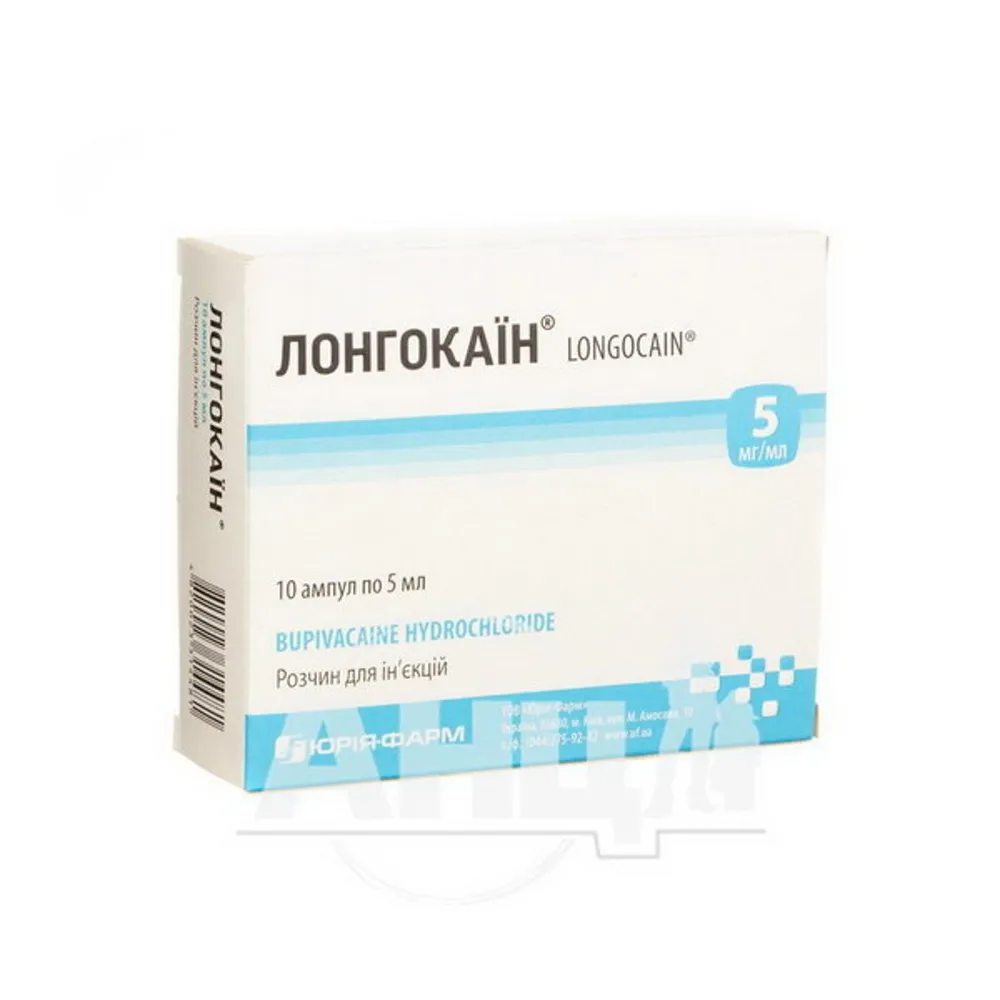
LONGOCAINE®
UkraineThe drug is used for local anesthesia (via transdermal infiltration, nerve block, or epidural anesthesia), as well as for surgical pain relief and management of acute pain in adults and children.
Frequently asked questions
How should Longocaine® be administered correctly?
The drug is administered by a specialist via injection. The dosage depends on the purpose of use (surgical intervention or pain relief), the route of administration, and the patient's condition. For children, the dose is calculated according to their body weight.
What side effects can Longocaine® cause?
The most common side effects may include nausea, decreased blood pressure, dizziness, paresthesia (tingling sensation), and vomiting. In rare cases, seizures, visual disturbances, cardiac arrhythmias, cardiac arrest, respiratory depression, or nerve damage may occur.
Who should not use this drug?
It is contraindicated in individuals with hypersensitivity to bupivacaine or other amide-type local anesthetics. There are also restrictions for epidural anesthesia (nervous system diseases, infections, blood clotting disorders, shock, etc.).
Can the drug be taken with other medicines?
Caution should be exercised when combining with other local anesthetics (e.g., lidocaine) or antiarrhythmic agents, as this may enhance the toxic effect. Special supervision is also required if the patient is taking Class III antiarrhythmic drugs (e.g., amiodarone).
Does the drug affect the ability to drive a vehicle?
The drug may cause temporary impairment of attention, coordination, and motor activity; therefore, caution should be exercised.
Instructions for use
INSTRUCTIONS FOR MEDICAL USE OF THE MEDICINAL PRODUCT LONOGAINE® (LONGOCAIN®)
Composition:
active substance: bupivacaine;
1 ml of solution contains bupivacaine hydrochloride (as bupivacaine hydrochloride monohydrate) 2.5 mg;
excipients: sodium chloride; water for injections.
Pharmaceutical form. Injection solution.
Main physicochemical properties: clear, colorless or slightly yellowish solution.
Pharmacotherapeutic group. Local anaesthetics. Amides. Bupivacaine.
ATC code N01B B01.
Pharmacological properties.
Pharmacodynamics.
Bupivacaine hydrochloride belongs to the group of amide-type local anesthetic agents with prolonged duration of action, producing anesthetic and analgesic effects. When high doses are used, surgical anesthesia is achieved, whereas lower doses result in sensory blockade (analgesia) accompanied by less pronounced motor blockade.
The onset and duration of the local anesthetic effect of bupivacaine depend on the dose and site of administration.
Like other local anesthetics, bupivacaine reversibly blocks impulse conduction in nerve fibers by inhibiting sodium ion transport across nerve membranes. Sodium channels in nerve membranes contain specific binding sites for local anesthetic molecules.
Similar effects may also occur in excitable membranes of the brain and myocardium.
When excessive amounts of the drug reach the systemic circulation, symptoms and signs of toxicity originating from the central nervous and cardiovascular systems may appear.
Signs of central nervous system toxicity (see section "Adverse Reactions") generally precede cardiovascular effects, as central nervous system toxicity occurs at lower plasma concentrations of the drug. Direct cardiac effects of local anesthetics include slowed conduction, negative inotropism, and ultimately cardiac arrest.
Indirect cardiovascular effects (arterial hypotension, bradycardia) may develop following epidural blockade, depending on the extent of accompanying sympathetic blockade.
Pharmacokinetics.
The pKa of bupivacaine is 8.2, and its partition coefficient is 346 (25 °C, n-octanol/phosphate buffer at pH 7.4). The metabolites exhibit pharmacological activity lower than that of bupivacaine.
Plasma concentration of bupivacaine depends on the dose, route of administration, and vascularity of the injection site.
Bupivacaine shows complete and biphasic absorption from the epidural space, with half-lives of approximately 7 minutes and 6 hours, respectively. The slow absorption phase is the rate-limiting factor for bupivacaine elimination and explains why the apparent elimination half-life after epidural administration is longer than after intravenous administration.
Total plasma clearance of bupivacaine is 0.58 L/min, the volume of distribution at steady state is 73 L, the terminal elimination half-life is 2.7 hours, and the hepatic extraction ratio is 0.38 after intravenous administration. Protein binding is approximately 96%, primarily to α1-acid glycoprotein. Bupivacaine clearance is almost entirely dependent on hepatic metabolism and is more sensitive to changes in intrinsic hepatic enzyme activity than to hepatic perfusion.
Pediatric population
In children, the pharmacokinetics of the drug are similar to those in adults.
An increase in total plasma concentration of the drug has been observed during prolonged epidural infusion. This is associated with postoperative elevation in α1-acid glycoprotein levels. However, the concentration of unbound (i.e., pharmacologically active) drug remains similar before and after surgery.
Bupivacaine crosses the placental barrier and rapidly reaches equilibrium with respect to unbound drug concentration.
However, total plasma concentration of the drug is lower in the fetus than in the mother due to the fetus's lower plasma protein binding capacity.
Bupivacaine is extensively metabolized in the liver, primarily via aromatic hydroxylation to 4-hydroxybupivacaine and N-dealkylation to PPX, both pathways being mediated by cytochrome P450 3A4. Approximately 1% of bupivacaine is excreted unchanged in urine within 24 hours, and about 5% is excreted as PPX. Plasma concentrations of PPX and 4-hydroxybupivacaine during and after prolonged bupivacaine infusion remain low compared to the concentration of the parent drug.
Clinical characteristics.
Indications.
Longocaine®, 0.25% solution, is indicated for local anaesthesia by percutaneous infiltration, peripheral nerve block(s), and central neural block (caudal or epidural), i.e., it is used by a specialist in situations where prolonged anaesthesia is required. Since sensory nerve block is more pronounced than motor block, Longocaine® is particularly effective in relieving pain, for example, during childbirth.
Longocaine® is indicated for:
- surgical anaesthesia in adults and children aged 12 years and older;
- management of acute pain syndrome in adults, infants, and children aged 1 year and older.
Contraindications.
Hypersensitivity to the active substance or to any of the excipients. Bupivacaine hydrochloride is contraindicated in patients with increased sensitivity to amide-type local anaesthetics.
Bupivacaine must not be used for intravenous regional anaesthesia (Bier block).
Epidural anaesthesia, regardless of the local anaesthetic used, has its own contraindications, including: active neurological diseases such as meningitis, poliomyelitis, intracranial haemorrhage, subacute combined degeneration of the spinal cord due to pernicious anaemia, and tumours of the brain and spinal cord; spinal tuberculosis; purulent skin infection at or near the site of lumbar puncture; cardiogenic or hypovolemic shock; coagulation disorders or ongoing anticoagulant therapy.
Interaction with other medicinal products and other forms of interaction.
Caution should be exercised when administering bupivacaine together with other local anaesthetics or medicinal products structurally related to amide-type local anaesthetics, such as certain antiarrhythmics (e.g., lidocaine and mexiletine), since systemic toxic effects are additive.
Specific interaction studies between bupivacaine and class III antiarrhythmic agents (e.g., amiodarone) have not been conducted; however, caution is recommended in such cases (see section "Special precautions for use").
Acute systemic toxicity
Systemic toxic reactions primarily affect the central nervous system (CNS) and the cardiovascular system. These reactions are caused by high concentrations of local anaesthetics in the blood, which may result from (accidental) intravascular injection, overdose, or exceptionally rapid absorption from highly vascularized areas (see section "Special precautions for use"). CNS reactions are similar for all amide-type local anaesthetics, whereas cardiovascular reactions depend more on the type of agent, both quantitatively and qualitatively.
Toxic effects on the central nervous system manifest as a stepwise reaction, with symptoms and signs progressing in severity. Initial symptoms include mild dizziness, perioral paraesthesia, tongue numbness, hyperacusis, tinnitus, and visual disturbances. Dysarthria, muscle rigidity, and tremor are more serious symptoms and may precede generalized seizures. These signs should not be mistaken for neurotic behaviour. Subsequently, loss of consciousness and generalized tonic-clonic seizures may occur, lasting from several seconds to several minutes. During seizures, increased muscular activity rapidly leads to hypoxia and hypercapnia, accompanied by respiratory depression and possible worsening of airway function. In severe cases, apnoea may develop. The development of acidosis, hyperkalaemia, and oxygen deficiency increases and prolongs the toxic effects of local anaesthetics.
Recovery occurs due to redistribution of the local anaesthetic away from the CNS, followed by metabolism and excretion. Recovery may be rapid, except when large doses of the drug have been administered.
In severe cases, toxic effects on the cardiovascular system may occur, and typically, signs of CNS toxicity precede cardiovascular toxicity. Prodromal CNS symptoms may not manifest in patients under the influence of strong sedatives or receiving general anaesthesia. High systemic concentrations of local anaesthetics may lead to arterial hypotension, bradycardia, arrhythmias, and even cardiac arrest; however, in rare cases, cardiac arrest has been observed without preceding CNS effects.
Paediatric population
Adverse reactions in children are similar to those observed in adults; however, early signs of toxicity with local anaesthetics may be difficult to detect in children when blocks are performed under general anaesthesia.
Treatment of acute toxicity
If signs of acute systemic toxicity occur, administration of the local anaesthetic must be stopped immediately.
Management of a patient exhibiting signs of systemic toxicity should focus on rapid termination of seizures and ensuring adequate ventilation, including oxygen administration, and, if necessary, assistance or control of pulmonary ventilation (respiration).
Once seizures are controlled and adequate pulmonary ventilation is ensured, additional treatment is usually not required.
In case of cardiovascular depression (arterial hypotension, bradycardia), appropriate treatment should be considered, including intravenous fluids, vasopressors, inotropes, and/or lipid emulsion. When treating symptoms of toxicity in children, doses appropriate to age and body weight should be used.
In case of circulatory arrest, cardiopulmonary resuscitation must be initiated immediately. Maintaining adequate oxygenation, pulmonary ventilation, circulation, and treating acidosis are life-saving measures.
Cardiac arrest caused by bupivacaine may be resistant to electrical defibrillation; therefore, resuscitation efforts must be actively continued for an extended period.
Manifestations of extensive or complete spinal block leading to respiratory paralysis and arterial hypotension during epidural anaesthesia should be managed by ensuring and maintaining airway patency, providing oxygen, and assisting or controlling pulmonary ventilation as needed.
Special precautions for use.
There have been reports of cardiac arrest associated with the use of bupivacaine for epidural anesthesia or peripheral nerve blocks. In some cases, resuscitation was complicated and required prolonged resuscitative efforts before a positive response was achieved. Nevertheless, in some instances resuscitation was unsuccessful despite apparently adequate preparation and appropriate therapy.
As with all local anesthetics, bupivacaine may cause acute toxic effects on the central nervous and cardiovascular systems when high concentrations of the drug are achieved in the blood following administration for local anesthesia. This is particularly relevant in cases of accidental intravascular injection or injection into highly vascularized areas. Cases of ventricular arrhythmias, ventricular fibrillation, sudden cardiovascular collapse, and fatal outcomes have been reported in association with high systemic concentrations of bupivacaine.
Appropriate resuscitation equipment must be readily available whenever local or general anesthesia is administered. The responsible physician must take necessary precautions to avoid intravascular injection (see section "Dosage and administration"). Prior to initiating any nerve block procedure, intravenous access must be established to allow for administration of medications required for resuscitation. Physicians performing these procedures must have adequate and appropriate training and must be familiar with the diagnosis and treatment of adverse effects, systemic toxicity, and other complications (see sections "Overdose" and "Side effects").
Blockade of large peripheral nerves may require large volumes of local anesthetic administered in highly vascularized areas, often near major blood vessels, where the risk of intravascular injection and/or systemic absorption is increased. This may result in high plasma concentrations of the drug.
Overdose or accidental intravenous injection may lead to the development of toxic reactions.
Due to the slow accumulation of bupivacaine hydrochloride, repeated doses may lead to a significant increase in blood levels with each subsequent dose. Drug tolerance varies depending on the patient's condition.
Although regional anesthesia is often the optimal anesthetic technique, certain patients require special attention to reduce the risk of serious adverse effects:
- Elderly patients and patients with poor general health require dose reduction proportional to their physical condition;
- Patients with partial or complete heart block – because local anesthetics may depress myocardial conduction;
- Patients with progressive liver disease or severe renal dysfunction;
- Patients in late stages of pregnancy;
- Patients receiving Class III antiarrhythmic agents (e.g., amiodarone) should be under close monitoring with continuous ECG surveillance, as the cardiologic effects of these drugs may be additive.
Patients with allergic reactions to ester-type local anesthetics (procaine, tetracaine, benzocaine, etc.) have not shown cross-sensitivity to amide-type agents such as bupivacaine.
Certain procedures involving local anesthesia may lead to serious adverse reactions regardless of the type of local anesthetic used.
-
Caution should be exercised when using local anesthetics for epidural anesthesia in patients with cardiovascular impairment, as such patients have a reduced ability to compensate for functional changes associated with prolonged atrioventricular conduction caused by these drugs.
-
Physiological effects resulting from central neural blockade are more pronounced in the presence of arterial hypotension. Sudden and severe arterial hypotension may develop during epidural anesthesia in patients with hypovolemia from any cause. Therefore, epidural anesthesia should be avoided or used with caution in patients with untreated hypovolemia or significant impairment of venous return.
-
Very rarely, retrobulbar injections may reach the cranial subarachnoid space and cause transient blindness, cardiovascular collapse, apnea, and seizures, among other effects.
-
Retro- and peribulbar injections of local anesthetics may pose a risk of persistent dysfunction of ocular muscles. The main causes include traumatic injury to nerves and/or local toxic effects of the injected anesthetic on muscles and nerves. The severity of such tissue reactions depends on the extent of trauma, the concentration of the local anesthetic, and the duration of exposure of tissues to the anesthetic. Therefore, as with all local anesthetics, the lowest effective concentration and dose should be used.
-
Vasoconstrictors may enhance tissue reactions and should be used only when indicated.
-
Unintentional intravascular injection of low doses of local anesthetics in the head and neck region, including retrobulbar, dental blocks, and stellate ganglion block, may lead to systemic toxicity.
-
Paracervical block may have a greater adverse effect on the fetus than other types of regional anesthesia used in obstetrics. Due to the systemic toxicity of bupivacaine, particular caution is required when using bupivacaine for paracervical block.
-
Post-marketing reports have described cases of chondrolysis in patients who received prolonged intra-articular infusions of local anesthetics after surgical procedures. In most reported cases, chondrolysis affected the shoulder joint. Due to multiple etiological factors and conflicting information in the scientific literature regarding the mechanism of action, a causal relationship has not been established. Prolonged intra-articular infusion is not an approved indication for Longocaine®.
Administration of epidural anesthesia with any local anesthetic may lead to the development of arterial hypotension and bradycardia. These effects should be anticipated, and appropriate preventive measures should be taken, which may include pre-administration of vasopressors. In case of arterial hypotension, vasoconstrictor agents should be administered intravenously. Severe arterial hypotension may occur due to hypovolemia from hemorrhage or dehydration, or aortocaval compression in patients with massive ascites, large intra-abdominal tumors, or in late pregnancy. Significant arterial hypotension should be avoided in patients with cardiac decompensation.
Epidural anesthesia in patients with hypovolemia from any cause may lead to sudden and severe arterial hypotension.
Epidural anesthesia may cause paralysis of intercostal muscles, and patients with pleural effusion may develop respiratory insufficiency. Sepsis may increase the risk of intraspinal abscess formation in the postoperative period.
When administering bupivacaine via intra-articular injection, caution is advised in cases of suspected recent extensive intra-articular trauma or presence of large open surfaces within the joint created during surgical procedures, as this may accelerate absorption and lead to elevated plasma concentrations of the drug.
The product contains 3.15 mg of sodium per 1 ml. This should be taken into account in patients on a strict low-sodium diet.
Pediatric population
The safety and efficacy of Longocaine® in children under 1 year of age have not been established. Only limited data are available.
The use of bupivacaine for intra-articular block in children aged 1 to 12 years is not indicated.
The use of bupivacaine for large nerve blocks in children aged 1 to 12 years is not indicated.
For epidural anesthesia in children, incremental dosing adjusted according to age and body weight is recommended, as particularly thoracic epidural anesthesia may lead to severe arterial hypotension and respiratory insufficiency.
Use during pregnancy or breastfeeding.
There is no evidence of adverse effects on pregnancy in humans; however, Longocaine® should not be used during early pregnancy except when the benefit is considered to outweigh the risks.
When performing paracervical block, there is an increased risk of adverse reactions in the fetus (such as bradycardia) due to the use of local anesthetics. These effects may be related to high concentrations of anesthetic reaching the fetus (see section "Special precautions for use").
Bupivacaine passes into breast milk, but in such small amounts that there is no risk of effects on the infant when the drug is used at therapeutic doses.
Ability to affect reaction speed when driving or operating machinery.
Longocaine® has minimal impact on the ability to drive or operate machinery. Besides the direct effect of anesthetics, local anesthetics may have a very slight effect on mental functions and motor coordination, even in the absence of overt CNS toxicity, and may cause temporary impairment of motor activity and attention.
Method of Administration and Dosage
Dosage
Adults and children aged 12 years and older
The following table provides dosage guidelines for the drug in adult patients of average age, when applying the most commonly used nerve block techniques. The figures indicate the expected range of average acceptable doses of the drug. Standard reference texts should be consulted when factors affecting individual block techniques are present, and to meet individual patient requirements.
Caution! When performing prolonged blocks, either via continuous infusion or repeated bolus administration, consider the risk of achieving toxic plasma concentrations of the drug or the risk of local nerve injury.
Physician experience and patient-specific factors are important considerations when determining the required dose. The lowest effective dose necessary to achieve adequate anesthesia should be used. Individual variability may occur both at the onset and during the course of anesthesia.
Dosage recommendations for adults – Table 1.
| Concentration, mg/ml |
Volume, ml |
Dose, mg |
Onset, min |
Duration of effect, hours7) |
|
| ANESTHESIA FOR SURGICAL PROCEDURES |
|||||
| Lumbar epidural administration1) |
|||||
| Surgical procedure |
5.0 |
15–30 |
75–150 |
15–30 |
2–3 |
| Lumbar epidural administration1) |
|||||
| Cesarean section |
5.0 |
15–30 |
75–150 |
15–30 |
2–3 |
| Thoracic epidural administration1) |
|||||
| Surgical procedure |
2.5 |
5–15 |
12.5–37.5 |
10–15 |
1.5–2 |
| 5.0 |
5–10 |
25–50 |
10–15 |
2–3 |
2–3 |
| Caudal epidural block1) |
|||||
| 2.5 |
20–30 |
50–75 |
20–30 |
1–2 |
|
| 5.0 |
20–30 |
100–150 |
15–30 |
2–3 |
2–3 |
| Peripheral nerve block2) |
|||||
| (e.g., brachial plexus, femoral, sciatic nerves) |
5.0 |
10–35 |
50–175 |
15–30 |
4–8 |
| Local anesthesia |
|||||
| (e.g., blocks and infiltration of small nerves) |
2.5 |
< 60 |
< 150 |
1–3 |
3–4 |
| 5.0 |
≤ 30 |
≤ 150 |
1–10 |
3–8 |
3–8 |
| Acute pain management |
Concentration, mg/mL |
Volume, mL |
Dose, mg |
Onset of action, min |
Duration of effect, hours7) |
| Lumbar epidural administration |
|||||
| Repeated bolus administration3) (e.g., postoperative analgesia) |
2.5 |
6–15; minimum interval 30 min |
15–37.5; minimum interval 30 min |
2–5 |
1–2 |
| Lumbar epidural administration |
|||||
| Continuous infusion4) |
2.5 |
5–7.5/ hour |
12.5–18.8/hour |
– |
– |
| Thoracic epidural administration1) |
|||||
| Continuous infusion4) |
2.5 |
4–7.5/ hour |
10–18.8/ hour |
– |
– |
| Intra- articular block6) |
|||||
| (e.g., single dose after knee arthroscopy) |
2.5 |
≤ 40 |
≤ 1005) |
5–10 |
2–4 hours after discontinuation |
| Local anesthesia |
|||||
| (e.g., blocks and infiltration of small nerves) |
2.5 |
≤ 60 |
≤ 150 |
1–3 |
3–4 |
- The dose includes the studied dose.
- The dose for blockade of large nerves should be adjusted according to the site of administration and the patient's condition. An increased incidence of serious adverse reactions may occur with intercostal block and supraclavicular brachial plexus block, regardless of the type of local anesthetic used; see also section "Special precautions".
- Total dose ≤ 400 mg/24 hours.
- These solutions are commonly used for epidural administration in combination with appropriate opioid analgesics. Total dose ≤ 400 mg/24 hours.
- When bupivacaine is used with any other techniques in the same patient, the dosage should not exceed 150 mg.
- Post-marketing reports have described cases of chondrolysis in patients who received prolonged intra-articular infusions of local anesthetics. Longocaine® is not approved for this indication (see section "Special precautions").
- Longocaine® without adrenaline.
In general, surgical anesthesia (e.g., epidural administration) requires higher concentrations and doses of the drug. When less intense blockade is required (e.g., for labor pain relief), lower concentrations are indicated. The volume of the administered solution will influence the extent of anesthesia.
To avoid intravascular injection, aspiration should be performed before and repeated during the administration of the total dose, which should be administered slowly or in divided doses at a rate of 25–50 mg/min, with continuous monitoring of vital functions and maintenance of verbal contact with the patient. Accidental intravascular injection may be detected by a transient increase in heart rate, and accidental intrathecal injection by signs of spinal block. If signs of intoxication occur, administration of the drug must be stopped immediately (see section "Adverse reactions"). Current clinical experience indicates that a dose of 400 mg administered over 24 hours is well tolerated in a healthy adult of average weight.
Children aged 1 to 12 years.
The following table provides dosing guidelines for pediatric use. Individual variations exist. In children with increased body weight, dosage should often be gradually reduced based on ideal body weight. Standard reference sources should be consulted when factors affecting specific block techniques are present or to meet individual patient requirements.
The lowest effective dose required to achieve adequate anesthesia should be used.
Dosing recommendations for children aged 1 to 12 years Table 2.
| Concentration, mg/mL |
Volume, mL/kg |
Dose, mg/kg |
Onset, min |
Duration of effect, hours |
|
| ACUTE PAIN MANAGEMENT (pre- and postoperative pain) |
|||||
| Caudal epidural administration |
2.5 |
0.6–0.8 |
1.5–2 |
20–30 |
2–6 |
| Lumbar epidural administration of the drug |
2.5 |
0.6–0.8 |
1.5–2 |
20–30 |
2–6 |
| Thoracic epidural administration of the druga) |
2.5 |
0.6–0.8 |
1.5–2 |
20–30 |
2–6 |
| Local anesthesia (e.g., nerve blocks and infiltration of small nerves) |
2.5 |
0.5–2.0 |
|||
| 5.0 |
0.5–2.0 |
||||
| Peripheral nerve block (e.g., femoral, ilioinguinal) |
2.5 |
0.5–2.0b) |
|||
| 5.0 |
0.5–2.0b) |
||||
a) The block may be supplemented with additional doses until the desired level of anesthesia is achieved.
b) The onset and duration of peripheral nerve block depend on the type of block and the dose administered.
For children, the dose should be calculated per 1 kg of body weight (up to 2 mg/kg).
To avoid intravascular injection, aspiration should be performed before and repeated during the administration of the total dose of the drug. The drug should be administered slowly in divided doses, especially when administered via lumbar or thoracic epidural route, with continuous careful monitoring of the patient's vital functions.
Peritonsillar infiltration was performed in children aged 2 years and older with bupivacaine 2.5 mg/mL at a dose of 7.5–12.5 mg per tonsil.
Ilioinguinal and iliohypogastric blocks were performed in children aged 1 year and older with bupivacaine 2.5 mg/mL at a dose of 0.1–0.5 mL/kg, equivalent to 0.25–1.25 mg/kg. Children aged 5 years and older received bupivacaine 5 mg/mL at a dose of 1.25–2 mg/kg.
The safety and efficacy of intermittent epidural bolus injection or continuous infusion have not been established. Only limited data are available.
Children.
May be used for anesthesia in children aged 1 year and older as prescribed (see section "Dosage and Administration").
The safety and efficacy of Longocaine® with and without adrenaline in children under 1 year of age have not been established. Only limited data are available.
Overdose.
Accidental intravascular injections of local anesthetics may cause immediate (within seconds to minutes) systemic toxic reactions. In cases of overdose, systemic toxicity appears later (15–60 minutes after injection) due to a slower rise in the blood concentration of the local anesthetic (see section "Adverse Reactions").
Adverse reactions.
Accidental intrathecal administration of the drug may lead to the development of a very high degree of spinal anesthesia, possibly with apnea and severe arterial hypotension.
The adverse reaction profile of Longocaine® is similar to that of other long-acting local anesthetics. Adverse reactions caused directly by the drug are difficult to distinguish from the physiological effects of nerve fiber blockade (e.g., decreased arterial pressure, bradycardia), as well as phenomena caused directly (e.g., nerve trauma) or indirectly (e.g., epidural abscess) by needle puncture.
Neurological injuries are rare but well-known consequences of regional, particularly epidural and spinal, anesthesia. They may be associated with several causes, such as direct trauma to the spinal cord or spinal nerves, anterior spinal artery syndrome, injection of an irritant substance, or injection of a non-sterile solution. This may result in paresthesia or anesthesia in localized areas, motor weakness, loss of sphincter control, and paraplegia. Sometimes these effects are prolonged in duration.
List of adverse reactions presented in tabular form.
Adverse reactions considered, at least, as possibly related to treatment with Longocaine®, based on data obtained from clinical trials of the relevant drugs and from post-marketing surveillance, are listed below by system organ classes and absolute frequency. Frequencies are defined as very common (> 1/10), common (from > 1/100 to < 1/10), uncommon (from > 1/1000 to < 1/100), rare (from > 1/10000 to < 1/1000), and not able to be estimated from available data.
Adverse reactions following administration of the drug. Table 3.
| System organ class |
Frequency classification |
Adverse reaction to drug administration |
| Immune system disorders |
Uncommon |
Allergic reactions, anaphylactic reaction/shock (see section "Special precautions"). |
| Nervous system disorders |
Common |
Paresthesia, dizziness. |
| Uncommon |
Signs and symptoms of CNS toxicity (seizures, perioral paresthesia, tongue numbness, hyperacusis, visual disturbances, loss of consciousness, tremor, mild dizziness, tinnitus, dysarthria, muscle twitching). |
|
| Rare |
Neuropathy, peripheral nerve injury, arachnoiditis, paresis, and paraplegia. |
|
| Eye disorders |
Rare |
Diplopia (double vision) |
| Cardiac disorders |
Common |
Bradycardia (see section "Special precautions"). |
| Rare |
Cardiac arrest (see section "Special precautions"), cardiac arrhythmias. |
|
| Vascular disorders |
Very common |
Arterial hypotension (see section "Special precautions"). |
| Common |
Arterial hypertension (see section "Special precautions"). |
|
| Respiratory, thoracic and mediastinal disorders |
Rare |
Respiratory depression. |
| Gastrointestinal disorders |
Very common |
Nausea |
| Common |
Vomiting |
|
| Renal and urinary disorders |
Common |
Urinary retention |
After repeated injections or long-term infusions of bupivacaine, cases of hepatic dysfunction have been reported, with reversible elevations in aspartate aminotransferase (AST), alanine aminotransferase (ALT), alkaline phosphatase, and bilirubin levels. If signs of hepatic dysfunction occur during treatment with bupivacaine, the drug should be discontinued.
Shelf life. 2 years.
Storage conditions.
Store at a temperature not exceeding 25 °C. Do not freeze. Keep out of reach of children.
Incompatibility.
Alkalinization may cause precipitation, as bupivacaine is poorly soluble at pH above 6.5.
Packaging.
200 ml in bottles.
Prescription status.
Prescription only.
Manufacturer.
LLC "Yuria-Pharm".
Manufacturer's address and location of business operations.
108, Kozbirska St., Cherkasy, Cherkasy region, 18030, Ukraine. Tel.: (044) 281-01-01.
Similar drugs
| Brand name | Dosage form | Active substance / Dosage | Manufacturer |
|---|---|---|---|
| BUCAINE | solution for injection |
|
PJSC "Infuziya" |
| BUCAINE | solution for injection |
|
PJSC "Infuziya" |
| BUPINECAINE-HYPERBAR | solution for injection |
|
PJSC "Scientific and Production Center "Borshchahivskyy Chemical and Pharmaceutical Plant" |
| BUPIVACAINE | solution for injection |
|
Farmasel LLC |
| BUPIVACAINE | solution for injection |
|
PJSC "Halychpharm" |
| BUPIVACAINE SPINAL | solution for injection |
|
Farmasel LLC |
| BUPIVACAINE SPINAL | solution for injection |
|
PJSC "Halychpharm" |
| BUPIVACAINE-ISOBAR | solution for injection |
|
PJSC "Scientific and Production Center "Borshchahivskyy Chemical and Pharmaceutical Plant" |
| BUPIVACAINE-M | solution for injection |
|
LLC "Kharkiv Pharmaceutical Enterprise "Zdorovya Narodu" |
| BUPIVACAINE-ZN | solution for injection |
|
LLC "Kharkiv Pharmaceutical Enterprise "Zdorovya Narodu" (all manufacturing stages, quality control, batch release) |
| LONGOCAINE® | solution for injection |
|
Yuria-Pharm LLC |
| LONGOCAINE® HEVI | solution for injection |
|
Yuria-Pharm LLC |
The original data is available in the language of the country of manufacture.
Data source: State Register of Medicinal Products of Ukraine
Data last verified: August 13, 2026