LINCAS
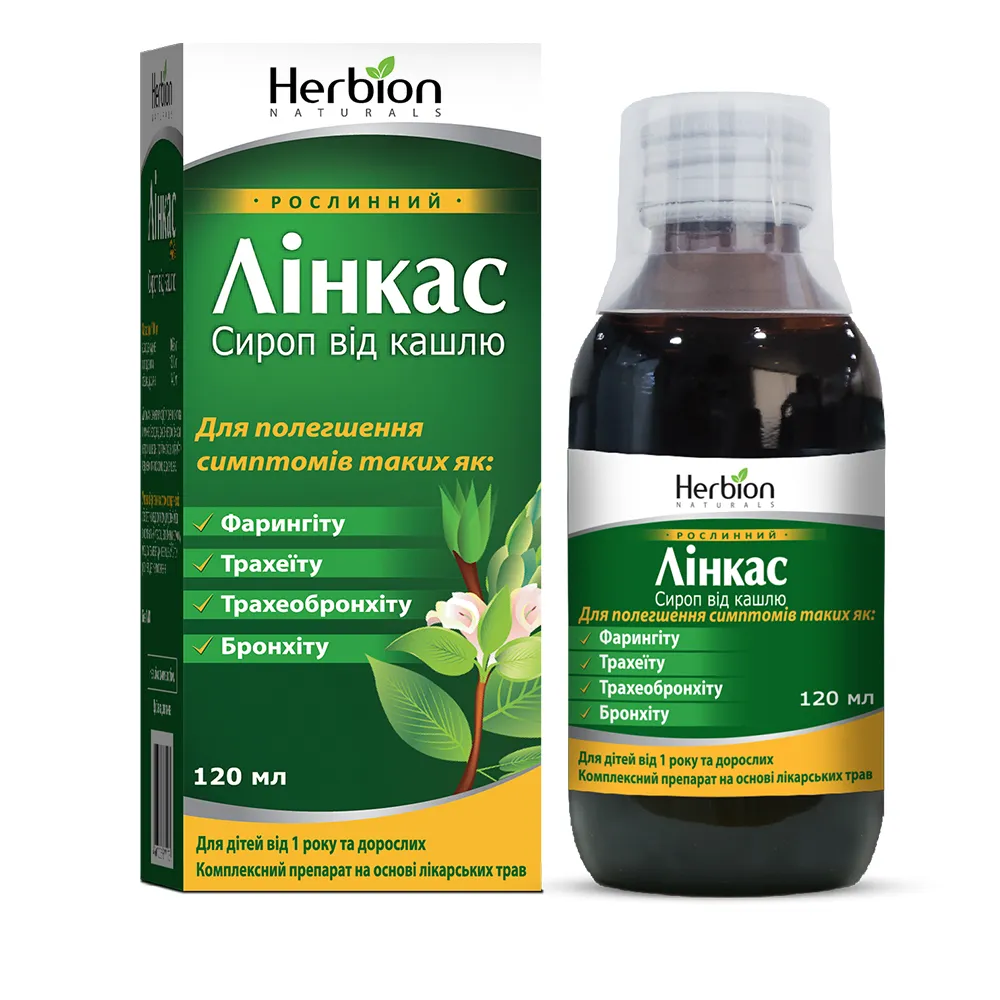
UkraineThe drug is used for the complex therapy of inflammatory diseases of the upper and lower respiratory tract accompanied by a dry, irritating cough. It is applied in cases of bronchitis (acute and chronic), pharyngitis, tracheitis, and tracheobronchitis.
Frequently asked questions
How should Lincas (LINKUS) be taken correctly?
The syrup is taken orally. Adults and children aged 12 years and older — 2 teaspoons (10 ml) 3–4 times a day. Children aged 7 to 11 years — 1 teaspoon (5 ml) 4 times a day. Children aged 3 to 6 years — 1 teaspoon (5 ml) 3 times a day. Children aged 1 to 2 years — 1/2 teaspoon (2.5 ml) 3–4 times a day. The course of treatment usually lasts from 3 to 7 days.
What are the possible side effects of Lincas (LINKUS)?
Possible side effects include weakness, increased blood pressure, allergic reactions (rash, itching, swelling), increased salivation, and irritation of the gastric mucosa. Prolonged use or overdose may lead to an imbalance of water and electrolytes.
Who should not take this drug?
Contraindications include hypersensitivity to the components, diabetes mellitus, organic heart lesions (infarction, myocarditis, etc.), arterial hypertension, liver or kidney dysfunction, hypokalemia, and severe obesity. The drug should not be prescribed to children under 1 year of age.
Can the syrup be combined with other medicines?
It is not recommended to take the drug simultaneously with antitussive agents that reduce phlegm expectoration (e.g., codeine). Any use of other medicines should be reported to a physician.
Does the drug affect the ability to drive a vehicle?
No, the use of the syrup does not affect the ability to drive vehicles or operate complex machinery.
Can the drug be taken during pregnancy or breastfeeding?
During this period, the drug should be used with caution and only as prescribed by a physician, if the expected benefit to the mother outweighs the potential risk to the child.
Instructions for use
INSTRUCTION FOR MEDICAL USE OF THE MEDICINAL PRODUCT LINCAS (LINKUS)
Composition:
Active substances: 5 ml of syrup contains:
Adhatoda vasica leaf extract, dry (3.25:1) (extracting agent – water) 92.31 mg;
Glycyrrhiza glabra root extract, dry (3.25:1) (extracting agent – water) 11.54 mg;
Piper longum fruit extract, dry (3.25:1) (extracting agent – water) 15.38 mg;
Viola odorata flower extract, dry (3.25:1) (extracting agent – water) 3.85 mg;
Hyssopus officinalis flower extract, dry (3.25:1) (extracting agent – water) 7.7 mg;
Alpinia galanga rhizome and root extract, dry (3.25:1) (extracting agent – water) 7.7 mg;
Cordia latifolia fruit extract, dry (3.25:1) (extracting agent – water) 15.38 mg;
Althaea officinalis seed extract, dry (3.25:1) (extracting agent – water) 15.38 mg;
Zizyphus vulgaris fruit extract, dry (3.25:1) (extracting agent – water) 15.38 mg;
Onosma bracteatum leaf and flower extract, dry (3.25:1) (extracting agent – water) 15.38 mg.
Excipients: sucrose, anhydrous citric acid, glycerin, methylparaben (E 218), propylparaben (E 216), propylene glycol, peppermint oil, clove oil, purified water.
Pharmaceutical form. Syrup.
Main physicochemical properties.
A homogeneous brown-colored syrup with a peppermint flavor and characteristic odor. Formation of sediment is permissible.
Pharmacotherapeutic group. ATC Code.
Combined preparations used in colds.
ATC Code R05X.
Pharmacological properties.
Pharmacodynamics.
A complex herbal medicinal product with anti-inflammatory, expectorant, mucolytic, spasmolytic, and antipyretic properties. Improves secretory function of the respiratory epithelium, surface-active properties of pulmonary surfactant, and stimulates ciliary epithelial function, thereby exerting a positive effect on exudative and proliferative phases of inflammation. Liquefies thick mucus and facilitates its removal from the respiratory tract. Acts on the mucous membranes of the pharynx and bronchi as a local antiseptic.
Pharmacokinetics.
Studies have shown that administration of the drug reduces smooth muscle tone of bronchioles and trachea, increases bronchiolar and alveolar sac diameter, and reduces mucosal edema. Changes in cough intensity are observed within 3–4 days of treatment.
Clinical characteristics.
Indications.
Complex therapy of inflammatory diseases of the upper and lower respiratory tract accompanied by dry, irritating cough; bronchitis (acute and chronic); pharyngitis, tracheitis, tracheobronchitis.
Contraindications.
Hypersensitivity to the components of the drug; diabetes mellitus.
Organic heart lesions (myocarditis, pericarditis, myocardial infarction), arterial hypertension; hepatic and renal dysfunction; hypokalemia; severe obesity.
Special precautions.
The syrup contains sugar, which should be taken into account by individuals on a low-calorie diet.
Interaction with other medicinal products and other forms of interaction.
Concomitant use of this drug with antitussive agents that suppress expectoration (e.g., codeine) is not recommended.
If it is necessary to use any other medicinal products, a physician should be informed.
Special precautions.
Use during pregnancy or breastfeeding.
Use with caution and only as prescribed by a physician during pregnancy and breastfeeding, and only if the expected benefit to the mother outweighs the potential risk to the fetus/child.
Ability to affect reaction speed when driving or operating machinery.
Does not affect the ability to drive or operate complex machinery.
Dosage and Administration.
For oral use.
Adults and children aged 12 years and older: 2 teaspoons (10 ml) of syrup 3–4 times daily.
Children aged 7 to 11 years: 1 teaspoon (5 ml) of syrup 4 times daily.
Children aged 3 to 6 years: 1 teaspoon (5 ml) of syrup 3 times daily.
Children aged 1 to 2 years: 1/2 teaspoon (2.5 ml) 3–4 times daily.
Duration of treatment: 3 to 7 days.
Children.
Do not administer to children under 1 year of age.
Overdose.
Overdose and prolonged use (more than 2 months) may cause disturbances in water-electrolyte balance, potentially leading to hypokalemic myopathy and myoglobinuria. Exacerbation of adverse effects is possible.
No cases of accidental overdose have been reported.
Adverse reactions.
Weakness, increased arterial pressure, hypokalemia, allergic reactions (including skin rash, hyperemia of the skin, annular erythema, pruritus, urticaria, angioneurotic edema); increased salivation, irritation of gastric mucosa may occur during administration of the drug.
If any adverse reactions occur, discontinue use of the drug and consult a physician.
Shelf life.
3 years.
Storage conditions.
Store in the original packaging at a temperature not exceeding 25 °C. Keep out of reach of children.
Packaging.
90 ml, 120 ml, or 150 ml of syrup in bottles No. 1 in a cardboard box.
Dispensing category.
Over-the-counter (without prescription).
Manufacturer/Applicant.
Herbion Pakistan Private Limited.
Representative of the applicant. Representative office "Herbion (Pakistan) Pvt. Ltd."
Manufacturer's location and address of business activity.
Plot No. 30, Sector 28, Korangi Industrial Area, Karachi, Pakistan.
Representative's location. Legal address: 01601, Kyiv, Mechnikova St., 16, office 306.
Similar drugs
| Brand name | Dosage form | Active substance / Dosage | Manufacturer |
|---|---|---|---|
| BRONCHIPRET | syrup |
|
Bionorica SE |
| BRONCHO VEDA PLUS | syrup | PJSC "Chempharmplant "Chervona Zirka" | |
| EHINASAL | syrup | Wroclaw Herbal Pharmaceuticals Enterprise "Herbapol" JSC | |
| HERBION® PLANTAIN SYRUP | syrup |
|
KRKA, d.d., Novo mesto (quality control and batch release) / KRKA, d.d., Novo mesto (bulk manufacturing, primary and secondary packaging, batch control) |
| MALIPIN® | syrup |
|
DKP "Pharmaceutical Factory" LLC |
| PELARGONIUM SYRUP DOCTOR MOM® | syrup |
|
Fitofarm Kleka S.A. |
| SINUPRET® | syrup | Bionorica SE | |
| SINUPRET® H | syrup | Bionorica SE |
The original data is available in the language of the country of manufacture.
Data source: State Register of Medicinal Products of Ukraine
Data last verified: August 13, 2026