LEMTRADA
UkraineThe drug is intended for monotherapy in adults with highly active relapsing-remitting multiple sclerosis (RRMS). It is used if the disease remains active despite previous treatment, or in cases of rapidly progressing severe disease.
Frequently asked questions
How to take Lemtrada?
The drug is administered via intravenous infusion. Standard initial treatment consists of two courses: the first course lasts 5 days, and the second (after 12 months) lasts 3 days. The dosage is 12 mg per day. Before infusions, it is necessary to take corticosteroids and anti-herpetic drugs for prophylaxis.
Who should not take this drug?
Contraindications include hypersensitivity to the ingredients, HIV infection, severe active infections, uncontrolled arterial hypertension, a history of stroke, myocardial infarction, or arterial dissection, as well as other autoimmune diseases (except MS) and coagulopathies.
What are the possible side effects of Lemtrada?
The most frequent reactions include rash, headache, fever, and respiratory tract infections. Possible serious autoimmune reactions (thyroid dysfunction, kidney problems, thrombocytopenia), infections, as well as reactions occurring directly during infusion (nausea, chills, shortness of breath) may occur.
Can the drug be taken with other medicines?
It is not recommended to use the drug simultaneously with antineoplastic or immunosuppressive agents, as this may increase the risk of immune system suppression. Before starting treatment, interferon beta and glatiramer acetate must be discontinued 28 days prior.
What special safety precautions should be followed?
During treatment, it is necessary to undergo regular (monthly) blood and urine tests and to monitor thyroid function. Women of reproductive age must use effective methods of contraception during treatment and for 4 months after it. It is also important to avoid consuming raw meat and unpasteurized dairy products.
How does the drug affect pregnancy and breastfeeding?
The drug may cross the placenta; therefore, its prescription to pregnant women is only possible if the benefit outweighs the risk. Breastfeeding must be discontinued during treatment and for 4 months after the last infusion.
Instructions for use
INSTRUCTIONS FOR MEDICAL USE OF THE MEDICINAL PRODUCT LEMTRADA (LEMTRADA®)
Composition:
Active substance: alemtuzumab;
1.2 ml of concentrate contains 12 mg of alemtuzumab;
1 vial contains 12 mg of alemtuzumab;
Excipients: sodium hydrogen phosphate (E 339); disodium edetate dihydrate; potassium chloride (E 508); potassium dihydrogen phosphate (E 340); polysorbate 80 (E 433); sodium chloride; water for injections.
Pharmaceutical form. Concentrate for solution for infusion.
Main physicochemical properties: clear, colorless to slightly yellow concentrate, pH 7.0–7.4.
Pharmacotherapeutic group. Immunosuppressants. Selective immunosuppressants. Alemtuzumab. ATC code L04A A34.
Pharmacological properties.
Pharmacodynamics.
Mechanism of action. Alemtuzumab is a humanized monoclonal antibody produced by recombinant DNA technology and directed against the CD52 glycoprotein located on the cell surface, with a molecular mass of 21–28 kDa. Alemtuzumab is an IgG1 kappa antibody with human variable framework and constant regions, and complementarity-determining regions derived from a mouse monoclonal antibody (produced in rat). The approximate molecular mass of the antibody is 150 kDa.
Alemtuzumab binds to the CD52 antigen on the cell surface, which is present at high concentrations on T lymphocytes (CD3+) and B lymphocytes (CD19+), and at lower concentrations on natural killer cells, monocytes, and macrophages. CD52 is either present in low concentrations or not detected at all on neutrophils, plasma cells, and bone marrow stem cells. The action of alemtuzumab is mediated through antibody-dependent cellular cytotoxicity and complement-mediated lysis following cell surface binding to T and B lymphocytes.
The mechanism by which Lemtrada exerts its therapeutic effects in multiple sclerosis (MS) is not fully understood. However, studies suggest immunomodulatory effects through elimination and subsequent repopulation of lymphocytes, including:
- changes in the number, ratio, and characteristics of certain lymphocyte subsets following treatment;
- increased numbers of regulatory T-cell subsets;
- increased numbers of memory T and B lymphocytes;
- transient effects on components of innate immunity (i.e., neutrophils, macrophages, NK cells).
The reduction in circulating B and T cells induced by Lemtrada, followed by their repopulation, may reduce the potential for disease relapse, ultimately slowing disease progression.
Pharmacodynamic effects. Lemtrada reduces circulating levels of T and B lymphocytes after each treatment course, with the lowest levels observed at 1 month post-treatment (corresponding to the earliest post-treatment assessment time point in Phase III studies). Lymphocyte repopulation occurs over time, with B-cell levels typically recovering within 6 months. CD3+ and CD4+ lymphocyte levels increase more slowly and usually do not return to baseline levels within 12 months after treatment. Approximately 40% of patients reached the lower limit of normal (LLN) for total lymphocyte count at 6 months after each treatment course, and approximately 80% of patients reached the LLN at 12 months after each treatment course.
Neutrophils, monocytes, eosinophils, basophils, and natural killer cells exhibit only transient changes in response to Lemtrada.
Clinical efficacy and safety. The safety and efficacy of alemtuzumab in MS were evaluated in three randomized, assessor-blind, controlled clinical trials using an active comparator drug and one uncontrolled, assessor-blind, extension study involving patients with relapsing-remitting multiple sclerosis (RRMS).
Table 1 presents information on study design and patient demographics (Studies 1, 2, 3, and 4).
Table 1
| Study Name |
Study 1 CAMMS323 |
Study 2 CAMMS32400507 |
Study 3 CAMMS223 |
| Study Design |
Controlled, randomized, assessor-blinded |
Controlled, randomized, assessor- and dose-blinded |
Controlled, randomized, assessor-blinded |
| Disease history |
Patients with active RRMS defined as at least 2 relapses in the prior 2 years |
Patients with active RRMS defined as at least 2 relapses in the prior 2 years or presence of 1 or more contrast-enhancing lesions |
|
| Duration |
2 years |
3 years‡ |
|
| Study participant population |
Patients who had not received prior treatment |
Patients who had an inadequate response to prior therapy* |
Patients who had not received prior treatment |
| Baseline characteristics |
|||
| Mean age (years) |
33 |
35 |
32 |
| Mean/median disease duration |
2.0/1.6 years |
4.5/3.8 years |
1.5/1.3 years |
| Mean duration of prior MS therapy (using ≥ 1 agent) |
Not applicable |
36 months |
Not applicable |
| % of patients previously treated with ≥ 2 courses of MS therapy |
Not applicable |
28% |
Not applicable |
| Mean EDSS (Expanded Disability Status Scale) score at baseline |
2.0 |
2.7 |
1.9 |
| Study 4 |
|||
| Study name |
CAMMS03409 |
||
| Study design |
Uncontrolled, assessor-blinded, extension study |
||
| Study participant population |
Patients who participated in studies CAMMS223, CAMMS323 or CAMMS32400507 (see baseline characteristics above) |
||
| Duration of extension phase |
4 years |
||
* Defined as patients who experienced at least 1 relapse during treatment with interferon beta or glatiramer acetate after receiving such therapy for at least 6 months.
‡ The primary endpoint of the study was assessed at 3 years. Additional follow-up provided data for a period with a median duration of 4.8 years (with a maximum follow-up of 6.7 years).
Table 2 shows the results obtained in studies 1 and 2.
Table 2
| Study Name |
Study 1 CAMMS323 (CARE-MS I) |
Study 2 CAMMS32400507 (CARE-MS II) |
||
| Clinical Endpoints |
Lemtrada 12 mg (N = 376) |
IFN-beta-1a SC (N = 187) |
Lemtrada 12 mg (N = 426) |
IFN-beta-1a SC (N = 202) |
| Relapse rate1 Annualized relapse rate (ARR) (95% CI) |
0.18 (0.13, 0.23) |
0.39 (0.29, 0.53) |
0.26 (0.21, 0.33) |
0.52 (0.41, 0.66) |
| Rate ratio (95% CI) |
0.45 (0.32, 0.63) 54.9 (p < 0.0001) |
0.51 (0.39, 0.65) 49.4 (p < 0.0001) |
||
| Disability1 (Confirmed disability progression [CDP])2 |
8.0% (5.7, 11.2) |
11.1% (7.3, 16.7) |
12.7% (9.9, 16.3) |
21.1% (15.9, 27.7) |
| Relative risk (95% CI) |
0.70 (0.40, 1.23) (p = 0.22) |
0.58 (0.38, 0.87) (p = 0.0084) |
||
| Patients without relapses over 2 years (95% CI) |
77.6% (72.9, 81.6) (p < 0.0001) |
58.7% (51.1, 65.5) |
65.4% (60.6, 69.7) (p < 0.0001) |
46.7% (39.5, 53.5) |
| Change in EDSS score from baseline at 2 years3 (95% CI) |
-0.14 (-0.25, -0.02) (p = 0.42) |
-0.14 (-0.29, 0.01) |
-0.17 (-0.29, -0.05) (p < 0.0001) |
0.24 (0.07, 0.41) |
| MRI Endpoints (0−2 years) |
||||
| Median percent change in T2 lesion volume on T2-weighted MRI |
-9.3 (-19.6, -0.2) (p = 0.31) |
-6.5 (-20.7, 2.5) |
-1.3 (p = 0.14) |
-1.2 |
| Proportion of patients with new or enlarging T2 lesions at 2 years |
48.5% (p = 0.035) |
57.6% |
46.2% (p < 0.0001) |
67.9% |
| Proportion of patients with gadolinium-enhancing lesions at 2 years |
15.4% (p = 0.001) |
27.0% |
18.5% (p < 0.0001) |
34.2% |
| Proportion of patients with new T1 hypointense lesions at 2 years |
24.0% (p = 0.055) |
31.4% |
19.9% (p < 0.0001) |
38.0% |
| Median percent change in brain parenchymal fraction |
-0.867 (p < 0.0001) |
-1.488 |
-0.615 (p = 0.012) |
-0.810 |
1 The primary endpoint consisted of CDP and relapses. The study was considered successful if at least one of these two components of the primary endpoint was achieved.
2 CDP was defined as an increase of at least 1.0 point on the Expanded Disability Status Scale (EDSS) compared to baseline EDSS score (for patients with a baseline EDSS score of 0, an increase of 1.5 points was considered), sustained for 6 months.
3 Assessed using a mixed model for repeated measures.
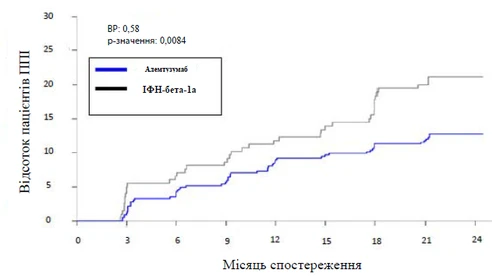
Figure. Time to confirmed disability progression (over a period of up to 6 months) in Study 2
Severity of relapse
In the study assessing the impact of treatment on relapse frequency, post hoc analyses conducted within Study 1 (CAMMS323) showed that treatment with Lemtrada 12 mg/day resulted in a statistically significantly lower number of patients experiencing severe relapses (61% reduction, p = 0.0056) and a statistically significantly lower number of relapses requiring steroid treatment (58% reduction, p < 0.0001), compared to the IFNB-1a group.
Post hoc analyses conducted within Study 2 (CAMMS32400507) showed that treatment with Lemtrada 12 mg/day resulted in a statistically significantly lower number of patients experiencing severe relapses (48% reduction, p = 0.0121) and a statistically significantly lower number of relapses requiring steroid treatment (56% reduction, p < 0.0001) or hospitalization (55% reduction, p = 0.0045), compared to the IFNB-1a group.
Confirmed disability improvement (CDI)
Time to CDI was defined as a decrease of at least 2 points on the EDSS score compared to baseline EDSS score, sustained for at least 6 months. CDI is a measure of sustained disability improvement. In Study 2, 29% of patients receiving Lemtrada achieved CDI, compared to only 13% in the subcutaneous IFNB-1a group. This difference was statistically significant (p = 0.0002).
Study 3 (Phase II study CAMMS223) evaluated the safety and efficacy of Lemtrada in patients with RRMS over 3 years. At study entry, patients had an EDSS score of 0–3.0, at least 2 clinical episodes of MS in the previous 2 years, and ≥1 gadolinium-enhancing lesion. Patients had not previously received any MS-related therapy. Patients received Lemtrada 12 mg/day (N = 108) or 24 mg/day (N = 108), administered once daily for 5 days in Month 0 and for 3 days in Month 12, or subcutaneous IFNB-1a 44 mcg (N = 107) administered three times weekly for 3 years. Forty-six patients received a third course of Lemtrada 12 mg/day or 24 mg/day for 3 days in Month 24.
After 3 years of treatment with Lemtrada, a 76% reduction in the risk of CDP sustained for 6 months (hazard ratio 0.24 [95% CI: 0.110, 0.545], p < 0.0006) and a 67% reduction in annualized relapse rate (ARR) (rate ratio 0.33 [95% CI: 0.196, 0.552], p < 0.0001) were observed compared to subcutaneous IFNB-1a. Treatment with Lemtrada 12 mg/day resulted in statistically significantly better EDSS scores (improvement from baseline) over 2 years of observation compared to IFNB-1a (p < 0.0001).
In the subgroup of RRMS patients with 2 or more relapses in the prior year and at least 1 gadolinium-enhancing lesion on T1-weighted MRI at baseline, the annualized relapse rate was 0.26 (95% CI: 0.20, 0.34) in the Lemtrada group (n = 205) and 0.51 (95% CI: 0.40, 0.64) in the IFNB-1a group (n = 102) (p < 0.0001). This analysis included data only from Phase III studies (CAMMS324 and CAMMS323) due to differences in MRI reading algorithms between Phase II and Phase III studies. These results were obtained from a post hoc analysis and should be interpreted with caution.
Long-term efficacy data
Study 4 was a Phase III, multicenter, open-label, rater-blinded, extension study evaluating the long-term efficacy and safety of Lemtrada in patients with RRMS who had participated in Studies 1, 2, or 3 (previously conducted Phase II and III studies). This study provided efficacy and safety data over a period with a median duration of 6 years from the time of enrollment in Studies 1 and 2. Patients in this extension study (Study 4) could receive additional course(s) of Lemtrada if there was documented reactivation of disease activity, defined as the occurrence of ≥1 MS relapse and/or the appearance of ≥2 new or enlargement of ≥2 existing lesions in the brain or spinal cord on MRI. Additional course(s) of Lemtrada were administered at a dose of 12 mg/day for 3 consecutive days (total dose 36 mg), no sooner than 12 months after the previous course.
91.8% of patients who received Lemtrada 12 mg in Studies 1 and 2 were enrolled in Study 4. 82.7% of these patients completed the study. Approximately half (51.2%) of patients who initially received Lemtrada 12 mg/day in Studies 1 or 2 and were enrolled in Study 4 received only the initial 2 treatment courses and did not receive any other disease-modifying therapies during the 6-year observation period.
46.6% of patients who initially received Lemtrada 12 mg/day in Studies 1 or 2 received additional courses due to documented evidence of MS reactivation (relapse occurrence and/or MRI changes) and according to the treating physician's decision to administer a repeat course. No baseline characteristics enabled identification of patients who later received one or more additional treatment courses.
Over 6 years after initial treatment with Lemtrada, patients under continued observation demonstrated consistently low relapse rates, low rates of new brain lesion formation on MRI, low brain tissue loss, consistent with the treatment effects observed during Studies 1 and 2, and predominantly stable or improved disability scores. Over the observation period in Study 4, patients initially treated with Lemtrada in Studies 1 and 2 had ARR of 0.17 and 0.23, CDP occurred in 22.3% and 29.7%, and CDI was achieved in 32.7% and 42.5%, respectively. Each year during Study 4, patients from both main studies continued to show low risk of new lesion formation on T2-weighted images (27.4% to 33.2%) or gadolinium-enhancing lesions (9.4% to 13.5%), and median annual percentage change in brain parenchymal fraction ranged from 0.19% to -0.09%.
In patients who received one or two additional courses of Lemtrada, improvements in relapse rate, MRI disease activity, and mean EDSS score were observed after the first or second repeat course (courses 3 and 4) compared to the prior year. In these patients, ARR decreased from 0.79 in the year preceding course 3 to 0.18 in the year following course 3, and mean EDSS score improved from 2.89 to 2.69. The percentage of patients with new or enlarging T2 lesions decreased from 50.8% in the year preceding course 3 to 35.9% in the year following course 3, and for gadolinium-enhancing lesions, the reduction was from 32.2% to 11.9%. Similar improvements in ARR, mean EDSS score, T2 lesion activity, and gadolinium-enhancing lesions were observed after course 4 compared to the prior year. These improvements were maintained over time; however, definitive conclusions about long-term efficacy (e.g., 3 and 4 years after additional courses) cannot be made, as many patients discontinued participation before reaching these time points.
The benefit and risks of 5 or more treatment courses have not been established.
Immunogenicity
Like other protein medicinal products, this product has potential to be immunogenic. Available data indicate that a certain proportion of patients developed positive antibodies to alemtuzumab as measured by enzyme-linked immunosorbent assay (ELISA), confirmed by competitive binding assay. Samples with positive results were further evaluated for in vitro inhibition using flow cytometry. In clinical studies of MS, serum samples were collected at 1, 3, and 12 months after each treatment course to assess the presence of anti-alemtuzumab antibodies. Approximately 85% of patients receiving Lemtrada developed anti-alemtuzumab antibodies during the study, of whom ≥90% also developed antibodies that inhibited alemtuzumab binding in vitro. In patients who developed anti-alemtuzumab antibodies, this occurred within 15 months of initial administration. During the first two treatment courses, no association was observed between the presence of anti-alemtuzumab antibodies or inhibiting antibodies and reduced efficacy, changes in pharmacodynamics, or occurrence of adverse reactions, including infusion-associated reactions. High titers of anti-alemtuzumab antibodies observed in some patients were associated with incomplete lymphocyte depletion after the third or fourth treatment course; however, no clear impact of anti-alemtuzumab antibodies on the clinical efficacy or safety profile of Lemtrada was observed.
Data on antibody formation frequency are highly dependent on the sensitivity and specificity of the assay. Additionally, various factors such as assay methodology, sample handling, timing of sample collection, concomitant medications, and underlying disease may influence the observed frequency of positive antibody results (including neutralizing antibodies). Therefore, comparisons of the frequency of antibody formation to Lemtrada with that of other medicinal products may not be appropriate.
Paediatric population
The European Medicines Agency has waived the obligation for the applicant to submit the results of studies with alemtuzumab in children aged from birth to less than 10 years for the treatment of multiple sclerosis (information on use in children is provided in section "Posology and method of administration").
The European Medicines Agency has granted the applicant a deferral for the obligation to submit the results of studies with Lemtrada in one or more paediatric subpopulations for RRMS (information on use in children is provided in section "Posology and method of administration").
Pharmacokinetics. Pharmacokinetic properties of alemtuzumab were evaluated in a total of 216 patients with RRMS who received the drug as intravenous infusions at either 12 mg/day or 24 mg/day for 5 consecutive days, followed by 3 consecutive days 12 months after the initial course. Serum concentrations of the drug increased with each subsequent dose during the treatment course, with peak concentrations observed after the last infusion of each course. Administration of 12 mg/day resulted in a mean Cmax of 3014 ng/mL on Day 5 of the initial course and 2276 ng/mL on Day 3 of the second course. The alpha-phase elimination half-life was approximately 4–5 days and was comparable across treatment courses, resulting in low or undetectable serum concentrations approximately 30 days after each course.
Alemtuzumab is a protein, and its expected metabolic pathway is degradation into small peptides and individual amino acids by a broad range of proteolytic enzymes. Classical biotransformation studies were not conducted.
Based on available data, no definitive conclusions can be drawn regarding the influence of race or sex on the pharmacokinetics of alemtuzumab. Pharmacokinetics of alemtuzumab in RRMS have not been studied in patients aged 55 years and older.
Preclinical safety data
Carcinogenicity and mutagenicity
No studies on the carcinogenic or mutagenic potential of alemtuzumab have been conducted to date.
Fertility and reproduction
Intravenous administration of alemtuzumab at doses up to 10 mg/kg/day for 5 consecutive days (7.1-fold increase in AUC compared to the recommended daily dose) did not affect fertility or reproductive function in huCD52 transgenic male mice. The number of normal spermatozoa was significantly reduced (<10%) compared to control animals, and the percentage of abnormal spermatozoa (with detached or absent heads) was significantly increased (up to 3%). However, these changes did not affect fertility and were therefore not considered adverse.
In female mice receiving intravenous alemtuzumab at doses up to 10 mg/kg/day (4.7-fold increase in AUC compared to the recommended daily dose) for 5 consecutive days prior to mating with wild-type male mice, mean numbers of corpora lutea and implantation sites per mouse were significantly reduced compared to placebo-treated animals. Pregnant mice receiving alemtuzumab at 10 mg/kg/day showed reduced weight gain during pregnancy compared to placebo-treated control animals.
In a reproductive toxicity study in pregnant mice receiving intravenous alemtuzumab at doses up to 10 mg/kg/day (2.4-fold increase in AUC compared to the recommended dose of 12 mg/day) for 5 consecutive days during pregnancy, a significant increase in the number of females with complete embryonic/fetal death or resorption was observed, along with a concomitant reduction in the number of females with viable fetuses. At doses up to 10 mg/kg/day, no malformations or variant deviations in external, soft, or skeletal tissues were observed.
Placental transfer and potential pharmacological activity of alemtuzumab were observed during pregnancy and after birth. In mouse offspring exposed to alemtuzumab during intrauterine development at doses of 3 mg/kg/day for 5 consecutive days (0.6-fold increase in AUC compared to the recommended dose of 12 mg/day), changes in lymphocyte counts were observed. At doses up to 10 mg/kg/day, no impairments in cognitive, physical, or sexual development were observed in offspring exposed to alemtuzumab during lactation.
Clinical characteristics.
Indications.
Lemtrada is indicated as a disease-modifying therapy for monotherapy of adults with highly active relapsing-remitting multiple sclerosis (RRMS) who fall into either of the following categories:
- patients who continue to have highly active disease despite an adequate course of treatment with at least one disease-modifying therapy, or
- patients with rapidly evolving severe relapsing-remitting multiple sclerosis defined as two or more disabling relapses within one year, with one or more gadolinium-enhancing lesion(s) on brain MRI or with a significant increase in total lesion volume on T2-weighted MRI compared to the most recent prior MRI.
Contraindications.
Hypersensitivity to the active substance or to any of the excipients of the medicinal product.
Infection caused by human immunodeficiency virus (HIV).
Severe active infection (until complete recovery of the patient).
Uncontrolled arterial hypertension.
History of arterial dissection of the head or neck.
History of stroke.
History of angina pectoris or myocardial infarction.
Known coagulopathy or concomitant use of antiplatelet or anticoagulant therapy.
Other concomitant autoimmune diseases (except MS).
Special safety precautions.
The content of the vial should be inspected visually for particulate matter and discoloration prior to administration. The medicinal product must not be used if particulate matter or discoloration is observed.
Do not shake vials before use.
For intravenous administration, 1.2 mL of Lemtrada is withdrawn from the vial into a syringe using aseptic technique. The product is then added to 100 mL of sodium chloride 9 mg/mL (0.9%) solution for infusion or glucose (5%) solution for infusion. This medicinal product must not be diluted with other solvents. To mix the solution, the bag should be gently inverted.
Care must be taken to ensure sterility of the prepared solution. The diluted solution should be used immediately. Each vial is intended for single use only.
Any unused medicinal product or waste material must be disposed of in accordance with local requirements.
Interaction with other medicinal products and other forms of interaction.
No formal drug interaction studies have been conducted with Lemtrada at the recommended doses in patients with MS. In one controlled clinical trial in MS, patients who had recently received interferon beta or glatiramer acetate were required to discontinue treatment with these agents 28 days prior to starting Lemtrada.
Special precautions for use.
Lemtrada is not recommended for patients with inactive disease and for patients whose disease is stable on their current therapy.
Patients being treated with Lemtrada should be provided with the Package Leaflet, Patient Alert Card, and Patient Guide. Prior to initiating treatment, patients must be informed about the risks and benefits of using the medicine and the necessity of undergoing monitoring from the start of treatment until at least 48 months after the last infusion of the second treatment course with Lemtrada. If an additional treatment course is prescribed, the safety monitoring period should be extended until at least 48 months after the last infusion of the medicine.
Traceability
To improve the traceability of biological medicinal products, the trade name and batch number of the administered product should be clearly recorded in the patient's medical records.
Autoimmune reactions
Treatment with this medicinal product may lead to the formation of autoantibodies and an increased risk of autoimmune-mediated conditions, which may be serious and life-threatening. Reported autoimmune disorders include thyroid disorders, immune thrombocytopenic purpura (ITP), nephropathies (e.g., anti-glomerular basement membrane antibody disease), autoimmune hepatitis, acquired hemophilia A, thrombotic thrombocytopenic purpura, sarcoidosis, and autoimmune encephalitis. Cases of multiple autoimmune disorders have been reported during post-marketing use after treatment with Lemtrada. Patients who experience autoimmune reactions should be evaluated for other autoimmune-mediated conditions (see section "Contraindications"). Patients and physicians should be informed about the potential for late onset of autoimmune disorders after the 48-month monitoring period.
Acquired hemophilia A
Cases of acquired hemophilia A (with development of antibodies to blood coagulation factor VIII) have been reported both in clinical trials and during post-marketing use of this medicinal product. Typically, patients present with spontaneous subcutaneous hematomas and large bruises, although hematuria, epistaxis, gastrointestinal, or other types of bleeding may also occur. All patients with such symptoms should undergo coagulation testing, including activated partial thromboplastin time (aPTT). In case of prolonged aPTT, the patient should be referred to a hematologist. Patients should be informed about the signs and symptoms of acquired hemophilia A and advised to seek immediate medical attention if any of these symptoms occur.
Thrombotic thrombocytopenic purpura (TTP)
TTP has been reported in patients receiving Lemtrada during post-marketing use, including fatal cases. TTP is a serious condition requiring urgent evaluation and prompt treatment and may develop several months after the last infusion of Lemtrada. TTP may be characterized by thrombocytopenia, microangiopathic hemolytic anemia, neurological symptoms, elevated body temperature, and renal failure.
Autoimmune encephalitis
Cases of autoimmune encephalitis have been reported in patients treated with Lemtrada. Autoimmune encephalitis is characterized by subacute onset (rapid progression over several months) of memory impairment, altered mental status, or psychiatric symptoms, usually in combination with new focal neurological symptoms and seizures. Patients suspected of autoimmune encephalitis should undergo neuroimaging (MRI), electroencephalography (EEG), lumbar puncture, and serological testing for relevant biomarkers (e.g., autoantibodies to neural tissue antigens) to confirm the diagnosis and exclude alternative etiologies.
Immune thrombocytopenic purpura (ITP)
Serious cases of ITP were observed in 12 (1%) patients receiving treatment during controlled clinical trials of MS (corresponding to an annual incidence rate of 4.7 cases/1000 patient-years). During the follow-up period, with a median of 6.1 years (maximum follow-up of 12 years), an additional 12 serious cases of ITP were observed (cumulative annual incidence rate of 2.8 cases/1000 patient-years). In one patient, ITP remained unrecognized until the requirement for monthly blood monitoring was implemented, and this patient died from intracerebral hemorrhage. In 79.5% of cases, ITP onset occurred within 4 years after the first administration of the medicine. However, in some cases, ITP occurred several years later. Symptoms of ITP may include (the proposed list is not exhaustive): increased tendency to bruising, petechiae, spontaneous skin and mucosal bleeding (e.g., epistaxis, hemoptysis), increased menstrual bleeding (compared to usual) or irregular menstrual bleeding. Hemoptysis may also indicate anti-glomerular basement membrane antibody disease (see below), so appropriate differential diagnosis is required. Patients should be reminded of the need to monitor for symptoms and to seek immediate medical attention in case of any concerns.
Before initiating treatment, a complete blood count with differential leukocyte count should be performed and repeated monthly during treatment and until at least 48 months after the last infusion of the medicine. After this, tests should be performed based on clinical data that may indicate the development of ITP. In case of suspicion of ITP, a complete blood count should be performed immediately.
Upon confirmation of ITP, prompt appropriate treatment is indicated, including immediate referral to a specialist. Results from clinical MS trials demonstrated that adherence to blood monitoring requirements and patient education regarding the onset and symptoms of ITP ensures early detection and treatment of ITP, with most cases responding to first-line medication therapy.
Nephropathies
Nephropathies, including anti-glomerular basement membrane (anti-GBM) antibody disease, were observed in 6 (0.4%) patients during clinical MS trials with follow-up, with a median of 6.1 years (maximum follow-up of 12 years), and typically developed within 39 months after the last administration of Lemtrada. Two cases of anti-GBM disease were recorded during clinical trials. Both cases were serious, detected early due to clinical and laboratory monitoring, and resolved favorably after treatment.
Clinical manifestations of nephropathy may include elevated serum creatinine levels, hematuria, and/or proteinuria. Although such cases were not observed in clinical trials, alveolar hemorrhage, manifesting as hemoptysis, may occur with anti-GBM disease. Hemoptysis may also indicate ITP or acquired hemophilia A (see above), so appropriate differential diagnosis is required. Patients should be reminded of the need to monitor for symptoms and to seek immediate medical attention in case of any concerns. Anti-GBM disease may lead to renal failure requiring dialysis and/or kidney transplantation if timely therapeutic measures are not taken, and may be life-threatening if left untreated.
Before initiating treatment, serum creatinine levels should be determined and this test should be repeated monthly during treatment and until at least 48 months after the last infusion of the medicine. Before initiating treatment, a general urine analysis with sediment microscopy should be performed and repeated monthly during treatment and until at least 48 months after the last infusion of the medicine. Detection of clinically significant changes in serum creatinine levels compared to baseline, unexplained hematuria, and/or proteinuria requires immediate evaluation for nephropathy, including urgent referral to a specialist. Early detection and treatment of nephropathies may reduce the risk of adverse clinical outcomes. After this, tests should be performed based on clinical data that may indicate the development of nephropathies.
Thyroid disorders
Endocrine thyroid disorders, including autoimmune thyroid disorders, were observed in 36.8% of patients receiving Lemtrada at a dose of 12 mg in clinical MS trials, with a median follow-up duration of 6.1 years (maximum follow-up of 12 years) after the first administration of Lemtrada. The frequency of adverse events related to the thyroid gland was higher in patients with a history of thyroid disorders, both in the Lemtrada group and in the interferon beta-1a (IFNB-1a) group. Reported autoimmune thyroid disorders included hyperthyroidism and hypothyroidism. Most cases were mild or moderate in severity. Serious endocrine adverse events developed in 4.4% of patients, with events such as Graves' disease (also known as Basedow's disease), hyperthyroidism, hypothyroidism, autoimmune thyroiditis, and goiter observed in more than one patient. Most adverse events related to the thyroid gland were treated with standard medication interventions, although some patients required surgical intervention. In patients who developed biopsy-confirmed autoimmune thyroiditis during the post-marketing period, autoimmune thyroid disorders had been previously documented.
Before initiating treatment, thyroid function tests, such as measurement of thyroid-stimulating hormone levels, should be performed and repeated every 3 months during treatment and until 48 months after the last infusion of the medicine. After this, tests should be performed based on clinical data that may indicate the development of thyroid function disorders or in case of pregnancy.
Thyroid disorders pose a particular risk for pregnant women (see section "Use during pregnancy or breastfeeding").
In clinical trials, adverse events related to the thyroid gland occurred in 74% of patients with positive baseline thyroid peroxidase antibodies (TPO) compared to 38% of patients with negative baseline TPO antibodies. The majority (approximately 80%) of patients who developed adverse events related to the thyroid gland after treatment had negative baseline TPO antibody results. Thus, adverse reactions related to the thyroid gland may occur in patients regardless of TPO antibody status before treatment with the medicine, so periodic testing as described above is necessary.
Cytopenias
Rare cases of suspected autoimmune cytopenias, such as neutropenia, hemolytic anemia, and pancytopenia, were observed during clinical MS trials. Complete blood counts should be performed (see above in the ITP subsection) to monitor for cytopenias, including neutropenia. Upon confirmation of cytopenia, prompt appropriate treatment is indicated, including referral to a specialist.
Autoimmune hepatitis and liver injury
Cases of autoimmune hepatitis (including fatal cases or those requiring liver transplantation) and infection-related liver injury have been observed in patients receiving Lemtrada (see section "Contraindications"). Liver function should be evaluated before initiating therapy with the medicine and monthly until at least 48 months after the last infusion of the medicine. Patients should be informed about the risk of autoimmune hepatitis, liver injury, and the corresponding symptoms.
Hemophagocytic lymphohistiocytosis (HLH)
During post-marketing use of the medicine, cases of HLH (including fatal cases) have been observed in patients receiving Lemtrada. HLH is a life-threatening syndrome of pathological immune activation characterized by clinical signs and symptoms of extremely pronounced systemic inflammation. HLH manifests with fever, hepatomegaly, and cytopenias. It is associated with high mortality in the absence of early diagnosis and treatment. Symptoms have been observed from several months to four years after the start of treatment. Patients should be informed about the symptoms of HLH and their timing. In patients with early signs of pathological immune activation, immediate evaluation is required, and a probable diagnosis of HLH should be considered.
Infusion-associated reactions (IARs)
In clinical trials, infusion-associated reactions (IARs) were defined as any adverse event occurring during or within 24 hours after infusion of Lemtrada. Most of these events may be due to cytokine release during infusion. Most patients receiving Lemtrada at a dose of 12 mg in clinical MS trials experienced mild or moderate IARs during or within 24 hours after administration of the medicine. The frequency of IARs was higher during the first treatment course compared to subsequent courses. Considering all available follow-up data, including patients who received additional treatment courses, the most common IARs were headache, rash, pyrexia, nausea, urticaria, pruritus, insomnia, chills, flushing, fatigue, dyspnea, dysgeusia, chest discomfort, generalized rash, tachycardia, bradycardia, dyspepsia, dizziness, and pain. Serious reactions occurred in 3% of patients and included headache, pyrexia, urticaria, tachycardia, atrial fibrillation, nausea, chest discomfort, and hypotension. Clinical manifestations of anaphylaxis may be similar to those associated with infusion reactions but tend to be more severe or potentially life-threatening. Anaphylaxis-related reactions were rarely reported compared to infusion-associated reactions.
To mitigate the effects of infusion reactions, premedication is recommended for patients (see section "Dosage and administration").
Most patients in controlled clinical trials received antihistamines and/or antipyretics before at least one infusion of Lemtrada. IARs may occur in patients despite premedication. Patients should be monitored for infusion reactions during and for at least 2 hours after infusion of Lemtrada. If necessary, prolonged monitoring (hospitalization) may be advisable. In case of severe infusion reactions, intravenous infusion should be immediately discontinued. Medications for treating anaphylaxis and other serious reactions should be readily available (see below).
Adult-onset Still's disease (AOSD)
During post-marketing use, cases of adult-onset Still's disease (AOSD) have been reported in patients receiving treatment with Lemtrada. AOSD is a rare inflammatory disease requiring immediate evaluation and treatment. Patients with AOSD may present with a combination of signs and symptoms: fever, arthritis, rash, and leukocytosis in the absence of infections, malignancies, or other rheumatic diseases. Consideration should be given to interrupting or discontinuing treatment with Lemtrada if an alternative etiology for these signs or symptoms is not established.
Other serious reactions temporally associated with Lemtrada infusion
During post-marketing use of the medicine, rare, serious, sometimes fatal, and unpredictable adverse events involving various organ systems have been observed. In most cases, the time to onset of such reactions was within 1–3 days after infusion of Lemtrada. Reactions occurred after any dose of the medicine and after the second treatment course. Patients should be informed about the signs and symptoms of these conditions and their timing. Patients should be advised to seek immediate medical attention if any of these symptoms occur. Patients should be informed about the possibility of late onset of such events.
Hemorrhagic stroke
Several patients with documented cases of hemorrhagic stroke were under 50 years of age, had no history of arterial hypertension, hemorrhagic disorders, and were not taking anticoagulants or platelet inhibitors. In some patients, an increase in blood pressure compared to baseline levels was observed before the development of hemorrhage.
Myocardial ischemia and myocardial infarction
Several patients with documented cases of these disorders were under 40 years of age and had no risk factors for ischemic heart disease. It was noted that in some of these patients, blood pressure and/or heart rate temporarily changed compared to normal values during infusion of the medicine.
Dissection of head and neck arteries
Cases of dissection of head and neck arteries, including multiple dissections, were observed both in the first days after infusion of Lemtrada and at later times within the first month after infusion.
Alveolar pulmonary hemorrhage
Documented cases of this disorder, temporally associated with the use of the medicine, were not linked to anti-GBM disease (Goodpasture's syndrome).
Thrombocytopenia
Documented cases of thrombocytopenia occurred in the first days after infusion of the medicine (in contrast to ITP). Thrombocytopenia often resolved spontaneously and was relatively mild, although severity and clinical consequences were unknown in many cases.
Pericarditis
Rare cases of pericarditis, pericardial effusion, and other pericardial events have been reported, both as part of acute infusion reactions and later.
Pneumonitis
Cases of pneumonitis have been reported in patients receiving infusions of Lemtrada. Most of these cases occurred within the first month after treatment with Lemtrada. Patients should be informed about the need to report symptoms of pneumonitis, which may include dyspnea, cough, wheezing, chest pain or tightness, and hemoptysis.
Infusion instructions aimed at reducing the risk of serious reactions temporally associated with Lemtrada infusion
- Assessments required before infusion:
- Baseline ECG and vital signs assessments, including heart rate and blood pressure, should be performed.
- Laboratory tests (complete blood count with differential leukocyte count, serum transaminase levels, serum creatinine levels, thyroid function tests, and general urine analysis with sediment microscopy) should be performed.
- During infusion:
- Continuous/frequent (at least hourly) monitoring of heart rate, blood pressure, and the patient's general clinical condition should be performed.
- Infusion should be discontinued:
- Continuous/frequent (at least hourly) monitoring of heart rate, blood pressure, and the patient's general clinical condition should be performed.
- In case of a severe adverse event.
- If the patient exhibits clinical symptoms indicating the development of a serious adverse event associated with infusion (myocardial ischemia, hemorrhagic stroke, dissection of head and neck arteries, or alveolar pulmonary hemorrhage).
- After infusion:
- Patients should be monitored for infusion reactions for at least 2 hours after infusion of Lemtrada. Close monitoring is required for patients exhibiting clinical symptoms indicating the development of a serious adverse event temporally associated with infusion (myocardial ischemia, hemorrhagic stroke, dissection of head and neck arteries, or alveolar pulmonary hemorrhage) until complete resolution of such symptoms. If necessary, prolonged monitoring (hospitalization) may be advisable. Patients should be informed about the possibility of later onset of infusion-associated reactions and instructed to report their symptoms and seek appropriate medical attention.
Platelet levels should be determined immediately after infusion on day 3 and day 5 of the first infusion course, and immediately after infusion on day 3 of any subsequent courses. In case of clinically significant thrombocytopenia, the patient should be monitored until resolution. Consideration should be given to referring the patient to a hematologist.
Infections
In controlled clinical MS trials lasting up to 2 years, infections occurred in 71% of patients receiving Lemtrada at a dose of 12 mg, compared to 53% of patients receiving subcutaneous injections of interferon beta-1a [IFNB-1a] (44 mcg 3 times weekly), and were predominantly mild or moderate in severity. Infections occurring more frequently in patients receiving Lemtrada compared to those receiving IFNB-1a included nasopharyngitis, urinary tract infection, upper respiratory tract infection, sinusitis, oral herpes, influenza, and bronchitis. Serious infections in controlled clinical MS trials occurred in 2.7% of patients receiving Lemtrada, compared to 1% of patients receiving IFNB-1a. Serious infections in the Lemtrada group included appendicitis, gastroenteritis, pneumonia, herpes zoster, and dental infection. Infections were generally of typical duration and resolved with standard medication treatments.
The cumulative annual infection rate was 0.99 with a median follow-up duration of 6.1 years (maximum follow-up of 12 years) after the first administration of Lemtrada, compared to 1.27 in controlled clinical trials.
In clinical trials, serious infections caused by varicella-zoster virus, including primary varicella and reactivation of varicella-zoster virus, occurred more frequently (0.4%) in patients receiving Lemtrada at a dose of 12 mg compared to patients receiving IFNB-1a (0%). Cases (2%) of cervical infection caused by human papillomavirus (HPV), including cervical dysplasia and anogenital warts, were also recorded in patients receiving Lemtrada at a dose of 12 mg. Female patients are recommended to undergo annual HPV screening.
Cytomegalovirus (CMV) infections, including cases of CMV reactivation, have been reported in patients receiving Lemtrada. Most cases occurred within 2 months of alemtuzumab administration. Before initiating therapy, the immunological (serological) status may be assessed according to local recommendations.
Infections, including Epstein-Barr virus (EBV) reactivation, severe, and sometimes fatal hepatitis caused by EBV, have been observed in patients receiving Lemtrada.
Cases of tuberculosis have been reported in patients receiving Lemtrada or IFNB-1a in controlled clinical trials. Active and latent tuberculosis, including several cases of disseminated tuberculosis, were observed in 0.3% of patients receiving Lemtrada, more frequently in regions endemic for this disease. Before initiating treatment, all patients should be screened for active or inactive (latent) tuberculosis infection according to local guidelines.
Cases of listeriosis/listerial meningitis have been recorded in patients receiving Lemtrada, typically within 1 month after infusion of Lemtrada. To reduce the risk of infection, patients receiving Lemtrada should avoid consuming raw or undercooked meat, soft cheeses, and unpasteurized dairy products for 2 weeks before, during, and for at least 1 month after infusion of Lemtrada.
In controlled clinical MS trials, superficial fungal infections, particularly oral and vaginal candidiasis, occurred more frequently (12%) in patients receiving Lemtrada compared to patients receiving IFNB-1a (3%).
For patients with severe active infections, initiation of Lemtrada therapy should be delayed until recovery. Patients receiving Lemtrada should be instructed to report symptoms of infection to their physician.
Prophylactic use of an oral anti-herpes medication should be initiated on the first day of treatment with Lemtrada and continued for at least 1 month after each treatment course. During clinical trials, patients were prescribed acyclovir 200 mg twice daily or an equivalent medication.
Lemtrada was not used for the treatment of MS simultaneously with anticancer or immunosuppressive medications or after their use. As with other immunomodulators, the potential impact of combining these medications on the patient's immune system should be considered when deciding on the use of Lemtrada. Concurrent use of Lemtrada with any of these medications may increase the risk of immunosuppression.
Currently, there are no data on the association between the use of Lemtrada and reactivation of hepatitis B virus (HBV) or hepatitis C virus (HCV), as patients with signs of active or chronic infection caused by these viruses were excluded from clinical trials. Screening for patients at high risk of HBV and/or HCV infection should be considered before initiating Lemtrada. Caution should be exercised when prescribing Lemtrada to patients identified as HBV and/or HCV carriers, as these patients may have an increased risk of irreversible liver damage associated with potential viral reactivation due to their existing infection status.
Progressive multifocal leukoencephalopathy (PML)
Rare cases of PML (including fatal cases) have been reported in MS patients after treatment with alemtuzumab. Patients receiving alemtuzumab should be monitored for signs that may indicate PML. A particularly important risk factor is prior immunosuppressive therapy, particularly other MS treatments with known PML risk factors.
Before clinical signs or symptoms appear, PML may be suspected based on MRI results. MRI scans should be performed and their results evaluated for signs of PML before initial and repeated alemtuzumab therapy. Further investigations, including analysis of cerebrospinal fluid for JC virus DNA and repeated neurological examinations, should be performed if necessary. The physician should particularly emphasize symptoms indicating PML that the patient may not notice (e.g., cognitive, neurological, or psychiatric symptoms). Patients should also be advised to inform their relatives or caregivers about their treatment, as they may notice such symptoms that the patient is unaware of. PML should be considered as a differential diagnosis in all MS patients receiving alemtuzumab who have neurological symptoms and/or focal brain lesions on MRI.
Alemtuzumab treatment should not be initiated or resumed if a diagnosis of PML is established.
Acute acalculous cholecystitis
Lemtrada may increase the risk of developing acute acalculous (non-stone-forming) cholecystitis. In controlled clinical trials, acute acalculous cholecystitis developed in 0.2% of MS patients receiving Lemtrada, compared to 0% of patients receiving IFNB-1a. Additional cases of acute acalculous cholecystitis have been reported during post-marketing use of the medicine in patients receiving Lemtrada. The time to symptom onset varied from less than 24 hours to 2 months after infusion of Lemtrada. Most patients received conservative antibiotic treatment and recovered without surgical intervention, although cholecystectomy was performed in some patients. Symptoms of acute acalculous cholecystitis include abdominal pain, tenderness on abdominal palpation, elevated body temperature, nausea, and vomiting. Acute acalculous cholecystitis is a condition that may be associated with high morbidity and mortality in the absence of early diagnosis and treatment. Immediate evaluation of the patient and appropriate treatment are required in case of suspicion of acute acalculous cholecystitis.
Malignancies
As with other immunomodulators, caution should be exercised when initiating Lemtrada treatment in patients with pre-existing and/or current malignancies. It is currently unknown whether the use of Lemtrada increases the risk of thyroid malignancies, as autoimmune reactions affecting the thyroid gland themselves may be a risk factor for thyroid malignancies.
Contraception
In mice, transplacental passage of Lemtrada and potential pharmacological activity were observed during gestation and after offspring birth. Women of reproductive age should use effective contraceptive methods during treatment and for 4 months after completion of a Lemtrada treatment course (see section "Use during pregnancy or breastfeeding").
Vaccines
It is recommended that patients complete all necessary immunization procedures required by local regulations no later than 6 weeks before starting Lemtrada therapy. The ability of the body to mount an immune response to any vaccines after treatment with Lemtrada has not been studied.
The safety of immunization with live viral vaccines after a Lemtrada treatment course has not been formally studied in controlled clinical trials in MS patients, so such vaccines should not be administered to MS patients who have recently received a Lemtrada treatment course.
Testing for varicella-zoster virus antibodies/vaccination against varicella-zoster virus. As with any immunomodulatory medicinal product, before starting a Lemtrada treatment course, patients who have not had varicella and have not been vaccinated against varicella-zoster virus (VZV) should undergo testing for VZV antibodies. Patients with negative antibody test results should consider vaccination against VZV before starting Lemtrada treatment. To ensure full effectiveness of VZV vaccination, Lemtrada treatment should be delayed for 6 weeks after vaccination.
Recommended laboratory tests for patient monitoring
Clinical examinations and laboratory tests that should be regularly performed for at least 48 months after the last Lemtrada treatment course to monitor for early signs of autoimmune disorders:
- Complete blood count with differential leukocyte count, serum transaminase levels, and serum creatinine levels (before starting treatment and monthly thereafter);
- General urine analysis with sediment microscopy (before starting treatment and monthly thereafter);
- Thyroid function tests, e.g., measurement of thyroid-stimulating hormone levels (before starting treatment and every 3 months thereafter).
Information on alemtuzumab use prior to marketing authorization of Lemtrada outside company-sponsored trials
The adverse reactions listed below were identified prior to the registration of Lemtrada when alemtuzumab was used for the treatment of B-cell chronic lymphocytic leukemia (B-CLL) and for the treatment of other disorders, typically at higher doses (e.g., 30 mg) and with more frequent administration than recommended for MS treatment. Since these reactions were reported voluntarily and the patient population was of undefined size, it is not always possible to reliably estimate their frequency or establish a causal relationship with alemtuzumab use.
Autoimmune disorders
Autoimmune disorders such as neutropenia, hemolytic anemia (including one fatal case), acquired hemophilia, anti-GBM disease, and thyroid disorders were recorded in patients receiving alemtuzumab. Serious and sometimes fatal autoimmune disorders such as autoimmune hemolytic anemia, autoimmune thrombocytopenia, aplastic anemia, Guillain-Barré syndrome, and chronic inflammatory demyelinating polyradiculoneuropathy were reported in patients without MS receiving alemtuzumab. Positive Coombs test results were recorded in oncology patients receiving alemtuzumab. A fatal graft-versus-host reaction associated with transfusion was recorded in one oncology patient receiving alemtuzumab.
Infusion-associated reactions
Serious and sometimes fatal IARs, including bronchospasm, hypoxia, syncope, pulmonary infiltrates, acute respiratory distress syndrome, respiratory arrest, myocardial infarction, arrhythmias, acute heart failure, and cardiac arrest, were observed in patients without MS receiving alemtuzumab at higher doses and with more frequent administration than used in MS. Cases of severe anaphylaxis and other hypersensitivity reactions, including anaphylactic shock and angioneurotic edema, were also reported.
Infectious and parasitic diseases
Serious and sometimes fatal viral, bacterial, protozoal, and fungal infections, including those caused by reactivation of latent infections, were observed in patients without MS receiving alemtuzumab at higher doses and with more frequent administration than used in MS.
Blood and lymphatic system disorders
Severe hemorrhagic reactions were observed in patients without MS.
Cardiac disorders
Cases of congestive heart failure, cardiomyopathy, and reduced ejection fraction were observed in patients without MS receiving alemtuzumab who had previously been treated with potentially cardiotoxic agents.
Epstein-Barr virus-associated lymphoproliferative disorders
Cases of Epstein-Barr virus-associated lymphoproliferative disorders were observed outside company-sponsored trials.
Lemtrada contains sodium and potassium
This medicinal product contains less than 1 mmol potassium (39 mg) per infusion, i.e., it is practically potassium-free.
This medicinal product contains less than 1 mmol sodium (23 mg) per infusion, i.e., it is practically sodium-free.
Use during pregnancy or breastfeeding
Women of childbearing potential
Approximately 30 days after each treatment course, serum concentrations of the medicine were low or undetectable. Therefore, women of childbearing potential should use effective contraceptive methods during the Lemtrada treatment course and for 4 months after each treatment course.
Pregnancy
Data on the use of alemtuzumab in pregnant women are currently limited. Lemtrada should be prescribed to pregnant women only if the expected benefit to the woman outweighs the potential risk to the fetus.
It is known that human IgG crosses the placental barrier; alemtuzumab may also cross the placental barrier and therefore potentially pose a risk to the fetus. Animal studies have shown toxic effects on reproductive function (see subsection "Preclinical safety data"). It is unknown whether alemtuzumab may harm the fetus when used in pregnant women or whether it may affect reproductive function.
Thyroid disorders (see subsection "Thyroid disorders") pose particular risks for pregnant women. Untreated hypothyroidism during pregnancy is associated with an increased risk of miscarriage and fetal developmental disorders, such as delayed mental development and dwarfism. In women with Graves' disease, thyroid-stimulating hormone receptor antibodies from the pregnant woman may reach the developing fetus and lead to transient Graves' disease in the newborn.
Breastfeeding
Alemtuzumab was detected in the milk of lactating mice and in the bodies of their offspring.
It is unknown whether alemtuzumab is excreted in human breast milk. The risk to newborns/infants who are breastfed cannot be excluded. Therefore, breastfeeding should be discontinued during each Lemtrada treatment course and for 4 months after the last infusion of each treatment course. However, the benefit of immunity transmitted through breast milk may outweigh the risks of potential alemtuzumab exposure to breastfed newborns/infants.
Fertility
Adequate clinical safety data on the effect of Lemtrada on fertility are lacking. In one sub-study involving 13 male patients receiving Lemtrada (at a dose of either 12 mg or 24 mg), no evidence of aspermia, azoospermia, persistent reduction in sperm count, impaired sperm motility, or increased sperm morphological abnormalities was found.
It is known that CD52 protein is present in reproductive organ tissues in humans and rodents. Animal study data showed certain effects of the medicine on fertility in humanized mice (see subsection "Preclinical safety data"), but the potential impact on fertility in humans during the treatment period is currently unknown based on available data.
Ability to affect reaction speed when driving or operating machinery
Lemtrada has a minor effect on the ability to drive and operate machinery. In most patients, IARs develop during or within 24 hours after administration of Lemtrada. Some IARs (e.g., dizziness) may temporarily affect the patient's ability to drive or operate machinery, so caution is required until these effects resolve.
Method of Administration and Dosage
Treatment with Lemtrada should be initiated and carried out only under the supervision of a neurologist experienced in managing patients with multiple sclerosis (MS), in a hospital setting equipped to provide intensive care.
Specialists and equipment necessary for timely diagnosis and medical management of adverse reactions must be readily available, particularly for myocardial ischemia and myocardial infarction, cerebrovascular adverse events, autoimmune conditions, and infections.
Appropriate resources for managing cytokine release syndrome, hypersensitivity reactions, and/or anaphylactic reactions must also be available.
Patients receiving Lemtrada treatment should be provided with a Patient Alert Card and Patient Guidelines, as well as information about the risks associated with Lemtrada use (see also the package leaflet for healthcare professionals).
Dosage
The recommended dose of alemtuzumab is 12 mg/day administered by intravenous infusion, consisting of two initial treatment courses, with up to two additional treatment courses administered if needed.
Initial treatment with two courses
- First treatment course: 12 mg/day for 5 consecutive days (total dose — 60 mg).
- Second treatment course: 12 mg/day for 3 consecutive days (total dose — 36 mg), administered 12 months after the first treatment course.
If necessary, up to two additional treatment courses may be considered (see section "Pharmacological Properties / Pharmacodynamics").
- Third or fourth treatment course: 12 mg/day for 3 consecutive days (total dose — 36 mg), administered 12 months after the previous treatment course (see sections "Pharmacological Properties / Pharmacodynamics" and "Indications").
If a dose is missed, it should not be administered on the same day as the scheduled dose.
Patient Monitoring
Treatment is recommended with two initial courses and, if needed, up to two additional treatment courses (see subsection "Dosage"). Patients should be monitored for safety from the start of treatment and for at least 48 months after the last infusion of the second treatment course. If an additional third or fourth treatment course is administered, monitoring for safety should continue for at least 48 months after the last infusion of the drug (see section "Special Warnings and Precautions for Use").
Premedication
Patients should receive corticosteroid premedication immediately before each Lemtrada infusion during the first 3 days of any treatment course. In clinical trials, patients received methylprednisolone 1000 mg on each of the first 3 days of every treatment course with Lemtrada.
Premedication with antihistamines and/or antipyretics may also be considered prior to Lemtrada administration.
All patients must be prescribed oral antiviral agents for herpes prophylaxis, starting on the first day of each treatment course and continuing for at least 1 month after completion of Lemtrada treatment (see also section "Special Warnings and Precautions for Use / Infections"). In clinical trials, acyclovir 200 mg twice daily or an equivalent agent was prescribed.
Special Patient Populations
Elderly Patients
Patients over the age of 61 years were not included in clinical trials of this drug. It is currently unknown whether there are differences in response to the drug in this population compared to younger patients.
Renal or Hepatic Impairment
The use of Lemtrada in patients with renal or hepatic impairment has not been studied.
Pediatric Patients
The safety and efficacy of Lemtrada in pediatric patients with MS aged 0 to 18 years have not been established. There is currently insufficient experience with the use of alemtuzumab in children from birth to less than 10 years of age for the treatment of multiple sclerosis. Data on this are lacking.
Method of Administration
Lemtrada must be diluted immediately before infusion. The diluted solution is administered by intravenous infusion over approximately 4 hours.
Instructions for dilution of this medicinal product prior to administration are provided in the section "Special Precautions for Handling and Disposal."
Children. The safety and efficacy of Lemtrada in children with MS aged 0 to 18 years have not been established. Significant experience with alemtuzumab in children from birth to less than 10 years of age for the treatment of multiple sclerosis is currently lacking. Data are unavailable.
Overdose.
In controlled clinical trials, two MS patients accidentally received up to 60 mg of Lemtrada (i.e., the full dose for the initial treatment course) in a single infusion and experienced serious reactions (headache, rash, and either arterial hypotension or sinus tachycardia). Doses of Lemtrada higher than those evaluated in clinical trials may increase the severity of infusion-associated adverse reactions and/or immune effects of the drug.
There is no known antidote for alemtuzumab overdose. Management consists of discontinuation of the drug and administration of supportive therapy.
Adverse reactions.
Integrated safety profile from clinical studies. The patient population used to assess safety in the pooled analysis of clinical trial data in relapsing-remitting multiple sclerosis (RRMS), with a median observation duration of 6.1 years (and a maximum follow-up of 12 years), consisted of 1,486 patients who received Lemtrada at a dose of 12 mg or 24 mg, providing 8,635 patient-years of exposure for safety evaluation.
The most clinically significant adverse reactions are autoimmune reactions (immune thrombocytopenic purpura [ITP], thyroid disorders, nephropathies, cytopenias), infusion-associated reactions (IARs), and infections (see section "Use in Specific Populations").
The most common adverse reactions with Lemtrada (observed in ≥ 20% of patients) were rash, headache, pyrexia, and respiratory tract infections.
Tabulated list of adverse reactions. The table below (Table 3) is based on pooled safety data from all patients who received Lemtrada 12 mg in all available clinical trial follow-up data. Adverse reactions are listed by System Organ Class (SOC) and preferred terms from the Medical Dictionary for Regulatory Activities (MedDRA). Frequency of adverse reactions is defined according to the following convention: very common (≥ 1/10); common (≥ 1/100 to < 1/10); uncommon (≥ 1/1,000 to < 1/100); rare (≥ 1/10,000 to < 1/1,000); very rare (< 1/10,000); frequency not known (cannot be estimated from available data). Within each frequency grouping, adverse reactions are presented in order of decreasing severity.
Table 3
Adverse reactions observed in Studies 1, 2, 3, and 4 in patients receiving Lemtrada 12 mg, and during post-marketing surveillance
| System Organ Class |
Very common |
Common |
Uncommon |
Rare |
Frequency not known |
| Infections and infestations |
Upper respiratory tract infections, urinary tract infections, herpes virus infection1 |
Varicella virus infections2, lower respiratory tract infections, gastroenteritis, oral candidiasis, vulvovaginal candidiasis, influenza, ear infection, pneumonia, vaginal infection, dental infection |
Onychomycosis, gingivitis, fungal skin infection, tonsillitis, acute sinusitis, phlegmon, tuberculosis, cytomegalovirus infections |
Listeriosis / listeria meningitis, infection (including reactivation) with Epstein-Barr virus (EBV) |
|
| Benign, malignant and unspecified neoplasms (including cysts and polyps) |
Skin papilloma |
||||
| Blood and lymphatic system disorders |
Lymphopenia, leukopenia including neutropenia |
Lymphadenopathy, immune thrombocytopenic purpura, thrombocytopenia, anemia, decreased hematocrit, leukocytosis |
Pancytopenia, hemolytic anemia, acquired hemophilia A |
Hemophagocytic lymphohistiocytosis (HLH), thrombotic thrombocytopenic purpura (TTP) |
|
| Immune system disorders |
Cytokine release syndrome*, hypersensitivity (including anaphylaxis)* |
Sarcoidosis |
|||
| Endocrine disorders |
Graves' disease, hyperthyroidism, hypothyroidism |
Autoimmune thyroiditis (including subacute thyroiditis), goiter, positive antibodies to thyroid components |
|||
| Metabolism and nutrition disorders |
Decreased appetite |
||||
| Psychiatric disorders |
Insomnia*, anxiety, depression |
||||
| Nervous system disorders |
Headache* |
Multiple sclerosis relapse, dizziness*, hypoesthesia, paresthesia, tremor, dysgeusia*, migraine* |
Sensory disturbance, hyperesthesia, tension headache, autoimmune encephalitis |
Hemorrhagic stroke**, dissection of head and neck arteries** |
|
| Eye disorders |
Conjunctivitis, endocrine ophthalmopathy, blurred vision |
Diplopia |
|||
| Ear and labyrinth disorders |
Vertigo |
Ear pain |
|||
| Cardiac disorders |
Tachycardia* |
Bradycardia*, palpitations* |
Atrial fibrillation* |
Myocardial ischemia**, myocardial infarction** |
|
| Vascular disorders |
Hyperemia* |
Arterial hypotension*, arterial hypertension* |
|||
| Respiratory, thoracic and mediastinal disorders |
Dyspnea*, cough, epistaxis, hiccups, oropharyngeal pain, bronchial asthma |
Throat tightness sensation*, throat irritation, pneumonitis |
Alveolar pulmonary hemorrhage** |
||
| Gastrointestinal disorders |
Nausea* |
Abdominal pain, vomiting, diarrhea, dyspepsia*, stomatitis |
Constipation, gastroesophageal reflux disease, gum bleeding, dry mouth, dysphagia, gastrointestinal disorders, hematochezia |
||
| Hepatobiliary disorders |
Increased aspartate aminotransferase levels, increased alanine aminotransferase levels |
Cholecystitis (including calculous cholecystitis and acute calculous cholecystitis) |
Autoimmune hepatitis, hepatitis (associated with Epstein-Barr virus (EBV) infection) |
||
| Skin and subcutaneous tissue disorders |
Urticaria*, rash*, pruritus*, generalized rash* |
Erythema*, ecchymosis, alopecia, hyperhidrosis, acne, skin lesions, dermatitis |
Blisters, night sweats, facial swelling, eczema, vitiligo, alopecia areata |
||
| Musculoskeletal and connective tissue disorders |
Myalgia, muscle weakness, arthralgia, back pain, limb pain, muscle spasms, neck pain, musculoskeletal pain |
Musculoskeletal stiffness, limb discomfort |
Adult-onset Still's disease (AOSD) |
||
| Renal and urinary disorders |
Proteinuria, hematuria |
Nephrolithiasis, ketonuria, nephropathies (including anti-GBM disease) |
|||
| Reproductive system and breast disorders |
Menorrhagia, irregular menstruation |
Cervical dysplasia, amenorrhea |
|||
| General disorders and administration site conditions |
Pyrexia*, increased fatigue*, chills* |
Chest discomfort*, pain*, peripheral edema, general weakness, influenza-like illness, malaise, infusion site pain |
|||
| Investigations |
Increased blood creatinine levels |
Decreased body weight, increased body weight, decreased red blood cell count, positive bacterial test, increased blood glucose levels, increased mean corpuscular volume |
|||
| Injury, poisoning and procedural complications |
Contusion, infusion-related reactions |
-
Infections caused by herpes virus include (in order of preferred terms): oral herpes; herpes simplex; genital herpes; herpes virus infection; genital herpes simplex; herpes dermatitis; herpes simplex ophthalmic; positive serology for herpes simplex.
-
Infections caused by varicella virus include (in order of preferred terms): herpes zoster; disseminated cutaneous herpes zoster; herpes zoster ophthalmic; ophthalmic herpes; neuroinfection caused by herpes zoster virus; meningitis caused by herpes zoster virus.
Description of individual adverse reactions. Terms marked with an asterisk (*) in Table 3 include adverse reactions reported as infusion-related reactions.
Terms marked with two asterisks (**) in Table 3 include adverse reactions observed during the post-marketing period, which in most cases started within 1–3 days after infusion of Lemtrada, following administration of any dose during the treatment course.
Neutropenia
Cases of severe (including fatal) neutropenia occurring within 2 months after Lemtrada infusion have been reported.
Safety profile based on long-term follow-up data. The types of adverse reactions, including their severity and seriousness, observed in patients from the Lemtrada treatment groups across all available follow-up data, including patients who received additional treatment courses, were similar to those observed in the active-controlled trials. The frequency of infusion reactions during the first treatment course was higher compared to subsequent courses.
In patients who continued to be followed after completion of controlled clinical trials and who did not receive any additional courses of Lemtrada after the initial two treatment courses, the frequency (number of events per patient-year) of most adverse reactions during years 3–6 was comparable to or lower than during years 1 and 2. The frequency of thyroid-related adverse reactions was highest during the third year and subsequently decreased.
Reporting of suspected adverse reactions.
This medicinal product is subject to additional monitoring. This will allow rapid identification of new safety information. Reporting of adverse reactions after marketing authorization of the medicinal product is of great importance. It enables ongoing monitoring of the benefit-risk balance of this medicinal product. Healthcare and pharmaceutical professionals, as well as patients or their legal representatives, should report all suspected adverse reactions and lack of efficacy via the automated pharmacovigilance information system at: https://aisf.dec.gov.ua.
Shelf life.
Concentrate: 4 years.
Reconstituted solution: The ready-to-use preparation has been shown to remain chemically and physically stable for 8 hours at 2–8 °C. From a microbiological standpoint, the product should be used immediately. If not used immediately, the user is responsible for storage conditions and duration prior to use, which must not exceed 8 hours at 2–8 °C, provided that protection from light is ensured.
Storage conditions. Store in a refrigerator (at 2–8 °C). Do not freeze. Do not shake. Keep the vial in the outer cardboard packaging to protect it from light. Store out of the reach and sight of children.
Incompatibilities. Compatibility studies have not been conducted; therefore, this medicinal product should not be mixed with other medicinal products except those specified in the section "Special precautions for safety."
Packaging.
No. 1: 1.2 mL in a vial; 1 vial in a cardboard box.
Prescription status. Prescription only.
Manufacturer.
Genzyme Ireland Limited.
Manufacturer’s address.
IDA Industrial Park, Old Kilmeaden Road, Waterford, Ireland.
Marketing Authorization Holder.
LLC "Sanofi-Aventis Ukraine", Ukraine.
Address of the Marketing Authorization Holder.
48-50A Zhylianska St., Kyiv, 01033, Ukraine.
The original data is available in the language of the country of manufacture.
Data source: State Register of Medicinal Products of Ukraine
Data last verified: August 13, 2026