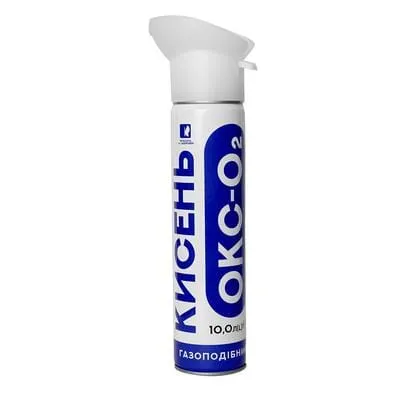
OXYGEN MEDICINAL GASEOUS
UkraineIt is used for diseases accompanied by oxygen starvation (e.g., pneumonia, bronchial asthma, heart failure), in cases of carbon monoxide or asphyxiant gas poisoning, during anesthesia, as well as for the treatment of certain parasitic infections (ascariasis, trichocephalosis) and the preparation of oxygen cocktails.
Frequently asked questions
How should Oxygen medicinal gaseous be taken correctly?
In hospitals, it is usually administered via masks (inhalation); at home, via special containers. For the treatment of parasites, oxygen is administered via a gastric tube or via a catheter into the rectum. During hyperbaric oxygenation (under pressure), procedures are performed in special hyperbaric chambers. The use of humidifiers is recommended.
What side effects can Oxygen medicinal gaseous cause?
Possible side effects include dizziness, nausea, coughing, irritation or dryness of the mucous membranes, as well as individual sensitivity to oxygen. In case of overdose, vomiting and convulsions may occur.
Who should not use this drug?
When supplying oxygen under pressure, contraindications include acute respiratory diseases, a history of epileptic seizures, severe hypertension, tumors, and the presence of lung cavities. For the treatment of parasites, it should not be used in cases of gastric ulcers, tumors, or acute gastrointestinal inflammation.
Can you drive a vehicle during use?
Due to possible dizziness, you should refrain from driving a vehicle or performing work that requires high concentration and rapid reaction.
Can the drug be used by pregnant or breastfeeding women?
It is not recommended for pregnant women to use oxygen for a period exceeding 5 months. Breastfeeding must be discontinued during treatment.
How does oxygen interact with other medicines?
Nitrates, adrenoblockers, calcium ion antagonists, and nootropics may facilitate better oxygen utilization by body tissues and reduce its deficiency.
Instructions for use
INSTRUCTIONS FOR MEDICAL USE OF THE MEDICINAL PRODUCT MEDICAL GASEOUS OXYGEN
Composition:
Active substance: oxygen;
contains not less than 99.5% oxygen.
Pharmaceutical form. Gas.
Main physicochemical properties: colorless, odorless and tasteless gas; supports combustion more actively than air; strong oxidizing agent.
Pharmacotherapeutic group. Medical gases.
ATC code V03A N01.
Pharmacological properties.
Pharmacodynamics.
Oxygen belongs to the group of drugs known as anti-hypoxants and antioxidants. It has the ability to bind with blood hemoglobin in the lungs and, in a complex compound with heme, is transported to the body's cells. It is a strong oxidizing agent and an essential component in the metabolic transformations of carbohydrates, proteins, and fats into energy required to sustain vital functions of the organism.
Pharmacokinetics.
In the human body, oxygen diffuses through the lung tissue into the blood, where it binds to hemoglobin in erythrocytes and partially dissolves in plasma. The oxygen is then transported to body tissues, where it diffuses into the tissue interstitial fluid. The final stage of respiration is the utilization of oxygen in biological oxidation processes and the generation of energy within cells; subsequently, through a series of changes, it is eliminated via the lungs in the bound form of carbon dioxide (CO₂).
Clinical Characteristics.
Indications.
Diseases accompanied by hypoxia:
respiratory organs:
- pneumonia;
- pulmonary edema;
- bronchial asthma;
- pneumosclerosis;
cardiovascular system:
- heart failure;
- coronary insufficiency.
Poisonings:
- carbon monoxide;
- cyanide;
- choking gases.
During general anesthesia in combination with inhalation anesthetics; in the postoperative period.
Preparation of oxygen cocktails and foams.
Infectious diseases: ascariasis and trichocephalosis.
Contraindications.
For hyperbaric oxygenation, contraindications include acute respiratory diseases, history of epileptiform seizures, impaired patency of auditory tubes and canals connecting paranasal sinuses, presence of lung cavities, bronchopleural fistulas, severe forms of arterial hypertension, neoplasms, and increased individual sensitivity to oxygen.
For oxygen deworming, contraindications include ulcerative lesions of the stomach and duodenum, tumors, and acute inflammatory diseases of the gastrointestinal tract.
Interaction with other medicinal products and other types of interactions.
Nitrates – adrenoblockers, calcium ion antagonists, nootropics promote more economical use of oxygen by tissues, improve its utilization, and thereby reduce hypoxia and increase the body's resistance to oxygen deficiency.
Special precautions for use
The use of moisturizers is recommended.
Do not use during menstrual period.
Use during pregnancy or breastfeeding
Do not use during pregnancy for longer than 5 months.
Breastfeeding should be discontinued for the duration of drug use.
Ability to affect reaction speed when driving or operating machinery
Due to possible dizziness, refrain from driving a vehicle or performing tasks that require increased attention and rapid reaction.
Method of Administration and Dosage
In hospital settings, oxygen is most commonly administered via inhalation through special rubber or plastic masks connected directly to steel cylinders containing oxygen.
In outpatient practice and at home, special rubber or plastic containers (bags) filled with oxygen or its mixture are more frequently used.
For hyperbaric oxygenation, i.e., delivery of oxygen under increased pressure, special ventilated chambers—so-called hyperbaric chambers (barochambers)—are used, where oxygen is administered both by inhalation and through mucous membranes and skin.
Most commonly, oxygen is administered by inhalation as a mixture with air at a concentration of 40–60%, at a flow rate of 4–5 liters per minute. A mixture known as "carbogen," consisting of 95% oxygen and 5% carbon dioxide, is also used. The mixture should be administered humidified.
During hyperbaric oxygenation, oxygen is delivered under pressure of 1.2–2 atm. Therapeutically, 8–10 sessions are typically conducted.
For the treatment of ascariasis, oxygen is administered into the stomach via a thin gastric or duodenal tube. The tube should preferably be inserted through the nose. Oxygen is administered for 2 consecutive days, in the morning, on an empty stomach or 4 hours after a meal. For children under 10 years of age, administer 100 mL of oxygen per year of life; for children aged 10–12 years, 1000–1100 mL; for those aged 13–14 years, 1250 mL; and for patients aged 15 years and older, 1250–1500 mL. Administer slowly, in portions of 100–200–250 mL, with intervals of 1–2 minutes. The total volume should be administered over no less than 15 minutes. After the procedure, the patient must remain in a lying position for at least 2 hours.
For the treatment of trichocephalosis (whipworm infection), perform a cleansing enema. One hour later, with the patient lying on their side, insert a catheter (or a rubber enema tip) into the rectum to a depth of 25–30 cm (beyond the internal sphincter). Through the catheter, oxygen is slowly insufflated in small portions (200–250 mL) at 2–3 minute intervals. For children under 10 years of age, administer 100 mL of oxygen per year of life; for children aged 10–12 years, 1000–1100 mL; for those aged 13–14 years, 1250 mL; and for patients aged 15 years and older, 1250–1500 mL. After completion of the procedure, the patient should lie on their back for 2 hours. Oxygen therapy should be administered consecutively for 5–7 days; on day 6 or 7, administer a saline laxative.
Preparation of oxygen cocktails and foams: mix oxygen with food products, juices, or herbal infusions.
Children. This category of patients may be treated with oxygen.
Overdose.
In case of overdose, nausea, vomiting, and seizures may occur. Treatment is symptomatic.
Side effects.
In individual patients, individual increased sensitivity to oxygen and its mixtures, dizziness, nausea, increased dryness of mucous membranes, their irritation, coughing may occur.
Shelf life. 18 months.
Do not use after the expiry date stated on the packaging.
Storage conditions.
Store in warehouse premises or under shelters, in a place inaccessible to children, protected from direct sunlight.
Storage must be carried out at temperatures ranging from minus 50 °C to plus 50 °C.
Storage and transportation at temperatures above plus 50 °C are not permitted.
Avoid contact with open flame and heat sources.
Packaging.
Gas in steel cylinders of 2 L or 4 L or 10 L or 12 L or 40 L.
Prescription category. Prescription only.
Manufacturer.
JSC "Pivdentehgas".
Manufacturer's location and address of business activity.
Ukraine, 66320, Odesa region, Kotovskiy district, village of Borshchi, Lesova St., 14.
Similar drugs
The original data is available in the language of the country of manufacture.
Data source: State Register of Medicinal Products of Ukraine
Data last verified: August 13, 2026