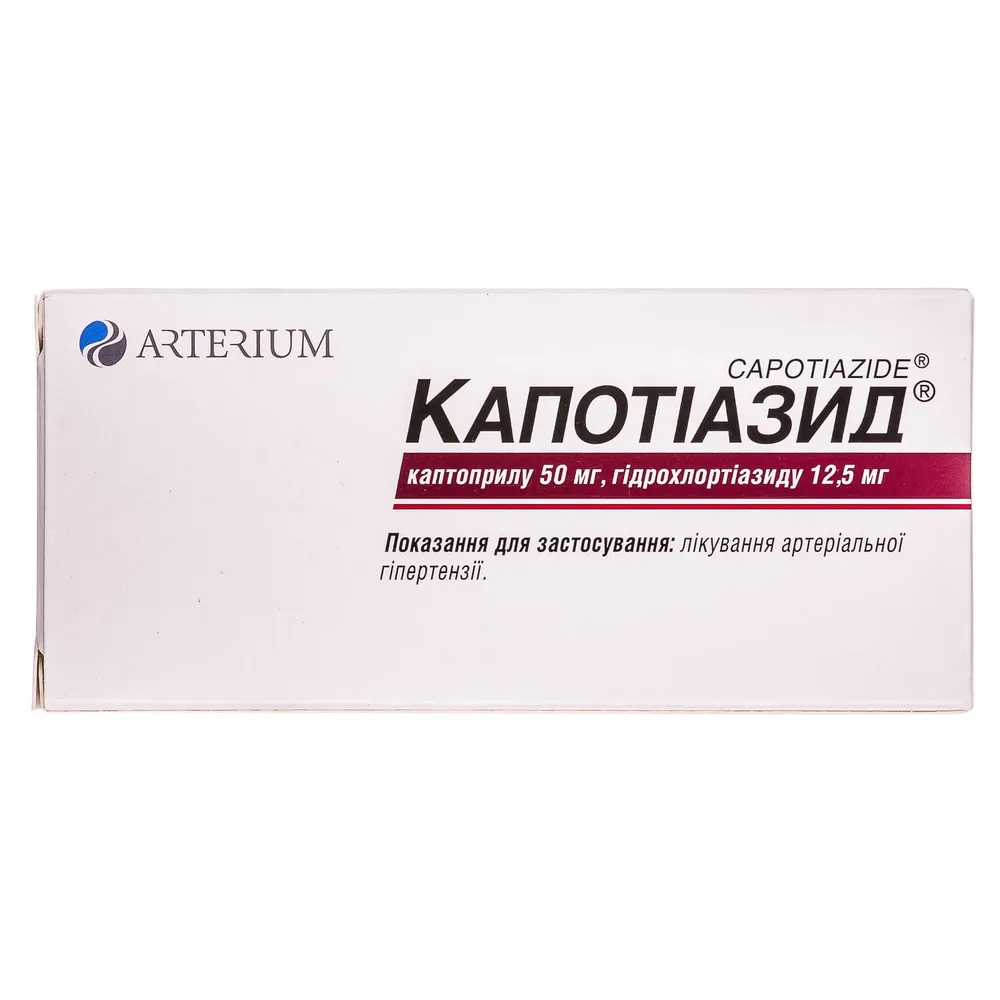
CAPOTIAZIDE®
UkraineThe drug is used for the treatment of arterial hypertension (high blood pressure).
Frequently asked questions
How should Capotiazide® be taken correctly?
Tablets should be taken 1 hour before meals. The dose is determined by a physician individually: the drug can be taken once a day or the daily dose can be divided into two doses.
Who should not take this drug?
Use is contraindicated in individuals with hypersensitivity to the components of the drug, a history of angioedema, severe renal or hepatic impairment, anuria, porphyria, as well as in pregnant women and women planning pregnancy.
What are the possible side effects of Capotiazide®?
Possible side effects include dry cough, dizziness, nausea, sleep disturbances, taste changes, weakness, muscle cramps, as well as changes in kidney or liver function. In rare cases, serious reactions such as swelling of the face or throat or skin rashes may occur.
Can the drug be combined with other medicines?
Caution is required when combining with lithium (which may increase its toxicity), non-steroidal anti-inflammatory drugs, diabetes medications, and certain antiarrhythmic agents. Always consult a physician before taking other medications.
Does the drug affect driving ability?
As with other blood pressure medications, the drug may reduce the ability to drive a vehicle or operate machinery, especially at the start of treatment or when the dosage is changed.
Instructions for use
INSTRUCTIONS FOR MEDICAL USE OF THE MEDICINAL PRODUCT KAPOTIAZIDE® (CAPOTIAZIDE®)
Composition:
Active substances: Each tablet contains captopril, calculated as 100 % substance, 50 mg; hydrochlorothiazide, calculated as 100 % substance, 12.5 mg;
Excipients: povidone; lactose monohydrate; calcium stearate; potato starch; silicon dioxide, colloidal, anhydrous (aerosil).
Pharmaceutical form. Tablets.
Main physicochemical characteristics: white or almost white tablets, round-shaped, with flat surface, with one or two notches and bevelled edges.
Pharmacotherapeutic group. Combined preparations of angiotensin-converting enzyme (ACE) inhibitors. Captopril and diuretics.
ATC code C09BA01.
Pharmacological Properties.
Pharmacodynamics.
A combined antihypertensive agent. Captopril, included in the composition of the drug, is an inhibitor of angiotensin-converting enzyme (ACE), which suppresses the formation of angiotensin II, thereby preventing its vasoconstrictive effect and stimulatory influence on aldosterone secretion in the adrenal glands. It reduces total peripheral vascular resistance, arterial pressure, decreases pre- and afterload on the myocardium, and lowers pressure in the right atrium and in the pulmonary circulation.
Hydrochlorothiazide produces a moderately expressed diuretic effect by increasing the excretion from the body of sodium, chloride, potassium ions, and fluid. It reduces sodium ion content in the vascular wall, decreasing its sensitivity to vasoconstrictor influences and thereby enhancing the antihypertensive effect of captopril.
Non-melanoma skin cancer: Based on available epidemiological data, there is a cumulative dose-dependent association between hydrochlorothiazide use and non-melanoma skin cancer. One study included a population comprising 71,533 cases of basal cell carcinoma and 8,629 cases of squamous cell carcinoma, corresponding to 1,430,833 and 172,462 controls, respectively. A high cumulative dose of hydrochlorothiazide (≥50,000 mg) was associated with an odds ratio of 1.29 (95% CI: 1.23–1.35) for basal cell carcinoma and 3.98 (95% CI: 3.68–4.31) for squamous cell carcinoma. A dose-response relationship was observed for both basal cell and squamous cell carcinoma. Another study indicated a possible association between lip cancer (squamous cell carcinoma) and hydrochlorothiazide exposure: 633 cases of lip cancer matched with 63,067 controls using a risk-set sampling strategy. A cumulative dose-response relationship was demonstrated with an odds ratio of 2.1 (95% CI: 1.7–2.6), increasing to an odds ratio of 3.9 (3.0–4.9) for high doses (~25,000 mg) and an odds ratio of 7.7 (5.7–10.5) for the highest cumulative dose (~100,000 mg) (see also section "Special Warnings and Precautions for Use").
Pharmacokinetics.
Captopril is rapidly absorbed after oral administration; maximum serum concentration is reached approximately 1 hour after intake. Minimal absorption is about 75%. Peak plasma concentration is achieved within 60–90 minutes. The presence of food in the gastrointestinal tract reduces absorption by approximately 30–40%. Approximately 25–30% of circulating drug is bound to plasma proteins. The elimination half-life of unchanged captopril from plasma is approximately 2 hours.
Over 95% of the administered dose is excreted in urine within 24 hours; 40–50% is unchanged drug, the remainder being inactive metabolites. Impaired renal function may lead to drug accumulation.
Animal studies have shown that captopril does not penetrate the blood-brain barrier.
Hydrochlorothiazide is rapidly absorbed after oral administration. The average half-life in plasma following administration on an empty stomach ranges from 5 to 15 hours. Hydrochlorothiazide is rapidly excreted by the kidneys, and (>95%) is excreted unchanged in urine.
Clinical characteristics.
Indications.
Treatment of arterial hypertension.
Contraindications.
- Hypersensitivity to the active substances or excipients of the medicinal product, or to any other angiotensin-converting enzyme (ACE) inhibitors or sulfonamide derivatives.
- History of angioedema during treatment with ACE inhibitors.
- Hereditary or idiopathic angioedema.
- Severe renal impairment (creatinine clearance < 30 mL/min).
- Severe hepatic dysfunction.
- Pregnancy and women planning to become pregnant (see section "Use in pregnancy or lactation").
- Bilateral renal artery stenosis affecting hemodynamics, or stenosis of the artery of a solitary kidney that is hemodynamically significant.
- Porphyria.
- Anuria.
- Refractory hypokalemia or hypercalcemia.
- Refractory hyponatremia.
- Symptomatic hyperuricemia (gout).
- Concomitant use of aliskiren-containing medicinal products in patients with diabetes mellitus or renal impairment (eGFR < 60 mL/min/1.73 m²).
Interaction with other medicinal products and other forms of interaction.
CAPTOPRIL
Potassium-sparing diuretics or potassium supplements. ACE inhibitors reduce potassium loss caused by diuretics. Potassium-sparing diuretics (e.g., spironolactone, triamterene, or amiloride), potassium supplements, or potassium-containing salt substitutes may lead to hyperkalemia. When used concomitantly in the presence of hypokalemia, they should be used with great caution and with frequent monitoring of serum potassium levels.
Diuretics (thiazide or loop diuretics): There is a risk of developing arterial hypotension due to dehydration caused by high-dose diuretic therapy when initiating captopril. The hypotensive effect can be minimized by discontinuing diuretics, increasing fluid and salt intake, or reducing the initial dose of captopril. However, no clinically significant interaction has been observed in specific studies with hydrochlorothiazide and furosemide.
Other antihypertensive agents: Captopril can be safely combined with other commonly used antihypertensive agents (e.g., β-blockers and long-acting calcium channel blockers). Concomitant use with these agents may enhance the hypotensive effect of captopril. Concurrent administration with nitroglycerin, other nitrates, or other vasodilators should be done with caution.
Alpha-adrenergic blockers: Concomitant use with α-adrenergic blockers may enhance the hypotensive effect of captopril and increase the risk of orthostatic hypotension.
Treatment of acute myocardial infarction: Captopril may be used concomitantly with acetylsalicylic acid (at cardiologic doses), thrombolytics, β-blockers, and/or nitrates in patients with myocardial infarction.
Tricyclic antidepressants/neuroleptics: ACE inhibitors may potentiate the hypotensive effect of certain tricyclic antidepressants and neuroleptics, potentially leading to orthostatic hypotension.
Allopurinol, procainamide, cytostatic and immunosuppressive agents: Concomitant use with ACE inhibitors may increase the risk of leukopenia, especially if these agents are used at doses exceeding recommended levels.
Lithium: Concomitant use of ACE inhibitors and lithium may cause a transient increase in serum lithium levels and lithium toxicity. Concurrent use of ACE inhibitors with thiazide diuretics may further increase serum lithium levels and elevate the risk of lithium toxicity. Concomitant use of captopril with lithium is not recommended. If such combination is necessary for a patient, careful monitoring of serum lithium levels is required (see section "Special precautions for use").
Sympathomimetic agents: These may reduce the antihypertensive effect of ACE inhibitors; therefore, patients should be closely monitored for blood pressure.
Nonsteroidal anti-inflammatory drugs (NSAIDs): It has been reported that ACE inhibitors and NSAIDs may have an additive effect on increasing serum potassium levels, potentially leading to renal dysfunction. This effect is usually reversible. Rarely, acute renal failure may occur, particularly in patients with pre-existing renal impairment, such as elderly patients or those who are dehydrated. Administration of NSAIDs may also reduce the antihypertensive effect of ACE inhibitors.
Antidiabetic agents: Pharmacological studies have shown that ACE inhibitors, including captopril, may potentiate the hypoglycemic effect of insulin and oral hypoglycemic agents, such as sulfonylurea derivatives, in patients with diabetes mellitus. In case of such interaction, a reduction in the dose of hypoglycemic agents may become necessary.
HYDROCHLOROTHIAZIDE
Amphotericin B (parenteral formulations), carbenoxolone, corticosteroids, corticotropin (ACTH), or stimulant laxatives: Hydrochlorothiazide may exacerbate electrolyte imbalances, including hypokalemia.
Calcium salts: Increased serum calcium concentration may occur due to reduced calcium excretion when administered concomitantly with thiazide diuretics.
Cardiac glycosides: There is an increased risk of cardiac glycoside toxicity associated with thiazide-induced hypokalemia.
Cholestyramine and colestipol: These may impair or reduce the absorption of hydrochlorothiazide. Sulfonamide diuretics should be taken at least 1 hour before or 4–6 hours after administration of these agents.
Non-depolarizing muscle relaxants (e.g., tubocurarine chloride): The effect of these agents may be potentiated by hydrochlorothiazide.
Medicinal products associated with torsades de pointes ventricular tachycardia: Due to the risk of hypokalemia, hydrochlorothiazide should be used cautiously when administered concomitantly with medicinal products associated with torsades de pointes ventricular tachycardia, such as certain antiarrhythmics and certain neuroleptics.
Carbamazepine: Concomitant use of carbamazepine with hydrochlorothiazide has been associated with symptomatic hyponatremia. Electrolyte levels should be monitored during such treatment. If possible, another class of diuretics should be prescribed.
COMBINATION OF CAPTOPRIL AND HYDROCHLOROTHIAZIDE
Lithium: Reversible increases in serum lithium concentration and lithium toxicity have been reported during concomitant use with ACE inhibitors. Concomitant use with thiazide diuretics may increase the risk of lithium toxicity and further potentiate the risk associated with ACE inhibitors. Therefore, concomitant use of the combination of captopril and hydrochlorothiazide with lithium is not recommended. If such combination is clinically necessary, careful monitoring of serum lithium concentration is required.
Nonsteroidal anti-inflammatory drugs (NSAIDs): When used concomitantly with ACE inhibitors, NSAIDs may have an additive effect on increasing serum potassium levels and may therefore worsen renal function. These effects are usually reversible. Rarely, acute renal failure may occur in patients with impaired renal function, particularly in elderly patients or those who are dehydrated. Prolonged use of NSAIDs may reduce the antihypertensive effect of ACE inhibitors and may also diminish the diuretic, natriuretic, and antihypertensive effects of thiazide diuretics.
Alcohol, barbiturates, narcotics, or antidepressants: These may potentiate orthostatic hypotension.
Antidiabetic agents (oral hypoglycemic agents and insulin): During treatment with thiazides, glucose tolerance may decrease. Dose adjustment may become necessary. Metformin should be used with caution due to the risk of lactic acidosis associated with possible hydrochlorothiazide-induced functional renal impairment.
Pressor amines (e.g., adrenaline): The effect of pressor amines may be reduced, but not to the extent that contraindicates their use.
Antigout agents (probenecid, sulfinpyrazone, and allopurinol): Dose adjustment of uricosuric agents may be required, as hydrochlorothiazide may increase serum uric acid levels. Increased doses of probenecid or sulfinpyrazone may be needed. Concomitant use of thiazides may increase the frequency of hypersensitivity reactions to allopurinol.
Anticholinergic agents (e.g., atropine, biperiden): Due to reduced gastrointestinal motility and delayed gastric emptying, the bioavailability of thiazide diuretics may increase.
Cytotoxic agents (e.g., cyclophosphamide, methotrexate): Thiazides may reduce renal excretion of cytotoxic drugs and potentiate their myelosuppressive effects.
Methyldopa: Isolated cases of hemolytic anemia have been reported with concomitant use of hydrochlorothiazide and methyldopa.
Cyclosporine: Concomitant use with cyclosporine may exacerbate hyperuricemia and increase the risk of complications such as gout.
Effect of medicinal products on laboratory test results: Due to their effect on calcium metabolism, thiazides may affect the assessment of parathyroid gland function (see section "Special precautions for use").
Iodine-containing contrast agents: In cases of diuretic-induced dehydration, the risk of acute renal failure increases, particularly with high-dose iodine-containing contrast agents. Patients require rehydration prior to administration of iodine-containing agents.
Beta-blockers and diazoxide: Concomitant use of thiazide diuretics, including hydrochlorothiazide, with beta-blockers may increase the risk of hyperglycemia. Thiazide diuretics, including hydrochlorothiazide, may potentiate the hyperglycemic effect of diazoxide.
Amantadine: Thiazides, including hydrochlorothiazide, may increase the risk of adverse effects caused by amantadine.
Medicinal products whose effects are influenced by changes in serum potassium levels.
Periodic monitoring of serum potassium levels and ECG monitoring are recommended when hydrochlorothiazide is used concomitantly with agents whose effects are influenced by changes in serum potassium levels (e.g., digitalis glycosides and antiarrhythmic agents), and with the following agents associated with polymorphic ventricular tachycardia (torsades de pointes), since hypokalemia is a predisposing factor for torsades de pointes:
- Class Ia antiarrhythmic agents (e.g., quinidine, hydroquinidine, disopyramide);
- Class III antiarrhythmic agents (e.g., amiodarone, sotalol, dofetilide, ibutilide);
- certain neuroleptics (e.g., thioridazine, chlorpromazine, levomepromazine, trifluoperazine, zuclopenthixol, sulpiride, sultopride, amisulpride, tiapride, pimozide, haloperidol, droperidol);
- other medicinal products (e.g., bepridil, cisapride, difemanil, intravenous erythromycin, halofantrine, mizolastine, pentamidine, terfenadine, intravenous vinca alkaloids).
Dual blockade of the renin-angiotensin-aldosterone system (RAAS) using ACE inhibitors, angiotensin II receptor blockers, or aliskiren is associated with an increased risk of hypotension, hyperkalemia, and reduced renal function (including acute renal failure) compared to monotherapy; therefore, their combined use is not recommended.
ACE inhibitors and angiotensin II receptor blockers should not be used concomitantly in patients with diabetic nephropathy.
Special precautions for use.
The fixed-dose combination drug is indicated for patients whose blood pressure cannot be adequately controlled with captopril or hydrochlorothiazide alone.
CAPTOPRIL
Arterial hypotension: occurs rarely in patients with uncomplicated hypertension.
Symptoms of arterial hypotension are more common in patients with hypertensive disease whose water-electrolyte balance is reduced due to diuretic therapy, low-sodium diet, diarrhea, vomiting, or hemodialysis. Before initiating angiotensin-converting enzyme (ACE) inhibitors, it is necessary to correct the water-electrolyte balance and consider prescribing the minimum effective dose.
As with any other antihypertensive agents, intensive lowering of blood pressure in patients with ischemic cardiovascular or cerebrovascular diseases may increase the risk of myocardial infarction or stroke. If arterial hypotension occurs, the patient should be placed in a horizontal (supine) position. An increase in circulating blood volume may be required via intravenous administration of 0.9% sodium chloride solution.
Arterial hypertension. Patients with heart failure are also at risk of symptomatic hypotension when using ACE inhibitors. Therefore, such patients should be started on captopril at a lower initial dose. Dose escalation of ACE inhibitors and diuretics should be performed under careful physician supervision.
Renovascular hypertension: there is an increased risk of arterial hypotension or renal failure in patients with bilateral renal artery stenosis or stenosis of the artery of a single functioning kidney who are taking ACE inhibitors. In such patients, therapy should be initiated at low doses under close medical supervision, with careful titration and monitoring of kidney function.
Angioedema: angioedema of the face, extremities, lips, tongue, pharynx, and/or larynx has been reported in patients taking ACE inhibitors, including captopril. Angioedema may occur at any time during treatment. If angioedema develops, captopril must be discontinued immediately and appropriate treatment initiated. The patient should be hospitalized and monitored for at least 12–24 hours until symptoms completely resolve. Patients of non-black race are at higher risk of developing angioedema. Patients with a history of angioedema unrelated to ACE inhibitor use may also have an increased risk of angioedema during ACE inhibitor therapy. Intestinal angioedema is rarely observed in patients taking ACE inhibitors. These patients present with abdominal pain (with or without nausea and vomiting); in some cases, without prior facial angioedema and with normal C-1 esterase levels. Intestinal angioedema has been diagnosed using procedures such as abdominal CT scan or ultrasound, or during surgery. Symptoms resolve after discontinuation of ACE inhibitors. Intestinal angioedema should be included in the differential diagnosis of patients taking ACE inhibitors who present with abdominal pain.
Cough: during ACE inhibitor therapy, patients may develop a persistent, non-productive cough, which resolves after discontinuation of treatment.
Hepatic impairment: in rare cases, ACE inhibitor use has been associated with a syndrome beginning with cholestatic jaundice and rapidly progressing to hepatic necrosis and (sometimes) resulting in fatal outcomes. The mechanism of this syndrome is unknown. Patients receiving ACE inhibitors who develop jaundice or marked elevation of liver enzymes should discontinue ACE inhibitors and seek medical advice.
Hyperkalemia: elevated serum potassium levels have been observed in some patients receiving ACE inhibitors, including captopril. Patients at risk of hyperkalemia include those with renal impairment, diabetes mellitus, patients taking potassium-sparing diuretics, potassium supplements, or other drugs that increase serum potassium levels (e.g., heparin). If concomitant use of these agents with ACE inhibitors is necessary, serum potassium levels should be monitored.
Lithium: combination of lithium and captopril is not recommended (see section "Interaction with other medicinal products and other forms of interaction").
Aortic stenosis and mitral valve stenosis / obstructive hypertrophic cardiomyopathy / cardiogenic shock: ACE inhibitors should be used with caution in patients with valvular obstruction or left ventricular outflow tract obstruction. Their use should be avoided in cases of cardiogenic shock and significant hemodynamic disturbances.
Neutropenia/agranulocytosis: cases of neutropenia, agranulocytosis, thrombocytopenia, and anemia have been reported in patients receiving ACE inhibitors. Neutropenia is rare in patients with normal renal function and no other risk factors. The drug should be prescribed with particular caution to patients with collagen vascular diseases, those undergoing immunosuppressive therapy, patients taking allopurinol or procainamide, or combinations thereof, especially in the presence of renal impairment. Some such patients may develop severe infections that are difficult to treat with intensive antibiotic therapy. In such patients, periodic monitoring of white blood cell count and differential counts is recommended (before treatment, every 2 weeks during the first 3 months of therapy, and periodically thereafter). Patients should be warned to report any signs of infection (e.g., fever, sore throat). If neutropenia develops (neutrophil count < 1000/mm³), the drug should be discontinued. After discontinuation of captopril, neutrophil counts return to normal rapidly in most patients.
Proteinuria: proteinuria may develop in patients with impaired renal function or those receiving relatively high doses of captopril (more than 150 mg/day). Protein excretion exceeding 1 g/day was observed in approximately 0.7% of patients receiving captopril. Nephrotic syndrome was diagnosed in 20% of patients with proteinuria. In most cases, proteinuria resolves within 6 months after discontinuation of the drug. Renal function parameters such as blood urea nitrogen and creatinine levels are rarely affected. In patients with impaired renal function, urine protein levels should be assessed before initiating treatment and monitored periodically during therapy.
Anaphylactoid reactions: in patients receiving ACE inhibitors undergoing allergen desensitization with venom from Hymenoptera, life-threatening anaphylactoid reactions may occur. Therefore, ACE inhibitor therapy should be used with caution in patients undergoing such desensitization procedures.
Anaphylactoid reactions during high-flux dialysis / low-density lipoprotein apheresis: in patients taking ACE inhibitors undergoing hemodialysis with high-flux membranes, severe anaphylactoid reactions may occur. These reactions can be avoided by switching to a different type of dialysis membrane or using antihypertensive agents from another class.
In patients taking ACE inhibitors, severe anaphylactoid reactions may occur during low-density lipoprotein apheresis. These reactions can be prevented by temporarily discontinuing ACE inhibitors before each apheresis session.
Surgical procedures/anesthesia: in patients undergoing major surgery or anesthesia with agents that lower blood pressure, arterial hypotension may develop. Hypotension occurring in such cases should be corrected by increasing circulating blood volume through administration of additional fluids.
Patients with diabetes mellitus: ACE inhibitors should be used with caution in diabetic patients receiving oral antidiabetic agents or insulin, and blood glucose levels should be monitored regularly, especially during the first month of treatment.
ACE inhibitors, including captopril, are less effective in reducing blood pressure in black patients compared to patients of other races due to lower renin fractions.
HYDROCHLOROTHIAZIDE
Renal impairment: the drug should be used with caution in patients with impaired renal function, as thiazide diuretics may lead to azotemia. Drug accumulation is also possible. In progressive renal disease characterized by elevated blood urea nitrogen levels, the necessity of continuing therapy should be carefully evaluated, and treatment discontinued if required.
Hepatic impairment: the drug should be used with caution in patients with impaired liver function or progressive liver disease, as thiazide diuretics may cause disturbances in water-electrolyte balance, which may lead rapidly to hepatic coma.
Metabolic and endocrine disturbances: thiazide therapy may reduce glucose tolerance. Modification of antidiabetic drug doses, including insulin, may become necessary. Latent diabetes mellitus may become manifest during thiazide therapy.
Elevated cholesterol and triglyceride levels have been associated with thiazide diuretic use.
Hyperuricemia or gout exacerbation may occur in some patients taking thiazides.
Electrolyte imbalance: during diuretic therapy, periodic monitoring of serum electrolyte levels is required.
Thiazides, including hydrochlorothiazide, may cause water-electrolyte imbalance (hypokalemia, hyponatremia, and hypochloremic alkalosis). Warning signs indicating water-electrolyte imbalance include dry mouth, thirst, weakness, lethargy, drowsiness, restlessness, muscle pain or cramps, muscle weakness, arterial hypotension, oliguria, tachycardia, and gastrointestinal disturbances such as nausea and vomiting.
Although concomitant use with captopril reduces the risk of hypokalemia induced by hydrochlorothiazide, patients at increased risk of hypokalemia include those with hepatic cirrhosis, high diuresis, inadequate oral replacement of electrolyte losses, and those receiving glucocorticoid therapy or adrenocorticotropic hormone.
During hot weather, hyponatremia may occur in patients prone to edema, usually mild and not requiring treatment.
Thiazides may reduce renal calcium excretion and thus cause fluctuations or slight increases in calcium concentration. Therefore, the drug should be discontinued before assessing parathyroid gland function.
Antidoping test: hydrochlorothiazide, a component of this drug, may yield a positive result in antidoping tests.
Other: hypersensitivity reactions may occur in patients with or without a history of allergy or bronchial asthma. Possible development or exacerbation of systemic lupus erythematosus has been reported.
Choroidal effusion, acute myopia, and secondary acute angle-closure glaucoma: medicinal products containing sulfonamide or its derivatives may cause idiosyncrasy leading to choroidal effusion with visual field defects, transient myopia, and acute angle-closure glaucoma. Hydrochlorothiazide is a sulfonamide derivative, but only isolated cases of angle-closure glaucoma have been reported with hydrochlorothiazide use. Symptoms include sudden decrease in visual acuity or eye pain. These symptoms typically develop within hours or weeks after starting therapy. Untreated acute angle-closure glaucoma may lead to irreversible vision loss. If such symptoms occur, therapy with this drug should be discontinued immediately. If intraocular pressure remains uncontrolled, pharmacological or surgical treatment should be considered. Risk factors for acute angle-closure glaucoma may include a history of sulfonamide or penicillin allergy.
Acute respiratory toxicity
Very rare, severe cases of acute respiratory toxicity, including acute respiratory distress syndrome (ARDS), have been reported. Very rare, severe cases of acute respiratory toxicity, including ARDS, have been reported after hydrochlorothiazide administration. Pulmonary edema usually develops within minutes or hours after hydrochlorothiazide intake. Initial symptoms include dyspnea, fever, worsening lung condition, and hypotension. If ARDS is suspected, hydrochlorothiazide should be discontinued and appropriate treatment initiated. Hydrochlorothiazide should not be prescribed to patients who previously experienced ARDS after hydrochlorothiazide use.
The drug may affect the results of the following laboratory tests:
- the drug may reduce plasma protein-bound iodine levels;
- treatment with the drug should be discontinued before laboratory testing to assess parathyroid gland function;
- the drug may increase free bilirubin concentration in serum.
Non-melanoma skin cancer
An increased risk of non-melanoma skin cancer (basal cell carcinoma and squamous cell carcinoma) after high cumulative doses of hydrochlorothiazide was identified in two epidemiological studies based on data from the Danish National Cancer Registry. The photosensitizing effect of hydrochlorothiazide may be a possible mechanism for non-melanoma skin cancer development.
Patients taking hydrochlorothiazide should be informed about the risk of non-melanoma skin cancer, the need for regular skin examinations for new lesions, and the necessity of immediate medical consultation if suspicious skin lesions appear.
Patients should be informed about preventive measures, such as limiting exposure to sunlight and UV radiation, and the need for adequate skin protection (clothing, sunscreen, etc.) when exposure occurs.
Suspicious skin lesions should be promptly diagnosed, including histological examination of biopsies. The use of hydrochlorothiazide in patients with a history of non-melanoma skin cancer may require reconsideration.
COMBINATION OF CAPTOPRIL AND HYDROCHLOROTHIAZIDE
Pregnancy. The drug should not be used in pregnant women or women planning to become pregnant. If pregnancy is confirmed during treatment with this drug, its use must be immediately discontinued and replaced with another medicinal product permitted during pregnancy.
Risk of hypokalemia: the combination of ACE inhibitors and thiazides does not eliminate the possibility of hypokalemia. Regular monitoring of serum potassium levels is required.
Combination with lithium: concomitant use of captopril with lithium is not recommended due to increased toxicity of lithium (see section "Interaction with other medicinal products and other forms of interaction").
Lactose: due to the presence of lactose in the composition of Kapotiazid®, this medicinal product should not be taken by patients with rare hereditary disorders of lactose intolerance, galactose intolerance, Lapp lactase deficiency, or glucose-galactose malabsorption.
Patients receiving concomitant therapy with ACE inhibitors and mTOR (mammalian target of rapamycin) inhibitors (e.g., temsirolimus, sirolimus, everolimus) may have an increased risk of angioedema.
If dual blockade therapy is considered absolutely necessary, it should only be performed under physician supervision with careful monitoring of renal function, electrolytes, and blood pressure.
Use during pregnancy or breastfeeding
The medicinal product should not be used in pregnant women or women planning to become pregnant. If pregnancy is confirmed during treatment with this product, its use must be immediately discontinued and replaced with another medicinal product permitted for use during pregnancy.
The drug should not be prescribed during breastfeeding.
Ability to affect reaction speed when driving or operating machinery
As with other antihypertensive medicinal products, the ability to drive or operate machinery may be impaired, particularly at the beginning of treatment, during dose changes, or in combination with alcohol. These effects depend on individual patient sensitivity.
Method of Administration and Dosage
Capotiazid® should be taken 1 hour before meals, either as a single daily dose or with the daily dose divided into two administrations.
Dosages should be individually adjusted according to the clinical presentation of the disease.
The initial dose is ½ tablet (25 mg captopril and 6.25 mg hydrochlorothiazide) once daily. If a stronger antihypertensive effect is needed, the dose of Capotiazid may be increased to 1 tablet (50 mg captopril and 12.5 mg hydrochlorothiazide) daily. The expected therapeutic effect is fully achieved within 6–8 weeks after initiation of treatment. Dose adjustments should be made at 6-week intervals, unless clinical manifestations require more rapid changes. If blood pressure reduction is insufficient, additional captopril and hydrochlorothiazide may be included in the treatment regimen as separate agents. In such cases, the daily dose of captopril should not exceed 150 mg, and hydrochlorothiazide should not exceed 50 mg.
Since captopril and hydrochlorothiazide are primarily eliminated from the body via the kidneys, their levels may increase in renal impairment; therefore, dose reduction or increased dosing intervals are recommended. For creatinine clearance values of 30–80 mL/min: the initial dose is 25 mg/6.25 mg once daily in the morning.
The combination captopril/hydrochlorothiazide is contraindicated in patients with severe renal impairment (creatinine clearance < 30 mL/min).
For patients with disturbances in water-electrolyte balance, elderly patients, and patients with diabetes mellitus, the initial dose is 25 mg/6.25 mg once daily.
After achieving the desired therapeutic effect, the dose should be reduced to the lowest effective dose.
Children
There are no data on the use of this medication in children.
Overdose
Symptoms: Decreased diuresis, electrolyte imbalance, severe hypotension, impaired consciousness including coma, seizures, paralysis, cardiac arrhythmias, bradycardia, renal failure, tachycardia, shock, weakness, dizziness, muscle cramps, paresthesia, exhaustion, nausea, vomiting, thirst, polyuria, oliguria, anuria, and laboratory abnormalities: hypokalemia, hyponatremia, hypochloremia, alkalosis, elevated blood urea nitrogen levels.
Treatment: Appropriate measures should be taken to prevent drug absorption (e.g., gastric lavage and administration of adsorbents) and to accelerate drug elimination. In case of arterial hypotension, the patient should be placed in a horizontal position with elevated legs, and fluid and electrolyte replacement (potassium, sodium, magnesium) should be administered as promptly as possible. Continuous monitoring of fluid and electrolyte balance is essential.
Captopril can be removed from circulating blood by hemodialysis. The extent to which hydrochlorothiazide is removed by hemodialysis has not been established.
Adverse reactions.
The following classification is used to determine the frequency of adverse reactions: common (>1/100, <1/10), uncommon (>1/1000, <1/100), rare (>1/10000, <1/1000), and very rare (<1/10000).
Captopril
Blood and lymphatic system disorders: very rare – neutropenia/agranulocytosis, pancytopenia (especially in patients with impaired renal function), anemia (including aplastic and hemolytic anemia), thrombocytopenia, lymphadenopathy, eosinophilia, autoimmune diseases and/or positive ANA titers, leukopenia.
Metabolism and nutrition disorders: rare – anorexia; very rare – hyperkalemia, hypokalemia.
Psychiatric disorders: common – sleep disturbances; very rare – confusion, depression.
Nervous system disorders: common – taste disturbances, dizziness; rare – somnolence, headache, paresthesia; very rare – cerebrovascular disorders including stroke or syncope.
Eye disorders: very rare – blurred vision.
Cardiac disorders: uncommon – tachycardia or tachyarrhythmia, angina pectoris, palpitations, arterial hypotension, Raynaud's syndrome, flushing, pallor; very rare – cardiac arrest, cardiogenic shock.
Respiratory, thoracic and mediastinal disorders: common – dry, irritating (non-productive) cough, dyspnea; very rare – bronchospasm, rhinitis, allergic alveolitis/eosinophilic pneumonia.
Gastrointestinal disorders: common – nausea, vomiting, gastric irritation, abdominal pain, diarrhea, constipation, dry mouth; rare – stomatitis/aphthous ulcers, interstitial angioneurotic edema; very rare – glossitis, peptic ulcer, pancreatitis.
Hepatobiliary disorders: very rare – liver function abnormalities, cholestasis (including jaundice), hepatitis (including necrosis), increased liver enzymes and bilirubin levels.
Skin and subcutaneous tissue disorders: common – pruritus with or without rash, alopecia; uncommon – angioneurotic edema; very rare – urticaria, Stevens-Johnson syndrome, erythema multiforme, photosensitivity, erythroderma, pemphigoid reactions, exfoliative dermatitis.
Musculoskeletal and connective tissue disorders: very rare – myalgia, arthralgia.
Renal and urinary disorders: rare – renal function impairment (including renal failure), polyuria, oliguria, increased frequency of urination; very rare – nephrotic syndrome.
Reproductive system and breast disorders: very rare – impotence, gynecomastia.
General disorders: uncommon – chest pain, increased fatigue, malaise; very rare – fever, weakness.
Laboratory findings: very rare – proteinuria, eosinophilia, increased serum potassium concentration, decreased serum sodium concentration, increased blood urea nitrogen, serum creatinine and bilirubin levels, decreased hemoglobin, hematocrit, leukocyte and platelet counts, positive ANA titers, increased ESR, false-positive urine ketone test.
Hydrochlorothiazide
Infections and infestations: sialadenitis.
Blood and lymphatic system disorders: leukopenia, neutropenia/agranulocytosis, thrombocytopenia, aplastic anemia, hemolytic anemia, bone marrow suppression.
Metabolism and nutrition disorders: anorexia, hyperkalemia, glucosuria, hyperuricemia, electrolyte imbalance (including hyponatremia and hypokalemia), increased cholesterol and triglyceride levels, hypomagnesemia, hyperglycemia, hypochloremic alkalosis (which may induce hepatic encephalopathy or hepatic coma), hyperuricemia (which may provoke gout attacks in patients with asymptomatic disease), reduced glucose tolerance (which may lead to manifestation of latent diabetes mellitus).
Psychiatric disorders: anxiety, depression, sleep disturbances, nervousness, confusion, disorientation, mood changes.
Nervous system disorders: loss of appetite, paresthesia, dizziness, headache, convulsions, somnolence.
Eye disorders: xanthopsia, transient blurred vision, acute myopia, secondary acute angle-closure glaucoma; unknown – choroidal effusion.
Ear and labyrinth disorders: vertigo.
Cardiac disorders: orthostatic hypotension, cardiac arrhythmias; necrotizing angiitis (vasculitis, cutaneous vasculitis).
Respiratory, thoracic and mediastinal disorders: respiratory distress (including pneumonitis and pulmonary edema); very rare – acute respiratory distress syndrome (ARDS) (see section "Special precautions").
Gastrointestinal disorders: gastric irritation, diarrhea, constipation, pancreatitis, dry mouth, thirst, nausea, vomiting.
Hepatobiliary disorders: jaundice (intrahepatic cholestatic jaundice), cholecystitis.
Skin and subcutaneous tissue disorders: photosensitivity reactions, rash, lupus-like skin manifestations, reactivation of systemic lupus erythematosus, urticaria, anaphylactic reactions, toxic epidermal necrolysis, shock, purpura, Stevens-Johnson syndrome.
Musculoskeletal and connective tissue disorders: muscle spasm, muscle pain.
Renal and urinary disorders: renal impairment, interstitial nephritis.
Neoplasms (benign, malignant and unspecified, including cysts and polyps): frequency unknown – non-melanoma skin cancer (basal cell carcinoma and squamous cell carcinoma).
Epidemiological studies have shown an increased risk of non-melanoma skin cancer following high cumulative doses of hydrochlorothiazide (see section "Special precautions").
General disorders: fever, weakness, sexual dysfunction.
Shelf life.
2 years.
Storage conditions.
Store in the original packaging at a temperature not exceeding 25 °C.
Keep out of reach and sight of children.
Packaging.
Tablets, 10 in a blister, 2 blisters in a carton.
Prescription category.
Prescription-only.
Manufacturer.
JSC "Kyivmedpreparat".
Manufacturer's address and place of business.
139 Saksaganskogo Street, Kyiv, 01032, Ukraine.
Similar drugs
| Brand name | Dosage form | Active substance / Dosage | Manufacturer |
|---|---|---|---|
| CAPTOPRES 12.5 - DARNITSA | tablets |
|
PJSC «Pharmaceutical Company «Darnitsa» |
| CAPTOREX-DARNITSA | tablets |
|
PJSC «Pharmaceutical Company «Darnitsa» |
| NORMOPRESS | tablets |
|
JSC "Kyiv Vitamin Plant" |
The original data is available in the language of the country of manufacture.
Data source: State Register of Medicinal Products of Ukraine
Data last verified: August 13, 2026