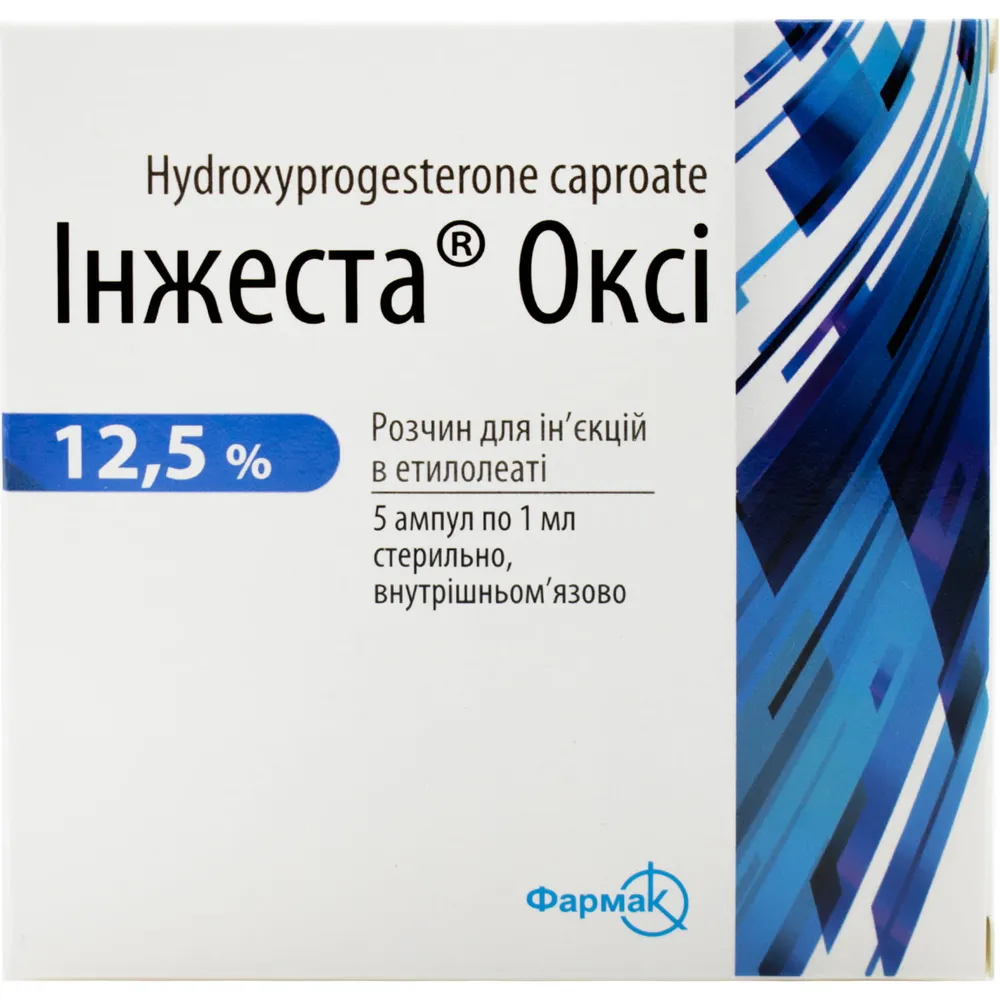
INJESTA OXY
UkraineThe drug is used to treat pathologies caused by corpus luteum deficiency, specifically in cases of threatened miscarriage, amenorrhea, polymenorrhea, dysfunctional uterine bleeding, endometriosis, and endometrial hyperplasia.
Frequently asked questions
How should Injesta oxy be taken correctly?
The drug is administered intramuscularly. The dosage depends on the purpose: in case of threatened miscarriage, 125-250 mg is administered once a week (only during the 1st trimester of pregnancy); for amenorrhea — 250 mg as a single dose or in two doses; to normalize the cycle — 62.5-125 mg on the 20th-22nd day of the cycle. In case of endometrial hyperplasia, the physician determines the treatment regimen depending on the patient's age.
What are the possible side effects of Injesta oxy?
Possible side effects include cardiovascular system reactions (increased blood pressure, tachycardia), metabolic disturbances (edema, fluid retention), digestive system issues (abdominal pain, constipation or diarrhea), nervous system effects (headache, depression, insomnia), as well as changes in the menstrual cycle, skin rashes, and visual disturbances.
Who should not use this drug?
Contraindications include hypersensitivity to the components, ectopic or missed pregnancy, vaginal bleeding of unknown origin, liver or kidney diseases or dysfunction, malignant tumors of the reproductive organs or mammary glands, thromboembolism, porphyria, and nervous disorders involving depression.
Can the drug be taken during pregnancy and breastfeeding?
During pregnancy, the drug is permitted for use only during the 1st trimester in cases of threatened miscarriage. During breastfeeding, the drug should not be used, as it passes into breast milk.
How does the drug interact with other medicines?
The drug may enhance the effects of diuretics, antihypertensive agents, and immunosuppressants, but reduces the efficacy of anticoagulants. It may also increase cyclosporine levels in the blood to toxic levels and weaken the effect of certain hormonal drugs.
Does the drug affect the ability to drive a vehicle?
Yes, the drug may cause visual disturbances and increased fatigue; therefore, during treatment, it is not recommended to engage in activities that require high concentration and rapid reaction time.
Instructions for use
INSTRUCTIONS FOR MEDICAL USE OF THE MEDICINAL PRODUCT INJESTA® OXY (INJESTA®OXY)
Composition:
Active substance: hydroxyprogesterone caproate;
1 ml of solution contains hydroxyprogesterone caproate, recalculated to 100% substance, 125 mg;
Excipients: benzyl benzoate, ethyl oleate.
Pharmaceutical form. Solution for injection.
Main physico-chemical properties: oily liquid of light green or light yellow color, with a specific odor.
Pharmacotherapeutic group.
Sex hormones and drugs used in pathologies of the reproductive system. Progestogens. ATC code G03D A03.
Pharmacological properties.
Pharmacodynamics.
Inzhesta**®** Oxy is a synthetic analogue of the corpus luteum hormone. The drug induces transformation of the uterine mucosa from the proliferative phase into the secretory phase, which is necessary for normal implantation; after fertilization, it promotes transition into the state required for development of the fertilized ovum. Inzhesta**®** Oxy also reduces excitability and contractility of the uterine and fallopian tube musculature, thereby supporting maintenance of pregnancy, and stimulates development of mammary gland terminal structures. In small doses it stimulates, while in large doses it suppresses gonadotropic hormone secretion. It inhibits aldosterone activity, resulting in enhanced urinary excretion of sodium and chloride. It exerts catabolic and immunosuppressive effects.
Inzhesta**®** Oxy is more stable in the body than progesterone, acts more slowly, and demonstrates a prolonged gestagenic effect. After a single intramuscular injection, its effect lasts from 8 to 14 days.
Pharmacokinetics.
After intramuscular injection, the drug is slowly absorbed from the injection site. Therapeutic concentration is maintained for 7–14 days.
Clinical characteristics.
Indications.
Pathological conditions caused by corpus luteum insufficiency: threat of miscarriage; primary and secondary amenorrhea; polymenorrhea; dysfunctional uterine bleeding; endometrial hyperplastic processes, endometriosis.
Contraindications.
Hypersensitivity to the components of the drug. Ectopic pregnancy or missed abortion in medical history, vaginal bleeding of unknown origin, post-abortion state, impaired liver function, liver diseases (hepatitis, cirrhosis), cholestatic jaundice during pregnancy or in medical history, benign hyperbilirubinemia, hepatic failure, renal failure, porphyria, neurological disorders with depressive symptoms, tachycardia, malignant tumors of the mammary glands and genital organs, active venous or arterial thromboembolism, severe thrombophlebitis or such conditions in medical history.
Interaction with other medicinal products and other types of interactions.
Hydroxyprogesterone caproate reduces the effect of drugs stimulating myometrial contractions (oxytocin, pituitrin), anabolic steroids (retabolil, nerobol), and pituitary gonadotropic hormones. When interacting with oxytocin, the lactogenic effect is reduced. It enhances the action of diuretics, antihypertensive agents, immunosuppressants, bromocriptine, and systemic coagulants. It reduces the effectiveness of anticoagulants. It alters the effects of hypoglycemic agents. Gestagenic activity is reduced by microsomal oxidation inducers (carbamazepine, griseofulvin, barbiturates, hydantoin, rifampicin). Combined use of β-adrenergic agonists and hydroxyprogesterone caproate for prevention of preterm labor helps reduce the adverse effects of β-adrenergic agonists.
Ingesta**®** Oxy inhibits the metabolism of cyclosporine, leading to increased cyclosporine plasma concentration and risk of toxic effects.
Special precautions for use.
The drug should be used with caution in patients with arterial hypertension, cardiovascular diseases, diabetes mellitus, bronchial asthma, epilepsy, migraine, and depression.
Use with caution is also recommended in patients with other conditions causing fluid retention and in patients with a history of psychiatric disorders. The drug should be discontinued at the first signs of depression.
In patients with diabetes mellitus, blood glucose levels should be closely monitored. The drug should not be used in patients with undiagnosed vaginal bleeding or in those with a history of peripheral arterial disease. When using the drug, early signs and symptoms of thromboembolism should be carefully monitored, and if they occur, treatment with the drug must be discontinued.
Regular medical examinations are recommended during treatment; their frequency and extent are determined individually.
Patients with any progesterone-dependent tumor, such as a history of meningioma and/or its progression during pregnancy or previous hormonal therapy, should remain under close physician supervision.
Prolonged use of high doses may lead to cessation of menstruation.
Use during pregnancy or breastfeeding.
Inzhesta® Oks may be used only during the first trimester of pregnancy in cases of threatened miscarriage.
The risk of congenital abnormalities, including genital abnormalities in children of both sexes, associated with the action of exogenous progesterone during pregnancy, has not been fully established. Progesterone passes into breast milk; therefore, the drug should not be used during breastfeeding.
Ability to affect reaction speed when driving or operating machinery.
The drug may cause visual disturbances and increased fatigue. During treatment, patients should avoid potentially hazardous activities requiring heightened attention and rapid psychomotor reactions.
Administration and Dosage
For use in adult women. The drug is administered intramuscularly. To prevent and treat the threat of miscarriage, administer 125–250 mg (1–2 mL of a 12.5% solution) once weekly. Injesta® Oxy should be used only during the first trimester of pregnancy.
In cases of amenorrhea (primary and secondary), the drug should be administered immediately after discontinuation of estrogenic agents. Administer 250 mg of Injesta**®** Oxy as a single dose or in two divided doses.
To normalize the menstrual cycle (in cases of polymenorrhea, dysfunctional uterine bleeding), administer Injesta**®** Oxy at a dose of 62.5–125 mg (0.5–1 mL of a 12.5% solution) on days 20–22 of the cycle.
In women with endometrial hyperplasia (in the absence of hormonally active ovarian tumors) under the age of 45, estrogens (ethinylestradiol 0.05 mg daily from day 5 to day 25 of the cycle) should be administered during the first phase of the menstrual cycle, along with Injesta**®** Oxy at a dose of 1 mL of a 12.5% solution once weekly on days 5, 12, and 19 of the cycle for 4–5 cycles. In women aged 45 years and older, administer only Injesta**®** Oxy at a dose of 2 mL of a 12.5% solution once weekly for 6–8 menstrual cycles.
Children
There is no experience with the use of this drug in children; therefore, it should not be used in pediatric practice.
Overdose
When higher-than-recommended doses are used, adverse effects described in the relevant section may occur more frequently. If progestogen-related adverse effects occur, treatment should be discontinued and, after resolution of symptoms, resumed at a lower dose. If necessary, symptomatic therapy should be administered.
Adverse reactions.
Cardiovascular system: possible increase in blood pressure, tachycardia, dyspnea, circulatory disturbances, venous thromboembolism.
Metabolic disorders: possible edema, fluid retention, albuminuria, impaired glucose tolerance, changes in plasma lipid profile.
Gastrointestinal system: altered appetite, abdominal distension, abdominal pain, constipation, diarrhea, liver function disorders and changes in liver function tests, cholestatic jaundice; rarely (with prolonged use) – nausea, vomiting.
Central nervous system: rarely (with prolonged use) – headache, dizziness, depression, insomnia, somnolence, weakness, increased fatigue, paresthesia.
Endocrine system: rarely (with prolonged use) – weight gain, breast tenderness and pain, changes in vaginal discharge, irregular uterine bleeding, amenorrhea, oligomenorrhea, menstrual cycle disturbances, premenstrual syndrome, decreased libido, hirsutism.
Genital organs: uterine spasms, disorders of external genital organs such as burning, dryness, genital pruritus, vaginal discharge, vaginal mycosis.
Immune system: hypersensitivity reactions, anaphylactic reactions, angioedema, urticaria.
Skin and subcutaneous tissue: alopecia, acne, yellowish pigmented facial spots (chloasma), possible skin allergic reactions (rash, pruritus), erythema multiforme.
Eye disorders: visual disturbances, retinal thrombosis, optic neuritis.
General disorders and administration site conditions: fever; changes at injection site, including pain and swelling.
Effect on the fetus: excessive amounts of progesterone may cause virilization of the female fetus (up to ambiguity of sex).
Shelf life.
2 years.
Do not use the drug after the expiry date stated on the package.
Storage conditions.
Store in the original packaging at a temperature not exceeding 25 °C. Keep out of reach of children.
Incompatibility. The drug should not be mixed with other medicinal products in the same container.
Packaging.
1 ml in an ampoule. 5 or 10 ampoules per pack. 5 ampoules in a blister. 1 or 2 blisters per pack.
Prescription category. Prescription only.
Manufacturer.
JSC "Farmak".
Manufacturer's address and place of business.
74, Kyrylivska Street, Kyiv, 04080, Ukraine.
The original data is available in the language of the country of manufacture.
Data source: State Register of Medicinal Products of Ukraine
Data last verified: August 13, 2026