GLUCOSE FRUITS
UkraineThe preparation is used for functional cardiac disorders, angioneuroses, and as an adjunct to main treatment for mild forms of atrial fibrillation and paroxysmal tachycardia.
Frequently asked questions
How should Glucose fruits be taken correctly?
If using whole fruits: pour 200 ml of hot water over 1 tablespoon, heat in a water bath for 15 minutes, cool for 45 minutes, strain, and top up with water to a volume of 200 ml. If using filter bags: pour 100 ml of boiling water over 1 bag and let it infuse for 15 minutes. Adults and children aged 14 and older should take the infusion warm 3 times a day, 30 minutes before meals.
What are the possible side effects of Glucose fruits?
Possible allergic reactions (redness, rash, itching, skin edema), drowsiness, and a decrease in heart rate.
Who should not take this preparation?
Contraindications include pronounced low blood pressure (hypotension), low heart rate (bradycardia), and individual hypersensitivity to the components of the product. The preparation should also not be used during pregnancy and breastfeeding.
Can I drive a car during treatment?
During the period of taking the preparation, you should refrain from driving motor vehicles or performing other work that requires high concentration and quick reactions.
How does the preparation interact with other medicines?
It may enhance the effects of hypnotics, sedatives, antihypertensive drugs, antiarrhythmics, and cardiac glycosides.
What should be done in case of overdose?
Prolonged intake of large doses may cause drowsiness, decreased blood pressure, and slowed heartbeat. In such cases, it is necessary to discontinue use and seek medical attention for symptomatic therapy.
Instructions for use
INSTRUCTIONS FOR MEDICAL USE OF THE MEDICINAL PRODUCT HAWTHORN FRUITS (CRATAEGIFRUCTUS)
Composition:
Active substance: hawthorn fruits (Crataegi fructus);
One pack contains hawthorn fruits (Crataegi fructus) – 50 g; one filter bag contains hawthorn fruits (Crataegi fructus) – 4 g.
Pharmaceutical form. Fruits.
Main physicochemical properties:
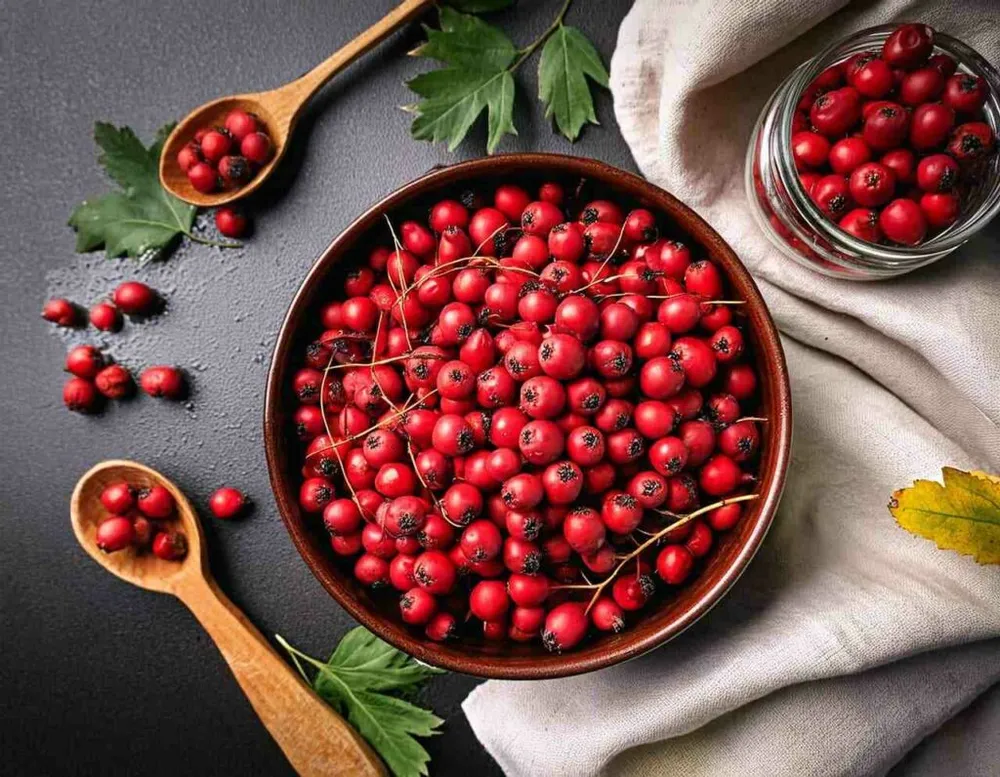
Whole raw material: apple-shaped fruits, spherical to ellipsoidal in form, hard, wrinkled, 6–14 mm long, 5–11 mm wide, with a crown-like rim at the top formed by withered sepals. The fruit pulp contains 1–5 woody pyrenes of irregular triangular, oval, or laterally compressed shape. The surface of the pyrenes is pitted-wrinkled or furrowed along the back. Fruit color ranges from yellow-orange and brownish-red to dark brown or black, sometimes with a whitish coating of crystallized sugar. Odorless. Taste is sweetish.
Powdered raw material: a mixture of fragments of the fruit outer peel and woody pyrenes, from yellow-orange and brownish-red to dark brown or black, sometimes with a whitish coating of crystallized sugar, passing through sieve №4000. Odorless. Taste is sweetish.
Coarse powder: a mixture of fragments of various shapes of the fruit outer peel and woody pyrenes, from yellow-orange and brownish-red to dark brown or black, sometimes with a whitish coating of crystallized sugar, passing through sieve №2800. Odorless. Taste is sweetish.
Pharmacotherapeutic group. Cardiological agents. ATC code C01EB04.
Pharmacological properties.
Pharmacodynamics.
The biologically active substances of the fruits exert cardiotonic, spasmolytic, hypotensive, sedative, and desensitizing effects; enhance blood supply in the coronary vessels of the heart and in cerebral vessels, increase myocardial sensitivity to cardiac glycosides, strengthen cardiac muscle contractions and reduce its excitability, produce a calming effect, normalize arterial pressure, and promote reduction of blood cholesterol levels.
Clinical characteristics.
Indications.
Functional cardiac disorders, angioneuroses, and also (as an addition to basic therapy) mild forms of atrial fibrillation and paroxysmal tachycardia.
Contraindications.
Marked arterial hypotension and bradycardia. Individual hypersensitivity to the components of the drug.
Interaction with other medicinal products and other forms of interaction.
May enhance the effects of sedatives, hypnotics, antihypertensive and antiarrhythmic agents, and cardiac glycosides.
Special precautions for use.
During treatment with the drug, monitoring of blood pressure is required. Consultation with a physician is necessary in case of prolonged use.
Use during pregnancy or breastfeeding.
Do not use.
Ability to affect reaction rate when driving or operating machinery.
During treatment with the drug, driving or performing other tasks requiring heightened attention, quick mental and motor reactions should be avoided.
Method of Administration and Dosage.
Place 1 tablespoon of uncrushed or 2 dessert spoons of crushed fruits into an enameled container, pour 200 ml of hot boiled water, cover with a lid and heat in a water bath for 15 minutes. Cool for 45 minutes at room temperature, then strain. Squeeze the remaining residue into the strained infusion. Adjust the volume of the resulting infusion with boiled water to the original volume (200 ml). Take warm, 3 times daily, 30 minutes before meals: adults – ⅓ cup, children aged 14 years and older – ¼ cup.
Place 1 filter bag containing 4 g into a glass or enameled container, pour 100 ml of boiling water, cover and let steep for 15 minutes. Take warm, 3 times daily, 30 minutes before meals: adults and children aged 14 years and older – 100 ml per dose.
The duration of treatment is determined individually by a physician and depends on the form and severity of the disease, the therapeutic effect achieved, and the type of therapy (monotherapy or combination therapy).
Children.
This medication should be used in children aged 14 years and older only as prescribed by a physician.
Overdose.
With prolonged use in high doses, somnolence, decreased arterial pressure, and bradycardia may occur. In case of signs of overdose, discontinue the medication and administer symptomatic and supportive therapy according to the patient's clinical condition.
Side effects.
Allergic reactions (including hyperemia, rash, itching, skin swelling); drowsiness, decreased heart rate.
Shelf life. 2 years.
Storage conditions.
Store in the original packaging at a temperature not exceeding 25 °C, in a place inaccessible to children. Prepared infusion – in a cool place for no more than 2 days.
Packaging.
50 g in packs with an inner pouch; 4 g in filter bags, pack of 20.
Category of release. Over-the-counter.
Manufacturer. JSC Pharmaceutical Factory "Viola".
Manufacturer's location and address of business activity.
69050, Ukraine, Zaporizhzhia, Skladska St., 4.
Marketing Authorization Holder. JSC Pharmaceutical Factory "Viola".
Address of the Marketing Authorization Holder.
69063, Ukraine, Zaporizhzhia, Amosova Akademika St., 75.
Similar drugs
| Brand name | Dosage form | Active substance / Dosage | Manufacturer |
|---|---|---|---|
| CRATAEGUS FRUIT | tablets |
|
PJSC "Lektravy" |
The original data is available in the language of the country of manufacture.
Data source: State Register of Medicinal Products of Ukraine
Data last verified: August 13, 2026