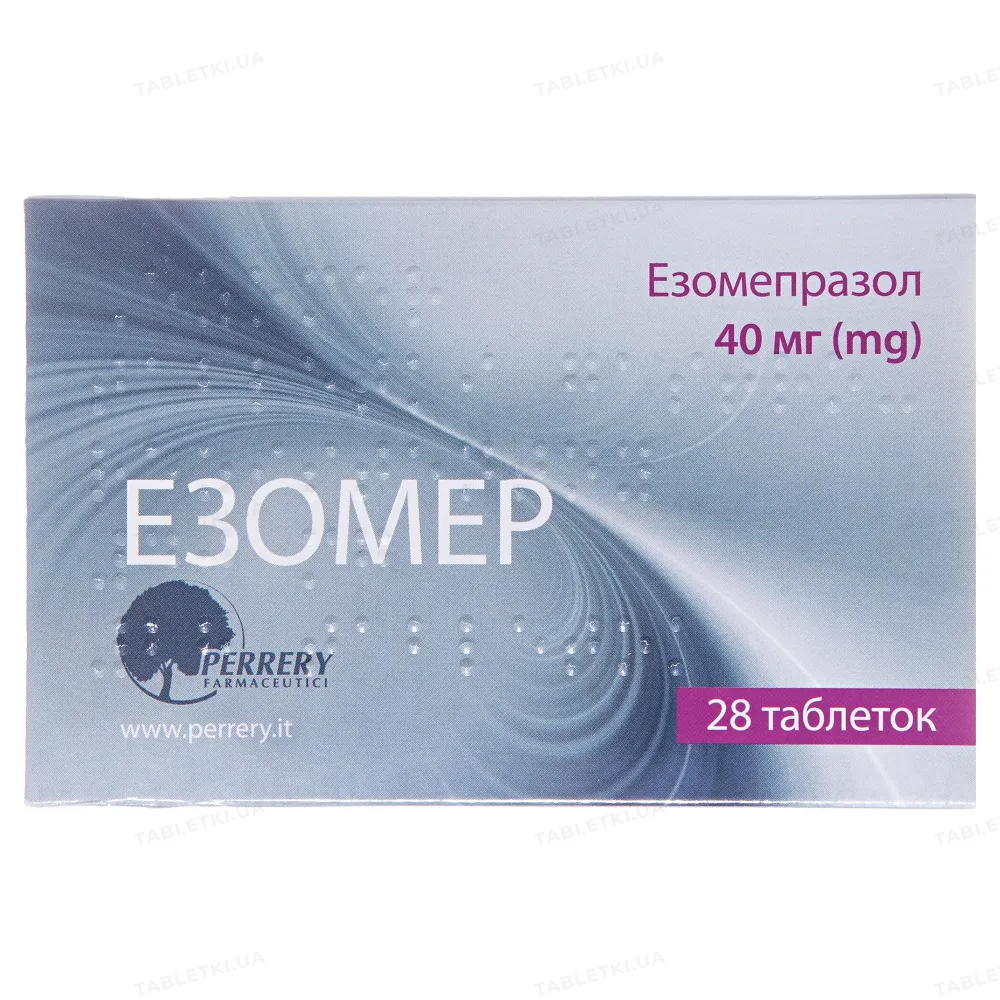
EZOMER
UkraineThe drug is used to treat erosive reflux esophagitis (a part of gastroesophageal reflux disease), to prevent recurrent bleeding from ulcers, and to treat Zollinger-Ellison syndrome. In children aged 12 years and older, it is prescribed for the treatment of erosive reflux esophagitis.
Frequently asked questions
How should Ezomer be taken correctly?
The tablet should be swallowed whole with liquid, without chewing or crushing. If swallowing is difficult, the tablet can be dissolved in half a glass of non-carbonated water and taken immediately or within 30 minutes. For patients using a gastric tube, the tablet can also be dissolved in non-carbonated water.
What dosage of Ezomer is typically used?
For the treatment of erosive reflux esophagitis in adults and children aged 12 years and older, 40 mg once daily for 4 weeks is typically prescribed. For Zollinger-Ellison syndrome, the initial dose is 40 mg twice daily, with subsequent individual adjustment.
Are there any contraindications for the drug?
The drug must not be taken in case of hypersensitivity to esomeprazole, other components of the drug, or substituted benzimidazoles. Co-administration with nelфиnavir is also contraindicated.
What are the possible side effects?
The most common side effects are headache, abdominal pain, diarrhea, nausea, constipation, abdominal bloating, and vomiting. Dizziness, insomnia, dry mouth, and skin rashes are also possible. In rare cases, serious skin reactions or disturbances in blood magnesium levels may occur.
Which medications should not be combined with the drug?
Co-administration with clopidogrel and atazanavir is not recommended. Combination with nelфиnavir is prohibited. Caution should also be exercised when taking it with warfarin, digoxin, methotrexate, and tacrolimus, as their effect or blood levels may change.
Can the drug be taken during pregnancy or breastfeeding?
During pregnancy, the drug should be prescribed with caution. The use of Ezomer is not recommended during breastfeeding, as it is unknown whether it passes into breast milk and how it might affect the child.
Instructions for use
INSTRUCTION FOR MEDICAL USE OF THE MEDICINAL PRODUCT ESOMER ESOMER
Composition:
Active substance: esomeprazole;
One tablet contains 43.38 mg of esomeprazole magnesium dihydrate, equivalent to 40 mg of esomeprazole;
Excipients: mixture of cellulose and mannitol (Avicel®), glycerol monostearate, mannitol, methacrylic acid copolymer (type A), paraffin, polyvinylpyrrolidone, polysorbate 80, sodium stearyl fumarate, spherical sugar, triethyl citrate;
Film coating: hypromellose, iron oxide yellow (E 172), iron oxide red (E 172), macrogol (PEG 4000), talc, titanium dioxide (E 171).
Pharmaceutical form. Gastro-resistant tablets.
Main physicochemical properties: pink-colored, oval-shaped tablets, film-coated.
Pharmacotherapeutic group. Drugs for treatment of peptic ulcer and gastroesophageal reflux disease. Proton pump inhibitors.
ATC code A02B C05.
Pharmacological Properties.
Pharmacodynamics.
Esomeprazole is the S-isomer of omeprazole, which reduces gastric juice secretion through a specifically targeted mechanism of action. It is a specific inhibitor of the proton pump in the parietal cell. The R- and S-isomers of omeprazole have equivalent pharmacodynamic activity.
Esomeprazole is a weak base that accumulates and is transformed into its active form in the highly acidic environment of the secretory canaliculi of the parietal cell, where it inhibits the enzyme H+K+-ATPase—the proton pump—and thereby suppresses both basal and stimulated acid secretion.
After oral administration of 20 mg and 40 mg of esomeprazole, the effect is observed within one hour. After repeated administration of 20 mg esomeprazole once daily for 5 days, the mean peak acid output following pentagastrin stimulation is reduced by 90% when measured 6–7 hours after the dose on day 5.
After 5 days of treatment with 20 mg and 40 mg esomeprazole orally, gastric pH remained above 4 for a mean of 13 and 17 hours, respectively, during a 24-hour period in patients with symptomatic reflux esophagitis. The proportion of patients with gastric pH above 4 for 8, 12, and 16 hours after administration of 20 mg esomeprazole was 76%, 54%, and 24%, respectively. Corresponding proportions for 40 mg esomeprazole were 97%, 92%, and 56%.
Using the area under the plasma concentration-time curve (AUC) as an indirect measure of drug exposure, a relationship between acid secretion suppression and drug exposure has been demonstrated.
Therapeutic effects of hydrochloric acid secretion inhibition
Treatment of reflux esophagitis with esomeprazole 40 mg was successful in approximately 78% of patients after 4 weeks of treatment and in 93% after 8 weeks of treatment.
Administration of esomeprazole 20 mg twice daily for one week in combination with appropriate antibiotics resulted in successful eradication of Helicobacter pylori in approximately 90% of patients. After this one-week treatment, no further monotherapy with acid-suppressing agents was required for successful healing and symptom relief of uncomplicated duodenal ulcer.
Other effects related to hydrochloric acid secretion inhibition
During treatment with acid-suppressing agents, plasma gastrin concentrations increase in response to reduced acid secretion. Chromogranin A (CgA) levels also rise due to decreased gastric acidity. Elevated CgA levels may interfere with laboratory tests for detecting neuroendocrine tumors. According to published data, treatment with proton pump inhibitors (PPIs) should be discontinued at least 5–14 days before measuring CgA levels to allow falsely elevated CgA levels, which may occur after PPI therapy, to return to normal range. An increase in ECL cell number may be associated with elevated plasma gastrin levels observed during long-term esomeprazole treatment in both children and adults. These findings are considered clinically insignificant.
There have been reports of a slight increase in the incidence of glandular cysts in the stomach with prolonged use of acid-suppressing agents. These changes are physiological consequences of long-term acid secretion inhibition and are benign and reversible.
Reduced gastric acidity due to any PPI increases the number of bacteria normally present in the gastrointestinal tract. PPI treatment may lead to a slight increase in the risk of gastrointestinal infections caused, for example, by Salmonella or Campylobacter, and in hospitalized patients possibly infected with Clostridium difficile.
Pharmacokinetics.
Absorption
Esomeprazole is acid-labile; therefore, it is administered orally as granules coated with an enteric coating. In vivo conversion to the R-isomer is negligible. Esomeprazole is rapidly absorbed, with peak plasma concentration (Cmax) reached approximately 1–2 hours after dosing. Absolute bioavailability is 64% after a single 40 mg dose and increases to 89% after repeated once-daily administration. For 20 mg esomeprazole, the corresponding values are 50% and 68%.
Food intake slows and reduces esomeprazole absorption, but this does not affect the drug's action on gastric acidity.
Distribution
The volume of distribution at steady state in healthy volunteers is 0.22 L/kg body weight. Esomeprazole is 97% bound to plasma proteins.
Metabolism
Esomeprazole is completely metabolized by the cytochrome P450 (CYP) system. The main part of esomeprazole metabolism depends on the polymorphic CYP2C19, responsible for the formation of hydroxy- and desmethyl metabolites. Another part depends on a second specific isoenzyme, CYP3A4, which mediates the formation of esomeprazole sulfone—the main metabolite in plasma.
Elimination
The parameters below primarily reflect pharmacokinetics in individuals with functional CYP2C19 enzyme (extensive metabolizers).
Total plasma clearance is approximately 17 L/hour after a single dose and about 9 L/hour after repeated administration. The elimination half-life in plasma is approximately 1.3 hours with repeated once-daily dosing. Esomeprazole is completely cleared from plasma between doses, with no tendency toward accumulation when administered once daily.
The main metabolites of esomeprazole do not affect gastric juice secretion. Approximately 80% of an oral dose is excreted in urine as metabolites, the remainder in feces. Less than 1% of the parent drug is recovered in urine.
Linearity/Non-linearity
The pharmacokinetics of esomeprazole have been studied at doses up to 40 mg twice daily. AUC increases with repeated administration. This increase is dose-dependent and results in a greater-than-proportional rise in AUC after repeated dosing. This time- and dose-dependence is attributed to reduced first-pass metabolism and systemic clearance, likely due to inhibition of the CYP2C19 enzyme by esomeprazole and/or its sulfone metabolite.
Special patient groups
Poor metabolizers
Approximately 2.9 ± 1.5% of the population lacks functional CYP2C19 enzyme (referred to as poor metabolizers). In these individuals, esomeprazole metabolism is primarily mediated by CYP3A4. After repeated once-daily 40 mg doses, the mean AUC in poor metabolizers is approximately 100% higher than in individuals with functional CYP2C19 (extensive metabolizers). The mean peak plasma concentration increases by approximately 60%. These findings have no impact on esomeprazole dosing.
Patients with hepatic impairment
Metabolism of esomeprazole may be impaired in patients with mild to moderate liver dysfunction. Metabolism is reduced in patients with severe hepatic impairment, leading to a doubling of AUC. Therefore, the maximum recommended dose in patients with severe hepatic impairment is 20 mg. Esomeprazole and its metabolites do not accumulate during once-daily administration.
Patients with renal impairment
Studies in this patient group have not been conducted. Since the kidneys are responsible for excretion of esomeprazole metabolites, not the parent compound, significant changes in metabolism are not expected in patients with renal impairment.
Elderly patients
The metabolism of esomeprazole does not undergo significant changes in elderly patients (aged 71 to 80 years).
Pediatric patients
After multiple doses of 20 mg and 40 mg esomeprazole, AUC and time to reach maximum plasma concentration (tmax) in children aged 12–18 years were similar to those in adults.
Gender differences
After a single 40 mg dose of esomeprazole, the mean AUC in women is 30% higher than in men. No gender-related differences were observed during repeated once-daily administration. These findings do not affect esomeprazole dosing.
Clinical characteristics.
Indications.
Adults:
Gastroesophageal reflux disease (GERD):
-
Treatment of erosive reflux esophagitis.
-
Long-term treatment following intravenous administration of the medicinal product for prevention of recurrent bleeding from peptic ulcers.
-
Treatment of Zollinger-Ellison syndrome.
Children aged 12 years and older:
Gastroesophageal reflux disease (GERD):
- Treatment of erosive reflux esophagitis.
Contraindications.
Hypersensitivity to esomeprazole, substituted benzimidazoles, or to any of the excipients of the product. Concomitant use with nelfinavir is contraindicated (see section "Interaction with other medicinal products and other forms of interaction").
Interaction with other medicinal products and other forms of interaction.
Effect of esomeprazole on the pharmacokinetics of other medicinal products
Warfarin
When 40 mg esomeprazole was administered to patients taking warfarin, coagulation times remained within normal limits. However, after widespread use of the drug in clinical practice, there have been several reports of clinically significant increases in the international normalized ratio (INR) during concomitant use of these medicinal products. Therefore, when esomeprazole is used concomitantly with warfarin (or other coumarin derivatives), coagulation parameters should be monitored at the beginning and after discontinuation of concomitant esomeprazole therapy in patients receiving warfarin or other coumarin derivatives.
Voriconazole
Omeprazole, like esomeprazole, acts as an inhibitor of CYP2C19. Concomitant administration of omeprazole (40 mg once daily) increased the Cmax and AUC of voriconazole (a CYP2C19 substrate) by 15% and 41%, respectively.
Diazepam
Concomitant administration of 30 mg esomeprazole reduces the clearance of diazepam, a CYP2C19 substrate, by 45%.
Protease inhibitors
Interactions between omeprazole and certain protease inhibitors (antiretroviral agents) have been reported. The clinical significance and mechanisms of such interactions are not always known. Increased gastric pH during omeprazole administration may alter the absorption of protease inhibitors. Other mechanisms of interaction may involve inhibition of CYP2C19. Reduced serum levels of certain antiretroviral agents, such as atazanavir and nelfinavir, have been observed when co-administered with omeprazole. Therefore, concomitant use of omeprazole with atazanavir and nelfinavir is not recommended. Administration of omeprazole (40 mg once daily) together with atazanavir 300 mg/ritonavir 100 mg in healthy volunteers resulted in a significant reduction in atazanavir exposure (approximately 75% decrease in AUC, Cmax, and Cmin [minimum plasma concentration]). Increasing the atazanavir dose to 400 mg did not compensate for the effect of omeprazole on atazanavir exposure. When omeprazole (20 mg daily) was co-administered with atazanavir 400 mg/ritonavir 100 mg in healthy volunteers, atazanavir exposure decreased by approximately 30% compared to exposure observed with daily administration of 300 mg atazanavir/100 mg ritonavir without omeprazole 20 mg daily. Concomitant use of omeprazole (40 mg daily) reduced the mean AUC, Cmax, and Cmin values of nelfinavir by 36–39%, and the mean values of AUC, Cmax, and Cmin of its pharmacologically active metabolite M8 decreased by 75–92%.
Due to the similar pharmacodynamic effects and pharmacokinetic properties of omeprazole and esomeprazole, concomitant use of esomeprazole with atazanavir is not recommended. Concomitant use of esomeprazole with nelfinavir is contraindicated.
An increase in serum levels (80–100%) of saquinavir (with concomitant ritonavir) has been reported when co-administered with omeprazole (40 mg once daily). Omeprazole treatment at a dose of 20 mg once daily did not affect darunavir (with concomitant ritonavir) or amprenavir (with concomitant ritonavir) exposure. Treatment with esomeprazole 20 mg once daily did not affect amprenavir exposure (with or without concomitant ritonavir). Omeprazole 40 mg once daily did not affect lopinavir exposure (with concomitant ritonavir).
Clopidogrel
In healthy volunteers, a pharmacokinetic/pharmacodynamic (PK/PD) interaction between clopidogrel (loading dose 300 mg/daily maintenance dose 75 mg) and esomeprazole (40 mg daily orally) was observed, resulting in a mean reduction of 40% in exposure to the active metabolite of clopidogrel and a mean reduction of 14% in maximum inhibitory activity (ADP-induced) against platelet aggregation.
In a study involving healthy volunteers evaluating clopidogrel used together with a combination of 20 mg esomeprazole and 81 mg acetylsalicylic acid compared to clopidogrel monotherapy, a reduction in exposure to the active metabolite of clopidogrel of nearly 40% was observed. However, maximum inhibitory activity (ADP-induced) against platelet aggregation was similar in groups receiving clopidogrel alone and clopidogrel + combination (esomeprazole + acetylsalicylic acid).
Several observational and clinical studies on PK/PD interactions have yielded conflicting results regarding whether the risk of major cardiovascular events increases when patients receive clopidogrel together with esomeprazole. As a precaution, concomitant use of clopidogrel with esomeprazole is recommended to be avoided.
Medicinal products metabolized by CYP2C19
Esomeprazole inhibits CYP2C19, the main enzyme responsible for esomeprazole metabolism. Therefore, when esomeprazole is used in combination with drugs metabolized by CYP2C19 (such as diazepam, citalopram, imipramine, clomipramine, phenytoin), their plasma concentrations may be increased, and dose reduction may be necessary. This should be taken into account, especially when prescribing esomeprazole on an "as needed" basis.
Medicinal products whose absorption is pH-dependent
Reduced gastric acidity during esomeprazole treatment may increase or decrease the absorption of drugs if their absorption depends on gastric pH.
As with other agents that reduce intragastric acidity, absorption of drugs such as ketoconazole, itraconazole, and erlotinib may be decreased, while absorption of drugs such as digoxin may be increased during esomeprazole treatment. Concomitant administration of omeprazole (20 mg daily) and digoxin in healthy volunteers increased digoxin bioavailability by 10% (up to 30% in two out of ten subjects). Digoxin toxicity has been reported rarely. Nevertheless, caution is advised when administering high doses of esomeprazole to elderly patients. Therapeutic drug monitoring of digoxin should be intensified.
Methotrexate
Increased blood levels of methotrexate have been reported in some patients when co-administered with PPIs. In cases where high-dose methotrexate administration is required, temporary discontinuation of esomeprazole should be considered.
Tacrolimus
Increased plasma levels of tacrolimus have been reported with concomitant use of esomeprazole. When this combination is used, monitoring of renal function (creatinine clearance), careful monitoring of plasma tacrolimus levels, and dose adjustment if necessary, should be performed.
Cisapride
In healthy volunteers, concomitant administration of 40 mg esomeprazole with cisapride increased AUC by 32% and prolonged the elimination half-life (t1/2) by 31%, but no significant increase in peak plasma levels of cisapride was observed. A mild QT interval prolongation was observed after cisapride administration alone and was not increased when cisapride was further administered in combination with esomeprazole (see also section "Special precautions for use").
Cilostazol
Omeprazole, like esomeprazole, acts as an inhibitor of CYP2C19. Administration of omeprazole 40 mg to healthy volunteers in a crossover study increased Cmax and AUC for cilostazol by 18% and 26%, respectively, and for one of its active metabolites by 29% and 69%, respectively.
Phenytoin
Concomitant administration of 40 mg esomeprazole increased the minimum plasma concentration of phenytoin by 13% in patients with epilepsy. Monitoring of phenytoin plasma concentrations is recommended when initiating or discontinuing esomeprazole therapy.
Investigated medicinal products without clinically significant interaction
Amoxicillin and quinidine
Esomeprazole was found not to have a clinically significant effect on the pharmacokinetics of amoxicillin or quinidine.
Naproxen or rofecoxib
No pharmacokinetic interaction was observed during short-term studies of concomitant use of esomeprazole with naproxen or rofecoxib.
Effect of other medicinal products on the pharmacokinetics of esomeprazole
Medicinal products inhibiting CYP2C19, CYP3A4, or both enzymes
Esomeprazole is metabolized by CYP2C19 and CYP3A4. Concomitant administration of esomeprazole and the CYP3A4 inhibitor clarithromycin (500 mg twice daily) resulted in a doubling of esomeprazole AUC.
Concomitant administration of esomeprazole with a combined inhibitor of CYP2C19 and CYP3A4 may increase esomeprazole AUC by more than two-fold. Voriconazole (an inhibitor of CYP2C19 and CYP3A4) increased omeprazole AUC by 280%. Dose adjustment of esomeprazole is not required in such situations. However, dose adjustment should be considered in patients with severe hepatic impairment or when long-term treatment is prescribed.
Medicinal products inducing CYP2C19, CYP3A4, or both enzymes
Drugs that induce CYP2C19, CYP3A4, or both enzymes (such as rifampicin or St. John's wort) may reduce plasma levels of esomeprazole by accelerating its metabolism.
Children. Drug interaction studies have been conducted only in adults.
Special precautions for use
In the presence of alarm symptoms (significant unexplained weight loss, recurrent vomiting, dysphagia, hematemesis, or melena) or when gastric ulcer is suspected or present, malignancy must be excluded, as treatment with esomeprazole may mask symptoms and delay diagnosis.
Long-term use
Patients receiving long-term treatment (particularly longer than one year) should be under regular medical supervision.
On-demand therapy
Patients using the medicine on an "as needed" basis should inform their physician if there is a change in symptom pattern.
Eradication of Helicobacter pylori
When prescribing esomeprazole for eradication of Helicobacter pylori, potential drug interactions between all components of triple therapy should be considered. Clarithromycin is a potent inhibitor of CYP3A4; therefore, when prescribing triple therapy to patients receiving other medicinal products metabolized by CYP3A4 (e.g., cisapride), possible contraindications and interactions between clarithromycin and these medicinal products must be taken into account.
Gastrointestinal infections
Use of PPIs may slightly increase the risk of gastrointestinal infections such as Salmonella and Campylobacter (see section "Pharmacodynamics").
Vitamin B12 absorption
Administration of esomeprazole, as with all acid secretion-inhibiting drugs, may lead to reduced absorption of vitamin B12 (cyanocobalamin) due to hypo- or achlorhydria. This should be considered in patients with low body stores of vitamin B12 or risk factors for reduced vitamin B12 absorption during long-term therapy.
Hypomagnesemia
Cases of severe hypomagnesemia have been reported in patients treated with PPIs (including esomeprazole) for at least 3 months, and in most cases, for over one year. Possible serious manifestations of hypomagnesemia include fatigue, tetany, delirium, seizures, dizziness, and ventricular arrhythmia. These symptoms may appear suddenly and insidiously and may be overlooked. Hypomagnesemia resolved after magnesium replacement and discontinuation of PPI therapy. Patients who are expected to undergo long-term treatment or who are taking PPIs with digoxin or other drugs that may cause hypomagnesemia (e.g., diuretics) should have plasma magnesium levels monitored before starting PPI therapy and periodically during treatment.
Fracture risk
Use of PPIs, especially at high doses and for prolonged periods (>1 year), may moderately increase the risk of hip, wrist, or spine fractures, primarily in elderly patients or those with other risk factors. Observational study data indicate that PPIs may increase the overall risk of fractures by 10–40%. Some fracture cases may be associated with other risk factors. Patients at risk of osteoporosis should be evaluated and treated according to current clinical guidelines and should receive adequate intake of vitamin D and calcium.
Subacute cutaneous lupus erythematosus (SCLE)
Cases of SCLE with PPI use have been very rare. If skin lesions appear, especially on exposed areas of skin and accompanied by arthralgia, patients should seek immediate medical attention, and healthcare providers should consider discontinuing Esomer. Development of SCLE after treatment with one PPI increases the risk of SCLE with use of other PPIs.
Interaction with other medicinal products
Concomitant use of esomeprazole and atazanavir is not recommended (see section "Interaction with other medicinal products and other forms of interaction"). If combination of atazanavir with PPIs cannot be avoided, close monitoring of the patient in an inpatient setting is recommended, along with increasing the atazanavir dose to 400 mg with 100 mg ritonavir; the esomeprazole dose should not exceed 20 mg.
Esomeprazole is an inhibitor of CYP2C19. Therefore, potential interactions with drugs metabolized by CYP2C19 should be considered at the beginning or end of esomeprazole therapy. An interaction between clopidogrel and esomeprazole has been observed (see section "Interaction with other medicinal products and other forms of interaction"). The clinical significance of this interaction is not fully established. As a precautionary measure, concomitant use of this combination is recommended to be avoided.
When prescribing esomeprazole for on-demand use, due to fluctuations in plasma concentrations of esomeprazole, potential interactions between Esomer and other medicinal products should be considered (see section "Interaction with other medicinal products and other forms of interaction").
Serious cutaneous adverse reactions (SCARs)
Serious cutaneous adverse reactions (SCARs), such as erythema multiforme (EM), Stevens-Johnson syndrome (SJS), toxic epidermal necrolysis (TEN), and drug reaction with eosinophilia and systemic symptoms (DRESS), which may be life-threatening, have very rarely been reported in association with esomeprazole treatment.
Patients should be informed about the signs and symptoms of severe skin reactions EM/SJS/TEN/DRESS and the need to seek immediate medical attention from their physician upon appearance of any characteristic signs or symptoms.
Esomeprazole treatment should be discontinued immediately upon appearance of signs and symptoms of serious skin reactions, and additional medical care/intensive monitoring should be provided as needed.
Re-challenge with esomeprazole should not be performed in patients with EM/SJS/TEN/DRESS.
Sucrose
This medicinal product contains sucrose. Patients with rare hereditary fructose intolerance, glucose-galactose malabsorption, or sucrase-isomaltase deficiency should not take this medicine.
Effect on laboratory test results
Elevated chromogranin A (CgA) levels may interfere with laboratory tests for neuroendocrine tumors. To avoid this effect, esomeprazole treatment should be discontinued at least 5 days before measuring CgA levels (see section "Pharmacodynamics"). If after the first measurement CgA and gastrin levels have not returned to the reference range, the test should be repeated 14 days after completion of PPI therapy.
Sodium content
This medicinal product contains less than 1 mmol sodium (23 mg) per tablet, i.e., essentially "sodium-free."
Use during pregnancy or breastfeeding
Pregnancy
Clinical data on the use of esomeprazole in pregnant women are limited. Epidemiological studies involving large numbers of pregnant women taking racemic omeprazole have shown no teratogenic (fetal developmental abnormalities) or fetotoxic effects. Animal studies with esomeprazole have not shown direct or indirect adverse effects on embryonic/fetal development. Animal studies with the racemic mixture have not demonstrated direct or indirect adverse effects on pregnancy, delivery, or postnatal development. The drug should be used during pregnancy only if clearly needed. Moderate data from pregnant women (between 300 and 1,000 pregnancy cases) indicate no risk of congenital malformations or toxic effects of esomeprazole on the fetus/newborn child.
Animal studies indicate no direct or indirect harmful effects of the drug on reproductive function due to its toxicity.
Lactation (breastfeeding)
No studies have been conducted in breastfeeding women. It is unknown whether esomeprazole passes into breast milk. There is insufficient information regarding the effects of esomeprazole on newborns/infants. Therefore, esomeprazole should not be used during breastfeeding.
Fertility
Animal studies with oral administration of the racemic omeprazole mixture did not demonstrate effects on fertility.
Ability to influence reaction speed when driving or operating machinery
Esomeprazole has minimal effect on the ability to drive or operate machinery. Adverse reactions such as dizziness (uncommon) and blurred vision (rare) have been reported (see section "Adverse reactions"). If such disorders occur, patients should refrain from driving or operating machinery.
Dosage and Administration
Adults
Gastroesophageal reflux disease (GERD)
- Treatment of erosive reflux esophagitis
40 mg once daily for 4 weeks.
Patients with untreated esophagitis or persistent symptoms should be treated for an additional 4 weeks.
Long-term treatment following intravenous administration of the drug for prevention of recurrent bleeding from peptic ulcers:
40 mg once daily for 4 weeks following intravenous administration of the drug for prevention of recurrent bleeding from peptic ulcers.
Zollinger–Ellison syndrome treatment
The recommended initial dose of Esomer is 40 mg twice daily.
The dose should then be individually adjusted; treatment continues as long as clinical indications require. Based on available clinical data, disease control can be achieved in most patients with doses ranging from 80 mg to 160 mg of esomeprazole per day. If daily doses exceed 80 mg, the dose should be divided and administered twice daily.
Special patient groups
Patients with renal impairment
Dose adjustment is not required in patients with renal impairment. However, due to limited experience with the drug, caution should be exercised when treating patients with severe renal impairment (see section "Pharmacokinetics").
Patients with hepatic impairment
Dose adjustment is not required in patients with mild to moderate hepatic impairment. The maximum dose of esomeprazole in patients with severe hepatic impairment should not exceed 20 mg* (see section "Pharmacokinetics").
*Administer esomeprazole preparations at the appropriate dosage.
Elderly patients
Dose adjustment is not required in elderly patients.
Children
Children aged 12 years and older
Gastroesophageal reflux disease (GERD)
- Treatment of erosive reflux esophagitis:
40 mg once daily for 4 weeks.
Patients with untreated esophagitis or persistent symptoms should be treated for an additional 4 weeks.
Children under 12 years of age
Esomer should not be used in children under 12 years of age due to lack of data on such use.
Administration method
The tablet should be swallowed whole with liquid. Tablets must not be chewed or crushed.
For patients who have difficulty swallowing, the tablet can also be dissolved in half a glass of non-carbonated water. Other liquids should not be used, as they may dissolve the enteric coating. Stir until the tablets dissolve, then the granule suspension should be taken immediately or within 30 minutes. Fill the glass halfway with water, stir any residue, and drink. Granules must not be chewed or crushed.
For patients unable to swallow, the tablet should be dissolved in non-carbonated water and administered via a gastric tube. It is important to carefully verify the suitability of the syringe and tube selected. Instructions for preparation and administration of the drug through a tube are provided below.
Administration of the drug through a gastric tube
- Place the tablet into an appropriate syringe and draw into the syringe approximately 25 mL of water and approximately 5 mL of air. For some tubes, dilution of the drug in 50 mL of water may be required to prevent clogging of the tube by tablet granules.
- Immediately shake the syringe for approximately 2 minutes to dissolve the tablet.
- Hold the syringe with the tip upward and ensure the tip is not clogged.
- Attach the syringe to the tube, continuing to hold the syringe tip upward.
- Shake the syringe and turn it with the tip downward. Immediately administer 5–10 mL of the dissolved drug into the tube. After administration, return the syringe to its previous position and shake it (the syringe must be held with the tip upward to prevent clogging of the tip).
- Turn the syringe tip downward and administer another 5–10 mL of the drug into the tube. Repeat this procedure until the syringe is completely emptied.
- Draw 25 mL of water and 5 mL of air into the syringe and repeat step 5 if necessary to flush any residue remaining in the syringe. For some tubes, 50 mL of water may be required if necessary.
Children
Esomer should not be used in children under 12 years of age due to lack of data on such use.
Administered to children aged 12 years and older for the following indications:
Gastroesophageal reflux disease (GERD)
- Treatment of erosive reflux esophagitis.
Overdose
Data on overdose are limited. Gastrointestinal symptoms and weakness have been reported after ingestion of 280 mg of esomeprazole. A single dose of esomeprazole 80 mg does not cause adverse effects. No specific antidote is known. Esomeprazole is highly protein-bound in plasma and therefore is not dialyzable.
Treatment: symptomatic and general supportive therapy.
Adverse Reactions.
Summary of safety profile
The adverse reactions most commonly observed during clinical trials and in the post-marketing period are headache, abdominal pain, diarrhoea, and nausea. Furthermore, the safety profile of the medicinal product is consistent across different dosage forms, approved indications, age groups, and patient populations. No dose-dependent adverse reactions have been identified.
Adverse reactions reported during clinical trials and after widespread clinical use of esomeprazole are listed below. No dose-dependent effects have been observed. Adverse reactions are classified according to frequency: very common (> 1/10); common (≥ 1/100, < 1/10); uncommon (≥ 1/1000, < 1/100); rare (≥ 1/10000, < 1/1000); very rare (< 1/10000); frequency not known (cannot be estimated from the available data).
Blood and lymphatic system disorders:
rare: leukopenia, thrombocytopenia;
very rare: agranulocytosis, pancytopenia.
Immune system disorders:
rare: hypersensitivity reactions, including fever, angioedema, anaphylactic reactions/shock.
Metabolism and nutrition disorders:
uncommon: peripheral oedema;
rare: hyponatraemia;
frequency not known: hypomagnesaemia (see section "Special warnings and precautions for use"); severe hypomagnesaemia may lead to hypocalcaemia; hypomagnesaemia may also be associated with hypokalaemia.
Psychiatric disorders:
uncommon: insomnia;
rare: agitation, depression, confusion;
very rare: aggression, hallucinations.
Nervous system disorders:
common: headache;
uncommon: dizziness, paraesthesia, somnolence;
rare: taste disturbance.
Eye disorders:
rare: blurred vision.
Ear and labyrinth disorders:
uncommon: vertigo.
Respiratory, thoracic and mediastinal disorders:
rare: bronchospasm.
Gastrointestinal disorders:
common: abdominal pain, constipation, diarrhoea, bloating, nausea, vomiting; gastric fundic gland polyps (benign);
uncommon: dry mouth;
rare: stomatitis, gastrointestinal candidiasis;
frequency not known: microscopic colitis.
Hepatobiliary disorders:
uncommon: increased liver enzymes;
rare: hepatitis, with or without jaundice;
very rare: hepatic reactions, including hepatic failure, encephalopathy in patients with pre-existing liver disease.
Skin and subcutaneous tissue disorders:
uncommon: dermatitis, pruritus, urticaria, rash;
rare: alopecia, photosensitivity;
very rare: severe skin reactions, including erythema multiforme, Stevens-Johnson syndrome, toxic epidermal necrolysis (TEN), drug reaction with eosinophilia and systemic symptoms (DRESS);
frequency not known: subacute cutaneous lupus erythematosus (see section "Special warnings and precautions for use").
Musculoskeletal and connective tissue disorders:
uncommon: fracture of the hip, wrist, or spine (see section "Special warnings and precautions for use");
rare: arthralgia, myalgia;
very rare: muscle weakness.
Renal and urinary disorders:
very rare: interstitial nephritis (in some patients, renal failure has also been reported).
Reproductive system and breast disorders:
very rare: gynaecomastia.
General disorders:
rare: malaise, increased sweating.
Reporting of suspected adverse reactions
Reporting suspected adverse reactions after medicinal product authorization is important. It allows continued monitoring of the benefit-risk balance of the medicinal product. Healthcare professionals and patients, as well as their legal representatives, are encouraged to report any suspected adverse reactions and lack of efficacy via the automated pharmacovigilance information system at the following link: https://aisf.dec.gov.ua/
Shelf life. 2 years.
Storage conditions.
Store in the original packaging at a temperature not exceeding 30 °C.
Keep out of reach and sight of children.
Packaging.
7 tablets in a blister. 2 or 4 blisters per cardboard box.
Prescription status. Prescription only.
Marketing Authorisation Holder.
PERRERY FARMACEUTICI SRL /
PERRERY FARMACEUTICI SRL.
Address of the Marketing Authorisation Holder.
Corso San Lorenzo, 1, 37026 Pescantina (VR), Italy /
Corso San Lorenzo, 1, 37026 Pescantina (VR), Italy.
Manufacturer.
LAMP SAN PROSPERO S.P.A. /
LAMP SAN PROSPERO S.P.A.
Manufacturer's address and site of manufacturing activity.
Via Della Pace, 25/A, 41030 San Prospero (MO), Italy /
Via Della Pace, 25/A, 41030 San Prospero (MO), Italy.
Similar drugs
| Brand name | Dosage form | Active substance / Dosage | Manufacturer |
|---|---|---|---|
| EZOMAPS | tablets, enteric-coated |
|
Hetero Labs Limited |
| EZOMAPS | tablets, enteric-coated |
|
Hetero Labs Limited |
| EZONEXA | tablets, enteric-coated |
|
JSC "Farmak" (manufacturing and packaging in bulk for the manufacturer Balkanpharma Dupnitsa AD, Bulgaria) |
| EZONEXA | tablets, enteric-coated |
|
JSC "Farmak" (manufacturing and packaging in bulk for the manufacturer Balkanpharma Dupnitsa AD, Bulgaria) |
| PEMOZAR | tablets, enteric-coated |
|
San Pharmaceutical Industries Limited |
| PEMOZAR | tablets, enteric-coated |
|
San Pharmaceutical Industries Limited |
| ZERCIM | tablets, enteric-coated |
|
Hetero Labs Limited |
| ZERCYM | tablets, enteric-coated |
|
Hetero Labs Limited |
The original data is available in the language of the country of manufacture.
Data source: State Register of Medicinal Products of Ukraine
Data last verified: August 13, 2026