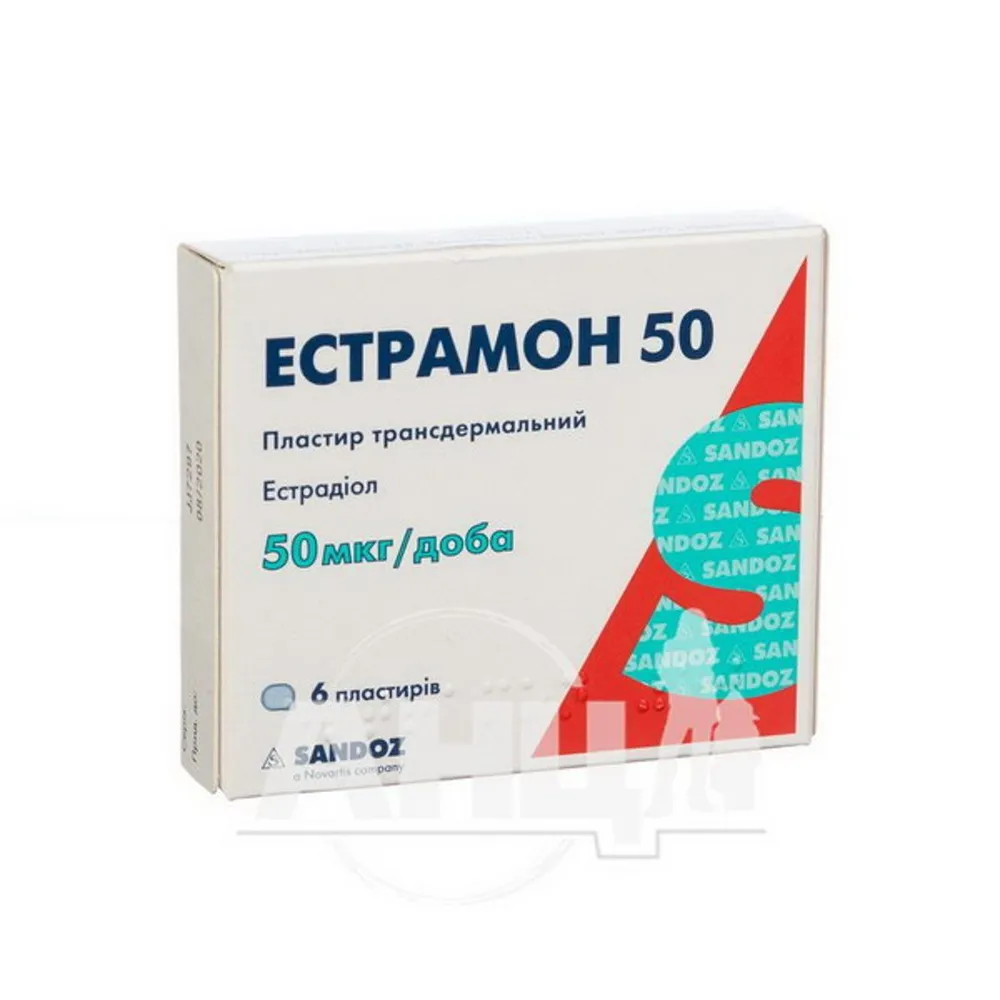
ESTRAMON 50
UkraineThe drug is used for hormone replacement therapy of estrogen deficiency symptoms in postmenopausal women, as well as for the prevention of osteoporosis in postmenopausal women at high risk of fractures.
Frequently asked questions
How should Estramon 50 be used correctly?
Apply the patch to a clean, dry, healthy area of skin on the thigh. It is recommended to use 1 patch at an interval of 3-4 days (on average, twice a week). The application site must be changed with each new application.
Who should not take this drug?
Contraindications include diagnosed or suspected breast cancer or estrogen-dependent tumors, vaginal bleeding of unknown origin, untreated endometrial hyperplasia, current or past thrombosis (venous thromboembolism, stroke, ischemic heart disease), liver disease, porphyria, and hypersensitivity to the components of the drug.
What are the possible side effects of Estramon 50?
The most frequent reactions include skin irritation at the application site, headache, edema, mood changes, nausea, breast pain, and spotting. More serious risks are also possible, such as an increased risk of thrombosis, stroke, or the development of certain types of tumors; therefore, it is important to follow the doctor's recommendations.
Can the drug be taken with other medicines?
Yes, some drugs may affect the action of estrogens. For example, anticonvulsants, certain antimicrobials, and St. John's wort may weaken the effect of the drug. At the same time, inhibitors of certain enzymes may increase estradiol levels in the body.
What should you do if you become pregnant during treatment?
If pregnancy occurs, you must stop taking the drug immediately.
Instructions for use
INSTRUCTION FOR MEDICAL USE OF THE MEDICINAL PRODUCT ESTRAMON 50 (ESTRAMON® 50)
Composition:
Active substance: estradiol;
1 patch of 20 cm² with a mean release rate of estradiol 50 μg per day contains 4 mg of estradiol;
Excipients: d-α-tocopherol concentrate, acrylic copolymer, Pegoterat backing.
Pharmaceutical form. Transdermal patch.
Main physicochemical properties: a translucent, colorless, elliptical patch, fixed on a colorless protective film.
Pharmacotherapeutic group. Sex hormones and drugs used in pathologies of the genital system. ATC code G03C A03.
Pharmacological Properties.
Pharmacodynamics.
The transdermal system contains estradiol (17β-estradiol), which is chemically and biologically identical to endogenous human estradiol. Estradiol replaces the declining estrogen production in menopausal women and alleviates menopausal symptoms. Estrogens prevent bone mass loss following menopause or oophorectomy.
Clinical Trial Data
Improvement of estrogen deficiency-related symptoms and effect on bleeding.
Relief of climacteric symptoms is achieved within the first weeks of treatment.
Osteoporosis prevention.
- Estrogen deficiency during menopause is associated with increased bone metabolism and loss of bone mass.
- The effect of estrogen on bone density is dose-dependent. Evidently, protection is maintained only while treatment continues. After discontinuation of HRT (hormone replacement therapy), bone mass loss occurs at a rate comparable to that in untreated women.
- Results from the Women's Health Initiative (WHI) study and meta-analyses of other trials indicate that current use of HRT, either alone or in combination with a progestogen, reduces the risk of hip, spine, and other osteoporotic fractures in predominantly healthy women. HRT may also prevent fractures in women with low bone density and/or confirmed osteoporosis, although data in these populations are limited.
Pharmacokinetics.
Absorption.
Application of estradiol via a transdermal system ensures sustained and uniform delivery into the body. Plasma concentrations of estradiol can be controlled, thus preventing overdose. After application of the Estromon 50 patch, estradiol is well absorbed through intact skin, providing stable blood levels throughout treatment. The calculated average daily release rate of estradiol is 50 µg per day. Unlike oral formulations, transdermal administration of estradiol avoids extensive first-pass hepatic metabolism.
Bioavailability.
With continuous use of the Estromon 50 patch, the average plasma concentration of estradiol is approximately 34 pg/mL, with a maximum concentration of about 48 pg/mL. After patch removal, estradiol levels return to baseline within 12–24 hours.
Distribution.
Estradiol is more than 50% bound to plasma proteins, including sex hormone-binding globulin and albumin. Only 2% of estradiol remains unbound and biologically active.
Biotransformation.
Transdermally administered estradiol is metabolized via the same pathways as endogenous hormone. Estradiol is primarily metabolized in the liver, where it is converted to estrone, then to estriol, epiestriol, and catechol estrogens, which are subsequently conjugated into sulfates and glucuronides. Cytochrome P-450 isoenzymes CYP1A2 and CYP3A4 catalyze the hydroxylation of estradiol to estriol. In humans, estriol undergoes glucuronidation by UGT1A1 and UGT2B7. Estradiol metabolites are also subject to enterohepatic recirculation.
Elimination.
Sulfates and glucuronide esters, along with small amounts of unchanged estradiol and other metabolites, are excreted in the urine. A minor portion is excreted in feces. Due to the short elimination half-life of estradiol (approximately 1 hour), plasma concentrations of estradiol and estrone return to baseline levels within 24 hours after patch removal.
Clinical characteristics.
Indications.
Hormone replacement therapy (HRT) of estrogen deficiency symptoms in postmenopausal women.
HRT for relief of symptoms due to estrogen deficiency in menopausal women, no earlier than 12 months after the last menstruation.
Prevention of osteoporosis in postmenopausal women at high risk of fractures when intolerant to or contraindicated for other medicinal products indicated for osteoporosis prevention.
Experience in treating women aged 65 years and older is limited.
Contraindications.
- Diagnosed or suspected breast cancer, or history of breast cancer;
- diagnosed or suspected estrogen-dependent malignant tumors (e.g., endometrial cancer);
- undiagnosed vaginal bleeding;
- untreated endometrial hyperplasia;
- current or past venous thromboembolism (deep vein thrombosis, pulmonary embolism);
- known thrombophilic disorders (e.g., protein C, protein S or antithrombin deficiency – see section "Special precautions");
- current or past arterial thromboembolic diseases (e.g., ischemic heart disease, stroke);
- acute liver disease, or history of liver disease if liver function tests have not normalized;
- known hypersensitivity to the active substances or to any of the excipients of the product;
- porphyria.
Interaction with other medicinal products and other forms of interaction.
Metabolism of estrogens (and progestogens) may be increased when co-administered with substances that induce enzymes involved in drug metabolism, particularly cytochrome P450 system enzymes. Such substances include anticonvulsants (e.g., phenobarbital, carbamazepine, phenytoin) and antimicrobial agents (e.g., rifampicin, rifabutin, nevirapine, efavirenz).
Although ritonavir and nelfinavir are known as potent inhibitors of CYP450, when co-administered with steroid hormones they may, conversely, induce these enzymes.
Herbal preparations containing St. John's wort (Hypericum perforatum) may increase the metabolism of estrogens (and progestogens).
Estradiol is primarily metabolized by the CYP3A4 isoenzyme; therefore, concomitant use of CYP3A4 inhibitors such as ketoconazole, erythromycin, and ritonavir may lead to increased exposure to estradiol.
With transdermal administration, the first-pass hepatic effect is absent; therefore, transdermally administered estrogens (and progestogens) may be less affected by enzyme inducers than orally administered hormones. Clinically, increased metabolism of estrogens and progestogens may lead to reduced efficacy and changes in the uterine bleeding pattern.
Estrogen therapy may influence the results of certain laboratory tests, such as glucose tolerance or thyroid function tests.
Special precautions for use.
HRT should only be initiated to treat postmenopausal symptoms that negatively affect quality of life. The benefit-risk balance of treatment should be carefully evaluated at least once a year before starting or continuing use of the Estramon 50 patch, and treatment should be continued only if benefits outweigh risks. Data on risks associated with HRT in the treatment of premature menopause are limited. However, due to the low absolute risk level in younger women, the benefit-risk ratio in these women is more favorable than in older women.
Medical examination/consultation. A detailed medical and family history should be taken before initiating or resuming treatment with Estramon 50 after a break. A physical examination (including gynecological and breast examination) should be performed, taking into account contraindications (section "Contraindications") and warnings (section "Special precautions for use"). Regular check-ups, the frequency and extent of which are individually determined, are recommended during treatment. Women should be informed about which breast changes should be reported to their physician (see section below "Breast cancer"). Regular screening, including appropriate imaging methods such as mammography, should be performed according to current guidelines for healthy women, taking into account individual medical needs for each woman.
Situations requiring patient monitoring. Patients with any of the following conditions currently, in the past, or with worsening during pregnancy or previous hormonal therapy should be closely monitored. It should be kept in mind that these conditions may recur or worsen during treatment with Estramon 50. These include:
- leiomyoma (uterine fibroids) or endometriosis;
- risk factors for thromboembolic disorders (see below);
- risk factors for estrogen-sensitive tumors, e.g., first-degree familial predisposition to breast cancer;
- arterial hypertension;
- liver disease (e.g., hepatic adenoma);
- diabetes mellitus with or without vascular complications;
- gallstone disease;
- migraine or (severe) headache;
- systemic lupus erythematosus;
- history of endometrial hyperplasia (see below);
- epilepsy;
- bronchial asthma;
- otosclerosis.
Reasons for immediate discontinuation of therapy. HRT must be immediately discontinued if a contraindication is identified, as well as in the following situations:
- onset of jaundice or liver dysfunction;
- significant increase in blood pressure;
- new-onset migraine-type headache;
- pregnancy.
Endometrial hyperplasia and carcinoma. In women with an intact uterus, the risk of developing endometrial hyperplasia and carcinoma increases with prolonged use of estrogen-only therapy. The observed increase in endometrial cancer risk in women taking estrogen-only therapy compared to non-users varies from 2- to 12-fold, depending on duration and dose of estrogen (see section "Adverse reactions"). This elevated risk may persist for at least 10 years after stopping treatment.
The addition of cyclic progestogen for at least 12 days per month or 28-day cycle, or continuous combined estrogen-progestogen therapy in women with an intact uterus, can prevent the excess risk associated with estrogen-only HRT. During the first months of treatment, breakthrough uterine bleeding related to a sudden drop in sex hormone levels ("withdrawal bleeding") or spotting may occur. If such bleeding occurs after some time on treatment or persists after stopping therapy, the cause must be investigated, which may include endometrial biopsy to exclude malignant endometrial neoplasms. Unopposed estrogen stimulation may lead to premalignant or malignant transformation of residual endometriosis foci. Therefore, the need for adding progestogen to estrogen replacement therapy should be considered in cases where hysterectomy was performed due to endometriosis and residual endometriosis is present.
Breast cancer. All available data indicate an increased risk of breast cancer in women receiving combined estrogen-progestogen HRT and, likely, also in women receiving estrogen-only HRT. This risk depends on the duration of use.
Combined estrogen-progestogen therapy. The Women’s Health Initiative (WHI) randomized placebo-controlled trial and epidemiological studies have shown an increased risk of breast cancer in women receiving combined estrogen-progestogen HRT, which becomes evident after approximately 3 years.
Estrogen-only monotherapy. The WHI study did not show an increased risk of breast cancer in women after hysterectomy who received estrogen-only HRT. Observational studies have mostly reported a slight increase in the risk of breast cancer diagnosis, which is significantly lower than in patients receiving estrogen-progestogen combinations. The increased risk becomes evident after a few years of use and rises with longer duration of treatment, but returns to baseline levels within a few (up to 5) years after stopping therapy. HRT, particularly combined estrogen-progestogen therapy, increases mammographic breast density, which may impair radiological detection of breast cancer.
Ovarian cancer. Ovarian cancer occurs much less frequently than breast cancer. Epidemiological data from a large meta-analysis showed a slightly increased risk in women receiving estrogen-only or estrogen-progestogen replacement therapy; this risk emerges within 5 years of use and decreases over time after stopping therapy. Some other studies, including the WHI study, indicate that the use of combined HRT may be associated with a similar or slightly lower risk (see section "Adverse reactions").
Venous thromboembolism (VTE). HRT is associated with a 1.3- to 3-fold increased risk of venous thromboembolism (VTE), i.e., deep vein thrombosis or pulmonary embolism. The occurrence of such pathology is most likely during the first year of HRT compared to later. Patients with known thrombophilic disorders have an increased risk of VTE, and HRT may further increase this risk. Therefore, hormone replacement therapy is contraindicated in this patient group (see section "Contraindications").
Well-established risk factors for VTE include: use of estrogens, advanced age, major surgery, prolonged immobilization, obesity (BMI > 30 kg/m²), pregnancy/postpartum period, systemic lupus erythematosus (SLE), and carcinoma. There is no consensus on the role of varicose veins in VTE development. As with all postoperative patients, preventive measures to avoid VTE should be taken after surgery. If prolonged immobilization is expected after elective surgery, HRT should be temporarily discontinued 4–6 weeks before the surgical procedure. Treatment may be resumed only when the woman has fully regained mobility.
Women without a history of VTE but with a first-degree relative who had thrombosis at a young age may be offered screening after thorough discussion of its limitations (only a portion of thrombophilic disorders are detectable by screening).
If a congenital thrombophilic disorder associated with a family history of thrombosis is identified, or if the disorder is severe (e.g., antithrombin, protein S or protein C deficiency, or a combination of disorders), HRT is contraindicated.
In women already receiving long-term anticoagulant therapy, the benefits and risks of HRT should be carefully weighed.
If VTE develops after starting therapy, the drug must be discontinued immediately. Patients should be warned to seek immediate medical attention if symptoms of thromboembolism occur (e.g., painful leg swelling, sudden chest pain, dyspnea).
Ischemic heart disease (IHD). There is no evidence from randomized controlled trials showing protection against myocardial infarction in women with or without IHD who received combined estrogen-progestogen HRT or estrogen-only HRT.
Combined estrogen-progestogen therapy. The relative risk of IHD with combined estrogen-progestogen HRT is slightly increased. Since the baseline absolute risk of IHD largely depends on age, the number of additional IHD cases caused by estrogen and progestogen use is very small in healthy women close to menopause but increases with older age.
Estrogen-only monotherapy. Data from randomized controlled trials did not show an increased risk of IHD in women after hysterectomy receiving estrogen-only monotherapy.
Ischemic stroke. Combined estrogen-progestogen therapy and estrogen-only monotherapy are associated with up to a 1.5-fold increased risk of ischemic stroke. The relative risk does not change with age or time since menopause. However, since the baseline absolute risk of stroke largely depends on age, the overall risk of stroke in women receiving HRT increases with age.
Severe anaphylactic/anaphylactoid reactions. After marketing of the medicinal product, cases of anaphylactic/anaphylactoid reactions have been reported, which occasionally developed during estradiol treatment and required emergency medical intervention.
Angioedema. Estrogens may cause or exacerbate symptoms of angioedema, particularly in women with hereditary angioedema.
Patients who develop angioedema during treatment with estradiol should not receive Estramon 50 again.
Other conditions.
- Estrogens may cause fluid retention; therefore, careful monitoring is required in patients with cardiac or renal impairment.
- Women with a previous history of hypertriglyceridemia should be closely monitored during estrogen replacement therapy or hormone replacement therapy, as in rare cases, plasma triglyceride levels may increase significantly during estrogen treatment, potentially leading to pancreatitis.
- Estrogens increase levels of thyroxine-binding globulin (TBG), resulting in increased circulating thyroid hormones, as measured by protein-bound iodine (PBI), T4 levels (by column or radioimmunoassay), or T3 levels (by radioimmunoassay). Triiodothyronine (T3) uptake is reduced due to elevated TBG levels. Free triiodothyronine (T3) and thyroxine (T4) concentrations remain unchanged. Levels of other serum binding proteins, such as corticosteroid-binding globulin (CBG) and sex hormone-binding globulin (SHBG), may increase, leading to higher plasma concentrations of corticosteroids and sex hormones. Concentrations of free or biologically active hormones remain unchanged. Levels of other plasma proteins (angiotensin-renin substrate, alpha-1-antitrypsin, ceruloplasmin) may also increase.
- HRT does not improve cognitive function. There are reports of an increased risk of dementia in women who started continuous combined HRT or estrogen-only therapy after age 65.
- Contact sensitization is known to be possible with all topical drug formulations. Although extremely rare, women who develop contact sensitization to any component of Estramon 50 should be informed of the possibility of severe hypersensitivity reactions if they continue using the substance causing sensitization.
- Although available data do not indicate that estrogens, including transdermal estradiol, impair carbohydrate metabolism, diabetic women should be monitored at the beginning of therapy until further information is available.
- Thyroid function should be regularly monitored in patients requiring both thyroid hormone replacement and estrogen therapy to control plasma thyroid hormone levels.
Estramon 50 therapy does not prevent fertilization.
Use during pregnancy or breastfeeding.
Pregnancy
Use of Estramon 50 is contraindicated during pregnancy. If pregnancy occurs during treatment, the drug must be discontinued immediately.
Available results from most epidemiological studies on inadvertent fetal exposure to estrogens do not indicate teratogenic or fetotoxic effects of the drug.
Lactation
Use of Estramon 50 is contraindicated during lactation.
Ability to affect reaction speed when driving or operating machinery.
Unknown.
Method of administration and dosage.
The duration and treatment regimens are determined individually by a physician. The patch may be used as monotherapy or in combination therapy.
Dosage
It is recommended to apply 1 patch every 3–4 days (on average, twice a week).
Estrogen deficiency symptoms:
Both at the beginning and during continuation of treatment, therapy should start with the lowest effective dose and be administered for the shortest possible duration.
The dose may be adjusted according to the clinical response, taking into account the individual patient's condition. If symptoms of estrogen deficiency persist after 3 months of patch use, the dose may be increased, but the maximum dose should not exceed 100 mcg per day. If symptoms of overdose occur (e.g., breast tenderness), the dose should be reduced.
Prevention of osteoporosis in postmenopausal women:
To prevent postmenopausal osteoporosis in women, the patch should be used at a dose of 50 mcg per day (1 patch every 3–4 days).
General notes
Estramon 50 may be administered either cyclically or continuously.
For women with an intact uterus, regardless of the chosen treatment regimen, estrogen should be combined with a progestogen approved for concomitant use with estrogens, for at least 12–14 days of each 28-day cycle, to effectively reduce estrogen-induced endometrial hyperplasia.
For women after hysterectomy, addition of a progestogen is not recommended, except in cases where endometriosis has been diagnosed.
Initiation of therapy.
In women not currently using HRT, or in women switching from continuous combined therapy, treatment may be initiated on any convenient day. In women switching from cyclic or continuous sequential estrogen-progestagen HRT, treatment should begin the day immediately following completion of the previous cycle.
Options for estrogen monotherapy and combined estrogen/progestagen therapy.
Cyclic or sequential cyclic:
Cyclic administration of estrogen with a treatment break, typically involving use of the medicinal product for 21 days, followed by a 7-day treatment-free interval. For women with a uterus, a progestagen should additionally be administered sequentially during the last 12–14 days of the treatment cycle.
Continuous or continuous sequential:
Continuous administration of estrogen. For women with a uterus, a progestagen should additionally be administered sequentially for 12–14 days of each 28-day cycle.
Progestagens may be added, for example, in the form of such agents as norethisterone, norethisterone acetate, medroxyprogesterone acetate, or progesterone (for more detailed information, see the instructions for medical use of these medicinal products).
Continuous, non-cyclic treatment may be used in women after hysterectomy, or when significant symptoms of estrogen deficiency reappear during the treatment-free interval.
Method of administration
- Each transdermal patch is individually packaged. Immediately before application, open the sachet by cutting near the edge, and remove the patch without damaging it.
- Carefully bend the patch back and forth along the perforation until the larger part of the protective film separates along the perforated strip from the adhesive surface of the patch. This part of the protective film is removed by pulling one of the resulting tabs.
- Apply the exposed adhesive surface of the patch to a healthy, clean, dry area of skin on the outer surface of the thigh.
- Slightly lift the free part of the patch to remove the remaining protective film and fully secure the patch.
- After complete fixation, press the patch firmly with the hand for 10 seconds.
The patch must not be applied to the area of the breasts! Each time a new patch is used, the application site must be changed. A new patch may be reapplied to the same site no sooner than one week later. Immediately before application, the skin area should be degreased and must not be damaged or irritated. The patch should not be attached to areas where it may shift during sitting. The patch should not be applied at the waistline, as friction from tight clothing may cause it to detach. The patch should be applied immediately after opening the package and removing the protective film. After fixation, ensure that the patch is securely adhered, especially at the edges. If the patch does not adhere properly, press it more firmly to ensure secure attachment.
If the patch is correctly applied, the patient may bathe or shower as usual. However, it may detach when exposed to very hot water or in a sauna. The patch should be protected from direct sunlight.
If the patch detaches partially or completely prematurely (before 3–4 days), a new patch should be applied. If a scheduled patch application is missed, a new patch should be applied as soon as possible. The next replacement should follow the original treatment schedule. Interruption of treatment may increase the likelihood of uterine or spotting bleeding.
Experience with the use of Estramon 50 patch in women aged 65 years and older is limited.
Children.
The medicinal product is not intended for use in children.
Overdose.
Overdose of estradiol is unlikely with transdermal administration.
The most common symptoms of overdose observed during clinical use are breast tenderness and/or vaginal bleeding. If such symptoms occur, dose reduction should be considered. To rapidly eliminate overdose effects, the patch should be removed.
Adverse reactions.
Mild erythema at the application site is the most frequently reported adverse effect (16.6%). Slight redness was observed after removing the patch from the skin at the application site. Mild pruritus and minor skin rash around the patch application site have also been reported.
Adverse effects are classified by frequency of occurrence: very common (≥ 1/10), common (≥ 1/100, < 1/10), uncommon (≥ 1/1000, < 1/100), rare (≥ 1/10,000, < 1/1000), very rare (< 1/10,000), and not known (frequency cannot be estimated due to lack of data).
Benign, malignant and unspecified neoplasms (including cysts and polyps): uncommon – breast cancer.
Immune system disorders: rare – hypersensitivity; very rare – urticaria, anaphylactic reactions (including angioedema), anaphylactoid reactions.
Metabolism and nutrition disorders: uncommon – hypercholesterolemia; rare – altered carbohydrate tolerance, worsening of porphyria.
Psychiatric disorders: common – depression, nervousness, affective lability; uncommon – anxiety; rare – libido disorders; very rare – exacerbation of epilepsy.
Nervous system disorders: very common – headache; common – somnolence, insomnia, mood changes, irritability, hot flushes; uncommon – migraine, dizziness; rare – paraesthesia; very rare – chorea.
Eye disorders: uncommon – visual disturbances, dry eye sensation; rare – contact lens intolerance.
Cardiovascular disorders: uncommon – arterial hypertension, embolism, tachycardia, loss of consciousness; rare – venous thromboembolism, sensation of heaviness in legs, varicose veins; not known – embolism.
Gastrointestinal and hepatobiliary disorders: common – nausea, dyspepsia, flatulence, diarrhea, abdominal pain, bloating, increased appetite; uncommon – vomiting, constipation, increased liver enzymes; rare – liver function abnormalities, bile flow disturbances (gallstone formation), cholestatic jaundice, cholelithiasis, gallbladder dysfunction.
Skin and subcutaneous tissue disorders: very common – application site reactions, including local bleeding, bruising, burning, eczema, swelling, inflammation, pain, papules, paraesthesia, swelling, vesicles; skin irritation, erythema; common – acne, skin rash, dry skin, pruritus; uncommon – skin discoloration; rare – contact dermatitis, pigmentation, alopecia; very rare – skin necrosis, hirsutism, erythema multiforme, nodular erythema, hemorrhagic rash, chloasma or melanosis, vasculitic purpura, generalized exanthema; not known – urticaria.
Musculoskeletal and connective tissue disorders: common – back pain; uncommon – arthralgia, muscle cramps, joint pain, limb pain (leg pain*); rare – myasthenia.
* Not related to thromboembolism, usually transient, lasting 3–6 weeks. In persistent cases, estrogen dose reduction should be considered.
Respiratory disorders: uncommon – throat pain.
Urinary system disorders: uncommon – dysuria, urinary tract infections.
Reproductive system and breast disorders: very common – breast tenderness and pain, dysmenorrhea, menstrual disorders; common – breast enlargement, uterine spasms, endometrial hyperplasia, vaginal infections, discharge (leukorrhea), increased cervical secretion, cervical polyps, uterine pathology, uterine/vaginal bleeding including spotting, pelvic pain, endometrial disorders, vulvovaginitis, vaginal candidiasis, vaginal dryness, breast cancer, ovarian cyst, fibrocystic breast disease, breast cyst, abnormal Pap smear results, uterine prolapse; rare – uterine leiomyoma, extra-tubal cysts, endocervical polyps, galactorrhea, nipple discharge; not known – fibrocystic mastopathy.
General disorders: common – pain, dorsalgia, asthenia, peripheral edema, weight change (increase or decrease); uncommon – allergic reactions, malaise, fluid or salt retention, loss of appetite; rare – epistaxis.
Investigations: uncommon – increased transaminase levels; not known – abnormal liver function test results.
The following adverse reactions have been reported with some types of estrogen-progestogen therapies: estrogen-dependent benign and malignant neoplasms, e.g., endometrial cancer, liver tumors; venous thromboembolism, e.g., deep vein thrombosis, pelvic venous thrombosis, and pulmonary embolism; stroke; myocardial infarction; dementia; dry eyes; changes in tear film composition; development or exacerbation of phlebitis; ectropion; epistaxis; porphyria; eczema; cystitis-like symptoms; increase in uterine fibroid size; cervical erosion.
Breast cancer
- The risk of breast cancer diagnosis in women who have received combined estrogen-progestogen therapy for more than 5 years is up to 2 times higher.
- The increased risk in women receiving estrogen-only therapy is considerably lower than in those receiving combined estrogen-progestogen therapy.
- The level of risk depends on the duration of treatment.
- Results from the largest randomized, placebo-controlled Women's Health Initiative (WHI) study and the largest epidemiological Million Women Study (MWS) are presented in Tables 1 and 2.
Table 1. Million Women Study (Million-Women-Study, MWS): estimated additional risk of breast cancer after 5 years of HRT
| Age group (years) |
Additional cases per 1,000 women not treated with HRT for 5 years* |
Relative risk# |
Additional cases per 1,000 women treated with HRT for 5 years (95% CI — confidence interval) |
| Estrogen-only therapy |
|||
| 50–65 |
9–12 |
1.2 |
1–2 (0–3) |
| Combined estrogen-progestagen therapy |
|||
| 50–65 |
9–12 |
1.7 |
6 (5–7) |
| # Overall relative risk. The relative risk is not constant and increases with longer duration of treatment. Note: Since baseline rates of new breast cancer cases vary across EU countries, the number of additional breast cancer cases also varies accordingly. * Relative to baseline incidence rates of new cases in industrialized countries. |
|||
Table 2. Studies within the Women's Health Initiative (WHI) in the USA: additional risk of breast cancer after 5 years of HRT use
| Age group (years) |
Incidence rate of new cases per 1,000 women in the placebo group over 5 years |
Relative risk (95% CI) |
Additional cases per 1,000 women treated with HRT for 5 years (95% CI) |
| Estrogen-only therapy |
|||
| 50–79 |
21 |
0.8 (0.7–1.0) |
|
| Estrogen and progestogen # |
|||
| 50–79 |
17 |
1.2 (1.0–1.5) |
+4 (0–9) |
| # When analysis was limited to women who had not used HRT prior to the study, no increased risk was observed during the first 5 years of treatment; after 5 years, the risk was higher than in untreated women. * Women's Health Initiative (WHI) study in women without a uterus, in which no increased risk of breast cancer was found. |
|||
Endometrial carcinoma
Postmenopausal women with an intact uterus.
Endometrial carcinoma developed in approximately 5 out of 1,000 women with an intact uterus who had not received HRT. Estrogen-only therapy is not recommended for women with an intact uterus, as it increases the risk of developing endometrial carcinoma.
Depending on the duration and dose of estrogen-only therapy, the increased risk of endometrial carcinoma observed in epidemiological studies ranged from 5 to 55 additional diagnosed cases per 1,000 women aged 50 to 65 years.
This increased risk can be avoided by adding a progestagen to estrogen-only therapy for at least 12 days per cycle. In the Million Women Study, combined HRT (sequential or continuous) used for 5 years was not associated with an increased risk of endometrial carcinoma (RR — relative risk 1.0 [95% CI 0.8–1.2]).
Ovarian carcinoma
The use of estrogen-only or combined estrogen-progestagen hormone replacement therapy (HRT) is associated with a slightly increased risk of being diagnosed with ovarian carcinoma.
According to a meta-analysis of 52 epidemiological studies, the risk of ovarian carcinoma is elevated among women currently using HRT compared to women who have never used HRT (RR 1.43, 95% CI 1.31–1.56). Among women aged 50 to 54 years who used HRT for 5 years, there was one additional case per 2,000 users. Among women aged 50 to 54 years who did not use HRT, approximately 2 cases of ovarian carcinoma would be diagnosed per 2,000 women over a 5-year period.
Venous thromboembolism
The risk of venous thromboembolism (VTE), such as deep vein thrombosis in the leg or pelvis, or pulmonary embolism, increases 1.3 to 3 times during HRT use. The occurrence of such disease is more likely during the first year of treatment than in subsequent years. Relevant results from the Women's Health Initiative (WHI) study are presented in Table 3.
Table 3: Women's Health Initiative (WHI) study: additional risk of venous thromboembolism after 5 years of HRT use
| Age group (years) |
Number of new cases per 1,000 women in the placebo group over 5 years |
Relative risk |
Additional cases per 1,000 women treated with HRT over 5 years |
| Oral estrogen monotherapy* |
|||
| 50–59 |
7 |
1.2 (0.6–2.4) |
1 (–3 – 10) |
| Combined oral estrogen and progestagen therapy |
|||
| 50–59 |
4 |
2.3 (1.2–4.3) |
5 (1–13) |
| * Study in women without a uterus |
|||
Coronary heart disease
In women over the age of 60 years who were treated with combined estrogen-progestogen hormone replacement therapy (HRT), the risk of coronary heart disease is slightly increased.
Stroke
The use of estrogen-only or combined estrogen-progestogen therapy is associated with a 1.5-fold increased risk of ischemic stroke. The risk of hemorrhagic stroke is not increased with HRT. This relative risk is independent of patient age or duration of treatment. However, since the baseline risk is largely dependent on patient age, the overall risk in women using HRT increases with advancing age. See Table 4.
Table 4. Combined results from the Women's Health Initiative (WHI): additional risk of ischemic stroke* after 5 years of HRT use
| Age group (years) |
Frequency of new cases of illness per 1,000 women in the placebo group over 5 years |
Relative risk |
Additional cases per 1,000 women treated with HRT for 5 years |
| 50–59 |
8 |
1.3 (1.1–1.6) |
3 (1–5) |
| * The difference between ischemic and hemorrhagic stroke was not considered when assessing risks. |
|||
The following adverse reactions have been reported with estrogen/progestogen therapy when using the medicinal product:
- Gallbladder disease.
- Skin and subcutaneous tissue disorders: chloasma, erythema multiforme, nodular erythema, vasculitic purpura.
- Possible dementia in women over 65 years of age.
- Jaundice.
- Adenoma of the breast.
Shelf life. 2 years.
Storage conditions.
Store at a temperature not exceeding 30 °C.
Keep out of reach of children.
Packaging.
1 patch per sachet; 6 sachets in a cardboard box.
Prescription status. Prescription only.
Manufacturer.
Hexal AG.
Manufacturer's address and place of business.
Industriestr. 25, Holzkirchen, Bavaria, 83607, Germany.
The original data is available in the language of the country of manufacture.
Data source: State Register of Medicinal Products of Ukraine
Data last verified: August 13, 2026