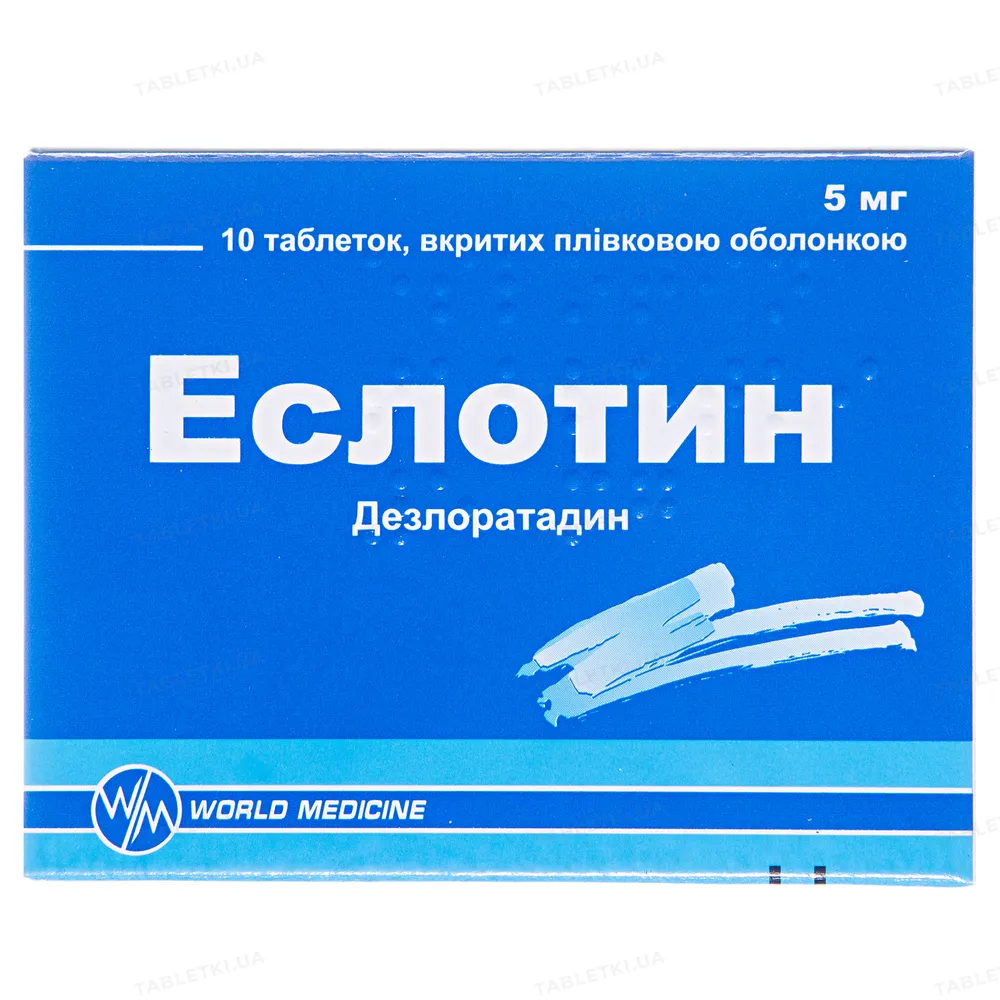
ESLOSTIN
UkraineThe drug is used to relieve symptoms of allergic rhinitis (sneezing, nasal discharge, itching, eye irritation, tearing, redness) and urticaria.
Frequently asked questions
How should Eslostin be taken correctly?
Adults and adolescents aged 12 years and older should take 1 tablet once daily. It can be taken regardless of food intake.
Who should not take this drug?
The drug is contraindicated in individuals with hypersensitivity to desloratadine, loratadine, or any of the excipients contained in the tablet.
What side effects may occur from taking Eslostin?
The most common side effects may include increased fatigue, dry mouth, and headache. Dizziness, insomnia, drowsiness, or other reactions specified in the instructions are also possible.
Can I drive a car during treatment?
Desloratadine generally does not affect the ability to drive a car, but since individual reactions may vary, it is recommended to refrain from driving until you understand how the drug specifically affects you.
How does the drug interact with alcohol?
Although the drug does not enhance the negative effects of alcohol on psychomotor functions, caution should be exercised with alcohol consumption during treatment, as cases of intolerance have been observed.
Can the drug be used for kidney problems?
In patients with severe renal impairment, the use of the drug should be carried out under medical supervision.
Instructions for use
INSTRUCTIONS FOR MEDICAL USE OF THE MEDICINAL PRODUCT ESLOTIN (esloTIN)
Composition:
Active substance: desloratadine;
One film-coated tablet contains 5 mg of desloratadine;
Excipients: calcium hydrogen phosphate dihydrate; talc; maize starch; microcrystalline cellulose; magnesium stearate;
film coating: Opadry® II Blue 85F20400 [polyvinyl alcohol, polyethylene glycol (macrogol), titanium dioxide (E 171), talc, indigo carmine (E 132)].
Pharmaceutical form. Film-coated tablets.
Main physicochemical properties: blue, round, biconvex, film-coated tablets with a score line on one side.
Pharmacotherapeutic group.
Antihistamines for systemic use. ATC code R06A X27.
Pharmacological Properties.
Pharmacodynamics.
Mechanism of action.
Desloratadine is a non-sedating, long-acting antihistamine with selective antagonistic activity at peripheral H1-receptors. After oral administration, desloratadine selectively blocks peripheral histamine H1-receptors and does not penetrate into the central nervous system.
In in vitro studies, desloratadine demonstrated anti-allergic and anti-inflammatory properties on endothelial cells. This was manifested by inhibition of pro-inflammatory cytokine release, such as IL-4, IL-6, IL-8, and IL-13, from human mast cells/basophils, as well as suppression of adhesion molecule expression, including P-selectin. The clinical relevance of these observations remains to be confirmed.
Clinical efficacy and safety.
In high-dose studies where desloratadine was administered daily at doses up to 20 mg for 14 days, no statistically significant cardiovascular changes were observed. In a clinical pharmacology study, administration of desloratadine at 45 mg per day (9 times the recommended daily clinical dose) for 10 days did not result in QT interval prolongation.
In interaction studies with ketoconazole and erythromycin, no clinically significant changes in plasma concentrations of desloratadine were observed.
Pharmacodynamic effects.
Desloratadine barely penetrates the central nervous system. In controlled clinical trials, at the recommended dose of 5 mg once daily, the incidence of somnolence was not different from that in the placebo group. A single 7.5 mg dose of desloratadine did not affect psychomotor performance.
In a single-dose study in adults, desloratadine 5 mg had no effect on standard flight performance parameters, including subjective alertness or performance of flight-related tasks.
In clinical pharmacology studies, co-administration with alcohol did not result in additive alcohol-related impairment, such as reduced performance or increased drowsiness. No significant differences were observed in psychomotor test results between desloratadine and placebo groups, either when desloratadine was administered alone or in combination with alcohol.
In patients with allergic rhinitis, desloratadine effectively relieves symptoms such as sneezing, rhinorrhea, nasal and ocular itching, lacrimation, redness, and palatal itching. Desloratadine provides effective symptom control over 24 hours.
Desloratadine effectively reduces the severity of seasonal allergic rhinitis, as evidenced by the total score of the quality-of-life questionnaire in patients with rhinoconjunctivitis. The greatest improvement was observed in questionnaire items related to practical problems and daily activities limited by symptoms.
Chronic idiopathic urticaria was studied in a clinical model under urticaria conditions. Since histamine release is a causative factor in all forms of urticaria, desloratadine is expected to effectively alleviate symptoms in other forms of urticaria, including chronic idiopathic urticaria.
In two placebo-controlled, 6-week studies involving patients with chronic idiopathic urticaria, desloratadine effectively reduced itching and decreased the number and size of hives by the end of the first dosing interval. In each study, the effect lasted throughout the 24-hour dosing interval. Itching relief of more than 50% was observed in 55% of patients taking desloratadine compared to 19% of patients receiving placebo. Desloratadine administration did not significantly affect sleep or daytime activity.
Children.
The efficacy of desloratadine tablets in adolescents aged 12–17 years has not been definitively demonstrated in clinical studies.
Pharmacokinetics.
Absorption.
Plasma concentrations of desloratadine can be detected within 30 minutes after administration. Desloratadine is well absorbed, with peak plasma concentration (Cmax) reached in approximately 3 hours; the elimination half-life (t1/2) is approximately 27 hours. The extent of desloratadine accumulation corresponds to its t1/2 (approximately 27 hours) and once-daily dosing regimen. Desloratadine bioavailability was dose-proportional in the range of 5 to 20 mg.
In a pharmacokinetic study where patient demographics were comparable to those in the general seasonal allergic rhinitis population, 4% of participants showed higher desloratadine concentrations. This proportion may vary depending on ethnicity. Cmax of desloratadine was approximately 3 times higher at about 7 hours, and the terminal t1/2 was approximately 89 hours. The safety profile in these patients did not differ from that in the general population.
Distribution.
Desloratadine is moderately bound to plasma proteins (83–87%). With daily dosing of desloratadine (5 to 20 mg) for 14 days, no evidence of clinically significant accumulation was observed.
Metabolism.
The enzyme responsible for desloratadine metabolism has not yet been identified; therefore, some drug interactions cannot be completely excluded. Desloratadine does not inhibit CYP3A4 in vivo. In vitro studies demonstrated that it also does not inhibit CYP2D6, nor is it a substrate or inhibitor of P-glycoprotein.
Excretion.
In a single-dose study with 7.5 mg desloratadine, food intake (high-fat, high-calorie breakfast) did not affect its pharmacokinetics. Grapefruit juice has also been shown not to affect desloratadine pharmacokinetics.
Patients with renal impairment.
Desloratadine pharmacokinetics were compared in patients with chronic renal insufficiency (CRI) and healthy volunteers in one single-dose and one multiple-dose study. In the single-dose study, plasma desloratadine levels were approximately 2 times higher in patients with mild, and 2.5 times higher in patients with moderate to severe CRI, compared to healthy volunteers. In the multiple-dose study, steady-state concentration was reached by day 11, and plasma desloratadine levels in patients with mild and moderate CRI were ~1.5 times higher, and in patients with severe CRI ~2.5 times higher than in healthy subjects. In both studies, changes in plasma levels (AUC and Cmax) of desloratadine and 3-hydroxydesloratadine were not clinically significant.
Clinical characteristics.
Indications.
Relief of symptoms associated with:
- allergic rhinitis (see section "Pharmacological properties");
- urticaria (see section "Pharmacological properties").
Contraindications.
Hypersensitivity to desloratadine, loratadine, and/or any of the excipients of the medicinal product.
Interaction with other medicinal products and other forms of interaction.
No clinically significant interactions were observed when desloratadine was co-administered with erythromycin or ketoconazole.
Desloratadine did not enhance the negative effect of ethanol on psychomotor function. However, cases of alcohol intolerance and alcohol intoxication have been reported during desloratadine use. Caution should be exercised when consuming alcohol during treatment with this medicinal product.
Children.
Interaction studies have been conducted only in adults.
Special precautions for use.
The drug should be administered under medical supervision in patients with severe renal impairment (see section "Pharmacological properties").
The drug should be used with caution in patients with a personal or family history of seizures, particularly young children who may be more susceptible to developing a new seizure episode. If seizures occur, discontinuation of the drug should be considered.
Use during pregnancy or breastfeeding.
Pregnancy.
Extensive data from use in pregnant women (more than 1000 documented outcomes) indicate no evidence of congenital or fetoneonatal toxicity associated with desloratadine. Animal studies have not shown any direct or indirect harmful effects on reproductive function. As a precautionary measure, use of the drug during pregnancy should be avoided.
Breastfeeding period.
Desloratadine has been detected in newborns/infants of mothers receiving treatment. The effect of desloratadine on newborns/infants is unknown. The decision whether to discontinue breastfeeding or to discontinue/abstain from drug therapy should be made taking into account the benefits of breastfeeding for the child and the benefits of therapy for the mother.
Fertility.
There are no data available on the effects on male or female fertility.
Ability to influence reaction speed when driving or operating machinery.
Based on clinical trial data, desloratadine has no effect or only a negligible effect on the ability to drive or operate machinery. Patients should be informed that somnolence is generally not observed in most cases. However, due to individual variability in response to medications, patients are advised to refrain from driving or operating machinery until their individual response to the drug has been established.
Dosage and Administration
Adults and adolescents (aged 12 years and older)
The medicinal product should be administered at a dose of 1 tablet once daily, regardless of food intake, for the relief of symptoms associated with allergic rhinitis (including intermittent and persistent allergic rhinitis) and urticaria.
Treatment of intermittent allergic rhinitis should continue until symptoms resolve and may be resumed upon their recurrence (presence of symptoms for more than 4 days per week and for more than 4 weeks). Long-term treatment during allergen exposure periods may be recommended for patients.
Children
There are limited clinical data on the efficacy of desloratadine tablets in adolescents aged 12 to 17 years (see section "Adverse Reactions").
The efficacy and safety of desloratadine in children under 12 years of age have not been established. Data are lacking.
Overdose
The adverse reaction profile observed in cases of overdose during post-marketing experience is consistent with the profile seen with therapeutic doses, although the severity of manifestations may be increased.
In clinical studies where desloratadine was administered at doses of 45 mg (9 times higher than the recommended dose), no clinically significant adverse reactions were observed.
In case of overdose, standard measures should be taken to remove the unabsorbed active substance. Symptomatic and supportive treatment is recommended. Desloratadine is not eliminated by hemodialysis; the possibility of its removal by peritoneal dialysis has not been established.
Adverse Reactions
In clinical studies for the approved indications, including allergic rhinitis and chronic idiopathic urticaria, adverse reactions were observed 3% more frequently in patients receiving a 5 mg daily dose compared to those receiving placebo.
The most commonly reported adverse reactions were fatigue (1.2%), dry mouth (0.8%), and headache (0.6%).
Children
In clinical studies involving 578 adolescents aged 12 to 17 years, the most commonly reported adverse reaction was headache, occurring in 5.9% of patients taking desloratadine and in 6.9% of patients receiving placebo.
The adverse reactions listed below have been reported more frequently than with placebo, as well as other adverse reactions reported during the post-marketing period. The frequency of adverse reactions is classified as follows: very common (≥1/10), common (≥1/100, <1/10), uncommon (≥1/1,000, <1/100), rare (≥1/10,000, <1/1,000), very rare (<1/10,000), and frequency not known (cannot be estimated from the available data).
Metabolism and nutrition disorders:
Frequency not known — increased appetite.
Psychiatric disorders:
Very rare — hallucinations; frequency not known — aggression, abnormal behavior, depressive mood.
Nervous system disorders:
Common — headache; very rare — dizziness, somnolence, insomnia, psychomotor hyperactivity, convulsions.
Eye disorders:
Frequency not known — dry eyes.
Cardiac disorders:
Very rare — tachycardia, palpitations; frequency not known — QT interval prolongation.
Gastrointestinal disorders:
Common — dry mouth; very rare — abdominal pain, nausea, vomiting, dyspepsia, diarrhea.
Hepatobiliary disorders:
Very rare — increased liver enzyme levels, elevated bilirubin levels, hepatitis; frequency not known — jaundice.
Musculoskeletal and connective tissue disorders:
Very rare — myalgia.
Skin and subcutaneous tissue disorders:
Frequency not known — photosensitivity.
General disorders and administration site conditions:
Common — increased fatigue; very rare — hypersensitivity reactions (such as anaphylaxis, angioedema, dyspnea, pruritus, rash, and urticaria); frequency not known — asthenia.
Investigations:
Frequency not known — weight gain.
Children
In the post-marketing period, the following adverse reactions have also been observed in children (frequency not known): QT interval prolongation, arrhythmia, bradycardia, abnormal behavior, and aggression.
A retrospective observational safety study revealed an increased incidence of seizures in patients aged 0 to 19 years during treatment with desloratadine compared to periods when they were not taking desloratadine.
Among children aged 0–4 years, the adjusted absolute increase was 37.5 (95% confidence interval [CI] 10.5–64.5) per 100,000 person-years, with a background seizure rate of 80.3 per 100,000 person-years. Among patients aged 5–19 years, the adjusted absolute increase was 11.3 (95% CI 2.3–20.2) per 100,000 person-years, with a background rate of 36.4 per 100,000 person-years.
Reporting of suspected adverse reactions
Reporting suspected adverse reactions after medicine authorization is important. It allows continuous monitoring of the benefit-risk balance of the medicine. Healthcare professionals are required to report any suspected adverse reactions through the national pharmacovigilance system.
Shelf life
3 years.
Storage conditions
Store at a temperature not exceeding 25 °C in a dry place, out of reach of children.
Packaging
10 tablets in a blister; 1, 2 or 3 blisters per cardboard box.
Prescription status
Over-the-counter (without prescription).
Manufacturer
UORLД MEDICINE ILAС SAN. VE TİC. A.Ş., Turkey /
WORLD MEDICINE ILAС SAN. VE TIC. A.S., Turkey.
Manufacturer's address and place of business
15 Temmuz Mahallesi Cami Yolu Caddesi No:50 Gunesli Bagcilar/Istanbul, Turkey.
Marketing Authorization Holder
WORLD MEDICINE, LLC, Ukraine.
Similar drugs
| Brand name | Dosage form | Active substance / Dosage | Manufacturer |
|---|---|---|---|
| ALERDEZ | tablets, film-coated |
|
PJSC "Scientific and Production Center "Borshchahivskyy Chemical and Pharmaceutical Plant" |
| ALERSIS | tablets, film-coated |
|
Laboratorios Normon S.A. |
| ALLERGOZAN® | tablets, film-coated |
|
JSC "Sofarma" |
| ASTRYA | tablets, film-coated |
|
ASTRAFARM LLC |
| DESLORATADINE | tablets, film-coated |
|
Corporation "Zdorovya" LLC (all manufacturing stages, quality control, batch release) |
| DESLORATADINE | tablets, film-coated |
|
PJSC "Tekhnolog" |
| DESLORATADINE-TEVA | tablets, film-coated |
|
Actavis LTD |
| DEZRADIN | tablets, film-coated |
|
KRKA, d.d., Novo Mesto (responsible for manufacturing 'in bulk', primary and secondary packaging, quality control and batch release) / KRKA, d.d., Novo Mesto (responsible for batch control) |
| EDEM | tablets, film-coated |
|
Farmak JSC |
| ELEGIUS | tablets, film-coated |
|
Ternofarm LLC |
| ELIZIEUM | tablets, film-coated |
|
Actavis Ltd. |
| ERIDEZ-DARNITSA | tablets, film-coated |
|
PJSC «Pharmaceutical Company «Darnitsa» |
The original data is available in the language of the country of manufacture.
Data source: State Register of Medicinal Products of Ukraine
Data last verified: August 13, 2026