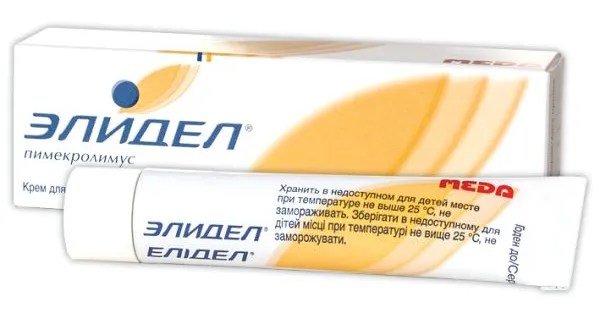
ELIDEL
UkraineThe drug is used for the treatment of mild to moderate atopic dermatitis in patients aged 3 months and older. It is prescribed if the use of topical corticosteroids is undesirable, impossible, or insufficiently effective, as well as for application to the face and neck.
Frequently asked questions
How should Elidel be used correctly?
Apply a thin layer of cream to the affected areas of the skin twice daily and rub in gently until fully absorbed. Treatment should be started at the first signs of the disease and discontinued after the symptoms disappear. For long-term prophylaxis, emollients should be used after applying the cream.
Who should not use this drug?
Elidel is not recommended for patients with hereditary or acquired immunodeficiency, individuals receiving immunosuppressive therapy, or patients with Netherton syndrome or erythroderma. It should not be applied to areas with malignant or pre-malignant lesions, or to skin affected by acute viral infections (e.g., herpes).
What are the possible side effects of Elidel?
The most common side effects are sensations of burning, irritation, itching, or redness at the application site. Skin infections (e.g., folliculitis), allergic reactions, or skin discoloration are also possible. In rare cases, alcohol intolerance (flushing, swelling, rash) has been observed.
Can the drug be used under a dressing?
No, it is not recommended to use Elidel under occlusive dressings.
How does the drug interact with other agents?
Pimecrolimus can be used simultaneously with antibiotics, antihistamines, and corticosteroids (oral, nasal, or inhaled). Excessive exposure to ultraviolet light (solariums, phototherapy) should be avoided during treatment. It is not recommended to apply the drug to areas where vaccination is ongoing.
Can the cream be used during pregnancy or breastfeeding?
Elidel should not be used during pregnancy. Women who are breastfeeding should use it with caution and avoid applying it to the breast area to prevent the child from accidentally ingesting the drug through the mouth.
Instructions for use
INSTRUCTIONS FOR MEDICAL USE OF THE MEDICINAL PRODUCT ELIDEL® (ELIDEL®)
Composition:
Active substance: pimecrolimus;
1 g of cream contains 10 mg of pimecrolimus;
Excipients: sodium hydroxide, anhydrous citric acid, benzyl alcohol, sodium cetostearyl sulfate, mono- and diglycerides, cetyl alcohol, stearyl alcohol, propylene glycol, oleyl alcohol, medium-chain triglycerides, purified water.
Pharmaceutical form. Topical cream.
Main physicochemical characteristics: white, homogeneous cream.
Pharmacotherapeutic group. Dermatologicals. Agents used in atopic dermatitis, excluding corticosteroids.
ATC code D11A H02.
Pharmacological Properties
Pharmacodynamics
Mechanism of Action
Pimecrolimus is a lipophilic derivative of the macrolactam anti-inflammatory substance ascomycin and is a selective inhibitor of the production and release of cytokines involved in inflammation.
Pimecrolimus binds with high specificity to macrophilin-12 (also known as FKBP-12), thereby inhibiting the calcium-dependent phosphatase calcineurin. As a result, it blocks the synthesis of inflammatory cytokines in T-lymphocytes.
Pharmacodynamic Effects
Pimecrolimus has demonstrated potent anti-inflammatory activity in animal models of skin inflammation following both topical and systemic administration. In a model of allergic contact dermatitis in pigs, topical pimecrolimus was as effective as potent corticosteroids. Unlike corticosteroids, pimecrolimus did not induce skin atrophy in pigs and had no effect on Langerhans cells in the skin of mice.
Pimecrolimus does not suppress the primary immune response and has no effect on lymph nodes when used in the context of allergic contact dermatitis in mice. After topical application, it penetrates human skin to a similar extent as corticosteroids but to a much more superficial depth, indicating a very low potential for systemic absorption.
Thus, the pharmacological action of pimecrolimus is skin-selective and distinct from that of corticosteroids.
Clinical Efficacy and Safety
The efficacy and safety profile of Elidel® has been evaluated in over 2000 patients, including children aged ≥ 3 months and adults, who participated in Phase II and III clinical trials. More than 1500 of these patients received Elidel®, and over 500 received control treatments—either the vehicle of Elidel® and/or topical corticosteroids.
Short-term Therapy
Children aged 2–17 years: Two six-week, placebo-controlled studies were conducted, enrolling a total of 403 patients aged 2–17 years. Patients applied Elidel® twice daily. Data from both studies were pooled.
Children aged 3–23 months: A similar study was conducted involving 186 patients aged 3–23 months.
The results of efficacy assessment in these three six-week studies and the endpoints are presented in the table below.
| Endpoint |
Criterion |
Children aged 2–17 years |
Children aged 3–23 months |
||||
| Elidel® 1% (N = 267) |
Placebo (N = 136) |
p-value |
Elidel® 1% (N = 123) |
Placebo (N = 63) |
p-value |
||
| IGA* |
Complete or almost complete clearance1 |
34.8% |
18.4% |
< 0.001 |
54.5% |
23.8% |
< 0.001 |
| IGA* |
Improvement2 |
59.9% |
33% |
not evaluated |
68% |
40% |
not evaluated |
| Itch |
Absent or mild |
56.6% |
33.8% |
< 0.001 |
72.4% |
33.3% |
< 0.001 |
| EASI° |
Composite score (mean % change)3 |
-43.6 |
-0.7 |
< 0.001 |
-61.8 |
+7.35 |
< 0.001 |
| EASI° |
Head/neck (mean % change)3 |
-61.1 |
+0.6 |
< 0.001 |
-74.0 |
+31.48 |
< 0.001 |
| * Investigator's Global Assessment (IGA). ° Eczema Area and Severity Index (EASI): mean % change in severity of clinical signs (erythema, infiltration, excoriation, lichenification) and body surface area affected. 1 p-value based on the Cochran–Mantel–Haenszel (CMH) test stratified by center. 2 I.e., IGA lower than at baseline. 3 p-value based on analysis of covariance (ANCOVA) model for EASI scores on day 43, with investigator center and treatment type as factors and baseline EASI score (day 1) as covariate. |
|||||||
A significant reduction in itching intensity was observed during the first week of therapy in 44% of children aged 2–17 years and in 70% of children aged 3–23 months.
Adults: Elidel® was less effective than 0.1% betamethasone-17-valerate in short-term treatment (3 weeks) of adults with moderate to severe atopic dermatitis.
Long-term therapy
Two double-blind studies evaluating long-term treatment outcomes in atopic dermatitis were conducted, including 713 children aged 2–17 years and 251 children aged 3–23 months. Patients applied Elidel® twice daily. Data from both studies were pooled. Elidel® was used as a first-line treatment.
Treatment with Elidel® was initiated at the first signs of itching and erythema to prevent progression to a flare-up of atopic dermatitis. Only in cases of severe disease flare-ups uncontrolled by Elidel® was treatment initiated with medium-potency topical corticosteroids. After starting corticosteroid therapy due to a flare-up, further use of Elidel® was discontinued. Patients in the control group applied the Elidel® vehicle to ensure data blinding.
In both studies, a statistically significant reduction in flare-up frequency (p < 0.001) was demonstrated with 1% pimecrolimus cream; therapy with 1% pimecrolimus cream was more effective than placebo across all secondary endpoints (Eczema Area and Severity Index, overall investigator assessment, patient assessment). Itch control with 1% pimecrolimus cream was achieved within one week. A greater number of patients receiving 1% pimecrolimus cream remained flare-free over 6 months (children aged 2–11 years [61% in the Elidel® group vs. 34% in the control group], children aged 3–23 months [70% in the Elidel® group vs. 33% in the control group]) and over 12 months (children aged 2–11 years [51% in the Elidel® group vs. 28% in the control group], children aged 3–23 months [57% in the Elidel® group vs. 28% in the control group]).
Elidel® reduces the need for topical corticosteroids: a greater proportion of patients receiving 1% pimecrolimus cream did not require corticosteroids over 12 months (children aged 2–11 years [57% in the Elidel® group vs. 32% in the control group], children aged 3–23 months [64% in the Elidel® group vs. 35% in the control group]). The efficacy of 1% pimecrolimus cream did not diminish over time.
A six-month, randomized, double-blind, parallel-group, placebo-controlled study with the same design was conducted in 192 adults with moderate to severe atopic dermatitis. Topical corticosteroids were required on 14.2 ± 24.2% of days during the 24-week treatment period in the Elidel® group and on 37.2 ± 34.6% of days in the control group (p < 0.001). Overall, 50.0% of patients using 1% pimecrolimus cream remained flare-free compared to 24.0% of patients randomized to the control group.
A one-year double-blind study in adults with moderate to severe atopic dermatitis was conducted to compare outcomes between Elidel® and 0.1% triamcinolone acetonide cream (for trunk and limbs) plus 1% hydrocortisone acetate cream (for face, neck, and skin fold areas). Both 1% pimecrolimus cream and topical corticosteroids were used without restrictions. Half of the patients in the control group used topical corticosteroids on more than 95% of study days. The efficacy of 1% pimecrolimus cream was lower than that of 0.1% triamcinolone acetonide cream (for trunk and limbs) plus 1% hydrocortisone acetate cream (for face, neck, and skin fold areas) in long-term therapy (52 weeks) of adults with moderate to severe atopic dermatitis.
Safety of long-term use
A 5-year, open-label, randomized, active-controlled study was conducted in 2418 infants aged 3 to less than 12 months at enrollment with mild to moderate atopic dermatitis (AD). The primary objective was to compare safety based on adverse event (AE) assessment, as well as the impact of therapy on immune system development and growth velocity. Infants aged 3–23 months were randomized to the Elidel® group (n = 1,205; short-term use of topical corticosteroids [TCS] for disease flares) or the low/medium-potency topical corticosteroid (TCS) group (n = 1,213).
Elidel® was well tolerated in patients with mild to moderate AD aged 3 to 12 months at study initiation. The profile and frequency of adverse events were similar between the two treatment groups. No worsening of systemic immune parameters was observed in patients with AD treated with 1% pimecrolimus cream or TCS; normal immune response development was maintained, and vaccination with vaccine antigens was effective. No apparent difference in growth velocity was observed.
Specialized studies
Tolerance studies demonstrated that Elidel® does not cause sensitization upon contact, has no phototoxic or photo-sensitizing effects, and does not cause cumulative irritation.
The atrophogenic potential of Elidel® under therapeutic use was evaluated in comparison with medium- and high-potency topical corticosteroids (betamethasone-17-valerate 0.1% cream, triamcinolone acetonide 0.1% cream) and the cream vehicle in a four-week study involving 16 healthy volunteers. Both topical corticosteroids caused a statistically significant reduction in skin thickness, measured by echography, compared to 1% pimecrolimus cream and the cream vehicle, neither of which caused a reduction in skin thickness.
Children
Results from relevant studies conducted in children aged 3–23 months and 2–17 years are described in detail above in the section "Pharmacodynamics."
Pharmacokinetics.
Human data
Systemic absorption in adults
Systemic absorption of pimecrolimus was studied in 12 adults with atopic dermatitis who applied Elidel® twice daily for three weeks. The body surface area (BSA) affected by the disease ranged from 15–59%. In 77.5% of samples, pimecrolimus blood concentration was below 0.5 ng/mL, and in 99.8% of all samples, it was below 1 ng/mL. The highest blood concentration of pimecrolimus was 1.4 ng/mL in one patient.
In 40 adult patients treated with Elidel® for one year, with 14–62% BSA affected at baseline, pimecrolimus blood concentration was below 0.5 ng/mL in 98% of samples. The maximum blood concentration of 0.8 ng/mL was detected in only two patients after six weeks of therapy. No increase in blood concentration was observed in any patient over 12 months of therapy. In eight adult patients with atopic dermatitis in whom AUC could be quantified, AUC(0–12 h) values ranged from 2.5–11.4 ng·h/mL.
Systemic absorption in pediatric patients
Systemic exposure to pimecrolimus was studied in 58 children aged 3 months to 14 years, of whom 41 were under 2 years of age. Affected BSA ranged from 10–92%. Elidel® was administered twice daily for three weeks. Five (8.6%) of the 58 patients received treatment for up to one year as needed: two of these patients were aged ≥3 to ≤6 months, and three were aged >6 to ≤12 months.
Pimecrolimus blood concentrations remained consistently low regardless of the area of affected skin or duration of therapy. Levels were within the range observed in adult patients.
Approximately 67% of samples had pimecrolimus blood concentrations below 0.5 ng/mL, and 93% of all samples from children aged 3–23 months were below 2 ng/mL.
In children aged ≥3 to ≤6 months, pimecrolimus blood concentration was below 0.5 ng/mL in 31% of samples and below 2.0 ng/mL in 90% of samples. The highest blood concentration was 4.14 ng/mL in one sample, but contamination during venipuncture was suspected.
In children aged >6 to ≤12 months, pimecrolimus blood concentration was below 0.5 ng/mL in 66% of samples and below 2.0 ng/mL in 90% of samples. The highest blood concentration was 2.6 ng/mL in one sample.
In children aged >12 to <24 months, pimecrolimus blood concentration was below 0.5 ng/mL in 80% of samples and below 2.0 ng/mL in 97% of samples. The highest blood concentration in this age group was 2.0 ng/mL in one sample.
In five children treated for one year (two aged ≥3 to ≤6 months, three aged >6 to ≤12 months), blood concentrations remained consistently low, with a maximum of 1.94 ng/mL in one sample from a child aged ≥3 to ≤6 months. No increase in blood concentration over time was observed in any patient during 12 months of therapy.
In children aged 2 to 14 years, pimecrolimus blood concentration was below 0.5 ng/mL in 68% of samples and below 2.0 ng/mL in 99% of all samples. The highest blood concentration observed in one patient was 2.0 ng/mL.
In eight children aged 2–14 years, AUC(0–12 h) values ranged from 5.4–18.8 ng·h/mL. AUC values in patients with <40% BSA affected at baseline were comparable to those with ≥40% BSA affected.
The maximum body surface area treated was 92% in clinical pharmacology studies and up to 100% in Phase III studies.
Distribution
Due to the selective skin action of pimecrolimus upon topical application, blood levels are very low. Therefore, metabolic transformation of pimecrolimus after topical use cannot be assessed.
In vitro plasma protein binding studies indicate that 99.6% of pimecrolimus in plasma is protein-bound. The majority of pimecrolimus in plasma is bound to various lipoproteins.
Biotransformation
After a single oral dose of radiolabeled pimecrolimus in adult patients, unchanged pimecrolimus was the main active substance-related component in blood, with numerous minor moderately polar metabolites also detected, presumed to be products of O-demethylation and oxidation. Metabolic transformation of pimecrolimus in human skin in vitro was not observed.
Elimination
After oral administration, radioactivity associated with the active substance was primarily excreted in feces (78.4%), with only a minor portion (2.5%) excreted in urine. Total recovery of radioactivity averaged 80.9%. The parent compound was not detected in urine, and less than 1% of radioactivity in feces was due to unchanged pimecrolimus.
Clinical characteristics.
Indications. Treatment of patients aged 3 months and older with mild to moderate atopic dermatitis when treatment with topical corticosteroids is undesirable or not possible. This may include:
- intolerance to topical corticosteroids;
- inadequate response to topical corticosteroids;
- need for treatment on the face and neck, where prolonged or intermittent use of corticosteroids may be inappropriate.
Contraindications. Hypersensitivity to pimecrolimus, other macrolactams, or any of the components of the medicinal product.
Interaction with other medicinal products and other forms of interaction.
Systematic evaluation of possible interactions between pimecrolimus and other medicinal products has not been conducted. Pimecrolimus is metabolized exclusively by CYP3A4. Due to the minimal systemic absorption of Elidel®, interactions with systemically administered drugs are unlikely.
These data indicate that pimecrolimus can be used concomitantly with antibiotics, antihistamines, and corticosteroids (oral, nasal, or inhaled).
Due to the minimal systemic absorption of Elidel®, systemic interactions during vaccination are unlikely. Patients with extensive or disseminated disease should be vaccinated during periods when treatment with the medicinal product is not being administered.
The use of pimecrolimus at vaccination sites while local reactions persist has not been studied and is therefore not recommended. A 5-year study was conducted in children with mild to moderate atopic dermatitis, aged 3 months to less than 12 months at enrollment. In patients with atopic dermatitis treated with Elidel® cream or topical corticosteroids, normal immune response development and effective immunization against vaccine antigens were observed.
There are no data on concomitant use of immunosuppressive agents used in atopic eczema, such as ultraviolet B and A radiation, PUVA therapy (psoralen plus ultraviolet A radiation), azathioprine, or cyclosporine A.
In animal studies, pimecrolimus did not demonstrate phot carcinogenic potential. However, since the effect in humans is unknown, excessive exposure of the skin to ultraviolet radiation (including use of sunbeds, ultraviolet B and A phototherapy, and PUVA therapy) should be avoided during treatment with pimecrolimus.
Rare cases of erythema, rash, burning sensation, pruritus, or swelling immediately after alcohol consumption have been observed in patients using pimecrolimus cream (see section "Adverse reactions").
Special precautions for use.
Pimecrolimus cream is not recommended for use in patients with inherited or acquired immunodeficiency or in patients receiving treatment with immunosuppressive agents.
The long-term impact on the local immune response of the skin and the frequency of occurrence of skin malignancies is unknown. Pimecrolimus should not be applied to potentially malignant lesions or areas of skin affected by premalignant conditions.
Pimecrolimus should not be used on areas of skin affected by acute viral infections (e.g., herpes simplex, varicella).
The efficacy and safety of Elidel® in the treatment of clinically infected atopic dermatitis have not been evaluated. Infected areas should be treated prior to initiating therapy with Elidel®.
Since patients with atopic dermatitis are prone to superficial skin infections, including eczema herpeticum (Kaposi's varicelliform eruption), treatment with pimecrolimus may increase the risk of infection with herpes simplex virus or development of eczema herpeticum. In such cases, treatment with Elidel® should be discontinued until the viral infection resolves.
Patients with acute atopic dermatitis have an increased risk of developing bacterial skin infections (e.g., impetigo) during treatment with pimecrolimus.
The use of Elidel® may cause mild, transient reactions at the application site, such as a sensation of warmth and/or burning (see section "Adverse reactions"). Patients should inform their physician if these reactions at the application site are pronounced.
Contact of the drug with eyes and mucous membranes should be avoided. If accidental exposure occurs, the area should be thoroughly wiped and/or rinsed with water.
The physician should advise the patient on appropriate protective measures against sun exposure, such as limiting time in the sun, using sun protection products, and covering the skin with clothing (see section "Interaction with other medicinal products and other forms of interaction").
Elidel® contains the active substance pimecrolimus, a calcineurin inhibitor. In transplant patients and those receiving long-term systemic immunosuppressive therapy, systemic use of calcineurin inhibitors has been associated with an increased risk of lymphomas and skin malignancies.
Cases of malignancies, including skin cancers and other forms of lymphoma and skin tumors, have also been reported in patients using pimecrolimus cream (see section "Adverse reactions"). However, in patients with atopic dermatitis treated with Elidel®, no significant systemic levels of pimecrolimus have been detected.
In clinical studies, lymphadenopathy was reported in 14/1544 (0.9%) patients treated with Elidel® cream, 10 mg/g (see section "Adverse reactions"). These cases of lymphadenopathy were generally associated with infections and were observed to resolve following appropriate antibiotic therapy. In most of these 14 cases, lymphadenopathy had a clear etiology and, as noted above, resolved. In patients receiving Elidel® cream, 10 mg/g, who develop lymphadenopathy, the etiology of the lymphadenopathy should be investigated. If no clear etiology for the lymphadenopathy is identified or if acute infectious mononucleosis is present, treatment with pimecrolimus should be discontinued. Patients who develop lymphadenopathy should be monitored to ensure resolution of the condition.
Groups of patients with potentially higher risk of systemic exposure. Studies on the use of Elidel® in patients with Netherton's syndrome have not been conducted. Due to the potential for higher systemic absorption of pimecrolimus, the use of Elidel® in patients with Netherton's syndrome is not recommended.
Since the safety of pimecrolimus in patients with erythroderma has not been evaluated, the use of Elidel® in this patient group is not recommended.
The use of Elidel® under occlusive dressings has not been studied. It is not recommended to apply the medicinal product under occlusive dressings.
In patients with acute inflammatory skin conditions and/or skin damage, systemic concentrations may be higher.
Elidel® contains cetyl and stearyl alcohol, which may cause local skin reactions (e.g., contact dermatitis). Elidel® also contains 10 mg of benzyl alcohol per 1 g of cream, which may cause allergic reactions and mild local irritation. Elidel® also contains 50 mg of propylene glycol (E 1520) per 1 g of cream, which may cause skin irritation.
Use during pregnancy or breastfeeding. There are insufficient data on the use of pimecrolimus in pregnant women. Animal studies with topical application of pimecrolimus did not show direct or indirect adverse effects on embryonal/fetal development. However, animal studies with oral administration of pimecrolimus showed reproductive toxicity.
Due to the minimal systemic absorption of pimecrolimus following topical application, the risk to humans is considered negligible. Nevertheless, pimecrolimus should not be used during pregnancy.
Animal studies with topical application have not been conducted, and the use of pimecrolimus in breastfeeding women has not been studied. It is unknown whether pimecrolimus is excreted in breast milk following topical application. However, due to the minimal systemic absorption of pimecrolimus after topical use, the risk to humans is considered negligible.
Elidel® should be prescribed with caution to breastfeeding women.
Women who are breastfeeding may use Elidel®, but should not apply it to the breast area to avoid inadvertent exposure of the drug to the oral cavity of newborn infants.
There are no clinical data on the effect of Elidel® cream on fertility in women or men.
Ability to affect reaction speed when driving or operating machinery. The effect of Elidel® on the ability to drive or operate machinery has not been established.
Method of Administration and Dosage
Treatment with Elidel® should be initiated under the supervision of a physician experienced in the diagnosis and management of atopic dermatitis.
Elidel® may be used short-term to treat signs and symptoms of atopic eczema and intermittently over a long-term period to prevent disease flares.
Treatment should be started at the first sign or symptom of atopic dermatitis. Elidel® should be applied only to areas affected by atopic dermatitis. Pimecrolimus should be used for as short a duration as possible during disease flare-ups. The patient or caregiver should discontinue pimecrolimus once signs and symptoms have resolved. Treatment should be intermittent and short-term.
If no improvement is observed after 6 weeks of treatment, or if the patient's condition worsens, therapy should be discontinued. The diagnosis of atopic dermatitis should be re-evaluated and further therapeutic strategies considered.
Adults. A thin layer of Elidel® should be applied to affected skin twice daily and gently rubbed into the skin until completely absorbed. Each affected area should be treated with pimecrolimus until symptoms resolve, after which treatment should be stopped.
Elidel® can be applied to all areas of the skin, including the head, face, neck, and intertriginous areas (skin folds and genital areas), except mucous membranes. Elidel® should not be used under occlusive dressings (see section "Interaction with Other Medicinal Products and Other Forms of Interaction").
For long-term management of atopic dermatitis (eczema), treatment with Elidel® should be initiated at the first sign or symptom of atopic dermatitis to prevent disease progression and further exacerbations. Elidel® should be applied twice daily. Moisturizers should be applied immediately after applying Elidel®.
Children. The dosage and method of administration for children aged 3–23 months and 2–17 years are the same as for adults.
Geriatric Patients. Atopic dermatitis (eczema) is rarely observed in patients aged 65 years and older. Clinical studies of Elidel® did not include a sufficient number of patients in this age group to determine whether their response to treatment differs from that of younger patients.
Children. May be used in children aged 3 months and older.
Overdose. There have been no reports of Elidel® overdose.
Adverse reactions
The most common adverse reactions were application site reactions, reported in approximately 19% of patients receiving Elidel® and 16% of patients in the control groups. These reactions usually occurred early in treatment, were mild to moderate in intensity, and transient.
Adverse effects were observed during clinical trials using 1% pimecrolimus cream and have been reported spontaneously.
Adverse reactions are classified by frequency in decreasing order: very common (≥ 1/10); common (≥ 1/100, < 1/10); uncommon (≥ 1/1,000, < 1/100); rare (≥ 1/10,000, < 1/1,000); very rare (< 1/10,000); frequency not known (cannot be estimated from the available data).
| Infections and infestations |
|
| Uncommon |
molluscum contagiosum |
| Immune system disorders |
|
| Very rare |
anaphylactic reactions, including severe forms |
| Metabolism and nutrition disorders |
|
| Uncommon |
alcohol intolerance (in most cases, sensation of flushing, rash, burning, itching or swelling occurring immediately after alcohol consumption) |
| Skin and subcutaneous tissue disorders |
|
| Common |
skin infections (folliculitis) |
| Uncommon |
furuncle, impetigo, herpes simplex, herpes zoster, herpes dermatitis (herpetic eczema), skin papilloma and worsening of condition |
| Rare |
allergic reactions, including rash, urticaria, angioneurotic edema, skin color changes (hypopigmentation, hyperpigmentation) |
| General disorders and administration site conditions |
|
| Very common |
sensation of burning at the site of cream application |
| Common |
reactions at the application site (irritation, itching, erythema) |
| Uncommon |
reactions at the application site (rash, pain, paresthesia, desquamation, dryness, swelling) |
Post-marketing period: in patients treated with pimecrolimus cream, cases of malignancies have been reported, including skin and other types of lymphoma, as well as skin cancer (see section "Special precautions for use").
During post-marketing use and in clinical trials, cases of lymphadenopathy have been reported; however, a causal relationship with pimecrolimus treatment has not been established (see section "Special precautions for use").
Children
The clinical safety database in children aged 3 months and older treated with pimecrolimus 1% cream is extensive and includes data on long-term safety over 5 years. Safety profiles in children aged 3–23 months and 2–17 years were comparable in nature and frequency of observed adverse reactions. The most common adverse reactions observed were application site reactions.
Reporting of suspected adverse reactions after medicine registration is important. It allows continuous monitoring of the benefit-risk balance of the medicine. Medical and pharmaceutical personnel, as well as patients or their legal representatives, should report all suspected adverse reactions and lack of efficacy through the Automated Pharmacovigilance Information System at: https://aisf.dec.gov.ua
Shelf life. 2 years.
Storage conditions. Store out of reach of children at a temperature not exceeding 25 °C. Do not freeze. After opening the tube, the product should be used within 12 months.
Packaging. 15, 30, 60 or 100 g of 1% topical cream in a tube, 1 tube with the instruction for medical use in a cardboard box.
Prescription status. Prescription only.
Manufacturer.
MEDA Manufacturing.
Manufacturer's address and location of operations.
Avenue JF Kennedy, 33700 Merignac, France.
The original data is available in the language of the country of manufacture.
Data source: State Register of Medicinal Products of Ukraine
Data last verified: August 13, 2026