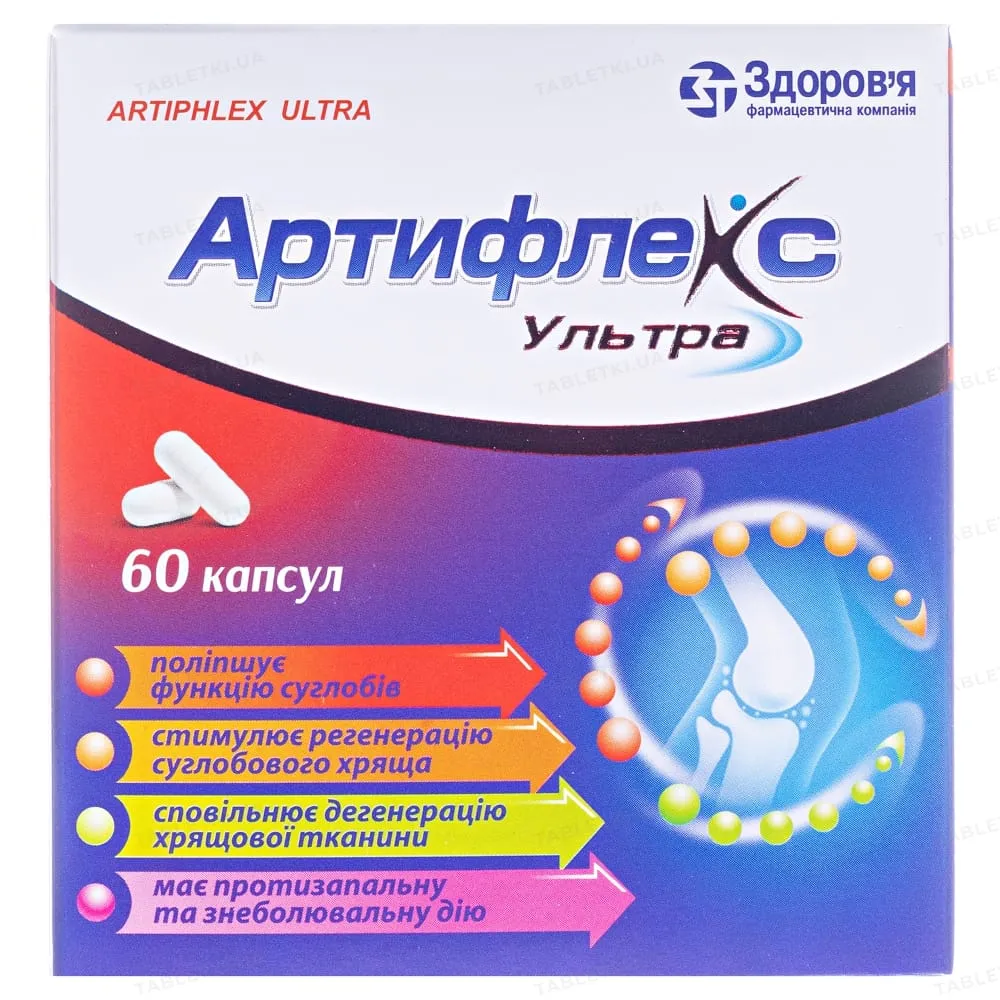
ARTIFLEX ULTRA
UkraineThe drug is used to treat pain in osteoarthritis of the limb joints and intervertebral discs.
Frequently asked questions
How should Artiflex ultra be taken correctly?
Adults should take 2 capsules 3 times a day after meals, swallowing with a glass of water. The maximum daily dose of 12 capsules must not be exceeded.
Who should not take this drug?
The drug is contraindicated in cases of hypersensitivity to its components or seafood, gastric ulcer disease, bleeding, optic nerve diseases, blood disorders, severe renal, cardiac, or hepatic insufficiency, diabetes mellitus, phenylketonuria, thrombophlebitis, as well as during pregnancy and breastfeeding.
What are the possible side effects of Artiflex ultra?
Possible side effects include abdominal pain, nausea, diarrhea, heartburn, headache, dizziness, edema, increased blood pressure, as well as allergic reactions (rash, swelling, shortness of breath). In rare cases, serious damage to the stomach, kidneys, liver, or skin may occur.
Can the drug be combined with other medicines?
Simultaneous intake with other anti-inflammatory drugs (NSAIDs), acetylsalicylic acid, and alcohol should be avoided. Interactions are also possible with anticoagulants (e.g., warfarin), corticosteroids, certain antibiotics, and blood pressure medications. Always consult a physician before combining with other medicines.
How long can the drug be taken?
The total duration of treatment should not exceed 20 days.
Instructions for use
INSTRUCTIONS FOR MEDICAL USE of the medicinal product ARTIPHLEX ULTRA (ARTIPHLEX ULTRA)
Composition:
Active substances: glucosamine, chondroitin sulfate, ibuprofen;
1 capsule contains sodium chloride glucosamine sulfate equivalent to 250 mg of glucosamine sulfate, sodium chondroitin sulfate 200 mg, ibuprofen 100 mg;
Excipients: pregelatinized starch, crospovidone, sodium starch glycolate (type A), stearic acid, microcrystalline cellulose, magnesium stearate, povidone, colloidal anhydrous silicon dioxide; the capsule shell contains: gelatin, titanium dioxide (E 171).
Pharmaceutical form. Capsules.
Main physicochemical properties: hard gelatin capsules of white color. The contents of the capsules – a mixture containing granules and powder from white to almost white. The presence of particle agglomerates is permissible.
The manufacturer's trademark – ZT – may be printed on the capsule.
Pharmacotherapeutic group.
Combined anti-inflammatory (antirheumatic) agents. ATC code M01B.
Pharmacological properties.
Pharmacodynamics.
This medicinal product stimulates regeneration of cartilage tissue. It exerts anti-inflammatory action at the cellular level, stimulates synthesis of both endogenous proteoglycans and endogenous hyaluronic acid, reduces catabolic activity of chondrocytes by inhibiting certain enzymes that destroy cartilage, such as collagenase, elastase, proteoglycanase, phospholipase A2, N-acetylglucosaminidase, etc., and also inhibits formation of other substances that may damage cartilage tissue (in vitro), such as superoxide radicals and lysosomal enzyme activity.
Chondroitin and glucosamine are effective in patients with osteoarthritis.
Chondroitin is one of the main components of cartilage. It reduces the activity of the inflammatory process at early stages and thus slows down degeneration of cartilage tissue. It helps reduce pain, improves joint function, and reduces the need for nonsteroidal anti-inflammatory drugs (NSAIDs) in knee and hip osteoarthritis.
Glucosamine is physiologically present in the human body and exhibits chondroprotective properties. In vitro and in vivo studies have shown that glucosamine hydrochloride stimulates synthesis of physiological glycosaminoglycans and proteoglycans by chondrocytes and synthesis of hyaluronic acid by synoviocytes.
Ibuprofen exerts antipyretic, analgesic, and anti-inflammatory effects. Its mechanism of action is associated with non-selective inhibition of cyclooxygenase (COX) types 1 and 2 (the key enzyme in arachidonic acid metabolism), leading to reduced prostaglandin synthesis, decreased prostaglandin concentration in cerebrospinal fluid, and reduced excitation of the thermoregulatory center. It reduces morning stiffness and improves range of motion in joints and spine.
Concomitant use of glucosamine and ibuprofen leads to increased analgesic activity of the latter.
Pharmacokinetics.
After a single oral therapeutic dose, maximum plasma concentration of chondroitin sulfate is reached within 3–4 hours. The bioavailability of the orally administered dose is 12%.
In blood, 85% of chondroitin and its depolymerized derivatives bind to several plasma proteins.
At least 90% of the administered chondroitin dose is initially metabolized by lysosomal phosphatases, followed by depolymerization by hyaluronidase, β-glucuronidase, and β-N-acetylhexosaminidase in the liver, kidneys, and other organs.
Chondroitin and its depolymerized derivatives are primarily excreted via renal excretion. Elimination half-life ranges from 5 to 15 hours.
After oral administration, glucosamine hydrochloride is rapidly and almost completely absorbed in the intestine. Glucosamine pharmacokinetics are linear when administered at doses up to 1500 mg once daily, and higher doses do not result in proportionally higher increases in maximum glucosamine concentration.
More than 25% of the administered glucosamine dose passes from plasma into cartilage tissue and synovial joint membrane.
Due to first-pass metabolism in the liver, more than 70% of glucosamine is metabolized into urea, carbon dioxide, and water.
It is excreted unchanged primarily via the kidneys in urine and partially in feces. Elimination half-life is 68 hours.
After oral administration, ibuprofen is almost completely absorbed from the gastrointestinal tract. Concomitant food intake delays absorption. Ibuprofen is metabolized in the liver (90%). Elimination half-life is 2–3 hours. 80% of the dose is excreted in urine, primarily as metabolites.
Clinical characteristics.
Indications. Treatment of pain syndrome in primary and secondary osteoarthritis of limb joints and intervertebral discs.
Contraindications. This medicinal product is contraindicated in the following cases:
- Hypersensitivity to the active substances or to any of the excipients of the product;
- History of allergic reactions (such as bronchospasm, asthma, rhinitis or skin rash, angioedema, urticaria) associated with the use of acetylsalicylic acid or other NSAIDs;
- History of gastrointestinal bleeding or perforation following the use of NSAIDs;
- Active or past peptic ulcer/gastrointestinal bleeding (two or more distinct episodes of peptic ulcer exacerbation and bleeding);
- Optic nerve disorders;
- Hematopoietic disorders;
- Severe renal, cardiac, or hepatic insufficiency;
- Phenylketonuria;
- Cerebrovascular or other hemorrhages;
- Diabetes mellitus;
- Tendency to bleeding;
- Thrombophlebitis.
Concomitant use of this drug with other NSAIDs, including selective cyclooxygenase-2 (COX-2) inhibitors, is contraindicated.
Interaction with other medicinal products and other forms of interaction. Medicinal products which may interact when used concomitantly with Artiflex Ultra, capsules:
Ibuprofen.
Combinations with ibuprofen should be avoided:
Acetylsalicylic acid
May lead to an increased risk of adverse effects. Use is acceptable if the dose of acetylsalicylic acid does not exceed 75 mg per day and has been prescribed by a physician.
Other NSAIDs, including selective COX-2 inhibitors
Increases the risk of erosive-ulcerative lesions and gastrointestinal bleeding (see section "Contraindications").
Combinations with ibuprofen should be used with caution:
Cyclosporine
May increase the risk of nephrotoxic effects.
Lithium
Plasma lithium levels may increase.
Methotrexate at doses of 15 mg/week or higher
Increases methotrexate concentration and increases the risk of methotrexate toxicity.
Anticoagulants
NSAIDs may enhance the effects of anticoagulants such as warfarin.
Corticosteroids
Increases the risk of gastrointestinal bleeding or ulceration.
Antihypertensive and diuretic agents
NSAIDs may reduce the therapeutic effect of these drugs.
In some patients with impaired renal function (e.g., dehydrated patients or elderly patients with renal impairment), concomitant use of angiotensin-converting enzyme (ACE) inhibitors or angiotensin II antagonists and agents that inhibit cyclooxygenase may lead to further deterioration of renal function, including potentially reversible renal failure. This interaction should be considered in patients taking coxibs concomitantly with ACE inhibitors or angiotensin II antagonists. Therefore, this combination should be used with caution, especially in elderly patients. Patients should receive adequate hydration, and monitoring of renal function should be considered at the start of concomitant therapy and periodically thereafter. Diuretics may increase the risk of NSAID-induced nephrotoxicity.
Antiplatelet agents and selective serotonin reuptake inhibitors (SSRIs)
Increases the risk of gastrointestinal bleeding.
Cardiac glycosides
NSAIDs may exacerbate heart failure, reduce glomerular filtration rate, and increase blood levels of glycosides.
Zidovudine
Concomitant use of NSAIDs with zidovudine increases the risk of hematological toxicity. Evidence suggests an increased risk of hemarthrosis and hematoma in HIV-infected patients receiving concomitant treatment with zidovudine and ibuprofen.
Mifepristone
NSAIDs should not be used earlier than 8–12 days after mifepristone administration, as they reduce its efficacy.
Tacrolimus
Possible increased risk of nephrotoxicity with concomitant use of NSAIDs and tacrolimus.
Potassium-sparing diuretics
Hyperkalemia may occur.
Alcohol
Increased risk of gastrointestinal tract injury and prolonged bleeding time.
Quinolone antibiotics
Concomitant use of NSAIDs and quinolone antibiotics may increase the risk of seizures.
Sulfonylurea derivatives and phenytoin
Possible potentiation of drug effects.
Chondroitin and glucosamine.
Tetracycline
Increases tetracycline absorption from the gastrointestinal tract.
Penicillin
Penicillin absorption is reduced.
Chloramphenicol
Chloramphenicol absorption is reduced.
Cyclosporine
May affect cyclosporine blood concentration.
Physicochemical and pharmacokinetic properties of chondroitin and glucosamine suggest a low potential for drug interactions; however, specific interaction studies have not been conducted. Chondroitin and glucosamine are compatible with NSAIDs.
Cases of enhanced anticoagulant effect and bleeding have been reported when glucosamine is used concomitantly with warfarin. Therefore, coagulation parameters should be monitored when these agents are used together.
Special precautions for use.
The use of Artiflex Ultra should be avoided concomitantly with other NSAIDs, including selective COX-2 inhibitors, due to an increased risk of ulceration or bleeding, as well as other adverse reactions. Adverse reactions can be minimized by using the lowest effective dose for the shortest duration necessary to control symptoms.
Gastrointestinal bleeding, ulceration, or perforation, which may be fatal and may occur with or without preceding symptoms, have been reported with all NSAIDs at any time during treatment, regardless of a history of serious gastrointestinal complications.
The risk of gastrointestinal bleeding, ulceration, or perforation increases with higher NSAID doses, a history of peptic ulcer (particularly complicated by bleeding or perforation), and in elderly patients. These patients should begin treatment with the lowest available dose. For such patients, as well as for those requiring concomitant use of low-dose acetylsalicylic acid or other medicinal products that may increase gastrointestinal risk, consideration should be given to concomitant protective therapy (e.g., misoprostol or proton pump inhibitors).
Patients with a history of gastrointestinal disorders, particularly elderly patients, should inform their physician about any unusual abdominal symptoms (including gastrointestinal bleeding), especially in the early stages of treatment. Caution should be exercised when treating patients who are concurrently receiving medications that may increase the risk of ulceration or bleeding, such as oral corticosteroids, anticoagulants (e.g., warfarin), selective serotonin reuptake inhibitors, and antiplatelet agents such as acetylsalicylic acid.
If gastrointestinal bleeding or ulceration occurs in patients receiving ibuprofen, treatment should be discontinued.
NSAIDs should be used with caution in patients with a history of ulcerative colitis or Crohn’s disease, as their condition may worsen.
If acetylsalicylic acid is used for the purpose of inhibiting platelet aggregation, consultation with a physician is recommended before initiating treatment with Artiflex Ultra.
There is evidence that medicinal products which inhibit COX/prostaglandin synthesis may impair female fertility by affecting ovulation. This effect is reversible upon discontinuation of these drugs.
The use of ibuprofen, especially at high doses (2400 mg/day) and during long-term treatment, may be associated with a small increased risk of arterial thrombotic events (e.g., myocardial infarction or stroke). Low doses of ibuprofen (≤1200 mg/day) are not associated with an increased risk of myocardial infarction.
Long-term treatment in patients with uncontrolled hypertension, congestive heart failure, diagnosed ischemic heart disease, peripheral arterial disease, and/or cerebrovascular disease should only be initiated by a physician after careful consideration. Long-term NSAID treatment should be prescribed to patients with significant cardiovascular risk factors (such as hypertension, hyperlipidemia, diabetes mellitus, smoking) only after thorough evaluation.
Cases of Kounis syndrome have been reported in patients receiving ibuprofen treatment. Kounis syndrome manifests as cardiovascular symptoms related to coronary artery spasm due to an allergic or hypersensitivity reaction, which may potentially lead to myocardial infarction.
Serious skin adverse reactions (SSARs): SSARs, including exfoliative dermatitis, erythema multiforme, Stevens-Johnson syndrome, toxic epidermal necrolysis, drug reaction with eosinophilia and systemic symptoms (DRESS syndrome), and acute generalized exanthematous pustulosis, which may be life-threatening or fatal, have been reported with ibuprofen use (see section "Adverse reactions"). Most such reactions occurred within the first month of treatment.
If signs or symptoms suggesting these reactions occur, ibuprofen should be discontinued immediately and alternative therapy should be considered (if necessary).
Ibuprofen may cause bronchospasm, asthma attacks, or other hypersensitivity reactions. Risk factors for such reactions include pre-existing bronchial asthma, hay fever, nasal polyps, sensitivity to acetylsalicylic acid, or chronic respiratory diseases. This also applies to patients who have experienced allergic reactions to ibuprofen or other NSAIDs (including skin reactions, pruritus, urticaria).
Masking symptoms of underlying infections: Ibuprofen may mask symptoms of infectious diseases, potentially delaying appropriate treatment and thereby worsening the course of the illness. This has been observed in community-acquired bacterial pneumonia and bacterial complications of varicella. When ibuprofen is used for fever or pain relief during infection, monitoring of the infectious condition is recommended. In outpatient settings, patients should consult a physician if symptoms persist or worsen.
Alcohol consumption is not recommended during treatment with Artiflex Ultra.
The following conditions require cautious use of the drug:
- Systemic lupus erythematosus and systemic connective tissue diseases – increased risk of aseptic meningitis;
- Hypertension and/or heart failure with a history of fluid retention and edema during NSAID use;
- Impaired renal and/or hepatic function; hepatic dysfunction increases the risk of renal toxicity and damage, as well as severe and potentially fatal hepatic reactions. For patients with liver or kidney disease, additional tests are recommended before starting treatment: monitoring of liver and kidney function and peripheral blood tests.
Prolonged use of NSAIDs may lead to dose-dependent reduction in prostaglandin synthesis and may provoke the development of renal failure. Patients at high risk include those taking diuretics; patients with hepatic, renal, or cardiac impairment; and elderly patients.
Special considerations for glucosamine sulfate and chondroitin sulfate
The drug should not be used in patients with hypersensitivity (allergy) to seafood.
Exacerbation of asthma symptoms may occur in patients with a history of bronchial asthma after starting glucosamine treatment.
Rarely, edema and/or fluid retention have been observed in patients with cardiac and/or renal insufficiency. This may be related to the osmotic effect of chondroitin sulfate.
Consult a physician if symptoms worsen after starting this medicinal product.
Use during pregnancy or breastfeeding. Although the use of drugs containing ibuprofen is contraindicated only during the third trimester of pregnancy, there are no clinical data on the efficacy and safety of glucosamine sulfate during pregnancy or breastfeeding. Therefore, the drug should not be used during these periods.
Ability to affect reaction speed when driving or operating machinery. Patients should monitor changes in their reaction speed before driving or operating machinery. If any adverse neurological effects occur, patients should refrain from driving or operating machinery.
Method of administration and dosage. The drug should be taken after meals, with a glass of water.
For adults: 2 capsules three times daily.
The lowest effective dose for the shortest duration should be used to relieve symptoms (see section "Special precautions for use").
The maximum daily dose of 12 capsules (1.2 g ibuprofen) should not be exceeded.
The total duration of treatment at the recommended dose should not exceed 20 days. After pain subsides, the patient may continue treatment with Artiflex Plus tablets.
Children. Experience with the use of the drug in children (under 18 years of age) is lacking.
Overdose. In case of overdose, symptoms may include abdominal pain, nausea, vomiting, diarrhea, gastrointestinal bleeding, dizziness, headache, sleep disturbances, and tinnitus. In severe cases, neurological symptoms may occur: drowsiness, lethargy, rarely excitement and disorientation, loss of consciousness, or coma; arterial hypertension, arterial hypotension, hepatic and renal dysfunction or hepatonecrosis, acute renal failure, rhabdomyolysis, and hypothermia may also occur; respiratory failure and cyanosis are possible. Seizures may rarely occur. In patients with bronchial asthma, asthma exacerbation may occur. In severe overdose, metabolic acidosis (including renal tubular acidosis) and hypokalemia may develop, and prothrombin time/INR (International Normalized Ratio) may be prolonged, likely due to interaction with blood coagulation factors.
Treatment is symptomatic and aimed at supporting vital functions, including ensuring airway patency and stabilization of the patient's condition. Gastric lavage and oral administration of activated charcoal are recommended within 1 hour after ingestion of a potentially toxic dose (over 400 mg/kg), along with hospitalization in a toxicology unit. Inpatient management includes infusion therapy, forced diuresis, and symptomatic treatment. There are no specific antidotes. Frequent or prolonged seizures should be treated with intravenous diazepam or lorazepam. Bronchodilators should be used in patients with bronchial asthma.
Adverse Reactions
Most adverse effects following the use of Artiflex Ultra are attributed to ibuprofen and are dose-dependent. Since the recommended single dose of ibuprofen is moderate and the usual daily dose in Artiflex Ultra (600 mg) is significantly lower than the maximum daily dose of ibuprofen (1200 mg), it is unlikely that any adverse effects will occur if the medicinal product is used according to the recommended dosing guidelines.
Gastrointestinal system disorders. Abdominal pain, dyspepsia, nausea, diarrhea, flatulence, constipation, and vomiting. Heartburn, ulcerative stomatitis, peptic ulcers, melena, hematemesis, gastritis, gastrointestinal perforation, or gastrointestinal bleeding may occur, which in some cases may be fatal, especially in elderly patients. In isolated cases, exacerbation of ulcerative colitis and Crohn's disease has been reported.
Nervous system disorders. Headache, aseptic meningitis (isolated cases have been reported). Dizziness, drowsiness, paresthesia, general weakness, and increased fatigue may occur. With prolonged use only – depression, hallucinations, confusion, tinnitus.
In patients with autoimmune disorders (particularly systemic lupus erythematosus, connective tissue diseases), isolated symptoms of aseptic meningitis have been observed during ibuprofen treatment, including nuchal rigidity, headache, nausea, vomiting, high fever, or disorientation.
Urinary system disorders. There have been reports of acute renal failure, papillary necrosis, particularly with prolonged use, associated with elevated serum urea levels and edema. Ibuprofen may cause interstitial nephritis, nephrotic syndrome, and nephrotoxicity.
Hepatobiliary system disorders. Liver function abnormalities, particularly with prolonged use, may occur in the form of hepatitis and jaundice.
Blood and lymphatic system disorders. Disorders of the hematopoietic system (anemia, neutropenia, aplastic anemia, hemolytic anemia, eosinophilia, decreased hematocrit and hemoglobin levels, leukopenia, thrombocytopenia, pancytopenia, agranulocytosis). Initial signs include high fever, sore throat, oral ulcers, flu-like symptoms, severe exhaustion, unexplained bleeding, and bruising. Reversible platelet aggregation, alveolitis, pulmonary eosinophilia.
Skin and subcutaneous tissue disorders. In isolated cases, severe skin adverse reactions may occur (including erythema multiforme, exfoliative dermatitis, Stevens-Johnson syndrome, and toxic epidermal necrolysis). Skin desquamation, alopecia, photosensitization, hyperemia, dermatitis, and eczema may be observed. Drug-induced eosinophilia with systemic symptoms (DRESS syndrome), acute generalized exanthematous pustulosis.
Immune system disorders. Allergic reactions, including severe hypersensitivity reactions, facial, tongue, and laryngeal swelling, dyspnea, angioedema (Quincke's edema), anaphylactic shock, anaphylaxis, urticaria, pruritus, rash, respiratory tract reactivity including bronchial asthma, asthma exacerbation, bronchospasm.
Cardiovascular and cerebral circulation disorders. Edema, arterial hypertension, heart failure, tachycardia, palpitations have been reported during NSAID therapy. Long-term use of high-dose ibuprofen (2400 mg/day) may lead to a slight increase in the risk of arterial thrombosis (myocardial infarction or stroke). Cerebral circulation complications are possible. Couineaud's syndrome.
Eye disorders. With prolonged use – visual disturbances, optic neuritis.
Laboratory test results. Increased ALT levels, increased blood creatinine levels, increased AST levels, increased blood urea levels, increased blood bilirubin levels.
Other. Endocrine system and metabolic changes, decreased appetite, dryness of ocular and oral mucous membranes, rhinitis, hearing disturbances.
The use of Artiflex Ultra should be discontinued immediately upon the appearance of any adverse reaction, and medical advice should be sought promptly.
Shelf life. 2 years.
Storage conditions. Store in the original packaging at a temperature not exceeding 25 °C.
Keep out of reach of children.
Packaging. Capsules № 60 (10x6), № 120 (10x12) in blisters in a box.
Marketing authorization category. Over-the-counter (without prescription).
Manufacturer. LIMITED LIABILITY COMPANY "CORPORATION "ZDOROVIYA".
Manufacturer's address and place of business.
22 Shevchenka Street, Kharkiv, Kharkiv Oblast, 61013, Ukraine.
Similar drugs
| Brand name | Dosage form | Active substance / Dosage | Manufacturer |
|---|---|---|---|
| THERAFLEX ADVANS® | capsules | Contract Pharmakal Corporation (manufacturer responsible for packaging, control and batch release; manufacturer responsible for manufacturing in bulk) |
The original data is available in the language of the country of manufacture.
Data source: State Register of Medicinal Products of Ukraine
Data last verified: August 13, 2026