SOLOXELAM
PolandThe medicine is used to stop sudden, prolonged seizures in infants (from 3 months of age), children, adolescents, and adults.
Frequently asked questions
How should Soloxelam be dosed?
The dose depends on the patient's age and is determined by a doctor. The dose consists of the entire contents of one syringe (do not administer more than one). Doses are color-coded: 2.5 mg (yellow) for infants from 3 months to 1 year, 5 mg (blue) for children from 1 to 5 years, 7.5 mg (purple) for children from 5 to 10 years, and 10 mg (orange) for persons over 10 years of age and adults.
When should this medicine not be administered?
The medicine must not be used if the patient is allergic to midazolam or other ingredients, has myasthenia gravis (muscle weakness), has significant breathing difficulties, suffers from sleep apnea syndrome, or has severe hepatic impairment.
How to administer the medicine correctly?
Insert the tip of the syringe deep between the inner cheek and the lower gum and slowly squeeze out the entire contents. Do not inject the medicine or attach a needle to the syringe.
What are the possible side effects of Soloxelam?
Nausea, vomiting, drowsiness, or loss of consciousness may occur frequently. Other possible symptoms include, among others, rash, pain or dizziness, fatigue, dry mouth, or temporary memory loss. Seek medical help immediately if serious breathing difficulties, a heart attack, or swelling of the face and throat occur.
Can this medicine be combined with other substances?
Alcohol and grapefruit juice should be avoided, as they may enhance the sedative effect of the medicine. Inform your doctor about all medications being taken, as some (e.g., anti-epileptic drugs, certain antibiotics, antifungals, or strong painkillers) may change the effect of Soloxelam.
When should emergency medical services be called urgently?
Seek help immediately if the seizure does not subside within 10 minutes, the patient begins to breathe too shallowly or stops breathing, their lips turn blue, chest pain occurs, or if an overdose of the medicine has been administered.
Instructions for use
Package leaflet: Information for the user
Soloxelam, 2.5 mg, oral solution
Soloxelam, 5 mg, oral solution
Soloxelam, 7.5 mg, oral solution
Soloxelam, 10 mg, oral solution
Midazolam
Please read all of this leaflet carefully before taking this medicine, as it contains important
information for you.
- Keep this leaflet, as you may need to read it again.
- If you have any further questions, please ask your doctor or pharmacist.
- This medicine has been prescribed for a specific individual. Do not pass it on to others. It may harm someone else, even if their symptoms are the same.
- If you experience any adverse effects, including any not listed in this leaflet, please inform your doctor or pharmacist. See section 4.
Table of contents
- What Soloxelam is and what it is used for
- Important information before taking Soloxelam
- How to take Soloxelam
- Possible side effects
- How to store Soloxelam
- Contents of the pack and other information
1. What Soloxelam is and what it is used for
Soloxelam oral solution contains an active substance called midazolam.
Midazolam belongs to a group of medicines known as benzodiazepines.
Soloxelam is used to stop sudden, prolonged seizures in infants from the age of 3 months, children, adolescents, and adults.
In infants aged from 3 months up to but not including 6 months of age, this medicine should only be administered in a hospital setting where patient monitoring and resuscitation equipment are available.
This medicine may be administered by parents or caregivers only if the patient has been diagnosed with epilepsy.
2. Important information before administering Soloxelam
When not to administer Soloxelam
- if the patient is allergic to midazolam, benzodiazepines (such as diazepam), or any of the other ingredients of this medicine (listed in section 6);
- if the patient has a nerve and muscle disease causing muscle weakness (myasthenia gravis);
- if the patient has significant breathing difficulties at rest (Soloxelam may worsen breathing difficulties);
- if the patient has a condition in which breathing disturbances during sleep are common (sleep apnoea syndrome);
- if the patient has severe liver function disorders.
Warnings and precautions
Children:
Before starting administration of Soloxelam, discuss with a doctor or pharmacist if the patient has:
- kidney, liver or heart problems;
- a lung disease causing persistent breathing difficulties.
Adults:
Before starting administration of Soloxelam, discuss with a doctor or pharmacist if:
- the patient is over 60 years of age,
- the patient has a chronic illness (e.g. breathing difficulties, kidney, liver or heart problems),
- the patient is debilitated (has an illness causing extreme weakness, exhaustion and lack of energy).
This medicine may cause patients to forget what happened after its administration. After administration of the medicine, patients should be closely observed.
Avoid administering the medicine to patients who abuse alcohol or drugs.
In patients with impaired respiratory function or heart disorders, life-threatening events may occur more frequently, especially after high doses of Soloxelam.
Children under 3 months of age:
Soloxelam should not be administered to children under 3 months of age, as there is insufficient information available for this age group.
Elderly patients:
Elderly patients are more sensitive to the effects of benzodiazepines.
If in doubt whether any of the above conditions apply to the patient, consult a doctor or pharmacist before administering this medicine.
Soloxelam and other medicines
Inform the doctor or pharmacist about all medicines currently used or recently used, as well as any medicines the patient plans to take. If in doubt whether any other medicine being taken by the patient may affect the use of Soloxelam, consult a doctor or pharmacist.
This is extremely important because taking more than one medicine at the same time may increase or decrease the effects of these medicines.
The effect of Soloxelam may be increased by medicines such as:
- antiepileptic drugs (used to treat epilepsy), e.g. phenytoin;
- antibiotics, e.g. erythromycin, clarithromycin;
- antifungal medicines, e.g. ketoconazole, voriconazole, fluconazole, itraconazole, posaconazole;
- medicines used to treat peptic ulcer disease, e.g. cimetidine, ranitidine and omeprazole;
- medicines used to treat high blood pressure, e.g. diltiazem, verapamil;
- some medicines used to treat HIV and AIDS, e.g. saquinavir, lopinavir/ritonavir combination;
- opioid analgesics (very strong painkillers), e.g. fentanyl;
- medicines used to lower blood lipid levels, e.g. atorvastatin;
- medicines used to treat nausea, e.g. nabilone;
- sleeping medicines;
- sedative antidepressants (medicines used to treat depression that cause drowsiness);
- sedatives;
- anaesthetics (used to relieve pain);
- antihistamines (used to treat allergies).
The effect of Soloxelam may be reduced by medicines such as:
- rifampicin (used to treat tuberculosis);
- xanthines (used to treat asthma);
- St John's wort (a herbal remedy). The use of this medicine should be avoided in patients taking Soloxelam.
Soloxelam may enhance the effect of certain muscle relaxants, e.g. baclofen (causing increased drowsiness). This medicine may also inhibit the effect of certain medicines, e.g. levodopa (a medicine used to treat Parkinson's disease).
Consult a doctor or pharmacist for information on which medicines should be avoided during treatment with Soloxelam.
Soloxelam with food and drink
Do not drink alcohol while taking Soloxelam. Alcohol may intensify the calming effect of the medicine and cause increased drowsiness.
Do not drink grapefruit juice while taking Soloxelam. Grapefruit juice may intensify the calming effect of the medicine and cause increased drowsiness.
Pregnancy
If the patient to whom this medicine will be administered is pregnant or breastfeeding, suspects she may be pregnant, or is planning to have a child, she should consult a doctor before using this medicine.
Administration of high doses of Soloxelam during the last 3 months of pregnancy may cause heart rhythm disturbances in the unborn child. Babies born to mothers who received this medicine during labour may have a weak sucking reflex, breathing difficulties and reduced muscle tone.
Breastfeeding
Inform the doctor if the patient is breastfeeding. Small amounts of Soloxelam may pass into breast milk, but discontinuation of breastfeeding may not be necessary. The doctor will decide whether the patient can breastfeed after administration of this medicine.
Driving and using machines
Soloxelam may cause drowsiness, memory loss, or impair concentration and coordination in patients. These effects may interfere with the performance of learned tasks such as driving vehicles, cycling or operating machinery.
After administration of this medicine, patients should not drive vehicles, ride bicycles or operate machinery until full recovery of abilities. Consult a doctor if further information is needed.
Soloxelam contains sodium
This medicine contains less than 1 mmol (23 mg) of sodium per filled oral syringe, meaning the medicine is considered "sodium-free".
3. How to use Soloxelam
This medicine should always be administered according to the doctor's instructions. If in doubt, consult
your doctor or pharmacist.
Dosage
Your doctor will prescribe the appropriate dose of Soloxelam, based primarily on the patient's
age. Different doses are indicated by different colors used to mark the box, tube, and syringe
containing the medicine.
Depending on age, the patient will receive one of the following doses, from a package
specifically color-marked:
| Age range | Dosage | Label color |
| from 3 months to below 1 year | 2.5 mg | Yellow |
| from 1 year to below 5 years | 5 mg | Blue |
| from 5 years to below 10 years | 7.5 mg | Violet |
| from 10 years and adults | 10 mg | Orange |
The dose consists of the entire contents of one oral syringe. Do not administer more than one
dose.
Infants aged from 3 months to below 6 months should only be treated in a hospital setting where
patient monitoring is possible and resuscitation equipment is available.
Preparing this medicine for administration
If the patient is having a seizure, allow free movement of the body; do not attempt to restrain them.
Move the patient only if there is a risk of injury, for example if they are near deep water, fire, or sharp objects.
Protect the patient's head with something soft, such as a pillow or by placing the patient's head on your lap.
Check that the dose of medicine is correct for the patient and appropriate for the patient's age.
How to administer this medicine
Ask your doctor, pharmacist, or nurse to show you how to take or administer this medicine. In case of doubt, always consult them for advice.
Instructions on how to administer this medicine are also provided on the tube label.
Do not inject Soloxelam. Do not attach a needle to the syringe.
Step 1
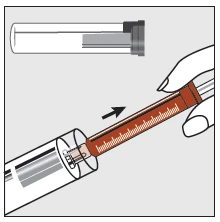
Holding the plastic tube, tear off the seal at one end and remove the cap. Remove the syringe from the tube.
Step 2
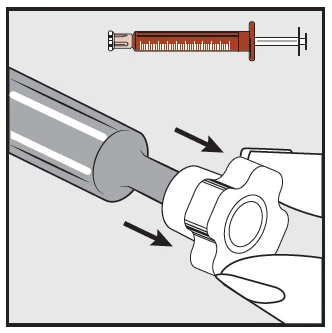
Remove the transparent cap from the end of the syringe and dispose of it safely.
Step 3
Gently grasp the patient's cheek with thumb and finger
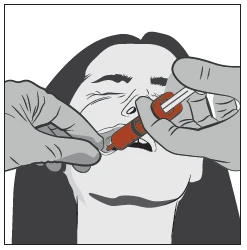
and pull it away. Insert the tip of the syringe deep between the inside of the cheek and lower gums.
Step 4
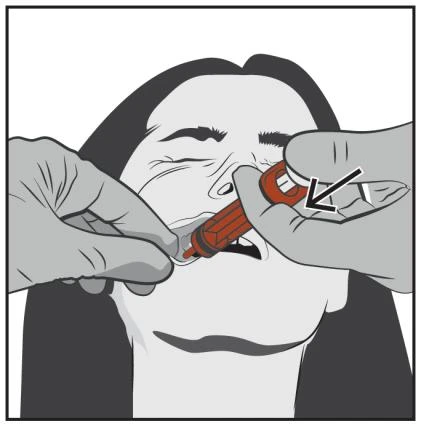
Slowly push the plunger of the syringe until it stops.
The entire volume of solution should be slowly administered into the space between the gum and cheek (into the oral cavity).
If necessary (in cases of larger volumes and/or smaller patients), slowly administer approximately half of the dose on one side of the oral cavity, then slowly administer the remaining half on the other side of the patient's oral cavity.
When to call emergency services
Always follow the instructions of the attending physician or qualified medical personnel. In case of any doubt, immediately seek medical help if:
- the seizure does not stop within 10 minutes;
- it is impossible to empty the syringe or part of its contents has spilled;
- the patient begins to breathe more slowly or stops breathing, i.e. breathing becomes slow and shallow or the patient's lips turn blue;
- symptoms of heart attack occur, which may include chest pain or pain radiating to the neck, shoulders, and down the left arm;
- the patient vomits and the seizure does not stop within 10 minutes;
- an overdose of Soloxelam has been administered and symptoms of overdose occur, including:
o drowsiness, fatigue, feeling of exhaustion;
o confusion or feeling disoriented;
o absence of knee reflex or lack of response to pinching;
o difficulty breathing (slowed or shallow breathing);
o low blood pressure (dizziness and feeling faint);
o coma.
Keep the syringe to show it to emergency personnel or the doctor.
Do not administer a dose larger than that prescribed to the patient by the doctor.
If the patient vomits
- Do not give another dose of Soloxelam to the patient.
- If the seizure does not stop within 10 minutes, call emergency services.
If you have any further doubts regarding the use of this medicine, consult your doctor or pharmacist.
4. Possible adverse reactions
Like any medicine, this medicine can cause adverse reactions, although not everyone experiences them.
Serious adverse reactions
You should contact a doctor immediately or call an ambulance if the patient experiences:
- serious breathing difficulties, e.g. slow and shallow breathing or bluish lips. In very rare cases, breathing may stop;
- heart attack. Symptoms may include chest pain which may radiate to the neck, shoulders and down the patient's left arm;
- swelling of the face, lips, tongue or throat, making swallowing or breathing difficult, or pale skin, weak and rapid pulse, or feeling faint. These may indicate a serious allergic reaction.
Other adverse reactions
If any adverse reactions occur, consult a doctor, pharmacist or nurse. This includes any possible adverse reactions not listed in this leaflet.
Common adverse reactions (may occur in less than 1 in 10 people):
- nausea and vomiting;
- drowsiness or loss of consciousness.
Uncommon adverse reactions (may occur in less than 1 in 100 people):
- rash, urticaria (urticaria pigmentosa), itching.
Very rare adverse reactions (may occur in less than 1 in 10,000 people):
- agitation, anxiety, hostility, anger or aggression, excitement, confusion, euphoria (excessive feeling of happiness or excitement) or hallucinations (seeing or hearing things that are not real);
- muscle spasms and muscle tremors (involuntary muscle shaking);
- reduced alertness;
- headache;
- dizziness;
- difficulties with muscular coordination;
- seizures (convulsions);
- temporary memory loss. The duration depends on the amount of Soloxelam administered to the patient;
- low blood pressure, slow heart rate or redness of the face and neck (hot flushes);
- laryngospasm (constriction of the vocal cords causing breathing difficulties and loud breathing);
- constipation;
- dry mouth;
- fatigue;
- hiccups.
Reporting of adverse reactions
If any adverse reactions occur, including any adverse reactions not listed in this leaflet, inform a doctor, pharmacist or nurse. Adverse reactions can be reported directly to the Department of Monitoring of Adverse Drug Reactions of the Office for Registration of Medicinal Products, Medical Devices and Biocidal Products, Al. Jerozolimskie 181 C, 02-222 Warsaw, tel.: +48 22 49 21 301, fax: +48 22 49 21 309, website: https://smz.ezdrowie.gov.pl.
Adverse reactions can also be reported to the marketing authorisation holder.
Reporting adverse reactions helps provide more information on the safety of the medicine.
5. How to store Soloxelam
Keep this medicine out of sight and reach of children.
Do not use this medicine after the expiry date stated on the carton, tube and oral syringe following the word EXP. The expiry date refers to the last day of the stated month.
Store the oral syringe in its protective plastic tube.
Do not store above 30°C.
Do not use this medicine if the packaging has previously been opened or is damaged.
Disposal of oral syringes
Medicines must not be disposed of via wastewater or household waste. Ask your pharmacist how to dispose of medicines no longer required. These measures help protect the environment.
6. Contents of the packaging and other information
What Soloxelam contains
- The active substance is midazolam.
- 2.5 mg - each oral syringe contains 2.5 mg of midazolam (as hydrochloride) in 0.5 mL of solution.
- 5 mg - each oral syringe contains 5 mg of midazolam (as hydrochloride) in 1 mL of solution.
- 7.5 mg - each oral syringe contains 7.5 mg of midazolam (as hydrochloride) in 1.5 mL of solution.
- 10 mg - each oral syringe contains 10 mg of midazolam (as hydrochloride) in 2 mL of solution.
The other ingredients are: sodium chloride, purified water, hydrochloric acid and sodium hydroxide (for pH adjustment).
What Soloxelam looks like and contents of the pack
2.5 mg - pack marked with yellow colour.
5 mg - pack marked with blue colour.
7.5 mg - pack marked with violet colour.
10 mg - pack marked with orange colour.
Soloxelam is a clear solution for oral use.
The medicine is supplied in an orange pre-filled oral syringe, without a needle, with a plunger and cap.
Each oral syringe is individually packed in a protective plastic tube.
Soloxelam is available in cardboard boxes containing 2 or 4 pre-filled oral syringes (each containing the same dose).
Not all pack sizes may be marketed.
Marketing Authorisation Holder and Manufacturer
Marketing Authorisation Holder
Exeltis Poland Sp. z o.o.
ul. Szamocka 8
01-748 Warsaw
e-mail: [email protected]
Manufacturer
Laboratorios Liconsa S.A.
Avda. Miralcampo, 7
Poligono Industrial Miralcampo
19200 Azuqueca de Henares
Guadalajara
Spain
This medicinal product is authorised in the European Economic Area countries under the following names:
Sweden: Midazolam Medical Valley 2.5 mg, 5 mg, 7.5 mg, 10 mg munhålelösning
Finland: Midazolam Medical Valley 2.5 mg, 5 mg, 7.5 mg, 10 mg liuos suuonteloon
Germany: Midazolam Desitin 2.5 mg, 5 mg, 7.5 mg, 10 mg Lösung zur Anwendung in der Mundhöhle
Norway: Midazolam Medical Valley 2.5 mg, 5 mg, 7.5 mg, 10 mg munnvann, oppløsning
Netherlands: Midazolam Xiromed 2.5 mg, 5 mg, 7.5 mg, 10 mg oplossing voor oromucosaal gebruik
Denmark: Midazolam Medical Valley 2.5 mg, 5 mg, 7.5 mg, 10 mg mundhulevæske, opløsning
Iceland: Midazolam Medical Valley 2.5 mg, 5 mg, 7.5 mg, 10 mg munnholslausn
France: Midazolam Exeltis 2.5 mg, 5 mg, 7.5 mg, 10 mg solution buccale
Ireland: Midazolam Rowa 2.5 mg, 5 mg, 7.5 mg, 10 mg oromucosal solution
Romania: Midazolam Desitin 2.5 mg, 5 mg, 7.5 mg, 10 mg soluție bucofaringiană
Spain: Oroxelam 2.5 mg, 5 mg, 7.5 mg, 10 mg solución bucal
Poland: Soloxelam
Italy: Oroxelam
Other sources of information
Detailed information about this medicine is available on the website of the Office for Registration of Medicinal Products, Medical Devices and Biocidal Products: http://www.urpl.gov.pl.
Similar drugs
| Brand name | Dosage form | Active substance / Dosage | Manufacturer |
|---|---|---|---|
| EPISTATUS | solution for oral use |
|
MoNo chem-pharm. Produkte GmbH |
| EPISTATUS | solution for oral use |
|
MoNo chem-pharm. Produkte GmbH |
| EPISTATUS | solution for oral use |
|
MoNo chem-pharm. Produkte GmbH |
| EPISTATUS | solution for oral use |
|
MoNo chem-pharm. Produkte GmbH |
| SOLOXELAM | solution for oral use |
|
Laboratorios Liconsa S.A. |
| SOLOXELAM | solution for oral use |
|
Laboratorios Liconsa S.A. |
| SOLOXIKAM | solution for oral use |
|
Laboratorios Liconsa S.A. |
The original data is available in the language of the country of manufacture.
Data source: Register of Medicinal Products of Poland (URPL)
Data last verified: September 01, 2026