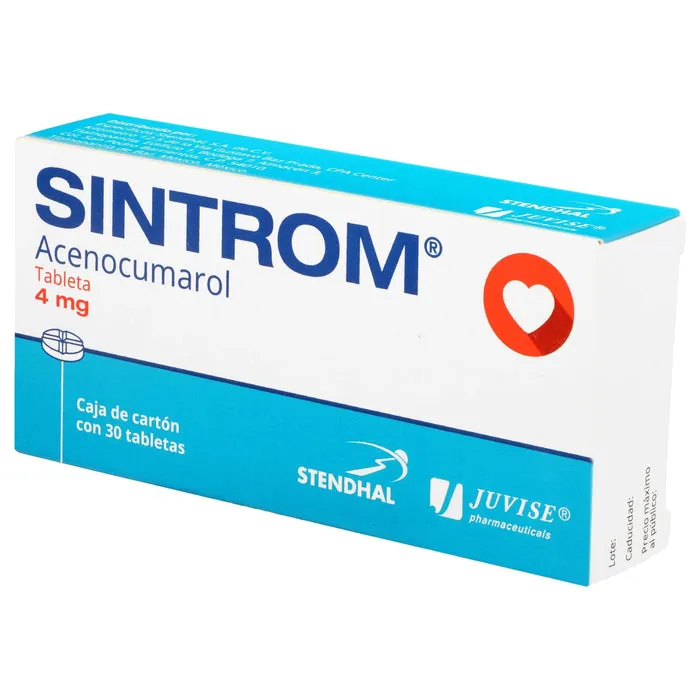
SINTROM
PolandThe medicine is used for the treatment and prevention of thromboembolic diseases. It works by inhibiting the formation of blood clots, which prevents them from enlarging.
Frequently asked questions
How should Sintrom be taken?
Tablets should be taken daily at the same time, swallowed with a glass of water. They should be swallowed whole, although they may be divided into equal parts. The dosage is determined individually by a doctor based on regular blood tests.
When should this medicine not be used?
The medicine must not be used, among other things, in cases of hypersensitivity to the ingredients, bleeding disorders (e.g., hemophilia), gastric or duodenal ulcer disease, gastrointestinal bleeding, severe liver or kidney disease, uncontrolled hypertension, and during pregnancy.
Does Sintrom interact with other medicines or food?
Yes. The effect of the medicine may change under the influence of many other drugs (e.g., antibiotics, painkillers, steroids) as well as food rich in vitamin K (e.g., spinach, cabbage, broccoli) and alcohol. The doctor must be informed about all preparations being taken.
What are the possible side effects of Sintrom?
The most common side effect is bleeding (e.g., from the nose, gums, blood in urine or stool, unusual bruising). Less commonly, allergic reactions, alopecia, nausea, or vomiting may occur. Very rarely, serious skin problems (calciphylaxis) or jaundice may occur.
What to do in case of a missed dose or taking too much medicine?
If a dose is missed, it should be taken as soon as possible, unless it is almost time for the next dose – in that case, the missed dose should be skipped and a double dose must not be taken. In case of taking more than the recommended amount, the doctor must be notified immediately, as this may lead to bleeding.
Instructions for use
Package leaflet: Information for the patient
Warning! Keep the leaflet! Information on the immediate packaging in a foreign language.
Sintrom, 4 mg, tablets
Acenocoumarolum
Please read this leaflet carefully before using the medicine, as it contains
important information for the patient.
- Keep this leaflet, as you may need to read it again.
- If you have any doubts, consult your doctor or pharmacist.
- This medicine has been prescribed for a specific individual. Do not share it with others. This medicine may harm other people, even if their symptoms are the same.
- If you experience any adverse effects, including any not listed in this leaflet, inform your doctor or pharmacist. See section 4.
Contents of the leaflet
- What Sintrom is and what it is used for
- Important information before taking Sintrom
- How to take Sintrom
- Possible side effects
- How to store Sintrom
- Contents of the pack and other information
1. What Sintrom is and what it is used for
What Sintrom is
Sintrom contains the active substance acenocoumarol.
Acenocoumarol belongs to a group of anticoagulant substances that reduce the blood's ability to clot and thus prevent the formation of blood clots in blood vessels.
What Sintrom is used for
Sintrom is indicated for the treatment and prevention of thromboembolic disorders.
How Sintrom works
Sintrom works by inhibiting the formation of blood clots. It does not dissolve existing blood clots, but may prevent clots from growing larger and causing more serious problems.
Control tests during Sintrom treatment
During treatment with Sintrom, your doctor will order regular blood tests and adjust the dose accordingly.
Consult your doctor if you have any questions regarding how Sintrom works or why it has been prescribed.
2. Important information before using Sintrom
Sintrom must only be used after consultation with a doctor. Sintrom is not suitable for every patient.
You must strictly follow your doctor's instructions, which may differ from the information contained in this leaflet.
When not to use Sintrom:
-
If the patient is allergic (hypersensitive) to acenocoumarol and similar coumarin derivatives or to any of the other ingredients of this medicine (listed in section 6 of the leaflet). In such a case, contact your doctor before using Sintrom. If you are unsure which medicines to avoid, ask your doctor or pharmacist.
-
If the patient is unable to cooperate (e.g. unsupervised elderly patients, alcoholics, or patients with psychiatric disorders).
-
If the patient has congenital or acquired bleeding disorders (e.g. haemophilia).
-
Shortly after surgery of the eye, central nervous system, dental procedures, or after surgical procedures involving the lungs, prostate gland, uterus, associated with significant blood loss, or shortly before surgery when substantial blood loss is expected.
-
If the patient has gastric or duodenal ulcer disease, gastrointestinal bleeding, bleeding from the urinary or genital tract, brain, or lungs.
-
If the patient has acute infection or inflammatory conditions affecting the heart, or pericardial effusion.
-
If the patient has uncontrolled arterial hypertension.
-
If the patient has severe liver or kidney disease.
-
If the patient is pregnant or if pregnancy is suspected.
If any of the above situations apply, contact your doctor before using Sintrom.
Consult your doctor for advice if you have allergies.
Warnings and precautions
Before starting treatment with Sintrom, discuss the following with your doctor:
- If the patient has liver function disorders.
- If the patient has kidney or thyroid dysfunction, tumour diseases, inflammatory conditions, or diseases associated with impaired nutrient absorption from the gastrointestinal tract. These conditions may affect the blood concentration of the active substance.
- If the patient has severe heart failure.
- If the patient has protein C or protein S deficiency (types of proteins affecting blood coagulation).
- If diagnostic or therapeutic procedures are planned, e.g. minor surgery, tooth extraction, lumbar puncture, angiography.
- If the patient is receiving intramuscular injections. Intramuscular injections should be avoided during treatment with Sintrom or similar medicines, as they may cause haematoma formation.
- If the patient has an increased risk of bleeding, for example, patients with a history of variable international normalized ratio (INR) test results, current or past gastric or duodenal ulcers, high blood pressure, cerebrovascular disease (cerebrovascular disease), anaemia, recent wounds or injuries, or if the patient is currently using or has recently used any of the medicines listed below, or has been taking Sintrom for a long time.
- Rare cases of calciphylaxis have been reported in patients taking vitamin K antagonists, including Sintrom. Calciphylaxis is a condition in which calcium accumulates in blood vessels of the skin, leading to painful nodules or ulcers, which may result in severe infection and often death. This usually occurs only when the patient has severe kidney disease or abnormal levels of calcium, albumin, phosphorus, or certain proteins in the blood. If calciphylaxis is diagnosed, the doctor will initiate appropriate treatment and may discontinue Sintrom therapy.
Inform your doctor immediately if any of the above situations occur.
Children and adolescents
Data on use in children and adolescents are limited; therefore, more frequent monitoring is required.
Elderly patients (over 65 years of age)
Patients over 65 years of age may be more sensitive to acenocoumarol; therefore, more frequent monitoring is required and, if necessary, dose reduction may be needed.
Other medicines and Sintrom
Inform your doctor about all medicines currently or recently taken, as well as any medicines the patient plans to take.
The effect of Sintrom may influence the action of other medicines and vice versa.
Concomitant use of Sintrom with the following medicines is not recommended:
- Heparin (anticoagulant),
- Antibiotics (e.g. clindamycin),
- Salicylic acid and its derivatives, e.g. acetylsalicylic acid, aminosalicylic acid, diflunisal (analgesic),
- Clopidogrel, prasugrel, ticagrelor, ticlopidine, phenylbutazone, and other pyrazolone derivatives, non-steroidal anti-inflammatory drugs (including celecoxib),
- Pyrazolone (sulfinpyrazone), other non-steroidal anti-inflammatory drugs (medicines affecting platelets and involved in the blood coagulation process).
Exercise caution when Sintrom must be used concomitantly with:
- Glucosamine (used in osteoarthritis) – may enhance the effect of Sintrom.
- Certain types of medicines used to prevent blood clotting (e.g. warfarin, dicoumarol, phenprocoumon, acenocoumarol, and fluindione). The effect of these medicines may be stronger when taken together with glucosamine. Patients receiving such combinations should be monitored particularly carefully when starting or stopping glucosamine treatment.
It is recommended that Sintrom not be taken simultaneously with any of the above medicines. If it becomes necessary to take any of these medicines while on Sintrom, your doctor will monitor blood coagulation parameters more frequently.
Other medicines that may increase the effect of Sintrom include:
- Allopurinol (used in the treatment of gout),
- Androgens, anabolic steroids,
- Antiarrhythmic agents (e.g. amiodarone, quinidine) (medicines preventing irregular heart rhythm),
- Antibiotics (e.g. erythromycin, tetracyclines, neomycin, chloramphenicol, amoxicillin, certain cephalosporins, and certain fluoroquinolones) (medicines used to treat infections),
- Selected antidepressants (serotonin reuptake inhibitors, SSRIs: e.g. citalopram, fluoxetine, sertraline),
- Cimetidine (used for gastritis and gastrointestinal ulcers),
- Clofibrate and its derivatives (used to reduce cholesterol levels),
- Corticosteroids, e.g. methylprednisolone, prednisone (anti-inflammatory medicines),
- Disulfiram (used in the treatment of alcoholism),
- Ethacrynic acid (used to increase urine output),
- Glucagon (used to maintain normal blood glucose levels),
- Imidazole derivatives (e.g. metronidazole, and even topically applied miconazole) (medicines used to treat infections),
- Paracetamol (antipyretic),
- Sulphonamides including co-trimoxazole (sulfamethoxazole and trimethoprim) (medicines used to treat infections),
- Sulfonylurea derivatives (tolbutamide, chlorpropamide) (medicines used to treat diabetes),
- Thyroid hormones (including levothyroxine) (used to treat hypothyroidism),
- Medicines that reduce the activity of the liver enzyme called CYP2C9 (e.g. valproic acid) – ask your doctor or pharmacist whether any of the medicines you are taking have this effect.
- Statins (e.g. fluvastatin, atorvastatin, simvastatin) (medicines used to reduce cholesterol levels),
- Tamoxifen (used in the treatment of breast cancer),
- Tramadol (analgesic),
- Proton pump inhibitors (e.g. omeprazole),
- Plasminogen activators (e.g. urokinase, streptokinase, alteplase), thrombin inhibitors (e.g. argatroban) (medicines used to dissolve blood clots in angina),
- Prokinetic agents (e.g. cisapride) (medicines used to treat gastrointestinal disorders),
- Gastric acid neutralizing agents (e.g. magnesium hydroxide),
- Vilazodone (antidepressant),
- Vitamin E.
Medicines that may reduce the effect of Sintrom include:
- Certain anticancer medicines (aminoglutethimide, azathioprine, 6-mercaptopurine),
- Certain antiviral medicines (ritonavir, nelfinavir) (used in HIV therapy),
- Barbiturates, carbamazepine (antiepileptic medicines),
- Cholestyramine (used to reduce cholesterol levels),
- Griseofulvin (used to treat fungal infections),
- Oral contraceptives,
- Rifampicin (used to treat infections),
- St John's wort (Hypericum perforatum) (herbal medicine used to treat depression),
- Foods rich in vitamin K,
- Semaglutide, a medicine used to lower blood sugar levels.
Effect of Sintrom on other medicines:
- Sintrom may increase the risk of toxicity when used with hydantoin derivatives, such as phenytoin (used to treat epilepsy).
- Sintrom may enhance the blood sugar-lowering effect of antidiabetic medicines known as sulfonylurea derivatives (e.g. glibenclamide, glimepiride).
Sintrom with food, drink, and alcohol
Limit consumption of large amounts of alcohol and foods rich in vitamin K, such as green leafy vegetables, spinach, cabbage, kale, peas, soybean oil, walnuts, broccoli, turnip, alfalfa, avocado, etc. Alcohol may alter the way Sintrom works. If in doubt, consult your doctor.
Pregnancy and breastfeeding
If the patient is pregnant or breastfeeding, suspects she may be pregnant, or plans to become pregnant, she should consult her doctor or pharmacist before using this medicine.
Use during pregnancy is contraindicated. Sintrom, like other anticoagulants, may cause serious fetal damage.
It is recommended that a pregnancy test be performed in women of childbearing age before starting treatment with Sintrom to exclude pregnancy. An effective method of contraception should be used during treatment with Sintrom.
The potential risks and benefits of the therapy should be discussed with the patient by the doctor.
If breastfeeding, consult your doctor. Both mother and child require special medical monitoring, and the child should receive prophylactic vitamin K.
Driving and operating machinery
Sintrom has no effect on the ability to drive or operate machinery. In case of an accident, inform the doctor or hospital staff about taking this medicine.
Due to the risk of injury, e.g. in an accident, it is recommended to carry an identification card indicating anticoagulant therapy.
Sintrom contains lactose monohydrate
Sintrom contains lactose monohydrate (milk sugar). If the patient has previously been diagnosed with intolerance to certain sugars, he or she should contact the doctor before taking the medicine.
3. How to use Sintrom
This medicine should always be taken exactly as prescribed by your doctor. If in doubt, consult your doctor.
The dosage of this medicine is determined by your doctor. Regular blood clotting tests allow your doctor to adjust the dose of Sintrom appropriately. Sintrom must be taken every day.
Follow your doctor's instructions carefully and do not exceed the recommended doses.
Recommended dose
Your doctor will inform you exactly how many Sintrom tablets you should take. Depending on your response to treatment, your doctor may decide to increase or decrease the dose.
Individual sensitivity to the medicine varies and may change during the course of treatment or if your diet changes, especially if you include foods rich in vitamin K (spinach, cruciferous vegetables). You must strictly follow your doctor's advice. Your doctor will determine the appropriate dose based on laboratory tests and your individual needs.
Do not suddenly stop taking this medicine or change the dose on your own initiative.
Dosage:
Adults
The usual initial dose is 2 mg/day to 4 mg/day.
The maintenance dose usually ranges between 1 mg/day and 8 mg/day.
Elderly patients, patients with liver disease or severe heart failure (which slows blood flow through the liver and may damage it), or malnourished patients may require a lower dose at the beginning and during maintenance treatment with Sintrom.
Use in children and adolescents
Your doctor will decide whether Sintrom should be used in children and adolescents.
During every visit to a doctor or dentist, inform them that you are taking this medicine.
How and when to take Sintrom
Take the tablets regularly every day at the same time (e.g. in the evening with a meal, with a glass of water). Swallow the tablets whole.
The tablet may be divided into equal doses.
Your doctor should assess whether you are able to divide the Sintrom 4 mg tablet into four equal parts.
How long to take Sintrom
Your doctor will clearly inform you how long you should take Sintrom.
Taking more Sintrom than recommended
If you accidentally take more Sintrom tablets than recommended, you must contact your doctor immediately. Overdose of Sintrom may lead to bleeding. If bleeding occurs, stop taking Sintrom and begin treatment for bleeding.
Missed dose of Sintrom
If you miss a dose at the usual time, take it as soon as possible. If it is almost time for your next dose, do not take the missed dose. Instead, take the next dose at the usual time.
Do not take a double dose to make up for a missed dose. At your next visit to the doctor, inform them about any missed doses.
Stopping Sintrom
If you have any further doubts about using this medicine, consult your doctor.
4. Possible adverse reactions
Like all medicines, this medicine can cause adverse reactions, although not everyone will experience them.
Some adverse reactions may be serious:
Common (less than 1 in 10 people): bleeding (symptoms may include: unexplained
nosebleeds or bleeding from the gums when brushing teeth; unexplained bruises; unusual,
heavy bleeding or oozing from cuts or wounds; abnormally heavy or unexpected menstrual
bleeding; blood in urine; bloody or black, tarry stools; coughing up blood or bloody sputum, or
vomiting blood; sudden, severe or persistent headache). If any of the above bleeding symptoms
occur, this may indicate that the patient has received more medicine than needed.
Rare (less than 1 in 1,000 people): allergic reactions such as rash or itching.
Very rare (less than 1 in 10,000 people): skin hemorrhagic lesions forming blisters, with or
without scarring, usually located on the cheeks, buttocks, abdomen, breasts, and sometimes on
the toes; hemorrhagic skin lesions or subcutaneous hematomas (a sign indicating possible
vasculitis); jaundice (symptoms of possible liver damage).
If any of the above adverse symptoms occur, you must immediately inform your doctor.
Other adverse reactions:
Rare (less than 1 in 1,000 people): hair loss, decreased appetite, vomiting, nausea.
If any of the above symptoms occur, you should inform your doctor.
Frequency not known (frequency cannot be estimated from available data): painful skin rash.
Sintrom may cause serious skin disorders, including so-called calciphylaxis, which may initially
present as painful skin rash but may lead to other serious complications. This adverse reaction
occurs more frequently in patients with chronic kidney disease.
Lower than normal number of red blood cells or reduced hemoglobin concentration (anemia).
Bleeding in the kidneys, sometimes with blood in the urine, leading to impaired kidney function
(anticoagulant-related nephropathy).
If any adverse reactions not listed in this leaflet occur, inform your doctor.
Reporting of adverse reactions
If any adverse reactions occur, including any not listed in this leaflet, inform your doctor or
pharmacist. Adverse reactions can be reported directly to the Department of Monitoring Adverse
Drug Reactions of the Office for Registration of Medicinal Products, Medical Devices and
Biocidal Products, Al. Jerozolimskie 181C, 02-222 Warsaw, tel.: +48 22 49 21 301, fax: +48 22 49 21 309,
website: https://smz.ezdrowie.gov.pl.
Reporting adverse reactions helps provide more information on the safety of the medicine.
5. How to store Sintrom
Store below 25°C.
Keep the medicine out of the sight and reach of children.
Do not use this medicine after the expiry date stated on the packaging. The expiry date refers to the last day of the stated month.
Medicines must not be disposed of via wastewater or household waste. Ask your pharmacist how to dispose of medicines no longer required. This will help protect the environment.
6. Contents of the pack and other information
What Sintrom contains
- The active substance is acenocoumarol. Each tablet contains 4 mg of acenocoumarol.
- The other ingredients are: monohydrate lactose, magnesium stearate, corn starch, pregelatinized corn starch, colloidal anhydrous silica (Aerosil 200).
What Sintrom looks like and contents of the pack
Sintrom is a white, round, flat tablet with rounded edges. On one side it is embossed with "CG", on the other side there is a cross-shaped break line allowing division into four equal parts, with the letter "A" embossed in each of the four parts.
Sintrom is available in packs containing 20 tablets.
For more detailed information, please contact the marketing authorisation holder or the parallel importer.
Marketing Authorisation Holder in Greece, country of export:
Merus Labs Luxco II S.à.R.L.
208, Val des Bons Malades
L-2121 Luxembourg
Luxembourg
Manufacturer:
FAMAR Α.Β.Ε. (FABRIKA b)
Anthousa Attica, 15349, Greece
Rovi Pharma Industrial Services, S.A.
Vía Complutense, 140, Alcalá de Henares, Madrid, 28805, Spain
Parallel Importer:
InPharm Sp. z o.o.
ul. Strumykowa 28/11
03-138 Warsaw
Repackaged in:
InPharm Sp. z o.o. Services sp. k.
ul. Chełmżyńska 249
04-458 Warsaw
Marketing Authorisation numbers in Greece, country of export: 44027/20-10-2009
39860/24-5-2016
Parallel Import Licence Number: 205/20
Similar drugs
| Brand name | Dosage form | Active substance / Dosage | Manufacturer |
|---|---|---|---|
| ACENOCOUMAROL WZF | tablets |
|
Pharmaceutical Plants POLPHARMA S.A. Production Branch in Nowa Dęba |
| ACENOCOUMAROL WZF | tablets |
|
Pharmaceutical Plants POLPHARMA S.A. Production Branch in Nowa Dęba |
| SINTROM | tablets |
|
Merus Labs Luxco II S.à.R.L. |
| SINTROM | tablets |
|
Merus Labs Luxco II S.à R.L. |
| SINTROM | tablets |
|
Merus Labs Luxco II S.a.R.L. |
| SINTROM | tablets |
|
Merus Labs Luxco II S.à R.L. |
The original data is available in the language of the country of manufacture.
Data source: Register of Medicinal Products of Poland (URPL)
Data last verified: September 01, 2026