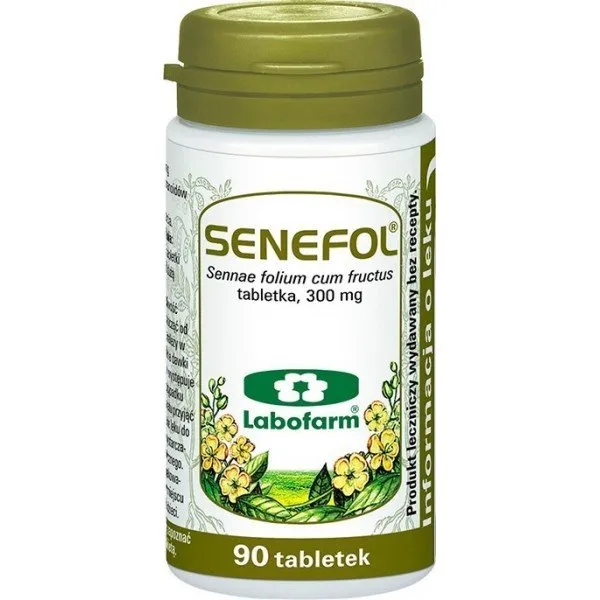
SENEFOL
PolandThe medicine is used for the symptomatic relief of constipation.
Frequently asked questions
How to use Senefol?
Adults and adolescents over 12 years of age should take 2 to 4 tablets before bedtime, swallowing them with plenty of water. It is recommended to start with the lowest dose (1 tablet) and increase it if necessary, without exceeding 4 tablets per day. The effect occurs after 8–12 hours.
When should you not take this medicine?
It should not be used in children under 12 years of age, persons with hypersensitivity to the ingredients, in cases of intestinal obstruction or narrowing, appendicitis, inflammatory bowel diseases (e.g., Crohn's disease), abdominal pain of unknown cause, and in a state of dehydration. Use is also contraindicated in cases of fecal impaction.
Can the medicine be used during pregnancy or breastfeeding?
The use of the medicine is not recommended during pregnancy or breastfeeding due to a lack of sufficient data.
What may side effects occur?
Allergic reactions (itching, urticaria, rash) as well as abdominal pain and cramps may occur. Long-term use may cause dark discoloration of the colonic mucosa. A change in urine color to pink or red may also occur, which is not harmful.
Does the medicine interact with other medicines?
Chronic overuse of the medicine may lower potassium levels, which enhances the effect of cardiac and antiarrhythmic drugs. Additionally, taking diuretics, steroids, or licorice root may deepen electrolyte deficiency.
How long can this preparation be used?
The product is not intended for long-term use. The decision to use it for longer than 1–2 weeks should be made by a physician, as long-term intake of laxatives can disrupt bowel function and lead to dependence.
Instructions for use
PACKAGE LEAFLET
Sennae foliolum cum fructu
SENEFOL
7.5 mg hydroxyanthracene derivatives expressed as sennoside B, tablet
Pharmacological action:
Active compounds derived from anthranoid glycosides present in senna leaves and fruits affect colonic peristalsis and inhibit water absorption, leading to softening of faecal mass and facilitation of defecation.
Indications:
Herbal medicinal product for short-term treatment of constipation.
Contraindications:
Do not use in case of known hypersensitivity to the active substance, intestinal obstruction or stricture, atony, appendicitis, inflammatory bowel diseases (e.g. Crohn's disease, ulcerative colitis), abdominal pain of unknown origin, or dehydration associated with electrolyte loss. Do not use in children under 12 years of age.
Warnings and precautions:
This product is not intended for long-term use. Use beyond 1–2 weeks should only be initiated by a physician. Prolonged use of laxatives may impair intestinal function and lead to dependency.
Preparations containing hydroxyanthracene glycosides should only be recommended if normal bowel movement cannot be achieved through dietary changes.
Do not use in patients with faecal impaction or gastrointestinal symptoms such as abdominal pain, nausea, and vomiting, unless otherwise directed by a physician. Such symptoms may indicate possible intestinal obstruction. In patients with renal dysfunction, there is a risk of electrolyte imbalance.
Use in patients with faecal incontinence requires more frequent diaper changes to avoid prolonged contact of faeces with the skin.
Interactions:
Chronic overuse may lead to hypokalaemia (decreased potassium levels), potentially enhancing the effects of concurrently administered cardiac glycosides, antiarrhythmic drugs, QT-prolonging agents, and sinus rhythm-restoring medications.
Concomitant use with drugs that induce hypokalaemia (e.g. diuretics, corticosteroids, liquorice root) may exacerbate electrolyte deficiency.
Special warnings:
Use in children and adolescents:
Do not use in children under 12 years of age.
Pregnancy and breastfeeding:
There are insufficient data on use during pregnancy; therefore, use during pregnancy is not recommended.
Use during breastfeeding is not recommended due to insufficient data on passage of metabolites into breast milk. Small amounts of active metabolites (rhein) pass into the milk of breastfeeding women, but a laxative effect in infants has not been observed.
Driving and operating machinery:
No influence.
Dosage, method and route of administration:
Route of administration: Oral.
Dosage: Adolescents over 12 years of age and adults: 2–4 tablets at bedtime. The tablets should be taken with a large glass of water. Do not exceed 4 tablets.
Due to individual variability in sensitivity, treatment should start with the lowest dose (1 tablet), which may be gradually increased to achieve an effective dose. The laxative effect occurs within 8–12 hours. If no effect is observed, the next dose should be taken after 12 hours.
Taking the medicine 2–3 times per week is usually sufficient to achieve the therapeutic effect.
Overdose:
May cause cramping pains, diarrhoea, possibly leading to dehydration and electrolyte loss (disturbance of water-electrolyte balance). Rehydration and electrolyte replacement should be administered. Potassium levels should be monitored, especially in elderly patients. Long-term overdose of anthranoids may lead to liver inflammation.
Missed dose:
Do not take a double dose to make up for a missed dose.
Adverse reactions:
In hypersensitive individuals, allergic reactions such as itching, urticaria, and rash may occur. Abdominal cramps and pain may also occur; in such cases, reduce the dose. Long-term use may lead to dark pigmentation of the colonic mucosa (pseudomelanosis coli), which usually resolves after discontinuation of the product. Metabolites may change urine colour to pink or red-pink, depending on urine pH; this is clinically insignificant.
Reporting of adverse reactions:
If any adverse reactions occur, including those not listed in this leaflet, inform your doctor, pharmacist, or nurse. Adverse reactions can be reported directly to the Department of Monitoring Adverse Drug Reactions, Office for Registration of Medicinal Products, Medical Devices and Biocidal Products: Al. Jerozolimskie 181C, 02-222 Warsaw, tel.: 22 49-21-301, fax: 22 49-21-309. Website: https://smz.ezdrowie.gov.pl.
Adverse reactions can also be reported to the marketing authorisation holder. Reporting adverse reactions helps provide more information on the safety of the medicinal product.
Storage:
Store in tightly closed containers, at a temperature not exceeding 25°C, out of sight and reach of children.
Do not use after the expiry date stated on the packaging.
Composition:
Sennae foliolum cum fructu 300 mg
Each tablet contains 7.5 mg hydroxyanthracene derivatives expressed as sennoside B.
Excipients: potato starch, colloidal anhydrous silica.
Marketing authorisation holder and manufacturer:
Labofarm sp. z o.o.
ul. Lubichowska 176B
83-200 Starogard Gdański
tel. 58 561 20 08
e-mail: [email protected]
Senefol, 2024.10.18 2 / 2
The original data is available in the language of the country of manufacture.
Data source: Register of Medicinal Products of Poland (URPL)
Data last verified: September 01, 2026