PLIAGLIS
PolandThe medicine is used to numb an area of skin before painful procedures, such as needle insertion or laser treatments.
Frequently asked questions
How to use Pliaglis?
The cream should be applied in a thin layer (approx. 1 mm) to dry and intact skin using a flat tool, e.g., a spatula. It must not be applied with fingers. The cream should be left to dry for 30 or 60 minutes (depending on the doctor's instructions) until it forms a mask, which should then be peeled off and carefully removed.
When should you not use this medicine?
It should not be used if you are allergic to lidocaine, tetracaine, or other anesthetics, or if you are allergic to para-aminobenzoic acid (PABA) or specific preservatives (methyl or propyl parahydroxybenzoate). The medicine must not be used on damaged or irritated skin or on mucous membranes (e.g., mouth). It is also not administered to children and adolescents under 18 years of age.
Can Pliaglis interact with other medicines?
Yes, the risk of side effects increases when used concurrently with certain heart medications (e.g., amiodarone, quinidine), drugs that cause methemoglobinemia (e.g., nitroglycerin, nitrofurantoin), and other products containing lidocaine or tetracaine.
What are the possible side effects of Pliaglis?
Redness and skin discoloration occur most frequently. Swelling, itching, pain, burning, tingling, paleness, skin peeling, or swelling of the face and eyelids may also occur. In the event of allergic reactions, such as rash, swelling, or difficulty breathing, the medicine must be removed immediately and a doctor must be contacted.
What should you remember during use?
Avoid contact of the medicine with the eyes. After removing the cream, the skin may be numb; therefore, you should not scratch it, rub it, or touch very hot or cold surfaces until sensation returns, in order to avoid damaging the skin. Wash your hands immediately after removing the mask.
Instructions for use
Table of contents
Patient Information Leaflet
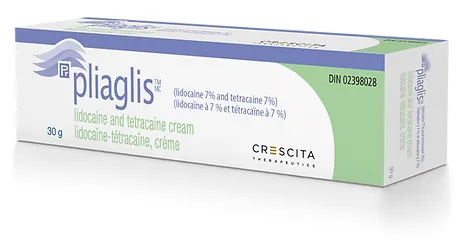
Pliaglis, 70 mg/g + 70 mg/g, cream
Lidocaine + Tetracaine
Please read carefully the entire leaflet before using this medicine, as it contains
important information for the patient.
- Keep this leaflet, as you may need to read it again.
- If you have any questions, please consult your doctor or pharmacist.
- This medicine has been prescribed for a specific individual. Do not pass it on to others. The medicine may harm someone else, even if their symptoms are the same.
- If you experience any adverse reactions, including any not listed in this leaflet, tell your doctor or nurse. See section 4.
Table of contents:
- What Pliaglis is and what it is used for
- Important information before using Pliaglis
- How to use Pliaglis
- Possible side effects
- How to store Pliaglis
- Contents of the pack and other information
1 What Pliaglis is and what it is used for
Pliaglis is a cream containing local anaesthetic agents: lidocaine and tetracaine, which are used to numb the skin area prior to a painful procedure such as needle insertion or laser treatments.
2 Important information before using Pliaglis
When not to use Pliaglis
if the patient is allergic to lidocaine or tetracaine, other similar local anaesthetics, or any of the other ingredients of this medicine (listed in section 6)
if the patient is allergic to para-aminobenzoic acid (also known as PABA), which is formed during the breakdown of tetracaine in the body, methyl parahydroxybenzoate (E 218), or propyl parahydroxybenzoate (E 216)
on damaged or irritated skin
on surfaces covered with mucous membranes such as the mouth
Warnings and precautions
Before starting treatment with Pliaglis, discuss with your doctor or pharmacist:
- if you have liver, kidney, or heart problems
- if you have an acute illness or physical weakness, as these may increase sensitivity to Pliaglis
Avoid contact with the eyes. If Pliaglis gets into the eyes, immediately rinse the eye with water or saline solution and protect it until sensation returns. Do not use Pliaglis for longer than recommended. See section 3. After removal of Pliaglis, the skin will feel numb. Avoid scratching or rubbing the numbed area, and do not touch very hot or very cold surfaces until the numbness wears off, as you may accidentally injure the skin.
Children and adolescents
Pliaglis should not be given to children and adolescents under 18 years of age, as its safety and efficacy have not been established in this population.
Pliaglis with other medicines
Tell your doctor or pharmacist about all medicines you are currently taking or have recently taken, as well as any medicines you plan to use. The risk of adverse effects increases when Pliaglis is used together with other medicines, such as:
- certain heart medications such as quinidine, disopyramide, tocainide, mexiletine, and amiodarone
- medicines known to cause methemoglobinemia such as: anilides, naphthalene, nitrates and nitrites, nitrofurantoin, nitroglycerin, sodium nitroprusside, primaquine, and quinine
- other medicines containing lidocaine and/or tetracaine
Pliaglis with food and drink
Pliaglis may be used before or after eating or drinking.
Pregnancy, breastfeeding and fertility
If you are pregnant or breastfeeding, think you may be pregnant, or are planning to have a baby, consult your doctor or pharmacist before using this medicine.
Pregnancy
Consult your doctor before using Pliaglis during pregnancy.
Breastfeeding
Breastfeeding is possible while using Pliaglis, provided the medicine is not applied to the breast area.
Driving and operating machinery
Pliaglis has no effect or negligible effect on the ability to drive and operate machinery.
Pliaglis contains methyl parahydroxybenzoate (E 218) and propyl parahydroxybenzoate (E 216)
These substances may cause allergic reactions (delayed-type reactions possible).
3 How to use Pliaglis
Always use this medicine exactly as your doctor has instructed. If you are unsure, consult your doctor or pharmacist.
The recommended dose is approximately 1.3 g of cream per 10 cm².
Pliaglis is intended for use in a single patient only.
Pliaglis should only be applied to dry, intact skin.
DO NOT apply Pliaglis to the face by yourself.
Only a doctor should apply Pliaglis to the face.
Apply Pliaglis evenly and thinly (approximately 1 mm thick) to the area to be treated (as directed by the doctor), using a flat instrument such as a metal spatula or tongue depressor. Never apply Pliaglis with fingers.
Do not cover the treated area with an occlusive dressing.
Avoid touching the cream with fingers.
Avoid contact with the eyes. If Pliaglis gets into the eyes, immediately rinse the eye with water or saline solution and protect it until sensation returns.
Leave the cream to dry for 30 to 60 minutes, depending on the procedure, as directed by the doctor.
After the required application time, the dried cream will form a soft mask on the skin. Pliaglis can be removed by grasping the edge of the mask and peeling it off the skin.
Carefully dispose of the mask immediately after removal (more information on mask removal is in section 5).
Any residue remaining on the skin surface should be wiped off with a swab (tissue or cotton).
Wash hands immediately after removing and disposing of the mask.
Using more Pliaglis than recommended
The maximum application area should not exceed 400 cm² (do not use more than two 30 g tubes). If too much Pliaglis is applied, consult your doctor or pharmacist immediately.
If you think the amount of Pliaglis applied is insufficient, consult your doctor immediately.
If you have any further questions about the use of this medicine, consult your doctor or pharmacist.
4 Possible side effects
Like all medicines, this product can cause side effects, although not everybody gets them.
Most side effects occur at the site where the cream was applied. They are usually mild, short-lived, and typically resolve after treatment ends.
The two active ingredients in Pliaglis (lidocaine and tetracaine) may cause
hypersensitivity reactions (anaphylactoid reactions) such as rash, swelling, and difficulty
breathing. If any of these side effects occur, remove Pliaglis immediately and contact your doctor.
Most side effects occur at the application site.
Very common: may affect more than 1 in 10 people
skin redness
skin discoloration
Common: may affect up to 1 in 10 people
skin swelling
Uncommon: may affect up to 1 in 100 people
skin itching
pain or skin pain
Rare: may affect up to 1 in 1,000 people
pale skin
skin burning sensation
facial swelling
skin peeling
skin irritation
skin tingling sensation
eyelid swelling
Unknown frequency: cannot be estimated from available data
urticaria (hives)
Reporting of side effects
If you experience any adverse reactions, including any not listed in this leaflet, tell your doctor or pharmacist.
Side effects can be reported directly to the Department of Monitoring Adverse Drug Reactions, Office for Registration of Medicinal Products, Medical Devices and Biocidal Products
Al. Jerozolimskie 181C
02-222 Warsaw
Tel.: +48 22 49 21 301
Fax: +48 22 49 21 309
Website: https://smz.ezdrowie.gov.pl
Side effects can also be reported to the marketing authorization holder.
Reporting side effects helps provide more information on the safety of this medicine.
5 How to store Pliaglis
Keep the medicine out of the sight and reach of children.
Do not use this medicine after the expiry date stated on the tube and carton.
The expiry date refers to the last day of the stated month.
Store in the refrigerator (2°C – 8°C), including after opening the package.
Do not freeze.
After opening, the product should be used within 3 months. It is recommended to write the opening date on the packaging.
Do not use Pliaglis if the packaging is damaged in any way.
Dispose of the used mask carefully, as it contains medicine components in high concentration. To protect the environment, do not flush the used mask down the toilet. Place the used mask in a sealed container such as a plastic bag.
Medicines should not be disposed of via wastewater or household waste. Ask your pharmacist how to dispose of medicines no longer in use. This helps protect the environment.
6 Contents of the pack and other information
What Pliaglis contains
- The active substances are: lidocaine and tetracaine; 1 gram of cream contains: 70 mg lidocaine and 70 mg tetracaine.
- Other ingredients: calcium hydrogen phosphate, anhydrous, purified water, polyvinyl alcohol, white soft paraffin, sorbitan monopalmitate, methyl parahydroxybenzoate (E 218), and propyl parahydroxybenzoate (E 216).
What Pliaglis looks like and contents of the pack
The medicine is a white or almost white cream. Tubes of 15 g or 30 g with a cap, packed in a cardboard box. Not all pack sizes may be marketed.
Marketing authorization holder and manufacturer
Marketing authorization holder:
Egis Pharmaceuticals PLC
Keresztúri út 30-38
1106 Budapest
Hungary
Manufacturer:
Industrial Farmacéutica Cantabria, S.A.
Barrio Solía, nº 30
La Concha
Villaescusa
39690 Santander
Cantabria
Spain
This medicinal product is authorized for marketing in the European Economic Area countries under the following names:
Austria, Belgium, France, Greece, Spain, the Netherlands, Ireland, Luxembourg, Germany, Poland, Portugal, United Kingdom, Italy: PLIAGLIS
Denmark, Norway: PLIAPEL
Information intended exclusively for healthcare professionals:
Pliaglis is a single-patient-use medicine.
For facial procedures, Pliaglis should be applied by healthcare professionals.
For procedures on other body parts, Pliaglis should be applied by healthcare professionals or by patients who have been adequately instructed in the proper method of application.
It is recommended that patients and healthcare professionals avoid repeated direct contact with the cream or skin covered with the cream to prevent contact dermatitis.
Pliaglis should never be applied with fingers.
Pliaglis should only be applied using a flat instrument such as a spatula or tongue depressor.
Wash hands immediately after removing and disposing of the mask.
For dermatological procedures such as pulsed dye laser therapy, laser hair removal, non-ablative laser facial rejuvenation, wrinkle filling injections, and vessel sealing, apply approximately 1.3 g of Pliaglis per 10 cm² of intact skin, forming a layer approximately 1 mm thick, for 30 minutes.
For dermatological procedures such as tattoo removal and laser treatment of varicose veins, apply approximately 1.3 g of Pliaglis per 10 cm² of intact skin, forming a layer approximately 1 mm thick, for 60 minutes.
- Determine the size of the area to be treated.
The table below indicates the amount of cream to apply to achieve a 1 mm thick layer depending on the surface area.
| Surface area of the treatment site (cm2) | Approximate amount of Pliaglis applied (g) | |
| 10 | 1.3 | 2 times the amount of drug that fits on the fingertip |
| 50 | 6.5 | Half of the contents of a 15 g tube |
| 100 | 13 | Entire contents of a 15 g tube |
| 200 | 26 | Entire contents of a 30 g tube |
| 400 | 52 | Entire contents of two 30 g tubes |
The maximum application area of the cream should not exceed 400 cm².
2) Pliaglis should be evenly and thinly applied (approximately 1 mm thick) to the area to be treated, using a flat instrument such as a metal spatula or tongue depressor. Contact with the patient's and the applicator's eyes should be avoided.
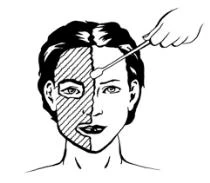
- Depending on the procedure, the cream should be left to dry for either 30 or 60 minutes.
- After the required application time has elapsed, the cream will form a flexible film on the skin. Pliaglis should be removed by grasping the edge of the film with fingers and peeling it off the skin.
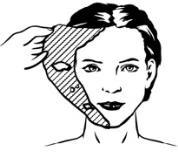
- Any remaining film residue should be wiped off the treatment area, and the patient should be prepared for the procedure. Skin anesthesia may last from 2 to 13 hours after removal of the film.
- Immediately after removal, the film should be disposed of according to local regulations.
- Hands should be washed immediately after removing and disposing of the film.
Similar drugs
| Brand name | Dosage form | Active substance / Dosage | Manufacturer |
|---|---|---|---|
| ANESDERM | cream |
|
Pierre Fabre Medicament Production |
The original data is available in the language of the country of manufacture.
Data source: Register of Medicinal Products of Poland (URPL)
Data last verified: September 01, 2026