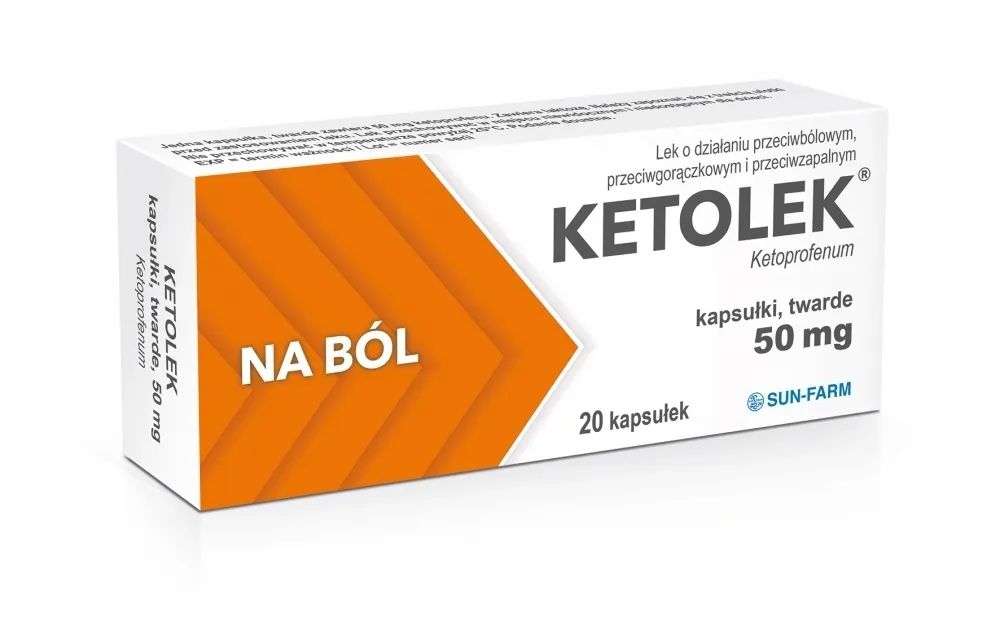
KETOLEK
PolandThe medicine is used for short-term, symptomatic treatment of mild to moderate pain, e.g., muscle pain, bone and joint pain, and headache. It has anti-inflammatory, antipyretic, and analgesic properties.
Frequently asked questions
How to use Ketolek?
Adults and adolescents over 15 years of age should take 1 capsule every 8 hours. The capsules should be swallowed whole with plenty of liquid, during or after a meal.
When should you not take this medicine?
Do not use this medicine if you are allergic to ketoprofen or other NSAIDs, have experienced allergic reactions (e.g., asthma, urticaria) after acetylsalicylic acid, have experienced skin reactions to light, have unexplained blood disorders, an active ulcer or gastrointestinal bleeding, hemorrhagic diathesis, severe heart, liver, or kidney failure, or during the last three months of pregnancy.
What are the possible side effects of Ketolek?
Gastrointestinal problems (nausea, vomiting, abdominal pain, diarrhea, constipation) are the most common. Rash, itching, headache, dizziness, or edema also occur frequently. Less commonly, serious problems may occur, such as gastrointestinal bleeding, vision disturbances, allergic reactions (e.g., facial swelling, shortness of breath), or kidney and liver problems.
Can this medicine be combined with other agents?
Particular caution should be exercised, and the doctor should be informed about the intake of other medicines, especially: other anti-inflammatory drugs (NSAIDs), anticoagulants (e.g., warfarin), corticosteroids, antidepressants (SSRIs), blood pressure medications, diuretics, and medicines used to treat epilepsy or psychiatric disorders.
Can you drive while undergoing treatment?
When using higher doses, dizziness, drowsiness, or fatigue may occur, which may affect the ability to drive vehicles and operate machinery. If such symptoms occur, you should not drive.
How long can the medicine be used without consulting a doctor?
The medicine should not be used for longer than 5 days without contacting a doctor. If there is no improvement after 5 days or if the condition worsens, you should consult a specialist.
Instructions for use
Package leaflet: Information for the patient
KETOLEK, 50 mg, hard capsules
Ketoprofenum
Please read all of this leaflet carefully before taking this medicine, because it contains
important information for the patient.
This medicine should always be used exactly as described in this patient information leaflet or as
directed by the doctor or pharmacist.
- Keep this leaflet so that you can read it again if necessary.
- If you need advice or further information, please consult your pharmacist.
- If you experience any adverse reactions, including any possible adverse reactions not listed in this leaflet, inform your doctor or pharmacist. See section 4.
- If there is no improvement after 5 days of treatment, or if you feel worse, consult your doctor.
Contents of the leaflet
- What Ketolek is and what it is used for
- Important information before taking Ketolek
- How to take Ketolek
- Possible side effects
- How to store Ketolek
- Contents of the pack and other information
1. What Ketolek is and what it is used for
Ketolek contains the active substance ketoprofen, a non-steroidal anti-inflammatory drug
(NSAID) with anti-inflammatory, antipyretic and analgesic properties.
Ketolek is indicated for short-term symptomatic treatment of mild to moderate pain of various origins, such as muscle pain, musculoskeletal pain, and headache.
2. Important information before using Ketolek
When not to use Ketolek:
- if the patient is allergic to ketoprofen or any of the other ingredients of this medicine (listed in section 6),
- if the patient has ever experienced bronchospasm, asthma attack, nasal mucosal swelling (nasal catarrh), skin reactions (urticaria) or other allergic reactions after taking ketoprofen, acetylsalicylic acid or other non-steroidal anti-inflammatory drugs (NSAIDs). Severe, rarely fatal anaphylactic reactions have been reported in such patients (see section 4),
- if the patient has previously experienced photosensitivity skin reactions (photoallergic or phototoxic reactions) during treatment with ketoprofen or fibrates (lipid-lowering drugs),
- if the patient has unexplained disorders of the haematopoietic system (the system responsible for blood component formation),
- if the patient has active peptic ulcer (gastric and/or duodenal ulcer disease) or a history of gastrointestinal bleeding, ulceration or perforation,
- if the patient has haemorrhagic diathesis,
- if the patient has cerebral haemorrhage (bleeding from cerebral vessels) or any other active bleeding,
- if the patient has severe heart failure,
- if the patient has severe impairment of liver or kidney function,
- during the last three months of pregnancy.
Warnings and precautions
Before starting treatment with Ketolek, discuss this with your doctor or pharmacist.
Inform your pharmacist or doctor if the patient has an infection – see below, the section titled “Infections”.
The section “Warnings and precautions” contains information about when the patient may take Ketolek only under certain conditions (i.e. with longer intervals between doses or at lower doses, with simultaneous monitoring of body functions). However, even in such cases, special caution is required.
This section also applies to patients who have previously experienced the situations described below.
For further information, contact your doctor or pharmacist.
Taking the medicine at the lowest effective dose for the shortest duration necessary to relieve symptoms reduces the risk of adverse effects.
Effects on the gastrointestinal tract (stomach and intestines)
Avoid concomitant use of Ketolek with other NSAIDs (non-steroidal anti-inflammatory drugs), including so-called selective cyclooxygenase-2 inhibitors.
Elderly patients
When using NSAIDs, the risk of adverse effects, especially gastrointestinal bleeding or perforation, which may be fatal, is higher in elderly patients. Therefore, elderly patients require special medical supervision.
Gastrointestinal bleeding, ulcers and perforations
Gastrointestinal bleeding, ulcers or perforations, which may be fatal, have been reported for all NSAIDs, at any time during treatment, with or without warning symptoms or serious gastrointestinal events in history.
Epidemiological data indicate that ketoprofen use may be associated with increased gastrointestinal toxicity compared to other NSAIDs, especially when higher doses are used.
The risk of gastrointestinal bleeding, ulceration or perforation increases with higher NSAID doses, in patients with a history of peptic ulcer disease, particularly if complicated by bleeding or perforation (see section 2 “When not to use Ketolek”), and in elderly patients. Therefore, treatment should be initiated with the lowest available dose in elderly patients.
Consideration should be given to co-therapy with protective agents (e.g. misoprostol or proton pump inhibitors) in these patients, as well as in patients requiring concomitant treatment with low-dose acetylsalicylic acid and other drugs increasing the risk of gastrointestinal adverse effects.
Patients, especially elderly ones, should report any unusual abdominal symptoms (particularly gastrointestinal bleeding), especially at the beginning of treatment.
Caution is advised in patients taking concomitant medications that may increase the risk of ulcers or bleeding, such as oral corticosteroids, anticoagulants (blood thinners) such as warfarin, selective serotonin reuptake inhibitors (used, among others, in depression treatment), or antiplatelet drugs such as acetylsalicylic acid (see section “Ketolek with other medicines”).
If gastrointestinal ulceration or bleeding occurs, Ketolek should be discontinued immediately.
NSAIDs should be used with caution in patients with a history of gastrointestinal disorders (ulcerative colitis, Crohn’s disease), as these drugs may exacerbate these conditions (see section 4 “Possible side effects”).
Effects on the circulatory system and cerebral vessels
Taking medicines such as Ketolek may be associated with a small increased risk of heart attack (myocardial infarction) or stroke. The risk is higher with long-term use of high doses. Do not use higher doses or longer treatment duration than recommended.
If you have heart problems, a history of stroke, or suspect you are at risk of such conditions (e.g. high blood pressure, diabetes, high cholesterol, smoking), discuss the treatment approach with your doctor or pharmacist.
Caution is advised in patients with hypertension and/or a history of mild to moderate heart failure, as fluid retention and oedema have been reported with NSAID treatment.
Skin reactions
Very rare cases of severe, sometimes fatal skin reactions – with redness and blisters – have been reported during NSAID treatment (including exfoliative dermatitis, Stevens-Johnson syndrome and toxic epidermal necrolysis (Lyell’s syndrome); see section 4 “Possible side effects”). The risk of these reactions is probably higher at the beginning of treatment, as most cases occurred within the first month of treatment. At the first signs of skin rash, mucosal changes or other signs of hypersensitivity reactions, Ketolek should be discontinued immediately and medical advice sought.
Photoallergic reactions caused by NSAIDs are well-known adverse effects of this group of drugs and are most commonly attributed to UV radiation. Ketoprofen increases the risk of photoallergic contact dermatitis. Symptoms may sometimes first appear after a latency period of sensitization. Skin symptoms may persist for several months after discontinuation of the drug. If a photoallergic reaction occurs in patients taking Ketolek, treatment should be discontinued and medical advice sought.
Infections
Ketolek may mask symptoms of infection such as fever and pain. Therefore, Ketolek may delay appropriate treatment of infection and consequently lead to an increased risk of complications. This has been observed in bacterial pneumonia and bacterial skin infections associated with chickenpox. If the patient takes this medicine during an infection and infection symptoms persist or worsen, medical advice should be sought immediately.
Other information
Ketolek should be used only after careful consideration of benefit-risk ratio in specific congenital disorders of blood cell production (acquired porphyria).
At the beginning of treatment in patients with heart failure, liver cirrhosis, nephrotic syndrome, patients receiving diuretics, and patients with chronic renal failure, especially elderly patients, renal function should be carefully monitored. In such patients, administration of ketoprofen may lead to reduced renal blood flow due to inhibition of prostaglandin synthesis, resulting in renal function impairment.
Close medical supervision is required in the following cases:
- in patients with pre-existing kidney damage,
- in patients with liver function disorders,
- in patients immediately after major surgery,
- in patients with allergies (e.g. skin reactions to other drugs, asthma, hay fever), chronic rhinitis, chronic respiratory diseases with airway narrowing,
- in patients taking potent diuretics,
- in patients taking NSAIDs or other painkillers,
- in patients with blood coagulation disorders and those taking anticoagulants.
Acute hypersensitivity reactions (e.g. anaphylactic shock) are very rarely observed.
If the first signs of severe hypersensitivity reactions occur after taking Ketolek, the medicine should be discontinued. Depending on symptoms, any medical intervention must be performed by a specialist.
If visual disturbances such as blurred vision occur, treatment should be discontinued.
Ketoprofen, the active substance in Ketolek, may temporarily inhibit platelet aggregation. Patients with coagulation disorders should be closely monitored.
If anticoagulants (blood thinners) or blood glucose-lowering drugs are used during ketoprofen treatment, blood glucose and coagulation should be carefully monitored.
Like other NSAIDs, ketoprofen may mask symptoms of infectious diseases.
In patients with abnormal liver function test results or a history of liver disease, aminotransferase levels should be periodically checked.
Rare cases of jaundice and hepatitis associated with ketoprofen use have been reported.
During prolonged treatment with Ketolek, regular monitoring of liver enzyme activity, kidney function and blood morphology is required.
Inform your doctor or dentist about taking Ketolek before undergoing surgery.
Patients with asthma combined with chronic rhinitis, chronic sinusitis and/or nasal polyps have a higher risk of allergy to acetylsalicylic acid and/or NSAIDs than the general population. Taking this medicine may cause asthma attacks or bronchospasm, particularly in patients allergic to acetylsalicylic acid or NSAIDs (see section 2 “When not to use Ketolek”).
During long-term use of painkillers, headache may occur, which should not be treated by increasing the dose of the medicine. If frequent headaches occur despite treatment with Ketolek, consult your doctor.
Chronic use of painkillers, especially when multiple painkillers are taken simultaneously, may lead to permanent kidney damage, including kidney failure (analgesic nephropathy).
Children and adolescents
Do not use in individuals under 15 years of age.
Ketolek and other medicines
Inform your doctor or pharmacist about all medicines currently or recently taken, as well as any medicines the patient plans to take.
This particularly applies to:
- digoxin (used to strengthen heart muscle) – concomitant use of Ketolek and digoxin may exacerbate heart failure and lead to increased digoxin serum concentration. Monitoring of digoxin serum levels is recommended.
- medicines containing phenytoin (used in epilepsy treatment) or lithium (used in psychiatric disorders treatment) – concomitant use of Ketolek with these medicines may increase their serum concentration, sometimes leading to toxic lithium serum concentration due to reduced renal lithium excretion. Serum lithium concentration should be carefully monitored, and monitoring of phenytoin serum concentration is recommended.
- diuretics (fluid-reducing drugs), beta-blockers and antihypertensive drugs – Ketolek may reduce the effectiveness of these drugs.
- angiotensin-converting enzyme inhibitors (drugs used in heart failure and hypertension treatment) – Ketolek may reduce their effectiveness. Additionally, concomitant use of these drugs may increase the risk of kidney function disorders.
- potassium-sparing diuretics (a group of diuretic drugs) – concomitant use of Ketolek may lead to increased blood potassium concentration. Blood potassium concentration should be monitored.
- other NSAIDs (including selective cyclooxygenase-2 inhibitors) or glucocorticosteroids – concomitant use with Ketolek increases the risk of gastrointestinal ulcers or bleeding.
- antiplatelet drugs (inhibiting or reducing blood clotting), such as acetylsalicylic acid and certain antidepressants (selective serotonin reuptake inhibitors - SSRIs), which may increase the risk of gastrointestinal bleeding.
- methotrexate (a drug used in cancer and autoimmune disease treatment) – administration of Ketolek within 24 hours before or after methotrexate may lead to increased methotrexate concentration and increased adverse effects.
- cyclosporine and tacrolimus – concomitant use of Ketolek with these drugs carries a risk of additive nephrotoxic effects, especially in elderly patients.
- medicines containing probenecid and sulfinpyrazone (used in gout treatment) – these drugs may delay ketoprofen excretion. This may lead to excessive accumulation of Ketolek in the body and increase the frequency and severity of adverse effects.
- anticoagulants (blood thinners), such as warfarin – NSAIDs may enhance the effect of these drugs.
- oral antidiabetic drugs (used in diabetes treatment) – clinical studies to date have not shown interactions between ketoprofen and these drugs. However, preventive monitoring of blood glucose levels during concomitant treatment is recommended.
- loop diuretics (used in hypertension treatment) – concomitant use of these drugs may increase the frequency of kidney function disorders.
- drugs neutralizing gastric acid, which may reduce ketoprofen absorption in the intestine.
- pentoxifylline (a drug used in intermittent claudication treatment) – concomitant use of pentoxifylline with Ketolek may increase the risk of bleeding.
- antibiotics (drugs used to treat bacterial infections) – administration of antibiotics such as quinolone derivatives may increase the risk of seizures.
- thrombolytic drugs (drugs preventing blood clot formation) – Ketolek enhances the effect of these drugs.
If in doubt about taking any of the listed medicines, consult your doctor or pharmacist.
Using Ketolek with food, drink and alcohol
Ketolek should be swallowed whole (not chewed), with plenty of fluid, during or after a meal.
Do not consume alcohol while taking Ketolek.
Pregnancy, breastfeeding and fertility
If the patient is pregnant, breastfeeding, suspects she may be pregnant, or is planning to have a child, she should consult her doctor or pharmacist before using this medicine.
Pregnancy
Do not use Ketolek if the patient is in the last three months of pregnancy, as it may harm the unborn child or cause problems during delivery. It may cause kidney and heart disorders in the unborn child. It may increase the tendency to bleeding in both mother and child and may delay or prolong labour.
During the first six months of pregnancy, Ketolek should not be used unless the doctor considers it absolutely necessary. If treatment is required during this period or when trying to conceive, the lowest possible dose should be used for the shortest possible time. From the 20th week of pregnancy, Ketolek may cause kidney function disorders in the unborn child if taken for longer than a few days. This may lead to reduced amniotic fluid volume (oligohydramnios) or narrowing of the blood vessel (ductus arteriosus) in the child’s heart. If treatment is required for longer than a few days, the doctor may recommend additional monitoring.
Breastfeeding
There is no data on the passage of ketoprofen into human milk. Use of Ketolek is not recommended in breastfeeding women.
Effect on female fertility
Ketolek may impair fertility. Inform your doctor if the patient is planning pregnancy or experiences difficulty conceiving.
Driving and operating machinery
As undesirable effects on the central nervous system (e.g. fatigue, dizziness) may occur during use of higher doses of Ketolek, reaction ability may be delayed in individual cases, and the ability to drive vehicles or operate machinery may be impaired. This is particularly relevant when alcohol is consumed concomitantly.
Patients should be informed about the possibility of somnolence, dizziness or seizures and advised not to drive or operate machinery if such symptoms occur.
Ketolek contains lactose
If the patient has previously been diagnosed with intolerance to certain sugars, the patient should consult a doctor before taking the medicine.
3. How to take Ketolek
This medicine should always be taken exactly as described in this patient leaflet or as directed by your doctor or pharmacist. If in doubt, consult your doctor or pharmacist.
This medicine is for oral use.
The lowest effective dose should be used for the shortest duration necessary to relieve symptoms.
If, during an infection, its symptoms (such as fever and pain) persist or worsen, consult a doctor immediately (see section 2).
Recommended dose
Adults and adolescents over 15 years of age:
1 capsule every 8 hours.
How to take the capsules
Ketolek should be swallowed whole (do not chew), with a large amount of liquid, during or after a meal.
Duration of treatment
Do not use this medicine for longer than 5 days without consulting a doctor.
If symptoms worsen or do not improve after 5 days, contact your doctor.
Elderly patients
Caution is required in elderly patients due to an increased risk of severe adverse effects. If non-steroidal anti-inflammatory drugs (NSAIDs) are necessary, consult your doctor or pharmacist.
Patients with impaired liver or kidney function
Caution is required in patients with impaired liver or kidney function due to an increased risk of severe adverse effects. If NSAIDs are necessary, consult your doctor or pharmacist.
Use in children and adolescents
Ketolek is not recommended for use in children and adolescents under 15 years of age.
Taking more Ketolek than recommended
Symptoms of overdose may include central nervous system disturbances such as headache, dizziness, lethargy, drowsiness, confusion, and loss of consciousness, as well as abdominal/epigastric pain, nausea, and vomiting. Additionally, hypotension, respiratory depression (reduced breathing rate), skin and mucosal purpura (cyanosis) may occur.
There is no specific antidote.
Inform a doctor immediately if an overdose of Ketolek is suspected. The doctor will decide on appropriate preventive measures based on the severity of poisoning.
If you forget to take Ketolek
Do not take a double dose to make up for a missed dose.
If you have any further questions about the use of this medicine, consult your doctor or pharmacist.
4. Possible adverse effects
Like all medicines, this medicine can cause adverse effects, although they do not occur in everyone.
When considering the adverse effects listed below, it should be remembered that they are mainly
dose-dependent and may vary between individual patients.
Most commonly, adverse effects involve the gastrointestinal tract. Gastrointestinal ulceration,
perforation or bleeding – sometimes fatal – may occur, particularly in elderly patients (see section 2
"Warnings and precautions"). Following administration of Ketolek, nausea, vomiting, diarrhoea,
flatulence (passing wind), constipation, dyspepsia, abdominal pain, melaena (black, tarry stools),
haematemesis (vomiting blood), ulcerative stomatitis (small ulcers or painful swellings of the mucous
membranes of the mouth and tongue), and worsening of ulcerative colitis and Crohn's disease have
been reported (see section 2 "Warnings and precautions"). Gastritis has been observed less frequently.
The risk of gastrointestinal bleeding particularly depends on the dose and duration of treatment.
Oedema, high blood pressure and heart failure have been reported in association with treatment with
NSAIDs.
Use of medicines such as Ketolek may be associated with a small increased risk of heart attack
(myocardial infarction) or stroke.
The following adverse effects have been reported with ketoprofen use in adults:
Very common (may affect more than 1 in 10 patients)
Gastrointestinal disorders such as nausea, vomiting, heartburn, stomach pain, flatulence, constipation
or diarrhoea, and minor gastrointestinal bleeding, which in isolated cases may lead to anaemia.
Common (may affect up to 1 in 10 patients)
Hypersensitivity reactions such as skin rash and itching, insomnia, restlessness, irritability, headache,
dizziness, fatigue, dyspepsia, abdominal pain, gastrointestinal ulceration with bleeding and
perforation in some cases, fluid retention causing swelling of the arms or legs (peripheral oedema),
particularly in patients with high blood pressure.
Uncommon (may affect up to 1 in 100 patients)
Somnolence, visual disturbances (see section 2 "Warnings and precautions"), tinnitus (ringing in the
ears), haematemesis (vomiting blood), black, tarry stools (melaena), stomatitis (inflammation of the
mucous membrane of the mouth), gastritis.
If moderate to severe epigastric pain, haematemesis, blood in the stool and/or black discoloration of
the stool occurs, treatment with Ketolek should be discontinued immediately and medical advice
sought without delay.
Hepatic function disorders, photosensitivity, skin rash, itching, oedema, fluid retention in the body,
excessive protein loss in urine (nephrotic syndrome), inflammatory changes in kidney tissue
(interstitial nephritis), renal function disorders.
Reduced urine output, fluid accumulation (oedema) and general malaise may indicate kidney
dysfunction or even renal failure.
Rare (may affect up to 1 in 1,000 patients)
Haemorrhagic anaemia, paraesthesia, asthma, hepatitis, increased aminotransferase activity,
increased serum bilirubin concentration due to liver dysfunction, weight gain.
Very rare (may affect up to 1 in 10,000 patients)
Cases of worsening of inflammatory conditions associated with infection (e.g. necrotising fasciitis)
have been described in connection with NSAID use, including Ketolek.
Therefore, medical advice should be sought immediately if signs or symptoms of infection appear or
worsen (e.g. redness, swelling, fever, pain, fever) during treatment with Ketolek.
Haemolytic anaemia (caused by accelerated breakdown of red blood cells), blood disorders
(aplastic anaemia, leukopenia, thrombocytopenia, pancytopenia, agranulocytosis). Initial signs may
include: fever, sore throat, superficial ulcers in the mouth, flu-like symptoms, severe fatigue, nosebleeds
and skin bleeding. In such cases, Ketolek should be discontinued immediately and medical advice
sought. The above symptoms should not be treated with analgesics or antipyretics.
During long-term treatment, blood counts should be monitored regularly.
Acute hypersensitivity reactions. Symptoms include: facial swelling, tongue swelling, laryngeal
oedema with airway constriction, dyspnoea, palpitations, hypotension, and even life-threatening
anaphylactic shock.
Medical advice should be sought immediately if early signs of the above symptoms occur, which may
appear even after the first dose of Ketolek.
Heart failure, myocardial infarction, arterial hypertension, pancreatitis, intestinal obstruction, liver
damage (particularly during long-term treatment), hair loss (alopecia), serious skin reactions such as
skin rash with redness and blisters (e.g. Stevens-Johnson syndrome and toxic epidermal necrolysis –
Lyell's syndrome), kidney damage (papillary necrosis), particularly during long-term treatment, and
increased uric acid levels.
After several months of uneventful use of the medicine, the skin may become photosensitive, showing
signs of erythema, itching, blistering and nodules on areas of skin exposed to sunlight or artificial UV
light (e.g. sunbeds).
Frequency not known (frequency cannot be estimated from the available data)
Bone marrow failure, mood changes, confusion, convulsions, taste disturbances, aseptic meningitis,
vasodilation, bronchospasm (particularly in patients with hypersensitivity to acetylsalicylic acid and
other NSAIDs), rhinitis, exacerbation of ulcerative colitis and Crohn's disease, urticaria, angioedema,
abnormal kidney function test results.
Kidney function should be monitored regularly.
Reporting of adverse effects
If any adverse effects occur, including any not listed in this leaflet, inform your doctor or pharmacist.
Adverse effects can be reported directly to the Department of Monitoring Adverse Drug Reactions
of the Office for Registration of Medicinal Products, Medical Devices and Biocidal Products
Al. Jerozolimskie 181C
02-222 Warsaw
Tel.: + 48 22 49 21 301
Fax: + 48 22 49 21 309
Website: https://smz.ezdrowie.gov.pl
Adverse effects can also be reported to the marketing authorisation holder.
Reporting adverse effects helps provide more information on the safety of the medicine.
5. How to store Ketolek
Keep the medicine out of the sight and reach of children.
Do not use this medicine after the expiry date stated on the blister and carton after EXP. The expiry date refers to the last day of the stated month.
Do not store above 25°C.
Medicines should not be disposed of via wastewater. Ask your pharmacist how to dispose of medicines no longer in use. Such measures will help protect the environment.
6. Contents of the pack and other information
What Ketolek contains
The active substance is ketoprofen.
Each capsule contains 50 mg of ketoprofen.
Other ingredients are:
Monohydrate lactose, magnesium stearate, colloidal anhydrous silica.
Capsule shell:
Body: gelatin, titanium dioxide (E 171).
Cap: gelatin, iron oxide black (E 172), erythrosine (E 127), indigo carmine (E 132), titanium dioxide (E 171).
What Ketolek looks like and contents of the pack
Ketolek is a hard gelatin capsule with an opaque blue-violet cap and white body, filled with a whitish-grey powder.
Ketolek is available in PVC/PVDC/Aluminium blisters, in cardboard boxes containing 10, 20 or 30 capsules.
Not all pack sizes may be marketed.
Marketing Authorisation Holder and Manufacturer
Marketing Authorisation Holder
SUN-FARM Sp. z o.o.
ul. Dolna 21
05-092 Łomianki
tel. +48 22 350 66 69
Manufacturer
mibe GmbH Arzneimittel
Münchener Straße 15
06796 Brehna
Germany
Similar drugs
| Brand name | Dosage form | Active substance / Dosage | Manufacturer |
|---|---|---|---|
| KETOFLIX | capsules, hard |
|
Biofarm Sp. z o.o. |
| KETONAL ACTIVE | capsules, hard |
|
Lek Pharmaceuticals d.d. |
| KETOPROFEN-SF | capsules, hard |
|
mibe GmbH Pharmaceuticals |
| KETOPROFEN-SF | capsules, hard |
|
mibe GmbH Pharmaceuticals |
The original data is available in the language of the country of manufacture.
Data source: Register of Medicinal Products of Poland (URPL)
Data last verified: September 01, 2026