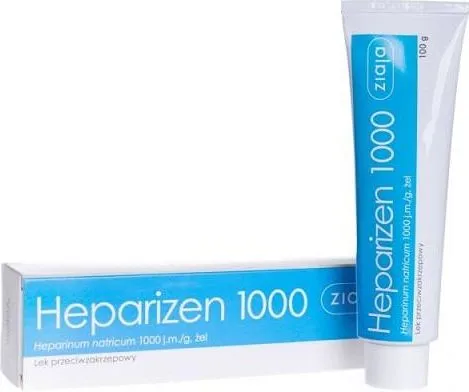
HEPARIZEN 1000
PolandThe medicine is used in the treatment of superficial thrombophlebitis, inflammation of the veins in the lower limbs, and varicose veins. It also helps with hematomas, bruises, swelling, and in the prevention and treatment of hypertrophic scars and keloids.
Frequently asked questions
How to use Heparizen 1000?
The gel should be applied locally to the affected areas and their surroundings 1 to 3 times daily. Apply 5 to 10 cm of gel and gently massage the skin for several minutes.
When should you not use this medicine?
Do not use if you are allergic to sodium heparin or any other ingredients. The gel must not be applied to open, bleeding, purulent, or oozing wounds, infected skin, mucous membranes, or the area around the eyes. The medicine is not for use in children.
Can the medicine be used during pregnancy or breastfeeding?
It can be used with caution and only when strictly necessary, after prior consultation with a doctor or pharmacist. Sodium heparin does not pass through the placenta or into breast milk.
Does the medicine interact with other drugs?
Topical application does not show interactions with other gels. However, individuals taking oral anticoagulants should exercise caution, as there may be an enhanced effect of the medicine and a prolongation of blood clotting time.
What side effects may occur?
Long-term use may cause skin reactions such as: erythema, inflammation, itching, burning, a sensation of cold, skin dryness, rash, or redness. The medicine should be discontinued if these symptoms occur.
What should you remember during use?
The product is flammable, so it should not be used near open flames, lit cigarettes, or devices such as hair dryers. It contains ethanol, which may cause burning of damaged skin.
Instructions for use
Package leaflet: Information for the patient
Heparizen 1000 1000 IU/g gel
Sodium heparin
Please read the entire leaflet carefully before using the medicine, as it contains
important information for the patient.
This medicine should always be used exactly as described in this patient leaflet or as directed by a physician or pharmacist.
- Keep this leaflet for future reference.
- If you need advice or further information, consult your pharmacist.
- If you experience any adverse reactions, including any possible adverse reactions not listed in this leaflet, inform your doctor or pharmacist. See section 4.
- If there is no improvement after 7 days of treatment, or if you feel worse, consult your doctor.
Table of contents
- What Heparizen 1000 is and what it is used for
- Important information before using Heparizen 1000
- How to use Heparizen 1000
- Possible side effects
- How to store Heparizen 1000
- Contents of the pack and other information
1. What Heparizen 1000 is and what it is used for
Heparizen 1000 is a topical gel containing sodium heparin, which exerts a local antithrombotic effect.
When applied externally to the skin in the form of a gel, sodium heparin accelerates the absorption of hematomas and infiltrates. It inhibits superficial inflammatory processes by neutralizing enzymes such as hyaluronidase and phosphatase.
It acts persistently on pathologically altered tissues, relieving pain and the sensation of tension, and improves metabolism in the subcutaneous connective tissue due to its hydrophilic nature, thereby shortening the duration of illness.
Heparizen 1000 is an adjunctive treatment for:
- Thrombophlebitis of superficial veins,
- Inflammatory conditions of the veins in the lower limbs,
- Varicose veins of the lower limbs,
- Post-traumatic conditions: hematomas, contusions, edema.
It is also used in the prevention and treatment of hypertrophic scars and keloids.
2. Important information before using Heparizen 1000
When not to use Heparizen 1000:
- if the patient is allergic to sodium heparin or any of the other ingredients of this medicine (listed in section 6).
Warnings and precautions
Before starting to use Heparizen 1000, discuss it with your doctor or pharmacist.
Do not use Heparizen 1000 on open, bleeding, purulent, or oozing wounds, skin lesions of unknown origin, infected skin, mucous membranes, or around the eyes. Patients with bleeding disorders should exercise particular caution. The medicine should be discontinued if patients develop: skin redness, rash, itching, burning sensation, or skin erythema.
Children
Heparizen 1000 should not be used in children due to lack of data on safety and efficacy.
Heparizen 1000 and other medicines
Inform your doctor or pharmacist about all medicines you are currently taking or have recently taken, as well as any medicines you plan to use.
No interactions with other medicines applied topically to the skin in gel form have been observed during local use of Heparizen 1000. Due to limited absorption of sodium heparin through the skin, interactions with other medicines are unlikely to be significant.
However, in patients receiving oral anticoagulant therapy, an enhanced effect of sodium heparin and prolonged blood clotting time may occasionally occur.
Pregnancy and breastfeeding
If the patient is pregnant or breastfeeding, suspects she may be pregnant, or is planning to have a child, she should consult her doctor or pharmacist before using this medicine.
Sodium heparin does not cross the placenta. Heparizen 1000 may be used during pregnancy cautiously, only when clearly necessary.
Sodium heparin does not pass into human milk. Heparizen 1000 may be used during breastfeeding cautiously, only when clearly necessary.
Driving and operating machinery
Heparizen 1000 has no influence on the ability to drive or operate machinery.
Heparizen 1000 contains propyl parahydroxybenzoate (E 216) and methyl parahydroxybenzoate (E 218)
This medicine may cause allergic reactions (including delayed-type reactions).
Heparizen 1000 contains 96% ethanol
This medicine contains 47.6 mg of ethanol in each gram of gel. It may cause a burning sensation on damaged skin. The medicine is flammable. Do not use near open flames, lit cigarettes, or certain devices (e.g. hair dryers).
3. How to use Heparizen 1000
This medicine should always be used exactly as described in this patient information leaflet or as directed by a physician. If in doubt, consult a doctor or pharmacist.
Heparizen 1000 should be applied topically to the skin.
Recommended dose
Apply the gel to the affected skin area and surrounding region 1 to 3 times daily.
Depending on the surface area affected, apply 5 to 10 cm of gel to the skin and gently massage for several minutes.
Use of a higher than recommended dose of Heparizen 1000
There are no reports of overdose symptoms. However, if such a case occurs, contact a doctor.
Protamine sulfate administration will inactivate sodium heparin by forming stable, pharmacologically inactive complexes.
Missed dose of Heparizen 1000
Do not use a double dose to make up for a missed dose.
4. Possible adverse reactions
Like all medicines, this medicine can cause adverse reactions, although not everyone will experience them.
Prolonged use of the medicine may occasionally lead to skin hypersensitivity reactions: erythema,
skin inflammation, itching, burning sensation, sensation of cold, dry skin, rash, skin redness.
Reporting of adverse reactions
If any adverse reactions occur, including any adverse reactions not listed in this leaflet, inform your doctor or pharmacist. Adverse reactions can be reported directly to the Department of Monitoring of Adverse Drug Reactions of the Office for Registration of Medicinal Products, Medical Devices and Biocidal Products
Al. Jerozolimskie 181C
02-222 Warsaw
Tel.: + 48 22 49 21 301
Fax: + 48 22 49 21 309
Website: https://smz.ezdrowie.gov.pl
Adverse reactions can also be reported to the marketing authorization holder.
Reporting adverse reactions helps to provide more information on the safety of the medicine.
5. How to store Heparizen 1000
Keep the medicine out of sight and reach of children.
No special storage conditions are required for this medicine.
Store in the original, tightly closed packaging.
Shelf life after first opening of the tube: 3 years, but not beyond the expiry date stated on the
packaging after "EXP".
Do not use this medicine after the expiry date indicated on the packaging following "EXP".
The expiry date refers to the last day of the stated month.
Medicines must not be disposed of via wastewater or household waste. Ask your pharmacist how to dispose of medicines no longer in use. This will help protect the environment.
6. Contents of the package and other information
What Heparizen 1000 contains
- The active substance is sodium heparin. One gram of gel contains 1000 IU of sodium heparin.
- The other ingredients are: carbomer, ethanol 96%, propyl parahydroxybenzoate (E 216), methyl parahydroxybenzoate (E 218), sodium hydroxide, purified water.
What Heparizen 1000 looks like and contents of the pack
Heparizen 1000 is a semi-solid, colorless, transparent gel.
Pack: aluminum tube, lacquered, with a membrane and latex ring, closed with a polyethylene cap with a piercing device, containing 30 g, 50 g or 100 g of gel, placed in a cardboard box.
Not all pack sizes may be marketed.
Marketing Authorisation Holder and Manufacturer
ZIAJA Ltd Zakład Produkcji Leków sp. z o.o.
Jesienna 9 Street
80-298 Gdańsk
Tel.: +48 58 521 34 00
Similar drugs
| Brand name | Dosage form | Active substance / Dosage | Manufacturer |
|---|---|---|---|
| FORTIVEN ACTIV GEL | gel |
|
HASCO-LEK S.A. Pharmaceutical Production Enterprise |
| FORTIVEN GEL | gel |
|
HASCO-LEK S.A. Pharmaceutical Production Enterprise |
| HEPARIN HASCO | gel |
|
HASCO-LEK S.A. Pharmaceutical Production Enterprise |
| HEPARIN HASCO FORTE | gel |
|
HASCO-LEK S.A. Pharmaceutical Production Enterprise |
| LIOTON 1000 | gel |
|
A. Menarini Industrie Farmaceutiche Riunite S.r.l. |
| LIPOHEP | gel |
|
Pharbil Waltrop GmbH |
The original data is available in the language of the country of manufacture.
Data source: Register of Medicinal Products of Poland (URPL)
Data last verified: September 01, 2026