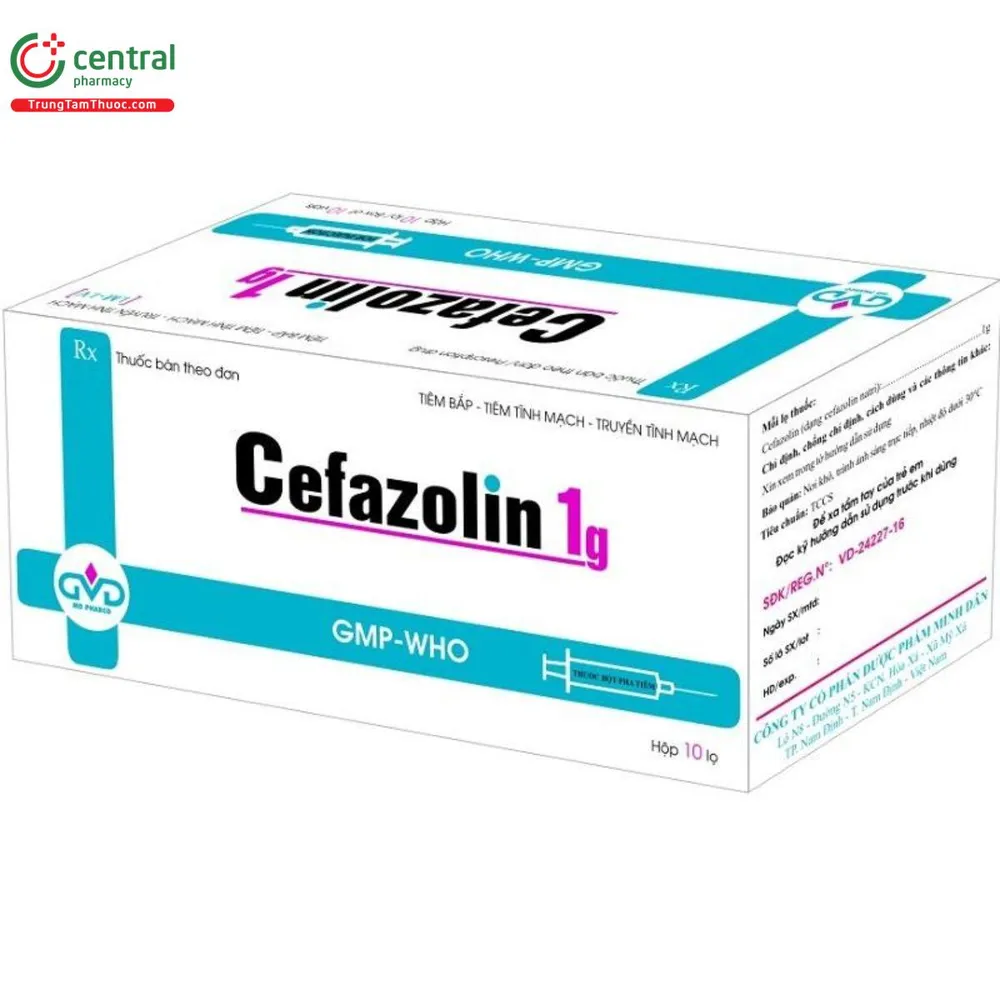
CEFAZOLIN APTAPHARMA
PolandThe drug is an antibiotic used to treat bacterial infections of the skin and soft tissues, as well as infections of the bones and joints. It may also be administered before, during, or after surgery to prevent infections.
Frequently asked questions
How should Cefazolin AptaPharma be administered?
The drug is always administered by medical personnel via intramuscular injection or intravenously (as an injection or infusion). The dosage depends on the type of infection, the patient's age, and their health status (e.g., kidney function).
When should this medicine not be used?
It must not be used if there is an allergy to cefazolin, other cephalosporins, or if there has ever been a severe allergic reaction to other beta-lactam antibiotics (e.g., penicillins). The medicine should not be used in neonates and infants under 1 month of age.
Can the medicine be used during pregnancy or breastfeeding?
During pregnancy, the medicine may be used only if the doctor deems it absolutely necessary. During breastfeeding, breastfeeding should be discontinued because the drug passes into human milk.
Which other medicines should be taken into account during treatment?
Particular caution should be exercised if taking anticoagulants (e.g., heparin), probenecid, and medicines that are harmful to the kidneys (e.g., certain antibiotics or diuretics, such as furosemide).
What side effects may Cefazolin AptaPharma cause?
Mild gastrointestinal problems (nausea, diarrhea, loss of appetite) and pain at the injection site may occur frequently. Less commonly, allergic reactions (rash, fever, swelling), blood clotting disorders, jaundice, or changes in blood test results may occur. You must contact a doctor immediately if a severe allergic reaction, difficulty breathing, or very severe diarrhea occurs.
What should be done in case of overdose symptoms?
Symptoms of overdose may include pain or dizziness, anxiety, seizures, or muscle spasms. In such a case, contact a doctor immediately.
Instructions for use
Table of contents
- 1. What is Cefazolin AptaPharma and what is it used for
- 2. Important information before using Cefazolin AptaPharma
- 3. How to use Cefazolin AptaPharma
- 4. Possible adverse reactions
- 5. How to store Cefazolin AptaPharma
- 6. Contents of the pack and other information
- Information intended exclusively for medical professionals:
Package leaflet: Information for the patient
Cefazolin AptaPharma, 1 g, powder for solution for injection/infusion
Cefazolinum
Please read carefully all the information in this leaflet before using this medicine, as it contains
important information for the patient.
- Keep this leaflet so that you can read it again if necessary.
- If you have any questions, please consult your doctor, pharmacist, or nurse.
- If you experience any adverse reactions, including any adverse reactions not listed in this leaflet, tell your doctor or pharmacist. See section 4.
Table of contents of the leaflet:
- What is Cefazolin AptaPharma and what is it used for
- Important information before using Cefazolin AptaPharma
- How to use Cefazolin AptaPharma
- Possible side effects
- How to store Cefazolin AptaPharma
- Contents of the pack and other information
1. What is Cefazolin AptaPharma and what is it used for
The medicine contains the active substance cefazolin, which is an antibiotic. Cefazolin is used in the treatment of bacterial infections caused by bacteria sensitive to cefazolin:
- skin and soft tissue infections
- bone and joint infections
Cefazolin may also be used before, during, or after surgery to prevent possible infections.
2. Important information before using Cefazolin AptaPharma
When not to use Cefazolin AptaPharma
- if the patient is allergic (hypersensitive) to cefazolin or to any of the other ingredients of this medicine (listed in section 6);
- if the patient is allergic to any cephalosporin;
- if the patient has ever experienced a severe allergic reaction to any beta-lactam antibiotic (penicillins, monobactams, or carbapenems).
Warnings and precautions
Before starting treatment with Cefazolin AptaPharma, discuss this with your doctor or pharmacist if:
- the patient has a tendency towards allergies (e.g. hay fever or bronchial asthma), as this increases the risk of severe allergic reactions to Cefazolin AptaPharma;
- the patient has previously been diagnosed with hypersensitivity to beta-lactam antibiotics (e.g. penicillins), as there is also a risk of allergy to Cefazolin AptaPharma;
- the patient has impaired kidney or liver function;
- the patient has been diagnosed with blood clotting disorders (e.g. haemophilia) or may currently have blood clotting disorders (due to parenteral nutrition, malnutrition, impaired liver or kidney function, reduced platelet count increasing the risk of bleeding or bruising [thrombocytopenia], or use of anticoagulant drugs [blood thinners, e.g. heparin]);
- the patient has been diagnosed with conditions causing bleeding (e.g. gastrointestinal ulcers);
- the patient develops severe, persistent diarrhoea during or after completion of treatment with Cefazolin AptaPharma. In such a case, contact your doctor immediately. Do not take drugs that inhibit intestinal peristalsis without consulting your doctor;
- prolonged or repeated treatment with cefazolin may lead to further infection with fungi or bacteria resistant to cefazolin (superinfection).
Children
- Cefazolin should not be used in newborns and infants under 1 month of age, as the safety of the medicine has not been established in this age group.
Cefazolin AptaPharma and other medicines
Tell your doctor or pharmacist about all medicines the patient is currently taking or has recently taken, including medicines available without a prescription.
Your doctor will exercise particular caution if the patient is taking any of the following medicines:
Anticoagulants (medicines that prevent blood clotting):
Cefazolin may very rarely cause blood clotting disorders. Therefore, caution is required when Cefazolin AptaPharma is used concomitantly with medicines that prevent blood clotting (e.g. heparin), and regular monitoring of coagulation parameters is necessary.
Probenecid (a medicine used in the treatment of joint disease and gout).
Medicines with potentially harmful effects on the kidneys: Cefazolin AptaPharma may increase the harmful effect on the kidneys of certain antibiotics (e.g. aminoglycosides) and medicines causing increased urine excretion (diuretics, e.g. furosemide). When Cefazolin AptaPharma is used concomitantly with the above-mentioned medicines, kidney function should be monitored regularly, especially in patients with impaired kidney function.
Pregnancy and breastfeeding
If the patient is pregnant or breastfeeding, suspects she may be pregnant, or is planning to have a child, she should consult her doctor before using this medicine.
Pregnancy
Cefazolin crosses the placental barrier and may affect the unborn child. Therefore, Cefazolin AptaPharma may be used during pregnancy only if, in the opinion of the doctor, it is absolutely necessary and after careful consideration by the doctor of the benefit-risk ratio.
Breastfeeding
Cefazolin passes into human milk in small amounts. Therefore, breastfeeding should be discontinued during treatment with Cefazolin AptaPharma.
Driving and operating machinery
Cefazolin AptaPharma has no effect or has a negligible effect on the ability to drive and operate machinery.
Cefazolin AptaPharma contains sodium
This medicine contains 50.6 mg of sodium (the main component of table salt) in each 1 g. This corresponds to 2.53% of the maximum recommended daily intake of sodium in the diet for adults.
3. How to use Cefazolin AptaPharma
Cefazolin AptaPharma is always administered by medical personnel. The medicine is given as an injection or infusion (into a vein) or as an intramuscular injection (into the muscle) in the form of a deep intramuscular injection, after prior reconstitution. Your doctor will inform you about the necessary duration and frequency of administration of Cefazolin AptaPharma.
Dosage
Adult patients with normal kidney function
- Infections caused by bacteria sensitive to this medicine: 1 to 2 g per day divided into 2 or 3 doses.
- Infections caused by bacteria less sensitive to this medicine: 3 to 4 g per day divided into 3 or 4 doses.
The daily dose of cefazolin may be increased up to 6 g given in 3 or 4 equal doses.
Use in children and adolescents
Premature infants and infants under 1 month of age:
The safety of using the medicine in infants under 1 month of age has not been established.
Children over 1 month of age:
- Infections caused by bacteria sensitive to this medicine: 25 to 50 mg per kg body weight per day divided into 2 to 4 single doses every 6, 8 or 12 hours.
- Infections caused by bacteria less sensitive to this medicine: up to 100 mg cefazolin per kg body weight per day divided into 3 or 4 single doses every 6 to 8 hours. The use of the medicine is not recommended in children under 1 month of age.
Use in elderly patients
Dosage adjustment is not necessary in elderly patients with normal kidney function.
Special dosage recommendations
Prevention of infections during surgical procedures
1 g cefazolin 30–60 minutes before surgery.
In the case of prolonged operations (2 hours or longer), an additional dose of 0.5 to 1 g cefazolin during the procedure.
Patients with renal impairment
In patients with renal impairment, elimination of cefazolin is slowed. Therefore, the doctor will adjust the dosage according to the degree of renal impairment by reducing the maintenance dose or by extending the interval between doses.
Duration of treatment
The duration of treatment depends on the severity of the infection and the patient's recovery.
Use of a higher than recommended dose of Cefazolin AptaPharma
Since the medicine will be administered by a doctor or nurse, it is unlikely that too high a dose will be given.
Symptoms of overdose include headache, non-vestibular dizziness (central), vestibular dizziness (peripheral), skin burning or prickling sensations (paresthesia), restlessness (agitation), involuntary muscle jerks or muscle groups (myoclonus), and seizures (convulsions). If any of these symptoms occur, contact a doctor immediately.
In emergencies, immediate medical assistance is required to treat symptoms of overdose.
Missed dose of Cefazolin AptaPharma
Do not administer a double dose to make up for a missed dose. A missed dose should only be administered if there is a sufficiently long interval before the next scheduled dose.
Stopping treatment with Cefazolin AptaPharma
Small doses, irregular dosing, or premature discontinuation of treatment may affect treatment outcome or may cause recurrence of infection that is more difficult to treat. Follow your doctor's instructions.
If you have any further doubts regarding the use of this medicine, consult your doctor or pharmacist.
4. Possible adverse reactions
Like any medicine, this medicine can cause adverse reactions, although not everyone will experience them.
You must stop taking the medicine immediately and contact your doctor if any of the following symptoms occur:
Uncommon adverse reactions (may occur in fewer than 1 in 100 patients):
- skin redness (erythema), widespread skin rash (erythema multiforme or rash), hives (red, itchy skin rash with wheals), fever, subcutaneous itching (angioedema), and/or lung tissue swelling with possible cough and breathing difficulties (interstitial pneumonia or pneumonia), as these adverse reactions may indicate an allergic reaction to the medicine.
Rare adverse reactions (may occur in fewer than 1 in 1,000 patients):
- jaundice (yellowing of the skin and whites of the eyes)
- severe skin reactions with hot flushes, fever, blisters or ulcers (Stevens-Johnson syndrome), or severe rash with redness, skin peeling and swelling resembling burns [(toxic epidermal necrolysis (Lyell's syndrome))].
Very rare adverse reactions (may occur in fewer than 1 in 10,000 patients):
- severe allergic reaction (anaphylactic shock) with breathing difficulties, swelling of the throat, face, eyelids or lips, tachycardia and drop in blood pressure. This reaction may begin shortly after the first dose of the medicine or later.
- severe and frequent diarrhoea, sometimes with blood, as this may be a sign of a more serious condition (pseudomembranous colitis).
The following adverse reactions may also occur during treatment with products containing
cefazolin:
Common adverse reactions, may occur in fewer than 1 in 10 patients:
- mild gastrointestinal disturbances (loss of appetite, diarrhoea, nausea, vomiting, severe and frequent diarrhoea). These symptoms usually resolve within a few days.
- intramuscular injection may cause pain at the injection site, sometimes associated with hardening of the skin and soft tissue at the site.
Uncommon adverse reactions, may occur in fewer than 1 in 100 patients:
- oral thrush (thick, white or creamy coating in the mouth and on the tongue).
- seizures or convulsions in patients with impaired kidney function.
- vein swelling due to thrombus formation following intravenous injection (phlebitis).
Rare adverse reactions, may occur in fewer than 1 in 1,000 patients:
-
bacterial or fungal infection of male or female genital organs with symptoms such as itching, redness, swelling and discharge (genital candidiasis, yeast infection, vaginitis).
-
increased or decreased blood glucose levels (hyperglycaemia or hypoglycaemia).
-
transient blood disorders involving decreased or increased numbers of red or white blood cells (leukopenia, granulocytopenia, neutropenia, thrombocytopenia, leukocytosis, granulocytosis, monocytosis, lymphopenia, basophilia and eosinophilia), which may cause bleeding, easy bruising and/or skin discoloration (confirmed by blood test).
-
non-systemic dizziness (central), feeling of fatigue and general malaise.
-
sleep disturbances, including nightmares and inability to fall asleep (insomnia).
-
feeling of nervousness and anxiety, drowsiness, weakness, hot flushes, colour vision disturbances, systemic dizziness (peripheral), confusion and seizures (involuntary, rapid and repetitive muscle contractions and relaxations).
-
chest pain, excess fluid in the lungs, breathing difficulties, cough, nasal congestion (nasal catarrh).
-
liver function disorders (such as increased alkaline phosphatase levels or transient hepatitis) with symptoms such as increased liver enzyme activity (alanine aminotransferase (AlAT), aspartate aminotransferase (AspAT), gamma-glutamyl transferase (gamma GT) and lactate dehydrogenase (LDH)) and bilirubin (a breakdown product of blood cells) in bile or urine (diagnosed in blood tests).
-
kidney function disorders (nephrotoxicity, interstitial nephritis, nephropathy of undefined cause, proteinuria) with symptoms such as kidney swelling and increased nitrogen concentration in the body, detectable in urine tests, usually occurring only in patients taking cefazolin concurrently with other medicines causing kidney function disorders.
Very rare adverse reactions, may occur in fewer than 1 in 10,000 patients:
- itching of the anus or genital organs.
- blood coagulation disorders, which may lead to increased bleeding. The above resolves with increased vitamin K intake, which should be confirmed by blood test (see section 2).
- decreased haemoglobin and/or haematocrit levels, anaemia, decreased number of white blood cells called granulocytes (agranulocytosis), insufficient production or increased breakdown of red blood cells (aplastic or haemolytic anaemia), very low numbers of all blood cells (pancytopenia).
Unknown (frequency cannot be estimated from available data)
- relates to intramuscular administration (into the muscle): systemic reactions to lidocaine (if the solvent contains lidocaine).
Reporting of adverse reactions
If any adverse reactions occur, including any not listed in this leaflet, inform your doctor or nurse.
Adverse reactions can be reported directly to the Department of Monitoring Adverse Drug Reactions of the Office for Registration of Medicinal Products, Medical Devices
and Biocidal Products
Al. Jerozolimskie 181C
02-222 Warsaw
Phone: + 48 22 49 21 301
Fax: + 48 22 49 21 309
Website: https://smz.ezdrowie.gov.pl
Adverse reactions can also be reported to the responsible entity.
Reporting adverse reactions helps gather more information on the safety of using the medicine.
5. How to store Cefazolin AptaPharma
Keep the medicine out of sight and reach of children.
Do not store above 25°C.
Store vials in the outer packaging to protect from light.
The solution after reconstitution/dilution should be administered immediately after preparation.
Do not use this medicine after the expiry date stated on the outer packaging and label after "EXP". The expiry date refers to the last day of the specified month.
Medicines must not be disposed of via wastewater or household waste. Ask your pharmacist how to dispose of medicines no longer required. Such measures will help protect the environment.
6. Contents of the pack and other information
What Cefazolin AptaPharma contains
The active substance is cefazolin. Cefazolin AptaPharma contains 1.048 g of cefazolin sodium, which
corresponds to 1 g of cefazolin.
What Cefazolin AptaPharma looks like and contents of the pack
Cefazolin AptaPharma is supplied in 10 mL vials made of colourless glass (type III) with a bromobutyl rubber stopper (type I) and an aluminium flip-off cap, packed in a cardboard box.
Cefazolin AptaPharma is available in packs containing 10 vials of 1 g each.
Marketing Authorisation Holder
Apta Medica Internacional d.o.o.
Likozarjeva Ulica 6
1000 Ljubljana
Slovenia
Manufacturer
ACS Dobfar S.p.A
Nucleo Industriale S. Atto – S. Nicolò a Tordino
64100 Teramo
Italy
ACS Dobfar S.p.A.
Via A. Fleming, 2
37135 Verona
Italy
This medicinal product is authorised in the Member States of the European Economic Area under the following names:
| Member State Name | Medicinal Product Name |
| Austria | Cefazolin AptaPharma 1 g Pulver zur Herstellung einer Injektions-/Infusionslösung |
| Bulgaria | Cefazolin AptaPharma 1 g prach za injekčný/infúzny roztok |
| Croatia | Cefazolin AptaPharma 1 g prašak za otopinu za injekciju/infuziju |
| Czech Republic | Cefazolin AptaPharma |
| Poland | Cefazolin AptaPharma |
| Romania | Cefazolină AptaPharma 1 g pulbere pentru soluție injectabilă/perfuzabilă |
| Slovakia | Cefazolin AptaPharma 1 g prášok na injekčný/infúzny roztok |
| Slovenia | Cefazolin AptaPharma 1 g prašek za raztopino za injiciranje/infundiranje |
| Hungary | Cefazolin AptaPharma 1 g por oldatos injekcióhoz vagy infúzióhoz |
Information intended exclusively for medical professionals:
Preparation of the solution
For each route of administration, refer to the information in the table below, which provides additional volumes and concentrations of solutions that may be useful when fractional doses are required.
Intramuscular injection
Cefazolin AptaPharma, 1 g, powder for solution for injection/infusion:
The medicinal product Cefazolin AptaPharma, 1 g, powder for solution for injection/infusion should be dissolved in one of the following solvents according to the table below:
- Water for injections
- 100 mg/mL (10%) glucose solution
- 9 mg/mL (0.9%) sodium chloride solution
- 5 mg/mL (0.5%) lidocaine hydrochloride solution
Shake well until the vial contents are completely dissolved, and administer by deep intramuscular injection.
Table with reconstitution information for intramuscular injection
| Content per vial | Amount of solvent to be added | Approximate concentration |
| 1 g | 2.5 mL | 330 mg/mL |
The amount of solvent to be added in children and adolescents, see below – "Dosing guidelines in children and adolescents".
Use of lidocaine:
When using lidocaine solution as solvent, cefazolin solutions may be administered exclusively for intramuscular injection. Before use, contraindications, warnings and other important information specified in the lidocaine medicinal product characteristics should be considered.
Lidocaine solution must never be administered intravenously.
In children above 30 months of age, intramuscular injection using lidocaine as solvent is recommended.
Intravenous injection
The medicinal product Cefazolin AptaPharma, 1 g, powder for solution for injection/infusion, should be dissolved in one of the following solvents according to the table below:
- Water for injections
- 9 mg/mL (0.9%) sodium chloride solution, or
- 50 mg/mL (5%) glucose solution
- 100 mg/mL (10%) glucose solution
Table containing information on reconstitution for intravenous injection
| Contents per vial | Minimum amount of solvent to be added | Approximate concentration |
| 1 g | 4 mL | 220 mg/mL |
The medicinal product Cefazolin AptaPharma should be injected slowly over 3–5 minutes. Under no circumstances
should the solution be injected in less than 3 minutes. This should be done directly into the vein or into the tubing
through which the patient is receiving intravenous solutions.
Single doses exceeding 1 g should be administered by intravenous infusion over 30 to 60 minutes.
Dosing guidelines for children and adolescents:
The contents of 1 vial (1000 mg of cefazolin) should be dissolved in 4 mL of a compatible diluent (concentration approximately
220 mg/mL). The appropriate volume of this solution to be used together with the dose in mg is shown
in Table 1.
The amount of diluent to be added for children and adolescents is given below – "Dosing guidelines for children and adolescents".
For volumes less than 1 mL, a 0.5 mL syringe should be used to achieve better dosing accuracy.
Intravenous infusion
First, the medicinal product Cefazolin AptaPharma, 1 g, powder for solution for injection/infusion, should be dissolved in one of the diluents specified as compatible for intravenous injection.
Further dilution should be performed using one of the following diluents, according to the table below:
- 9 mg/mL (0.9%) sodium chloride solution, or
- 50 mg/mL (5%) glucose solution,
- Ringer's solution,
- Ringer's lactate solution,
- water for injections.
Table containing information on reconstitution/dilution for intravenous infusion
| Contents per vial | Reconstitution | Dilution | Approximate concentration |
| Minimum quantity of solvent to be added | Quantity of solvent to be added | ||
| 1 g | 4 mL | 50 mL-100 mL | 20 mg/mL-10 mg/mL |
Solutions of Cefazolin AptaPharma containing lidocaine must never be administered intravenously.
As with all parenteral medicinal products, the reconstituted solution should be inspected visually for particulate matter and discoloration prior to administration.
The solution should be used only if it is clear and practically free of particulate matter.
After reconstitution, the product is intended for single use only.
Any unused medicinal product or waste material must be disposed of in accordance with local regulations.
Dosage and method of administration
Dosage and route of administration depend on the site and severity of infection, as well as clinical and bacteriological progress. Local therapeutic guidelines should be taken into account.
Adults and adolescents (aged over 12 years and ≥ 40 kg body weight)
- Infections caused by susceptible microorganisms: 1 g to 2 g of cefazolin per day, divided into 2 or 3 equal doses.
- Infections caused by moderately susceptible microorganisms: 3 g to 4 g of cefazolin per day, divided into 3 or 4 equal doses.
In severe infections: up to 6 g of cefazolin per day, divided into 3 or 4 equal doses (one dose every 6 or 8 hours).
Special dosage recommendations
Prevention of perioperative infections
- To prevent postoperative infections in contaminated or potentially contaminated surgical procedures, the following doses are recommended: 1 g of cefazolin 30–60 minutes before surgery.
- In prolonged surgical procedures (2 hours or longer), an additional intraoperative dose of 0.5–1 g of cefazolin.
- Prolonged postoperative administration of the drug should be applied in accordance with official local guidelines.
It is important that: (1) the preoperative dose is administered immediately (30 minutes to 1 hour) before the start of surgery, so that adequate antibiotic concentrations are present in serum and tissues at the time of the first surgical incision, and (2) cefazolin is administered, if necessary, at appropriate intervals during surgery to ensure sufficient antibiotic concentration during periods of highest risk of infection.
Adult patients with renal impairment
Adult patients with renal impairment may require lower doses to avoid drug accumulation.
The reduced dose should be based on serum drug concentration monitoring results. If this is not feasible, the dose may be adjusted based on creatinine clearance.
Maintenance therapy with cefazolin in patients with renal impairment
| Creatinine clearance [mL/min] | Serum creatinine concentration [mg/100 mL] | Dosing |
| ≥ 55 | ≤ 1.5 | Usual dose and usual intervals between doses |
| 35–54 | 1.6–3.0 | Usual dose every 8 hours |
| 11–34 | 3.1–4.5 | Half the usual dose every 12 hours |
| ≤ 10 | ≥ 4.6 | Half the usual dose every 18–24 hours |
In patients undergoing hemodialysis, the treatment regimen depends on the dialysis conditions.
Dosing guidelines for adults
Table containing information on reconstitution in case of intramuscular injection
| Content per vial | Amount of solvent to be added | Approximate concentration |
| 1 g | 2.5 mL | 330 mg/mL |
Table containing information on dissolution in the case of intravenous injection
| Content per vial | Minimum amount of solvent to be added | Approximate concentration |
| 1 g | 4 mL | 220 mg/mL |
Children and adolescents
Infections caused by susceptible microorganisms
A dose of 25–50 mg/kg body weight divided into 2 to 4 equal doses per day (one dose every 6, 8, or 12 hours) is recommended.
Infections caused by moderately susceptible microorganisms
Up to 100 mg/kg body weight divided into 3 or 4 equal doses (one dose every 6 or 8 hours) is recommended.
Preterm neonates and infants under 1 month of age
The use of cefazolin is not recommended in preterm neonates and infants under 1 month of age, as the safety of cefazolin has not been established in this age group. See also section 4.4 of the Summary of Product Characteristics.
Dosing guidelines for children and adolescents
Intravenous injection
Vial 1 g: The contents of one vial (1000 mg of cefazolin) should be dissolved in 4 mL of a compatible solvent (concentration approximately 220 mg/mL). Table 1 provides the appropriate volume of this solution to administer according to the dose in mg.
Intravenous administration of lidocaine-containing solutions must be strictly avoided.
Table 1. Appropriate volumes of solution for intravenous and intramuscular injections in children and adolescents
| Body weight | Dose | 5 kg | 10 kg | 15 kg | 20 kg | 25 kg |
| Dose divided every 12 hours, 25 mg/kg body weight per day | Vial 1 g | 63 mg | 125 mg | 188 mg | 250 mg | 313 mg |
| 0.29 mL | 0.57 mL | 0.85 mL | 1.14 mL | 1.42 mL | ||
| Dose divided every 8 hours, 25 mg/kg body weight per day | Vial 1 g | 42 mg | 85 mg | 125 mg | 167 mg | 208 mg |
| 0.19 mL | 0.38 mL | 0.57 mL | 0.76 mL | 0.94 mL | ||
| Dose divided every 6 hours, 25 mg/kg body weight per day | Vial 1 g | 31 mg | 62 mg | 94 mg | 125 mg | 156 mg |
| 0.14 mL | 0.28 mL | 0.43 mL | 0.57 mL | 0.71 mL | ||
| Dose divided every 12 hours, 50 mg/kg body weight per day | Vial 1 g | 125 mg | 250 mg | 375 mg | 500 mg | 625 mg |
| 0.57 mL | 1.14 mL | 1.7 mL | 2.27 mL* | 2.84 mL* | ||
| Dose divided every 8 hours, 50 mg/kg body weight per day | Vial 1 g | 83 mg | 166 mg | 250 mg | 333 mg | 417 mg |
| 0.38 mL | 0.75 mL | 1.14 mL | 1.51 mL | 1.89 mL | ||
| Dose divided every 6 hours, 50 mg/kg body weight per day | Vial 1 g | 63 mg | 125 mg | 188 mg | 250 mg | 313 mg |
| 0.29 mL | 0.57 mL | 0.85 mL | 1.14 mL | 1.42 mL | ||
| Dose divided every 8 hours, 100 mg/kg body weight per day | Vial 1 g | 167 mg | 333 mg | 500 mg | 667 mg | 833 mg |
| 0.76 mL | 1.51 mL | 2.27 mL* | 3.03 mL* | 3.79 mL* | ||
| Dose divided every 6 hours, 100 mg/kg body weight per day | Vial 1 g | 125 mg | 250 mg | 375 mg | 500 mg | 625 mg |
| 0.57 mL | 1.14 mL | 1.7 mL | 2.27 mL* | 2.84 mL* |
* In case of intramuscular administration, when the calculated volume of each individual dose
exceeds 2 mL, it is recommended to select a dosing regimen with more divided doses per day
(3 or 4) or to divide the administered volume into equal parts between two different
injection sites.
For volumes less than 1 mL, a 0.5 mL syringe should be used to achieve better dosing accuracy.
Intramuscular injection
The contents of 1 vial (1000 mg of cefazolin) should be dissolved in 4 mL of a compatible diluent (concentration approximately 220 mg/mL), and the appropriate volume (as indicated in Table 1) should be withdrawn from the reconstituted solution and administered via intramuscular injection.
In children under 30 months of age, cefazolin must not be dissolved in lidocaine solution (see section 4.4 of the Summary of Product Characteristics).
Intravenous infusion
The dose may be administered as an intravenous infusion using the reconstituted and subsequently diluted solution (10 mg/mL) described in section 6.6 of the Summary of Product Characteristics.
Children and adolescents with renal impairment
Children with renal impairment (as in adults) may require reduced doses to avoid drug accumulation.
The reduced dose should be based on serum drug concentration measurements. If this is not possible, the dose may be determined based on creatinine clearance according to the following guidelines.
In children with moderate renal impairment (creatinine clearance 40–20 mL/min), administration of 25% of the usual daily dose every 12 hours is sufficient.
In children with severe renal impairment (creatinine clearance 20–5 mL/min), administration of 10% of the usual daily dose divided into doses every 24 hours is sufficient.
All the above guidelines apply after the initial dose. See also section 4.4 of the Summary of Product Characteristics.
Elderly patients:
Dosage adjustment is not required in elderly patients with normal renal function.
Method of administration
Cefazolin AptaPharma may be administered by deep intramuscular injection, slow intravenous injection, or intravenous infusion after dilution.
The volume and type of diluent used to dissolve the powder depend on the route of administration.
Instructions for reconstitution of the medicinal product prior to administration are provided in section 6.6 of the Summary of Product Characteristics.
If lidocaine is used as the diluent, the resulting solution must never be administered intravenously (see section 4.3 of the Summary of Product Characteristics). The Summary of Product Characteristics for lidocaine should also be consulted.
Duration of treatment
The duration of treatment depends on the severity of infection and on clinical and bacteriological progress.
Similar drugs
| Brand name | Dosage form | Active substance / Dosage | Manufacturer |
|---|---|---|---|
| CEFAZOLIN DALI PHARMA | powder for preparation of solution for injection / infusion |
|
SciencePharm Ltd. |
| CEFAZOLIN NORIDEM | powder for preparation of solution for injection / infusion | — | DEMO S.A. Pharmaceutical Industry |
| CEFAZOLIN NORIDEM | powder for preparation of solution for injection / infusion | — | DEMO S.A. Pharmaceutical Industry |
| CEFAZOLIN PHAGECON | powder for preparation of solution for injection / infusion |
|
Laboratórios Basi Pharmaceutical Industry S.A. |
| CEFAZOLIN PHAGECON | powder for preparation of solution for injection / infusion |
|
Laboratórios Basi Indústria Farmacêutica S.A. LDP-LABORATORIOS TORLAN S.A. |
| CEFAZOLIN TZF | powder for preparation of solution for injection / infusion |
|
Tarchomin Pharmaceutical Works 'Polfa' S.A. |
The original data is available in the language of the country of manufacture.
Data source: Register of Medicinal Products of Poland (URPL)
Data last verified: September 01, 2026