BIOFUROXIME
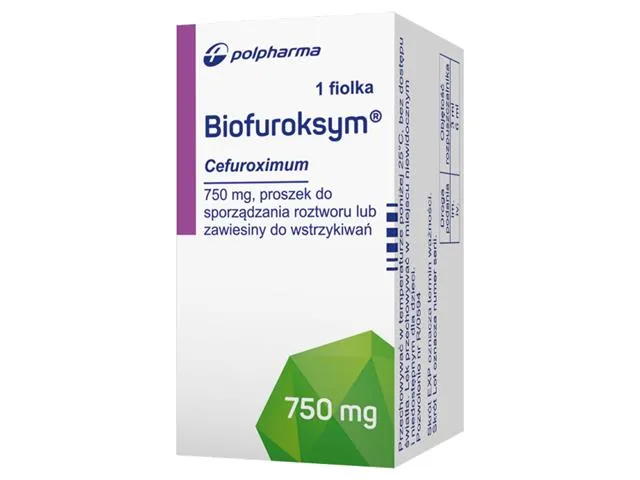
PolandThe medicinal product is an antibiotic used in adults and children to treat infections of the lungs, chest, urinary tract, abdomen, as well as skin and soft tissue infections. It is also used to prevent infections during surgery.
Frequently asked questions
How should Biofuroksym be taken?
The medicine is administered by a doctor or nurse via intravenous injection, intramuscular injection, or infusion. The dosage depends on the patient's age, body weight, type of infection, and renal function.
When should you not use this medicine?
Do not use this medicine if you are allergic to cephalosporin antibiotics or any other ingredients of the preparation. A contraindication is also a previously established severe allergic reaction to other beta-lactam antibiotics (e.g., penicillins) or the occurrence of severe skin reactions after treatment with this medicine or other cephalosporins.
Does Biofuroksym interact with other medicines?
Yes, some medicines may affect the action of Biofuroksym or increase the risk of side effects. These include: aminoglycoside antibiotics, diuretics (e.g., furosemide), probenecid, and oral anticoagulants. You should inform your doctor about them.
What are the possible side effects of Biofuroksym?
The most serious side effects are allergic reactions (e.g., facial swelling, difficulty breathing, itchy rash) and severe skin reactions (blisters, peeling of the epidermis). Pain and redness at the injection site may occur frequently. Other possible symptoms include diarrhea, nausea, abdominal pain, and fungal infections.
What should be noted during blood and urine tests?
Biofuroksym may affect the results of tests detecting sugar in the blood or urine, as well as the Coombs' test result. The person collecting the samples should be informed about the use of this medicine.
Should the doctor be informed about pregnancy or breastfeeding?
Yes, you must inform your doctor about pregnancy, suspected pregnancy, planning a pregnancy, as well as breastfeeding. The doctor will then assess whether the benefits of treatment outweigh the risks to the child.
Instructions for use
Table of contents
Package leaflet: Information for the user
Biofuroksym
1.5 g, powder for solution for injection
Cefuroximum
Please read all of this leaflet carefully before using this medicine, because it contains
important information for you.
- Keep this leaflet so that you can read it again if necessary.
- If you have any doubts, please consult your doctor or nurse.
- This medicine has been prescribed for a specific individual. Do not pass it on to others. This medicine may harm someone else, even if their symptoms are the same as yours.
- If you experience any adverse reactions, including any not listed in this leaflet, tell your doctor or nurse. See section 4.
Table of contents
- What Biofuroksym is and what it is used for
- Important information before using Biofuroksym
- How to use Biofuroksym
- Possible side effects
- How to store Biofuroksym
- Contents of the pack and other information
1. What Biofuroksym is and what it is used for
Biofuroksym is an antibiotic used in adults and children. The medicine works by killing bacteria that cause infections. It belongs to a group of medicines called cephalosporins.
Biofuroksym is used to treat infections of:
- lungs or chest,
- urinary tract,
- skin and soft tissues,
- abdomen.
Biofuroksym is also used:
- to prevent infections during surgery.
2. Important information before using Biofuroksym
When not to use Biofuroksym:
- if the patient is allergic to cephalosporin antibiotics or to any of the other ingredients of Biofuroksym (listed in section 6);
- if the patient has ever experienced a severe allergic reaction (hypersensitivity) to any other type of beta-lactam antibiotics (penicillins, monobactams or carbapenems);
- if the patient has ever developed severe skin rash, skin peeling, blisters and/or oral ulcers following treatment with cefuroxime or other cephalosporin antibiotics.
➔ If the patient thinks any of the above situations apply, they should tell their doctor before starting treatment with Biofuroksym. The patient must not take Biofuroksym.
Warnings and precautions
While being treated with Biofuroksym, be alert for symptoms such as allergic reactions and gastrointestinal disturbances (e.g. diarrhoea). This will help reduce the risk of complications (see "Symptoms which require attention" in section 4). If the patient has ever had allergic reactions to other antibiotics such as penicillin, they may also be allergic to Biofuroksym.
Severe skin reactions have occurred during treatment with cefuroxime, including: Stevens-Johnson syndrome, toxic epidermal necrolysis, and drug reaction with eosinophilia and systemic symptoms (DRESS). If any of the symptoms associated with severe skin reactions described in section 4 occur, the patient should seek immediate medical advice.
Blood and urine tests
Biofuroksym may affect test results for detecting glucose in blood or urine, as well as a blood test known as the Coombs test. If the patient is due to have such tests, they should:
➔ inform the person taking the sample that they are taking Biofuroksym.
Biofuroksym with other medicines
Tell the doctor about all medicines the patient is currently taking or has recently taken, as well as any medicines they are planning to take. This includes medicines available without a prescription.
Some medicines may affect the action of Biofuroksym or may increase the risk of adverse effects. These include:
- antibiotics of a class known as aminoglycosides,
- diuretic tablets (water tablets), e.g. furosemide,
- probenecid,
- oral anticoagulants (blood thinners).
➔ If this applies to the patient, they should tell their doctor. Additional monitoring of kidney function may be necessary during treatment with Biofuroksym.
Pregnancy, breastfeeding and fertility
Inform the doctor before taking Biofuroksym:
- if the patient is pregnant, suspects she may be pregnant, or plans to become pregnant,
- if the patient is breastfeeding.
The doctor will assess whether the benefits of using Biofuroksym during pregnancy or breastfeeding outweigh any potential risks to the child.
Driving and operating machinery
The patient should not drive or operate machinery if they do not feel well.
Biofuroksym contains sodium
Biofuroksym contains 83 mg of sodium (the main component of table salt) per vial. This corresponds to 4.15% of the maximum recommended daily dietary intake of sodium for adults.
When preparing the medicine for administration – see section: "Information intended exclusively for healthcare professionals" at the end of this leaflet. When calculating the total sodium content of the prepared diluted solution, include the sodium originating from the diluent. For accurate information on the sodium content of the solution used to dilute the medicine, refer to the patient leaflet of the diluent used.
This should be taken into account for patients who are monitoring their sodium intake.
3. How to use Biofuroksym
Biofuroksym is usually administered by a doctor or nurse. It may be given as an
intravenous infusion (drip) or as an injection directly into a vein or
into a muscle.
Usual dose
The doctor will decide the appropriate dose of Biofuroksym for the patient, taking into account
the severity and type of infection, whether the patient is taking any other antibiotics, body
weight, age, and kidney function.
Newborns and infants (aged 0–3 weeks)
Per kilogram of body weight, a daily dose of 30 to 100 mg of Biofuroksym is given, divided
into two or three doses.
Infants (over 3 weeks of age) and children
Per kilogram of body weight, a daily dose of 30 to 100 mg of Biofuroksym is given, divided
into three or four doses.
Adults and adolescents
750 mg to 1.5 g of Biofuroksym two, three or four times daily. No more than 6 g per day.
Patients with impaired kidney function
If the patient has kidney problems, the doctor may adjust the dosage of the medicine.
➔ If this applies to the patient, they should tell their doctor.
4. Possible adverse reactions
Like any medicine, this medicine can cause adverse reactions, although not everyone will experience them.
Symptoms to be aware of
In a small number of people taking Biofuroksym, an allergic reaction or potentially severe skin reaction has been reported. Symptoms may include:
- Widespread rash, high body temperature, and swollen lymph nodes (DRESS syndrome or drug hypersensitivity syndrome).
- Chest pain associated with an allergic reaction, which may indicate a heart attack triggered by allergy (Kounis syndrome).
- Severe allergic reaction. Symptoms include: raised, itchy rash, swelling, sometimes of the face or lips, which may make breathing difficult.
- Skin rash, which may develop into blisters and appear as small rings (a dark spot in the center surrounded by a lighter ring with a dark edge around the perimeter).
- Widespread skin lesions, with blisters and peeling skin. (This may be a sign of Stevens-Johnson syndrome or toxic epidermal necrolysis - Lyell's disease).
- Fungal infections. Medicines such as Biofuroksym may rarely cause overgrowth of yeast ( Candida ) in the body, leading to fungal infection (e.g. candidiasis). The risk of this adverse reaction is higher if Biofuroksym is used for a prolonged period.
➔ If any of these symptoms occur in the patient, contact a doctor
or nurse immediately.
Common adverse reactions (occur in less than 1 in 10 patients):
- pain at the injection site, swelling and redness along the vein.
- If any of these adverse reactions occur in the patient, inform the doctor.
Common adverse reactions that may be revealed in blood test results:
- increased activity of substances (enzymes) produced in the liver,
- changes in white blood cell count (neutropenia or eosinophilia),
- decreased number of red blood cells (anaemia).
Uncommon adverse reactions (occur in less than 1 in 100 patients):
- skin rash, urticaria,
- diarrhoea, nausea, abdominal pain. ➔ If any of these adverse reactions occur in the patient, inform the doctor.
Uncommon adverse reactions that may be revealed in blood test results:
- decreased number of white blood cells (leukopenia),
- increased bilirubin levels (a substance produced by the liver),
- positive Coombs test result.
Other adverse reactions
Other adverse reactions occur in a very small number of patients, but the exact frequency is unknown (frequency cannot be estimated from available data):
- fungal infection,
- high temperature (fever),
- allergic reactions (hypersensitivity),
- inflammation of the colon (large intestine), causing diarrhoea, usually with blood and mucus, and abdominal pain,
- inflammation of the kidneys and blood vessels,
- excessive breakdown of red blood cells (haemolytic anaemia),
- skin rash, which may develop into blisters and appear as small rings (a dark spot in the center surrounded by a lighter ring with a dark edge around the perimeter).
➔ If any of the adverse reactions listed above occur in the patient, inform the doctor.
Adverse reactions that may be revealed in blood test results:
- decreased number of platelets (cells involved in blood clotting - thrombocytopenia),
- increased blood urea nitrogen and serum creatinine levels.
Reporting of adverse reactions
If any adverse reactions occur, including any not listed in this leaflet, inform your doctor or pharmacist. Adverse reactions can be reported directly to the Department of Monitoring Adverse Drug Reactions of the Office for Registration of Medicinal Products, Medical Devices and Biocidal Products
Al. Jerozolimskie 181C
02-222 Warsaw
Phone: +48 22 49 21 301
Fax: +48 22 49 21 309
Website: https://smz.ezdrowie.gov.pl
Adverse reactions can also be reported to the responsible entity.
Reporting adverse reactions helps to provide more information on the safety of the medicine.
5. How to store Biofuroksym
Keep this medicine out of sight and reach of children.
Store the medicine at a temperature below 25 °C, protected from light.
After dissolution, the solution remains stable for 24 hours at a temperature between 2 °C and 8 °C.
Do not use this medicine after the expiry date stated on the packaging. The expiry date refers to the last day of the stated month.
The label on the packaging shows the expiry date after the abbreviation EXP, and the batch number after the abbreviation Lot.
Medicines must not be disposed of via wastewater or household waste. Ask your pharmacist how to dispose of medicines no longer in use. This will help protect the environment.
6. Contents of the pack and other information
What Biofuroksym contains
- The active substance is cefuroxime. Each vial contains 1.5 g of cefuroxime (as sodium salt). The medicine does not contain excipients.
What Biofuroksym looks like and contents of the pack
Biofuroksym is a white or almost white crystalline powder in a glass vial containing 1.5 g of powder. The vials are closed with a rubber stopper and sealed with an aluminium cap or an aluminium cap with a plastic flip-off seal, and packed in cardboard boxes.
Pack sizes: 1 or 10 vials.
Not all pack sizes may be marketed.
Marketing Authorisation Holder and Manufacturer
Marketing Authorisation Holder
Zakłady Farmaceutyczne POLPHARMA S.A.
ul. Pelplińska 19, 83-200 Starogard Gdański
tel. + 48 22 364 61 01
Manufacturer
Zakłady Farmaceutyczne POLPHARMA S.A.
ul. Pelplińska 19, 83-200 Starogard Gdański
Zakłady Farmaceutyczne POLPHARMA S.A.
Production Branch in Duchnice
ul. Ożarowska 28/30, 05-850 Ożarów Mazowiecki
Information intended exclusively for medical professionals:
Reconstitution instructions
Table 1. Volumes of water to be added and solution concentrations useful when fractional doses are required.
| Size of vial | Route of administration | Volume of water to be added | Approximate concentration of cefuroxime** |
|---|---|---|---|
| 1.5 g | Intramuscular | 6 ml | 216 mg/ml |
| Intravenous injection | at least 15 ml | 94 mg/ml | |
| Intravenous infusion | 15 ml* | 94 mg/ml |
* The prepared solution should be added to 50 or 100 ml of a compatible infusion fluid (for compatibility information – see below).
** The final volume of the cefuroxime solution in the solvent increases due to the phase displacement factor of the active substance, resulting in the concentrations (mg/ml) stated above.
According to good practice, the solution should be used immediately after preparation.
The medicinal solution remains stable for 24 hours at a temperature between 2°C and 8°C.
An increase in the intensity of the antibiotic solution's coloration during storage does not affect its therapeutic efficacy.
Compatibility
1.5 g of sodium cefuroxime dissolved in 15 ml of water for injections may be mixed with metronidazole solution (500 mg/100 ml); the activity of both components remains stable for up to 24 hours at temperatures below 25°C.
1.5 g of sodium cefuroxime is compatible with 1 g of azlocillin (in 15 ml solution) or 5 g of azlocillin (in 50 ml solution) for up to 24 hours at 4°C or up to 6 hours at temperatures below 25°C.
Sodium cefuroxime (5 mg/ml) in 5% w/v or 10% w/v xylitol solution for injection may be stored for up to 24 hours at 25°C.
Sodium cefuroxime is compatible with aqueous solutions containing no more than 1% lidocaine hydrochloride.
Sodium cefuroxime is compatible with the infusion solutions listed below, with stability maintained for 24 hours at room temperature:
0.9% w/v sodium chloride solution
5% glucose solution for injection
0.18% w/v sodium chloride with 4% glucose solution for injection
5% glucose and 0.9% sodium chloride solution for injection
5% glucose and 0.45% sodium chloride solution for injection
5% glucose and 0.225% sodium chloride solution for injection
10% glucose solution for injection
10% invert sugar solution in water for injection
Ringer's solution for injection
Ringer's lactate solution for injection
sodium lactate solution for injection (M/6)
multi-component sodium lactate solution for injection (Hartmann's solution).
The stability of sodium cefuroxime in 0.9% sodium chloride solution for injection and in 5% glucose solution for injection is not affected by the presence of hydrocortisone sodium phosphate.
Sodium cefuroxime also shows compatibility for 24 hours at room temperature when added to intravenous infusion solutions containing:
heparin (10 or 50 units/ml) in 0.9% sodium chloride solution for injection;
potassium chloride (10 or 40 mEq/l) in 0.9% sodium chloride solution for injection.
Any unused portions of the medicinal product or waste materials should be disposed of in accordance with local regulations.
Preparation of solution for rapid injection
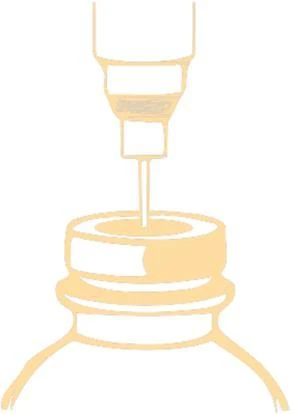
Pierce the stopper with a needle and inject the recommended volume of solvent into the vial. To pierce the stopper, use a needle with a diameter no greater than 0.8 mm. Insert the needle vertically at a 90° angle into the centrally marked area, as shown in the diagram below:
Similar drugs
| Brand name | Dosage form | Active substance / Dosage | Manufacturer |
|---|---|---|---|
| APROKAM | powder for preparation of injection solution |
|
Biopharma S.r.L. Laboratoires Thea |
| CEFUROXIME KABI | powder for preparation of injection solution |
|
Labesfal Laboratoiros Almiro S.A. |
| CEFUROXIME KABI | powder for preparation of injection solution |
|
Labesfal Laboratoiros Almiro S.A. |
The original data is available in the language of the country of manufacture.
Data source: Register of Medicinal Products of Poland (URPL)
Data last verified: September 01, 2026