APENAL
PolandThe medicine is used for the symptomatic treatment of fever lasting no longer than 3 days and mild to moderate pain. It is intended for children weighing up to 32 kg.
Frequently asked questions
When should this medicine not be used?
It must not be used if there is an allergy to paracetamol or any of the ingredients of the medicine, or in cases of severe renal or hepatic impairment.
How to correctly dose Apenal?
The dosage must be strictly adjusted to the child's body weight. The medicine can be administered every 6 hours (dose of 15 mg/kg of body weight) or every 4 hours (dose of 10 mg/kg of body weight). To determine the dose in milliliters, multiply the child's body weight by 0.15 (for a dose every 6h) or by 0.1 (for a dose every 4h).
Can the medicine be combined with other agents?
Particular caution should be exercised, and the doctor should be informed about all medications being taken. It must not be combined with other products containing paracetamol. There is a risk of interaction with, among others, antibiotics, anticoagulants, anticonvulsants, or anti-tuberculosis drugs.
What side effects may occur?
Rarely, general malaise, hypotension, and increased liver enzyme activity may occur. Very rarely, the following may occur: liver damage, kidney problems, rash, urticaria, anaphylactic shock, or changes in blood cell counts. In the event of allergic reactions, discontinue use immediately.
What to do in case of overdose?
Consult a doctor or pharmacist immediately, providing the name of the medicine and the amount taken. Seek medical attention even if symptoms have not yet appeared, as they may manifest even after 3 days.
How to store the medicine?
The medicine should be stored at a temperature below 25°C, in its original packaging, in a place out of the sight and reach of children. Do not store in a refrigerator. Once the bottle is opened, the contents must be used within 6 months.
Instructions for use
Patient Information Leaflet
Apenal, 100 mg/ml, oral solution
Paracetamolum
Please read all of this leaflet carefully before taking this medicine, because it contains
important information for you.
This medicine should always be taken exactly as described in this patient leaflet or as directed by
your doctor, pharmacist, or nurse.
- Keep this leaflet so that you can read it again if necessary.
- If you need advice or further information, please consult your pharmacist.
- If you experience any side effects, including any possible side effects not listed in this leaflet, tell your doctor, pharmacist, or nurse. See section 4.
- If there is no improvement after 3 days, or if you feel worse, contact your doctor.
Contents of the leaflet
- What Apenal is and what it is used for
- Important information before taking Apenal
- How to take Apenal
- Possible side effects
- How to store Apenal
- Contents of the pack and other information
1. What Apenal is and what it is used for
The active substance in Apenal is paracetamol.
Apenal belongs to a group of medicines called analgesics (pain relievers) and antipyretics (fever reducers). It is used for the symptomatic treatment of fever lasting no more than 3 days and for mild to moderate pain.
Apenal is intended for children with body weight up to 32 kg (approximately from 0 months to 10 years of age). In children under 3 months of age, Apenal should be used only on medical advice.
If pain persists for more than 3 days, or if fever lasts longer than 3 days, or if symptoms worsen or new symptoms appear, treatment should be discontinued and medical advice should be sought.
2. Important information before taking Apenal
When not to take Apenal
- if the patient is allergic to paracetamol or to any of the other ingredients of this medicine (listed in section 6);
- severe impairment of kidney or liver function.
Warnings and precautions
Before starting treatment with Apenal, discuss this with your doctor or pharmacist.
Exercise caution:
- consult a doctor before administering this medicine to children under 3 years of age;
- do not exceed the recommended dose stated in section 3;
- if the patient has impaired kidney, heart or lung function, or suffers from anaemia (reduced haemoglobin concentration in blood, with or without reduced number of red blood cells), or has low activity of glucose-6-phosphate dehydrogenase enzyme in blood, consult a doctor before using the medicine;
- in case of liver diseases (including Gilbert's syndrome), consult a doctor to consider reducing the dose and/or increasing the interval between doses;
- in patients with body weight below 50 kg due to anorexia, malnutrition or dehydration, due to the risk of increased hepatotoxicity;
- drinking alcoholic beverages while taking paracetamol may cause liver damage;
- if high fever (>39°C) is present, consult a doctor before using Apenal;
- if pain persists for more than 3 days or fever lasts longer than 3 days, or if symptoms worsen or new symptoms appear, discontinue treatment and consult a doctor;
- exercise caution in patients with asthma and hypersensitivity to acetylsalicylic acid, as the medicine may trigger asthma symptoms;
- the medicine contains propylene glycol (E 1520). Concurrent administration with other substrates of alcohol dehydrogenase, such as ethanol, may cause severe adverse reactions in newborns.
Prolonged or frequent use of Apenal is not recommended. The caregiver and (or) patient should be informed not to take other medicines containing paracetamol simultaneously. Taking multiple doses at once may lead to severe liver damage. In such cases, loss of consciousness may not occur, but immediate medical attention is required. Long-term use without medical supervision may be harmful.
Apenal and other medicines
Tell your doctor or pharmacist about all medicines currently or recently taken, as well as any medicines the patient plans to take.
Particular attention should be paid when using medicines containing any of the following active substances, as dose adjustment or discontinuation of one of the following medicines may be necessary:
- antibiotics (chloramphenicol);
- oral anticoagulants (acenocoumarol, warfarin);
- oral contraceptives and estrogens;
- antiepileptic drugs (lamotrigine, phenytoin or other hydantoins, phenobarbital, methylphenobarbital, primidone, carbamazepine);
- anti-tuberculosis drugs (isoniazid, rifampicin);
- barbiturates (used as sedatives, hypnotics and anticonvulsants);
- activated charcoal (used in the treatment of diarrhoea and flatulence);
- cholestyramine (used to reduce blood cholesterol levels);
- medicines used in the treatment of gout (probenecid and sulfinpyrazone);
- medicines used to relieve spasms and cramps of the stomach, intestines and bladder (anticholinergic drugs);
- metoclopramide and domperidone (used to prevent nausea and vomiting);
- propranolol (used in the treatment of high blood pressure (hypertension) and heart rhythm disorders (arrhythmias));
- zidovudine (used in the treatment of patients infected with human immunodeficiency virus causing AIDS);
- flucloxacillin (an antibiotic), due to the serious risk of blood and body fluid disorders (metabolic acidosis with a high anion gap), which require urgent treatment and may occur particularly in patients with severe kidney dysfunction, sepsis (a condition in which bacteria and their toxins circulate in the blood, leading to organ damage),
malnutrition, chronic alcoholism, as well as in patients taking maximum daily doses of paracetamol;
- other medicines containing paracetamol.
Effect on laboratory test results:
If laboratory tests are planned (such as blood tests, urine tests, skin allergy tests, etc.), inform the doctor about the use of this medicine, as it may affect the test results.
Taking Apenal with food, drink and alcohol
Apenal can be diluted with water, milk or fruit juices. Use of paracetamol in patients who regularly consume alcohol (three or more alcoholic drinks per day) may cause liver damage.
Pregnancy, breastfeeding and fertility
If the patient is pregnant, breastfeeding, suspects she may be pregnant, or is planning to have a baby, she should consult a doctor or pharmacist before using this medicine.
Apenal may be administered to pregnant women if necessary. The lowest effective dose for relieving pain or reducing fever should be used, and the medicine should be taken for the shortest possible duration. If pain is not relieved or fever does not subside, or if it becomes necessary to increase the frequency of dosing, consult a doctor or midwife.
During pregnancy, paracetamol should not be used simultaneously with other medicines.
Paracetamol, at therapeutic doses, may be used during breastfeeding.
Driving and operating machinery
The medicine has no effect or negligible effect on the ability to drive and operate machinery.
Apenal contains sodium and propylene glycol (E 1520)
Apenal contains less than 1 mmol (23 mg) of sodium per 1 ml, meaning the product is considered "sodium-free".
Apenal contains 7.64 mg of propylene glycol (E 1520) per 1 ml. Before administering the medicine to a child under 4 weeks of age, consult a doctor or pharmacist, especially if the child is taking other medicines containing propylene glycol or alcohol.
3. How to take Apenal
This medicine should always be taken exactly as described in the patient leaflet or as directed by a doctor, pharmacist, or nurse. If in doubt, consult a doctor, pharmacist, or nurse.
Apenal is intended for use in children weighing up to 32 kg (approximately from 0 months to 10 years of age). It is essential to follow the dosing instructions based on the child's body weight and to determine the correct oral solution dose in millilitres.
Approximate age ranges related to body weight are provided only as additional information for the patient.
Paracetamol should be used in children under 3 years of age only on medical advice.
The recommended daily dose of paracetamol is approximately 60 mg/kg body weight per day, administered in 4 to 6 divided doses per day, e.g. 15 mg/kg body weight every 6 hours or 10 mg/kg body weight every 4 hours.
In children under 3 years of age, Apenal should be administered using the pipette provided with the 30 ml pack.
In children aged 3 years and older, Apenal should be administered using the oral syringe provided with the 60 ml pack.
The following provides instructions for administering the dose of 15 mg/kg every 6 hours:
| Child's body weight | Age (approximately) | Single dose volume (ml) | Single paracetamol dose (mg) | Daily paracetamol dose (mg) |
| up to 4 kg | from 0 to 3 months | 0.6 ml | 60 mg | 240 mg |
| up to 7 kg | from 4 to 8 months | 1.0 ml | 100 mg | 400 mg |
| up to 8 kg | from 9 to 11 months | 1.2 ml | 120 mg | 480 mg |
| up to 10.5 kg | from 12 to 23 months | 1.6 ml | 160 mg | 640 mg |
| up to 13 kg | from 2 to 3 years | 2.0 ml | 200 mg | 800 mg |
| up to 18.5 kg | from 4 to 5 years | 2.8 ml | 280 mg | 1120 mg |
| up to 24 kg | from 6 to 8 years | 3.6 ml | 360 mg | 1440 mg |
| up to 32 kg | from 9 to 10 years | 4.8 ml | 480 mg | 1920 mg |
To calculate the dose directly, multiply the child's body weight in kilograms by
0.15. The result is the number of millilitres of Apenal syrup to be administered.
In children, this dose should be given every 6 hours, including during the night.
If the desired effect is not achieved within 3–4 hours, the medicine may be given every
4 hours. In such a case, the dose should be 10 mg/kg body weight.
Below is the dosing instruction for a dose of 10 mg/kg every 4 hours:
| Body weight of child | Age (approximately) | Single dose volume (ml) | Single dose paracetamol (mg) | Daily dose paracetamol (mg) |
|---|---|---|---|---|
| up to 4 kg | from 0 to 3 months | 0.4 ml | 40 mg | 240 mg |
| up to 7 kg | from 4 to 8 months | 0.7 ml | 70 mg | 420 mg |
| up to 8 kg | from 9 to 11 months | 0.8 ml | 80 mg | 480 mg |
| up to 10.5 kg | from 12 to 23 months | 1.0 ml | 100 mg | 600 mg |
| up to 13 kg | from 2 to 3 years | 1.3 ml | 130 mg | 780 mg |
| up to 18.5 kg | from 4 to 5 years | 1.8 ml | 180 mg | 1080 mg |
| up to 24 kg | from 6 to 8 years | 2.4 ml | 240 mg | 1440 mg |
| up to 32 kg | from 9 to 10 years | 3.2 ml | 320 mg | 1920 mg |
To calculate the dose directly, multiply the child's body weight in kilograms by
0.1. The result is the number of milliliters of Apenal medicine to be administered.
For infants with body weight below 7 kg (under 6 months of age), suppositories are recommended (if available), except in cases where administration of this pharmaceutical form is clinically impossible (e.g. diarrhea).
Under no circumstances should a dose exceeding the maximum daily dose of 60 mg/kg be administered. It should be remembered that doses higher than recommended may cause a risk of severe liver damage.
Patients with liver or kidney disease, see section 2, Warnings and precautions.
Administration of the medicine depends on the presence of pain and fever symptoms. If symptoms resolve, administration of the medicine should be discontinued.
In case of recurring fever, high fever (>39°C), signs of secondary infection, or persistence of symptoms for more than 3 days, the physician should re-evaluate the treatment clinically.
Instructions for correct administration of the product
Apenal medicine is administered orally.
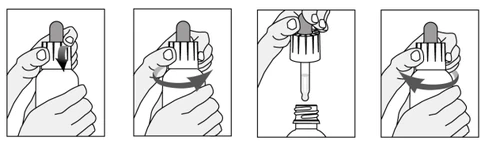
30 ml bottle with child-resistant pipette (2 ml):
- Hold the bottle firmly in one hand. With the other hand, grasp the cap with thumb and index finger at the location of the triangles marked on the cap, where the word "PRESS" is printed.
- To open the bottle, press down on the triangle and unscrew the cap by turning it to the left (counterclockwise). Draw up the required amount of solution using the pipette. The medicine may be administered directly or diluted with water.
- To close the bottle, turn the cap to the right (clockwise) until a click is heard. The bottle must be closed tightly after each use. If visibly soiled, rinse the pipette with water and dry thoroughly before reattaching it to the bottle.
60 ml bottle with child-resistant closure and 5 ml oral syringe:
- Open the bottle following the instructions on the cap (for first opening, break the single-use seal).
- Insert the oral syringe by pressing it into the perforated opening.
- Turn the bottle upside down and draw up the appropriate amount of solution.
- Administer directly or diluted with water, milk, or juice.
- After use, the oral syringe should be washed with water. The bottle must be closed tightly after each use.
Accidental overdose of Apenal medicine
If an overdose of paracetamol has been taken (administered to a child), seek immediate advice from a doctor or pharmacist and provide the name of the medicine and the amount taken.
It is helpful to bring the packaging and leaflet and hand them over to the healthcare professional.
In case of overdose, seek medical attention at a healthcare facility as quickly as possible, even if no symptoms are present, because symptoms of overdose may not appear for up to 3 days, even in severe poisoning. Symptoms of overdose may include: dizziness, vomiting, loss of appetite, yellowing of the skin and eyes (jaundice), and abdominal pain.
An overdose of paracetamol is considered to have occurred when an adult has ingested more than 6 g in total, or a child more than 100 mg per kilogram of body weight. Treatment of overdose is more effective if initiated within 4 hours of ingestion.
Patients taking barbiturates or those with chronic alcoholism may be more susceptible to paracetamol overdose.
Generally, treatment of paracetamol overdose is symptomatic.
Missed dose of Apenal medicine
Do not take a double dose to make up for a missed dose.
If a dose has been missed, take (administer to the child) the next dose as soon as possible, then continue taking the medicine according to the normal schedule. However, if the time until the next scheduled dose is very short, skip the missed dose and take the next dose according to the recommended dosing schedule.
Stopping treatment with Apenal medicine
If you have any further questions about the use of this medicine, consult your doctor, pharmacist, or nurse.
4. Possible adverse effects
Like all medicines, this medicinal product may cause adverse effects, although not everyone experiences them.
Adverse reactions associated with paracetamol use usually occur rarely (in 1 to 10 out of 10,000
patients) or very rarely (less frequently than in 1 out of 10,000 patients).
Uncommon adverse effects include general malaise, hypotension, and increased liver enzyme activity.
Very rarely, liver damage may occur when high doses of the medicine are used or during prolonged treatment. Also very rarely, hypoglycaemia, cloudy urine, adverse renal effects (kidney function disorders), skin rash, urticaria, anaphylactic shock, and blood cell count changes such as thrombocytopenia, agranulocytosis, neutropenia, leukopenia, and haemolytic anaemia may occur.
In very rare cases, serious skin reactions have been reported.
The medicine must be discontinued immediately and medical advice sought if allergic reactions
(hypersensitivity) to paracetamol occur.
Reporting of adverse effects
If any adverse effects occur, including any adverse effects not listed in this leaflet, inform a doctor, pharmacist, or nurse.
Adverse effects can be reported directly to the Department of Monitoring Adverse Drug Reactions at the Office for Registration of Medicinal Products, Medical Devices and Biocidal Products,
Al. Jerozolimskie 181 C,
02-222 Warsaw,
Tel. (22) 49 21 301,
Fax (22) 49 21 309;
Website: https://smz.ezdrowie.gov.pl
Adverse effects can also be reported to the marketing authorisation holder.
Reporting adverse effects helps to provide more information on the safety of the medicine.
5. How to store Apenal
Keep this medicine out of sight and reach of children.
Do not use this medicine after the expiry date stated on the cardboard packaging following:
Expiry date (EXP):. The expiry date refers to the last day of the stated month.
After first opening, the contents should be used within 6 months.
Store in the original packaging to protect from light.
Do not store in the refrigerator.
After opening, store the medicine at a temperature below 25°C.
Medicines should not be disposed of via wastewater or household waste. Ask your pharmacist how to dispose of medicines no longer in use. This will help protect the environment.
6. Contents of the pack and other information
What Apenal contains
- The active substance is paracetamol. Each ml of solution contains 100 mg of paracetamol.
- The other ingredients (excipients) are: glycerol, macrogol 600, sodium saccharin (E 954), strawberry flavour (propylene glycol (E 1520), flavouring substances), purified water.
What Apenal looks like and contents of the pack
Apenal is a thick, sticky, transparent oral solution, very slightly pink in colour and with a strawberry odour, packed in plastic bottles with a capacity of 30 or 60 ml.
- 30 ml bottle: an orange-coloured PET (polyethylene terephthalate) bottle closed with a child-resistant PP (polypropylene) cap, connected with an LDPE (low-density polyethylene) pipette with 2 ml graduated scale, in a cardboard box.
- 60 ml bottle: an orange-coloured PET (polyethylene terephthalate) bottle closed with a child-resistant PP/HDPE (polypropylene and high-density polyethylene) cap, with an LDPE (low-density polyethylene) oral syringe adapter and a tresylene seal, or a child-resistant HDPE cap with a tamper-evident ring and an LDPE oral syringe adapter, together with an LDPE/PS (low-density polyethylene and polystyrene) oral syringe with 5 ml graduated scale, in a cardboard box.
Marketing authorisation holder and manufacturer
LEK-AM Sp. z o.o. Pharmaceutical Company
Ostrzykowizna 14A, 05-170 Zakroczym, Poland
Tel.: +48 22 635-80-41
Similar drugs
| Brand name | Dosage form | Active substance / Dosage | Manufacturer |
|---|---|---|---|
| FEVERINEX | solution, oral |
|
Olsztyn Galenic Laboratory Sp. z o.o. |
| INFACETAMOL | solution, oral |
|
Farmina Sp. z o.o. |
| PEDICETAMOL | solution, oral |
|
Laboratorios ERN, S.A. |
The original data is available in the language of the country of manufacture.
Data source: Register of Medicinal Products of Poland (URPL)
Data last verified: September 01, 2026