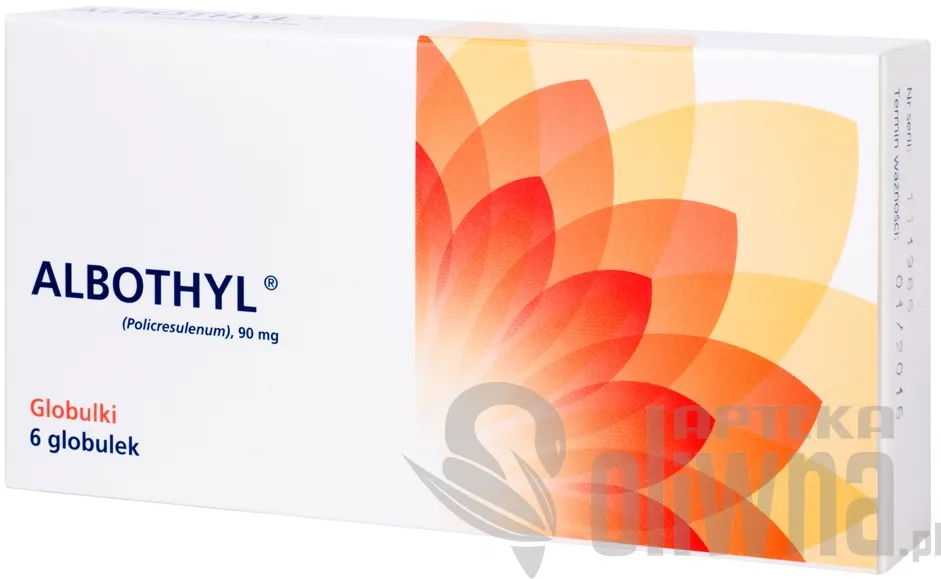
ALBOTHYL
PolandThe medicine is used for the topical treatment of bacterial vaginitis.
Frequently asked questions
How to use Albothyl?
The ovules should be inserted intravaginally at night. Depending on the severity of the symptoms, one ovule is used per day or every second day. The medicine should not be used for longer than 9 days.
When not to use the medicine?
Do not use the medicine if you are allergic to its ingredients or during menstruation. The medicine is not indicated for women under 18 years of age or women in menopause.
What are the possible side effects of Albothyl?
Dryness of the vulva and vagina may occur very frequently. Excretion of mucosal shreds may occur frequently. An unknown frequency includes, among others, itching, discharge, a feeling of discomfort, urticaria, or allergic reactions.
Can other medicines be used during treatment?
Avoid the intravaginal use of other medicines during treatment with Albothyl.
What should you remember during use?
Sexual intercourse should be avoided during treatment and for 7 days after its completion. Due to the risk of irritation, traditional soaps for intimate hygiene should be avoided. The ovules must not be swallowed – in case of ingestion, drink plenty of water and contact a doctor immediately.
Can the medicine be used during pregnancy?
During pregnancy, the medicine can only be used for strictly specified indications, after prior consultation with a doctor who will assess the risk to the mother and child.
Instructions for use
Patient Information Leaflet
Albothyl, 90 mg, globules
Policresulen
Please read all of this leaflet carefully before using this medicine, because it contains
important information for you.
This medicine should always be used exactly as described in this patient leaflet or as
directed by your doctor or pharmacist.
- Keep this leaflet, so that you can read it again if necessary.
- If you need advice or further information, please contact your pharmacist.
- If you experience any side effects, including any possible side effects not listed in this leaflet, inform your doctor, pharmacist, or nurse. See section 4.
- If there is no improvement after 9 days, or if you feel worse, you should contact your doctor.
Contents of the leaflet
- What Albothyl is and what it is used for
- Important information before using Albothyl
- How to use Albothyl
- Possible side effects
- How to store Albothyl
- Contents of the pack and other information
1. What Albothyl is and what it is used for
The active substance policresulen acts selectively on necrotic and pathologically altered tissue proteins.
It does not affect healthy tissues. The acidic nature of the medicine (low pH) destroys bacteria.
Albothyl is indicated for the local treatment of bacterial vaginitis.
Albothyl is not recommended for use in women under 18 years of age or during menopause,
due to lack of experience with the use of this medicine in these patient groups.
2. Important information before using Albothyl
When not to use Albothyl
- If the patient is allergic to the active substance or to any of the other ingredients of this medicine (listed in section 6).
- During menstruation.
Warnings and precautions
Before starting treatment with Albothyl, discuss this with your doctor or pharmacist.
- Do not swallow Albothyl globules, as polycresulen may cause erosion of the oesophagus. In case of accidental ingestion of Albothyl, drink plenty of water and contact your doctor immediately to prevent erosion of the oral cavity, throat, and oesophagus.
- Albothyl strongly stimulates the healing process. There is no cause for concern if necrotic tissue detaches (even in large amounts) from diseased areas. This is a sign of the therapeutic effect of the medicine.
- Due to the risk of irritation, traditional soaps should be avoided for intimate hygiene during treatment with this medicine.
- Sexual intercourse should be avoided during treatment with Albothyl and for 7 days after discontinuation of the medicine.
- Protect the eyes from contact with the medicine. If the medicine comes into contact with the eyes, rinse immediately with water; consultation with an ophthalmologist may be necessary.
- Albothyl does not protect against infections caused by HIV virus or other sexually transmitted diseases, such as gonorrhoea or syphilis.
- If fabric or skin becomes contaminated with Albothyl, wash the affected area immediately with water to prevent drying.
- Spots visible on the surface of the globules are due to the natural appearance of the globule base and do not affect the efficacy or safety of the medicine.
Albothyl and other medicines
Inform your doctor or pharmacist about all medicines currently used, recently used, or planned to be used.
This medicine is intended for topical use. Since the risk of interaction with other medicines cannot be excluded, concomitant intravaginal use of other medicines should be avoided during treatment with Albothyl.
Pregnancy and breastfeeding
If the patient is pregnant or breastfeeding, suspects she may be pregnant, or is planning to have a child, she should consult her doctor or pharmacist before using this medicine.
Albothyl may be used during pregnancy only for strictly defined indications (as prescribed by a doctor) and after considering the risks associated with treatment for both mother and child.
There are no data regarding the passage of the medicine into breast milk.
Animal studies have not shown effects on fertility disturbances.
Driving and operating machinery
Albothyl has no influence on the ability to drive or operate machinery.
3. How to use Albothyl
This medicine should always be used exactly as described in this patient leaflet or as directed by a doctor or pharmacist. If in doubt, consult your doctor or pharmacist.
Recommended dose
Depending on the severity of symptoms, 1 globule per day or every other day. The globules should be administered at night.
The globules should be used until symptoms subside, but not for longer than 9 days. If symptoms do not resolve within this time, or if symptoms recur shortly after treatment ends, medical advice should be sought.
Method of administration
For vaginal use only.
To facilitate administration, the globule may be moistened with water and then inserted deeply into the vagina. Before inserting the globule, lie on your back. The use of sanitary pads can help prevent soiling of underwear and bed linens.
If Albothyl is administered to the patient in a doctor's office, a tampon should be used to keep the medicine in place and should be removed within 1 to 2 hours after insertion of the globule.
Use of a higher than recommended dose of Albothyl
No symptoms of overdose have been observed.
Missed dose of Albothyl
If it is almost time for the next scheduled dose, take the dose at the appropriate time. Do not use a double dose to make up for a missed dose.
4. Possible adverse reactions
Like all medicines, this medicine can cause adverse reactions, although not everyone will experience them.
Adverse reactions are listed according to their frequency of occurrence.
Very common (occurring in more than 1 in 10 patients):
- dryness of the vulva and vagina.
Common (occurring in less than 1 in 10 patients):
- shedding of fragments of mucous membrane.
Frequency not known (cannot be estimated based on available data):
- vaginal and vulval candidiasis, vaginal and vulval pruritus, vaginal discharge, sensation of discomfort in the vagina and vulva, dryness of the vagina and vulva, sensation of a foreign body;
- systemic allergic reactions;
- urticaria.
If serious local irritation symptoms occur, treatment should be discontinued and the physician should be informed.
Reporting of adverse reactions
If any adverse reactions occur, including any adverse reactions not listed in this leaflet, inform your doctor, pharmacist, or nurse. Adverse reactions can be reported directly to the Department of Monitoring Adverse Drug Reactions at the Office for Registration of Medicinal Products, Medical Devices and Biocidal Products
Al. Jerozolimskie 181 C, 02-222 Warsaw
Tel.: +48 22 49 21 301
Fax: +48 22 49 21 309
Website: https://smz.ezdrowie.gov.pl
Adverse reactions can also be reported to the marketing authorization holder.
Reporting adverse reactions helps to provide more information on the safety of the medicine.
5. How to store Albothyl
Store below 25°C.
Keep the medicine out of the sight and reach of children.
Do not use this medicine after the expiry date stated on the blister and carton. The expiry date refers to the last day of the stated month.
Medicines must not be disposed of via wastewater or household waste. Ask your pharmacist how to dispose of medicines no longer required. Such practices help protect the environment.
6. Contents of the packaging and other information
What Albothyl contains
- The active substance is polycresulen. Each globule contains 90 mg of polycresulen.
- The other components are: macrogol 4000, macrogol 1500, edetic acid.
What Albothyl looks like and contents of the pack
Albothyl is a globule formulation ranging in colour from cream to reddish-brown.
The cardboard box contains 6 globules in 1 blister and a polyethylene finger cover sachet.
Marketing Authorisation Holder
Orifarm Healthcare A/S
Energivej 15
5260 Odense S
Denmark
For further information regarding this medicinal product, please contact the local representative of the Marketing Authorisation Holder:
Orifarm Healthcare Sp. z o.o.
ul. Przyokopowa 31
01-208 Warsaw
Poland
[email protected]
Manufacturer
Takeda GmbH
Robert-Bosch-Strasse 8
78224 Singen
Germany
or
DELPHARM HUNINGUE SAS
26 rue de la Chapelle
HUNINGUE, 68330
France
The original data is available in the language of the country of manufacture.
Data source: Register of Medicinal Products of Poland (URPL)
Data last verified: September 01, 2026