ZINNAT
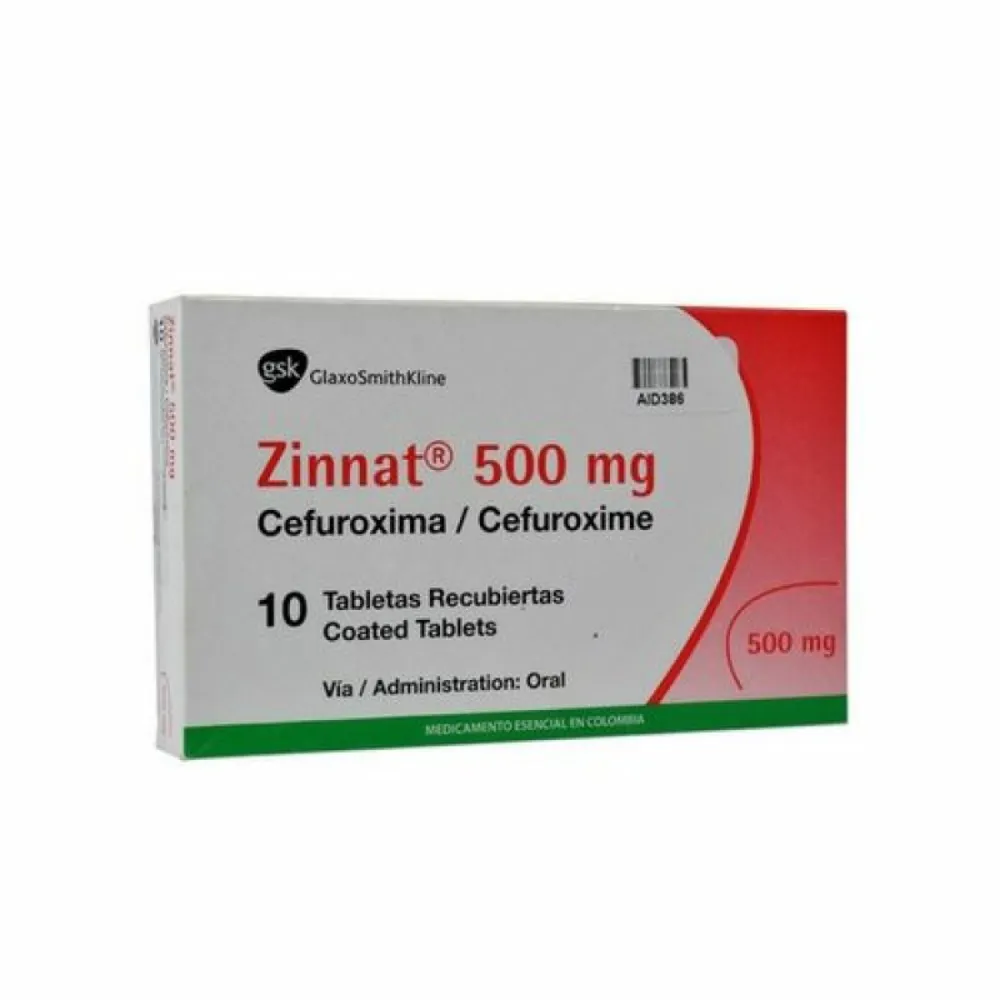
ItalyZinnat is an antibiotic used in adults and children to treat various infections, including those of the throat, sinuses, middle ear, lungs or chest, urinary tract, skin, and soft tissues. It can also be used for Lyme disease.
Frequently asked questions
When should you not take Zinnat?
You must not take this medicine if you are allergic to cefuroxime, other cephalosporins, or if you have had severe allergic reactions to other beta-lactam antibiotics (such as penicillins, monobactams, or carbapenems). It should not be taken if past treatment with cefuroxime or other cephalosporins has caused severe skin rashes, peeling, blisters, or mouth ulcers.
How should Zinnat be taken?
The medicine should be taken after meals to make it more effective. For adults and children weighing 40 kg or more, the dose is 250 mg or 500 mg twice daily. For children weighing less than 40 kg, the dose depends on weight, age, and the severity of the infection. It is essential to complete the entire course of treatment even if you feel better.
What are the common side effects of Zinnat?
Side effects that may affect up to 1 in 10 people include fungal infections (such as Candida), headache, dizziness, diarrhea, nausea, and stomach pain.
What are the serious side effects that should be reported immediately?
It is necessary to contact a doctor immediately if severe allergic reactions occur (swelling, difficulty breathing, itchy rashes), severe skin reactions (skin peeling, blisters), severe diarrhea with blood or mucus, high fever, or if symptoms such as yellowing of the skin or eyes are experienced.
Can Zinnat interact with other medicines?
Yes. It is important to inform your doctor if you are taking medicines to reduce stomach acidity (antacids), probenecid, or oral anticoagulants, as these may affect the activity of the drug.
What to do in case of a missed dose or overdose?
If you forget a dose, do not take a double dose but proceed with the next dose at the usual time. In case of overdose, seizures may occur: do not wait and contact a doctor or emergency services immediately.
How should the medicine be stored?
The medicine should be stored in its original packaging at a temperature below 30°C. For the suspension (bottle), once prepared, it must always be stored in the refrigerator between 2 and 8°C and can be used within 10 days.
Instructions for use
Table of contents
- Zinnat 125 mg/5 ml granules for oral suspension, 250 mg/5 ml granules for oral suspension, 250 mg granules for oral suspension
- 1. What Zinnat is and what it is used for
- 2. What you should know before taking Zinnat
- 3. How to take Zinnat
- 4. Possible side effects
- 5. How to store Zinnat
- 6. Package contents and other information
Package leaflet: Information for the user
Zinnat 125 mg/5 ml granules for oral suspension, 250 mg/5 ml granules for oral suspension, 250 mg granules for oral suspension
cefuroxime
Read all of this leaflet carefully before taking this medicine because it contains important
information for you.
Keep this leaflet. You may need to read it again.
If you have any questions, ask your doctor, pharmacist, or nurse.
This medicine has been prescribed for you only. Do not give it to other people, even if their symptoms
are the same as yours, as it may be harmful.
If you experience any side effects, including those not listed in this leaflet, contact your doctor,
pharmacist, or nurse. See section 4.
Contents of this leaflet:
- What Zinnat is and what it is used for
- What you need to know before taking Zinnat
- How to take Zinnat
- Possible side effects
- How to store Zinnat
- Contents of the pack and other information
1. What Zinnat is and what it is used for
Zinnat is an antibiotic used in adults and children. It works by killing the bacteria that cause infections and belongs to a group of medicines called cephalosporins.
Zinnat is used to treat infections of:
- the throat
- the sinuses
- the middle ear
- the lungs or chest
- the urinary tract
- the skin and soft tissues
Zinnat may also be used:
- to treat Lyme disease (an illness spread by parasites called ticks).
Your doctor may check which type of bacteria are causing the infection and monitor whether the bacteria are sensitive to Zinnat during treatment.
2. What you should know before taking Zinnat
Do not take Zinnat:
- if you are allergic to axetil cefuroxime or to any antibiotic of the cephalosporin class or to any of the other ingredients of Zinnat (listed in section 6).
- if you have had a severe allergic reaction (hypersensitivity) to any other type of beta-lactam antibiotics (penicillins, monobactams, and carbapenems).
- if you have developed severe skin rash, skin peeling, blisters, and/or mouth ulcers after treatment with cefuroxime or with any other antibiotic of the cephalosporin class. ➔ If you think this applies to you, do not take Zinnat before consulting your doctor.
Take special care with Zinnat:
Serious skin reactions have been reported during treatment with cefuroxime, including
Stevens-Johnson syndrome, toxic epidermal necrolysis, drug reaction with eosinophilia and systemic
symptoms (DRESS). Seek immediate medical advice if you notice any of the symptoms related to
these serious skin reactions described in section 4.
Warnings and precautions
Talk to your doctor or pharmacist before taking Zinnat.
Children
Zinnat is not recommended in children under 3 months of age as safety and
efficacy have not been established in this age group.
Be alert for certain symptoms such as allergic reactions, fungal infections (such as Candida), and severe diarrhoea (pseudomembranous colitis) while taking Zinnat. This will help reduce the risk of potential problems.
See 'Conditions requiring caution' in section 4.
If you need blood tests
Zinnat may interfere with blood test results for blood sugar levels or with the blood test known as the Coombs test. If you need blood tests:
➔ inform the person taking the sample that you are taking Zinnat.
Other medicines and Zinnat
Inform your doctor or pharmacist if you are taking, have recently taken, or might take any other medicines.
Medicines used to reduce stomach acid (e.g. antacids used to treat heartburn) may affect the activity of Zinnat.
Probenecid
Oral anticoagulants
➔ Inform your doctor or pharmacist if you are taking any of these medicines.
Pregnancy, breastfeeding and fertility
If you are pregnant, think you may be pregnant, are planning to become pregnant, or are breastfeeding, ask your doctor or pharmacist for advice before taking this medicine.
Driving and using machines
Zinnat may cause dizziness and other side effects that may impair alertness.
➔ Do not drive or operate machinery if you do not feel well.
Important information about some of the excipients in Zinnat
Zinnat suspension contains sugar (sucrose). If you are diabetic, you must take this into account in your diet. If your doctor has diagnosed you with an intolerance to certain sugars, contact your doctor before taking this medicine.
Zinnat suspension also contains aspartame, which is a source of phenylalanine. This may be harmful if you have phenylketonuria (PKU), a rare genetic disorder in which phenylalanine accumulates because the body cannot remove it properly.
Zinnat suspension also contains benzyl alcohol (E1519), which may cause allergic reactions. Consult your doctor or pharmacist if you have liver or kidney disease, are pregnant, or are breastfeeding (see also the previous section – Pregnancy, breastfeeding and fertility). This is because large amounts of benzyl alcohol may accumulate in your body and cause side effects (called metabolic acidosis). Do not use for more than one week in young children (under 3 years of age), unless advised by your doctor or pharmacist.
Zinnat 125 mg/5 ml granules for oral suspension
This medicine contains 0.021 g of aspartame in each 5 ml dose
This medicine contains 3.1 g of sucrose in each 5 ml dose
This medicine contains 6 mg of propylene glycol (E1520) in each 5 ml dose
This medicine contains 4.5 mg of benzyl alcohol (E1519) in each 5 ml dose
Zinnat 250 mg/5 ml granules for oral suspension
This medicine contains 0.045 g of aspartame in each 5 ml dose
This medicine contains 2.3 g of sucrose in each 5 ml dose
This medicine contains 4.6 mg of benzyl alcohol (E1519) in each 5 ml dose
Zinnat 250 mg granules for oral suspension
This medicine contains 0.042 g of aspartame per sachet
This medicine contains 6.1 g of sucrose per sachet. This should be taken into account in patients with diabetes mellitus.
This medicine contains 12 mg of propylene glycol (E1520) per sachet.
This medicine contains 9 mg of benzyl alcohol (E1519) per sachet
➔ Check with your doctor that Zinnat is suitable for you.
3. How to take Zinnat
Always take this medicine exactly as instructed by your doctor or pharmacist.
If you have any doubts, consult your doctor or pharmacist.
Take Zinnat after meals. This will help make the treatment more effective.
125 mg/5 ml and 250 mg/5 ml oral suspension granules
Shake the bottle well before use.
Zinnat suspension may be diluted in cold fruit juices or milk-based drinks, but must be taken immediately.
Do not mix Zinnat with hot drinks.
For step-by-step instructions on how to prepare Zinnat suspension, see Reconstitution instructions, at the end of this leaflet.
250 mg oral suspension granules (sachets)
For step-by-step instructions on how to prepare Zinnat sachets, see Reconstitution instructions, at the end of this leaflet.
Recommended dose
Adults and children weighing 40 kg or more
The recommended dose of Zinnat is 250 mg to 500 mg twice daily, depending on the severity and type of infection.
Children weighing less than 40 kg
Children weighing less than 40 kg should preferably be treated with Zinnat oral suspension or sachets. The recommended dose of Zinnat is 10 mg/kg (up to a maximum of 250 mg) to 15 mg/kg (up to a maximum of 250 mg) twice daily, depending on:
- severity and type of infection
- the child's weight and age, up to a maximum of 500 mg per day.
Zinnat is not recommended in children under 3 months of age, as safety and efficacy have not been established in this age group.
Depending on the illness or how you or your child responds to treatment, the initial dose may be adjusted or more than one treatment course may be required.
Patients with kidney problems
If you have kidney problems, your doctor may adjust your dose.
➔ Talk to your doctor if this applies to you.
If you take more Zinnat than you should
If you take too much Zinnat, you may experience neurological disturbances; in particular, you are more likely to have seizures.
➔ Do not wait. Contact your doctor or the nearest hospital emergency department immediately. If possible, show them the Zinnat packaging.
If you forget to take Zinnat
Do not take a double dose to make up for a forgotten dose. Take the next dose at the usual time.
If you stop taking Zinnat
Do not stop taking Zinnat without medical advice.
It is important to complete the full course of Zinnat treatment. Do not stop unless your doctor tells you to, even if you feel better. If you do not complete the full course of treatment, the infection may return.
If you have any questions about how to use this medicine, ask your doctor or pharmacist.
4. Possible side effects
Like all medicines, this medicine can cause side effects, although not everyone gets them.
Conditions requiring attention
A small number of people being treated with Zinnat may experience an allergic reaction or a potentially serious skin reaction. Symptoms of these reactions include:
- Severe allergic reaction. Signs include raised, itchy rash, swelling, sometimes of the face or mouth, causing difficulty breathing.
- Widespread rash, high body temperature, and swollen lymph nodes (DRESS syndrome or drug hypersensitivity syndrome).
- Chest pain in the context of allergic reactions, which may be a symptom of heart attack caused by an allergy (Kounis syndrome).
- Rash with blister-like lesions resembling small targets (a dark spot in the center surrounded by a lighter area with a black ring at the edge).
- Widespread rash with blisters and peeling of the skin. (These may be signs of Stevens-Johnson syndrome or toxic epidermal necrolysis).
Other conditions requiring attention while taking Zinnat include:
- Fungal infections. Medicines like Zinnat can cause overgrowth of fungi (Candida) in the body, leading to fungal infections (such as thrush). This side effect is more likely if Zinnat is taken for a long time.
- Severe diarrhoea ( pseudomembranous colitis ). Medicines like Zinnat can cause inflammation of the colon (large intestine), resulting in severe diarrhoea, usually with blood and mucus, stomach pain, and fever.
- Jarisch-Herxheimer reaction. Some patients may experience high temperature (fever), chills, headache, muscle pain, and rash during treatment with Zinnat for Lyme disease. This is known as Jarisch-Herxheimer reaction. Symptoms usually last for a few hours up to one day. ➔ Contact your doctor or nurse immediately if you experience any of these symptoms.
Common side effects
These may affect up to 1 in 10 patients:
- Fungal infections (such as Candida)
- Headache
- Dizziness
- Diarrhoea
- Nausea
- Stomach pain
Common side effects that may be detected by blood tests:
- Increase in a type of white blood cells (eosinophilia)
- Increase in liver enzymes
Uncommon side effects
These may affect up to 1 in 100 patients:
- Vomiting
- Skin rashes
Uncommon side effects that may be detected by blood tests:
- Decrease in the number of blood platelets (cells that help blood clotting)
- Decrease in the number of white blood cells
- Positive Coombs test
Other side effects
Other side effects have occurred in a very small number of people, but their exact frequency is unknown:
- Severe diarrhoea (pseudomembranous colitis)
- Allergic reactions
- Skin reactions (including severe)
- High temperature (fever)
- Yellowing of the whites of the eyes or skin
- Inflammation of the liver (hepatitis)
Side effects that may be detected by blood tests:
- Too rapid destruction of red blood cells (haemolytic anaemia)
Reporting of side effects
If you experience any side effect, including those not listed in this leaflet, talk to your doctor or pharmacist. You can also report side effects directly via the reporting system at the following website: . By reporting side effects, you can help provide more information on the safety of this medicine.
5. How to store Zinnat
Keep this medicine out of the sight and reach of children.
Store in the original packaging at a temperature not exceeding 30°C.
125 mg/5 ml and 250 mg/5 ml granules for oral suspension
The suspension should always be stored in the refrigerator when not in use.
Do not allow it to freeze. It can be kept in the refrigerator for up to 10 days.
250 mg sachets
The reconstituted suspension should be taken immediately.
Do not use Zinnat if it shows any signs of deterioration.
Do not use this medicine after the expiry date stated on the pack after "Exp." The expiry date refers to the last day of that month.
Do not dispose of medicines via wastewater or household waste. Ask your pharmacist how to dispose of medicines no longer required. This will help protect the environment.
6. Package contents and other information
What Zinnat contains
125 mg/5 ml granules for oral suspension
The active substance is 125 mg of cefuroxime per 5 ml (present as cefuroxime axetil).
The other components are aspartame (E951), xanthan gum, acesulfame potassium (E950), povidone K30,
stearic acid, sucrose, tutti-frutti flavour [containing propylene glycol (E1520) and benzyl alcohol (E1519)]
and purified water.
250 mg/5 ml granules for oral suspension
The active substance is 250 mg of cefuroxime per 5 ml (present as cefuroxime axetil).
The other components are aspartame (E951), xanthan gum, acesulfame potassium (E950), povidone K30,
stearic acid, sucrose, tutti-frutti flavour [contains benzyl alcohol (E1519)] and purified water.
250 mg sachets
The active substance is 250 mg of cefuroxime (present as cefuroxime axetil) per sachet.
The other components are aspartame (E951), xanthan gum, acesulfame potassium (E950), povidone K30,
stearic acid, sucrose, tutti-frutti flavour [containing propylene glycol (E1520) and benzyl alcohol (E1519)]
and purified water.
See section 2 for further important information on some of the excipients in Zinnat.
Description of the appearance of Zinnat and the contents of the pack
Zinnat 125 mg/5 ml and 250 mg/5 ml suspension is supplied in an amber glass multidose bottle. The
bottle contains 50 ml, 70 ml or 100 ml of 125 mg/5 ml suspension, or 50 ml, 70 ml or 100 ml of 250 mg/5 ml
suspension. This medicine must be prepared with water using the granules provided in the bottle. The
bottle is contained in a carton.
Zinnat 250 mg suspension is supplied in sachets.
The sachets are contained in a carton.
Not all pack sizes may be marketed.
Marketing Authorisation Holder and Manufacturer
Marketing Authorisation Holder:
Sandoz S.p.A.
Viale Luigi Sturzo 43
20154 Milan
Italy
Manufacturer:
GlaxoSmithKline Trading Services Limited –
12 Riverwalk - Citywest Business Campus –
Dublin 24
Ireland
Lek Pharmaceuticals d.d.
Verovškova 57
1526 Ljubljana
Slovenia
Sandoz GmbH
Kundl (AICO FDF Kundl)
Biochemiestraße 10
6250 Kundl
Austria
This medicine is authorised in the European Economic Area and in the United Kingdom (Northern Ireland) under the following names:
125 mg/5 ml granules for oral suspension
Bulgaria, Czech Republic, Estonia, France, Hungary, Ireland, Italy, Latvia, Lithuania, Malta, Netherlands, Poland, Romania, Slovakia, Slovenia, United Kingdom (Northern Ireland) – Zinnat
Germany – Cefuroxim 125 mg/5 ml - 1 A Pharma Granulat zur Herstellung einer Suspension zum Einnehmen
Italy – Zinnat
Portugal – Zipos
Portugal – Zoref
250 mg/5 ml granules for oral suspension
Belgium, Bulgaria, Cyprus, Ireland, Italy, Luxembourg, Malta, Poland, Slovakia, Slovenia, Spain, United Kingdom (Northern Ireland) – Zinnat
Greece – Zinadol
Italy – Zinnat
Portugal – Zipos
Portugal – Zoref
250 mg granules for oral suspension
Italy, Spain, Slovakia – Zinnat
Italy – Zinnat
Instructions for reconstitution
125 mg/5 ml and 250 mg/5 ml granules for oral suspension
Instructions for preparing the suspension
Please note that the time required to prepare the Zinnat suspension before administering the first dose will take more than one hour. This includes the time needed for the suspension to stabilise in the refrigerator.
Follow the instructions below carefully when preparing and storing the Zinnat suspension for your child.
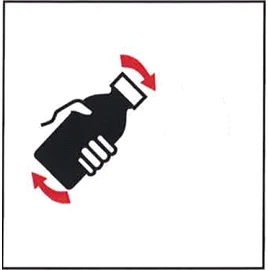
Shake the bottle to disperse the contents. Remove the bottle cap and the heat-sealed membrane. If the membrane is damaged or missing, return the product to the pharmacist.
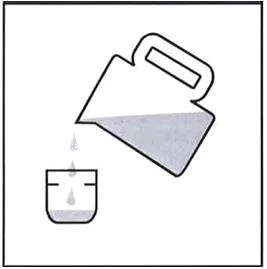
Add the amount of cold water as indicated on the label or up to the volume line on the measuring spoon provided. If the water has been previously boiled, allow it to cool to room temperature before adding. Do not mix Zinnat granules for oral suspension with hot or boiling liquids. Cold water should be used to prevent the suspension from becoming too thick.
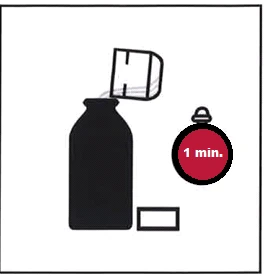
Pour the total amount of cold water into the bottle. Replace the cap. Hold the bottle upright to allow the granules to be fully immersed in the water; this should take about 1 minute.
Turn the bottle upside down and shake well (for at least 15 seconds) until
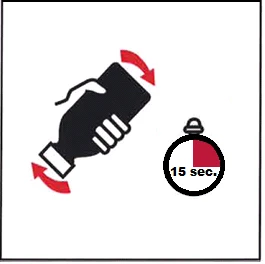
all granules are mixed with the water.
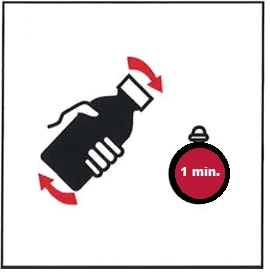
Turn the bottle upright and shake well for at least 1 minute until all granules are completely mixed with the water.
Immediately store the reconstituted Zinnat suspension in the refrigerator at a temperature between 2 and 8°C (do not freeze) and allow it to stand for at least one hour before administering the first dose.
The reconstituted suspension must always be refrigerated; if stored between 2 and 8°C, the reconstituted suspension can be kept for up to 10 days.
Always shake the bottle well before administering the medicine.
For children who cannot take Zinnat with a spoon, an oral dosing syringe with a 5 ml mark may be supplied with the pack. If provided, use the oral dosing syringe to measure the dose accurately:
- Remove the bottle cap. Keep it safe.
- Hold the bottle firmly. Push the plastic adapter into the neck of the bottle.
- Insert the syringe firmly into the adapter.
- Turn the bottle upside down.
- Pull the plunger of the syringe until the syringe contains the first portion of the child's full dose.
- Return the bottle to an upright position. Remove the syringe from the adapter.
- Place the syringe into the child's mouth, positioning the tip against the inside of the cheek. Slowly push the plunger of the syringe, allowing time for swallowing. Do not push too hard or spray the liquid to the back of the child's throat, as this may cause choking.
- Repeat steps 3 to 7 in the same way until the full dose has been administered.
- Remove the syringe from the bottle and wash it thoroughly with clean water. Allow it to dry completely before reuse.
- Close the bottle securely with the cap, leaving the adapter in place.
250 mg granules for oral suspension
Instructions for preparing the suspension from sachets
- Pour the granules from the sachet into a glass.
- Add a small amount of cold water.
- Shake well and drink immediately.
➔ Do not mix the suspension or granules with hot drinks.
Similar drugs
| Brand name | Dosage form | Active substance / Dosage | Manufacturer |
|---|---|---|---|
| CEFUROXIME EG | tablets, film-coated | EG S.P.A. | |
| CEFUROXIME MYLAN | tablets, film-coated | MYLAN S.P.A. | |
| ORAXIM | tablets, film-coated | MALESCI ISTITUTO FARMACOBIOLOGICO S.P.A. | |
| TILEXIM | tablets, film-coated | I.B.N. SAVIO S.R.L |
The original data is available in the language of the country of manufacture.
Data source: Italian Medicines Agency (AIFA)
Data last verified: September 21, 2026