SINEISTIC
ItalySinestic is used for the treatment of asthma in adults and adolescents between 12 and 17 years of age. It is also indicated for the treatment of symptoms of chronic obstructive pulmonary disease (COPD) in adults.
Frequently asked questions
How should Sinestic be taken?
The medicine should be used every day following the doctor's instructions. For the powder version, the usual dose is 1 or 2 inhalations twice daily. For the pressurized suspension (spray), the usual dose is 2 inhalations twice daily. It is important to rinse your mouth with water and spit after use.
When should you not use the medicine?
You must not use Sinestic if you are allergic to budesonide, formoterol, or lactose (which may contain small amounts of milk protein). It is necessary to consult a doctor before use if you suffer from diabetes, lung infections, heart problems, high blood pressure, problems with the thyroid, adrenal glands, or liver, or if you have low potassium levels in the blood.
What are the side effects of Sinestic?
Common side effects include palpitations, tremors, fungal infections in the mouth (thrush), sore throat, cough, hoarseness, or headache. Less common side effects may also occur, such as dizziness, nausea, rapid heartbeat, or blurred vision. In very rare cases, changes in behavior, chest pain, or changes in blood pressure may occur.
What to do in case of serious reactions?
Stop use immediately and contact a doctor if you experience swelling of the face, tongue, or throat, difficulty swallowing, hives with breathing difficulties, or sudden fainting. Contact a doctor also if you experience sudden wheezing or shortness of breath immediately after inhalation.
Are there interactions with other medicines?
It is important to inform your doctor if you are taking other medicines, particularly beta-blockers, heart rhythm medications, diuretics, oral steroids, other bronchodilators, antidepressants, medicines for Parkinson's disease or thyroid disease, and certain medicines for the treatment of HIV or infections.
Can the medicine be used during pregnancy or breastfeeding?
If you are pregnant or planning a pregnancy, consult your doctor before use. If you become pregnant during treatment, do not stop use but consult your doctor immediately. Inform your doctor before using the medicine if you are breastfeeding.
Instructions for use
Table of contents
- Sinestic
- 1. What Sinestic is and what it is used for
- 2. What you need to know before using Sinestic
- 3. How to use Sinestic
- 4. Possible side effects
- 5. How to store Sinestic
- 6. Package contents and other information
- Package leaflet: information for the user
- Sinestic
- 1. What Sinestic is and what it is used for
- 2. What you need to know before using Sinestic
- 3. How to use Sinestic
- 4. Possible side effects
- 5. How to store Sinestic
- 6. Package contents and other information
- Sinestic 160 micrograms/4.5 micrograms/dose, pressurized suspension for
- 1. What Sinestic is and what it is used for
- 2. What you need to know before using Sinestic
- 3. How to use Sinestic
- 4. Possible side effects
- 5. How to store Sinestic
- 6. Package contents and other information
Package leaflet: Information for the user
Sinestic
160 micrograms/4.5 micrograms/inhalation, inhalation powder
budesonide/formoterol fumarate dihydrate
Please read this leaflet carefully before using this medicine because it contains important information for you.
- Keep this leaflet. You may need to read it again.
- If you have any questions, consult your doctor or pharmacist.
- This medicine has been prescribed for you only. Do not give it to other people, even if their symptoms are the same as yours, as it may be harmful.
- If any adverse reaction occurs, including those not listed in this leaflet, contact your doctor or pharmacist. See section 4.
Contents of this leaflet:
- What Sinestic is and what it is used for
- What you need to know before using Sinestic
- How to use Sinestic
- Possible side effects
- How to store Sinestic
- Contents of the pack and other information
1. What Sinestic is and what it is used for
Sinestic consists of an inhaler used to treat asthma in adults and adolescents aged
12 to 17 years. It is also used to treat symptoms of chronic obstructive pulmonary
disease (COPD) in adults aged 18 years and older. It contains two
different medicines: budesonide and formoterol fumarate dihydrate.
- Budesonide belongs to a group of medicines called “corticosteroids”. It works by reducing and preventing swelling and inflammation in your lungs.
- Formoterol fumarate dihydrate belongs to a group of medicines called “long-acting β2-adrenergic agonists” or “bronchodilators”. It works by relaxing the muscles in the airways, thereby making breathing easier.
Asthma
Sinestic may be prescribed for asthma in two different ways.
a) Some people are prescribed two inhalers for asthma: Sinestic and a separate “reliever inhaler”.
- They use Sinestic every day. This helps prevent the occurrence of asthma symptoms.
- They use the “reliever inhaler” when asthma symptoms occur, to help restore normal breathing.
b) Some people are prescribed Sinestic as their only asthma inhaler.
- They use Sinestic every day. This helps prevent the occurrence of asthma symptoms.
- They also use Sinestic when they need extra doses to relieve asthma symptoms, to help restore normal breathing. They do not need a separate inhaler for this purpose.
Chronic obstructive pulmonary disease (COPD)
Sinestic may also be used to treat symptoms of severe COPD in adults. COPD is
a chronic lung airway disease, often caused by cigarette smoking.
2. What you need to know before using Sinestic
Do not use Sinestic:
If you are allergic to budesonide, formoterol, or any of the other ingredients of this medicine (listed in section 6), i.e. lactose (which contains small amounts of milk proteins).
Warnings and precautions
Talk to your doctor or pharmacist before using Sinestic if:
- You have diabetes.
- You have a lung infection.
- You have high blood pressure or have ever had heart problems in the past (e.g. irregular heartbeat, very rapid pulse, narrowed arteries, or heart failure).
- You have thyroid or adrenal gland problems.
- You have low potassium levels in your blood.
- You have severe liver problems. Contact your doctor if you experience blurred vision or other visual disturbances.
For athletes: using this medicine without a therapeutic need constitutes doping and may lead to a positive anti-doping test.
Other medicines and Sinestic
Inform your doctor or pharmacist if you are currently taking, have recently taken, or might take any other medicines.
In particular, inform your doctor or pharmacist if you are taking any of the following medicines:
- Beta-blockers (such as atenolol or propranolol for hypertension), including eye drops (such as timolol for glaucoma).
- Medicines for rapid or irregular heartbeat (such as quinidine).
- Medicines such as digoxin, often used to treat heart failure.
- Diuretics (such as furosemide), used to treat hypertension.
- Oral steroids (such as prednisolone).
- Xanthines (such as theophylline or aminophylline), often used to treat asthma.
- Other bronchodilators (such as salbutamol).
- Tricyclic antidepressants (such as amitriptiline) and the antidepressant nefazodone.
- Phenothiazine medicines (such as chlorpromazine and prochlorperazine).
- Medicines called "HIV protease inhibitors" (such as ritonavir), used to treat HIV infection.
- Medicines to treat infections (such as ketoconazole, itraconazole, voriconazole, posaconazole, clarithromycin, and telithromycin).
- Medicines for Parkinson's disease (such as levodopa).
- Medicines for thyroid problems (such as levothyroxine).
If you fall into any of the above categories, or if you are in doubt, consult your doctor or pharmacist before using Sinestic.
Also inform your doctor or pharmacist if you are due to undergo general anaesthesia for a surgical or dental procedure.
Pregnancy, breastfeeding and fertility
- If you are pregnant, or planning to become pregnant, consult your doctor before taking Sinestic – do not take Sinestic unless advised by your doctor.
- If you become pregnant while being treated with Sinestic, do not stop using Sinestic but consult your doctor immediately.
- If you are breastfeeding, inform your doctor before taking Sinestic.
Driving and using machines
Sinestic has no effect or negligible effects on the ability to drive vehicles or operate tools or machinery.
Sinestic contains lactose
Sinestic contains lactose, which is a type of sugar. If your doctor has informed you that you have an intolerance to certain sugars, consult your doctor before using this medicine. The amount of lactose contained in this medicine usually does not cause problems in people with lactose intolerance. However, the excipient lactose contains small amounts of milk proteins which may cause allergic reactions.
3. How to use Sinestic
- Use this medicine exactly as instructed by your doctor. If you have any doubts, consult your doctor or pharmacist.
- It is important to use Sinestic every day, even if you do not currently have asthma or COPD symptoms.
- If you are using Sinestic for asthma, your doctor will want to monitor your symptoms periodically.
If you have been taking oral steroid tablets for your asthma or COPD, your doctor may gradually reduce the number of tablets once you have started using Sinestic. If you have taken oral steroids for a long period, your doctor may require you to have periodic blood tests. As you reduce the amount of oral steroids, you may feel generally unwell even though your respiratory symptoms may be improving. You might experience symptoms such as nasal congestion and rhinorrhea (runny nose), weakness or muscle or joint pain, or skin rash (eczema). If any of these symptoms concern you, or if you experience symptoms such as headache, fatigue, nausea, or vomiting, please contact your doctor immediately. You may need to take another medicine for allergic or arthritic symptoms. Ask your doctor if you have any doubts about continuing treatment with Sinestic.
Your doctor may consider adding oral steroid tablets to your usual treatment during periods of stress (for example, when you have a respiratory infection or before undergoing surgery).
Important information about asthma or COPD symptoms
If you notice the onset of breathlessness or wheezing while using Sinestic, continue using it but consult your doctor as soon as possible, as additional treatment may be needed.
Contact your doctor immediately if:
- Your breathing worsens or you wake up frequently at night due to asthma.
- You begin to experience chest tightness in the morning or if chest tightness lasts longer than usual.
These signs may indicate that your asthma or COPD is not adequately controlled and that you may need different or additional treatment immediately.
Asthma
Sinestic may be prescribed for asthma in two different ways. The amount of Sinestic to use and when to use it depends on your doctor's prescription.
a) If you have been prescribed Sinestic and a separate reliever inhaler, read section “a) Use of Sinestic and a separate reliever inhaler”.
b) If you have been prescribed Sinestic as your only inhaler, read section “b) Use of Sinestic as the only inhaler for asthma”.
a) Use of Sinestic and a separate reliever inhaler
Use Sinestic every day. This helps prevent the onset of asthma symptoms.
Adults (aged 18 years and over)
- The usual dose is 1 or 2 inhalations, twice daily.
- Your doctor may increase this dose to 4 inhalations, twice daily.
- If your symptoms are well controlled, your doctor may instruct you to take the medicine once daily.
Adolescents (aged 12–17 years)
- The usual dose is 1 or 2 inhalations, twice daily.
- If your symptoms are well controlled, your doctor may instruct you to take the medicine once daily.
Other medicines containing budesonide and formoterol at lower strengths are available for children aged 6 to 11 years.
The use of Sinestic is not recommended in children under 6 years of age.
Your doctor (or nurse) will help manage your asthma and adjust the dose of this medicine to the lowest dose that controls your asthma. However, do not change the dose without first discussing it with your doctor (or nurse).
Use the separate “reliever inhaler” to treat asthma symptoms when they occur.
Always carry your “reliever inhaler” with you, to use when needed. Do not use Sinestic to treat asthma symptoms—use the reliever inhaler instead.
b) Use of Sinestic as the only inhaler for asthma
Use Sinestic in this way only if instructed by your doctor and if you are over 12 years of age.
Use Sinestic every day. This helps prevent the onset of asthma symptoms. You may take:
- 1 inhalation in the morning and 1 inhalation in the evening, or
- 2 inhalations in the morning, or
- 2 inhalations in the evening.
Your doctor may increase this dose to 2 inhalations, twice daily.
Also use Sinestic as a “reliever inhaler” to treat asthma symptoms when they occur.
- If asthma symptoms occur, take 1 inhalation and wait a few minutes.
- If you do not feel better, take another inhalation.
- Do not take more than 6 inhalations at one time.
Always carry your Sinestic Turbohaler with you for use when needed.
Normally, a total daily dose exceeding 8 inhalations is not required. However, your doctor may allow you to take up to 12 inhalations per day for a limited period.
If you regularly need to use 8 or more inhalations per day, consult your doctor or nurse, as your treatment may need to be adjusted.
Do not use more than 12 inhalations in total within 24 hours.
If asthma symptoms occur during physical exercise, use Sinestic as described in this leaflet. However, do not use Sinestic immediately before exercise to prevent symptoms.
Chronic obstructive pulmonary disease (COPD)
- Use is intended for adults only (aged 18 years and over).
- The usual dose is 2 inhalations twice daily.
Your doctor may also prescribe other bronchodilator medicines, such as anticholinergics (e.g. tiotropium bromide or ipratropium bromide), for the treatment of COPD.
How to prepare the Sinestic Turbohaler
Before using a new Sinestic Turbohaler for the first time, you must prepare it for use as follows:
- Unscrew and remove the cap; you may hear a noise.
- Hold the Sinestic Turbohaler upright with the red wheel facing downwards.
- Turn the red wheel fully in one direction, then fully in the other direction (it does not matter which direction you start in). You will hear a click during this process.
- Repeat this step, turning the red wheel fully in both directions.
- The Sinestic Turbohaler is now ready for use.
How to take an inhalation
Each time you need to take an inhalation, follow the instructions below:
- Unscrew and remove the cap; you may hear a noise.
- Hold the Sinestic Turbohaler upright with the red wheel facing downwards.
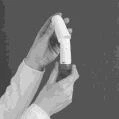
- Do not touch the mouthpiece while loading the Sinestic Turbohaler. To load a dose, turn the red wheel fully in one direction, then fully in the other direction (it does not matter which direction you start in). You will hear a click. The Sinestic Turbohaler is now loaded and ready for use. Only load the Sinestic Turbohaler when you are ready to use it.
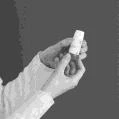
- Hold the Sinestic Turbohaler away from your mouth. Breathe out gently (without forcing). Do not breathe out through the Sinestic Turbohaler.
- Place the mouthpiece gently between your teeth. Close your lips and inhale as deeply as possible through your mouth. Do not chew or bite the mouthpiece.
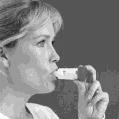
- Remove the Sinestic Turbohaler from your mouth. Breathe out gently. The amount of medicine inhaled is very small. This means you may not taste it after inhalation. If you have followed the instructions correctly, you can be sure you have inhaled the dose, and the medicine is now in your lungs.
- If you need to take a second inhalation, repeat steps 2 to 6.
- After use, replace the cap and screw it back on.
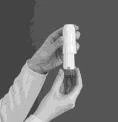
- Rinse your mouth with water after the morning and/or evening dose and spit out the water. Do not try to remove or rotate the mouthpiece. It is fixed to the Sinestic Turbohaler and must not be removed. Do not use the Sinestic Turbohaler if it is damaged or if the mouthpiece has come loose.
As with all inhalers, caregivers must ensure that children prescribed Sinestic use the correct inhalation technique as described above.
How to clean the Sinestic Turbohaler
Clean the outside of the mouthpiece once a week with a dry cloth. Do not use water or liquids.
When to start using a new inhaler
The dose indicator shows how many doses (inhalations) remain in the Sinestic Turbohaler, starting from 60 or 120 doses when full.
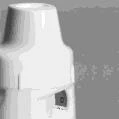
- The dose indicator shows doses in increments of 10, so it does not display every single dose.
- When a red mark first appears at the edge of the indicator window, approximately 20 doses remain. For the last 10 doses, the background of the dose indicator turns red. When the '0' on the red background reaches the middle of the window, you should start using a new Sinestic Turbohaler. Note:
- You will still be able to turn the red wheel and hear a "click" even when the Sinestic Turbohaler is empty.
- The sound heard when shaking the Sinestic Turbohaler comes from a drying agent, not the medicine. Therefore, this sound does not indicate how much medicine remains in the device.
- If, by mistake, you load the Sinestic Turbohaler more than once before taking a dose, you will still only receive one dose. However, the dose counter will record all loaded doses.
If you use more Sinestic than you should
It is important that you take the dose as indicated on the label or as advised by your doctor. Do not exceed the prescribed dose without consulting your doctor.
The most common symptoms if you use more Sinestic than you should are tremor, headache, or rapid heartbeat.
If you forget to use Sinestic
- If you forget to take a dose, take it as soon as you remember. However, if it is almost time for your next dose, skip the missed dose.
- Do not take a double dose to make up for a forgotten dose.
If you have any doubts about how to use this medicine, ask your doctor or pharmacist.
4. Possible side effects
Like all medicines, this medicine can cause side effects, although not everyone experiences them.
If any of the following occur, stop using Sinestic and contact your doctor immediately:
- Swelling of the face, particularly around the mouth (tongue and/or throat and/or difficulty swallowing) or hives accompanied by breathing difficulties (angioedema) and/or sudden fainting sensation. This could indicate an allergic reaction. This side effect is rare and affects fewer than 1 in 1,000 people.
- Sudden wheezing and shortness of breath immediately after using the inhaler. If you experience any of these symptoms, stop using Sinestic immediately and use your "reliever" inhaler. Contact your doctor immediately if you need to change your treatment. This occurs rarely, affecting fewer than 1 in 10,000 people.
Other possible side effects:
Common (may affect up to 1 in 10 people)
- Palpitations (awareness of heartbeat), tremor. If these effects occur, they are usually mild and disappear with continued treatment with Sinestic.
- Oral thrush (a fungal infection) in the mouth. This is less likely if you rinse your mouth with water after using Sinestic.
- Mild sore throat, cough, and hoarseness.
- Headache.
- Pneumonia (lung infection) in patients with COPD (common side effect). Inform your doctor if you experience any of the following symptoms while taking Sinestic, as they could indicate a lung infection:
- Fever or chills.
- Increased mucus production, changes in mucus colour.
- Worsening cough or increased breathing difficulties.
Uncommon (may affect up to 1 in 100 people)
- Feeling restless, nervous, or agitated.
- Disturbed sleep.
- Dizziness.
- Nausea (feeling unwell).
- Fast heartbeat.
- Skin bruising.
- Muscle cramps.
- Blurred vision.
Rare (may affect up to 1 in 1,000 people)
- Skin rash, itching.
- Bronchospasm (narrowing of the muscles in the airways, causing wheezing). If you experience wheezing immediately after using Sinestic, stop using Sinestic and contact your doctor immediately.
- Low levels of potassium in the blood.
- Irregular heartbeat.
Very rare (may affect up to 1 in 10,000 people)
- Depression.
- Changes in behaviour, particularly in children.
- Chest pain or tightness (angina pectoris).
- Increased blood sugar (glucose) levels.
- Taste disturbances, for example unpleasant taste in the mouth.
- Changes in blood pressure. Inhaled corticosteroids may affect the normal production of steroid hormones in the body, particularly if high doses are used for prolonged periods. These effects include:
- Changes in bone mineral density (thinning of the bones).
- Cataract (clouding of the lens in the eye).
- Glaucoma (increased pressure in the eye).
- Slowed growth in children and adolescents.
- Effects on the adrenal gland (a small gland near the kidney). The likelihood of these effects is much lower with inhaled corticosteroids than with oral corticosteroid tablets.
Reporting of side effects
If you experience any side effect, including those not listed in this leaflet, talk to your doctor or pharmacist.
You can also report side effects directly via the national reporting system at: http://www.agenziafarmaco.gov.it/content/come-segnalare-una-sospetta-reazione-avversa. By reporting side effects, you can help provide more information on the safety of this medicine.
5. How to store Sinestic
- Keep this medicine out of the sight and reach of children.
- Do not use this medicine after the expiry date stated on the carton or on the label of your inhaler after Exp. The expiry date refers to the last day of that month.
- Do not store above 30°C.
- Keep the container/cap tightly closed to protect the medicine from moisture.
- Do not dispose of any medicine via wastewater or household waste. Ask your pharmacist how to dispose of medicines no longer in use. This will help protect the environment.
6. Package contents and other information
What Sinestic contains
The active substances are budesonide and formoterol fumarate dihydrate. Each inhaled dose contains 160 micrograms of budesonide and 4.5 micrograms of formoterol fumarate dihydrate.
The other excipient is lactose monohydrate (which contains milk proteins).
Description of the appearance of Sinestic and package contents
Sinestic consists of an inhaler containing the medicine. The inhalation powder is white in colour. Each inhaler contains 60 or 120 doses and has a white body with a red wheel. The rotating ring contains the Braille code number 6 for identification, to distinguish it from other AstraZeneca inhaler products.
Sinestic is available in packages containing 1, 2, 3, 10 or 18 inhalers, each containing 60 (or 120) doses.
Not all pack sizes may be marketed.
Marketing Authorisation Holder and Manufacturer
Marketing Authorisation Holder
AstraZeneca S.p.A.
Palazzo Ferraris, Via Ludovico il Moro 6/C
20080 Basiglio (MI)
Italy
Manufacturer
AstraZeneca AB
SE-151 85 Södertälje
Sweden
or
AstraZeneca GmbH
Wedel (Germany)
or
AstraZeneca UK Limited
Macclesfield, Cheshire (United Kingdom)
Package leaflet: information for the user
Sinestic
320 micrograms/9 micrograms/inhalation, inhalation powder
budesonide/formoterol fumarate dihydrate
Please read this leaflet carefully before using this medicine, because it contains
important information for you.
- Keep this leaflet. You may need to read it again.
- If you have any questions, ask your doctor or pharmacist.
- This medicine has been prescribed for you only. Do not give it to others, even if their symptoms are the same as yours, because it could be harmful.
- If you experience any adverse reaction, including those not listed in this leaflet, contact your doctor or pharmacist. See section 4.
Contents of this leaflet:
- What Sinestic is and what it is used for
- What you need to know before using Sinestic
- How to use Sinestic
- Possible side effects
- How to store Sinestic
- Package contents and other information
1. What Sinestic is and what it is used for
Sinestic consists of an inhaler used to treat asthma in adults and adolescents aged 12 to 17 years. It is also used to treat symptoms of chronic obstructive pulmonary disease (COPD) in adults aged 18 years and older. It contains two different medicines: budesonide and formoterol fumarate dihydrate.
- Budesonide belongs to a group of medicines called "corticosteroids". It works by reducing and preventing swelling and inflammation in your lungs.
- Formoterol fumarate dihydrate belongs to a group of medicines called "long-acting β2-adrenergic agonists" or "bronchodilators". It works by relaxing the muscles in the airways, thereby making breathing easier.
Asthma
For asthma, your doctor will prescribe two inhalers: Sinestic and a separate "reliever inhaler".
- Use Sinestic every day. This will help prevent the occurrence of asthma symptoms.
- Use the "reliever inhaler" when asthma symptoms occur, to help you breathe more easily.
Do not use Sinestic as a reliever inhaler.
Chronic obstructive pulmonary disease (COPD)
Sinestic may also be used to treat symptoms of severe COPD in adults. COPD is a chronic lung airway disease, often caused by cigarette smoking.
2. What you need to know before using Sinestic
Do not use Sinestic:
- If you are allergic to budesonide, formoterol, or any of the other ingredients of this medicine (listed in section 6), i.e. lactose (which contains small amounts of milk proteins).
Warnings and precautions
Talk to your doctor or pharmacist before using Sinestic if:
- You have diabetes.
- You have a lung infection.
- You have high blood pressure or if you have or have previously had heart problems (e.g. irregular heartbeat, very fast pulse, narrowed arteries, or heart failure).
- You have thyroid or adrenal gland problems.
- You have low levels of potassium in your blood.
- You have severe liver problems.
Contact your doctor if you experience blurred vision or other visual disturbances.
For individuals engaged in sports: using this medicine without therapeutic need constitutes doping and may lead to a positive result in anti-doping tests.
Other medicines and Sinestic
Tell your doctor or pharmacist if you are taking, have recently taken, or might take any other medicines.
In particular, inform your doctor or pharmacist if you are taking any of the following medicines:
- Beta-blockers (such as atenolol or propranolol for hypertension), including eye drops (such as timolol for glaucoma).
- Medicines for rapid or irregular heartbeat (such as quinidine).
- Medicines such as digoxin, often used to treat heart failure.
- Diuretics (such as furosemide), used to treat hypertension.
- Oral steroids (such as prednisolone).
- Xanthines (such as theophylline or aminophylline), often used to treat asthma.
- Other bronchodilators (such as salbutamol).
- Tricyclic antidepressants (such as amitriptyline) and the antidepressant nefazodone.
- Phenothiazine medicines (such as chlorpromazine and prochlorperazine).
- Medicines known as “HIV protease inhibitors” (such as ritonavir), used to treat HIV infection.
- Medicines to treat infections (such as ketoconazole, itraconazole, voriconazole, posaconazole, clarithromycin, and telithromycin).
- Medicines for Parkinson’s disease (such as levodopa).
- Medicines for thyroid problems (such as levothyroxine).
If you fall into any of the above categories, or if you are unsure, consult your doctor or pharmacist before using Sinestic.
Also inform your doctor or pharmacist if you are due to undergo general anaesthesia for a surgical or dental procedure.
Pregnancy and breastfeeding
- If you are pregnant, or planning to become pregnant, consult your doctor before taking Sinestic – do not take Sinestic unless advised by your doctor.
- If you become pregnant while being treated with Sinestic, do not stop using Sinestic but consult your doctor immediately.
- If you are breastfeeding, inform your doctor before taking Sinestic.
Driving and using machines
Sinestic has no effect or a negligible effect on the ability to drive vehicles or operate tools or machinery.
Sinestic contains lactose
Sinestic contains lactose, which is a type of sugar. If your doctor has informed you that you have an intolerance to certain sugars, consult your doctor before using this medicine. The amount of lactose contained in this medicine generally does not cause problems in people with lactose intolerance.
The excipient lactose contains small amounts of milk proteins which may cause allergic reactions.
3. How to use Sinestic
- Use this medicine exactly as directed by your doctor. If you have any doubts, consult your doctor or pharmacist.
- It is important to use Sinestic every day, even if you do not currently have asthma or COPD symptoms.
- If you are using Sinestic for asthma, your doctor will want to monitor your symptoms periodically.
If you have been taking oral steroids in tablet form for asthma or COPD, your doctor may gradually reduce the number of tablets you are taking once you have started using Sinestic. If you have been taking oral steroid tablets for a long time, your doctor may require you to have periodic blood tests. When reducing the amount of oral steroids, you may feel generally unwell, even though your respiratory symptoms may be improving. You might experience symptoms such as nasal congestion and rhinorrhea (runny nose), muscle or joint weakness or pain, and skin rash (eczema). If any of these symptoms concern you, or if you experience symptoms such as headache, fatigue, nausea, or vomiting, please contact your doctor immediately.
You may need to take another medicine if you develop allergic or arthritic symptoms.
Ask your doctor if you have any doubts about continuing or discontinuing treatment with Sinestic.
Your doctor may consider adding oral steroid tablets to your usual treatment during periods of stress (for example, when you have a respiratory infection or before surgery).
Important information about asthma or COPD symptoms
If you notice the onset of breathlessness or wheezing while using Sinestic, continue using it but consult your doctor as soon as possible, as additional treatment may be needed.
Contact your doctor immediately if:
- Your breathing worsens or you wake up frequently at night due to asthma.
- You begin to experience chest tightness in the morning, or if chest tightness lasts longer than usual. These signs may indicate that your asthma or COPD is not adequately controlled and that you may need immediate different or additional treatment.
Asthma
Use Sinestic every day.
This helps prevent the onset of asthma symptoms.
Adults (18 years of age and over)
- The usual dose is 1 inhalation twice daily.
- Your doctor may increase this dose to 2 inhalations twice daily.
- If your symptoms are well controlled, your doctor may instruct you to take the medicine once daily.
Adolescents (12–17 years of age)
- The usual dose is 1 inhalation twice daily.
- If your symptoms are well controlled, your doctor may instruct you to take the medicine once daily.
Other medicines containing budesonide and formoterol at lower strengths are available for children aged 6 to 11 years.
The use of Sinestic is not recommended in children under 6 years of age.
Your doctor (or nurse) will help manage your asthma and adjust the dose of this medicine to the lowest dose that controls your asthma. However, do not change the dose without first discussing it with your doctor (or nurse).
Use a separate "reliever inhaler" to treat asthma symptoms when they occur.
Always carry your "reliever inhaler" with you so you can use it when needed. Do not use Sinestic to treat asthma symptoms—use the "reliever inhaler" instead.
Chronic obstructive pulmonary disease (COPD)
- Use is intended for adults only (18 years of age and over).
- The usual dose is 1 inhalation twice daily.
Your doctor may also prescribe other bronchodilator medicines, such as anticholinergics (e.g. tiotropium bromide or ipratropium bromide), for the treatment of COPD.
How to prepare the Sinestic Turbohaler
Before using a new Sinestic Turbohaler for the first time, you must prepare it for use as follows:
- Unscrew and remove the cap; you may hear a sound.
- Hold the Sinestic Turbohaler upright with the red wheel facing downwards.
- Turn the red wheel fully in one direction, then turn it fully in the opposite direction (it does not matter which direction you start from). You will hear a click during this process.
- Repeat the process, turning the red wheel fully in both directions.
- The Sinestic Turbohaler is now ready for use.
How to take an inhalation
Each time you need to take an inhalation, follow the instructions below:
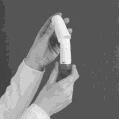
- Unscrew and remove the cap; you may hear a sound.
- Hold the Sinestic Turbohaler upright with the red wheel facing downwards.
-
Do not touch the mouthpiece when loading the Sinestic Turbohaler. To load a dose, turn the red wheel fully in one direction, then fully in the opposite direction (it does not matter which direction you start from). You will hear a click during this process.
The Sinestic Turbohaler is now loaded and ready for use. Only load the Sinestic Turbohaler when you are ready to use it. -
Hold the Sinestic Turbohaler away from your mouth. Breathe out gently (without forcing). Do not breathe out through the Sinestic Turbohaler.
-
Place the mouthpiece gently between your teeth. Close your lips and inhale as deeply as possible through your mouth. Do not chew or bite the mouthpiece.
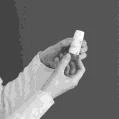
- Remove the Sinestic Turbohaler from your mouth. Breathe out gently. The amount of medicine inhaled is very small. This means you may not taste it after inhalation. If you have followed the instructions correctly, you can be sure that you have inhaled the dose and that the medicine is now in your lungs.
- If you need to take a second inhalation, repeat steps 2 to 6.
- After use, replace the cap and screw it back on.
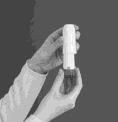
- Rinse your mouth with water after the morning and/or evening dose and spit out the water. Do not attempt to remove or rotate the mouthpiece. It is fixed to the Sinestic Turbohaler and must not be removed. Do not use the Sinestic Turbohaler if it is damaged or if the mouthpiece has come loose.
As with all inhalers, caregivers responsible for children must ensure that children prescribed Sinestic use the correct inhalation technique as described above.
How to clean the Sinestic Turbohaler
Clean the outside of the mouthpiece once a week with a dry cloth. Do not use water or liquids.
When to start using a new inhaler
- The dose indicator shows how many doses (inhalations) remain in the Sinestic Turbohaler, starting from 60 doses when full.
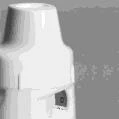
- The dose indicator shows intervals of 10 doses and does not indicate every single dose.
- When a red mark first appears at the edge of the indicator window, approximately 20 doses remain. For the last 10 doses, the background of the dose indicator turns red. When the '0' on the red background reaches the middle of the window, you should start using a new Sinestic Turbohaler.
Note:
- You will still be able to turn the red wheel and hear the "click" even when the Sinestic Turbohaler is empty.
- The sound heard when shaking the Sinestic Turbohaler is caused by a drying agent, not the medicine. Therefore, this sound does not indicate how much medicine remains in the device.
- If, by mistake, you load the Sinestic Turbohaler more than once before taking a dose, you will still only inhale one dose. However, the dose counter will record each loading as a dose taken.
If you use more Sinestic than you should
It is important that you take the dose as indicated on the label or as advised by your doctor. Do not exceed the prescribed dose without consulting your doctor.
The most common symptoms if you use more Sinestic than you should are: tremor, headache, or rapid heartbeat.
If you forget to use Sinestic
- If you forget to take a dose, take it as soon as you remember. However, if it is almost time for your next dose, skip the missed dose.
- Do not take a double dose to make up for a forgotten dose.
If you have any further questions about the use of this product, consult your doctor or pharmacist.
4. Possible side effects
Like all medicines, this medicine can cause side effects, although not everyone experiences them.
If any of the following occur, stop using Sinestic and contact your doctor immediately:
- Swelling of the face, particularly around the mouth (tongue and/or throat and/or difficulty swallowing) or hives accompanied by breathing difficulties (angioedema) and/or sudden fainting sensation. This could indicate an allergic reaction. This effect is rare, affecting fewer than 1 in 1,000 people.
- Sudden wheezing and shortness of breath immediately after using the inhaler. If you experience any of these symptoms, stop using Sinestic immediately and use your "as-needed" inhaler instead. Contact your doctor immediately if you need to change your treatment. This occurs very rarely, affecting fewer than 1 in 10,000 people.
Other possible side effects:
Common (may affect up to 1 in 10 people)
- Palpitations (awareness of heartbeat), tremor. If these effects occur, they are usually mild and disappear with continued treatment with Sinestic.
- Oral thrush (a fungal infection in the mouth). This is less likely if you rinse your mouth with water after using Sinestic.
- Mild sore throat, cough, and hoarseness.
- Headache.
- Pneumonia (lung infection) in patients with COPD (common side effect). Inform your doctor if you experience any of the following symptoms while taking Sinestic, as they could indicate a lung infection:
- Fever or chills.
- Increased mucus production, changes in mucus color.
- Worsening cough or increased breathing difficulties.
Uncommon (may affect up to 1 in 100 people)
- Feeling restless, nervousness, or agitation.
- Disturbed sleep.
- Dizziness.
- Nausea (feeling unwell).
- Fast heartbeat.
- Skin bruising.
- Muscle cramps.
- Blurred vision.
Rare (may affect up to 1 in 1,000 people)
- Skin rash, itching.
- Bronchospasm (narrowing of the muscles in the airways, causing wheezing). If wheezing occurs immediately after using Sinestic, stop using Sinestic and contact your doctor immediately.
- Low levels of potassium in the blood.
- Irregular heartbeat.
Very rare (may affect up to 1 in 10,000 people)
- Depression.
- Changes in behaviour, particularly in children.
- Chest pain or tightness (angina pectoris).
- Increased blood sugar (glucose) levels.
- Taste disturbances, for example an unpleasant taste in the mouth.
- Changes in blood pressure.
Inhaled corticosteroids may affect the normal production of steroid hormones in the body,
particularly if high doses are used for prolonged periods. These effects include:
- Changes in bone mineral density (thinning of the bones).
- Cataract (clouding of the lens in the eye).
- Glaucoma (increased pressure in the eye).
- Slowed growth in children and adolescents.
- Effect on the adrenal gland (a small gland near the kidney).
The occurrence of these effects is much less likely with inhaled corticosteroids than with oral corticosteroid tablets.
Reporting of side effects
If you experience any side effect, including those not listed in this leaflet, talk to your doctor or pharmacist. You can also report side effects directly via the national reporting system at:
http://www.agenziafarmaco.gov.it/content/come-segnalare-una-sospetta-reazione-
avversa. By reporting side effects, you can help provide more information on the safety of this medicine.
5. How to store Sinestic
- Keep this medicine out of the sight and reach of children.
- Do not use this medicine after the expiry date which is stated on the carton or on the inhaler label after Exp. The expiry date refers to the last day of the month.
- Do not store above 30°C.
- Keep the container/cap tightly closed to protect the medicine from moisture.
- Do not dispose of any medicine via wastewater or household waste. Ask your pharmacist how to dispose of medicines you no longer use. This will help protect the environment.
6. Package contents and other information
What Sinestic contains
The active substances are budesonide and formoterol fumarate dihydrate. Each inhaled dose contains 320 micrograms of budesonide and 9 micrograms of formoterol fumarate dihydrate.
The other excipient is lactose monohydrate (which contains milk proteins).
Description of the appearance of Sinestic and package contents
Sinestic consists of an inhaler containing the medicine. The inhaled powder is white in colour. Each inhaler contains 60 doses and has a white body with a red wheel. The rotating mouthpiece contains the Braille code with the number 6 for identification, to distinguish it from other AstraZeneca inhaler products.
Sinestic is available in packages containing 1, 2, 3, 10 or 18 inhalers, each containing 60 doses.
Not all pack sizes may be marketed.
Marketing Authorisation Holder and Manufacturer
Marketing Authorisation Holder
AstraZeneca S.p.A.
Palazzo Ferraris, Via Ludovico il Moro 6/C
20080 Basiglio (MI)
Italy
Manufacturer
AstraZeneca AB
SE-151 85 Södertälje
Sweden
or
AstraZeneca GmbH
Wedel (Germany)
or
AstraZeneca UK Limited
Macclesfield, Cheshire (United Kingdom)
Package leaflet: Information for the user
Sinestic 160 micrograms/4.5 micrograms/dose, pressurized suspension for
inhalation
budesonide/formoterol fumarate dihydrate
Please read this leaflet carefully before using this medicine because it contains
important information for you.
- Keep this leaflet. You may need to read it again.
- If you have any questions, ask your doctor or pharmacist.
- This medicine has been prescribed for you only. Do not give it to other people, even if their symptoms are the same as yours, as it could be harmful.
- If you experience any side effect, including those not listed in this leaflet, talk to your doctor or pharmacist. See section 4.
Contents of this leaflet:
- What Sinestic is and what it is used for
- What you need to know before using Sinestic
- How to use Sinestic
- Possible side effects
- How to store Sinestic
- Contents of the pack and other information
1. What Sinestic is and what it is used for
Sinestic is an inhaler used to treat symptoms of chronic obstructive pulmonary disease (COPD) in adult patients aged 18 years and older. COPD is a long-term disease of the airways, often caused by cigarette smoking.
Sinestic contains two different medicines: budesonide and formoterol fumarate dihydrate.
- Budesonide belongs to a group of medicines called "corticosteroids". It works by reducing and preventing swelling and inflammation in the lungs.
- Formoterol fumarate dihydrate belongs to a group of medicines called "long-acting beta2-adrenergic agonists" or "bronchodilators". It works by relaxing the muscles in the airways, making it easier to breathe. This medicine must not be used as a "rescue" inhaler.
2. What you need to know before using Sinestic
Do not use Sinestic:
- If you are allergic to budesonide, formoterol, or to any of the other ingredients of this medicine (listed in section 6).
Warnings and precautions
Talk to your doctor or pharmacist before using Sinestic if:
- You have diabetes.
- You have a lung infection.
- You have high blood pressure or have previously had heart problems (e.g. irregular heartbeat, very fast pulse, narrowed arteries, or heart failure).
- You have thyroid or adrenal gland problems.
- You have low levels of potassium in your blood.
- You have severe liver problems.
Contact your doctor if you experience blurred vision or other visual disturbances.
For those engaged in sports: using this medicine without therapeutic need constitutes doping and may lead to a positive anti-doping test.
Children and adolescents
Sinestic is not recommended for children and adolescents under 18 years of age.
Other medicines and Sinestic
Inform your doctor or pharmacist if you are taking, have recently taken, or might take any other medicines.
In particular, inform your doctor or pharmacist if you are taking any of the following medicines:
- Beta-blockers (such as atenolol or propranolol for high blood pressure), including eye drops (such as timolol for glaucoma).
- Medicines for rapid or irregular heartbeat (such as quinidine).
- Medicines such as digoxin, often used to treat heart failure.
- Diuretics, also known as 'water tablets' (such as furosemide), used to treat high blood pressure.
- Oral steroids (such as prednisolone).
- Xanthines (such as theophylline or aminophylline), often used to treat COPD or asthma.
- Other bronchodilators (such as salbutamol).
- Tricyclic antidepressants (such as amitriptyline) and the antidepressant nefazodone.
- Phenothiazine medicines (such as chlorpromazine and prochlorperazine).
- Medicines called “HIV protease inhibitors” (such as ritonavir), used to treat HIV infection.
- Medicines to treat infections (such as ketoconazole, itraconazole, voriconazole, posaconazole, clarithromycin, and telithromycin).
- Medicines for Parkinson's disease (such as levodopa).
- Medicines for thyroid problems (such as levothyroxine).
If you fall into any of the above categories, or if you are unsure, consult your doctor or pharmacist before using Sinestic.
Also inform your doctor or pharmacist if you are due to undergo general anaesthesia for a surgical or dental procedure.
Pregnancy, breastfeeding and fertility
- If you are pregnant, or planning to become pregnant, consult your doctor before taking Sinestic – do not use Sinestic unless advised by your doctor.
- If you become pregnant while being treated with Sinestic, do not stop using Sinestic but consult your doctor immediately.
- If you are breastfeeding, inform your doctor before using Sinestic.
Driving and using machines
Sinestic has no effect or negligible effects on the ability to drive vehicles or operate tools or machinery.
3. How to use Sinestic
- Use this medicine exactly as prescribed by your doctor. If you have any doubts, consult your doctor or pharmacist.
- It is important to use Sinestic every day, even if you currently do not have symptoms of COPD.
The usual dose is 2 inhalations twice daily. Sinestic is not recommended for children and adolescents under 18 years of age.
If you are taking oral steroid tablets for COPD, your doctor may reduce the number of tablets you are taking once you have started using Sinestic. If you have been taking oral steroids for a long time, your doctor may ask you to have periodic blood tests. When reducing the dose of oral steroids, you may feel generally unwell even though your respiratory symptoms may improve. You might experience symptoms such as nasal congestion and rhinorrhea, weakness or muscle or joint pain, and skin rash (eczema). If any of these symptoms concern you, or if you develop symptoms such as headache, fatigue, nausea (feeling unwell), or vomiting (being sick), contact your doctor immediately. You may need to take another medicine if you have allergic or arthritic symptoms. Ask your doctor if you are unsure whether to continue or stop treatment with Sinestic.
Your doctor may consider adding oral steroid tablets to your usual treatment during periods of stress (for example, when you have a respiratory infection or before undergoing surgery).
Important information about COPD symptoms
If you notice the onset of breathlessness or wheezing while using Sinestic, continue using it but consult your doctor as soon as possible, as additional treatment may be needed.
Contact your doctor immediately if:
- Your breathing worsens or if you wake up frequently at night due to breathlessness.
- You start experiencing chest tightness in the morning or if chest tightness lasts longer than usual.
These signs may mean that your COPD is not adequately controlled and that you may need different or additional treatment immediately.
Your doctor may also prescribe other bronchodilators, for example anticholinergics (such as tiotropium or ipratropium bromide) for COPD.
Information about Sinestic
- Before starting to use Sinestic, remove it from the aluminium foil pouch. Discard the pouch and the desiccant contained inside the pouch. If the desiccant has leaked out of the packaging, do not use the inhaler.
- After removing the inhaler from the aluminium foil pouch, you must use it within 3 months. Mark the label of the inhaler with the date (3 months from opening the pouch) to remind yourself when to stop using the inhaler.
- The components of the inhaler are shown in the image. The inhaler will be pre-assembled when you receive it for the first time. Do not disassemble it. If the canister becomes loose, reinsert it into the inhaler and continue using the inhaler.

Preparing Sinestic
You must prepare the inhaler for use in the following cases:
- When using a new Sinestic for the first time.
- If you have not used it for more than 7 days.
- If it has been dropped. To prepare the inhaler for use, follow the instructions below:
- Shake the inhaler well for at least 5 seconds to mix the contents of the aerosol canister.
- Remove the mouthpiece cap by gently pressing the protrusions on the sides. The tab on the mouthpiece cap will remain attached to the inhaler.
- Hold the inhaler upright. Then press the dose indicator (on the top of the inhaler) to release one spray into the air. You may use one or both hands, as shown in the images.
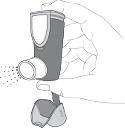
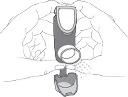
- Lift your finger(s) off the dose indicator.
- Wait 10 seconds, shake the inhaler well, and then repeat steps 3 and 4.
- The inhaler is now ready for use.
How to take an inhalation
Each time you need to take an inhalation, follow the instructions below:
- Shake the inhaler well for at least 5 seconds to mix the contents of the aerosol canister.
- Remove the mouthpiece cap by gently pressing the protrusions on the sides. Check that the mouthpiece is not blocked.

- Hold the inhaler upright (using one or both hands). Breathe out slowly.
- Gently place the mouthpiece between your teeth. Close your lips around it.
- Begin to inhale slowly and deeply through your mouth. At the same time, press firmly on the dose indicator (on the top of the inhaler) to release one spray. Continue inhaling for a few seconds after pressing the dose indicator. Inhaling at the same time as activating the inhaler ensures that the medicine reaches your lungs.
- Hold your breath for 10 seconds, or as long as comfortable.
- Before exhaling, remove your finger from the dose indicator and take the mouthpiece out of your mouth. Keep the inhaler upright.
- Then breathe out slowly. To take a second inhalation, shake the inhaler well for at least 5 seconds and repeat steps 3 to 7.
- Replace the mouthpiece cap.
- Rinse your mouth with water after the morning and evening doses and spit it out.
Using a spacer device
Your doctor, nurse, or pharmacist may recommend using a spacer device (for example, AeroChamber Plus Flow Vu or AeroChamber Plus). Follow the instructions provided in the leaflet included with the spacer device.
How to clean Sinestic
- Clean the inside and outside of the mouthpiece at least once a week with a dry cloth.
- Do not use water or other liquids, and do not remove the canister from the inhaler.
How do I know when to replace Sinestic?
- The dose indicator, located on the top of the inhaler, shows the number of sprays (doses) remaining in Sinestic. It indicates 120 sprays when full.
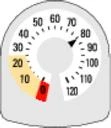
- With each inhalation or release of a spray into the air, the arrow moves downward toward zero ('0').
- When the arrow first enters the yellow zone, approximately 20 sprays remain.
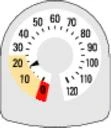
- When the arrow reaches '0', you must stop using Sinestic. The inhaler may still appear to work and may produce a spray, but it will no longer deliver the correct amount of medicine.
If you use more Sinestic than you should
If you use more Sinestic than prescribed, contact your doctor or pharmacist. The following symptoms may occur: tremor, headache, or rapid heartbeat.
If you forget to use Sinestic
- If you forget to take a dose, take it as soon as you remember. However, if it is almost time for your next dose, skip the missed dose.
- Do not take a double dose to make up for a forgotten dose.
If you stop using Sinestic
You must consult your doctor or pharmacist before stopping treatment with Sinestic. If you stop using Sinestic, your signs and symptoms of COPD may worsen.
If you have any questions about using this medicine, ask your doctor or pharmacist.
4. Possible side effects
Like all medicines, this medicine can cause side effects, although not everybody gets them.
If any of the following occur, stop using Sinestic immediately and contact your doctor
immediately:
- Swelling of the face, particularly around the mouth (tongue and/or throat and/or difficulty swallowing), skin redness or hives accompanied by breathing difficulties (angioedema) and/or sudden fainting sensation. This could indicate that you are having an allergic reaction. This effect is rare and affects fewer than 1 in 1,000 people.
- Sudden onset of wheezing or shortness of breath immediately after using the inhaler. If you experience any of these symptoms, stop using Sinestic immediately and use your "as-needed" inhaler instead. Contact your doctor immediately, as you may need to change your treatment. This occurs very rarely, affecting fewer than 1 in 10,000 people.
Other possible side effects:
Common (may affect up to 1 in 10 people)
- Palpitations (awareness of heartbeat), tremor or restlessness. If these effects occur, they are usually mild and tend to disappear with continued treatment with Sinestic.
- Oral candidiasis (a fungal infection in the mouth). This is less likely if you rinse your mouth with water after using Sinestic.
- Mild sore throat, cough, and hoarseness.
- Headache.
- Pneumonia (lung infection) in patients with COPD.
Inform your doctor if you experience any of the following symptoms while taking Sinestic, as they
may be signs of a lung infection:
- Fever or chills.
- Increased mucus production, changes in mucus colour.
- Worsening cough or increased breathing difficulties.
Uncommon (may affect up to 1 in 100 people)
- Feeling restless, nervous, or agitated.
- Disturbed sleep.
- Dizziness.
- Nausea (feeling unwell).
- Fast heartbeat.
- Bruising of the skin.
- Muscle cramps.
- Blurred vision.
Rare (may affect up to 1 in 1,000 people)
- Skin rash, itching.
- Bronchospasm (narrowing of the muscles in the airways, causing wheezing). If you experience wheezing immediately after using Sinestic, stop using Sinestic and contact your doctor immediately.
- Low levels of potassium in the blood.
- Irregular heartbeat.
Very rare (may affect up to 1 in 10,000 people)
- Depression.
- Behavioural changes, particularly in children.
- Chest pain or tightness (angina pectoris).
- Increased blood sugar (glucose) levels.
- Taste disturbances, for example unpleasant taste in the mouth.
- Changes in blood pressure.
Inhaled corticosteroids may affect the normal production of steroid hormones in the body,
particularly if high doses are used for prolonged periods. These effects include:
- Changes in bone mineral density (thinning of the bones).
- Cataract (clouding of the lens in the eye).
- Glaucoma (increased pressure in the eye).
- Reduced growth velocity in children and adolescents.
- Effect on the adrenal gland (a small gland near the kidney).
The occurrence of these effects is much less likely with inhaled corticosteroids than with oral
corticosteroid tablets.
Reporting of side effects
If you experience any side effect, including those not listed in this leaflet, talk to your doctor,
pharmacist, or nurse. You can also report side effects directly via the national reporting system at:
http://www.agenziafarmaco.gov.it/content/come-segnalare-una-sospetta-reazione-avversa .
By reporting side effects, you can help provide more information on the safety of this medicine.
5. How to store Sinestic
- Keep this medicine out of the sight and reach of children.
- Do not use this medicine after the expiry date stated on the label, on the carton, or on the aluminium foil after "Exp". The expiry date refers to the last day of that month.
- As with many other pressurised inhalation medicines contained in a canister, the effect of this medicine may be reduced when the canister is cold. For best results, this medicine should be at room temperature before use. Do not refrigerate or freeze. Protect from frost and direct sunlight.
- After removing the inhaler from the aluminium foil, it must be used within 3 months. Record the date of use (3 months from opening the foil) on the label of the inhaler to remind yourself when to stop using the inhaler.
- After each use of the inhaler, always firmly replace the mouthpiece cap and snap it into place.
- Do not dispose of any medicine via wastewater or household waste. Ask your pharmacist how to dispose of medicines no longer required. This will help protect the environment.
Warning: The canister contains pressurised liquid. Do not expose to temperatures above 50°C. Do not pierce the canister. Do not break, pierce, or burn the canister, even when it appears empty.
6. Package contents and other information
What Sinestic contains
The active substances are budesonide and formoterol fumarate dihydrate. Each spray (dose)
contains 160 micrograms of budesonide and 4.5 micrograms of formoterol fumarate
dihydrate.
The other ingredients are apaflurane (HFA 227), povidone and macrogol. This inhaler does not
contain CFCs.
Description of the appearance of Sinestic and contents of the pack
Sinestic consists of an inhaler containing the medicine. The pressurised canister, equipped with a dose indicator, contains a white inhalation suspension. The canister is inserted into a red plastic actuator which includes a white plastic mouthpiece and an integrated grey plastic protective cap. Each inhaler contains 120 sprays (doses) after it has been prepared for use. Each inhaler is individually packaged in an aluminium foil pouch containing a desiccant.
Sinestic, 160 micrograms/4.5 micrograms/dose, pressurised inhalation suspension (Budesonide/Formoterol fumarate dihydrate) is available in packs containing one inhaler.
Marketing Authorisation Holder
AstraZeneca S.p.A.
Palazzo Ferraris
Via Ludovico il Moro 6/C
Basiglio (MI) 20080
Italy
Manufacturer
AstraZeneca Dunkerque Production
224 avenue de la Dordogne
59640 DUNKERQUE
France
Similar drugs
| Brand name | Dosage form | Active substance / Dosage | Manufacturer |
|---|---|---|---|
| BIRESP SPIROMAX | powder for inhalation | TEVA PHARMA B.V. | |
| DUORESP SPIROMAX | powder for inhalation | TEVA PHARMA B.V. | |
| FOBULER | powder for inhalation | ORION CORPORATION | |
| GORESP DIGIHALER | powder for inhalation | TEVA PHARMA B.V. | |
| SYMBICORT | powder for inhalation | ASTRAZENECA S.P.A. | |
| SYMBICORT MITE | powder for inhalation | ASTRAZENECA S.P.A. |
The original data is available in the language of the country of manufacture.
Data source: Italian Medicines Agency (AIFA)
Data last verified: September 21, 2026