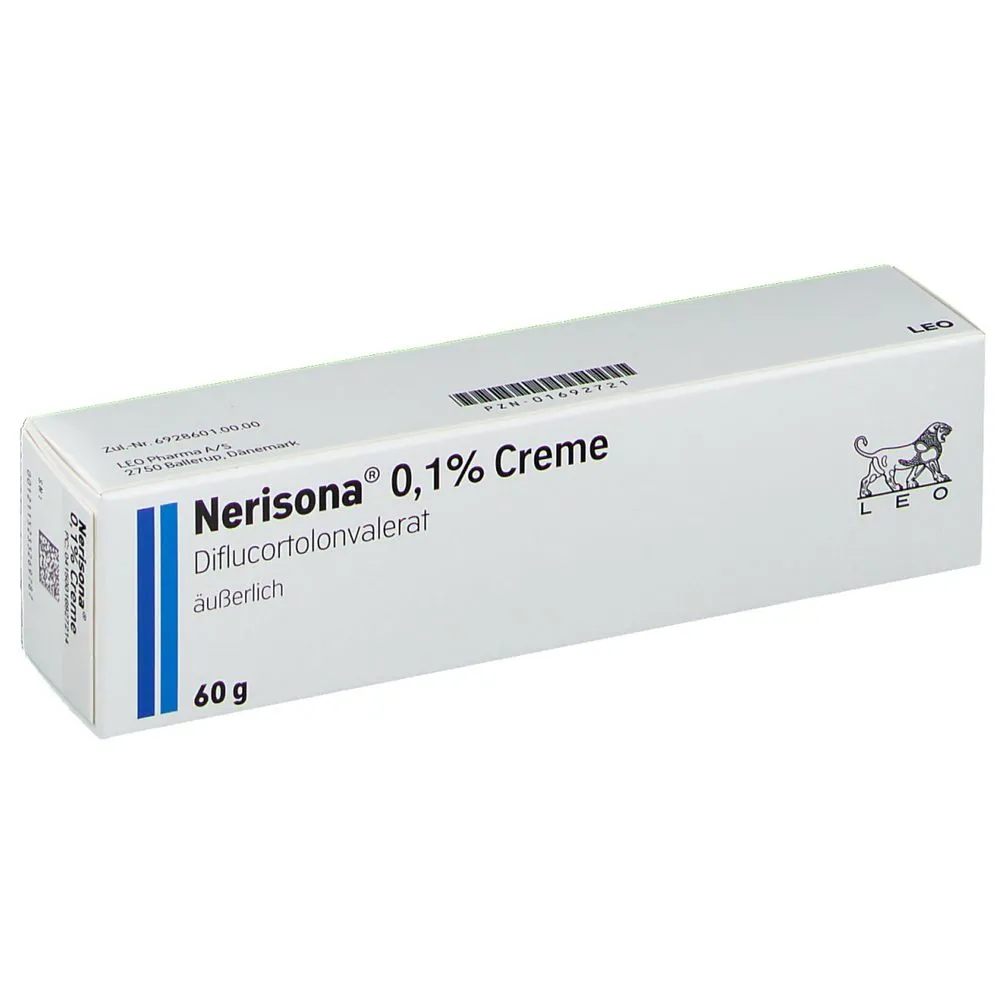
NERISONA
ItalyIt is used for the treatment of various skin conditions, such as eczema (contact, nummular, seborrheic, infantile, anal, etc.), dermatitis, psoriasis, neurodermatitis, insect bites, first-degree burns, sunburn, and other inflammatory skin conditions.
Frequently asked questions
How should Nerisona be taken?
Unless otherwise directed by a doctor, the product should be applied in a thin layer 2-3 times a day. Once improvement is achieved, one application per day is sufficient. It must not be used for more than 3 weeks (or 1-2 weeks for the 0.3% versions).
When should you not use this medicine?
It must not be used if you are allergic to the active substance or any of the components, if the affected skin shows signs of tuberculosis or syphilis, if you suffer from viral diseases (such as chickenpox or herpes zoster), if you suffer from rosacea or perioral dermatitis, or if you have had skin reactions after vaccinations. Some formulations cannot be used on the face or in children up to 4 years of age.
What are the possible side effects of Nerisona?
Local effects may occur, such as itching, burning, redness, blister formation, hair growth, acne, or skin discoloration. In rare cases, allergic reactions or hair follicle infections may occur. Prolonged use or use on extensive areas may cause skin thinning (atrophy), stretch marks, telangiectasia (visible blood vessels), or systemic effects such as Cushing's Syndrome, or increased blood or urine sugar levels.
Are there any special precautions for use during pregnancy or breastfeeding?
It is necessary to consult a doctor before use. Glucocorticoids should not be applied during the first three months of pregnancy. If you are breastfeeding, do not apply the product to the breast and avoid use on large areas or for prolonged periods.
Are there any interactions with other products or risks for sexual protection?
It is important to inform the doctor of any other medication being used. If the product is applied to the anal or genital areas, some ingredients may damage latex products such as condoms, making them less effective as contraceptives or as protection against diseases such as HIV.
What should be done with children?
In infants and children, use should not exceed 5-7 days if the treated areas are covered by diapers or plastic underwear.
Instructions for use
Table of contents
- Nerisona 0.1% cream
- 1. What Nerisona is and what it is used for
- 2. What you need to know before using Nerisona
- 3. How to use Nerisona
- 4. Possible side effects
- 5. How to store Nerisona
- 6. Package contents and other information
- Nerisona 0.1% hydrophobic cream
- 1. What Nerisona is and what it is used for
- 2. What you should know before using Nerisona
- 3. How to use Nerisona
- 4. Possible side effects
- 5. How to store Nerisona
- 6. Package contents and other information
- Nerisona 0.1% cutaneous solution
- 1. What Nerisona is and what it is used for
- 2. What you should know before using Nerisona
- 3. How to use Nerisona
- 4. Possible adverse effects
- 5. How to store Nerisona
- 6. Package contents and other information
- Nerisona 0.1% ointment
- 1. What Nerisona is and what it is used for
- 2. What you need to know before using Nerisona
- 3. How to use Nerisona
- 4. Possible side effects
- 5. How to store Nerisona
- 6. Package contents and other information
- Patient information leaflet
- Nerisona 0.3% hydrophobic cream
- 1. What Nerisona is and what it is used for
- 2. What you should know before using Nerisona
- 3. How to use Nerisona
- 4. Possible side effects
- 5. How to store Nerisona
- 6. Package contents and other information
- Patient information leaflet
- Nerisona 0.3% ointment
- 1. What Nerisona is and what it is used for
- 2. What you need to know before using Nerisona
- 3. How to use Nerisona
- 4. Possible side effects
- 5. How to store Nerisona
- 6. Package contents and other information
Package leaflet: Information for the patient
Nerisona 0.1% cream
diflucortolone valerate
Please read this leaflet carefully before using this medicine because it contains important information for you.
- Keep this leaflet. You may need to read it again.
- If you have any questions, ask your doctor or pharmacist.
- This medicine has been prescribed for you only. Do not give it to other people, even if their symptoms are the same as yours, as it may be harmful.
- If you experience any side effects, including those not listed in this leaflet, contact your doctor or pharmacist. See section 4.
Contents of this leaflet:
- What Nerisona is and what it is used for
- What you need to know before using Nerisona
- How to use Nerisona
- Possible side effects
- How to store Nerisona
- Contents of the pack and other information
1. What Nerisona is and what it is used for
Nerisona contains the active substance diflucortolone valerate, which belongs to the group of glucocorticoids.
This cream is used for the treatment of skin conditions such as contact eczema, contact dermatitis (of allergic or toxic origin, such as hypersensitivity to detergents or other chemical agents),
atopic eczema, microbial eczema, dermoepidermitis, seborrheic eczema, varicose eczema (however not directly on the ulcer), infantile eczema, anal eczema.
2. What you need to know before using Nerisona
Do not use Nerisona
- if you are allergic to the active substance or to any of the other ingredients of this medicine (listed in section 6);
- if the area of skin to be treated is affected by tuberculosis or syphilis;
- if you suffer from viral infections (chickenpox, herpes zoster);
- if you suffer from rosacea (intense flushing or redness of the skin and face) or perioral dermatitis (red skin eruptions around the mouth);
- if you have had skin reactions following vaccination.
Warnings and precautions
Talk to your doctor or pharmacist before using Nerisona:
- if extensive lesions are present; treat limited areas sequentially, one at a time;
- if you are pregnant. In this case, use the cream only if strictly necessary and under direct medical supervision (see "Pregnancy and breastfeeding");
- if you have a skin disease associated with bacterial infections, your doctor will also prescribe treatment with topical antibiotics; in case of fungal infections (mycosis), your doctor will also prescribe treatment with topical antifungals.
Contact your doctor if blurred vision or other visual disturbances occur.
Children
Do not use the medicine for more than 5–7 days in infants and children when the treated areas are covered by diapers or plastic pants.
Topical application of glucocorticoid medicines on large body areas and/or for prolonged periods may lead to unwanted effects due to absorption through the skin and passage into the bloodstream (systemic absorption). This is more likely to occur with occlusive bandaging (non-breathable), use of diapers, and in skin folds in children. Therefore, in the treatment of chronic conditions requiring long-term therapy, once improvement has been achieved, your doctor should reduce the dosage and frequency of applications to the minimum necessary to control symptoms and prevent recurrence, discontinuing the cream as soon as possible.
Avoid contact with the eyes.
With the use of topical glucocorticoids, glaucoma (an eye disease characterized by increased pressure inside the eye) may develop, for example, after excessive doses or application on large areas for prolonged periods, with occlusive bandaging techniques, or after application to the skin around the eyes.
The use, especially prolonged, of topical glucocorticoid medicines may lead to sensitization phenomena. In such cases, stop treatment immediately and contact your doctor, who will advise appropriate therapy.
If Nerisona is applied in the anal or genital area, some of its ingredients may damage latex products, such as condoms. Therefore, these may no longer be effective as contraceptives or as protection against sexually transmitted diseases such as HIV infection.
Consult your doctor or pharmacist if you need further information.
Other medicines and Nerisona
Inform your doctor or pharmacist if you are currently using, have recently used, or might use any other medicines.
Pregnancy, breastfeeding, fertility
- If you are pregnant, think you may be pregnant, planning to have a baby, or are breastfeeding, consult your doctor or pharmacist before using this medicine. Your doctor will carefully evaluate the benefit-risk ratio related to the use of Nerisona.
- Glucocorticoids should not be applied during the first three months of pregnancy to avoid any risk to fetal development.
- If you are pregnant, you should especially avoid applying Nerisona under occlusive bandages, over large areas, or for prolonged periods.
- It is not known whether the active ingredient in Nerisona passes into breast milk. Therefore, a risk to the infant cannot be excluded.
If you are breastfeeding, you should:
- not apply Nerisona to the breast;
- avoid applying Nerisona under occlusive bandages or over large body areas;
- avoid using Nerisona for prolonged periods.
There are no data showing that fertility is affected by the use of Nerisona.
Nerisona cream contains stearyl alcohol, methyl 4-hydroxybenzoate, and propyl 4-hydroxybenzoate
Stearyl alcohol may cause local skin reactions, such as contact dermatitis.
Methyl 4-hydroxybenzoate and propyl 4-hydroxybenzoate may cause allergic reactions (including delayed reactions).
Driving and operating machinery
No known effects.
3. How to use Nerisona
Use this medicine exactly as directed by your doctor or pharmacist. If you have any doubts, consult your doctor or pharmacist.
Due to its high water content and low fat content, Nerisona 0.1% cream is particularly suitable for the treatment of exuding skin conditions and moist skin areas, such as the anal region and the axillae, where preparations with a high water content are recommended.
Nerisona 0.1% cream helps remove and reduce exudate, promoting drying of the skin. The cream does not leave a greasy residue on the skin and is therefore also suitable for application on the face, exposed skin areas, and hairy skin regions.
Unless otherwise prescribed by your doctor, begin treatment by applying a thin layer of the cream 2–3 times daily. Once improvement is achieved, a single daily application is sufficient.
Do not use this medicine for longer than 3 weeks. In particular, do not extend treatment beyond 5–7 days in infants and children when the areas being treated are covered by diapers or plastic pants.
If extensive lesions are present, treat limited areas sequentially, one at a time.
In specific, therapy-resistant cases, your doctor may prescribe treatment under occlusive dressing. The affected skin area treated with the cream will be covered with a waterproof film secured to the surrounding healthy skin. The duration of occlusion will be determined by your doctor but must not exceed 24 hours. The occlusive dressing may be repeated several times, replacing it every 12 hours. If infections develop during treatment, occlusive dressings should not be used for a period of time.
If you use more Nerisona than you should
No risk of intoxication is expected following a single local application of an excessive amount of the medicine (application over a large skin area under conditions favoring absorption) or accidental ingestion of the entire contents of a package.
4. Possible side effects
Like all medicines, this medicine can cause side effects, although not everyone experiences them.
During treatment with Nerisona, local side effects may occur:
In isolated cases the following may occur:
- itching,
- burning,
- erythema (redness of the skin),
- vesiculation (formation of blisters);
In rare cases the following may occur:
- allergic skin reactions (allergic contact dermatitis),
- folliculitis (infection of the hair follicle),
- increased body hair growth (hypertrichosis),
- perioral dermatitis (red skin rashes around the mouth),
- skin discoloration.
The following may occur with unknown frequency (frequency cannot be estimated from the available data): Blurred vision.
When Nerisona 0.1% cream is used under normal conditions of use, it is highly unlikely that side effects due to systemic absorption will occur.
However, during treatment with Nerisona cream over large areas of skin (approximately 10% or more of body surface area) and/or with prolonged use (more than 3 weeks), especially under occlusive dressing (whose application should be limited by the physician to no more than 1 day), the following side effects may occur:
- skin atrophy (conditions causing the skin to become thin, wrinkled and lacking elasticity),
- skin discoloration,
- telangiectasias (visible dilation of small blood vessels on the skin surface),
- striae (stretch marks),
- acneiform eruptions (acne),
- effects due to systemic absorption, whose symptoms include Cushing's syndrome (a condition in which the body produces high levels of the hormone cortisol), hyperglycemia (increased blood glucose), and glycosuria (presence of sugar in urine). A higher incidence of these side effects may be observed when glucocorticoid medicines are used over large skin areas, with prolonged use, and when occlusive dressings are added. With occlusive treatment, it should be noted that the films used for bandaging may themselves cause sensitization reactions. Prolonged application of Nerisona cream may lead to dryness of the skin, and in such cases, your doctor will prescribe a pharmaceutical form containing excipients with a higher fat content.
Reporting of side effects
If you experience any side effect, including those not listed in this leaflet, talk to your doctor or pharmacist. You can also report side effects directly via the national reporting system at the following website:
http://www.agenziafarmaco.gov.it/content/come-segnalare-una-sospetta-reazione-avversa.
By reporting side effects, you can help provide more information on the safety of this medicine.
5. How to store Nerisona
Keep this medicine out of the sight and reach of children.
Do not store above 25°C.
Do not use this medicine after the expiry date stated on the packaging. The expiry date refers to the last day of that month.
The expiry date applies to the product in its original, unopened packaging and properly stored.
Shelf life after first opening: 3 months.
Do not dispose of medicines via wastewater or household waste. Ask your pharmacist how to dispose of medicines no longer in use. This will help protect the environment.
6. Package contents and other information
What Nerisona contains
- The active substance is diflucortolone valerate. 100 g of cream contain 0.1 g (0.1%) of diflucortolone valerate.
- The other components are: macrogol stearate, stearyl alcohol, liquid paraffin, white soft paraffin, disodium edetate, polyacrylic acid, sodium hydroxide, methyl 4-hydroxybenzoate, propyl 4-hydroxybenzoate, purified water.
Description of the appearance of Nerisona and package contents
Cream – 30 g tube.
Marketing Authorization Holder and Manufacturer
Marketing Authorization Holder
LEO Pharma A/S, Industriparken 55, DK-2750 Ballerup, Denmark.
Manufacturer
LEO Pharma Manufacturing Italy S.r.l.
Via E. Schering, 21 - 20090 Segrate (MI), Italy.
Package leaflet: information for the patient
Nerisona 0.1% hydrophobic cream
diflucortolone valerate
Please read this leaflet carefully before using this medicine because it contains
important information for you.
- Keep this leaflet. You may need to read it again.
- If you have any questions, consult your doctor or pharmacist.
- This medicine has been prescribed for you only. Do not give it to other people, even if their symptoms are the same as yours, as it may be harmful.
- If you experience any adverse reaction, including those not listed in this leaflet, contact your doctor or pharmacist. See section 4.
Contents of this leaflet:
- What Nerisona is and what it is used for
- What you need to know before using Nerisona
- How to use Nerisona
- Possible side effects
- How to store Nerisona
- Contents of the pack and other information
1. What Nerisona is and what it is used for
Nerisona contains the active substance diflucortolone valerate, which belongs to the group of glucocorticoids.
This hydrophobic cream is used to treat skin conditions such as contact dermatitis and eczema, occupational eczema, common eczema, nummular (microbial) eczema, varicose eczema (but not directly on the ulcer), anal eczema, infantile eczema, neurodermatitis, first-degree burns, sunburn, insect bites, chronic discoid erythematosus, psoriasis, lichen ruber planus and lichen verrucosus.
2. What you should know before using Nerisona
Do not use Nerisona
- if you are allergic to the active substance or to any of the other ingredients of this medicinal product (listed in section 6);
- if the area of skin to be treated is affected by tuberculosis or syphilis;
- if you suffer from viral diseases (chickenpox, herpes zoster);
- if you suffer from rosacea (intense flushing or redness of the skin and face) or perioral dermatitis (red skin eruptions around the mouth);
- if you have had skin reactions after vaccination.
Warnings and precautions
Talk to your doctor or pharmacist before using Nerisona:
- if extensive lesions are present; treat limited areas sequentially, one at a time;
- if you are pregnant. In this case, use the hydrophobic cream only if clearly needed and under direct medical supervision (see "Pregnancy and breastfeeding");
- if you have a skin disease associated with bacterial infections, your doctor will also prescribe local antibiotic treatment; in case of fungal infections (mycosis), your doctor will prescribe local antifungals. Contact your doctor if blurred vision or other visual disturbances occur.
Children
Do not use the medicine for longer than 5–7 days in infants and children if the treated areas are covered by
diapers or plastic pants.
The application of topical glucocorticoid medicines on extensive body areas and/or for prolonged periods
may lead to unwanted effects due to absorption through the skin and passage into the bloodstream (systemic absorption). This is more likely with occlusive bandaging (non-breathable), use of diapers, and in skin folds in children. Therefore, in the treatment of chronic diseases requiring prolonged therapy, once improvement has been achieved, your doctor should reduce the dosage and frequency of applications to the minimum necessary to control symptoms and prevent recurrence, discontinuing the hydrophobic cream as soon as possible.
Avoid contact with the eyes.
With the use of topical glucocorticoids, glaucoma (an eye disease characterized by increased intraocular pressure) may occur, for example after excessive doses or prolonged use on extensive areas, with occlusive bandaging techniques, or after application to the skin around the eyes.
The use, especially prolonged, of topical products may lead to sensitization phenomena.
In such cases, discontinue treatment and contact your physician, who will recommend appropriate therapy.
If Nerisona is applied in the anal or genital area, some of its ingredients may damage latex products, such as condoms. Therefore, these may no longer be effective as contraceptives or as protection against sexually transmitted diseases such as HIV infection.
Consult your doctor or pharmacist if you need further information.
Other medicines and Nerisona
Inform your doctor or pharmacist if you are using, have recently used, or might use any other medicine.
Pregnancy, breastfeeding, fertility
- If you are pregnant, think you may be pregnant, are planning to have a baby, or are breastfeeding, ask your doctor or pharmacist for advice before using this medicine. Your doctor will carefully evaluate the benefit-risk ratio related to the use of Nerisona.
- Glucocorticoids should not be applied during the first three months of pregnancy to avoid any risk to fetal development.
- If you are pregnant, you should especially avoid applying Nerisona under occlusive bandaging, over large areas, or for prolonged periods.
- It is not known whether the active substance of Nerisona passes into breast milk. Therefore, a risk to the infant cannot be excluded.
If you are breastfeeding, you should
- not apply Nerisona to the breast;
- avoid applying Nerisona under occlusive bandaging or over extensive body areas;
- avoid using Nerisona for prolonged periods.
There are no data showing that fertility is affected by the use of Nerisona.
Driving and using machines
No known effects.
3. How to use Nerisona
Use this medicine exactly as instructed by your doctor or pharmacist. If you have
any doubts, consult your doctor or pharmacist.
Due to its specific water and fat content, Nerisona 0.1% hydrophobic cream can be widely used for
various skin conditions, ranging from those that are not excessively exudative to those that are not
particularly dry. The hydrophobic cream provides the skin with an appropriate lipid supply without
impairing transpiration and heat exchange.
Unless otherwise prescribed by your doctor, begin treatment by applying a thin layer of the hydrophobic cream 2–3
times daily. Once improvement is achieved, a single daily application is sufficient.
Do not use this medicine for longer than 3 weeks. In particular, in infants and children, treatment should not be prolonged beyond 5–7 days when the areas being treated are covered by diapers or plastic pants.
If extensive lesions are present, treat limited areas sequentially, one at a time.
In particular resistant cases, your doctor may prescribe treatment under occlusive dressing. The affected skin area treated with the hydrophobic cream will be covered with a film of waterproof material, which should be secured to the surrounding healthy skin. The duration of occlusion will be determined by the doctor, but must not exceed 24 hours. The occlusive dressing may occasionally be repeated several times, replacing it every 12 hours. If infections should appear during treatment, occlusive dressings must not be used for a period of time.
If you use more Nerisona than you should
No risk of intoxication is expected following a single topical application of an excessive amount of the medicine (application over a large skin area under conditions favoring absorption) or after accidental ingestion of the entire contents of a package.
4. Possible side effects
Like all medicines, this medicine can cause side effects, although not everyone experiences them.
During treatment with Nerisona, local side effects may occur:
In isolated cases, the following may occur:
- itching,
- burning,
- erythema (redness of the skin),
- vesiculation (formation of blisters).
In rare cases, the following may occur:
- allergic skin reactions (allergic contact dermatitis),
- folliculitis (infection of the hair follicle),
- increased body hair growth (hypertrichosis),
- perioral dermatitis (red skin eruptions around the mouth),
- skin discoloration.
With unknown frequency (frequency cannot be estimated from the available data): Blurred vision.
When using Nerisona 0.1% hydrophobic cream under normal conditions of use, side effects due to systemic absorption are very unlikely.
During treatment with Nerisona over large areas of skin (approximately 10% or more of body surface area) and/or with prolonged use (beyond 3 weeks), especially under occlusive dressing (the application of which will be determined by the physician for no longer than 1 day), the following side effects may occur:
- skin atrophy (conditions causing thin, wrinkled and inelastic skin),
- skin discoloration,
- telangiectasias (visible dilation of small blood vessels on the skin surface),
- striae (stretch marks),
- acneiform eruptions (acne), and
- effects due to systemic absorption, whose symptoms include Cushing's syndrome (a condition in which the body produces high levels of the hormone cortisol), hyperglycaemia (increased blood glucose), and glycosuria (presence of sugar in urine). A higher incidence of these side effects may occur with the use of glucocorticoid medicines over large surface areas, prolonged use, or when occlusive dressings are applied. With occlusive treatments, bear in mind that films used for bandaging may themselves cause sensitisation reactions.
Reporting of side effects
If you experience any side effect, including those not listed in this leaflet, talk to your doctor or pharmacist. You may also report side effects directly via the national reporting system at the following website:
http://www.agenziafarmaco.gov.it/content/come-segnalare-una-sospetta-reazione-avversa.
By reporting side effects, you can help provide more information on the safety of this medicine.
5. How to store Nerisona
Keep this medicine out of the sight and reach of children.
Do not store above 25°C.
Do not use this medicine after the expiry date stated on the packaging. The expiry date refers to the last day of that month. The expiry date applies to the product in its original, unopened packaging stored correctly.
Validity after first opening: 3 months.
Do not dispose of any medicine via wastewater or household waste. Ask your pharmacist how to dispose of medicines you no longer use. This will help protect the environment.
6. Package contents and other information
What Nerisona contains
- The active substance is: diflucortolone valerate. 100 g of hydrophobic cream contain 0.1 g (0.1%) of diflucortolone valerate.
- The other components are: white beeswax, liquid paraffin, white vaseline, high molecular weight aliphatic esters, purified water.
Description of the appearance of Nerisona and contents of the pack
Hydrophobic cream.
Tube of 30 g.
Marketing Authorization Holder and Manufacturer
Marketing Authorization Holder
LEO Pharma A/S, Industriparken 55, DK-2750 Ballerup, Denmark
Manufacturer
LEO Pharma Manufacturing Italy S.r.l.
Via E. Schering, 21 - 20090 Segrate (MI), Italy.
Local representative in Italy: LEO Pharma S.p.A., Via Elio Vittorini 129 - 00144 Rome.
Package leaflet: information for the patient
Nerisona 0.1% cutaneous solution
diflucortolone valerato
Please read this leaflet carefully before using this medicine because it contains
important information for you.
- Keep this leaflet. You may need to read it again.
- If you have any questions, consult your doctor or pharmacist.
- This medicine has been prescribed for you only. Do not give it to others, even if their symptoms are the same as yours, as it could be harmful.
- If you experience any adverse reaction, including those not listed in this leaflet, consult your doctor or pharmacist. See section 4.
Contents of this leaflet:
- What Nerisona is and what it is used for
- What you need to know before using Nerisona
- How to use Nerisona
- Possible side effects
- How to store Nerisona
- Contents of the pack and other information
1. What Nerisona is and what it is used for
Nerisona contains the active substance diflucortolone valerate, which belongs to the group of glucocorticoids.
This solution is used for the treatment of skin diseases (dermatoses) affecting hairy areas and warm, moist body regions that are responsive to glucocorticoids, such as: dermatitis and contact eczema, atopic eczema of the scalp, atopic dermatitis, eczema of the external auditory canal, neurodermatitis, insect bites, chronic discoid erythematosus, psoriasis, lichen planus and lichen verrucosus.
It can also be used for the treatment of dry pityriasis, including seborrheic conditions with greasy scaling of the scalp commonly known as dandruff.
2. What you should know before using Nerisona
Do not use Nerisona
- if you are allergic to the active substance or to any of the other components of this medicinal product (listed in section 6);
- if the area of skin to be treated is affected by tuberculosis or syphilis;
- if you suffer from viral diseases (chickenpox, herpes zoster);
- if you suffer from rosacea (intense flushing or redness of the skin and face) or perioral dermatitis (red skin eruptions around the mouth);
- if you have had skin reactions following vaccine administration.
Warnings and precautions
Consult your doctor or pharmacist before using Nerisona:
- if there are extensive lesions; treat limited areas sequentially, one at a time;
- if you are pregnant. In this case, use the solution only if strictly necessary and under direct medical supervision (see "Pregnancy and breastfeeding");
- if you have a skin disease associated with bacterial infections, your doctor will also prescribe treatment with topical antibiotics; in case of fungal infections (mycosis), your doctor will also prescribe treatment with topical antifungals.
Contact your doctor if blurred vision or other visual disturbances occur.
Children
Do not use the medicine for longer than 5–7 days in infants and children if the treated areas are covered by
diapers or plastic pants.
The application of topical glucocorticoid medicines on extensive body areas and/or for prolonged periods
may cause adverse effects due to absorption through the skin and into the bloodstream (systemic absorption). This is more likely to occur with occlusive bandaging (non-breathable), use of diapers, and in skin folds in children. Therefore, in the treatment of chronic diseases requiring prolonged therapy, once improvement has been achieved, your doctor should reduce the dosage and frequency of applications to the minimum necessary to control symptoms and prevent recurrence, discontinuing the use of the solution as soon as possible.
Avoid contact with the eyes.
With the use of topical glucocorticoids, glaucoma (an eye disease characterized by increased intraocular pressure) may develop, for example after excessive doses or application over large areas for prolonged periods, with occlusive bandaging techniques, or after application to the skin around the eyes.
The use, especially prolonged, of topical glucocorticoid medicines may lead to sensitization phenomena. In such cases, discontinue treatment and contact your physician, who will recommend appropriate therapy.
Other medicines and Nerisona
Inform your doctor or pharmacist if you are taking, have recently taken, or might take any other medicines.
Pregnancy, breastfeeding, fertility
- If you are pregnant, think you might be pregnant, are planning to have a baby, or are breastfeeding, consult your doctor or pharmacist before using this medicine. Your doctor will carefully evaluate the benefit-risk balance related to the use of Nerisona.
- Glucocorticoids should not be applied during the first three months of pregnancy to avoid any risk to fetal development.
- If you are pregnant, you should especially avoid applying Nerisona under occlusive dressings, over large areas, or for prolonged periods.
- It is not known whether the active substance of Nerisona passes into breast milk. Therefore, a risk to the infant cannot be excluded.
If you are breastfeeding, you should:
- not apply Nerisona to the breast;
- avoid applying Nerisona under occlusive dressings or over extensive body areas;
- avoid using Nerisona for prolonged periods.
There are no data showing that fertility is affected by the use of Nerisona.
Driving and using machines
No known effects.
3. How to use Nerisona
Use this medicine exactly as directed by your doctor or pharmacist. If you have
any doubts, consult your doctor or pharmacist.
Nerisona solution is particularly indicated for scalp dermatoses, hairy areas, and very oily or fat-sensitive skin, allowing uniform distribution and subsequent penetration of the active substance.
Unless otherwise prescribed by your doctor, initially apply Nerisona solution twice daily to the affected area and gently massage. Once improvement is achieved, once-daily application is sufficient.
Do not use this medicine for longer than 3 weeks. In particular, do not extend treatment beyond 5–7 days in infants and children if the treated areas are covered by diapers or plastic pants.
If extensive lesions are present, treat limited areas successively, one at a time.
If you use more Nerisona than you should
No risk of intoxication is expected following a single local application of an excessive amount of the medicine (application over a large skin area under conditions favoring absorption) or accidental ingestion of the entire contents of a package.
4. Possible adverse effects
Like all medicines, this medicine can cause adverse effects, although not everyone experiences them.
During treatment with Nerisona, local adverse effects may occur:
In isolated cases, the following may occur:
- itching,
- burning,
- erythema (redness of the skin), or
- vesiculation (formation of blisters).
Rarely, the following may occur:
- allergic skin reactions (allergic contact dermatitis),
- folliculitis (infection of the hair follicle),
- increased body hair growth (hypertrichosis),
- perioral dermatitis (red skin rashes around the mouth),
- skin discoloration.
With unknown frequency (the frequency cannot be estimated from the available data): Blurred vision.
When Nerisona 0.1% solution is used under normal conditions of use, adverse effects due to systemic absorption are highly unlikely.
During treatment with Nerisona solution on extensive areas of skin (approximately 10% or more of the body surface area) and/or with prolonged use (more than 3 weeks), the following adverse effects may occur:
- skin atrophy (conditions causing the skin to become thin, wrinkled, and lacking elasticity),
- skin discoloration,
- telangiectasias (visible dilation of small blood vessels on the skin surface),
- striae (stretch marks),
- acneiform eruptions (acne), and
- effects due to systemic absorption, whose symptoms include Cushing's syndrome (a condition in which the body produces high levels of the hormone cortisol), hyperglycaemia (increased blood glucose), and glycosuria (presence of sugars in the urine).
A higher incidence may be observed when glucocorticoid medicines are used over large skin areas or for prolonged periods. Prolonged application of Nerisona solution may cause dryness of the skin; in such cases, switch to using a pharmaceutical form with a higher fat content (Nerisona cream, hydrophobic cream, or ointment).
Reporting of adverse effects
If you experience any adverse effect, including those not listed in this leaflet, talk to your doctor or pharmacist. You may also report adverse effects directly via the national reporting system at: http://www.agenziafarmaco.gov.it/content/come-segnalare-una-sospetta-reazione-avversa. By reporting adverse effects, you can help provide more information on the safety of this medicine.
5. How to store Nerisona
Keep this medicine out of the sight and reach of children.
Do not use this medicine after the expiry date stated on the packaging. The expiry date refers to the last day of that month. The expiry date applies to the product in its original packaging, provided it has been stored correctly.
Shelf life after first opening: 80 days.
Do not dispose of any medicine via wastewater or household waste. Ask your pharmacist how to dispose of medicines you no longer use. This will help protect the environment.
6. Package contents and other information
What Nerisona contains
- The active substance is: diflucortolone valerate. 100 g of solution contain 0.1 g (0.1%) of diflucortolone valerate.
- The other components are: 96% ethanol, 85% glycerol, povidone, purified water.
Description of the appearance of Nerisona and contents of the pack
Cutaneous solution.
30 ml bottle.
Marketing Authorization Holder and Manufacturer
Marketing Authorization Holder
LEO Pharma A/S, Industriparken 55, DK-2750 Ballerup, Denmark.
Manufacturer
Berlimed SA, c/ Francisco Alonso s/n, 28806 Alcalá de Henares - Madrid/Spain.
Licensee in Italy: LEO Pharma S.p.A., Via Elio Vittorini 129 - 00144 Rome.
Patient Information Leaflet
Nerisona 0.1% ointment
diflucortolone valerate
Please read this leaflet carefully before using this medicine because it contains
important information for you.
- Keep this leaflet. You may need to read it again.
- If you have any questions, consult your doctor or pharmacist.
- This medicine has been prescribed for you only. Do not give it to other people, even if their symptoms are the same as yours, as it could be harmful.
- If you experience any adverse reactions, including those not listed in this leaflet, contact your doctor or pharmacist. See section 4.
Contents of this leaflet:
- What Nerisona is and what it is used for
- What you need to know before using Nerisona
- How to use Nerisona
- Possible side effects
- How to store Nerisona
- Contents of the pack and other information
1. What Nerisona is and what it is used for
Nerisona contains the active substance diflucortolone valerate, which belongs to the group of glucocorticoids.
This ointment is used for the treatment of skin conditions such as neurodermatitis, common eczema (chronic phase), microbial eczema (dry), lichenified eczema, psoriasis, lichen ruber planus, and verrucous lichen.
2. What you need to know before using Nerisona
Do not use Nerisona
- if you are allergic to the active substance or to any of the other ingredients of this medicine (listed in section 6);
- if the area of skin to be treated is affected by tuberculosis or syphilis;
- if you suffer from viral infections (chickenpox, herpes zoster);
- if you suffer from rosacea (intense flushing or redness of the skin and face) or perioral dermatitis (red skin eruptions around the mouth);
- if you have had skin reactions after vaccination.
Warnings and precautions
Talk to your doctor or pharmacist before using Nerisona:
- if there are extensive lesions; in such cases, treat limited areas sequentially, one at a time;
- if you are pregnant. In this case, use the ointment only if strictly necessary and under direct medical supervision (see "Pregnancy and breastfeeding");
- if you have a skin condition associated with bacterial infections, your doctor will also prescribe treatment with topical antibiotics; in case of fungal infections (mycosis), your doctor will also prescribe treatment with topical antifungals.
Contact your doctor if you experience blurred vision or other visual disturbances.
Children
Do not use the medicine for longer than 5–7 days in infants and children if the treated areas are covered by
diapers or plastic pants.
The application of topical glucocorticoid medicines on extensive body areas and/or for prolonged periods
may cause adverse effects due to absorption through the skin and into the bloodstream (systemic absorption).
This is more likely to occur with occlusive bandaging (non-breathable dressings), use of diapers, and in skin folds in children. Therefore, in the treatment of chronic conditions requiring prolonged therapy, once improvement has been achieved, your doctor should reduce the dosage and frequency of application to the minimum necessary to control symptoms and prevent recurrence, discontinuing the ointment as soon as possible.
Avoid contact with the eyes.
With the use of topical glucocorticoids, glaucoma (an eye disease characterized by increased pressure inside the eye) may develop, for example, after excessive doses, application on large areas for prolonged periods, use of occlusive dressings, or application to the skin around the eyes.
The use, especially prolonged, of topical glucocorticoid medicines may lead to sensitization. If this occurs, stop treatment and contact your doctor, who will advise appropriate therapy.
If Nerisona is applied in the anal or genital area, some of its ingredients may damage latex products such as condoms. Therefore, these may no longer be effective as contraceptives or as protection against sexually transmitted diseases such as HIV infection.
Consult your doctor or pharmacist if you need further information.
Other medicines and Nerisona
Tell your doctor or pharmacist if you are taking, have recently taken, or might take
any other medicines.
Pregnancy, breastfeeding, fertility
- If you are pregnant, think you might be pregnant, are planning to have a baby, or are breastfeeding, consult your doctor or pharmacist before using this medicine. Your doctor will carefully evaluate the benefit-risk balance related to the use of Nerisona.
- Glucocorticoids should not be applied during the first three months of pregnancy to avoid any risk to fetal development.
- If you are pregnant, you should especially avoid applying Nerisona under occlusive dressings, over large areas, or for prolonged periods.
- It is not known whether the active substance of Nerisona passes into breast milk. Therefore, a risk to the infant cannot be ruled out.
If you are breastfeeding, you should
- not apply Nerisona to the breast;
- avoid applying Nerisona under occlusive dressings or over large areas of the body;
- avoid using Nerisona for prolonged periods.
There are no data showing that fertility is affected by the use of Nerisona.
Driving and using machines
No known effects.
3. How to use Nerisona
Use this medicine exactly as directed by your doctor or pharmacist. If you have
any doubts, consult your doctor or pharmacist.
Due to its completely fatty composition, Nerisona 0.1% ointment is particularly suitable
for dry forms and chronic stages. Nerisona 0.1% ointment helps maintain skin moisture and
thus softens the thickened horny layer (superficial layer) and facilitates penetration of the
active substance.
Unless otherwise prescribed by your doctor, begin treatment by applying the ointment in a thin layer 2–3 times daily.
Once improvement is achieved, a single daily application is sufficient.
Do not use this medicine for longer than 3 weeks. In particular, do not extend treatment beyond 5–7 days in infants and children, if the areas being treated are covered by diapers or plastic pants.
If extensive lesions are present, treat limited areas successively, one at a time.
The ointment exerts an occlusive effect and therefore, in general, occlusive bandaging is not necessary.
In particular resistant cases, your doctor may prescribe treatment under occlusive dressing.
The affected skin area treated with the ointment will be covered with a waterproof film, fixed to the surrounding healthy skin. The duration of occlusion will be determined by the doctor, but must not exceed 24 hours. Occlusive dressings may occasionally be repeated several times, replacing them every 12 hours. If infections should occur during treatment, occlusive dressings must not be used for a period of time.
If you use more Nerisona than you should
No risk of intoxication is expected following a single local application of an excessive amount of the medicine (application over a large skin area under conditions favoring absorption) or accidental ingestion of the entire contents of a package.
4. Possible side effects
Like all medicines, this medicine can cause side effects, although not everybody will experience them.
Local side effects may occur during treatment with Nerisona:
In isolated cases, the following may occur:
- itching,
- burning,
- erythema (redness of the skin),
- vesiculation (formation of blisters);
In rare cases, the following may occur:
- allergic skin reactions (allergic contact dermatitis),
- folliculitis (infection of the hair follicle),
- increased body hair growth (hypertrichosis),
- perioral dermatitis (red skin eruptions around the mouth),
- skin discoloration.
The following may occur with unknown frequency (frequency cannot be estimated from the available data): Blurred vision.
When using Nerisona 0.1% ointment under normal conditions of use, adverse effects due to systemic absorption are highly unlikely.
However, during treatment with Nerisona ointment applied to large areas of skin (approximately 10% or more of body surface area) and/or with prolonged use (beyond 3 weeks), especially under occlusive dressing (whose application should be limited by the physician to no more than 1 day), the following adverse effects may occur:
- skin atrophy (conditions causing the skin to become thin, wrinkled and lacking elasticity),
- skin discoloration,
- telangiectasias (visible dilation of small blood vessels on the skin surface),
- striae (stretch marks),
- acneiform manifestations (acne), and
- effects due to systemic absorption, whose symptoms include Cushing's syndrome (a condition in which the body produces high levels of the hormone cortisol), hyperglycemia (increased blood glucose), and glycosuria (presence of sugars in urine).
A higher incidence of these adverse effects may be observed when using glucocorticoid medicines over large surface areas, with prolonged use, or when occlusive dressings are applied. In occlusive treatments, it should be noted that films used for dressings may themselves cause sensitization reactions.
Reporting of side effects
If you experience any side effect, including those not listed in this leaflet, talk to your doctor or pharmacist.
You can also report side effects directly via the national reporting system at the following website:
http://www.agenziafarmaco.gov.it/content/come-segnalare-una-sospetta-reazione-avversa
By reporting side effects, you can help provide more information on the safety of this medicine.
5. How to store Nerisona
Keep this medicine out of the sight and reach of children.
Do not store above 30°C.
Do not use this medicine after the expiry date stated on the packaging. The expiry date refers to the last day of that month.
The expiry date applies to the product in its original unopened packaging and properly stored.
Usable life after first opening: 3 months.
Do not dispose of any medicine via wastewater or household waste. Ask your pharmacist how to dispose of medicines you no longer use. This will help protect the environment.
6. Package contents and other information
What Nerisona contains
- The active substance is: diflucortolone valerate. 100 g of ointment contain 0.1 g (0.1%) of diflucortolone valerate.
- The other components are: liquid paraffin, white vaseline, microcrystalline wax, hydrogenated castor oil.
Description of the appearance of Nerisona and package contents
Ointment – tube of 30 g.
Marketing Authorization Holder and Manufacturer
Marketing Authorization Holder
LEO Pharma A/S, Industriparken 55, DK-2750 Ballerup, Denmark
Manufacturer
LEO Pharma Manufacturing Italy S.r.l.
Via E. Schering, 21 - 20090 Segrate (MI), Italy.
Authorized distributor in Italy: LEO Pharma S.p.A., Via Elio Vittorini 129 - 00144 Rome
Patient information leaflet
Nerisona 0.3% hydrophobic cream
diflucortolone valerate
Please read this leaflet carefully before using this medicine because it contains
important information for you.
- Keep this leaflet. You may need to read it again.
- If you have any questions, ask your doctor or pharmacist.
- This medicine has been prescribed for you only. Do not give it to other people, even if their symptoms are the same as yours, as it may be dangerous.
- If you experience any adverse reaction, including those not listed in this leaflet, contact your doctor or pharmacist. See section 4.
Contents of this leaflet:
- What Nerisona is and what it is used for
- What you need to know before using Nerisona
- How to use Nerisona
- Possible side effects
- How to store Nerisona
- Contents of the pack and other information
1. What Nerisona is and what it is used for
Nerisona contains the active substance diflucortolone valerate, which belongs to the group of glucocorticoids.
This hydrophobic cream is used for the treatment of inflammatory skin conditions caused by: psoriasis, lichenification, discoid lupus erythematosus, hypertrophic lichen.
It can also be used for the treatment of hypertrophic scars.
2. What you should know before using Nerisona
Do not use Nerisona
- if you are allergic to the active substance or to any of the other ingredients of this medicinal product (listed in section 6);
- if the area of skin to be treated is affected by tuberculosis or syphilis;
- if you suffer from viral diseases (such as chickenpox and herpes zoster);
- if you have had skin reactions after vaccination;
- in infants and children up to 4 years of age;
- on the face.
Warnings and precautions
Talk to your doctor or pharmacist before using Nerisona:
- if you are pregnant. In this case, use the hydrophobic cream only if clearly needed and under direct medical supervision (see "Pregnancy and breastfeeding");
- if you have extensive skin lesions, treat only limited areas, one at a time, in succession;
- if you have a skin disease associated with bacterial infections, your doctor will also prescribe treatment with topical antibiotics; in case of fungal infections (mycosis), your doctor will also prescribe treatment with topical antifungals.
The application of topical glucocorticoid medications to large body areas and/or for prolonged periods may result in adverse effects due to absorption through the skin and passage into the bloodstream (systemic absorption). This is more likely to occur with occlusive bandaging (non-breathable dressing). Therefore, in the treatment of chronic conditions requiring prolonged therapy, once improvement has been achieved, your doctor should reduce the dosage and frequency of applications to the minimum necessary to control symptoms and prevent recurrence, discontinuing use of the hydrophobic cream as soon as possible.
With the use of topical glucocorticoids, glaucoma (an eye disease characterized by increased intraocular pressure) may develop, for example, after excessive doses or prolonged use on large areas, particularly when occlusive bandaging techniques are employed.
The use, especially if prolonged, of topical glucocorticoid medications may lead to sensitization reactions. If this occurs, discontinue treatment and contact your doctor, who will advise you on appropriate therapy.
If Nerisona is applied in the anal or genital area, some of its ingredients may damage latex products such as condoms. Therefore, these may no longer be effective as contraceptives or as protection against sexually transmitted diseases, including HIV infection.
Contact your doctor if you experience blurred vision or other visual disturbances.
Consult your doctor or pharmacist if you need further information.
Other medicines and Nerisona
Inform your doctor or pharmacist if you are currently using, have recently used, or might use any other medicines.
Pregnancy, breastfeeding, fertility
- If you are pregnant, think you might be pregnant, are planning to become pregnant, or are breastfeeding, consult your doctor or pharmacist before using this medicinal product. Your doctor will carefully evaluate the benefit-risk balance related to the use of Nerisona.
- Glucocorticoids should not be applied during the first three months of pregnancy to avoid any risk to fetal development.
- If you are pregnant, you should especially avoid applying Nerisona under occlusive bandaging, over large areas, or for prolonged periods.
- It is not known whether the active substance of Nerisona passes into breast milk. Therefore, a risk to the infant cannot be excluded.
If you are breastfeeding, you should:
- not apply Nerisona to the breast;
- avoid applying Nerisona under occlusive bandaging or over extensive areas of the body;
- avoid using Nerisona for prolonged periods.
There are no data showing that fertility is affected by the use of Nerisona.
Driving and using machines
No known effects.
3. How to use Nerisona
Use this medicine exactly as instructed by your doctor or pharmacist. If you have any doubts, consult your doctor or pharmacist.
Nerisona 0.3% hydrophobic cream is a water-in-oil emulsion, which allows the skin to breathe and facilitates heat exchange. At the same time, the oily component protects against undesirable drying of the skin. Therefore, the formulation of Nerisona 0.3% hydrophobic cream is particularly suitable for skin that is neither dry nor moist.
Unless otherwise prescribed by your doctor, begin treatment by applying a thin layer of the hydrophobic cream 2–3 times daily for a period of 1–2 weeks. After this treatment period, once improvement has been achieved, the maintenance dose should be reduced to one application per day, or you may switch to the analogous medicinal product with a lower concentration (Nerisona 0.1% hydrophobic cream).
This treatment should not be used under occlusive dressings over large body surface areas.
If extensive lesions are present, treat limited areas successively, one at a time.
If you use more Nerisona than you should
No risk of intoxication is expected following a single local application of an excessive amount of the medicine (application over a large skin area under conditions favouring absorption) or after accidental ingestion of the entire contents of a package.
4. Possible side effects
Like all medicines, this medicine can cause side effects, although not everybody experiences them.
During treatment with Nerisona, local side effects may occur:
In isolated cases, the following may occur during treatment:
- itching,
- burning,
- erythema (redness of the skin),
- vesiculation (formation of blisters).
In rare cases, the following may occur:
- folliculitis (infection of the hair follicle),
- skin discoloration,
- increased body hair growth (hypertrichosis),
- skin allergic reactions (allergic contact dermatitis).
May occur with unknown frequency (frequency cannot be estimated from the available data): Blurred vision.
When using Nerisona 0.3% hydrophobic cream, the occurrence of side effects due to systemic absorption is highly unlikely.
However, during treatment with Nerisona 0.3% hydrophobic cream applied to extensive areas of skin (approximately 10% or more of body surface area) and/or prolonged use (more than 10 days), the following side effects may occur:
- skin atrophy (a condition causing the skin to become thin, wrinkled and lacking elasticity),
- telangiectasias (visible dilation of small blood vessels on the skin surface),
- striae (stretch marks),
- acne,
- effects due to systemic absorption, whose symptoms include Cushing's syndrome (a condition in which the body produces high levels of the hormone cortisol), hyperglycaemia (increased blood glucose), and glycosuria (presence of sugars in urine). A higher incidence may be observed with the use of glucocorticoids over a large surface area, prolonged use, or use under occlusive dressing.
With occlusive treatment, it should be noted that dressings or films used for bandaging may themselves cause sensitization reactions.
Reporting of side effects
If you experience any side effects, including those not listed in this leaflet, please inform your doctor or pharmacist. You may also report side effects directly through the national reporting system at the following website: http://www.agenziafarmaco.gov.it/content/come-segnalare-una-sospetta-reazione-avversa. By reporting side effects, you can help provide more information on the safety of this medicine.
5. How to store Nerisona
Keep this medicine out of the sight and reach of children.
Do not store above 25°C.
Do not use this medicine after the expiry date stated on the packaging. The expiry date refers to the last day of that month. The expiry date applies to the product in its original unopened packaging, correctly stored.
Shelf life after first opening: 3 months.
Do not dispose of any medicine via wastewater or household waste. Ask your pharmacist how to dispose of medicines you no longer use. This will help protect the environment.
6. Package contents and other information
What Nerisona contains
- The active substance is: diflucortolone valerate. 100 g of hydrophobic cream contain 0.3 g (0.3%) of diflucortolone valerate.
- The other components are: white beeswax, liquid paraffin, white soft paraffin, high molecular weight aliphatic esters, purified water.
Description of the appearance of Nerisona and contents of the pack
Hydrophobic cream.
Tube of 20 g.
Marketing Authorization Holder and Manufacturer
Marketing Authorization Holder
LEO Pharma A/S, Industriparken 55, DK-2750 Ballerup, Denmark
Manufacturer
LEO Pharma Manufacturing Italy S.r.l.
Via E. Schering, 21 - 20090 Segrate (MI), Italy
Local Distributor in Italy: LEO Pharma S.p.A., Via Elio Vittorini 129 - 00144 Rome
Patient information leaflet
Nerisona 0.3% ointment
diflucortolone valerate
Please read this leaflet carefully before using this medicine because it contains
important information for you.
- Keep this leaflet. You may need to read it again.
- If you have any questions, ask your doctor or pharmacist.
- This medicine has been prescribed for you only. Do not give it to other people, even if their symptoms are the same as yours, because it may be dangerous.
- If you experience any side effects, including those not listed in this leaflet, consult your doctor or pharmacist. See section 4.
Contents of this leaflet:
- What Nerisona is and what it is used for
- What you need to know before using Nerisona
- How to use Nerisona
- Possible side effects
- How to store Nerisona
- Contents of the pack and other information
1. What Nerisona is and what it is used for
Nerisona contains the active substance diflucortolone valerate, which belongs to the group of glucocorticoids.
This ointment is used for the treatment of inflammatory skin conditions caused by:
psoriasis, lichenification, discoid lupus erythematosus, hypertrophic lichen.
It can also be used for the treatment of hypertrophic scars.
2. What you need to know before using Nerisona
Do not use Nerisona
- if you are allergic to the active substance or to any of the other ingredients of this medicine (listed in section 6);
- if the area of skin to be treated is affected by tuberculosis or syphilis;
- if you suffer from viral diseases (chickenpox, herpes zoster);
- if you have had skin reactions after vaccination;
- in infants and children up to 4 years of age;
- on the face.
Warnings and precautions
Talk to your doctor or pharmacist before using Nerisona:
- if you are pregnant. In this case, use the ointment only if strictly necessary and under direct medical supervision (see "Pregnancy and breastfeeding");
- if extensive skin lesions are present, treat limited areas sequentially, one at a time;
- if you have a skin disease associated with bacterial infections, your doctor will also prescribe treatment with topical antibiotics; in case of fungal infections (mycosis), your doctor will also prescribe treatment with topical antifungals.
The application of topical glucocorticoid medicines on extensive areas of skin and/or for prolonged periods may cause adverse effects due to absorption through the skin and passage into the bloodstream (systemic absorption). This is more likely to occur with occlusive (non-breathable) bandaging. Therefore, in the treatment of chronic conditions requiring prolonged therapy, once improvement has been achieved, your doctor should reduce the dosage and frequency of applications to the minimum necessary to control symptoms and prevent recurrence, discontinuing the ointment as soon as possible.
The use of topical glucocorticoids may lead to glaucoma (an eye disease characterized by increased intraocular pressure), for example, after excessive doses or prolonged use on large areas, particularly when occlusive bandaging techniques are employed.
Prolonged use, especially, of topical glucocorticoid medicines may cause sensitization reactions. If this occurs, stop treatment immediately and contact your doctor, who will advise appropriate therapy.
If Nerisona 0.3% is applied in the anal or genital area, some of its ingredients may damage latex products, such as condoms. Therefore, these may no longer be effective as contraceptives or for protection against sexually transmitted infections, including HIV infection.
Contact your doctor if you experience blurred vision or other visual disturbances.
Consult your doctor or pharmacist if you need further information.
Other medicines and Nerisona
Inform your doctor or pharmacist if you are currently using, have recently used, or might use any other medicines.
Pregnancy, breastfeeding, fertility
- If you are pregnant, think you may be pregnant, are planning to have a baby, or are breastfeeding, consult your doctor or pharmacist before using this medicine. Your doctor will carefully evaluate the benefit-risk balance related to the use of Nerisona.
- Glucocorticoids should not be applied during the first three months of pregnancy to avoid any risk to fetal development.
- If you are pregnant, you should especially avoid applying Nerisona under occlusive dressings, over large areas, or for prolonged periods.
- It is not known whether the active substance in Nerisona passes into breast milk. Therefore, a risk to the infant cannot be excluded.
If you are breastfeeding, you should
- not apply Nerisona to the breasts;
- avoid applying Nerisona under occlusive dressings or over large areas of the body;
- avoid using Nerisona for prolonged periods.
There are no data showing that fertility is affected by the use of Nerisona.
Driving and using machines
No known effects.
3. How to use Nerisona
Use this medicine exactly as directed by your doctor or pharmacist. If you have
any doubts, consult your doctor or pharmacist.
Due to its completely fatty composition, Nerisona 0.3% ointment is particularly suitable
for dry skin conditions, as it softens the superficial layers of the skin and promotes
healing processes.
The occlusive effect provided by the ointment enhances penetration of the active substance
into the skin layers. Unless otherwise prescribed by your doctor, begin treatment by applying
the ointment as a thin layer 2–3 times daily for a period of 1–2 weeks.
After this treatment period, once improvement has been achieved, the maintenance dose
should be reduced to one application per day, or you may switch to the lower-concentration
alternative medicine (Nerisona 0.1% ointment).
Treatment with occlusive dressings over large body surfaces is not recommended.
If extensive lesions are present, treat limited areas sequentially, one at a time.
If you use more Nerisona than you should
No risk of intoxication is expected following a single local application of an excessive
amount of the medicine (application over a large skin area under conditions favoring
absorption) or after accidental ingestion of the entire contents of a package.
4. Possible side effects
Like all medicines, this medicine can cause side effects, although not everyone experiences them.
During treatment with Nerisona, local side effects may occur:
In isolated cases the following may occur during treatment:
- itching,
- burning,
- erythema (redness of the skin), or
- vesiculation (formation of blisters).
In rare cases, the following may occur:
- folliculitis (infection of the hair follicle),
- skin discoloration,
- increased body hair growth (hypertrichosis),
- allergic skin reactions (allergic contact dermatitis).
The frequency cannot be estimated from the available data: Blurred vision.
When using Nerisona 0.3% ointment, it is very unlikely that side effects due to systemic absorption will occur.
However, during treatment with Nerisona 0.3% ointment over extensive areas of skin (approximately 10% or more of the body surface area) and/or with prolonged use (more than 10 days), the following side effects may occur:
- skin atrophy (a condition causing thin, wrinkled and inelastic skin),
- telangiectasias (visible dilation of small blood vessels on the skin surface),
- striae (stretch marks),
- acne,
- effects due to systemic absorption, whose symptoms include Cushing's syndrome (a condition in which the body produces high levels of the hormone cortisol), hyperglycaemia (increased blood glucose), and glycosuria (sugar in the urine). A higher incidence may be observed when glucocorticoid medicines are used over large skin areas, with prolonged use, or when occlusive dressings are added. With occlusive treatment, it should be noted that the films used for dressings themselves may cause sensitisation reactions.
Reporting of side effects
If you experience any side effect, including those not listed in this leaflet, talk to your doctor or pharmacist.
You can also report side effects directly via the national reporting system at the following website: http://www.agenziafarmaco.gov.it/content/come-segnalare-una-sospetta-reazione-avversa. By reporting side effects, you can help provide more information on the safety of this medicine.
5. How to store Nerisona
Keep this medicine out of the sight and reach of children.
Do not store at temperatures above 30°C.
Do not use this medicine after the expiry date stated on the packaging. The expiry date refers to the last day of that month. The expiry date applies to the product in its original, unopened packaging stored correctly.
Usable duration after first opening: 3 months.
Do not dispose of any medicine via wastewater or household waste. Ask your pharmacist how to dispose of medicines no longer in use. This will help protect the environment.
6. Package contents and other information
What Nerisona contains
- The active substance is: diflucortolone valerate. 100 g of ointment contain 0.3 g (0.3%) of diflucortolone valerate.
- The other components are: liquid paraffin, white soft paraffin, microcrystalline wax, hydrogenated castor oil.
Description of the appearance of Nerisona and contents of the pack
Ointment.
Tube of 20 g.
Marketing Authorization Holder and Manufacturer
Marketing Authorization Holder
LEO Pharma A/S, Industriparken 55, DK-2750 Ballerup, Denmark.
Manufacturer
LEO Pharma Manufacturing Italy S.r.l., Via E. Schering, 21 - 20090 Segrate (MI), Italy.
Licensee in Italy: LEO Pharma S.p.A., Via Elio Vittorini 129 - 00144 Rome
Similar drugs
| Brand name | Dosage form | Active substance / Dosage | Manufacturer |
|---|---|---|---|
| DERMAVAL | cream | MORGAN S.R.L. | |
| DERVIN | cream | BIONATIVA S.P.A. | |
| TEMETEX | cream | TEOFARMA S.R.L. |
The original data is available in the language of the country of manufacture.
Data source: Italian Medicines Agency (AIFA)
Data last verified: September 21, 2026