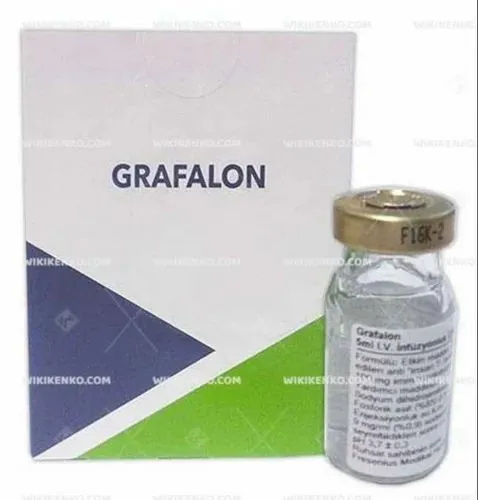
GRAFALON
ItalyIt is used to prevent 'graft-versus-host disease', a serious complication that can occur after a stem cell transplant (such as a bone marrow transplant). It is part of an immunosuppressive therapy used in conjunction with other drugs.
Frequently asked questions
How is Grafalon administered?
The drug is administered in a hospital via intravenous infusion, after being diluted in a sodium chloride solution. The dose is determined by the doctor based on the patient's body weight and condition.
When should you not use this medicine?
You must not use it if you are allergic to rabbit anti-human T-lymphocyte immunoglobulin or to any of the other ingredients, or if you suffer from a treatment-resistant infection.
What are the side effects of Grafalon?
Very common side effects include fever, chills, headache, tremors, vomiting, nausea, diarrhea, abdominal pain, breathing difficulties, hot flashes, increased infections, and anemia. Allergic reactions that can cause chest pain, wheezing, muscle pain, or skin redness are also common. In rare cases, anaphylactic shock may occur, a serious condition that requires immediate medical assistance.
Are there any special precautions to follow?
Because the drug weakens the immune system, it is important to inform the doctor if you have liver disease, heart problems, or difficulty stopping bleeding. Live vaccines must not be taken. It is also necessary to consult a doctor in case of pregnancy or breastfeeding.
Can the drug interact with other medicines?
Yes, Grafalon is often used together with other immunosuppressants, such as corticosteroids. This combination can increase the risk of infections, abnormal bleeding, and anemia. It is essential to inform the doctor of all medications you are currently taking.
How should the product be stored?
Vials must be stored in a refrigerator between 2°C and 8°C, within their outer packaging to protect them from light.
Instructions for use
Package leaflet: Information for the user
Grafalon
20 mg/ml concentrate for solution for infusion
Rabbit anti-human T-lymphocyte immunoglobulin
Please read this leaflet carefully before using this medicine because it contains
important information for you.
- Keep this leaflet. You may need to read it again.
- If you have any questions, ask your doctor.
- If you get any side effects, including those not listed in this leaflet, tell your doctor. See section 4.
Contents of this leaflet
- What Grafalon is and what it is used for
- What you need to know before using Grafalon
- How Grafalon is administered
- Possible side effects
- How to store Grafalon
- Contents of the pack and other information
1. What Grafalon is and what it is used for
Grafalon contains rabbit immunoglobulin anti-human T-lymphocytes and belongs to a group of
medicines called immunosuppressants. Immunosuppressants are used to prevent the body from
rejecting transplanted cells.
Grafalon is administered prior to a stem cell transplant (e.g. bone marrow transplant) to prevent a
condition called 'graft-versus-host disease'. This is a common but serious complication that may occur
after a stem cell transplant when the donated cells react against the patient's tissues.
Grafalon is used as part of immunosuppressive therapy, in combination with other immunosuppressive
medicines.
2. What you need to know before using Grafalon
Do not use Grafalon
- If you are allergic to rabbit anti-human T-lymphocyte immunoglobulin or to any of the excipients of this medicine (listed in section 6);
- if you have a resistant infection that cannot be treated.
Warnings and precautions
Talk to your doctor before using Grafalon
- If you have previously had allergic reactions to these medicines (immunosuppressants) or to rabbit proteins;
- if you have liver disease;
- if you have heart problems;
- if you have difficulty stopping bleeding.
Infections with Grafalon
Grafalon weakens your immune system. As a result, your body will not respond to infections as it normally would. Your doctor will ensure that such infections are appropriately treated. Infections may be fatal.
Other medicines and Grafalon
Inform your doctor if you are taking, have recently taken, or might take any other medicines.
- Grafalon is used together with other immunosuppressive medicines, such as corticosteroids. The concomitant use of Grafalon and other immunosuppressants may increase the risk of infection, abnormal bleeding, and anemia (a blood disorder).
- You must not receive live vaccines due to your immunosuppressive therapy. If you are administered a non-live vaccine, inform your doctor. Such vaccines may be ineffective if given at the same time as Grafalon. Pregnancy and breastfeeding If you are pregnant, think you may be pregnant, planning to become pregnant, or are breastfeeding, consult your doctor before using this medicine.
Important information about the production of Grafalon
Human components (e.g. red blood cells) are used in the production of Grafalon. For this reason, certain measures are taken to prevent the transmission of infectious agents to patients, including careful selection of donors to exclude those at risk of transmitting infections, and testing each donation for signs of viruses/infections. The manufacturing process also includes steps to treat human components that can inactivate or remove viruses.
Despite these precautions, when medicines produced using human components are administered, the possibility of transmitting infections cannot be completely ruled out. This also applies to any unknown or emerging viruses or other pathogens causing infections.
The precautions taken are considered effective against enveloped viruses such as human immunodeficiency virus (HIV), hepatitis B virus, and hepatitis C virus, as well as non-enveloped viruses such as hepatitis A virus and parvovirus B19.
Effects on ability to drive and use machines
Grafalon has a moderate effect on the ability to drive vehicles or operate machinery.
Grafalon contains sodium.
Grafalon contains less than 1 mmol (23 mg) of sodium per dose unit, i.e. it is almost “sodium-free”. However, the sodium content of the infusion solution ready for use is higher and depends on the amount of sodium chloride solution used for dilution.
3. How Grafalon is administered
Your treatment with Grafalon has been prescribed by a qualified doctor experienced in immunosuppressive therapies.
Grafalon will be administered to you in a hospital setting. Grafalon will be given by intravenous infusion. Prior to infusion, the medicine will be diluted in a sodium chloride (0.9%) solution.
The dose is based on body weight and the patient's condition.
The recommended daily dose is 20 mg/kg body weight, usually administered from day -3 to day -1 before stem cell transplantation.
Use in children and adolescents
Available information indicates that pediatric patients do not require different doses compared to adult patients, but no recommendation can be made regarding dosage.
If you use more Grafalon than you should
Administration of Grafalon will be discontinued and your doctor will adjust any other ongoing immunosuppressive treatment. Your immune system may be weakened by an excessive amount of Grafalon; in such case, you may be given medicines to prevent the development of infections.
If you have any doubts about using this product, consult your doctor.
4. Possible side effects
Like all medicines, this medicine can cause side effects, although not everyone will experience them.
Allergic reactions are common side effects following treatment with Grafalon. Less than
1 in 10 patients may experience:
- chest pain
- wheezing
- muscle pain
- skin redness
In 3 out of more than 240 patients, allergic reactions progressed to anaphylactic shock. This is a
serious, potentially life-threatening condition in which the patient may present the following symptoms:
- high fever
- skin rash
- swelling
- breathing difficulties
- low blood pressure
Tell your doctor if you notice any of the following side effects listed below:
Very common side effects (may affect more than 1 in 10 patients):
- fever
- chills
- headache
- tremor
- vomiting
- nausea
- diarrhoea
- abdominal pain
- breathing difficulties
- hot flushes
- increased infections (CMV infection, urinary tract infection)
- low red blood cell count (anaemia)
Common side effects (may affect less than 1 in 10 patients):
- thrombocytopenia, leucopenia, pancytopenia (blood disorders)
- mucosal inflammation
- peripheral swelling
- feeling of fatigue
- chest pain
- muscle and joint pain
- back pain
- muscle stiffness
- low or high blood pressure
- tingling sensation, skin prickling or numbness
- rapid heartbeat
- light sensitivity (photophobia)
- increased laboratory parameters
- increased bilirubin in blood
- blood in urine
- cough
- nosebleed
- skin redness
- itching
- skin rash
- anaphylactic shock, anaphylactic reaction, hypersensitivity
- kidney failure
- lymphoproliferative disorder (a type of cancer originating from certain white blood cells)
- veno-occlusive disease (blockage of the small veins in the liver)
- generalized bacterial infection, pneumonia, pyelonephritis, herpes infection, influenza, Candida fungal infection, bronchitis, rhinitis, sinusitis, nasopharyngitis, skin infection
Uncommon side effects (may affect less than 1 in 100 patients):
- indigestion
- mucosal inflammation due to gastric acid reflux into the oesophagus
- swelling
- increase in liver clinical parameters
- increased cholesterol
- shock
- increase in red blood cell count
- abnormal accumulation of lymph fluid
- fluid retention
- catheter site infection, Epstein-Barr virus infection, gastrointestinal infection, bacterial skin infection, wound infection
- kidney failure, renal necrosis
- drug-induced skin rash
Rare but clinically relevant side effects (may affect less than 1 in 1,000 patients): haemolysis (abnormal breakdown of red blood cells).
In rare cases, particularly if the medicine is administered for a prolonged period, serum sickness may occur—a type of allergic reaction to foreign proteins, characterized by symptoms such as fever, muscle and joint pain, and urticaria.
Other side effects in children and adolescents
Available data indicate that the side effects of Grafalon in children and adolescents are not substantially different from those observed in adults.
Reporting of suspected adverse reactions
If you experience any side effect, including those not listed in this leaflet, talk to your doctor or pharmacist. You can also report side effects directly via the national reporting system at https://www.aifa.gov.it/content/segnalazioni-reazioni-avverse. By reporting side effects, you can help provide more information on the safety of this medicine.
5. How to store Grafalon
- Store in a refrigerator (2°C-8°C). Keep the vials in the outer packaging to protect the medicine from light.
- Do not use this medicine if the solution is cloudy.
- Keep this medicine out of the sight and reach of children.
- Do not use this medicine after the expiry date stated on the label after Exp. The expiry date refers to the last day of the month indicated.
- Unused medicines must be disposed of by your doctor.
6. Package contents and other information
What Grafalon contains
The active substance is 20 mg of rabbit anti-human T-lymphocyte immunoglobulin.
The excipients are monosodium dihydrogen phosphate dihydrate, phosphoric acid (85%) for pH adjustment, and water for injections.
Description of the appearance of Grafalon and contents of the pack
Grafalon is a powder and solvent for solution for infusion, supplied in vials made of Type II glass and sealed with a chlorobutyl rubber stopper. The smaller vial (5 ml) contains 100 mg of Grafalon, while the larger vial (10 ml) contains 200 mg of Grafalon.
Grafalon is available in a pack containing 10 vials.
Marketing Authorization Holder and Manufacturer
Neovii Biotech GmbH
Am Haag 6+7
82166 Gräfelfing
Germany
This medicinal product is authorized in the European Economic Area countries under the following names:
Italy: Grafalon
Austria: Grafalon
The original data is available in the language of the country of manufacture.
Data source: Italian Medicines Agency (AIFA)
Data last verified: September 21, 2026